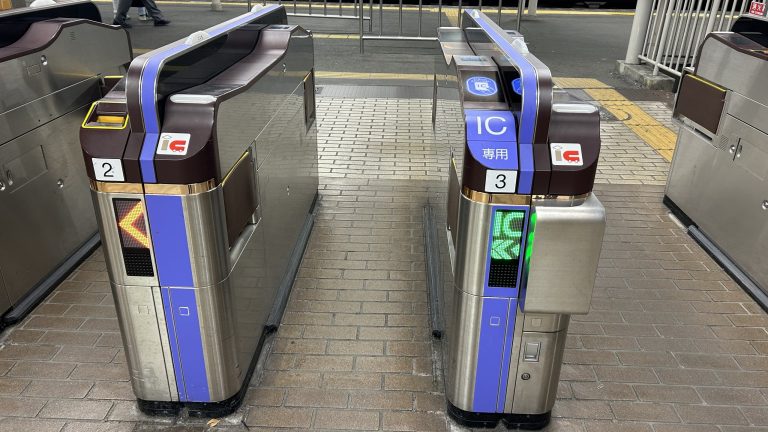
Suica, ICOCA & PASMO IC Card Guide for Tourists
AuthorMIRUTOBE editors
Table of Contents6 items
Since nationwide interoperability arrived, a Suica bought in Tokyo pays your bus fare in Kyoto and your coffee in an Osaka convenience store. Which card you hold barely matters. Three things do: how you get one, the deposit and refund rules, and what happens as the balance runs down.
An IC card is a rechargeable contactless card used across Japanese transport. Tap the reader going in, tap going out, and the fare comes off — no fare table, no ticket machine, no exact change. The same card pays in convenience stores, at many cafés and restaurants, at station lockers and at most vending machines.
Check first: which form will work on your device
- You carry an iPhone or Apple Watch (Apple Wallet supports Suica, PASMO and ICOCA)
- On Android, the handset carries the Osaifu-Keitai (FeliCa) chip
- You have a card in Apple Wallet that is not a Visa
- If you buy plastic, you know which region you leave from last
- You know where to top up with cash (Seven Bank ATMs, station ticket machines)
Miss the second line and one option disappears. In most cases the FeliCa chip is fitted only to Android handsets sold for the Japanese market, so an Android phone bought anywhere else is a poor bet. Buy the plastic card instead and stop worrying about it.
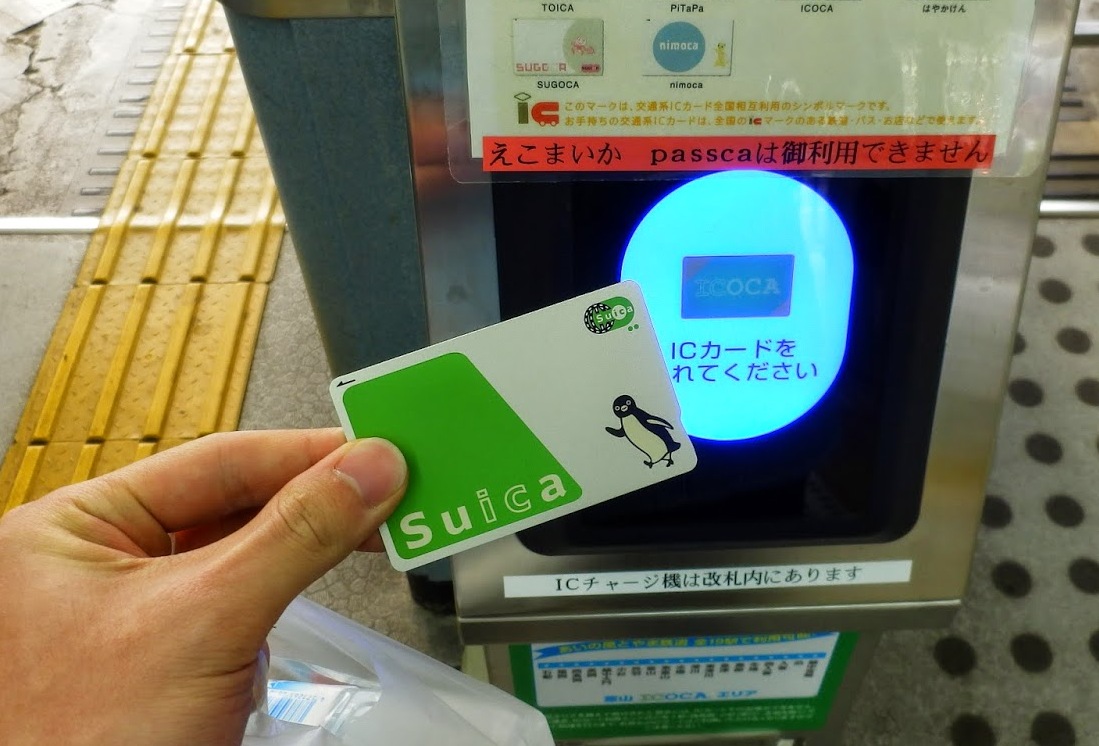
The full picture: the cards, and why the choice hardly matters
Sales points for Suica are as listed by JR East (see the reference block). Some stations in the area do not sell them. Every physical card costs a refundable deposit of JPY 500 plus whatever balance you load onto it. Checked on 2026-09-20.
Buy whatever the city you land in sells. Inside the interoperable area any of them takes you through trains, subways, buses, convenience stores and vending machines alike.
With an iPhone you can skip the plastic entirely by adding Suica or ICOCA to Apple Wallet before you land. Three things follow from that: it is ready before the trip, you top it up from your seat instead of hunting for a machine, and there is no deposit and no refund queue on the last morning. Turn on Express Card and you tap without unlocking the phone.
Four ways to top up, and the JPY 20,000 ceiling
The usual ceiling on the stored balance is JPY 20,000, and that is also the most a single purchase can draw, so a bill above JPY 20,000 cannot be settled with the card. Mobile Suica is the exception in the making: JR East has announced that from autumn 2026 a code-payment function is added, covering purchases above JPY 20,000 and a pay-later option. Whether it has arrived by the time you visit is a question for the app in front of you.
Two habits are worth forming. Keep at least JPY 1,000 on the card, because some lines refuse entry below a threshold. And for long-distance JR journeys and the Shinkansen, buy a proper ticket rather than relying on the balance — IC-based Shinkansen services exist, but they require registration, which puts them outside the scope of a short visit.
Where people trip up
A foreign-issued Visa is the card most likely to fail in Apple Wallet
Plenty of visitors try to top up a digital Suica or ICOCA inside Apple Wallet with a card from home and get nowhere. The usual cause is 3D Secure authentication failing between the Japanese payment system and the overseas bank, and Visa cards issued outside Japan are the ones that get blocked most often.
The workaround is to put a Mastercard or an American Express card into Apple Wallet instead; the success rate on digital IC top-ups is considerably higher. If Visa is all you hold and “Payment Not Completed” keeps coming back, cash is the certainty. A Seven Bank ATM, the green ticket machines at major JR stations, or tapping your phone on the reader at a convenience store till and handing over notes — any of the three goes through.
On local buses, the number of taps changes from city to city
Ticket gates are simple; buses are not. In Tokyo and most large cities the city buses charge a flat fare: board through the front door, tap once on the reader beside the driver, and leave through the rear door without tapping again.
In Kyoto, Hiroshima and much of rural Japan the fare depends on distance. There you board through the rear door and tap at the entrance to record where you got on, then tap a second time beside the driver as you leave through the front, and the fare for the distance is calculated and deducted. Forget the second tap and you are settling up manually, so work out which system you are on as you board.
Some operators take no IC card at all. Azuma Bus on Ishigaki Island, for instance, accepts only cash and contactless credit cards on its routes. On the smaller islands and in parts of the countryside, assume the nationally interoperable card is not accepted and keep coins on you.
A card can only be refunded in the region that issued it
A physical Suica is refunded at JR East counters in the Tokyo area, an ICOCA at JR West counters in Kansai. You get the balance less a handling fee, plus the JPY 500 deposit. Fly home from Tokyo still holding an ICOCA and there is nowhere to refund it, so either deal with it before leaving Kansai or — far simpler — spend the balance down in a convenience store.
Visitor cards such as Welcome Suica are built with no deposit and no refund, so the plan there is to spend it out and keep the card. Sales conditions in this category have changed several times in recent years, which makes the issuer’s own page worth a look before you fly. A card in a phone simply waits for the next trip; in practice the balance does not lapse.
What if a day pass or a rail pass would be cheaper
An IC card is pay-as-you-go with no discount; a pass is a prepaid bundle. The test is how many rides your actual itinerary contains. A day spent working through one district usually adds up to two or three journeys, and the IC card wins those. A day deliberately spent criss-crossing Tokyo by train, or riding buses all afternoon, belongs to the pass.
The nationwide JR Pass stopped being an automatic purchase after the price rise. The method — list the long-distance legs, price each one individually, then compare — is set out in our piece on whether the JR Pass is still worth it. The two are not mutually exclusive either: a pass for the long hauls and an IC card for everything inside the cities is a perfectly ordinary combination.
There is a prior question underneath all of it, which is whether the intercity leg should be a train at all. Over distances like Tokyo to Fukuoka or Tokyo to Sapporo, flying often comes out lower once everything is counted. Pricing that single long leg against the air fare before you start comparing passes can change the shape of the whole trip.
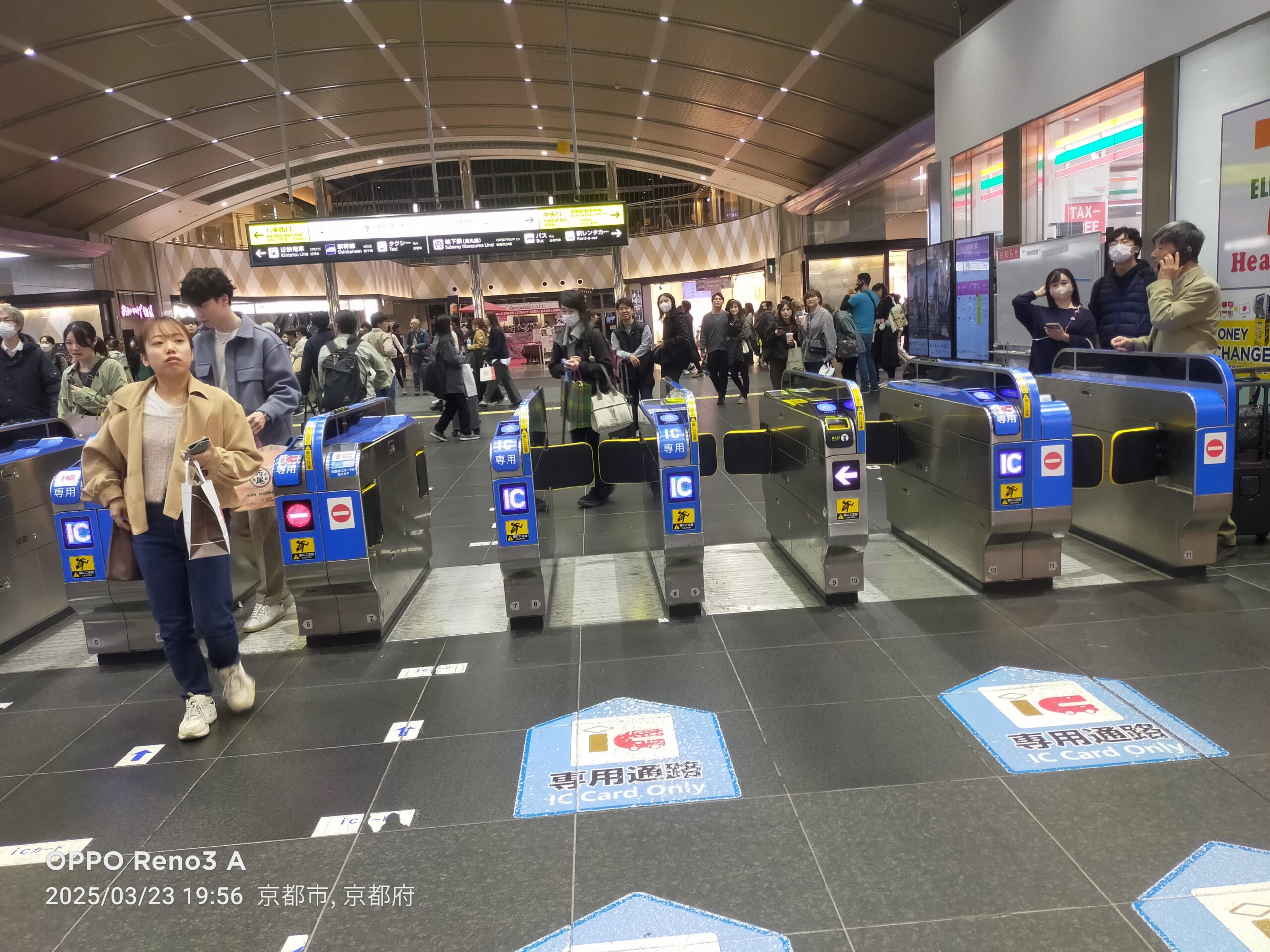
Shops take it too: convenience stores, coffee chains, fast food, drugstores, the bento counters on station platforms, vending machines, coin lockers. Beyond never hunting for coins, it means you can buy snacks on the last day and run the balance to zero, so nothing is stranded on the card. Read it alongside how convenience stores work and the amount of cash you carry drops noticeably.
Common questions: arrival day, a second card, and children
What should I do on the day I arrive?
Either add Suica or ICOCA to your iPhone before you fly, or pick up a card at the airport. That single step takes tickets off your list of things to think about, and per five minutes spent it is the highest-value piece of preparation there is. Which airport you land at changes the route into town, so the comparison of Narita and Haneda is worth reading first.
Is there any point holding both a Suica and an ICOCA?
Almost none. Interoperability means one card works nationwide, so a second one mostly means paying a second deposit. The exceptions are loading a commuter pass or a regional excursion ticket onto a card, and travelling as a family: two people cannot pass a gate one after the other on the same card, so you need one each.
What about children?
A child IC card is registered and requires identity documents to buy, and on a short trip the paperwork costs more than it saves. That leaves buying children’s tickets, or putting them on an unregistered card at the adult fare. If your itinerary involves a lot of travelling, choosing a day with few journeys — the Kamakura day trip is one — removes the problem rather than solving it.
- JR East, Suica (including the announcement of code payment on Mobile Suica) ↗Checked on 2026-09-20
- How to buy a Suica card (My Suica and the unregistered Suica card, sales points) ↗Checked on 2026-09-20
- JR West, ICOCA (purchase and refund counters) ↗Checked on 2026-09-20
- PASMO official site ↗Checked on 2026-09-20
Source: the reference block above / Azuma Bus ticket information (that its Ishigaki Island routes take no IC card) / Photos: Wikimedia Commons / Checked on 2026-09-20
Other sales ending soon




 4 days leftuntil Oct 24Air Busan Takamatsu-Busan Coupon: Up to 9,000 Yen Off Until October 24
 5 days leftuntil Oct 25JAL Hong Kong Campaign: Tokyo–Hong Kong Round Trip from 75,800 Yen (until 25 Oct)
 11 days leftuntil Oct 31Jin Air Kobe–Seoul: 5,000 yen off a round trip with code KTOUKB1, until 31 October
 11 days leftuntil Oct 31Jin Air to Busan: 4,000 yen off a round trip with code KTOPUS, first 300 only