Is the JR Pass Still Worth It? 2026 Guide
AuthorMIRUTOBE editors
Table of Contents6 items
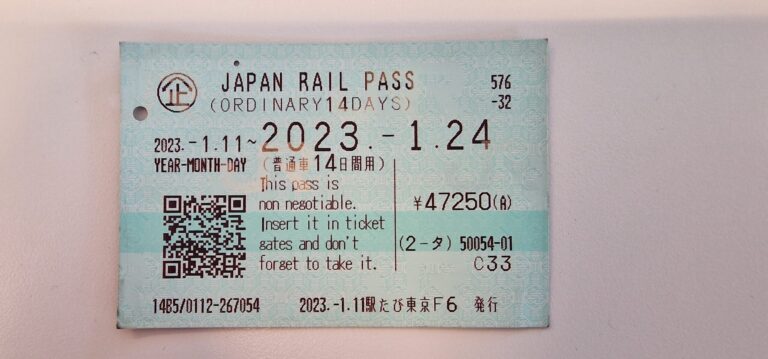
Eligibility comes before price. The pass is sold to foreign visitors admitted under Temporary Visitor status and to Japanese nationals living abroad for ten consecutive years or more. Even then, Tokyo to Kyoto to Hiroshima to Osaka and back prices at JPY 50,980 on Smart EX — almost exactly the pass.
All figures are Japanese, in yen, copied from the operators’ own pages. If you are visiting on a Temporary Visitor stamp you almost certainly qualify, which means the only question left is arithmetic.
Check first: can you buy it, and should you?
- Your passport carries a Temporary Visitor stamp or sticker
- (Japanese nationals) You have lived abroad for ten consecutive years or more
- (Same) You can produce a copy of your overseas residential registration or a certificate of residence, issued within six months of the day the exchange order was bought
- You have three or more long Shinkansen or limited-express legs inside seven days
- You can build the itinerary without Nozomi and Mizuho services
Fail either of the first two and the pass leaves the conversation entirely. A Japanese national living in Japan cannot buy it, tourism or not. Dual nationals need, alongside the Japanese passport, a document issued by a Japanese overseas mission showing ten consecutive years of residence abroad. Residents wanting cheap long-distance travel are pushed towards the Seishun 18 Ticket, the operators’ seasonal free tickets and the advance-purchase fares.
The fifth line is the one people miss. The pass on its own does not carry you on Nozomi or Mizuho services on the Tokaido, Sanyo and Kyushu Shinkansen. Riding them needs a separate Nozomi/Mizuho ticket: JPY 4,960 for Tokyo to Kyoto and Tokyo to Shin-Osaka, JPY 4,180 for Tokyo to Nagoya, JPY 6,500 for Tokyo to Hiroshima, JPY 4,960 for Shin-Osaka to Hakata and JPY 5,150 for Hakata to Kagoshima-Chuo. Tax included, and the same price whether you use it for Green Car, reserved ordinary or unreserved.
The full picture: prices, and the 1 October 2026 revision
Copied from the Japan Rail Pass official price table on 2026-09-20. A child is aged 6 to 11 and pays half in every case. Overseas agent prices match the official website until 30 September 2026 and move to the figures above on 1 October.
From October the website and the overseas agents diverge: JPY 3,000 apart on the ordinary seven-day pass, JPY 5,000 on the 21-day. If you intend to buy through a travel agency or an online reseller, securing the exchange order by 30 September changes what you pay. The Green Car version moves on the same day, from JPY 70,000 to JPY 74,000.
Green Car costs JPY 20,000 more over seven days, JPY 30,000 over fourteen and JPY 40,000 over twenty-one. At seven days that is JPY 2,857 a day, which a single Tokyo–Shin-Osaka return will not recover. The daily premium shrinks as the pass lengthens, so Green Car starts making sense from a fourteen-day circuit onwards.
Children aged 6 to 11 pay half. Two adults and two children on ordinary seven-day passes is JPY 150,000 — and the Nozomi/Mizuho tickets are then bought per person, so a single Tokyo–Kyoto return adds JPY 39,680 for the four of you. Before a family circuit gets that far, work out whether the days can be built around Hikari services instead.
Five steps: price the legs, then look at the pass
Laid out, the boundary becomes visible. Tokyo to Kyoto, on to Hiroshima, back from Osaka, all on Nozomi: JPY 13,970 plus JPY 11,740 plus JPY 10,750 plus JPY 14,520 makes JPY 50,980, against JPY 50,000 for the ordinary seven-day pass. But riding Nozomi on the pass requires the supplementary tickets, so an all-Nozomi version of that trip costs more with the pass than without it. Rebuild it around Hikari and Sakura and the pass wins.
For three nights in Kyoto and back, there is nothing to calculate. JPY 27,940 against JPY 50,000 leaves JPY 22,060 to recover, and recovering it means finding JPY 20,000 of extra travel inside seven days. Nara, Himeji and Osaka together do not get there. How to shape those days is in the two- to three-day Kyoto route by district.
Where people trip up
Nozomi tickets are capped by seat count and can be unavailable on the day
Nozomi and Mizuho tickets are sold from one month before travel until the day itself, at reserved-seat ticket machines, Midori-no-Madoguchi offices and travel centres. The official wording adds that the Green Car and reserved ordinary versions are limited by seat allocation and may be unavailable even when the train itself has space. Turning up on the day for a busy Tokyo–Shin-Osaka service and finding only the unreserved version left is a real outcome. Travelling beyond the section you bought also costs the ordinary fare on top.
Almost all movement inside a city falls outside the pass
The pass covers JR trains. Subways and private railways are not JR: not Tokyo Metro, not Osaka Metro, not Kintetsu, not Hankyu. You will be using an IC card during your stay regardless, and in Kyoto the workhorse is the city bus, which is not JR either. Budget on the assumption that seven days of unlimited travel means no transport costs and you have dropped roughly JPY 1,000 a day of city fares out of the plan. Which card to hold is in the comparison of Suica, ICOCA and PASMO.
Some of the “cheaper” regional passes carry the same restriction
JR West’s Kansai Wide Area Pass is JPY 12,000 for an adult over five consecutive days, sold to holders of a passport issued by a government other than Japan whose status is Temporary Visitor — the same gate as the nationwide pass. When you read that a regional pass is cheaper, read the eligibility column before the price. Free tickets aimed at residents exist separately, narrower in range and season but with no status requirement attached.
What if you cannot buy it: what you hold instead
For anyone living in Japan, the cheap long-distance options sit outside the pass. On an itinerary that can move by local train, the Seishun 18 Ticket is JPY 10,000 for three days and JPY 12,050 for five, giving unlimited unreserved travel on JR local and rapid services for that many consecutive days. If the Shinkansen is unavoidable, Smart EX’s EX Hayatoku 21 closes at 23:30 on the 21st day before travel, and Eki-net’s Shinkansen e-tickets discount against 14-day and 28-day deadlines.
Both trade flexibility for the discount in the same way. EX Hayatoku 21 permits no change of train after booking. The Seishun 18 Ticket only works on consecutive days, so a scattered itinerary wastes whole days of it. Sorting the options by when your dates firm up, rather than by price, makes the choice quicker. Riding Shikoku’s local lines on a Seishun 18 Ticket is the version where the travelling is itself the itinerary.
Where the rest of the budget should be cut, and in what order, is set out in the savings ranked by how much they move. Optimise transport alone and leave accommodation until last, and it comes back as a cheap hotel far from the station with a taxi fare every night.
Where this pass does not fit is a trip that settles in one city. Five nights in Kyoto with day trips out leaves you using the JR Nara and Sagano lines and little else, while the city buses and subway that do the real work sit outside it. It suits improvised travel badly too: unlimited travel is not a reserved seat, and riding Nozomi means arranging your day around the supply of supplementary tickets.
Common questions: activation, luggage, and buying on arrival
When does the clock start?
On the start date you nominate when the pass is issued, and it then runs for seven, fourteen or twenty-one consecutive days including that one. Consecutive is the operative word: a rest day in the middle is a day of the pass spent. That is also why the count of long legs, rather than the length of the holiday, is what the decision turns on.
Do I still have to reserve a seat for oversized luggage?
Yes, on the Tokaido, Sanyo and Kyushu Shinkansen, where large baggage needs a designated space booked in advance. The pass covers the seat, not that arrangement. Sending the suitcase ahead by courier from a convenience store or hotel usually costs less than the day it saves, and it removes the reservation entirely.
Can I buy it after I arrive?
Yes — the official website sells it, and that is now the cheaper channel, by JPY 3,000 on the ordinary seven-day pass once the overseas agent prices rise on 1 October 2026. What you cannot do is buy it after deciding it would have been useful: the value comes from long legs booked inside the seven days, so the calculation belongs before the itinerary is fixed, not after.
- Japan Rail Pass, types and prices (including the 1 October 2026 revision) ↗Checked on 2026-09-20
- Japan Rail Pass, eligibility (Temporary Visitor; ten years’ residence abroad) ↗Checked on 2026-09-20
- Nozomi and Mizuho tickets (prices by section, limited seat allocation) ↗Checked on 2026-09-20
- Smart EX, reserved ordinary seat sections and prices ↗Checked on 2026-09-20
- JR West, Kansai Wide Area Pass (five days, JPY 12,000, eligibility) ↗Checked on 2026-09-20
- JR East, Seishun 18 Ticket ↗Checked on 2026-09-20
Source: the reference block above / Photos: DragonFury and Dquai, both CC BY-SA 4.0 (Wikimedia Commons) / Checked on 2026-09-20
Other sales ending soon




 4 days leftuntil Oct 24Air Busan Takamatsu-Busan Coupon: Up to 9,000 Yen Off Until October 24
 5 days leftuntil Oct 25JAL Hong Kong Campaign: Tokyo–Hong Kong Round Trip from 75,800 Yen (until 25 Oct)
 11 days leftuntil Oct 31Jin Air Kobe–Seoul: 5,000 yen off a round trip with code KTOUKB1, until 31 October
 11 days leftuntil Oct 31Jin Air to Busan: 4,000 yen off a round trip with code KTOPUS, first 300 only