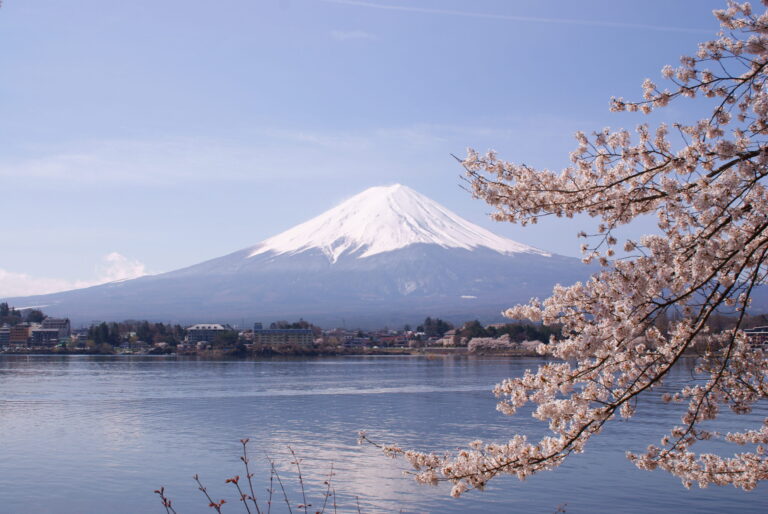
Where to See Mt Fuji: Kawaguchiko, Hakone or Enoshima
AuthorMIRUTOBE editors
Table of Contents6 items
If seeing Mt Fuji is the objective, stay a night at Lake Kawaguchi and take the morning. It is an hour and three-quarters by express bus from Shinjuku, and the reflection on the lake and a ropeway viewpoint are in the same place. Hakone gives you a mountain as a guest star; Enoshima gives you a free winter silhouette.
Fares below are Japanese, in yen, from the operators’ own pages. The mountain is out in the morning and builds its own cloud as the air warms, which is the single fact the whole plan turns on.
Check first: is Fuji actually the point of the trip?
- You can arrive the night before and be out between 07:00 and 09:00
- Your trip falls between November and February
- You have decided in advance what you do on a day the mountain never appears
- You can reserve the express bus from one month before travel
- Seeing the mountain outranks hot springs and art galleries for you
Fail the first line and basing yourself at Kawaguchiko is worth half of what it was. Fuji is out early and wraps itself in cloud as the temperature climbs, so a day trip arriving at midday puts you there during the least visible hours. Fail the fifth — that is, put the onsen and the galleries above the view — and Hakone gives a better day. Count the mountain as a bonus there.
Express buses on the Shinjuku–Fuji Five Lakes route have assigned seats. Reservations open one month before travel, on the same date, and close 30 minutes before the bus leaves its first stop. An adult one way is from JPY 2,200, or JPY 2,000 paid online; a child is from JPY 1,100, or JPY 1,000 online. Weekend morning departures fill early, so book the bus at the same time as the room and the day becomes predictable.
The full picture: three bases, by access and by the price of height
Fares and prices as published by Fujikyu Bus, the Mt Fuji Panoramic Ropeway and Hakone Navi (Odakyu Hakone), read on 2026-09-20. Hakone Ropeway fares are those in force after the revision of 1 October 2025.
The right-hand column is the decision. Kawaguchiko’s JPY 1,000 ropeway takes three minutes to a deck at 1,075 metres; Hakone’s JPY 2,000 one way carries you over Owakudani. The price difference maps onto the difference between travelling to see a mountain and travelling to have a day out. Enoshima charges nothing at all, and what you get is a distant silhouette.
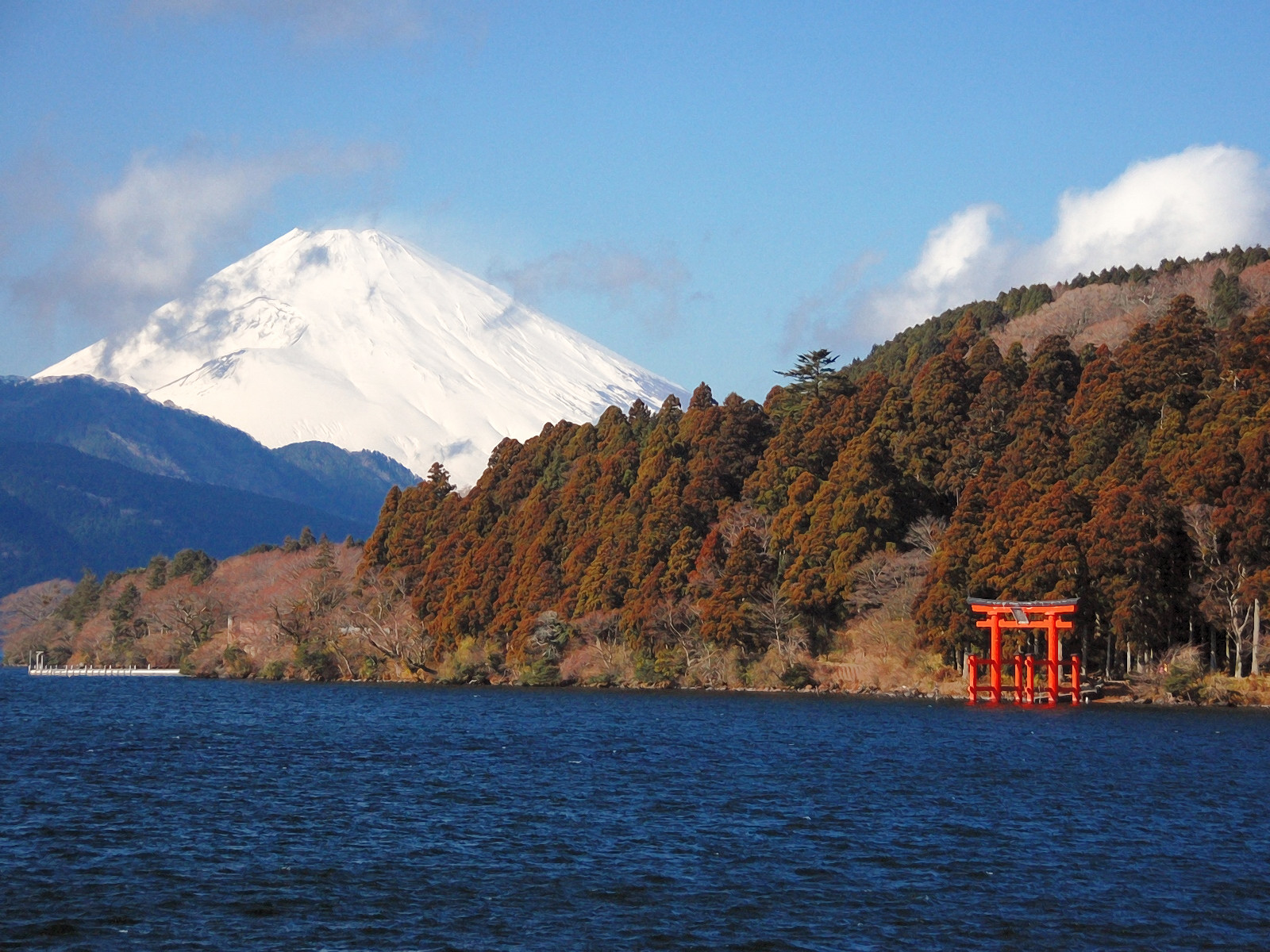
For anyone whose object is photographing Fuji, Hakone is the wrong choice. The terrain blocks the angles and the afternoon cloud arrives early, so the window from the far shore of Lake Ashi and from Owakudani is narrow. The compensation runs the other way: Hakone is the one that still works when the mountain never shows. The Hakone Open-Air Museum and the Pola Museum of Art do not depend on the weather. At Kawaguchiko, a hidden mountain leaves you with a lake and a gallery.
Enoshima and the Shonan coast disappoint anyone expecting the postcard. It is a silhouette across Sagami Bay, and it only appears on a clear winter afternoon. In exchange it costs nothing in admissions and slots into a day in Kamakura without adjustment. Choose it when you are staying in Tokyo and the view does not justify an extra night.
If you do go to Hakone, note that the ropeway went up on 1 October 2025: one way from JPY 1,500 to JPY 2,000, return from JPY 2,500 to JPY 3,000. The fare is flat across Sounzan, Owakudani, Ubako and Togendai, so a single section costs the same as the lot. Ride through to Lake Ashi and a one-way ticket is enough; turn back at Owakudani and two one-way tickets cost the same as the return.
Five steps through a Kawaguchiko morning
The ropeway sells one-way tickets too — adult JPY 600, child JPY 300 — for people who ride up and walk down the Tenjoyama path. The gap to the JPY 1,000 return is JPY 400, so unless you are confident on your feet the return keeps your options open. Three minutes to a deck at 1,075 metres means the 08:30 first car has you looking down on the lake and the mountain before nine.
STEP 4 is the whole point of the sequence. Plan to be done by noon and an afternoon that clouds over costs you nothing. Plan to go up the ropeway in the afternoon and the first cloud takes the day with it. That time difference is what the extra night is actually buying. A car-free version of the whole trip is set out in two days around the Fuji Five Lakes without a car.
Where people trip up
The ropeway only runs an hour later in summer
Normal hours on the Mt Fuji Panoramic Ropeway are 08:30 to 17:00, with the last car down at 17:20. Only from 20 July to 31 August does it extend to 18:00, last descent 18:20. Arrive in autumn intending to shoot in evening light and you are running for the 17:20 instead. In summer the longer daylight and the longer hours line up. For a winter evening, plan the shot from the lakeside rather than from the deck.
The Hakone Ropeway charges the same for one section as for all of them
The fare between Sounzan, Owakudani, Ubako and Togendai is flat. Ride the single section from Sounzan to Owakudani and it is still JPY 2,000 for an adult. A return is JPY 3,000, so turning back at Owakudani makes the return ticket JPY 1,000 better. Carrying on to Lake Ashi and coming back by boat means one way is enough. Decide which before you reach the window, or you will queue at it twice. A one-way ticket is valid for one day and a return for two.
The roadside photo spots are somebody’s street
Since the composition lining up a convenience store roof with Mt Fuji became well known, parts of Fujikawaguchiko and Fujiyoshida have posted crossing marshals and put up screens. The barriers and the screens exist because photographers were standing around, and getting past them shrinks the thing you came for. Take the picture, but stay off the carriageway and do not spread a tripod across the footpath. The mountain is not going anywhere, so giving way costs you no composition.
What if the mountain never appears
Decide the substitute in advance and you can make the call the moment you look at the sky. At Kawaguchiko it is the galleries, the lakeside cafés and an inn with an open-air bath facing the mountain. In Hakone it is the Open-Air Museum, the Pola Museum and Owakudani. On the coast you switch to the temples and shrines of Kamakura. All of them have an indoor centre of gravity, which is the point.
Staying in Tokyo is also an answer. The Tokyo Metropolitan Government observatories are on the 45th floor of Building 1, 202 metres up and free to enter, the north deck open 09:30–17:00 and the south 09:30–21:30. On a clear winter morning the mountain stands beyond the towers. It is too far away to be much of a photograph, but as a fallback that costs neither fare nor admission it is a reasonable one.
Switching to climbing it is only an option from July to early September. All four routes require registration and an entry fee, so it is not a spontaneous move. What the system involves is in the guide to Mt Fuji’s climbing rules and fees. To fold in autumn colour, read it beside how the koyo front moves from north to south, which shows November at the Fuji Five Lakes doing two jobs at once.
To watch the morning mountain from the water, book the inn with the open-air bath first. How to use the bath once you are in it is covered in the onsen sequence as the Ministry of the Environment sets it out.
The next move is to book the room and the bus seat on the same day. The morning only belongs to people who were already there the night before.
Common questions: best months, day trips, and the train
Which months actually show the mountain?
November to February, which is why it is on the checklist. Cold, dry air after a front has passed is the condition that matters, and it is far more common in winter than in the humid months. Summer visitors are not excluded, but the morning window is narrower and the cloud builds sooner.
Is a day trip from Tokyo pointless?
Not pointless, but you are arriving during the least reliable hours. A 09:00 departure from Shinjuku puts you at the lake around 11:00, by which time the cloud is often building. If the day trip is the only option, go in winter, take the earliest bus you can, and have the gallery plan ready.
Bus or train to Kawaguchiko?
The bus goes directly from Shinjuku in about 1h45 with an assigned seat, from JPY 2,200 or JPY 2,000 online. The rail route involves changing onto the Fujikyuko line and costs more for a comparable journey time. The bus’s weakness is traffic on holiday weekends; the railway’s is the change and the fare.
- Fujikyu Bus, Shinjuku–Kawaguchiko (fares, journey time, reservations) ↗Checked on 2026-09-20
- Mt Fuji Panoramic Ropeway, hours and fares ↗Checked on 2026-09-20
- Hakone Ropeway fares (revised 1 October 2025) ↗Checked on 2026-09-20
- Tokyo Metropolitan Government observatories (free entry, 202m) ↗Checked on 2026-09-20
Source: the reference block above / Photos: Kentagon, CC BY-SA 4.0; Midori, CC BY 3.0 (both Wikimedia Commons) / Checked on 2026-09-20
Other sales ending soon
 4 days leftuntil Oct 24Air Busan Takamatsu-Busan Coupon: Up to 9,000 Yen Off Until October 24
 5 days leftuntil Oct 25JAL Hong Kong Campaign: Tokyo–Hong Kong Round Trip from 75,800 Yen (until 25 Oct)
 11 days leftuntil Oct 31Jin Air Kobe–Seoul: 5,000 yen off a round trip with code KTOUKB1, until 31 October
 11 days leftuntil Oct 31Jin Air to Busan: 4,000 yen off a round trip with code KTOPUS, first 300 only