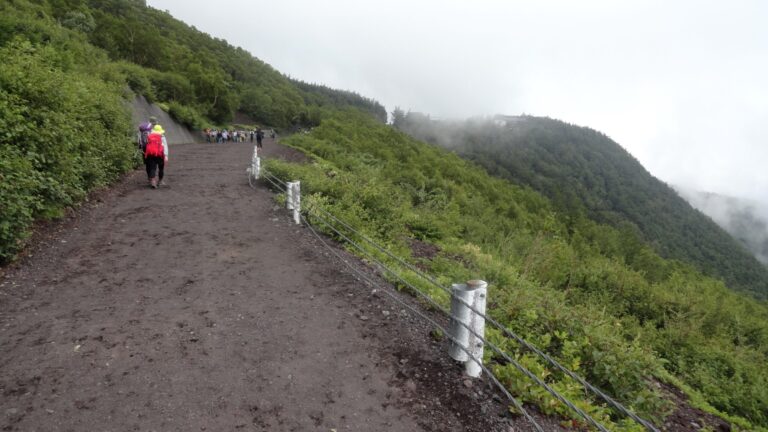
Mt. Fuji Climbing Regulations & Fees 2026: Complete Guide
AuthorMIRUTOBE editors
Table of Contents5 items
Japan charges JPY 4,000 per person per climb on all four Mount Fuji trails. Yamanashi Prefecture runs a booking system, Shizuoka a registration system. What bites is not the amount but the cancellation rule.
On the Yoshida trail the fee can only be cancelled free of charge up to the day after you pay. With a ceiling of 4,000 climbers a day the slot wants taking early — and the earlier you take it, the more certain it is that the JPY 4,000 is gone if the weather sends you back down.
Check first: what is already decided before you start
- You have chosen which of the four trails you are climbing
- Your schedule gets you through the fifth-station gate by 2pm
- If you are entering after 2pm, you hold a mountain hut booking
- You can bring cold-weather and waterproof gear, mountain boots and a detailed map
- You are carrying coins, JPY 100 pieces above all
The second and third lines are the same rule seen from both sides. Between 2pm and 3am the following morning, nobody enters except guests of the mountain huts. Entry on the Yoshida trail runs from 3am to 2pm, and standing outside that window means being stopped at the gate unless you can show a hut reservation. The rule exists to end the practice of climbing straight through the night, and both prefectures apply it.
The fifth line looks trivial and is not. The toilets on Mount Fuji run on tips of roughly JPY 100 to JPY 300 a visit, and the huts do not always take cashless payment. The entry fee itself accepts cards and e-money online and on the day; everything above the trailhead goes back to being a cash economy.
The full picture: four trails by distance and elevation
Distances, times, elevations and season dates from the four-route comparison on the official Mount Fuji climbing site, run by Yamanashi and Shizuoka Prefectures. The 2026 season closed on 10 September and the mountain is now shut for winter.
Read the table downwards and the choice makes itself. The smallest climb is from Fujinomiya, whose fifth station sits at 2,400 m. Its 4.3 km ascent is the shortest going, which is precisely why it is steep: the same height gain packed into less ground. Gotemba starts at 1,440 m and asks for 10.5 km and about 8 h 40 min, so more than 2,000 m of ascent on foot. For a first climb, take Yoshida, and the reason is neither the distance nor the time but the number of huts.
Look at the descents as well. Fujinomiya is quickest at about 2 h 40 min and Yoshida slowest at about 3 h 35 min. Add the two halves together and Fujinomiya comes to roughly 7 h 50 min, Yoshida 9 h 45 min and Gotemba 12 h 10 min. For a single-day return, Gotemba is the one where catching the first bus still leaves the finish racing the sunset. Reaching the fifth station without a car uses the same connections as getting round the Fuji Five Lakes by bus.
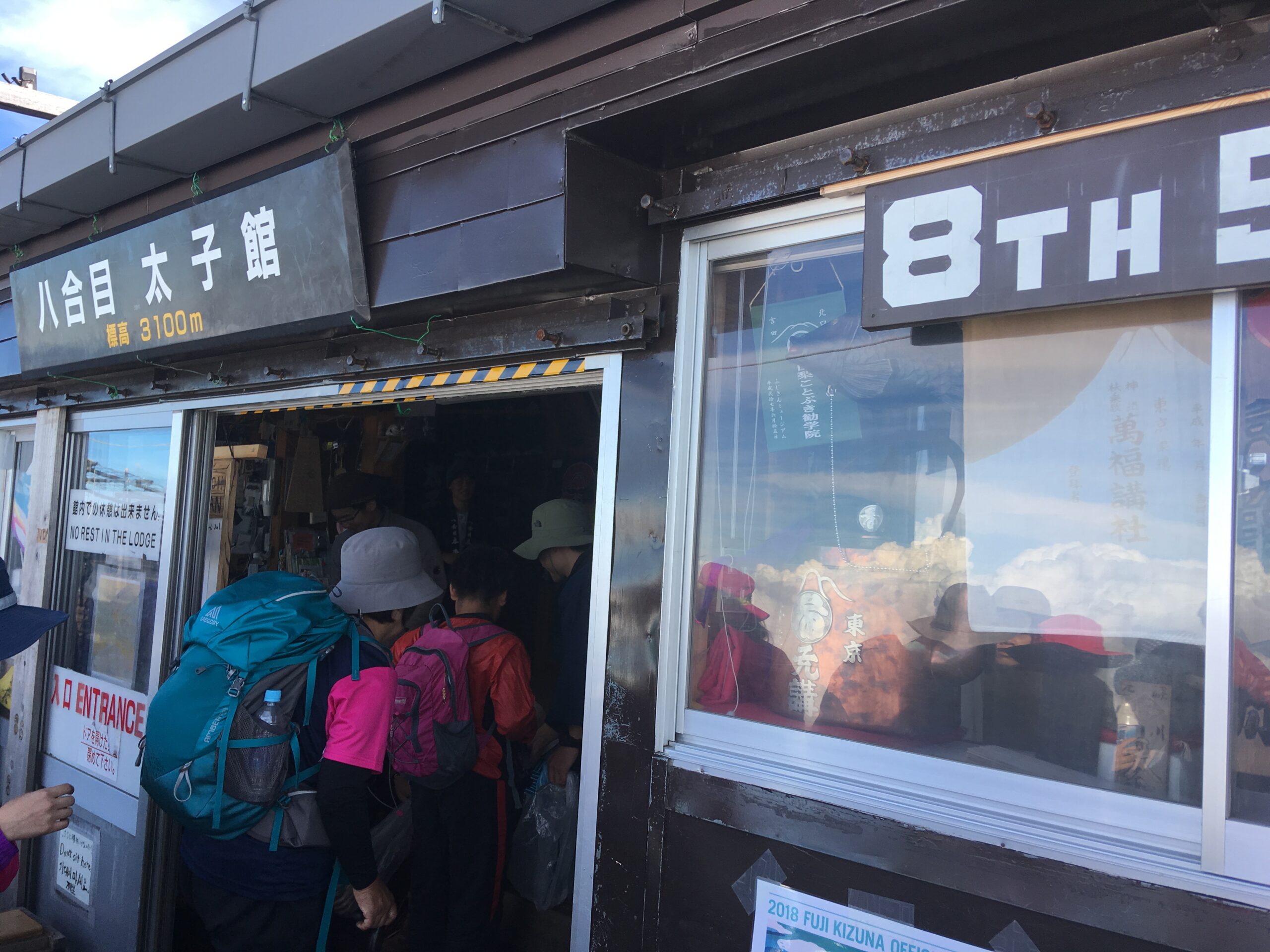
Five steps through the paperwork
The difference between the two prefectures is whether you can be turned away by a quota or only by a missing registration. Yoshida ends when the places are gone; Shizuoka has no ceiling but will not let you past without registering. Same JPY 4,000, and Yoshida is the one that forces you to move first.
Where people trip up
Cancellation closes the day after you pay
The Yoshida entry fee can be cancelled without charge up to the day after the payment date. From the second day onwards the full cancellation fee applies. Book a slot two months out and that JPY 4,000 is, from then on, money you are not getting back — a typhoon will not change it and neither will illness. Holding the place and keeping the money are not compatible, so while the dates are still uncertain, not booking costs you less. Where the dates genuinely cannot move, the calculation inverts and paying early is the right side to be on, because weekend slots go first.
The 2pm gate opens on a hut booking
Between 2pm and 3am, only hut guests may enter. Climbing in a single day therefore only works on a schedule that leaves the fifth station by 2pm. The Yoshida ascent takes about 6 h 10 min, so entering at 2pm puts you on the summit after 8pm. What the rule really does is take the decision to push on out of the climber’s hands and give it to the gate. On a day when you arrive late, a night at the foot and a fresh start in the morning gets you there sooner.
The fee takes e-money; the toilets take coins
More than ten cashless methods are accepted for the entry fee, and above the trailhead the toilets run on tips of about JPY 100 to JPY 300 a visit. That means coins, and JPY 100 pieces in particular. The higher you go the fewer places there are to break a note, so the change has to be sorted before you leave the fifth station. Five visits across the ascent and descent comes to somewhere near JPY 1,500, and without that in coins it is not money you can spend. How far cash still matters on a trip in Japan is covered in the order in which travel costs are worth cutting.
What if you need the kit and a night at the foot
Altitude belongs in the same column as equipment. The Fujinomiya trail starts at 2,400 m, so you are already high the moment the bus doors open. Sitting at the fifth station for 30 to 60 minutes before setting off, rather than walking straight up, lowers the chance of a headache later. Gotemba is the opposite case: the climb begins at 1,440 m, which gives the body far longer to adjust, at the price of the longest route on the mountain at 10.5 km. Which one you take is a question of fitness against time.
The equipment the official site names is four things: cold-weather protection, waterproof protection, mountain boots and a detailed map. The summit stands at 3,776 m and is cold even in high summer. A temperature that feels mild at the fifth station is no guide at all to the top. Make the waterproofs a separate jacket and trousers rather than a poncho, and they will still work on an exposed ridge in wind.
Turning it into a two-day climb with a hut removes the entry-time constraint. You may enter after 2pm, and sleeping partway up also cuts the altitude risk. The cost is that the hut has to be booked first, so the fee slot and the hut have to land on the same date. If either one fails the plan is rebuilt, which is why the hut comes first in the order.
The night before is best spent at the foot. Buses to the fifth station leave early, and staying near Gotemba, Mt. Fuji or Fujinomiya station puts you on the first departure. If you would rather look at the mountain than climb it, which bases and which hours give the clearest view covers that instead.
The 2026 season ended on 10 September. Yoshida, Subashiri and Gotemba are closed for winter from the fifth station to the summit, Fujinomiya from the sixth, and the crater circuit is shut as well. How the fee came to be JPY 4,000 across all four trails is set out in the change to the climbing rules. For a bath on the way down, the manners are in the onsen guide built on the Ministry of the Environment’s posting standard.
The next move is to wait for the season dates of the year you are climbing, then decide the order in which you take the hut and the fee slot for the same day. Pay first and there is no way back from it.
- Official Mount Fuji Climbing Site — before you climb (JPY 4,000 fee, night-time restriction) ↗Checked on 2026-09-20
- Official Mount Fuji Climbing Site — comparison of the four routes (distance, time, season) ↗Checked on 2026-09-20
- Official Mount Fuji Climbing Site — FAQ (booking, payment, cancellation, toilets) ↗Checked on 2026-09-20
- Official Mount Fuji Climbing Site — opening status (extent of the winter closure) ↗Checked on 2026-09-20
Source: the reference block above / Photo: Fabio Achilli, CC BY 2.0 (Wikimedia Commons) / Checked on 2026-09-20
Other sales ending soon
 4 days leftuntil Oct 24Air Busan Takamatsu-Busan Coupon: Up to 9,000 Yen Off Until October 24
 5 days leftuntil Oct 25JAL Hong Kong Campaign: Tokyo–Hong Kong Round Trip from 75,800 Yen (until 25 Oct)
 11 days leftuntil Oct 31Jin Air Kobe–Seoul: 5,000 yen off a round trip with code KTOUKB1, until 31 October
 11 days leftuntil Oct 31Jin Air to Busan: 4,000 yen off a round trip with code KTOPUS, first 300 only