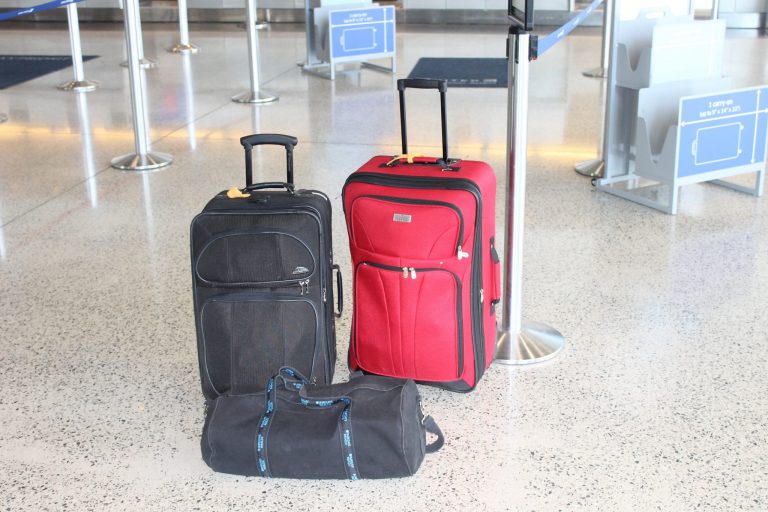
Beating the 7kg LCC Carry-On Limit: Minimalist Packing Techniques
AuthorMIRUTOBE editors
Table of Contents6 items
Jetstar Japan, Peach, ZIPAIR and Spring Japan all cap cabin baggage at 7kg in total across a maximum of two pieces, personal item included. None of them treats the small bag as a separate allowance the way the full-service carriers do.
Whatever you buy in the duty-free shops after security counts inside the same 7kg. If the excess is found at the gate, you pay to check the bag there: JPY 5,500 on a Jetstar domestic flight, JPY 7,000 for Spring Japan’s 20kg allowance.
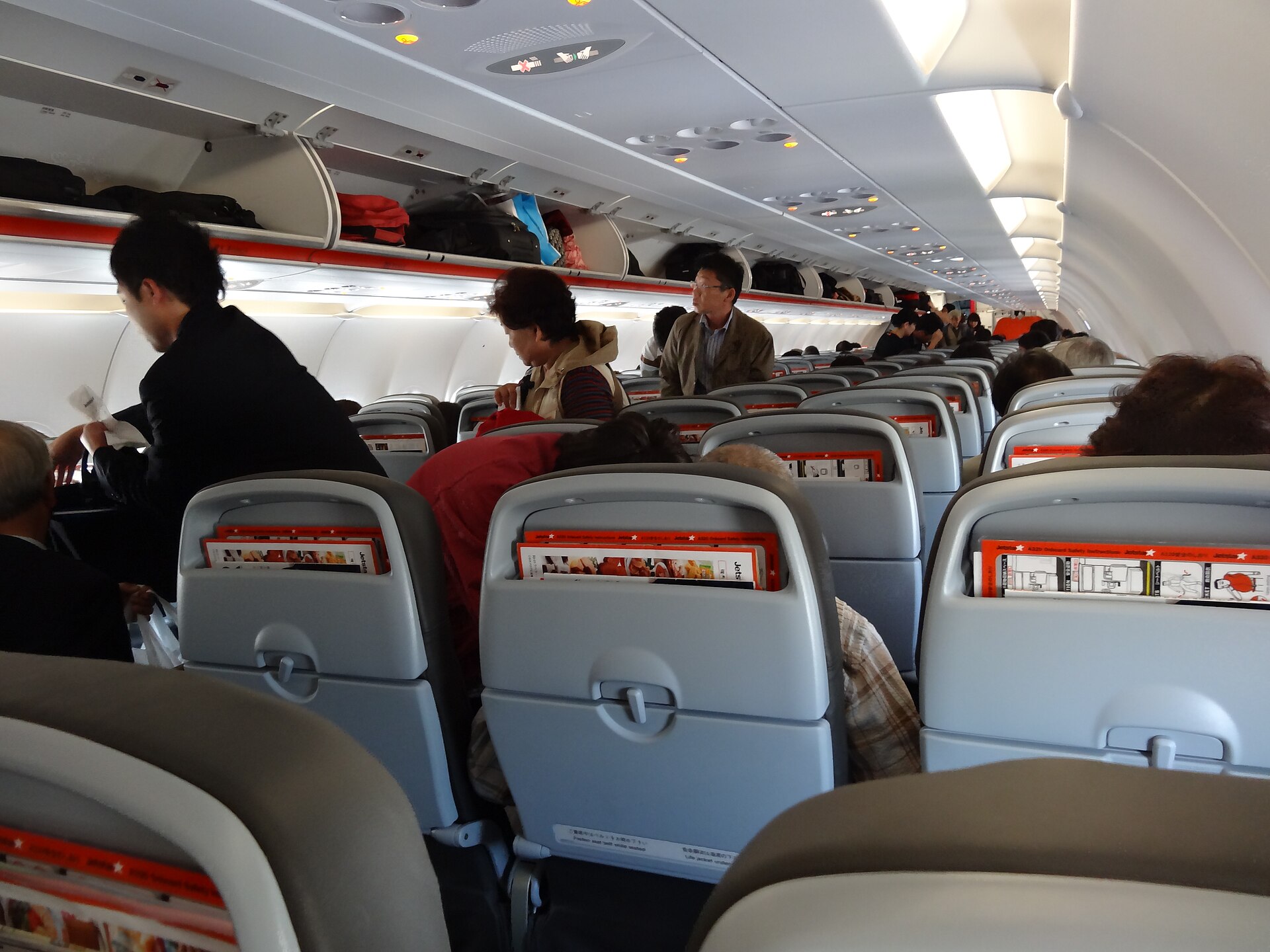
Check first: which allowance applies to your flight
- You are flying Jetstar Japan (GK), Peach, ZIPAIR or Spring Japan
- The bag you own fits that airline’s dimensions
- You are inside two pieces, counting the personal item
- You have weighed the empty bag and worked out what is left for the contents
- You have left room in the 7kg for whatever you buy in duty free
The fourth line is where most people come unstuck. The 7kg is the total, not the contents. Choose a hard case that weighs 3kg empty and you have 4kg to pack. If the plan is to travel cabin-only, the arithmetic starts with buying a bag that weighs something with a 1 in front of it.
Five steps to getting under 7kg
Step 5 is where the deadline bites. ZIPAIR’s cabin baggage upgrade is JPY 2,000 one way per person Narita to Seoul, JPY 3,000 to Taipei, Bangkok, Singapore and Kuala Lumpur, JPY 4,000 to Honolulu and JPY 5,000 to North American cities. Finish packing the night before and realise then, and there is nothing left to buy.
Jetstar’s Plus 7kg and Mini fare add weight and nothing else: the piece count and the dimensions stay where they were. You will still be repacking 14kg into two bags that each fit the frame.
The full picture: four allowances, and one full-service carrier for contrast
Only the weight is standardised. How the size is defined is not. Jetstar has no linear-total rule; Peach does not publish limits for individual sides; Spring Japan imposes both. A bag that comes in under 115cm linear but is 24cm deep is outside Spring Japan’s rule while satisfying Peach’s.
ZIPAIR is the odd one out for giving the two pieces different frames: 55×40×25cm for the first and 35×45×25cm for the second. The second is taller and narrower, which makes a pair of matching rucksacks the wrong combination to turn up with.
Where people trip up
Duty free is inside the 7kg, and weighing it afterwards is too late
Peach’s cabin baggage rule says in so many words that it includes items bought in the duty-free shops after the security checkpoint. Spring Japan likewise counts goods purchased after check-in inside the allowance. Treat passing security as the end of the weighing and you meet the problem again at the gate.
Some things genuinely sit outside the allowance. Jetstar states that mobility aids are not counted in the cabin baggage allowance and are weighed separately. Spring Japan puts laptops and tablets outside the 7kg, although it limits how many.
What does not exist, on the other hand, is a rule excluding a coat. Nothing on the Jetstar, Peach or Spring Japan sites takes outerwear out of the weight, which is exactly the contrast with Solaseed Air, where one coat and one umbrella are written out of it. Wearing a jacket removes its weight from the bag because you are carrying it; moving small items into its pockets has no basis in any published rule. Building a 7kg packing list that depends on that trick is a plan I would not make.
Paying at the gate costs more than double the online price
Spring Japan’s 20kg domestic allowance is JPY 3,000 on the official site, JPY 6,000 at the airport counter and JPY 7,000 at the gate, for travel up to 20 December 2026. That is 2.3 times the advance price. Jetstar domestic is JPY 4,600 at the counter for up to 15kg and JPY 5,500 at the gate, with JPY 1,000 per kilogram beyond 15kg. International is JPY 6,500 at the counter, JPY 8,500 at the gate, and JPY 2,000 per excess kilogram.
Whether you get weighed is not left to chance. Peach notes that staff may physically check the size, number and weight of cabin baggage. ZIPAIR keeps baggage scales at its airports, with a few exceptions, for passengers who did not weigh anything at home.
Where the excess is not your doing, though, you do not pay. Jetstar’s conditions of carriage, article 11.2, provide that where the airline cannot accommodate the cabin allowance and moves it to the hold, no additional charge is made to the passenger. Turn up to a full flight, find the lockers already taken and have the bag taken from you at the door, and that is free.
Power banks: two units since 24 April 2026, and no charging in the air
The rules Japan’s Ministry of Land, Infrastructure, Transport and Tourism published on 14 April 2026 took effect on 24 April, following an emergency revision of the ICAO international standard that was adopted on 27 March and applied the same day. Three things were added: a cabin limit of 160Wh or less and no more than two units, no charging a power bank in flight, and no charging another device from a power bank in flight.
The existing rules stand alongside them. Power banks are banned from checked baggage and must travel in the cabin. The watt-hour rating stops at 160Wh. Terminals are protected individually, with insulating tape or otherwise. And the bank stays out of the overhead locker, in the seat pocket or somewhere else within reach.
Spare cells taken out of a device — a camera battery, say — are counted separately. At 100Wh or less there is no limit on the number. Above 100Wh up to 160Wh, you may carry two if your power banks are both 100Wh or less, none if both power banks are over 100Wh, and one if you have one of each.
What if you reach the airport still over 7kg
All four airlines deal with it the same way: excess found at the gate is checked into the hold. The charge is per piece rather than per kilogram over, and the later you pay, the more it costs. That much is common ground.
The pricing is not. Peach’s first domestic bag is JPY 2,000 on the web against JPY 3,100 at the airport counter. ZIPAIR charges from the first bag: JPY 4,000 Narita to Seoul, JPY 6,000 to Taipei, JPY 7,500 to Honolulu and JPY 11,000 to North American cities. Pay through the contact centre or at the counter and an administration fee of JPY 1,000 goes on top, and the ZIPAIR counter takes no cash — credit, debit or prepaid card, or a UnionPay QR code.
Add checked baggage to the total and there are sectors where the budget carrier ends up above the full-service airline. A trip planned cabin-only that turns into a checked bag has changed the basis of the comparison. A table of fares alone stops being useful at that point.
Some of this is decided at the booking screen rather than at the scales, because on one airline the fare type changes the cabin allowance. What is settled when you book is set out in how budget fare types and fees compare. For the battery details, the power bank capacity rules go further than this page does.
Common questions: souvenirs, wearing it, and laptops
Do souvenirs bought on the trip count towards the 7kg?
They do. Peach states that items bought in duty free are included, and Spring Japan counts goods purchased after check-in. If the return leg is going to be heavy, the choice is between buying checked baggage for that leg and posting the parcel. If you buy the allowance, buy it on the web: Spring Japan’s 20kg domestic allowance is JPY 3,000 on the official site against JPY 6,000 at the airport counter.
Does wearing the heavy clothes make the bag lighter?
What is on your body is not weighed, so in that narrow sense yes. But no rule on the Jetstar, Peach or Spring Japan sites excludes a coat or a jacket from the weight. Solaseed Air does have an explicit exclusion for one coat and one umbrella, which shows that the answer varies by airline rather than being general. Moving small items into pockets has no published basis anywhere.
Does a laptop count inside the 7kg?
Spring Japan puts laptops and tablets outside the 7kg, subject to a limit on quantity. Nothing equivalent appears on the Jetstar or Peach sites, so on those two, weigh it as if it counts. A 13-inch laptop with its charger is around 1.5kg, so which side of the line it falls on moves a fifth of your allowance.
Seven kilograms is easiest to live inside on trips of two or three days where the hotel has a washing machine. On a short-hop itinerary like a three-day weekend in Taipei, Jiufen and Shifen, you can plan on recycling clothes rather than carrying them.
- Jetstar Japan — carry-on baggage (pieces, weight, dimensions)↗Checked on 2026-09-14
- Jetstar — excess baggage charges at the airport (counter and gate)↗Checked on 2026-09-14
- Peach — carry-on baggage (duty-free purchases, physical checks)↗Checked on 2026-09-14
- ZIPAIR — baggage (two size frames, upgrade, checked charges)↗Checked on 2026-09-14
- Spring Japan — cabin baggage (storage by seat row)↗Checked on 2026-09-14
- Spring Japan — checked baggage (website, counter and gate prices)↗Checked on 2026-09-14
- Ministry of Land, Infrastructure, Transport and Tourism — new power bank rules, 14 April 2026↗Checked on 2026-09-14
- Solaseed Air — cabin baggage (contrast: 10kg, coat and umbrella excluded)↗Checked on 2026-09-14
Source: the reference block above / Photo: Kathryn Greenhill, CC BY-SA 2.0 (Wikimedia Commons) / Checked on 2026-09-14 / Featured image: Billy Hathorn, CC BY 3.0 (Wikimedia Commons)
Other sales ending soon




 4 days leftuntil Oct 24Air Busan Takamatsu-Busan Coupon: Up to 9,000 Yen Off Until October 24
 5 days leftuntil Oct 25JAL Hong Kong Campaign: Tokyo–Hong Kong Round Trip from 75,800 Yen (until 25 Oct)
 11 days leftuntil Oct 31Jin Air Kobe–Seoul: 5,000 yen off a round trip with code KTOUKB1, until 31 October
 11 days leftuntil Oct 31Jin Air to Busan: 4,000 yen off a round trip with code KTOPUS, first 300 only