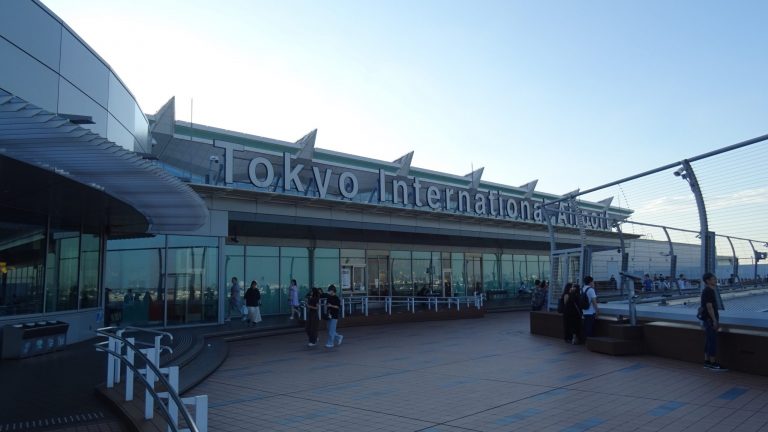
Narita vs Haneda Airport: Which to Choose for Tokyo (2026)
AuthorMIRUTOBE editors
Table of Contents6 items
- Check first: settle your arrival time and your side of the city
- The full picture: fares and journey times into central Tokyo
- What if you land late, or leave at dawn
- Where people trip up
- How much cheaper the airfare has to be before Narita wins
- Common questions: curfews, IC fares and which airport for a short stay
The gap between the two Tokyo airports shows up in operating hours before it shows up in distance. Narita has banned movements from 23:00 to 06:00 since it opened. Haneda never closes, and its train to the city costs JPY 330 against Narita’s cheapest rail fare of JPY 1,200.
All the fares below are Japanese domestic prices in yen, taken from the operators’ own tables. Choosing Narita only pays when the difference in the airfare beats the difference in getting into town — and that difference is larger than most people assume.
Check first: settle your arrival time and your side of the city
- You know whether you land after 22:00
- You have decided whether you sleep on the east side of the Yamanote loop (Ueno, Tokyo) or the west (Shinjuku, Shibuya)
- You have decided whether you carry the large bag yourself or send it to the hotel
- You have looked up how much cheaper the Narita fare is, per person
- You have checked whether you arrive at and depart from the same terminal
The second line does most of the work. From Narita the Skyliner runs to Nippori and Keisei-Ueno while the Narita Express runs to Tokyo, Shinagawa, Shibuya and Shinjuku — the same airport, a different train, and JPY 750 between them depending on where you get off. At Haneda the Keikyu line serves Shinagawa and the Toei Asakusa line, the monorail serves Hamamatsucho, and the gap there is JPY 190. Fix the hotel first and the train picks itself.
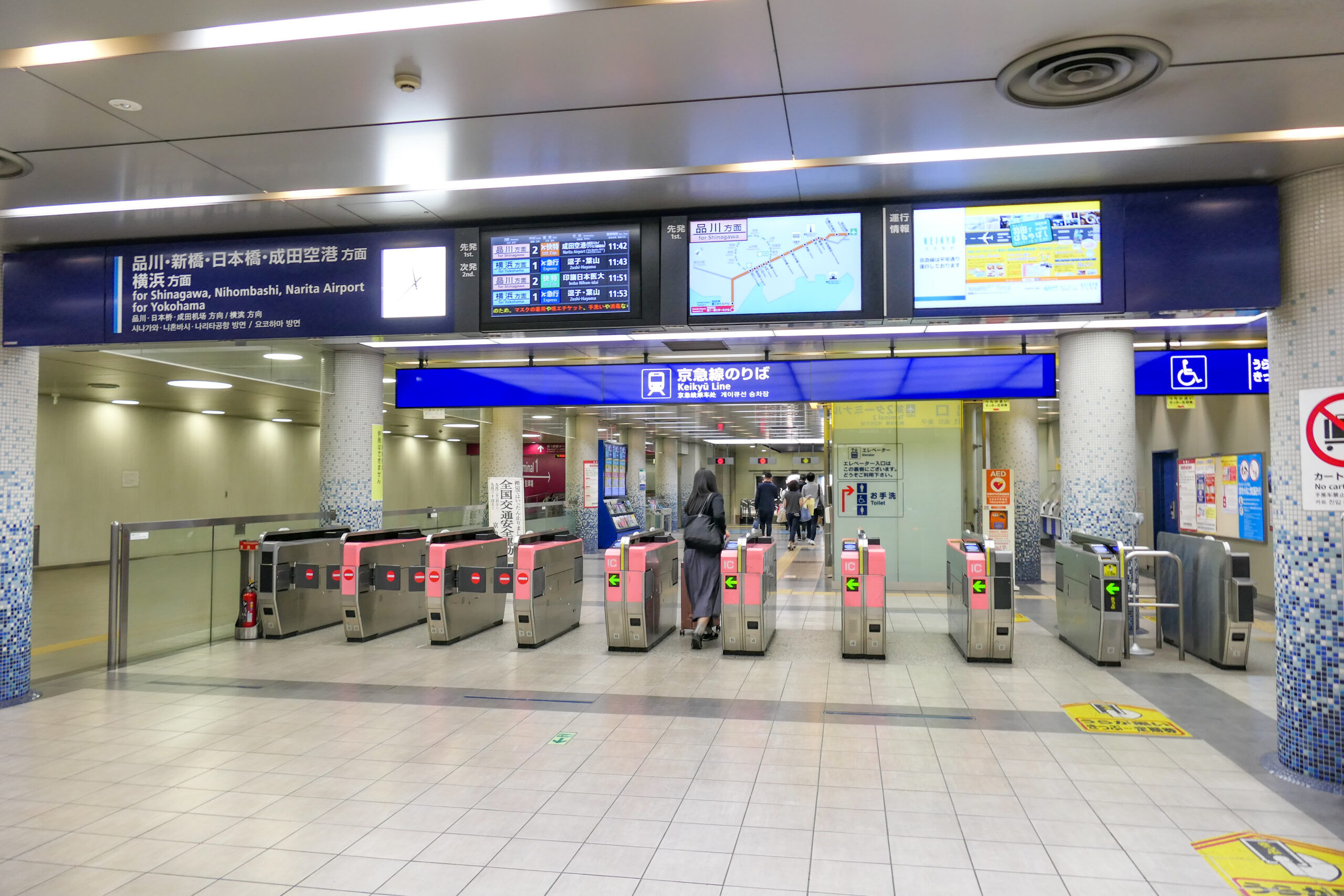
The full picture: fares and journey times into central Tokyo
From each operator’s published fare tables and timetables. JR East raised ordinary fares by an average of 7.8 per cent on 14 March 2026 (express charges unchanged); the Tokyo Monorail revised its fares on 16 March 2024 and Airport Bus TYO-NRT on 1 August 2024. Checked on 2026-09-14.
Cheapest against cheapest, Haneda’s JPY 330 on the Keikyu faces Narita’s JPY 1,200 on the Access Express. The gap is JPY 870 one way, which is JPY 1,740 for two people and JPY 3,480 for four. Fastest against fastest, Haneda reaches Shinagawa in 14 minutes and Narita reaches Nippori in 36 on the Skyliner — but the Skyliner costs JPY 2,580, so the speed is priced at 7.8 times Haneda’s.
The quietly strong option at Narita is the JR Rapid. It runs straight through to Tokyo Station for JPY 1,410 in 80 minutes, JPY 1,170 below the Skyliner, and that saving is about what lunch costs. Travelling light with nothing booked for the afternoon, the Rapid is enough. Land at dusk with somewhere to be, and the 44 minutes between 36 and 80 turn into 44 minutes of daylight.
What if you land late, or leave at dawn
The reason Narita has so few late arrivals in the first place is the curfew. Movements between 23:00 and 06:00 have been barred in principle since the airport opened, and only since 27 October 2019 has Runway A been extended to midnight. Runway B carries a cap of ten movements between 22:00 and 23:00. Haneda runs 24 hours with up to 40,000 slots a year in the 23:00 to 06:00 window. Whether a late-arriving flight exists for you to book at all comes out of that difference.
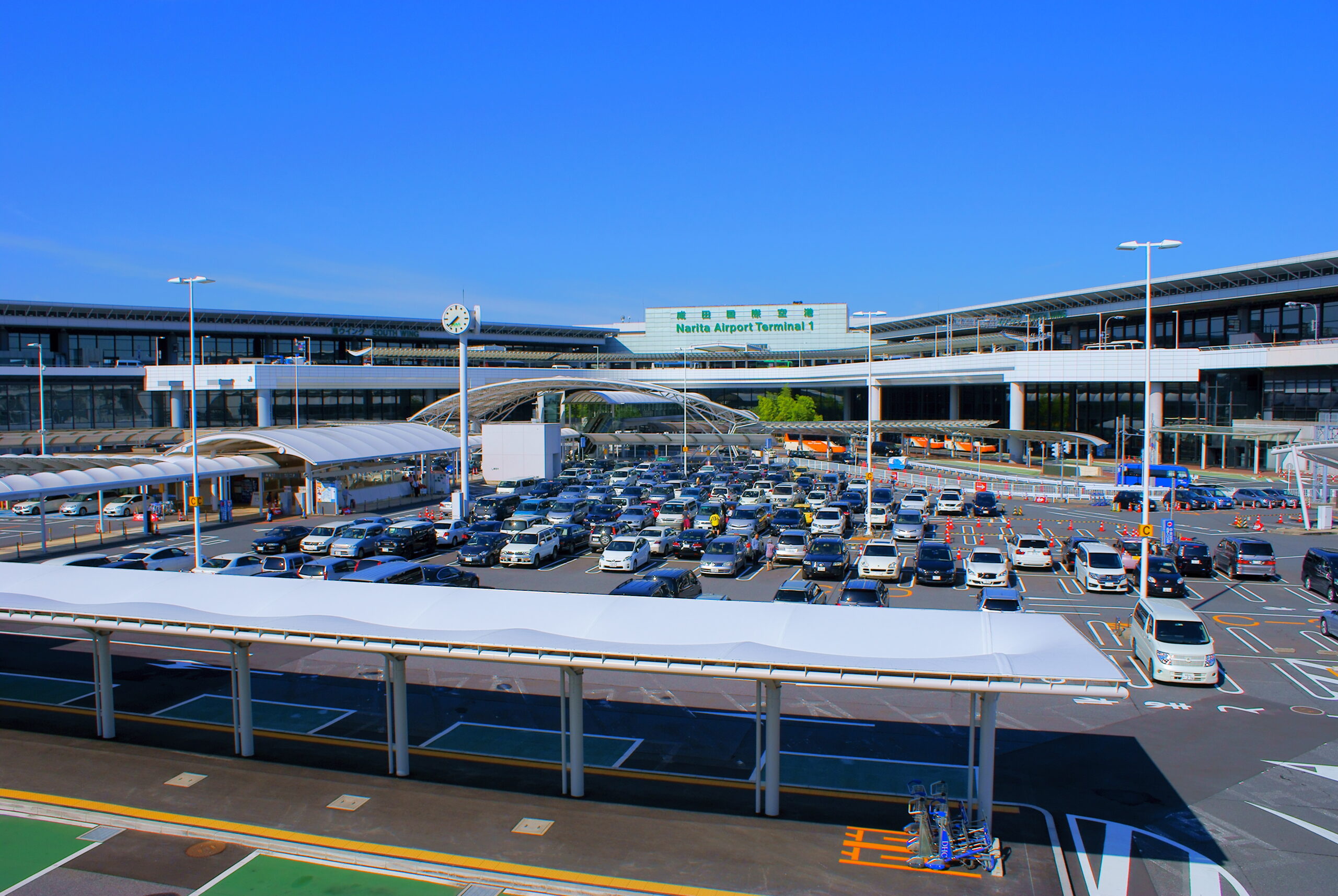
Narita expects to bring an extended Runway B and a new Runway C into use by the end of the 2028 financial year, which widens the airport’s operating day to 05:00–24:30. Until then the arithmetic above holds, and an itinerary built around a midnight landing — the kind described in our two-day plan that starts with a late budget flight — only works on the Haneda side.
Where people trip up
Haneda’s flat taxi fares do not cover anything called “central Tokyo”
The flat fares from Haneda are set ward by ward and were revised on 20 April 2026: JPY 7,600 to Chiyoda, JPY 8,500 to Shibuya, JPY 9,000 to Shinjuku, JPY 8,900 to Setagaya, JPY 11,200 to Toshima. A journey falling entirely between 22:00 and 05:00 carries its own late-night rate — JPY 9,000 to Chiyoda, JPY 10,700 to Shinjuku. Expressway tolls are extra in every case.
The trap is the coverage, not the price. There is no such category as “the central three wards” here, and Chuo, Minato, Shinagawa, Ota, Meguro and Koto do not appear on the flat-fare table at all. Those wards are on the meter. Book a hotel in Ginza or Roppongi, budget “just under JPY 10,000, fixed”, and the figure you are quoted will not be the figure you pay.
Moving between terminals by train is not free
At Haneda, the free way between Terminals 1 and 2 and Terminal 3 is the shuttle bus — every four minutes from 05:00 to 20:00, every eight from 20:00 to midnight. Take the Keikyu instead and it is JPY 150; the monorail is JPY 230. Those become free only if you have been given a transfer coupon, which is issued against a passport and a ticket. Narita’s shuttle buses are free as well, taking about 14 minutes between Terminals 1 and 3 and about three between Terminals 3 and 2; Terminals 2 and 3 are also about 13 minutes apart on foot.
Luggage delivery carries a JPY 660 airport handling fee on top
Sending a bag from the airport to your hotel adds an airport fee of JPY 660 to the ordinary courier rate. From Narita or Haneda to the 23 wards of Tokyo, one piece one way, the rate is JPY 1,600 at size 60, JPY 1,890 at 80, JPY 2,190 at 100 and JPY 2,700 at 120. A suitcase usually lands between sizes 100 and 140, so the real cost is JPY 2,190 to JPY 3,290. Counters sit in the arrivals lobby of Narita Terminal 1 (north and south wings), Terminal 2 and Terminal 3, and of Haneda Terminals 1, 2 and 3. Send in the morning and it arrives the next day, with a delivery window you can choose. The cut-off time differs by counter, and the operator says so rather than publishing one common time.
How much cheaper the airfare has to be before Narita wins
The transport gap is JPY 870 one way comparing the cheapest options, JPY 890 comparing the JR Rapid with the monorail, and JPY 2,060 comparing the premium trains (Skyliner JPY 2,580 against monorail JPY 520). Multiply by return journeys and headcount: two people returning are JPY 3,480 apart on the cheap comparison and JPY 8,240 apart on the premium one. If the Narita ticket saves you JPY 5,000 a head, it still wins. If it saves JPY 1,000, Haneda is cheaper in total.
Time belongs in the same sum. Haneda to Shinagawa is 14 minutes; Narita to Nippori is 36 by Skyliner and Narita to Tokyo is 80 by Rapid, which is over two hours across a return trip. On a two-night stay that is half a day of sightseeing. Stay a week and the same two hours thin out, and the airfare gap starts winning on its own.
My own rule is to look at Narita first if the hotel is on the Ueno, Asakusa or Tokyo Station side, and Haneda first if it is on the Shinjuku or Shibuya side — because Narita to Shinjuku costs JPY 3,330 on the Narita Express or JPY 3,600 on the limousine bus, and the Skyliner’s value never reaches you there. Fold in what a budget carrier charges for fare type and bags, as set out in our guide to booking low-cost flights, and a cheap-looking Narita departure can lose on the total.
Booking the flight home, look at the airport’s own deadlines too. Checked baggage on Haneda domestic flights now closes 30 minutes before departure, which moves the hour you have to be at the airport forward. At Narita, Terminals 2 and 3 are 13 minutes apart on foot and Terminals 1 and 3 are 14 minutes apart by bus, so arriving at the wrong one puts that deadline out of reach. On any day when your inbound and outbound terminals differ, give the connection an extra half hour.
Common questions: curfews, IC fares and which airport for a short stay
Can I land at Narita at two in the morning?
No. Take-offs and landings are barred in principle between 23:00 and 06:00, with Runway A extended to midnight since 27 October 2019 and Runway B capped at ten movements between 22:00 and 23:00. Haneda has no such curfew. That is why a schedule with a 01:00 arrival is a Haneda schedule.
Do I save anything by touching an IC card instead of buying a ticket?
Only a few yen. Keikyu to Shinagawa is JPY 330 as a ticket and JPY 327 on IC; the monorail is JPY 520 against JPY 519; the JR Rapid to Tokyo is JPY 1,410 against JPY 1,408. The reason to tap is that you skip the ticket machine, not the saving. The Skyliner and the Narita Express need a reserved seat regardless.
Two nights in Tokyo — which airport?
Haneda, unless the Narita fare is at least a few thousand yen cheaper per person. On a short stay the return journey eats a disproportionate share of your waking hours, and the JPY 870 to JPY 2,060 one-way gap runs in the same direction. For a same-day return fare of the kind covered in our piece on bullet return tickets, the airport is decided for you by whichever route the fare appears on.
- Keisei Electric Railway, Skyliner tickets (fare and Liner charge) ↗Checked on 2026-09-14
- JR East, Narita Express tickets ↗Checked on 2026-09-14
- Keikyu, fare table for Haneda Airport Terminal 3 station ↗Checked on 2026-09-14
- Tokyo Monorail, fare table (Haneda Airport Terminal 3 station) ↗Checked on 2026-09-14
- Airport Bus TYO-NRT, how it works (fares) ↗Checked on 2026-09-14
- Tokyo Hire-Taxi Association, Haneda flat fares (revised 20 April 2026) ↗Checked on 2026-09-14
- Narita International Airport, curfew and operating hours ↗Checked on 2026-09-14
- Yamato Transport, airport luggage counters and the airport handling fee ↗Checked on 2026-09-14
Source: the reference block above / Photos: MaedaAkihiko, CC BY-SA 4.0; 名無し野電車区, CC BY-SA 3.0; BWard 1997, CC BY 4.0 (all Wikimedia Commons) / Checked on 2026-09-14
Other sales ending soon




 4 days leftuntil Oct 24Air Busan Takamatsu-Busan Coupon: Up to 9,000 Yen Off Until October 24
 5 days leftuntil Oct 25JAL Hong Kong Campaign: Tokyo–Hong Kong Round Trip from 75,800 Yen (until 25 Oct)
 11 days leftuntil Oct 31Jin Air Kobe–Seoul: 5,000 yen off a round trip with code KTOUKB1, until 31 October
 11 days leftuntil Oct 31Jin Air to Busan: 4,000 yen off a round trip with code KTOPUS, first 300 only