Kamakura One-Day Model Course From Tokyo: Eight Standard Spots by the Enoden
AuthorMIRUTOBE editors
Table of Contents6 items
Into Kamakura from Tokyo Station without changing, then six places in one day: Tsurugaoka Hachimangu, Hokokuji, Hasedera, the Great Buddha, Goryo Shrine and Enoshima. The axis is an Enoden day ticket, which does not pay for itself in three rides.
Itinerary
DAY 1Come in from the east and leave westwards on the Enoden
Why this order: from Kamakura Station the day runs clockwise — north to Tsurugaoka Hachimangu, east to Hokokuji, south-west to Hase, then out along the Enoden to Enoshima. Nothing is retraced, so there is almost nowhere to get lost.
Kamakura’s sights radiate from the station: Tsurugaoka Hachimangu to the north, Hokokuji to the east, Hase and the Great Buddha to the south-west, and Enoshima twenty minutes out on the Enoden. Going back and forth between those four directions spends half the day on the move, which is why this runs as a single clockwise loop.
Morning: return tickets are no longer sold
Tokyo Station to Kamakura is direct on the JR Yokosuka Line, JPY 1,040 one way, or JPY 1,034 by IC card. That is the figure after the fare revision of 14 March 2026, which places Tokyo to Kamakura in the trunk-line band at just over 51 route kilometres.
The same revision ended the sale of return tickets. Buying a return as a product no longer exists, so you pay a single each way: JPY 4,160 for two people going and coming back.
Once you are at Kamakura Station, decide what you are travelling on for the day. The Enoden window offers two passes, and which you take changes where you can go.
Add up the ordinary fares for the sections this itinerary actually uses and you get JPY 200 from Kamakura to Hase, JPY 260 from Hase to Enoshima and JPY 260 from Enoshima back to Kamakura: JPY 720. The Noriorikun is JPY 800, so it falls JPY 80 short. Three rides and nothing else means paying per ride is cheaper.
It turns over the moment you get off once more. Enoden fares come in only four steps — JPY 200, 220, 260 and 310 — starting at JPY 200. Break the journey at Kamakurakokomae and Hase to there is JPY 220, then JPY 200 on to Enoshima, for JPY 880 in total. Anyone stopping off to take photographs recovers the price there. Whether to buy it comes down to one question: do you intend to get off along the way.
The Noriorikun exists as a paper ticket, as a digital version in the EMot app, and as a Pass Case using contactless credit card payment. It carries perks at 54 businesses along the line, one use per person at each, and is valid on the day of issue alone. To push the JR fare down further, check the periods and the conditions first in the guide to the Seishun 18 ticket.
The Enoden links Fujisawa and Kamakura, and riding the whole line takes 37 minutes for JPY 310. It is slow for the number of stations because between Koshigoe and Enoshima it runs on the road itself, and at some stations single-track services wait to pass each other. Kamakura to Hase is 4 minutes and Hase to Enoshima 19. Since each section is short, breaking the journey does not really disturb the day.
One more thing about where to buy. The Noriorikun is sold from the machines at every Enoden station, but the Kamakura Free Kankyo Tegata only at the Enoden’s Kamakura and Hase stations, and only from 07:00 to 17:00. Arriving in Kamakura in the late afternoon and then trying to buy the Tegata means finding the window closed. If the plan runs on buses, it has to be bought as soon as you arrive.
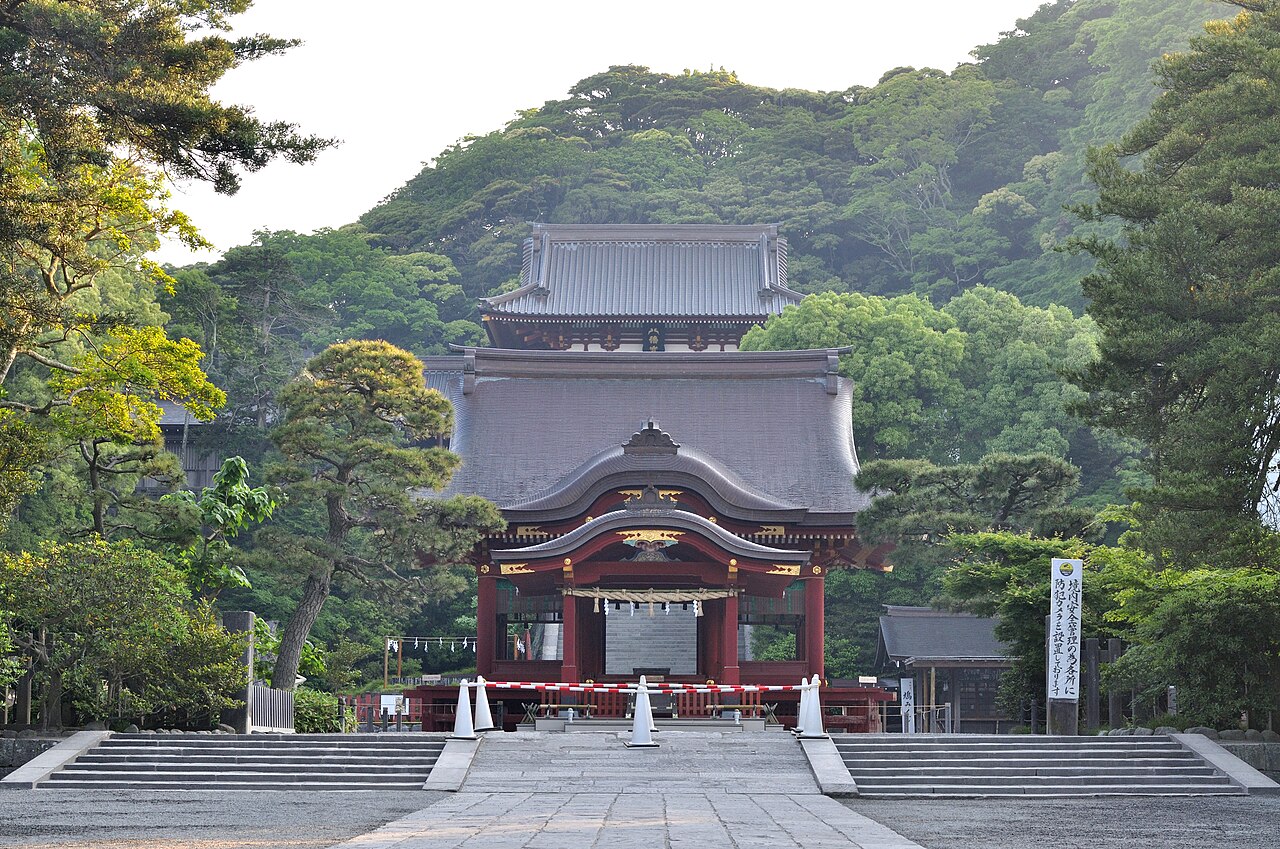
Highlights: the gates are open 06:00 to 20:00 all year and there is no charge to enter the grounds. It is ten minutes on foot from the East Exit of JR Kamakura, and walking up the raised approach, the Dankazura, gives you the most Kamakura-like view of the day first. The standard composition is from straight in front, where the dance hall in the middle of the grounds lines up with the great stairway behind it.
Practical note: since it opens at 06:00, the surest way to avoid the crowds is to be there just after the gates do. Arriving by car, the worshippers’ car park is JPY 600 for the first hour and JPY 300 for each 30 minutes after. From the Enoden’s Kamakura station it is also ten minutes, the same as from JR.
- Nearest
- 10 minutes from the East Exit of JR Kamakura
- Entry
- JPY 0
- Hours
- 6:00–20:00 all year
- Official
- Official site ↗
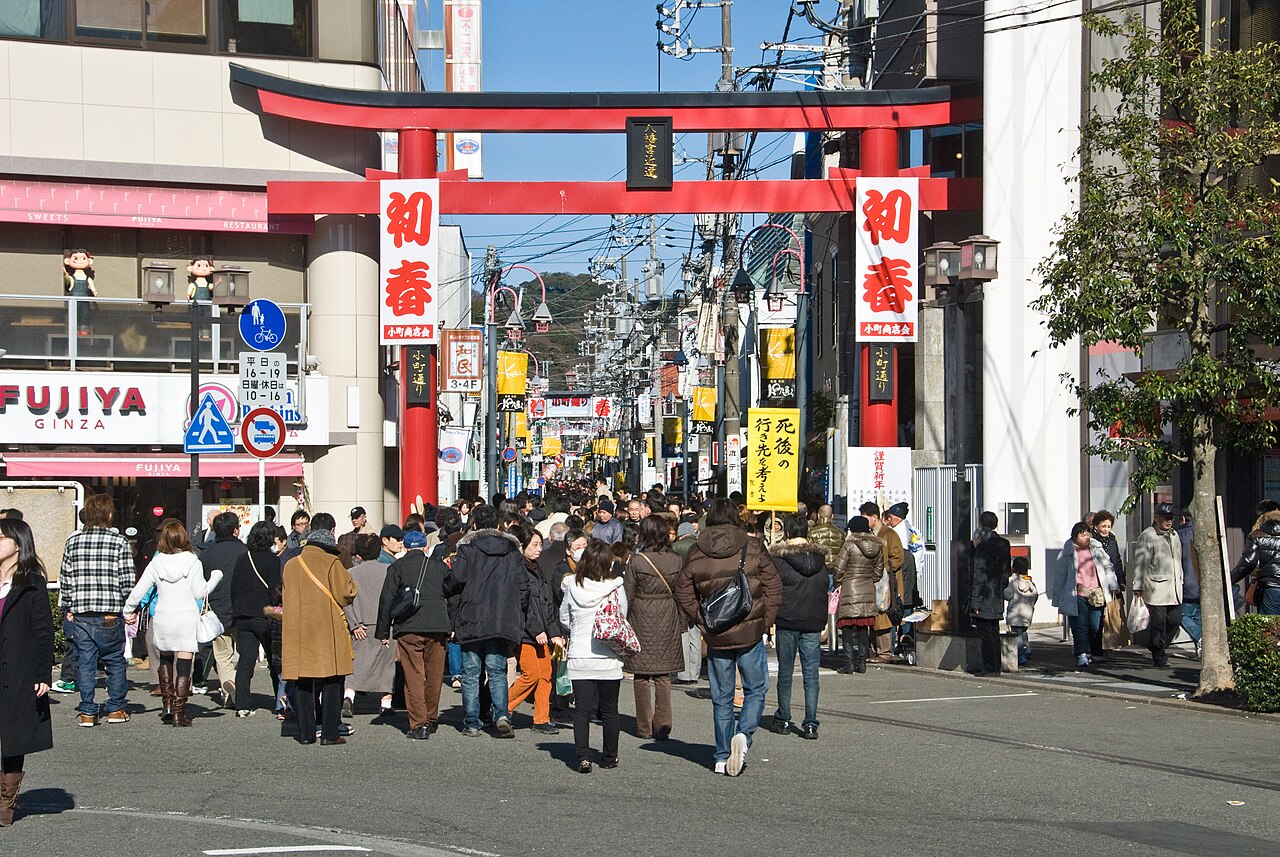
Highlights: the shopping street running from the East Exit of Kamakura Station up towards Tsurugaoka Hachimangu. The street itself is free and each shop keeps its own hours. Places to eat on your feet are packed along it, and by early afternoon people fill it from wall to wall.
Practical note: go up to the shrine along the Dankazura and save Komachi-dori for the way back, and you waste less time. In the morning the flow of people runs from the station towards the shrine, so you would be looking at shop fronts while being carried in that same direction.
- Nearest
- Immediately outside the East Exit of Kamakura Station
- Walking
- JPY 0
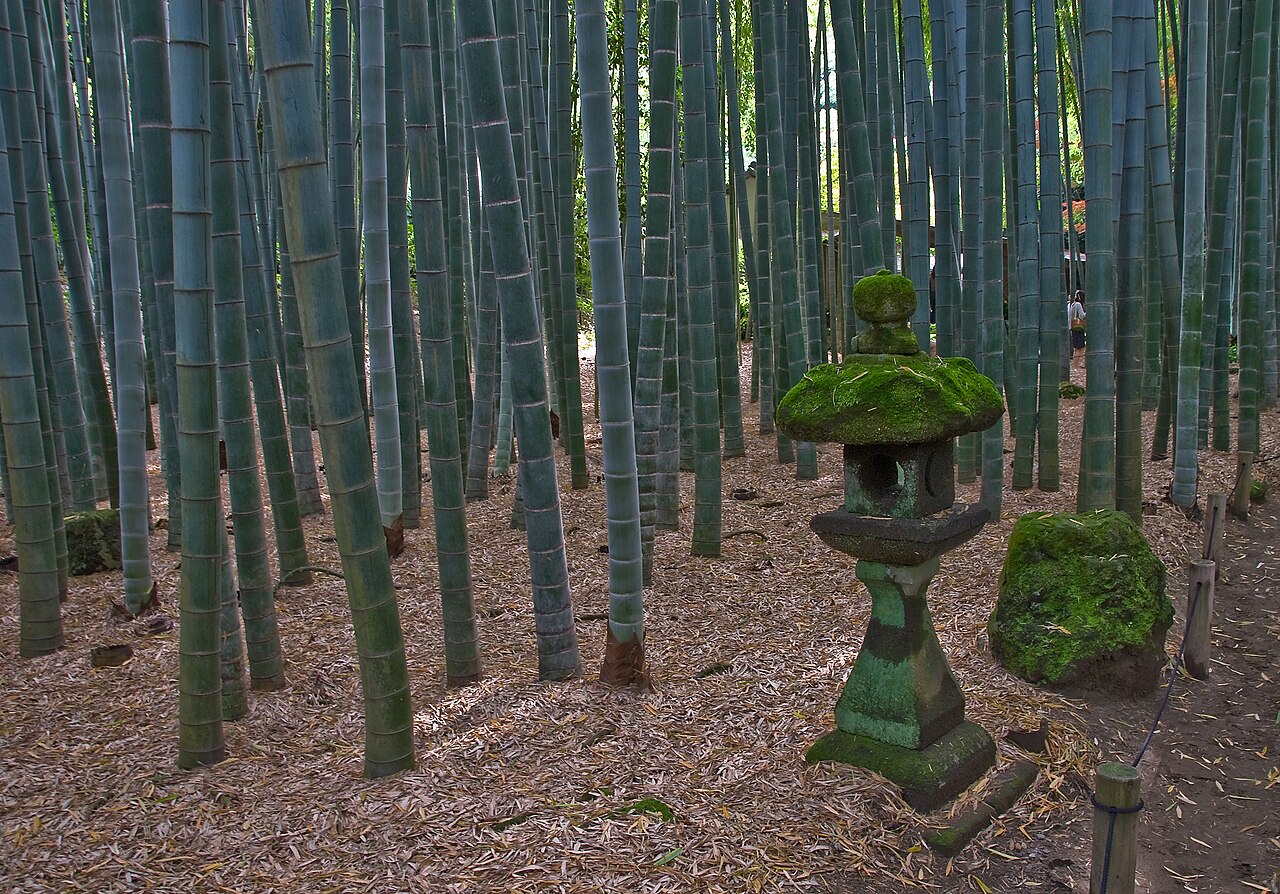
Highlights: admission is JPY 400 from high school age and JPY 200 for primary and junior high pupils, open 09:00 to 16:00. The grove behind the main hall is described by the temple as around 2,000 bamboo. One path runs through it, so a few people stopping to take photographs turns it into a queue.
Practical note: matcha is served at the Kyukoan inside the grove, JPY 600, with orders taken from 09:00 to 15:30. Admission runs to 16:00 but the tea closes half an hour earlier. It shuts from 29 December to 3 January. From bay 4 outside the East Exit of Kamakura Station, take a Keikyu bus to Jomyoji and walk three minutes; on foot along the Kanazawa-kaido it is about 30 minutes.
- Nearest
- 3 minutes from the Jomyoji bus stop; about 30 minutes on foot from Kamakura Station
- Admission
- High school and above JPY 400; primary and junior high JPY 200
- Hours
- 9:00–16:00 (matcha orders to 15:30)
- Closed
- 29 December to 3 January
- Official
- Official site ↗
Afternoon: three places cluster around Hase station
Back to Kamakura Station and out to Hase on the Enoden, four minutes. Hasedera, Kotokuin and Goryo Shrine all sit within seven minutes’ walk of that station, and those three are the afternoon.
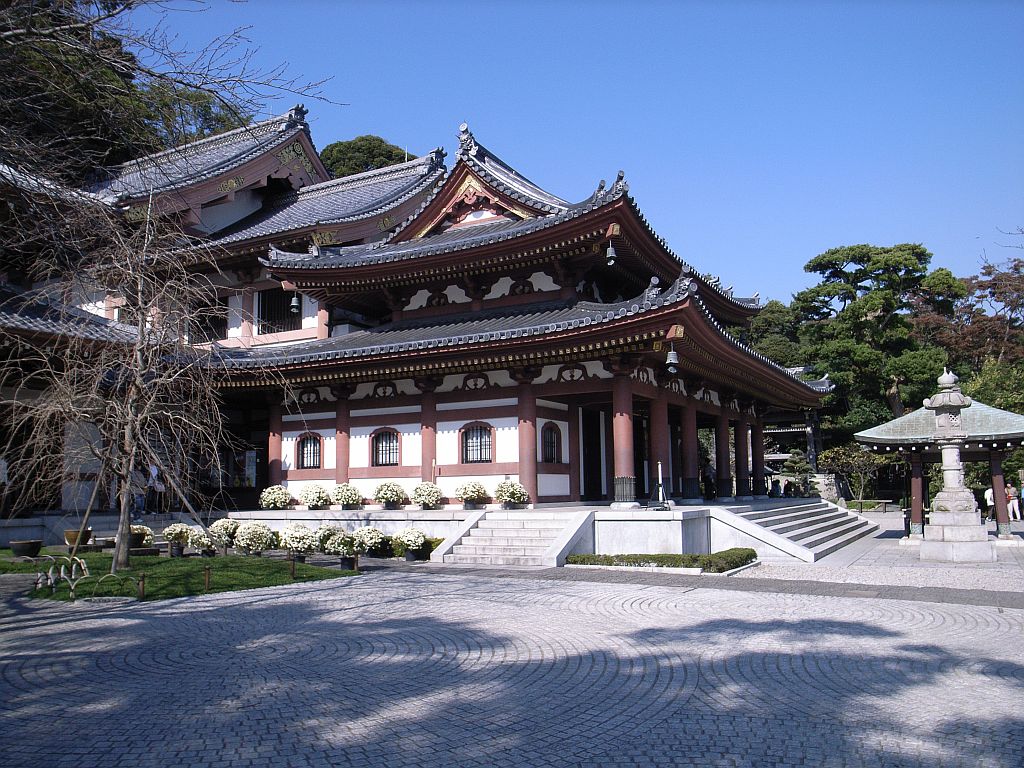
Highlights: admission is JPY 400 for adults and JPY 200 for primary pupils. The desk is open 08:00 to 16:30 with the gate closing at 17:00, extended to 08:00–17:00 with the gate at 17:30 from April to June only. The grounds split into a lower and an upper level, and from the viewing terrace you can see Yuigahama.
Practical note: entry is restricted during the hydrangea season. Hasedera runs a booking page for its hydrangea tickets and publishes how busy it is in real time. Going in June, securing a ticket in advance matters more than arriving early. Holders of a Kamakura Fukuju Techo pay JPY 200.
- Nearest
- 5 minutes on foot from Hase on the Enoden
- Admission
- Adult JPY 400; primary JPY 200
- Hours
- 8:00–16:30 (gate 17:00); April–June 8:00–17:00 (gate 17:30)
- Official
- Official site ↗
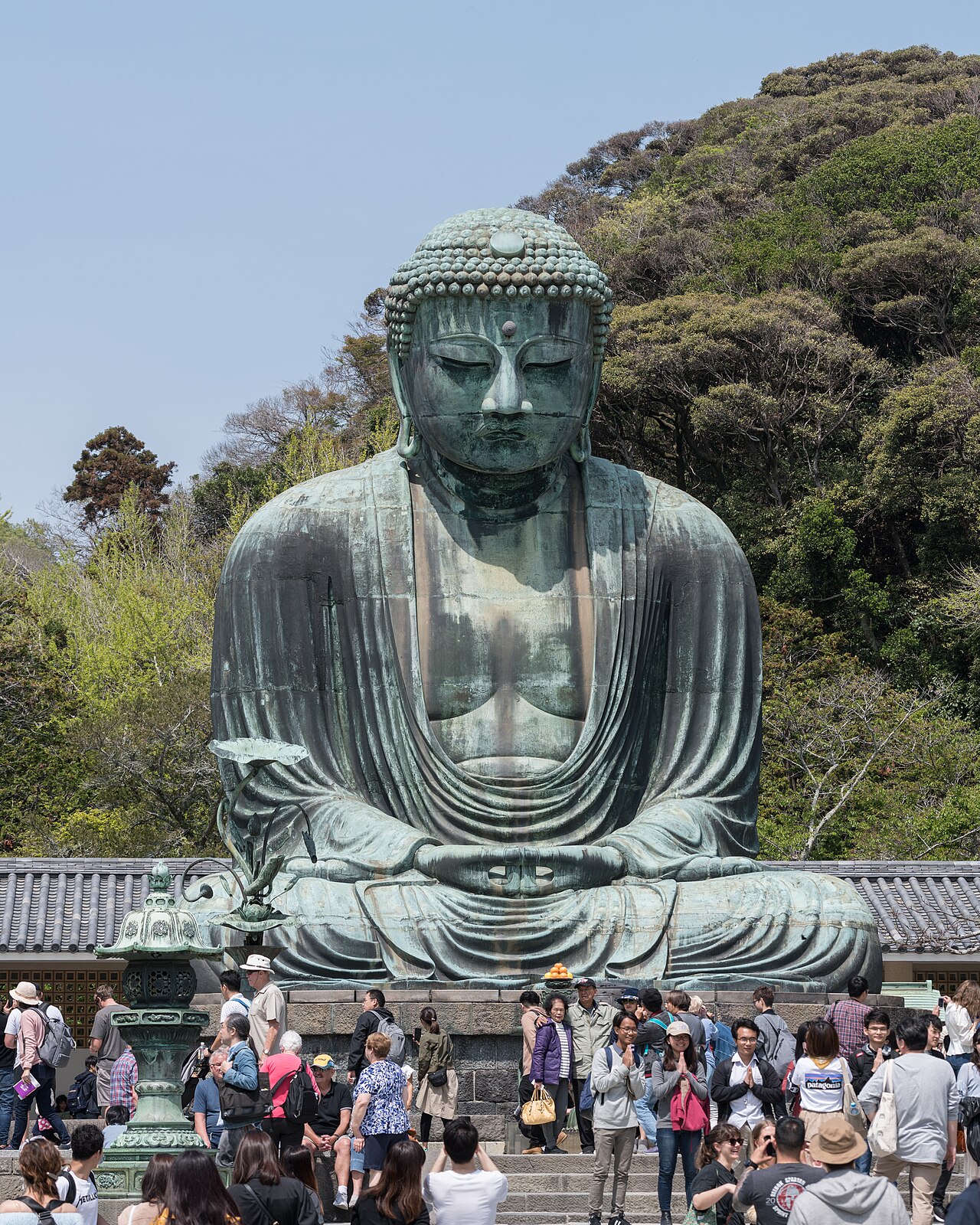
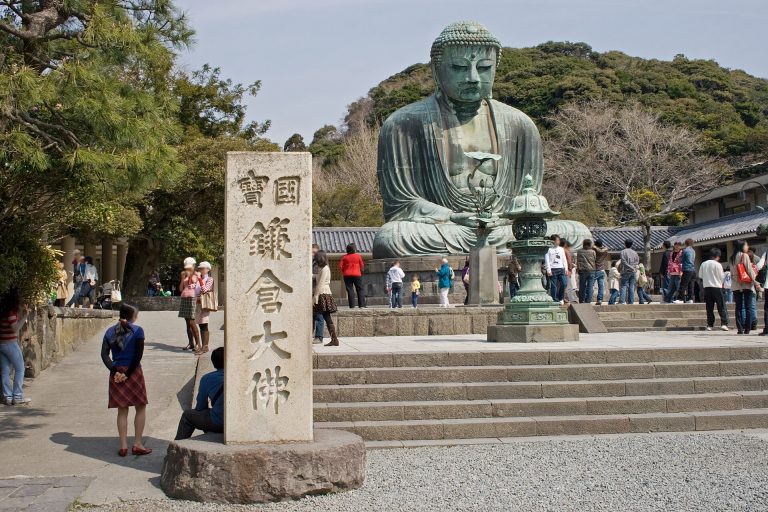
Highlights: admission is JPY 300 general, JPY 150 for primary pupils, free below school age, and nothing is booked. Hours are 08:00 to 17:30 from April to September and 08:00 to 17:00 from October to March. You can also go inside the statue for JPY 50 more, with that desk open 08:00 to 16:30 all year. The temple’s own account is that the hall was brought down by typhoons and a great tsunami, leaving the figure in the open by the end of the Muromachi period.
Practical note: entry inside the statue stops in summer. The temple gives notice that the interior traps heat from the outside air and direct sun, becoming hotter and more humid than the air outside, and that the desk closes when temperatures are high. You can have put JPY 50 in the budget and still not get in during high summer. Eating and drinking are prohibited in the grounds, and selfie sticks inside the figure, and drones, are prohibited too.
- Nearest
- 5 minutes from Hasedera; 7 minutes from Hase station
- Admission
- General JPY 300; primary JPY 150; inside the statue JPY 50
- Hours
- April–September 8:00–17:30; October–March 8:00–17:00 (inside the statue 8:00–16:30 all year)
- Official
- Official site ↗
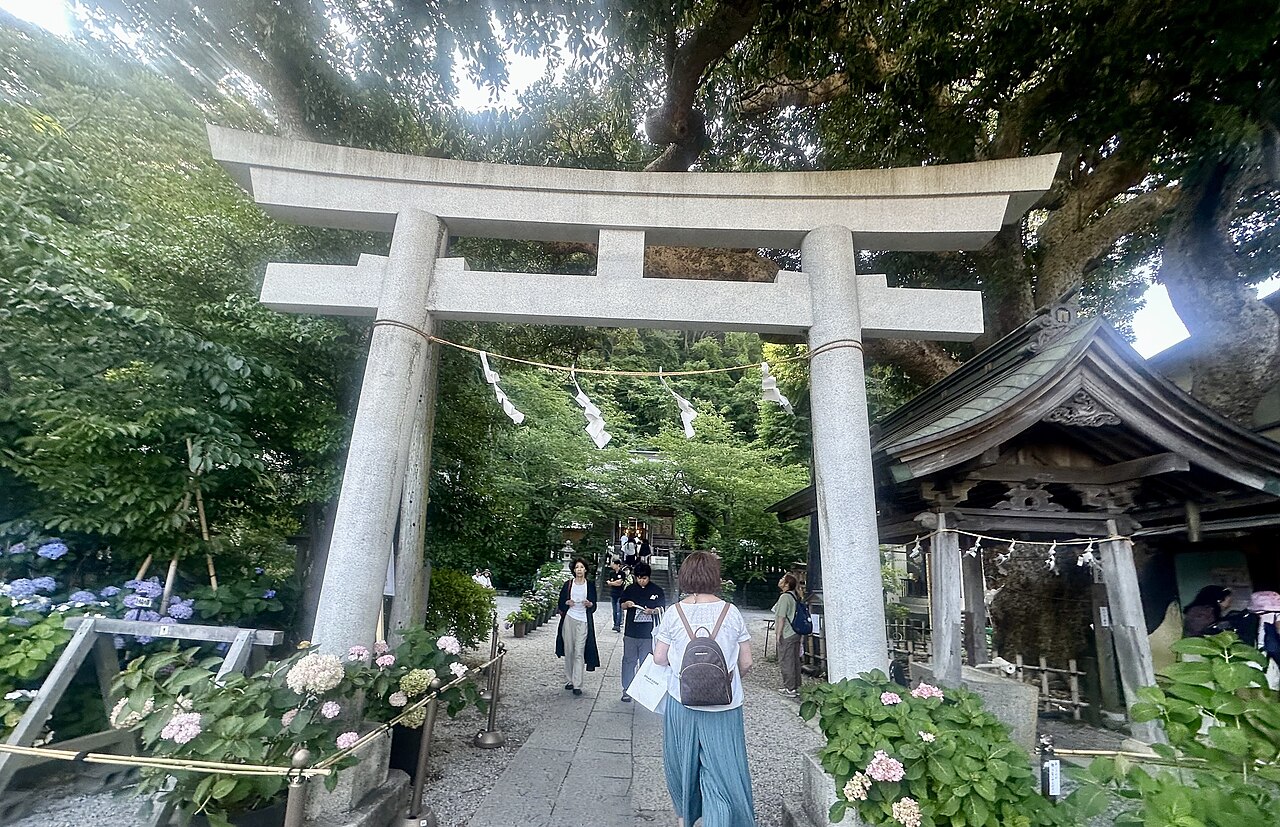
Highlights: free to visit. It is known for the view in which an Enoden train crosses directly in front of the torii, and in June the hydrangeas come into the same frame. Five minutes on foot from Hase station.
Practical note: this is the middle of a residential district. Stepping onto the track is dangerous, so photograph from outside the crossing and do it quickly. Not lingering is the whole of the etiquette here.
- Nearest
- 5 minutes on foot from Hase station
- Entry
- JPY 0
Evening: the prices on Enoshima change at 17:00
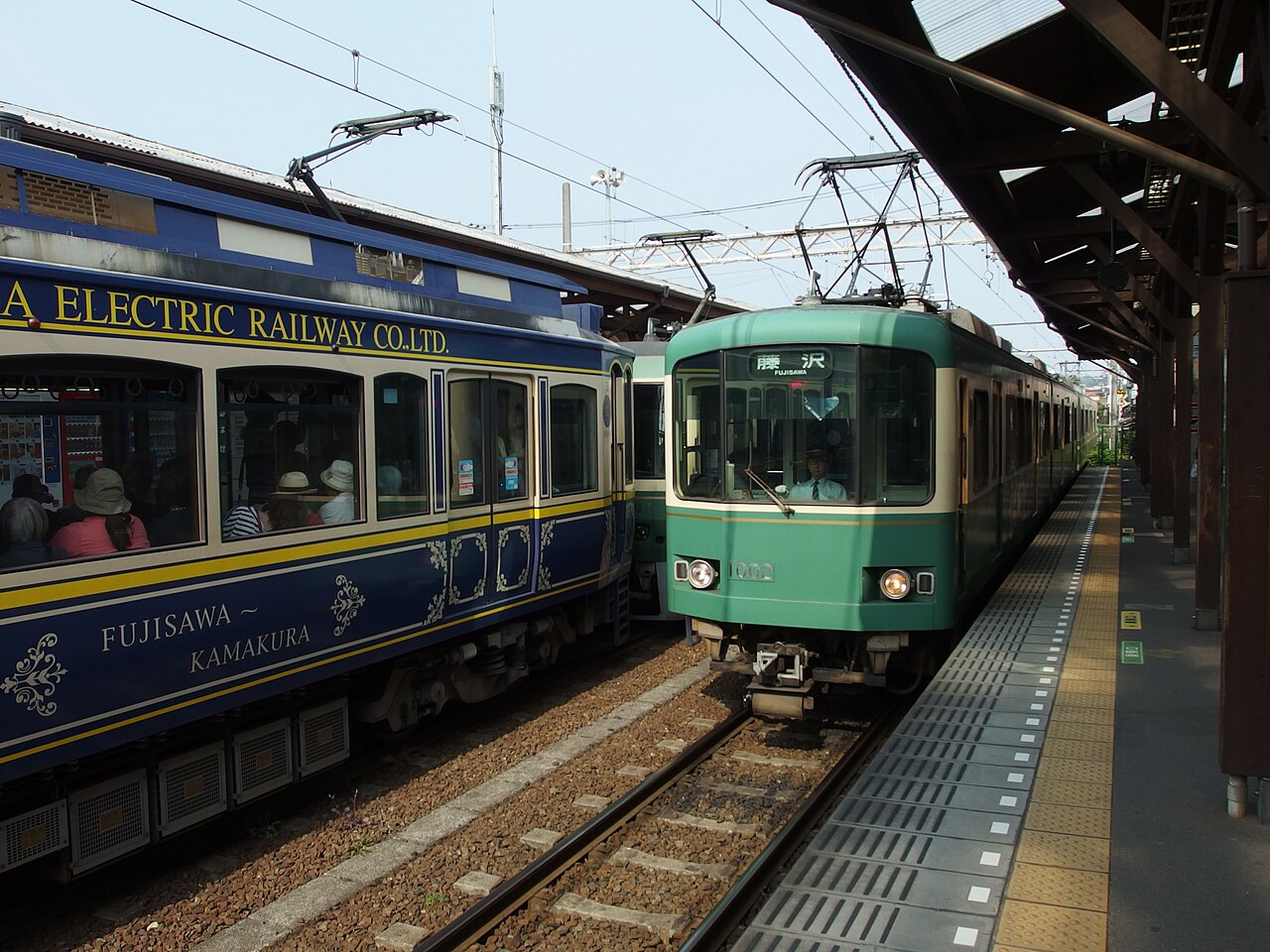
Highlights: Hase to Enoshima is 19 minutes without changing, JPY 260. Along the coastal stretch Sagami Bay opens out on the right-hand side of the train. Between Koshigoe and Enoshima the line runs on the road, and the carriages slide past cars at arm’s length.
Practical note: get off part way at Kamakurakokomae and it is JPY 220 from Hase, then JPY 200 on to Enoshima — JPY 40 more in total, and nothing at all extra if you hold a Noriorikun. This is precisely where the decision about that ticket lies.
- Fare
- Hase to Enoshima JPY 260 (no extra with a Noriorikun)
- Journey
- 19 minutes
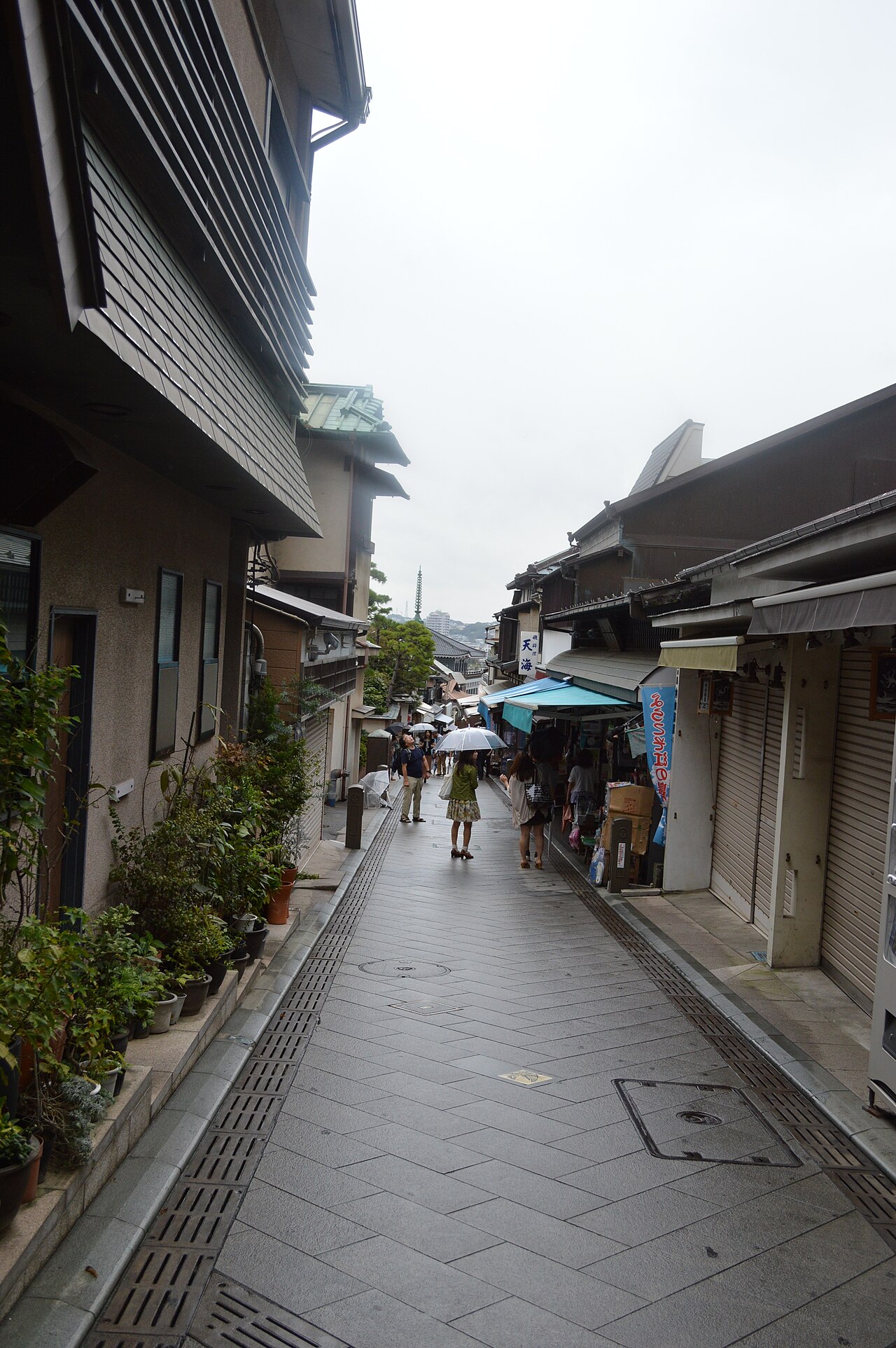
Highlights: 12 to 15 minutes on foot from Enoshima station across the Benten bridge, this is the approach running from the bronze torii up to the Zuishinmon gate of Enoshima Shrine. Walking it is free, and it is lined with whitebait restaurants and octopus cracker stalls.
Practical note: everything beyond this point on the island is slope and stairs. The climb has already started part way along Nakamise, and it is far steeper than photographs suggest. If your legs feel heavy here, decide about the Escar before you go any further.
- Nearest
- 12–15 minutes on foot from Enoshima station
- Walking
- JPY 0
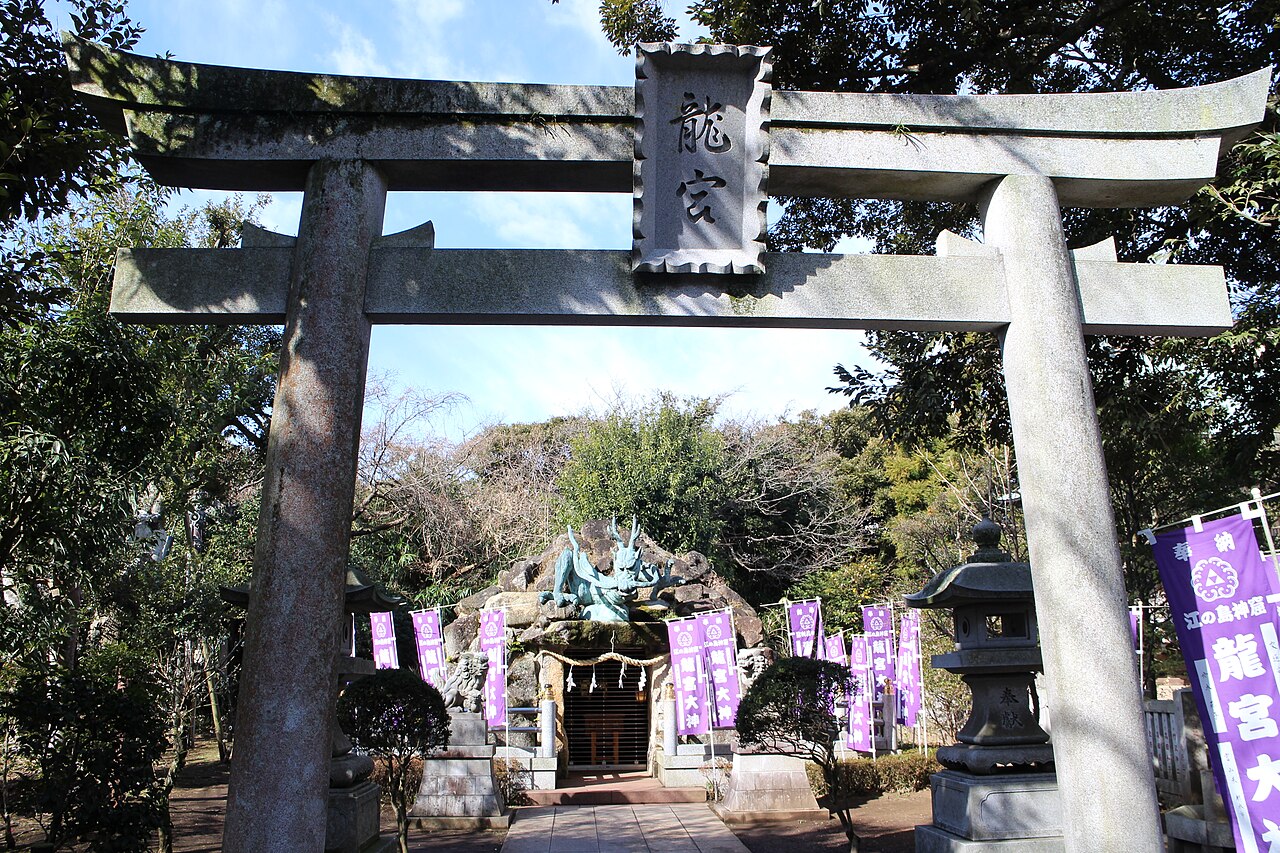
Highlights: the shrine comprises three halls, Hetsumiya, Nakatsumiya and Okutsumiya, and visiting the grounds is free. This plan goes as far as Hetsumiya, the nearest to Nakamise. Carrying on to Nakatsumiya, Okutsumiya and the Iwaya caves adds about another hour there and back.
Practical note: the grounds are steep. The paid Escar (upward only, three sections, JPY 500 for adults and JPY 250 for children) saves you the stairs going up, but you walk down. It runs 08:50 to 19:05.
- Nearest
- 5 minutes on through Nakamise
- Entry
- JPY 0 (the Hoanden is charged separately)
- Escar
- Adult JPY 500; child JPY 250 (upward only, 8:50–19:05)
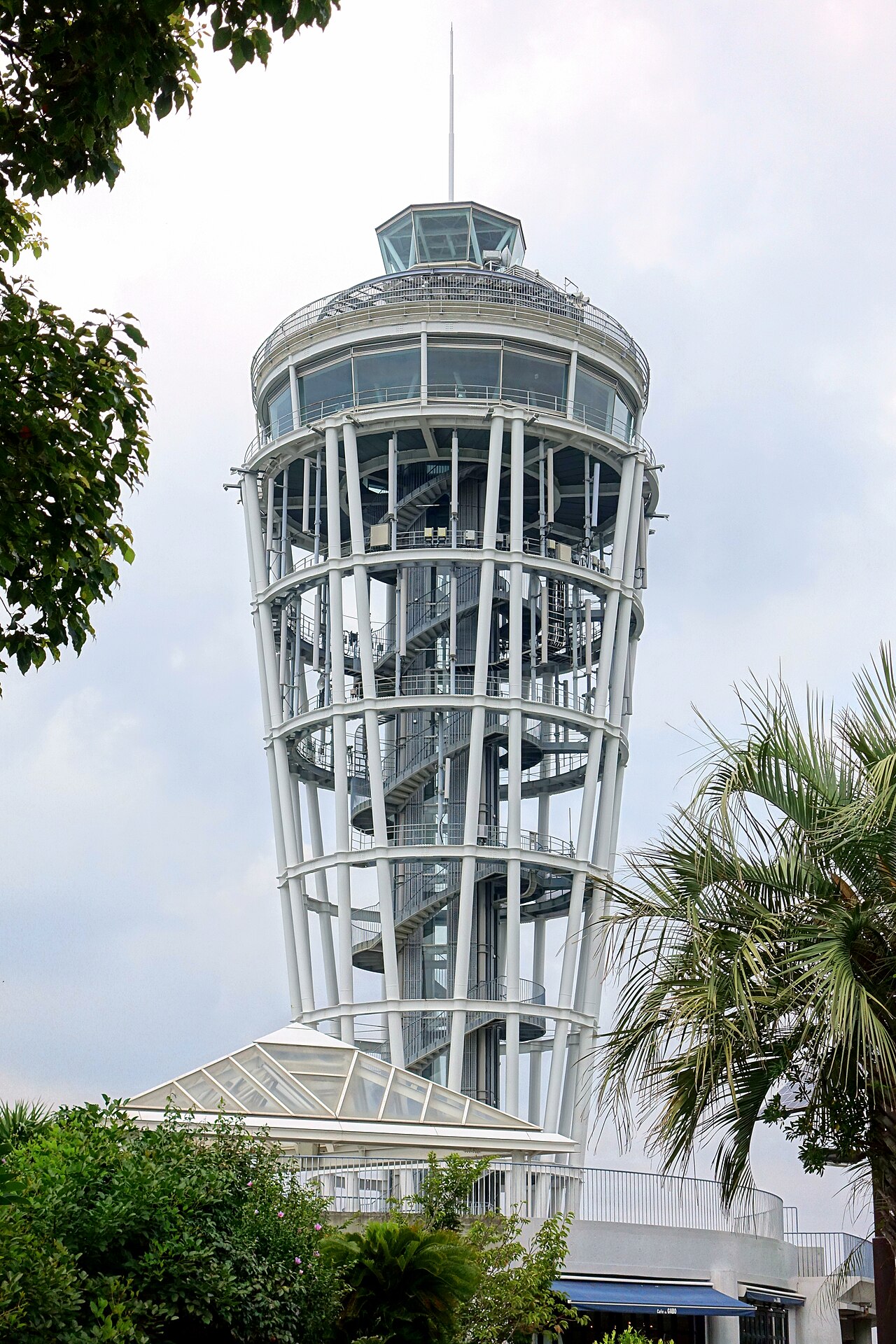
Highlights: the observation lighthouse is JPY 800 for adults and JPY 400 for children, where adult means junior high age and above and child means primary school. It runs 09:00 to 20:00 with last entry at 19:30. On a clear day you see Sagami Bay and Mt Fuji.
Practical note: the Samuel Cocking Garden beneath it is free from 09:00 to 17:00 and JPY 500 for adults only after 17:00, so whether you cross that hour changes what you pay. Using the Escar, the garden and the tower, the Enoshima Sea Candle Set is JPY 1,100 for an adult against JPY 1,300 buying them separately, JPY 200 less. The Enoshima 1day, which adds the island’s other sites, is JPY 1,550.
- Admission
- Adult JPY 800; child JPY 400
- Set ticket
- Sea Candle Set, adult JPY 1,100 (Escar, garden and lighthouse)
- Hours
- 9:00–20:00 (last entry 19:30)
- Official
- Official site ↗
Going home means the Enoden back from Enoshima to Kamakura and a change to the JR Yokosuka Line. Enoshima to Kamakura is 25 minutes and JPY 260, with nothing extra on a Noriorikun. The other way is out to Fujisawa for the JR Tokaido Line; riding the Enoden end to end is 37 minutes and JPY 310.
Staying on Enoshima into the evening is also a way to build the day. The Cocking Garden costs JPY 500 for adults after 17:00, and against that the Cocking Garden Set plus Night, which covers that entry together with the Sea Candle, is JPY 850 for an adult. To use everything from the Escar up to the lighthouse and stay for the dark, the Enoshima Sea Candle Set plus Night is JPY 1,550, and the Enoshima 1day plus Night, including the island’s other sites, is JPY 1,950. There are enough varieties that it is easier to decide what time you are crossing to the island before you join the queue at the window.
Anyone coming more than twice a year has a further option in the annual pass, JPY 1,500 for an adult against JPY 800 for a single admission to the Sea Candle, so it pays for itself on the second visit. It is irrelevant to a one-off day trip, and worth knowing for anyone who keeps returning to the Shonan coast.
Alternatives
Rainy-day swap
Most of this itinerary is outdoors and it is not resilient to rain. Even so, not a single element is cancelled by it. The Kannon hall at Hasedera and the Great Buddha can be seen under a roof or in the open, and Sagami Bay is visible from inside an Enoden carriage.
What gets dangerous underfoot is the bare earth in the bamboo garden at Hokokuji and the stone steps on Enoshima. Both are passable in the right shoes, but in heavy rain reverse the order and take the covered Kannon hall and the area around the Great Buddha first. Enoshima is made of nothing but slope and stairs, so leaving it at the back of the day lets you decide whether to go at all according to what your legs have left.
The place rain empties is Kotokuin. The figure stands in the open with nothing to shelter under, and the crowds fall away accordingly. To look at the face properly without people in front of it, a wet day is not a bad condition.
If your train is delayed by an hour or more
An hour late and Hokokuji is the first thing at risk. Admission closes at 16:00 and the matcha at 15:30, so missing the morning slot puts it in competition with the Hase area in the afternoon. Once you know you are an hour down, dropping Hokokuji and running five places is the reliable answer.
Without Hokokuji, giving an hour to Tsurugaoka Hachimangu and Komachi-dori, ninety minutes to Hasedera and Kotokuin, and two hours to Goryo Shrine and Enoshima covers the main sights in roughly four and a half hours of actual visiting. Admissions fall by JPY 800.
Delay on the way home barely matters here. The Enoshima Sea Candle is open until 20:00 with last entry at 19:30, so even staying for dusk leaves plenty of room against the last trains towards Tokyo. If anything, the second half of this day improves when you push the return later and stay for sunset.
When you’re tired
The order is Hokokuji, then Enoshima, then Komachi-dori. Hokokuji goes together with the bus journey out and back, which frees the most time. Dropping Enoshima removes the island’s slopes and stairs entirely and takes one Enoden ride out of the day — at which point the reason for buying a Noriorikun disappears as well, so switch to paying per ride.
To cut the actual walking, the Escar on Enoshima is the lever. Upward only, three sections, JPY 500 for an adult; you still walk down, so what it buys is conserving your legs on the way up.
Stretching to one night is another answer. Do Tsurugaoka Hachimangu through to Kotokuin on day one, stay in Kamakura, and take Goryo Shrine and Enoshima on the second morning. For anyone who wants dusk or the night view on the island, two days without a last train to worry about fits much better. It also pairs with the day trips by train out of Tokyo if you want to go in a different direction on consecutive days.
Why we skipped Zeniarai Benzaiten and the Iwaya caves
Two Kamakura fixtures are absent from this plan: Zeniarai Benzaiten Ugafuku Shrine, and, over on the Enoshima side, the Iwaya caves.
Zeniarai Benzaiten is 20 to 25 minutes on foot from Kamakura Station and free to visit. It is out not because of the distance but because of the gradient: the way towards Genjiyama climbs continuously. Nearly an hour of the day goes into that slope, and it has to come out of something else. The real choice is between the bamboo grove at Hokokuji and Zeniarai Benzaiten, and this plan keeps the grove. Anyone who would rather pray for money should swap the two.
The Iwaya caves on Enoshima, and Nakatsumiya and Okutsumiya before them, are out for the same reason. Going beyond Hetsumiya adds about an hour there and back, which has to be taken either from the time at the Sea Candle or from the hour you leave. If walking the length of the island is the point, it is cleaner to narrow the Kamakura side to the three places at Hase and give the whole afternoon to Enoshima.
Going further into the island also changes what the Escar is for. It runs upward only in three sections and lifts you to the level of Hetsumiya and Nakatsumiya, but from there to Okutsumiya and the caves you descend and climb back on your own feet, and the return is stairs the whole way. That estimate of an hour there and back includes the descent and the climb back up.
The treasure hall at Tsurugaoka Hachimangu is not opened in this plan either. Visiting the grounds is free and complete in itself, while the treasure hall is charged separately and keeps shorter hours than the 40-minute stop allows. To look properly at the blades and the documents, stretch Tsurugaoka Hachimangu to an hour and a half and drop Hokokuji to pay for it.
One season changes the reasoning entirely. In May 2026 the Enoshima Electric Railway announced a Kamakura Hydrangea Early Start campaign under the line that hydrangeas are at their best when it is not crowded, proposing morning visits instead of the middle of the day. The reasons are stated: spreading the crowds and easing the burden on the area. The leaflet is distributed at four Enoden stations — Fujisawa, Enoshima, Hase and Kamakura — and at every station on the Odakyu line.
The detail worth noticing is that the leaflet describes routes starting from the Enoden at Fujisawa. This itinerary comes in from the east, from Tokyo Station on the JR Yokosuka Line to Kamakura, but in hydrangea season there is a case for coming in from the west. Boarding the Enoden at Fujisawa avoids the busiest ticket gates at Kamakura Station altogether and works towards Hase from the emptier end. It is also worth registering that the appeal is asking visitors to give way. Kamakura’s hydrangeas are not a display at an attraction; they are in the middle of residential streets and a working commuter line.
Where to stay
This works as a day trip, but adding a night before or after drops the density of the day considerably. Choose where to sleep by which side you want to come in from the next morning.
Staying around Kamakura Station puts you inside Tsurugaoka Hachimangu first thing. The gates open at 06:00, so from walking distance you get the grounds with nobody in them. Staying on the Fujisawa or Katase-Enoshima side means boarding the Enoden from the west, which is the better way round in hydrangea season. Yokohama is a third option: short to Kamakura and short back into Tokyo, with by far the widest range of rooms and prices.
Rates move even for identical dates, which is why no room figure appears in the table below. If you want to fix timed activities around the day as well, Klook lists Kamakura slots by date. Looking at the Yokohama side instead, the new Yokohama hotels sets out opening years and locations.
What this trip costs
Assumptions: two adults, a day trip out and back from Tokyo Station. The Kamakura city buses, meaning the run to Hokokuji and back, are left out of the total because the fare depends on the section, and meals are out for the same reason. What is listed is the part that barely moves: published rates.
Every figure above is the published rate as of 2026-09-20.
Of that JPY 10,160, JPY 4,160 is the JR return. What you spend inside Kamakura is JPY 6,000, a third of it the Enoshima set ticket. Admissions on the Kamakura side come to only JPY 2,200 across three places, because Tsurugaoka Hachimangu, Komachi-dori, Goryo Shrine, Nakamise and Enoshima Shrine are all free. The only charges are three temples and an observation tower; the skeleton of the day is built out of places that cost nothing.
It is worth checking whether the Noriorikun actually pays. The rides this plan makes are Kamakura to Hase at JPY 200, Hase to Enoshima at JPY 260 and Enoshima back to Kamakura at JPY 260 — JPY 720. The ticket is JPY 800, so it loses JPY 80. To turn that round, get off once more anywhere: Hase to Kamakurakokomae is JPY 220 and Kamakurakokomae to Enoshima JPY 200, for JPY 880 and a gain of JPY 80. The Noriorikun is not a ticket for riding, it is a ticket for getting off. With no intention of getting off, it costs you money.
The Enoshima side has the same structure. Escar at JPY 500, the Cocking Garden at JPY 500 and the Sea Candle at JPY 800 add up to JPY 1,800 bought separately, but the garden is free until 17:00, so a daytime visitor actually pays JPY 1,300. Against the set ticket’s JPY 1,100 the saving is only JPY 200. For anyone crossing the 17:00 line and staying for the night view, the difference is much larger. What time you cross to the island decides which ticket to buy.
This plan does not suit anyone arriving in the June hydrangea season without having arranged anything in advance, nor anyone who wants to see the Iwaya caves on Enoshima. For the first, how long you wait at Hasedera depends on whether you secured a hydrangea ticket; for the second, the hour there and back is not in the budget of time. Because the city bus fares are outside the table, anyone travelling out to Hokokuji and back should count those separately — 30 minutes each way on foot, or about 12 by bus.
Three things in a bag actually matter here: shoes you can walk in, coins, and a power bank. Enoshima is slope and stairs from end to end, and the bamboo garden at Hokokuji is bare earth. Admission windows sometimes want cash, and so does the matcha at Hokokuji. Checking Enoden times and maps all day drains a phone. An umbrella depends on the season, though Kamakura sits close enough to the sea for the weather to turn quickly, and a folding one earns its space on a day spent mostly outdoors.
The same shape of day — one full day built as a single loop — is used in the day trip from Hiroshima out to Miyajima. Where a day out of the city fits inside a longer stay is covered in the five-day Tokyo plan.
Sources: JR East; Enoshima Electric Railway; Tsurugaoka Hachimangu; Hokokuji; Hasedera; Kotokuin; Enoshima Sea Candle and the Enoshima Samuel Cocking Garden / Checked on 2026-09-20 / Photographs: credited in each caption (all Wikimedia Commons) / Featured image: Σ64, CC BY-SA 3.0 (Wikimedia Commons)
Other sales ending soon




 4 days leftuntil Oct 24Air Busan Takamatsu-Busan Coupon: Up to 9,000 Yen Off Until October 24
 5 days leftuntil Oct 25JAL Hong Kong Campaign: Tokyo–Hong Kong Round Trip from 75,800 Yen (until 25 Oct)
 11 days leftuntil Oct 31Jin Air Kobe–Seoul: 5,000 yen off a round trip with code KTOUKB1, until 31 October
 11 days leftuntil Oct 31Jin Air to Busan: 4,000 yen off a round trip with code KTOPUS, first 300 only