Hiroshima to Miyajima Day Trip Model Course: Transport Costs and the Visitor Tax
AuthorMIRUTOBE editors
Table of Contents6 items
One day from central Hiroshima across to Miyajima and back to the Peace Memorial Park by evening. Hiroden is a flat JPY 240 however far you ride, the ferry is JPY 200 each way, and the JPY 100 visitor tax rides only on the crossing out.
Itinerary
DAY 1Cross to the island first and leave the museum, which closes late, until last
Why this order: how busy the ferry gets becomes harder to predict as the afternoon goes on. Miyajima takes the morning, and the Peace Memorial Museum, which stays open until 19:00, takes the evening.
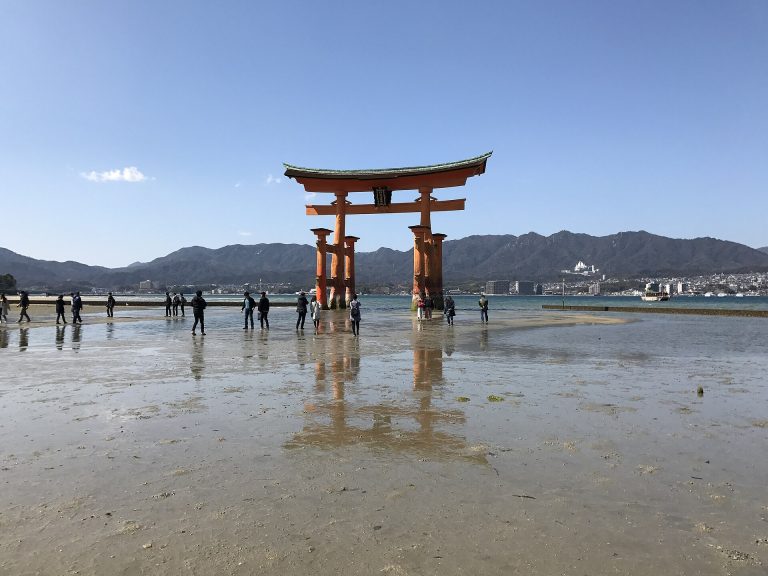
Itsukushima Shrine dates its founding to the year Empress Suiko acceded, 593. The halls now standing over the water were rebuilt by Taira no Kiyomori, and at low tide both the halls and the torii stand on sand. At high tide the whole building floats. The place has two entirely different appearances within the same day, so what time you arrive decides the photograph.
The order is chosen because one of the two closes much later. The Peace Memorial Museum runs to 19:00 from March to July and from September to November, and to 20:00 in August. On Miyajima, Itsukushima Shrine closes between 17:00 and 18:00 depending on the season. Putting the later closing at the back absorbs whatever the first half runs over by.
Morning: JPY 240 will carry you 25 kilometres
Hiroshima Station to Miyajimaguchi is a single ride on Hiroden route 2, no changes. From 1 February 2025 the fare went flat across the whole network at JPY 240 for adults and JPY 120 for children — the same amount whether you stay on the city lines or ride through onto the Miyajima line.
Seventy minutes on the tram is not fast. Route 2 is still the choice here because Genbaku Dome-mae is on it. Coming back on the same line puts you down at the Peace Memorial Park without changing. Out through the city looking at it from the window, back via the park, and on to Hiroshima Station — at no point do you have to buy another ticket.
JR is certainly quicker, and its fare depends on the route and the service. Take JR if you are buying time; take Hiroden if you are avoiding changes and keeping the fare down.
The flat fare has a second effect. Since distance is irrelevant, getting off part way costs you nothing in planning terms: see a stop you like on the way out to Miyajimaguchi, get off, get back on. What it does add is another JPY 240 each time, so on an itinerary built around three boardings it pays to count them if you want the total to be predictable. Children are JPY 120.
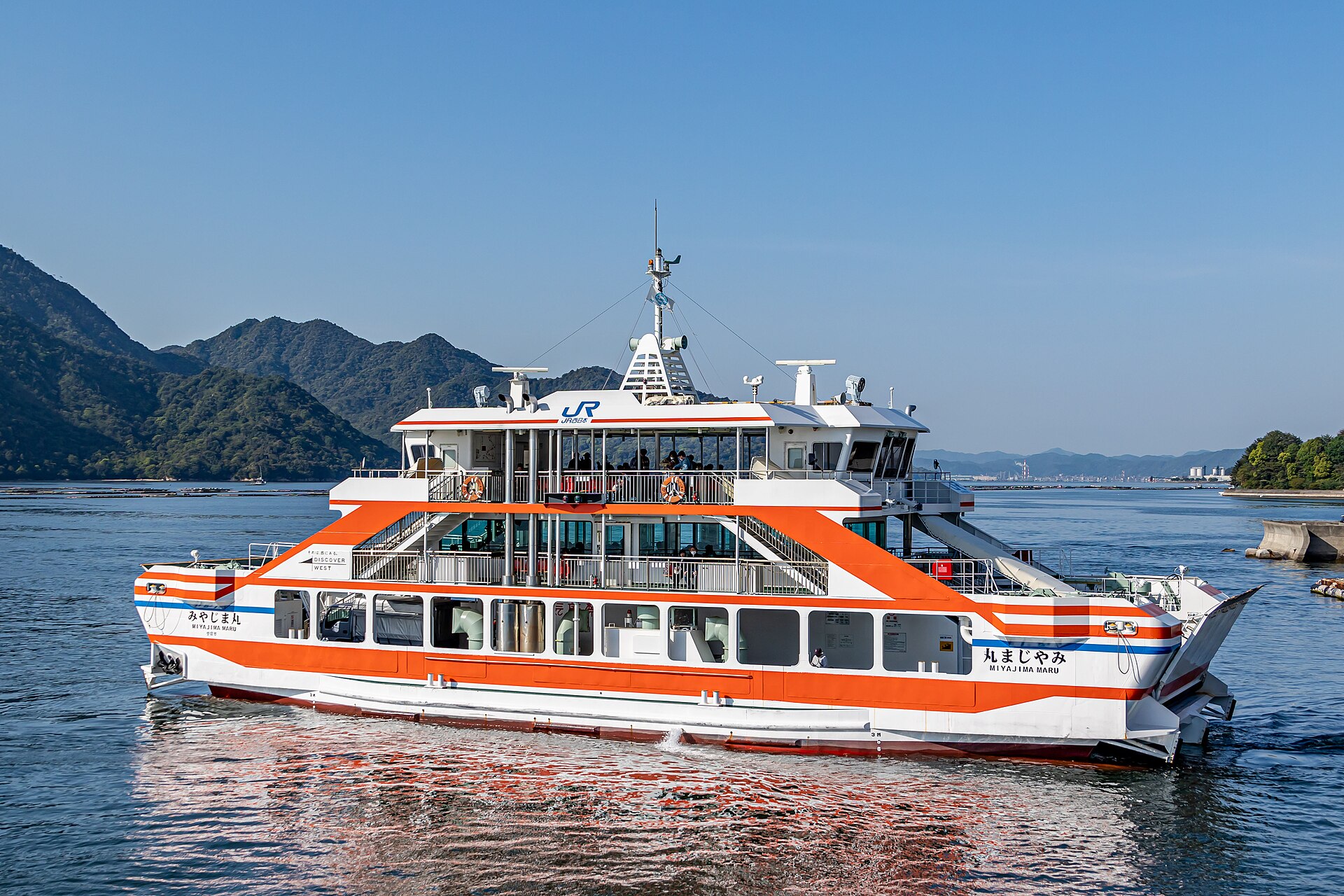
Highlights: two companies run the same crossing from Miyajimaguchi and both take about ten minutes. The fare is JPY 200 one way for an adult, with the JPY 100 visitor tax on top. On JR West Miyajima Ferry, departures from Miyajimaguchi between 09:10 and 16:10 take the Great Torii route, passing close to the gate so you see it from the water. On days with a high tidal surge the route changes.
Practical note: the two companies define “adult” differently. For JR West Miyajima Ferry an adult is 12 and over, with 6 to under 12 paying the JPY 100 child fare. For Miyajima Matsudai Kisen an adult is junior high age and above, with primary pupils paying JPY 100. Travelling with a child in the last year of primary school, which boat you take changes what you pay. The JR side accepts all ten of the national transport IC cards, so you can board without cash.
- Fare
- Adult JPY 200 one way, JPY 400 return
- Visitor tax
- JPY 100, on the crossing to the island only
- Journey
- About 10 minutes
- Official
- JR West Miyajima Ferry ↗
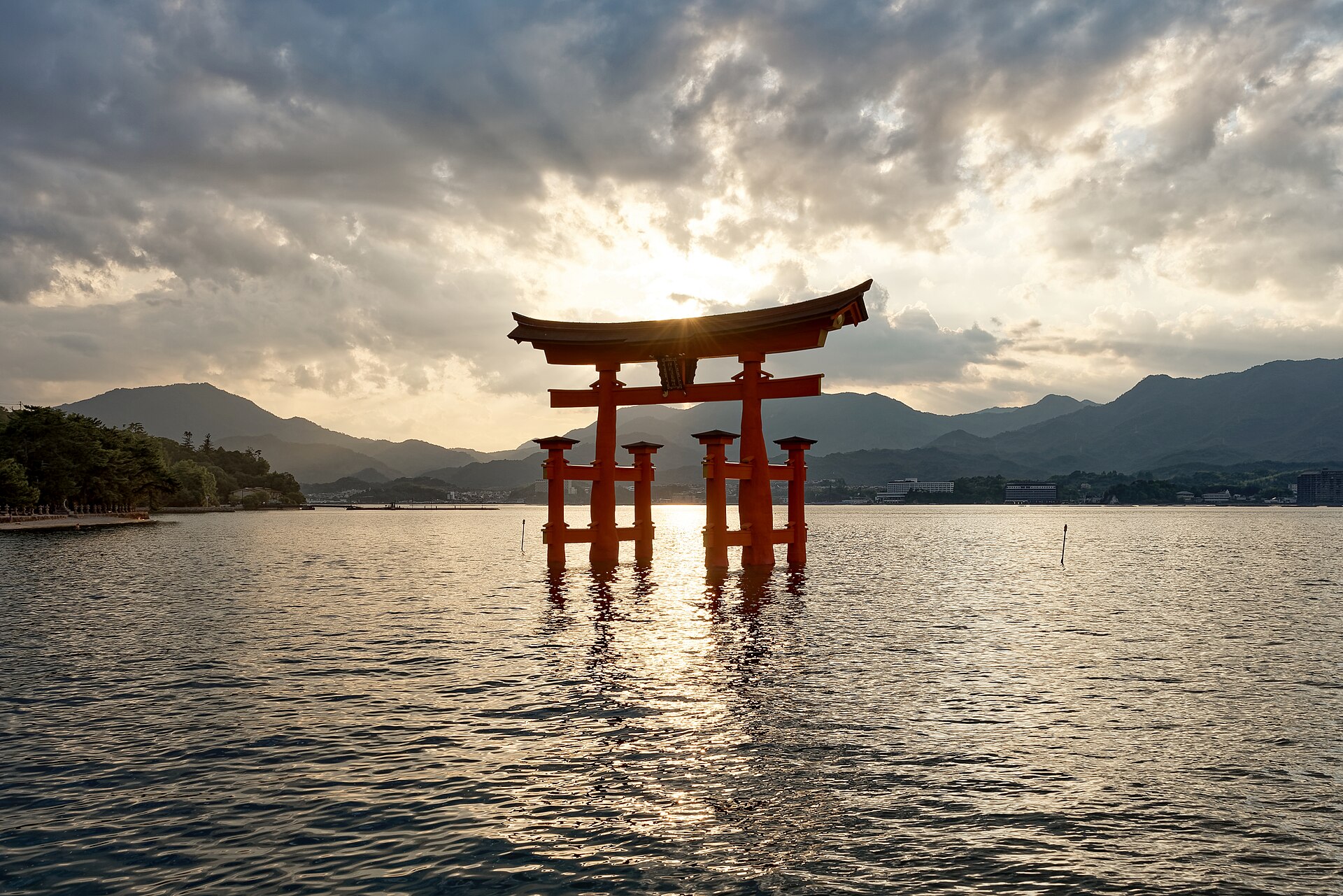
Highlights: admission to the halls is JPY 300 for adults, JPY 200 for senior high pupils and JPY 100 for junior high and primary. It opens every day of the year: 06:30–18:00 from 1 March to 14 October, 06:30–17:30 from 15 October to 30 November and from 4 January to the end of February, and 06:30–17:00 in December. The founding is dated to the accession of Empress Suiko, 593, and the halls as they stand were rebuilt by Taira no Kiyomori.
Practical note: the shrine posts a warning about footwear. Its wording is that the corridors are built with gaps between the boards as a measure against high tides, that heels and similar can catch in those gaps, and that visitors should consider what they wear. The boards really are set apart, and a thin heel really does go through. Combined with the treasure hall, the discounted joint ticket is JPY 500 for an adult against JPY 600 bought separately — and the joint ticket is sold only at the shrine entrance.
- Admission
- Adult JPY 300; senior high JPY 200; junior high and primary JPY 100
- Hours
- 1 March–14 October 6:30–18:00; 15 October–30 November 6:30–17:30; December 6:30–17:00
- Joint ticket
- Shrine plus treasure hall, adult JPY 500 (sold only at the shrine entrance)
- Official
- Official site ↗
The new year period works to a different clock entirely. Itsukushima Shrine opens 00:00 to 18:30 on 1 January and 06:30 to 18:30 on 2 and 3 January. Because it is open from midnight on New Year’s Day, crossing in the night for the first visit of the year is possible. From 4 January to the end of February it returns to 06:30–17:30.
Groups pay differently. Once there are 50 or more in the adult, senior high or junior-and-primary category, the group rate applies: JPY 250, JPY 150 and JPY 70. On school trips, accompanying teachers, photographers and nurses are admitted at the student rate. The 50 is counted within each category, so 49 adults and 2 school pupils is not a group. The shrine’s site sets out that exact example, which suggests it is where parties most often get it wrong.
The treasure hall is a separate building, open 08:00 to 17:00 all year at JPY 300 for adults. Senjokaku, the main hall of Toyokuni Shrine, opens 08:30 to 16:30 with admission at JPY 100 for adults and JPY 50 for junior high and primary pupils. Senjokaku has neither a joint ticket nor a group rate. For a JPY 100 building the floor area is remarkable, and between the pillars you look out over the island’s roofs to the sea. With the shrine halls it still comes to JPY 800 for two, so it is worth the detour if there is time.
How the great torii looks depends on the tide. At high water it floats; at low water a sandbank appears and you can walk out to its feet. Which is better is a matter of taste, and the two swap over within a few hours of the same day, so if the photograph is the point, look at a tide table before you go. The Great Torii ferry route being confined to 09:10 to 16:10 has the same tides and channel behind it.
Afternoon: one approach, so you can put the map away
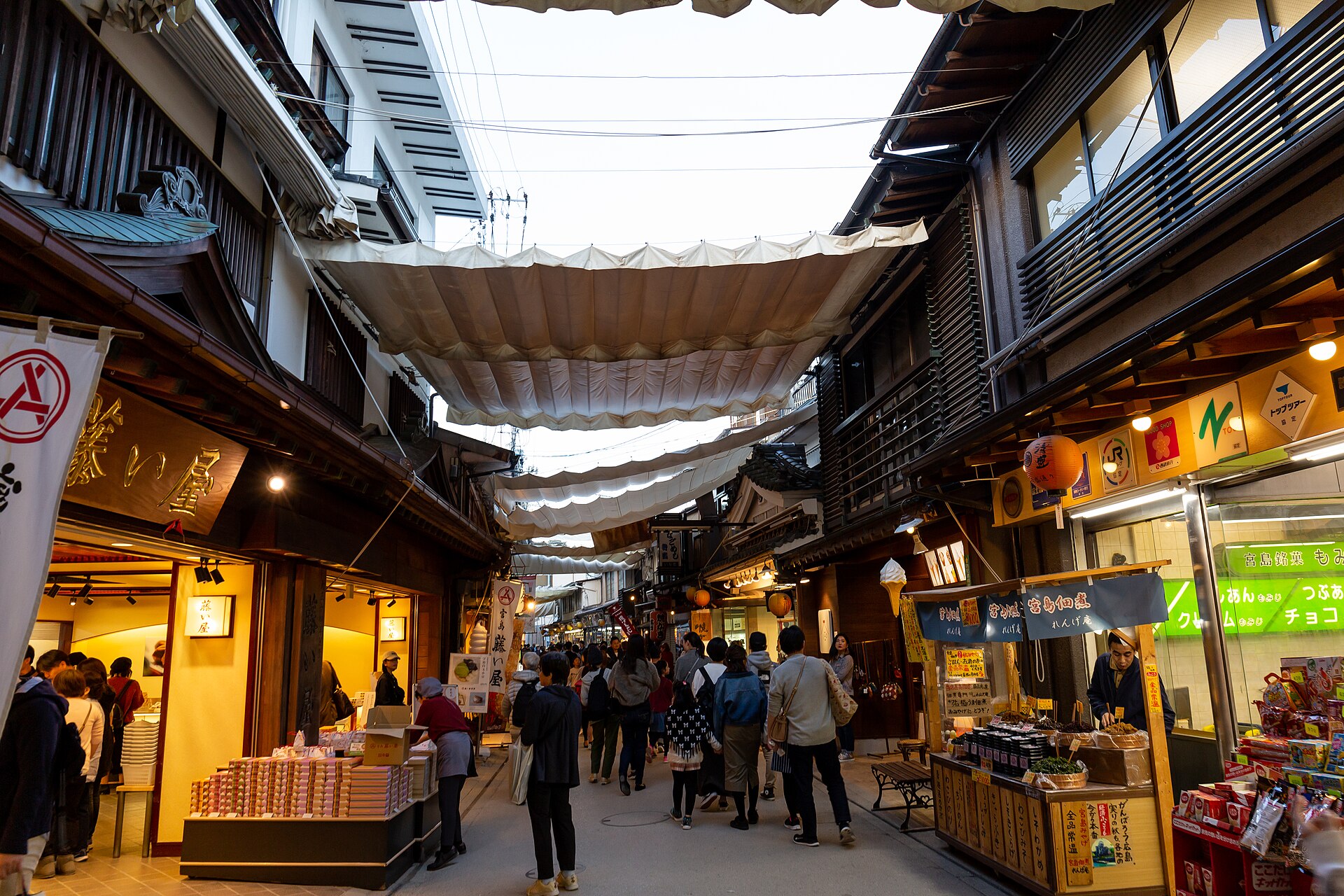
Highlights: it is about ten minutes on foot from the pier to Itsukushima Shrine, and this approach is the most crowded part of the island. There is only one road, so you do not need to navigate. Momiji manju makers and tsukudani shops run along it, and lunch happens here.
Practical note: when the crowds get tiring, cut through to Machiya-dori, one street behind. It runs parallel and carries far fewer people, and since it goes the same way it is not a detour. Taking Omotesando out and Machiya-dori back gives you two different streets instead of the same one twice.
- Nearest
- 10 minutes on foot from Miyajima pier to Itsukushima Shrine
- Walking
- JPY 0
Highlights: a temple of the Omuro branch of Shingon Buddhism, a few minutes’ walk from Itsukushima Shrine, with its gate open 08:00 to 17:00. It also connects to the trailhead for Mt Misen.
Practical note: Senjokaku and the five-storey pagoda are close by. Senjokaku is JPY 100 for adults and JPY 50 for junior high and primary pupils, open 08:30 to 16:30, with no joint ticket and no group rate. For a building you enter for JPY 100 it is on a substantial scale, and it is the easiest addition to price when time is left over.
- Hours
- 8:00–17:00
- Nearest
- A few minutes on foot from Itsukushima Shrine
- Senjokaku
- Adult JPY 100; junior high and primary JPY 50 (8:30–16:30)
- Official
- Daishoin ↗
Evening: the museum opens at 07:30 and closes late
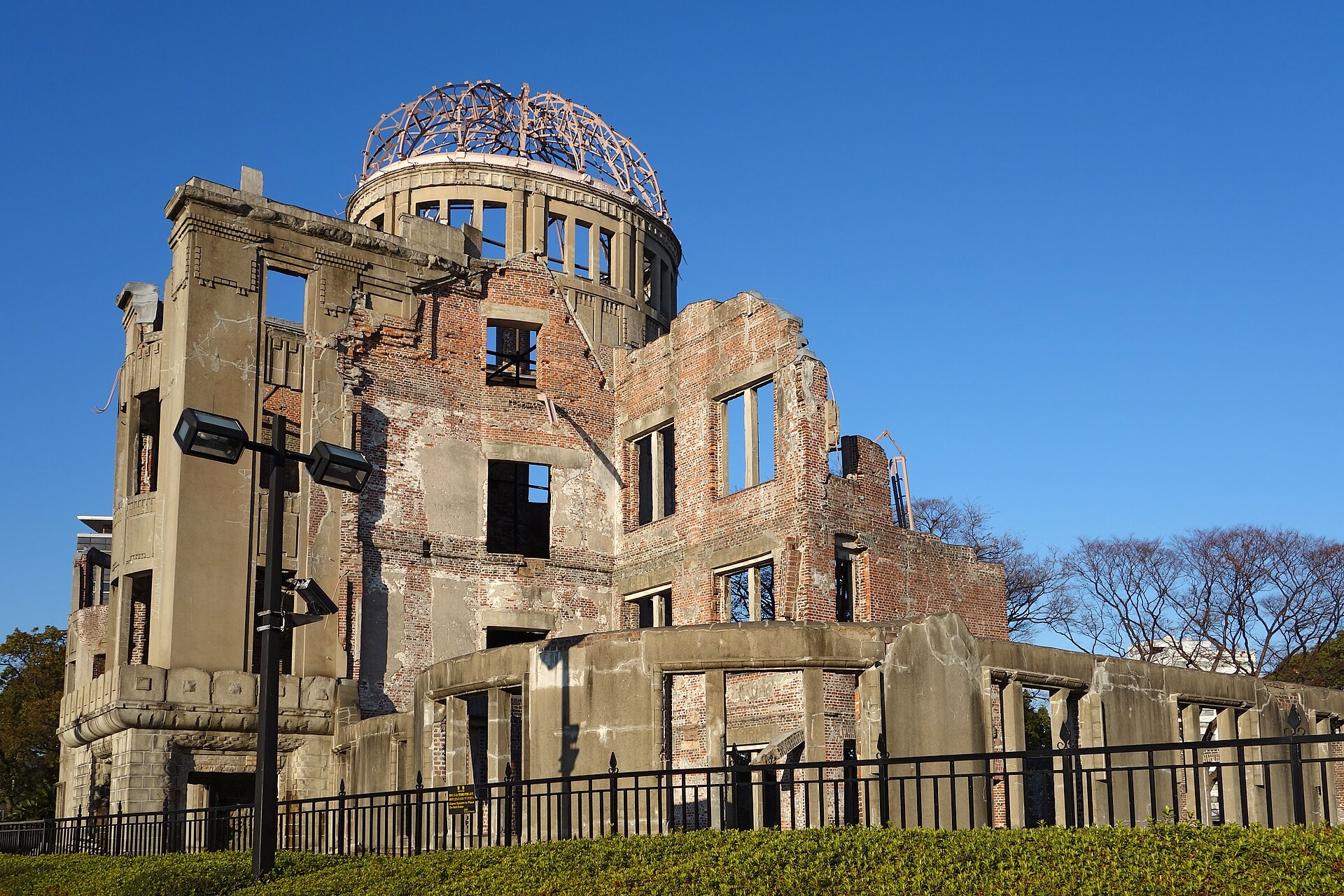
Highlights: the permanent exhibition is JPY 200 for adults from university age, JPY 100 for senior high pupils and free for junior high age and under, with JPY 100 for visitors of 65 and over. It opens 07:30–19:00 from March to July and September to November, 07:30–20:00 in August, closing at 21:00 on 5 and 6 August, and 07:30–18:00 from December to February. It closes on 30 and 31 December and for the exhibition changeover in mid-February.
Practical note: some early and late slots require an online booking to enter the permanent exhibition room — 17:30 to 18:30 from March to July and September to November, 18:30 to 19:30 in August, running to 20:30 on 5 and 6 August, and 16:30 to 17:30 from December to February. The 07:30 to 08:30 hour also needs a booking every day. This itinerary enters at 17:00, so either see half an hour and be out before the booked band starts, or book in advance.
- Admission
- Adult JPY 200; senior high JPY 100; junior high and under free; 65 and over JPY 100
- Hours
- March–July and September–November 7:30–19:00; August 7:30–20:00; December–February 7:30–18:00
- Closed
- 30 and 31 December; mid-February for the exhibition changeover
- Official
- Official site ↗
Tickets and bookings are available online for busy periods. Entry restrictions apply in some time bands, so if you are going when the crowds concentrate, as in early August, do not plan around joining the queue for a same-day ticket. Opening as early as 07:30 is partly about spreading people across the summer mornings. Arriving first thing and giving the afternoon to Miyajima — the whole day in reverse — works perfectly well on those hours.
The Atomic Bomb Dome, in front of the museum, costs nothing and keeps no hours if you are looking at it from outside. It is immediately outside the Hiroden stop at Genbaku Dome-mae and you can walk the whole way round the fence. Even arriving after the museum has shut, this much is still open to you. The dome, the museum and the cenotaph are laid out on a single axis, so walking south through the park brings all three into view in turn.
Senior high pupils are free on Saturdays, groups of 30 or more pay JPY 160 an adult, and senior high groups of 20 or more are free. Holders of a disability certificate and their carers are free, and so is anyone attending for peace education through a school or a public body. The JPY 200 figure is also a statement about who the institution is meant to be open to.
The exemptions are wide. Pre-school, primary and junior high children are free; holders of a disability certificate and their carers are free; participants in peace education through a school or a public body are free. Senior high pupils are free on Saturdays outside public holidays and closure periods. With the JPY 100 rate for over-65s, this is a museum that divides its pricing finely by who is walking in.
Afterwards, take the Hiroden from Genbaku Dome-mae back towards Hiroshima Station: JPY 240, the same as on the way out. Three tram rides in a day is JPY 720 a head, and with the ferry return and the museum admission on top, two people finish on JPY 3,440.
The Miyajima visitor tax applies only on the way over
This is the JPY 100 that has people searching their pockets at the ferry terminal. It divides into three points.
The first is that it is charged only on the crossing to the island. You pay it with the fare when boarding at Miyajimaguchi, and nothing is charged on the way back. It is a local tax levied by the city of Hatsukaichi since 1 October 2023, at JPY 100 per person per visit. Paying a year at a time instead costs JPY 500 per person per year, which only makes sense for anyone crossing six times or more.
The second is that it sits alongside the fare rather than inside it. An adult single is JPY 200 and the JPY 100 goes on top. Working out the return journey in your head, that JPY 100 is the first thing to fall out. The ferry fare tables say plainly that a JPY 100 Miyajima visitor tax applies separately on entering the island, and the operators collect it with the fare on the city’s behalf. Arriving at a pier, the pier operator collects it; landing on a natural shoreline, you declare and pay it yourself within ten days of the visit.
The third is that two different groups do not pay, and they are easily confused. Outside the scope of the tax altogether are residents of the Miyajima-cho area, people commuting to an office or workplace in the district for 48 hours a month or more, and people attending a school there for 48 hours a month or more. Separately from that there is an exemption, covering pre-school children, pupils visiting on a school event or school trip together with their leaders and attendants, and holders of a rehabilitation certificate, a mental health and welfare certificate or a physical disability certificate. An adult arriving as a tourist falls into neither.
Whether the JPY 500 annual payment is worth it comes down to how often you cross. At JPY 100 a time it pays from the sixth crossing in a year. That is irrelevant to a visitor coming once or twice, and it matters to someone living in Hiroshima who goes to the island repeatedly, or who crosses for work. Payment is limited to credit card, PayPay and LINE Pay; the annual option cannot be paid in cash.
The practical friction has largely gone. JR West Miyajima Ferry accepts all ten national transport IC cards and takes the fare and the tax together on one tap. Only if you are carrying cash alone do you need a few JPY 100 coins in a pocket to avoid holding up the window.
Alternatives
Rainy-day swap
Hiroshima sits on the Seto Inland Sea and belongs to a region with relatively little rain through the year, but catching a wet day changes what the day contains.
Miyajima is mostly moving about outdoors, so rain alters it considerably. The corridors of Itsukushima Shrine are roofed, but the approach from the pier to the shrine and the climb up to Daishoin are not.
On a wet day, cutting the island short and shifting the hours to the Peace Memorial Museum works well. The museum is open to 19:00, or 20:00 in August, so finishing Miyajima in two hours still leaves the day with room. Keep the covered Omotesando arcade and Senjokaku, and drop Daishoin and Machiya-dori.
The corridor floor is slippery in the rain. With gaps built between the boards, wet timber makes it harder to read your footing. The shrine’s warning about heels is written for dry weather; in the rain the same care applies in any shoe.
If the ferry is delayed by an hour or more
Two companies run the same crossing, so one being stopped does not necessarily mean the other is. The two piers at Miyajimaguchi adjoin each other, and you can ask at the window before choosing which one to use.
On days affected by a tidal surge, JR West Miyajima Ferry changes the Great Torii route. Only the routing changes, from the one that passes close to the gate to the ordinary one, and the service itself continues. For anyone who came to photograph the torii from the water, half the purpose has gone, so switch that day to walking out towards it once on the island.
A delay on the tram side is harder to plan against. That 70 minutes is the ordinary running time for a street tramway and it stretches with the traffic. If the return from Miyajima runs late, the time at the museum is what gets cut, so on that day prioritise the museum and settle for the dome from the outside.
When you’re tired
Once you are on the island and find there is nothing left in your legs, the first thing to give up is Mt Misen. The last ropeway down is at 16:30, so starting the climb after 15:00 is not a plan that works at all. It is settled by looking at a clock, which leaves little room for deliberation.
The order after that is Daishoin, Machiya-dori, Senjokaku. Daishoin involves a climb, so dropping it is what takes the most weight off your feet. Shortening the island to three hours means an earlier boat back and a longer visit to the museum.
Anyone who does want to climb Mt Misen cannot use this itinerary as it stands. The Miyajima Ropeway runs 09:00 to 16:00 with the last descent at 16:30. Its own wording is that the round trip including sightseeing takes about an hour, and that the summit of Mt Misen adds about another hour there and back. Fares are JPY 2,000 return and JPY 1,100 one way for adults, JPY 1,000 and JPY 550 for children. Add two hours to the island and the Peace Memorial Park does not fit. To include Mt Misen, rebuild the day around Miyajima alone. Both will not go in.
The ropeway is in two sections: about ten minutes from Momijidani to Kayatani and about four from Kayatani to Shishiiwa. It has been running since April 1959, and group and senior rates bring an adult return to JPY 1,800, with a disability fare of JPY 1,000 return. From Shishiiwa station to the summit you walk.
Momijidani station is under repair, according to the operator’s own notice: that the station is currently surrounded by scaffolding but is cheerfully open, and that the Miyajima Ropeway, born in April 1959, is rather older than it looks and needs maintenance, which is why it will be operating in this state until around March next year. It is running, but if you came to photograph the station building it will not look the way you expect.
Where to stay
This itinerary assumes a room in central Hiroshima. Adding a night before or after opens up the museum’s first hour of the morning.
Around Hiroshima Station the Shinkansen connection is short and it is the starting point of the Hiroden. Staying near the Peace Memorial Park means walking to a museum that opens at 07:30. Miyajimaguchi and the island itself are a third option: sleeping on Miyajima gives you the approach once the day visitors have left and the great torii first thing in the morning, at the cost of far fewer places to eat and shop.
Rates move even for identical dates, which is why no room figure appears in the table below. If you want to fix timed activities around the day, Klook lists Hiroshima and Miyajima slots by date. The tax on a room differs by municipality, so before totalling anything up, look at the municipalities that levy a lodging tax and what they charge.
What this trip costs
Assumptions: two adults, a day trip out and back from central Hiroshima. Meals and souvenirs vary too much by circumstance to belong in the total, so what is listed is the published transport and admission charges.
Every figure above is the published rate as of 2026-09-20.
The total is JPY 3,440 for two, JPY 1,720 a head. Two things can be added: the treasure hall and Senjokaku. Taking Itsukushima Shrine and the treasure hall on the joint ticket is JPY 1,000 for two against JPY 1,200 bought separately, and Senjokaku is JPY 200 for two. Adding both takes the pair to JPY 4,240. The range between the leanest and the fullest version of this day is about JPY 1,000.
JPY 1,720 each for a full day is low as sightseeing in a Japanese city goes. Two reasons: the Hiroden flat fare, and the fact that most of what there is to see on Miyajima is an approach, a shoreline and a mountain, none of which charges. The JPY 300 at the shrine and the JPY 200 at the museum account for nearly all of the paid part of the day.
What makes that work is Hiroden going flat across its whole network on 1 February 2025. City lines and the Miyajima line ridden through are still JPY 240. Hiroshima Station to Miyajimaguchi is roughly 25 kilometres and 70 minutes for that money; a private railway in a large city would generally charge at least double for the same distance. Three rides for JPY 720 does not exist without the flat fare.
There is almost nothing to cut, because so much of the day is free anyway. Omotesando, Machiya-dori, the dome from outside and the walk along the approach all cost nothing. The only charges are the shrine halls and the permanent exhibition, JPY 1,000 for two between them. What can be cut on Miyajima is Senjokaku and the treasure hall, which are additions; the skeleton does not move.
Two things in a bag matter: shoes you can walk in, and coins. The corridors at Itsukushima Shrine have gaps between the boards, and the shrine names thin heels specifically. Daishoin and the Mt Misen side are slopes and stone steps. The coins are for cash-first windows such as Senjokaku and Daishoin, and for the ferry if you have no IC card — though on the JR West side all ten national transport IC cards work, which removes almost every occasion for cash.
The season moves the shrine’s closing time. It is 18:00 from 1 March to 14 October, 17:30 from 15 October to 30 November and 17:00 in December, so a November visit ends half an hour earlier than a September one. The museum in turn closes at 18:00 from December to February, which pulls both ends of a winter day forward by 30 to 60 minutes. Building this in winter, shorten the island by an hour and move everything earlier.
This plan does not suit anyone who wants to climb Mt Misen, nor anyone who wants two hours or more inside the museum. The first needs two hours for the ropeway alone; the second runs out of time entering at 17:00 before the booked band begins. Either is better rebuilt as a day given entirely to Miyajima, or entirely to the Peace Memorial Park. The same shape of day — a single loop built to fill one day — is used in the Kamakura day trip from Tokyo, and for choosing between destinations in the first place, how the day trips by train out of Tokyo compare is the same method. Stretching it into an overnight gives you something closer to the two days in Kanazawa. When to buy the flights can be followed through the record of past airfare sales.
Sources: Itsukushima Shrine; Hiroshima Peace Memorial Museum; Hiroden; JR West Miyajima Ferry; Miyajima Matsudai Kisen; City of Hatsukaichi; Miyajima Ropeway; Daishoin / Checked on 2026-09-20 / Photographs: Soramimi (CC BY-SA 4.0) and as credited in each caption
Other sales ending soon
 4 days leftuntil Oct 24Air Busan Takamatsu-Busan Coupon: Up to 9,000 Yen Off Until October 24
 5 days leftuntil Oct 25JAL Hong Kong Campaign: Tokyo–Hong Kong Round Trip from 75,800 Yen (until 25 Oct)
 11 days leftuntil Oct 31Jin Air Kobe–Seoul: 5,000 yen off a round trip with code KTOUKB1, until 31 October
 11 days leftuntil Oct 31Jin Air to Busan: 4,000 yen off a round trip with code KTOPUS, first 300 only