Vienna 3-Night, 5-Day Model Plan: Palaces, Opera and Klimt in the Capital of Music and Art
AuthorMIRUTOBE editors
Table of Contents9 items
- Itinerary
- DAY 1 The route in from the airport changed completely on 7 September 2026
- DAY 2 The palace admits by timed slot, which is why the morning cannot move
- DAY 3 July and August do not exist on the opera house calendar
- DAY 4-5 Checkout adds 5% of the room rate
- Why we skipped the imperial silver collection
- Alternatives
- Where to stay
- What this trip costs
Three nights in Vienna: a day for the Habsburg palaces, a day for Klimt and music. Admissions and transport come to EUR 324.40 for two. The S-Bahn trunk line through the centre has been shut since 7 September 2026, so the way in from the airport has changed.
Itinerary
DAY 1The route in from the airport changed completely on 7 September 2026
Why this order: nothing that needs a timed slot goes on day one. Settle the route from the airport to the hotel, and make the evening a walk and nothing else.
The S-Bahn trunk line that runs north to south through the middle of Vienna is closed completely between Wien Hauptbahnhof and Wien Praterstern from 7 September 2026 until the end of October 2027, fourteen months. It is a modernisation programme, and the closed section includes Wien Mitte and Wien Rennweg.
Which means the two routes that every guide printed until last year no longer work as described. The City Airport Train, which covered airport to city in 16 minutes, is now a replacement bus, and the S7 runs only as far as St. Marx.
Not all of the rail has gone, though. Long-distance trains between the airport and Wien Hauptbahnhof are running normally.
Airport to Wien Hauptbahnhof14–17 minEUR 5.50Staying near the Hauptbahnhof or along U1
Airport to Wien Hauptbahnhof22 minEUR 5.50The same, when you want more departures
Airport to Wien St. Marx only18 minEUR 5.50Anyone changing to tram 18 or 71
Airport to Wien Mitte21 minEUR 14.90 (EUR 24.90 return)Anyone who wants a seat and no stops
Airport to the Hauptbahnhof, Westbahnhof and three more22–40 minEUR 11 (EUR 20 return)Anyone with large luggage
The figure doing the most work in that table is EUR 5.50. That is a single VOR ticket, the outer zone from the airport at EUR 2.30 plus the Vienna core zone at EUR 3.20. It carries you through your connections inside the city on the day you land. The S7, the REX 7 and the long-distance trains all take it.
The EUR 4.60 that appears in older guidance is the late-2025 figure. This fare rose in two steps, to EUR 5.40 in January 2026 and EUR 5.50 in July, which is 90 cents in a year.
The City Airport Train’s replacement bus leaves from Marxergasse 1b, beside the shopping centre at Wien Mitte. It is 21 minutes non-stop, every 12 minutes from 07:00 to 19:00. At EUR 14.90 one way it is 2.7 times the rail fare, though under-15s travel free. City check-in, where you drop your bags downtown, is not available during this period.
Two airport bus routes were added on 5 September 2026, to Karlsplatz and to Praterstern, both created to cover the districts the closure left awkward.
Entry procedure has changed shape too. The EES border system went into full operation on 10 April 2026 and passports are no longer stamped. What is recorded instead is fingerprints and a facial image, the passport data, and the time and place of each crossing. Austria collects it at six international airports including Vienna Schwechat, and anyone over 12 with a chipped passport can register at a self-service terminal there. Allow time for the first one.
ETIAS, the electronic travel authorisation, was not yet accepting applications as of September 2026. The start is expected in the fourth quarter of 2026, with the exact date announced several months in advance. The fee is EUR 20 and it lasts three years or until the passport expires, whichever is earlier. Under-18s and over-70s pay nothing. It is tied to the passport, so a new passport means a new ETIAS.
That passport has two conditions on it. Three months of validity beyond your planned departure, and issued within the last ten years. Both come from the Schengen Borders Code, and a trip in the final year of a ten-year passport fails on the second. The stay limit is 90 days in any 180.
Power is 230 V, more than double the 100 V at home in Japan, so check what your chargers and hairdryer accept before you leave. Where the line falls between an adapter and a transformer is set out in the difference between an adapter and a converter.
Make the evening a walk along the Ringstrasse. It is the boulevard that circles the old town, and the State Opera, the city hall and the parliament all stand on that line. Walk it or take a tram; on the first night the outsides of the buildings are enough.
DAY 2The palace admits by timed slot, which is why the morning cannot move
Why this order: pin Schönbrunn, which has the timed entry, to the morning, then line up the afternoon by which place stops admitting first. The tower that stays open late goes at the end.
Morning: palace and gardens together take three to four hours
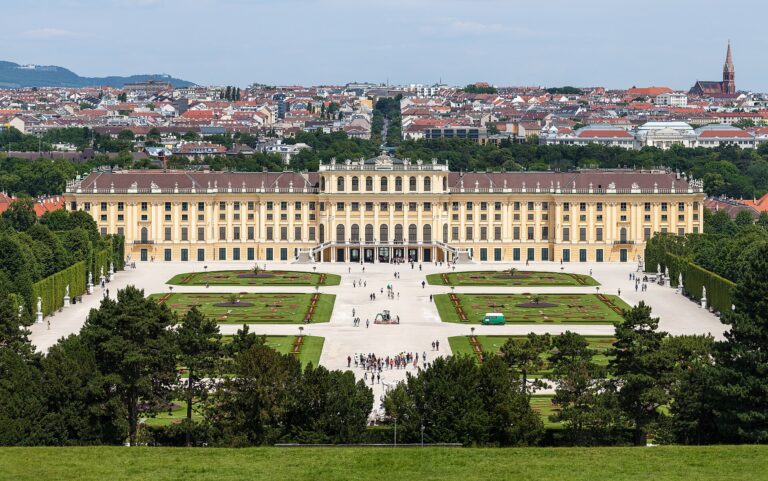
Highlights: the Habsburgs’ summer residence, inscribed as a UNESCO World Cultural Heritage site at the twentieth session of the committee in December 1996, palace and gardens together as one baroque ensemble. What you walk is the first floor, the Bel Etage, with the imperial couple’s private rooms, the ceremonial halls and Maria Theresa’s rococo apartments. The ceiling of the Great Gallery at the centre is a three-part composition by Gregorio Guglielmi; the eastern panel was destroyed by bombing in April 1945 and replaced by a copy painted in 1947 and 1948.
Practical note: the palace runs on timed entry, and the official site states plainly that you should secure a slot online before arriving. The only authorised online seller is imperialtickets.com, and the palace warns about counterfeit sites. The tickets are the Palace Ticket at EUR 42 for the palace alone (about 75 minutes), the shorter State Apartments at EUR 30 (about 40 minutes), and the Classic Pass at EUR 49 covering palace, gardens and Gloriette (three to four hours). Last admission everywhere is 45 minutes before closing.
- Admission
- Classic Pass EUR 49; Palace Ticket EUR 42; State Apartments EUR 30
- Hours
- Palace daily 8:30–17:30 (to 18:00 in July and August)
- Gardens
- Free; gates from 6:30 (to 20:00 in September, to 21:00 May to August)
- Nearest
- Schönbrunn on U4
What makes the ticket choice awkward is that the gardens are free to walk and the Classic Pass still costs EUR 49. The extra EUR 7 buys the charged enclosures inside the gardens: the Gloriette viewing terrace, the Privy Garden, the Orangery Garden and the maze.
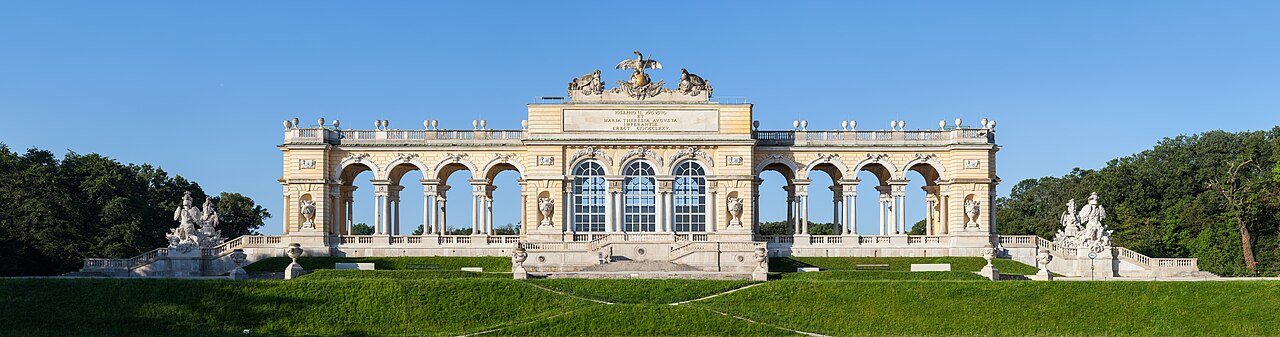
The Gloriette stands on the hill at the south end of the gardens. The centre is shaped as a triumphal arch with an imperial eagle on a globe above it, and the wings are arcades of semicircular arches. Many of the paired columns and capitals were reused from the Neugebäude palace, begun by Maximilian II in 1568 and never finished. The east wing was destroyed by bombing in 1945, rebuilt after the war and fully restored in 1994 and 1995.
The viewing terrace up there is reachable only by stairs. So is the Privy Garden, and neither takes a wheelchair. The maze does. From September to 25 October it opens 9:30 to 17:30, with last entry half an hour before.
Afternoon: the Hofburg shuts at 16:30, and so does the cathedral nave
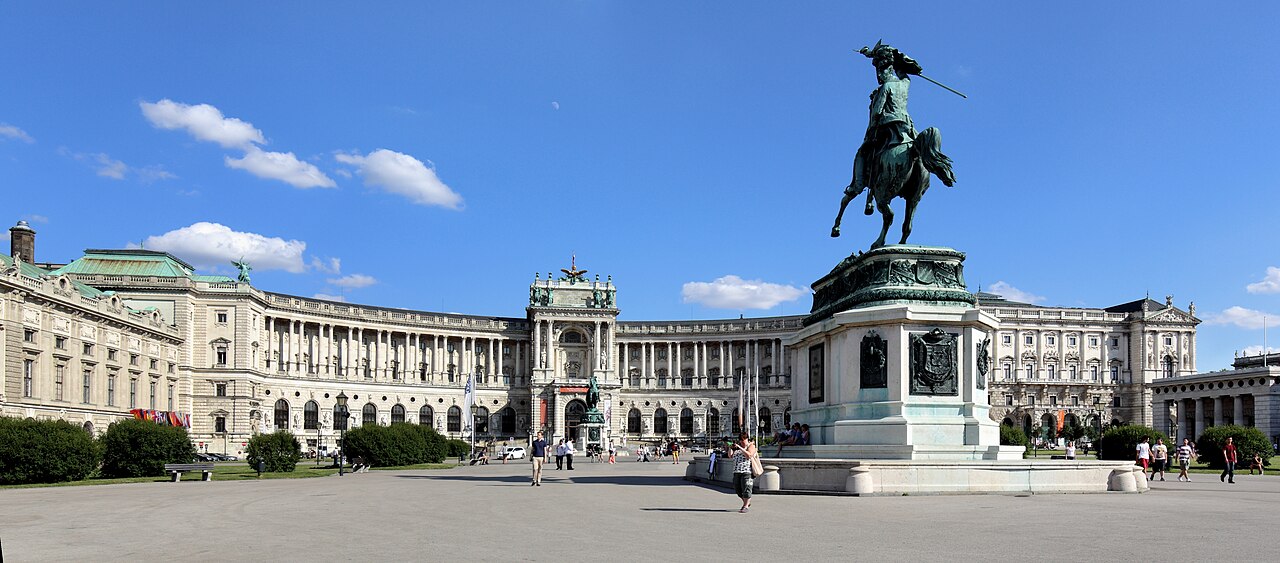
Highlights: the winter palace the Habsburgs lived in for more than 600 years. From the eighteenth century they summered at Schönbrunn, so one day here puts the same family’s winter and summer side by side. The Sisi Museum opened in 2004 in the Stephan Apartment, named for Archduke Stephan. It was designed by the stage designer Rolf Langenfass and built around poems Elisabeth wrote herself.
Practical note: the entrance is under the cupola of the Michaelertor, at Herrengasse on U3. Arriving from the Heldenplatz side means walking round to the far side. It opens daily 9:00 to 17:30, last admission 16:30. This is timed entry as well, and imperialtickets.com is again the only authorised seller. From 6 October to 18 November 2026 the final phase of refurbishment shortens opening to 16:30 and closes the museum section, with prices reduced by 25% in exchange.
- Admission
- Day ticket (Sisi Museum and Imperial Apartments) EUR 20; with a guide EUR 25
- Hours
- Daily 9:00–17:30 (last admission 16:30)
- Time needed
- About 60 minutes
- Nearest
- Herrengasse on U3
St Stephen’s Cathedral is just under ten minutes’ walk from here, and there is a reason to hurry. The nave can only be visited freely from 13:00 to 16:30. On weekdays there is also a 9:00 to 11:30 window, but the morning has gone to Schönbrunn.
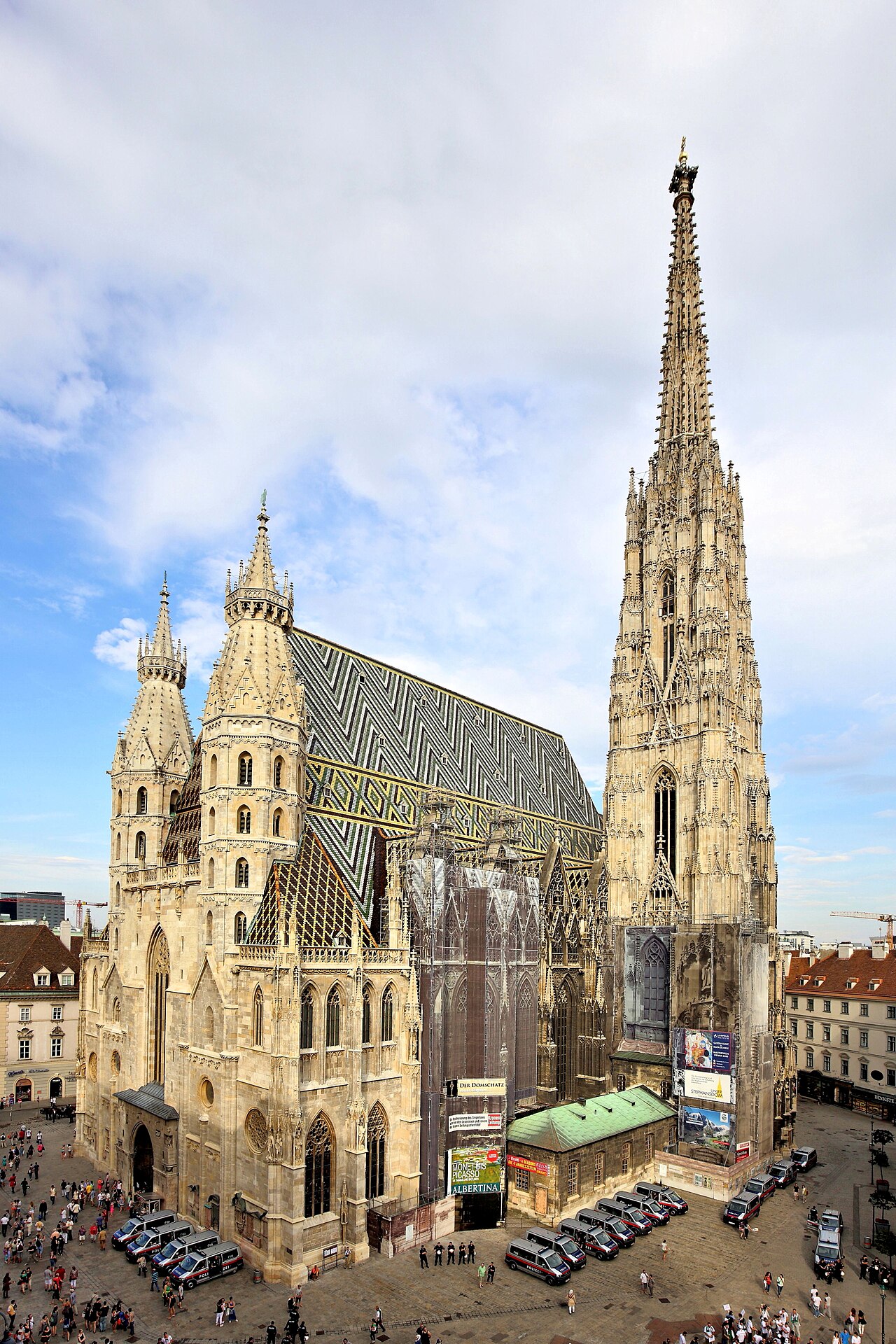
Highlights: the Gothic cathedral at the dead centre of the old town, its roof patterned in zigzags legible from the air. The south tower is 136.4 m and Viennese call it Steffl; the north tower stopped at 68.3 m, unfinished, and is called the eagle tower after the imperial double-headed eagle. Below are the tombs of bishops and princes, and the catacombs that run under Stephansplatz.
Practical note: entering the building is free, but going into the nave to look around is charged at EUR 8.00 for an adult. No booking. Viewing hours are Monday to Saturday 9:00 to 11:30 and daily 13:00 to 16:30, with the official caveat that liturgy takes precedence, so a mass stops the visiting. The catacombs are guided tour only.
- Nave
- Adult EUR 8.00; up to 14 EUR 3.00
- Viewing hours
- Mon–Sat 9:00–11:30; daily 13:00–16:30
- Catacombs
- Guided tour only, adult EUR 8.00 (Mon–Sat 10:00, 11:00, 11:30, 13:30–16:30)
- Nearest
- Stephansplatz on U1 and U3
Evening: the south tower is open until 19:00, so it goes last
What settles the shape of this day is that the towers keep different hours from everything else. The nave ends at 16:30 while both towers stay open to 19:00, with the last climb up the south at 18:15 and the last lift up the north at 18:30. Two palaces in and you can still go up.
The south tower is 343 steps under your own power. No lift. From the watchman’s room at the top, the roofs of the old town and the green of the Ringstrasse sit in the same field of view. For the easier version, the north tower has a lift to a viewing platform and puts you beside the Pummerin, the largest bell in Austria. Both cost the same EUR 8.00 for an adult.
To see the nave, both towers, the catacombs and the cathedral museum, the all-inclusive ticket is EUR 29.00. Bought separately those come to more than EUR 32.00, so three or more of them makes the combined ticket cheaper. It is valid for a year from issue, and each one carries one child under 14 free.
DAY 3July and August do not exist on the opera house calendar
Why this order: put the Belvedere, which needs a booked slot, in the morning; the opera house in the afternoon; a cafe at night. Everything stays inside one tram and one metro line.
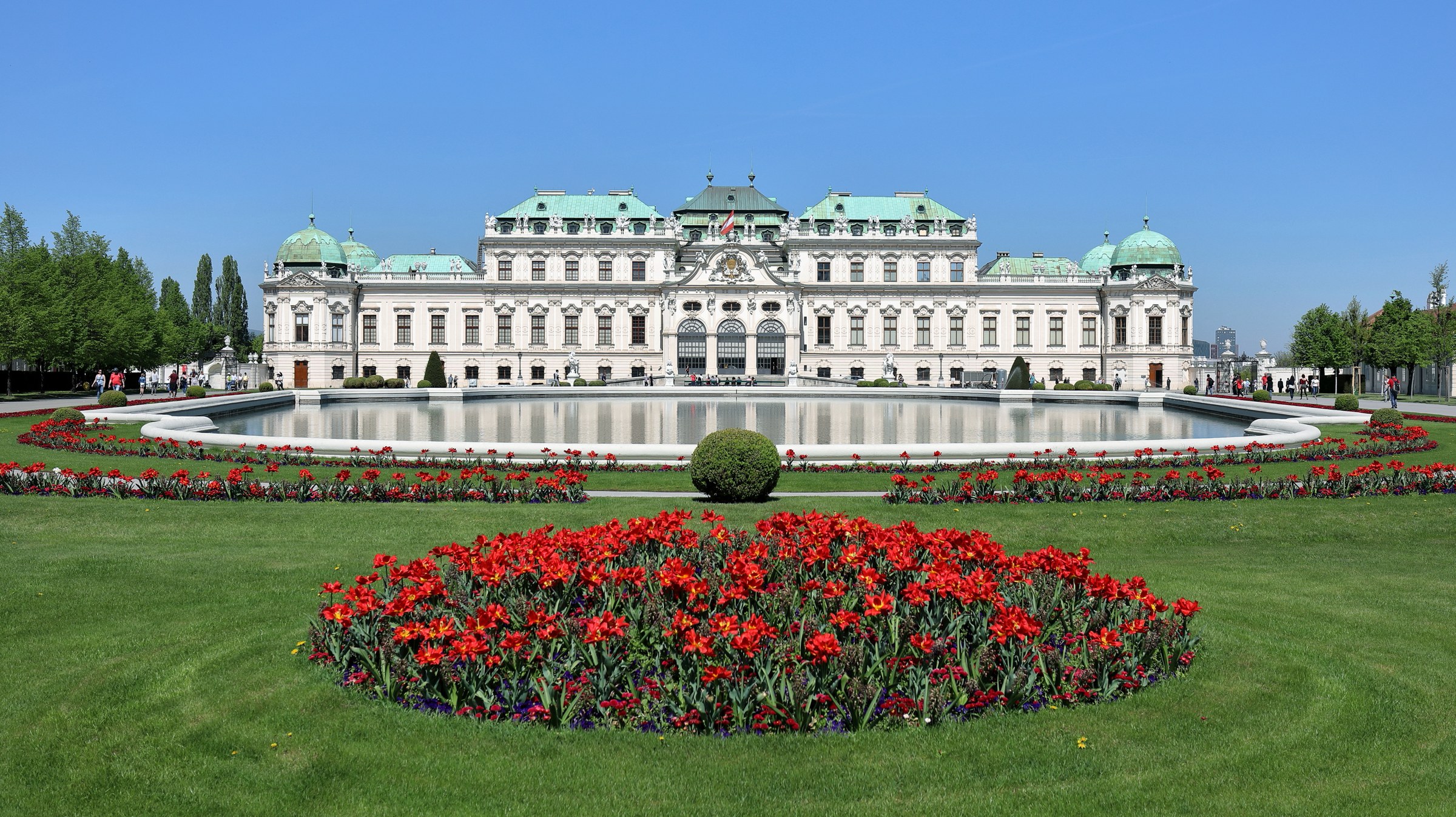
Highlights: Prince Eugene’s summer palace turned into a museum. The official line is a baroque palace and 800 years of art history, with masterpieces by Klimt, Schiele, Funke, Messerschmidt and Van Gogh. The permanent display runs as a single narrative called Picture this!, from Cranach to Lassnig. The gardens count among the more important examples of late baroque garden design in Europe.
Practical note: every site requires a booked time slot. There is no closing day, and the Upper Belvedere opens daily 9:00 to 18:00, extending to 19:00 only from 15 July to 31 August. Doing the Upper and Lower Belvedere on the same day, the two-site ticket bought on the day is EUR 32.00 against EUR 43.00 separately, EUR 11 less. Under-19s go free. Tram D stops at Schloss Belvedere in front of the Upper Belvedere, and it is about 15 minutes on foot from Wien Hauptbahnhof.
- Admission
- Upper Belvedere EUR 23.00; under 26 and over 65 EUR 19.00; under 19 free
- Two-site ticket
- Upper and Lower, on the day, EUR 32.00
- Hours
- Upper Belvedere daily 9:00–18:00 (no closing day)
- Nearest
- Tram D, Schloss Belvedere; 15 minutes on foot from Hauptbahnhof on U1
Most people come for Klimt’s The Kiss. The permanent display runs as one continuous argument, though, and works move within it. Which room it is hanging in on the day is answered by the signage inside.
Afternoon: come in summer and there are no performances at all
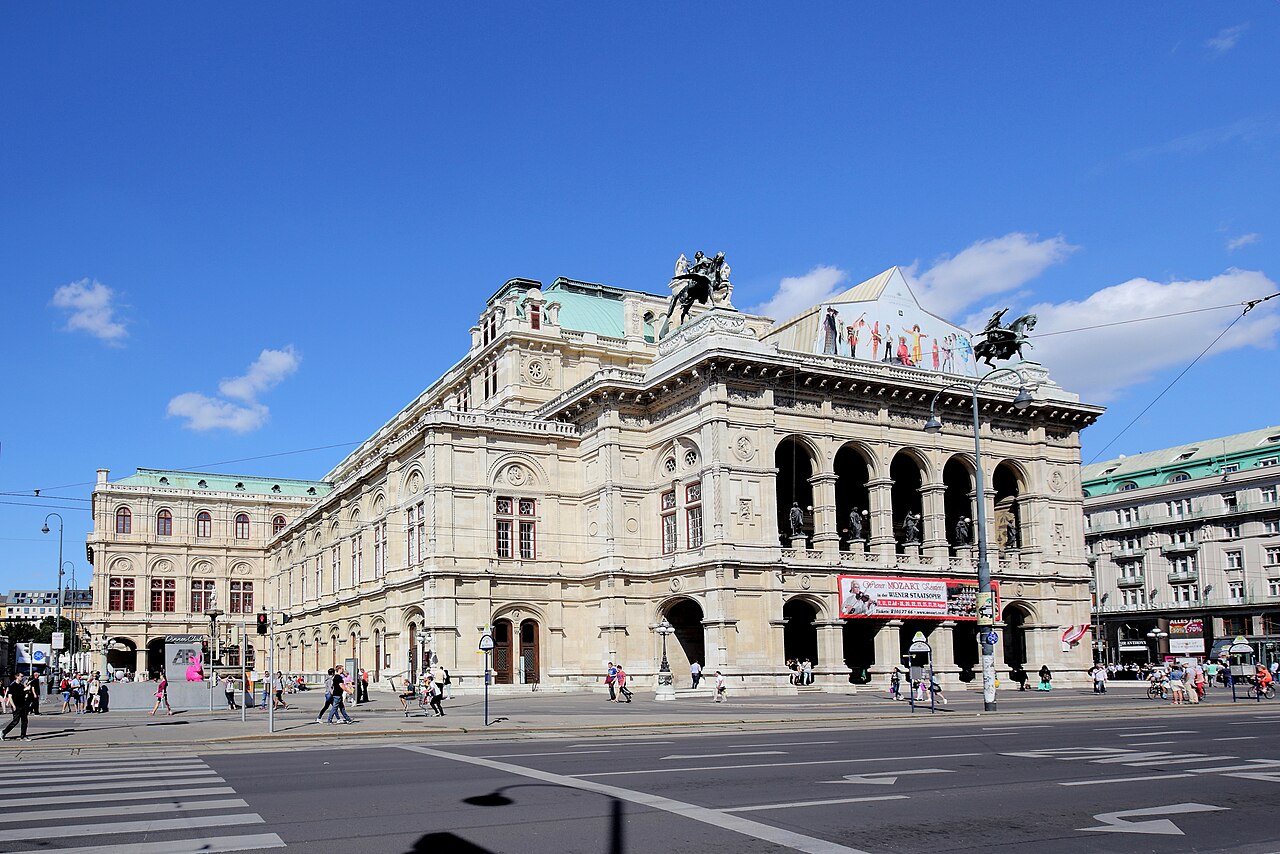
Highlights: 1,700 seats and 435 standing places, and the house calls itself the largest repertory opera house in the world. Every seat has a subtitle screen carrying English, German and the original language permanently and up to eight languages in all. The guided tour goes from the entrance hall up the grand staircase, through the reception rooms and into the auditorium, looking at the stage from the front.
Practical note: July and August do not appear on the official calendar. The month tabs for the 2026/27 season run from September to the following June, ten months, and the July and August URLs return 404. The season opens on 4 September 2026 with Don Carlo and closes on 30 June 2027. In summer the guided tour is the main event. The standard tour is EUR 18 for an adult and EUR 14 for under-27s and seniors, and there are tours in Japanese. If places are left you can buy on site 30 minutes before it starts.
- Guided tours
- Standard, adult EUR 18 (about 40 minutes); backstage EUR 48 (about 90 minutes, selected Sundays)
- Standing places
- 435, sold on the day only (online and at the box office from 10:00; the standing-room window opens 80 minutes before curtain)
- Seat sales
- The current month plus the following two are always on sale (a March performance goes on sale on 1 January)
- Nearest
- Karlsplatz on U1, U2 and U4
There are 435 standing places and they exist only on the day of the performance. The lowest figure the house publishes is EUR 4, carrying a note about the membership card; the real price appears per performance in the booking screen. For a comparison on the same date, the Spanish Riding School in the same city ran from EUR 188 at the top down to EUR 36 standing.
On clothing, the phrase you see repeated is that it depends on the performance. The house itself draws a clearer line than that: flip-flops, vest tops worn as underwear and extremely short shorts may be refused at the door. Headwear that blocks the view of the people behind you is out as well. There is no formal dress code, so anything above that floor will do.
Doors open an hour before curtain. Arrive late and you wait for the interval, and there is no admission at all after the interval.
Evening: the cafe culture is not on the UNESCO representative list
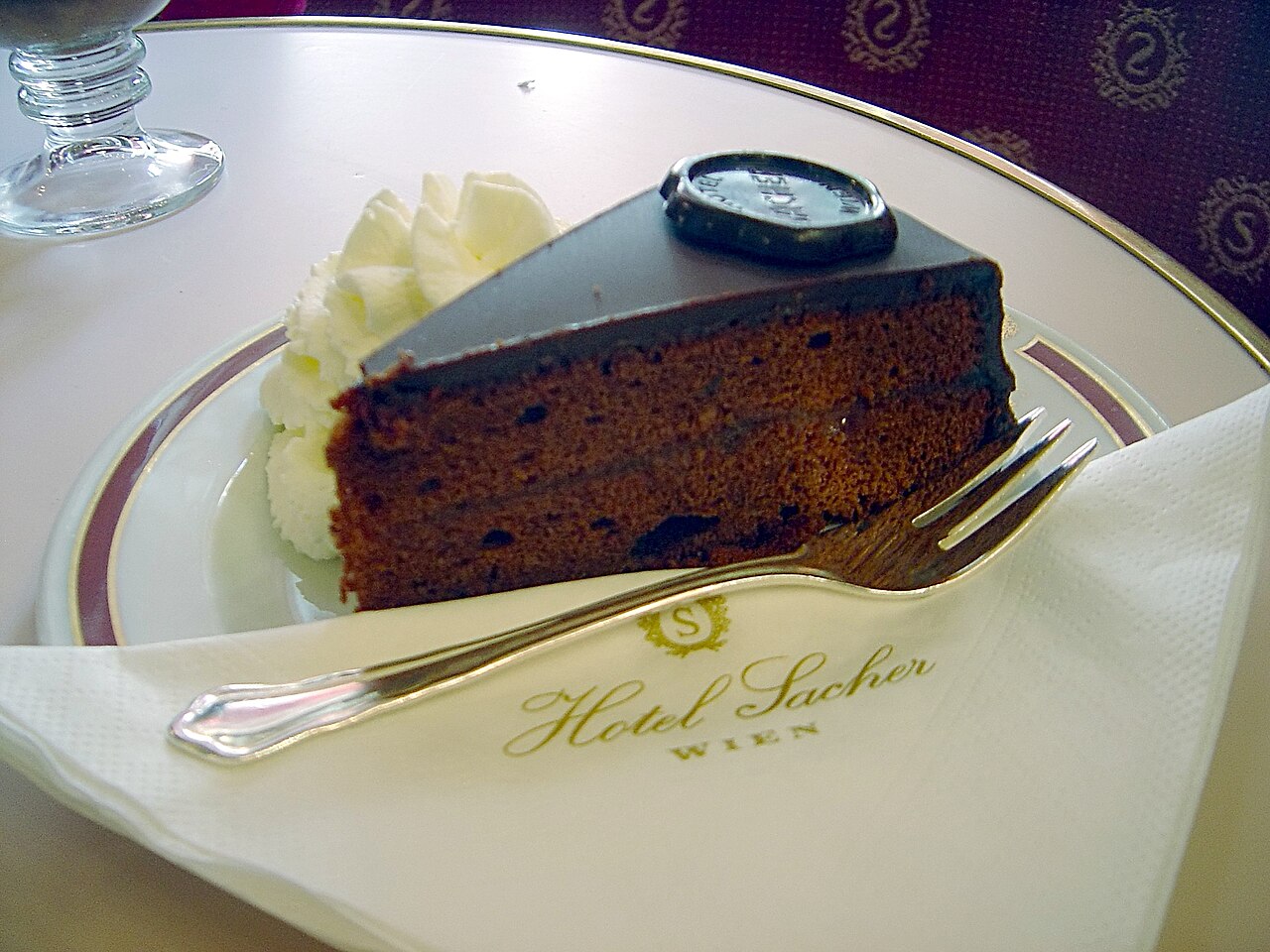
Viennese coffee house culture gets described as UNESCO intangible cultural heritage. What it actually is, is an entry made in 2011 on the national inventory of intangible cultural heritage maintained by the Austrian UNESCO Commission, and it is not on the UNESCO representative list. The wording of the national entry is worth having: small marble tables, Thonet chairs, booth seating, the little racks the newspapers hang on, historicist interiors. And a place where time and space are consumed and only the coffee appears on the bill.
What Vienna does have on the UNESCO representative list is the classical horsemanship of the Spanish Riding School, inscribed in 2015, with the Lipizzaner breeding tradition added in 2022. Performances in the Winter Riding School start at EUR 26, and watching the morning training from EUR 17. No photography at all, and being a historic building there is no lift.
Sachertorte is a name that includes a Hotel Sacher trademark. A Melange is coffee with milk, and it is not the cream-topped drink sold in Japan as Viennese coffee. Read the bill at the end: the city tourist board’s guidance is that a tip of 5 to 10% is customary, but not to pay twice if service is already on the bill.
DAY 4-5Checkout adds 5% of the room rate
Why this order: count backwards from the time you need to be at the airport. With the trunk line shut, settle the route out of the city the night before.
At checkout a charge appears that was not in the booking-site price. It is the Ortstaxe, the lodging tax, and the rate went from 3.2% to 5% on 1 July 2026. From 1 July 2027 it becomes 8%. It applies to the room rate after VAT and breakfast are taken out, under the Vienna Tourism Promotion Act. Anyone staying more than three months in the same property, and students at a university in the city, are exempt.
A rate that rises by half in one year and by another 60% the next is not one to budget from last year’s hotel bill.
The morning goes to shopping and cafes. Graben and Kärntner Strasse are the spine of the old town, and walking from the opera house to the cathedral takes you along both. For changing money the banks are better value, and the city tourist board warns about the commissions at bureaux de change. Banks open on weekdays 8:00 to 12:30 and 13:30 to 15:00, until 17:30 on Thursdays. In the first district most stay open through lunch.
Go back to the airport the way you came. Long-distance trains leave Wien Hauptbahnhof every 30 minutes from 05:42 to 22:42, and from the airport from 06:33 to 23:02, then 00:02. The CAT replacement bus runs every 15 minutes until 24:00. With the closure adding a change to the journey, leaving the hotel 30 minutes earlier than you would have is the safer arithmetic for a morning flight.
Why we skipped the imperial silver collection
Guides to the Hofburg usually list the Silberkammer, the silver collection, alongside the Imperial Apartments and the Sisi Museum. It is the room holding the tableware and silver that served the Habsburg table, and it used to be inside the combined ticket.
It cannot be entered now. The official ticket page carries a note that the silver collection has been closed until further notice since 1 April 2023, with no reopening date given. That is why this route runs the Hofburg as two sites rather than three. Budget for three and the afternoon comes out an hour long.
To use that hour, the morning training at the Spanish Riding School on the same Michaelerplatz is the candidate. It starts between 10:00 and 11:00, runs about 60 minutes, and costs from EUR 17. It collides head-on with the morning of day two, though, so it only works on dates where Schönbrunn can move to day three.
One more thing worth knowing is the Sisi Museum’s own refurbishment. From 6 October to 18 November 2026 the final phase closes the museum section and leaves only the imperial couple’s apartments open, with prices cut by 25% for the duration. On dates inside that window, a visit aimed purely at the interiors is the cheaper one.
Alternatives
Rainy-day swap
The vulnerable stretch is the morning of day two. Of the EUR 49 in a Classic Pass, the outdoor parts are the Gloriette terrace, the Privy Garden, the Orangery Garden and the maze. Rain makes all four hard to use.
If the forecast is readable the night before, drop to the EUR 42 Palace Ticket. That is EUR 7 a head, EUR 14 for two. The palace interior alone takes about 75 minutes, so the time released goes into the afternoon. Because the ticket is timed, this is a decision made when booking rather than a swap at the door.
Day three is the rain-resistant one. The Upper Belvedere and the opera house are both indoors and the travelling is by tram and metro. A cafe, if anything, suits rain better. Where days two and three can be exchanged, less is lost that way. Just remember that the Belvedere and Schönbrunn are both timed when you move them.
If the flight is delayed by an hour or more
Because day one holds nothing timed, a late outbound costs only the evening walk on the Ringstrasse. That is a free stretch, so there is no money in it.
Only a middle-of-the-night arrival narrows the routes. The last long-distance train from the airport is 23:02 and the one after it is 00:02. The CAT replacement bus runs every 15 minutes to 24:00. Past that you are waiting at the airport until morning, so on any flight scheduled to land after 22:00, settle how you get to the hotel in advance.
Day two is the frightening one. Schönbrunn and the Hofburg both admit by timed slot, with no guarantee of getting in later on a slot you missed. To absorb a possible delay, book Schönbrunn for 10:00 or later rather than at the 08:30 opening.
When you’re tired
The first thing to drop is the south tower on the evening of day two. It is 343 steps on your own legs, and after two palaces it will be felt. Switching to the north tower’s lift keeps the same EUR 8.00 and removes the stairs.
The Gloriette at Schönbrunn goes next. It stands on the hill at the south of the gardens and the terrace is stairs only. Dropping it and taking the Palace Ticket returns EUR 14 to the two of you.
What must not be cut is the Belvedere on the morning of day three, because the slot is booked and cannot be re-entered on a whim. Who this route does not suit is anyone who feels a day of stairs the next morning. The 343 steps in the south tower, the stairs to the Gloriette, the Bel Etage at Schönbrunn, the boxes at the opera house. The first and second gallery levels at the opera have no lift either, and the royal box at the Spanish Riding School is stairs only. Treat this as a city measured in steps rather than paces.
Where to stay
For 2026 into 2027 there is one extra condition on choosing a room: not landing in the area the S-Bahn closure has made awkward. Wien Mitte and Wien Rennweg are stations with no trains at them right now.
On that basis the straightforward choice this year is around Wien Hauptbahnhof. Long-distance trains from the airport arrive in 14 to 17 minutes, twice an hour. U1 runs into the old town, and the Upper Belvedere is 15 minutes on foot, so the morning of day three starts from the front door.
Staying in the first district puts the whole afternoon and evening of day two inside walking distance. The Hofburg to the cathedral is just under ten minutes and the cathedral to the opera house about the same. More places stay open late, and the banks work through lunch. Against that, rooms cost the most in the city here, and because the lodging tax is a flat 5% the tax grows with them.
Landstrasse, around Wien Mitte, is where the CAT replacement bus starts and ends. On the single point of arriving 21 minutes non-stop from the airport it is strong. With no trains, though, getting around the city means relying on U3 and U4.
Book in this order: flights, the timed slots at Schönbrunn, the Hofburg and the Belvedere, then the room, then the opera. The opera goes last because general seat sales cover the current month plus the following two. A March performance goes on sale on 1 January, so a trip decided earlier than that means going through the pre-order instead. Connectivity is split by party size in the eSIM and pocket Wi-Fi break-even.
What this trip costs
Assumptions: two adults, a seven-day city transport ticket, and paid entry at five places, Schönbrunn on the Classic Pass, the Hofburg, the nave and south tower at St Stephen’s, the Upper Belvedere and the State Opera guided tour. The airport runs are two single VOR tickets each way. Flights, rooms and meals are out of the total, and so is the lodging tax, which is a percentage of the room rate.
Every figure above is the published rate as of 2026-09-20. The yen conversion uses the European Central Bank euro reference rate of 2026-09-18, JPY 180.94.
Of the EUR 324.40, admissions are EUR 252.00 and transport EUR 72.40. In a city of palaces and museums the admissions take more than 70% of it. The heaviest single line is the Schönbrunn Classic Pass at EUR 98.00 for two, which is 30% of the whole total on its own.
City transport has an odd twist in it. Wiener Linien sells no 48-hour and no 72-hour ticket. The line-up is 24 hours, 7 days and 31 days, so a three-day stay is a choice between three 24-hour tickets at EUR 29.10 and one 7-day ticket at EUR 25.20. The shorter option is the more expensive one.
Where the 48-hour and 72-hour options survive is the Vienna City Card sold by the tourist board, at EUR 37 for 72 hours. That is EUR 11.80 above the seven-day ticket and carries discounts at museums and attractions. The Upper Belvedere discount, though, takes EUR 23.00 down to EUR 21.50, EUR 1.50, so closing an EUR 11.80 gap needs it used at eight places. Three nights does not reach that. At Schönbrunn there is no discount at all, only an extra step of booking the timed slot on a different site.
There are two places to cut. Dropping Schönbrunn to the Palace Ticket returns EUR 14 for two, and swapping the opera tour for a standing place takes EUR 36 down to a few euros. Going the other way, the cathedral all-inclusive adds EUR 58.00 for two, the Belvedere two-site ticket EUR 64.00, and a Spanish Riding School performance from EUR 52.00 for two. Move up the seating grades and it reaches EUR 188 a head.
On top of all this sit the flights, the room, the food and the 5% lodging tax. The exchange rate has moved within the year as well. JPY 180.94 to the euro is the European Central Bank reference rate for 18 September 2026, 6.4% above the JPY 170 that budgets used to assume. The same EUR 324.40 is about JPY 55,100 at JPY 170 and about JPY 58,700 at JPY 181.
Who this route does not suit is anyone who wants to spend a day on one place. Day two packs two palaces and a cathedral into a single date and runs the whole way against last-admission times. To look at art slowly, split the Belvedere and Schönbrunn onto separate days and take four nights instead.
The line closure is scheduled to last until the end of October 2027. Until then the airport routes hold this year’s shape, so check the date on anything written before it. To pair the city with its neighbour, the Prague three-night plan is the same length; to add a castle, Munich and Neuschwanstein over four nights; and to turn towards the mountains, the Swiss Alps over five is the closest in scale.
Sources: Schönbrunn Palace; St Stephen’s Cathedral; the Sisi Museum and Imperial Apartments; the Spanish Riding School; the Belvedere; the Vienna State Opera; Wiener Linien; the Vienna Tourist Board; the City of Vienna (Ortstaxe); ÖBB; VOR; City Airport Train; Vienna Airport Bus; the Austrian Embassy in Japan; the European Union (Schengen Borders Code, EES, ETIAS); the Austrian UNESCO Commission; UNESCO intangible cultural heritage; the European Central Bank (exchange rates) / Checked on 2026-09-20 / Photographs: Thomas Wolf (www.foto-tw.de), C.Stadler/Bwag, David Monniaux (Wikimedia Commons, CC BY-SA 3.0 / CC BY-SA 3.0 de / CC BY-SA 3.0 at / CC BY-SA 4.0)
Other sales ending soon




 4 days leftuntil Oct 24Air Busan Takamatsu-Busan Coupon: Up to 9,000 Yen Off Until October 24
 5 days leftuntil Oct 25JAL Hong Kong Campaign: Tokyo–Hong Kong Round Trip from 75,800 Yen (until 25 Oct)
 11 days leftuntil Oct 31Jin Air Kobe–Seoul: 5,000 yen off a round trip with code KTOUKB1, until 31 October
 11 days leftuntil Oct 31Jin Air to Busan: 4,000 yen off a round trip with code KTOPUS, first 300 only