Prague 5-Day Itinerary: Astronomical Clock and Prague Castle
AuthorMIRUTOBE editors
Table of Contents9 items
- Itinerary
- DAY 1 Bus 119 from the airport does not run any more
- DAY 2 Crossing the bridge is free; climbing the towers is not
- DAY 3 The cathedral cannot be entered on a Sunday morning, and that fixes the castle day
- DAY 4-5 The lodging tax counts days of stay, not nights, and skips the first
- What closes by the day and what shrinks by the hour
- Alternatives
- Where to stay
- What this trip costs
Three nights in Prague, a day for the old town east of the river and a day for the castle across the bridge. On the ground the two of you spend CZK 4,100. It costs less than western Europe, but St Vitus shuts on Sunday mornings and the Jewish Museum closes on Saturdays, so the weekday you land changes the contents.
Itinerary
DAY 1Bus 119 from the airport does not run any more
Why this order: day one is the journey and the ticketing. Nothing with a closing time, and the evening stays within walking distance of the room.
From Václav Havel Airport into the city, the normal method is a bus out to a metro station and a change there. The 119, recommended for years, was replaced by trolleybus 59 on 6 March 2024. Arrive with only the number memorised and there is nothing at the stop to find.
Fares went up on 1 January 2026. The 90-minute ticket moved from CZK 40 to CZK 50 and the 24-hour ticket from CZK 120 to CZK 150. The 72-hour ticket is CZK 350. One 90-minute ticket carries you through bus and metro together, so the airport to the hotel takes one ticket even with a change. The CZK 39 half-hour ticket does not reach the centre.
With a suitcase you need a second one. Luggage larger than 25 by 45 by 70 centimetres requires a CZK 25 baggage ticket, which makes CZK 75 in total if you are dragging something over cabin size in from the airport. But holders of the 24-hour and 72-hour tickets carry one large item free. Counted across three nights, buying 90-minute tickets as you go and buying one 72-hour ticket both land at about CZK 350. The baggage allowance is what makes the 72-hour version the better buy.
The Airport Express is separate and does not take ordinary PID tickets. Its own ticket is CZK 200 for an adult and CZK 100 for ages 6 to 15. In exchange luggage is free and it runs around the clock. Staying near the main station, it is a single ride with no change.
A paper ticket is validated once, on the first journey only. The 24-hour and the 72-hour both get one stamp when you first board. At the yellow terminals inside the metro, tapping a contactless card issues a ticket with the expiry already on it and no stamping at all. Forgetting to validate, or travelling without a ticket, carries a penalty fare.
The currency is the Czech koruna, not the euro. The Japanese foreign ministry warns that anyone offering to change currency on the street is running an illegal exchange and that counterfeit notes are handed over. The Japanese embassy in Prague cites a case near Charles Bridge where someone was approached with an offer of a good rate and given one CZK 200 note with the rest made up of low-value foreign currency. Change money in a proper shop and pay by card where you can. Carrying two cards on different networks, kept apart, is the practical preparation.
Entry procedure has a different shape from last year. The EES border system went into full operation on 10 April 2026 and the passport stamp has been replaced by an electronic record. What is taken is four fingerprints and a facial image, the passport data, and the time and place of each crossing. At Prague airport you can register yourself at a self-service terminal in the arrivals area before passport control.
ETIAS, the electronic travel authorisation, was still not accepting applications as of September 2026. No start date has been published, and the European Union says it will give several months’ notice. The fee is EUR 20 and it lasts three years or until the passport expires, whichever is earlier, with under-18s and over-70s exempt from the fee. The passport must have three months of validity beyond your planned departure and have been issued within the last ten years, and the stay limit is 90 days in any 180.
Power is 230 V at 50 Hz, more than double the 100 V at home in Japan, so check what your chargers and hairdryer accept before you leave. Where the line falls between an adapter and a transformer is set out in the difference between an adapter and a converter.
DAY 2Crossing the bridge is free; climbing the towers is not
Why this order: cross the bridge early while it is empty, then move to the square to hit the hour. In the afternoon take the Jewish Quarter first, because it closes on Saturdays.
Morning: not “nearly thirty” statues but exactly thirty
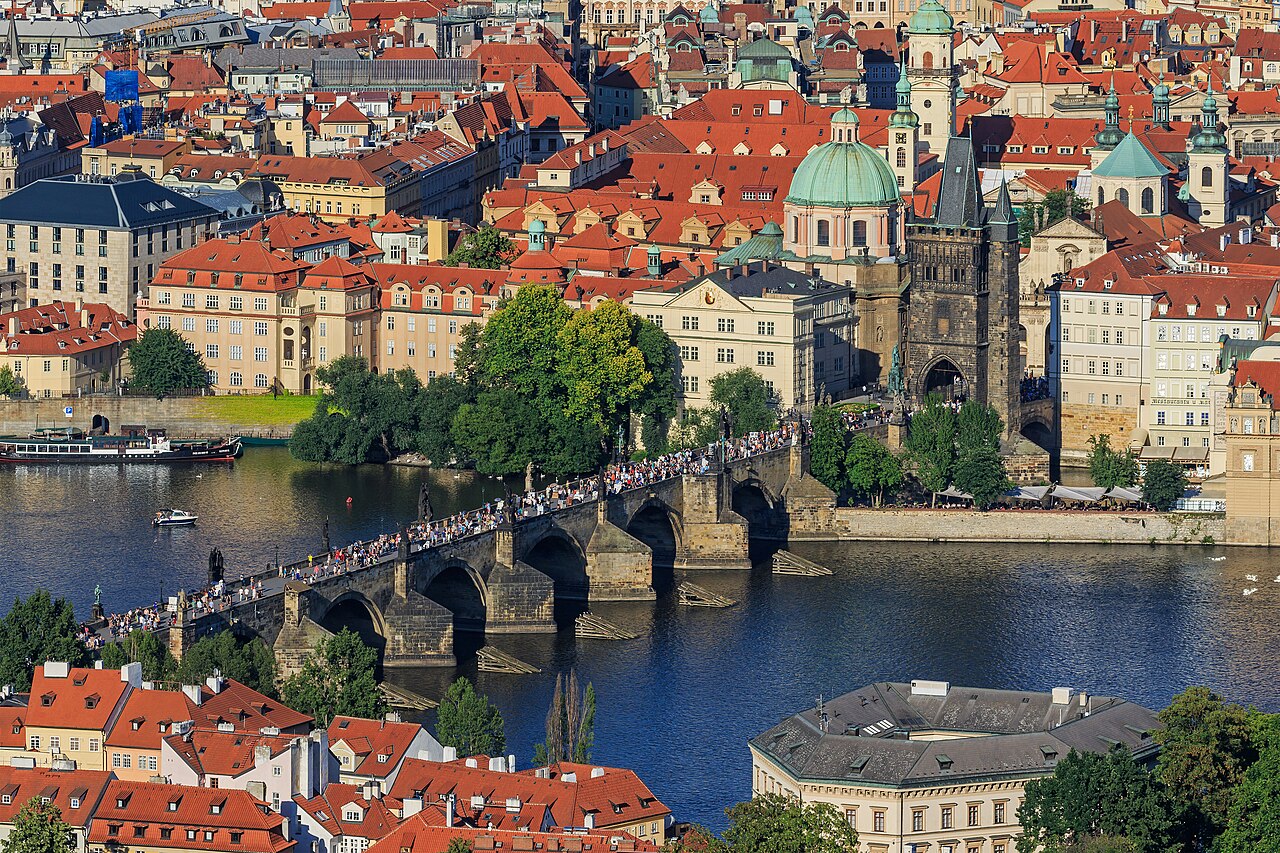
Highlights: a stone bridge built in the middle of the fourteenth century for Charles IV to a design by Petr Parléř, with exactly thirty statues of saints along the parapet. The oldest is the St John of Nepomuk of 1683 by Jan Brokoff, 2.5 m high, weighing 20 quintals and costing 7,000 gold coins at the time, according to the official account. It was dedicated to mark 300 years since his death, and he was actually thrown into the river in 1393; the official text notes that the donors were ten years out.
Practical note: the bridge is a public road maintained by the city, with no admission and no time restriction, so early morning is when it is walkable. Set into the parapet is a brass cross marking where the saint went into the water, and the official account carries the belief that placing a hand with one finger on each of the five stars grants a wish. The five stars are explained as the five letters of tacet, Latin for “it is silent”.
- To cross
- CZK 0 (a public road, no time limit)
- Old Town bridge tower
- Adult CZK 250; June to September 9:00–20:30; 138 steps
- Malá Strana bridge tower
- Adult CZK 200 (a combined two-tower ticket is CZK 340)
- Nearest
- Staroměstská on metro A
Both towers at the ends of the bridge can be climbed. The old-town side is CZK 250 and 138 steps, the Malá Strana side CZK 200. A combined ticket for the two is CZK 340, CZK 110 less than buying them apart. Both towers are half price for the first hour after opening. From June to September that opening is 9:00, so entering by 10:00 costs CZK 125.
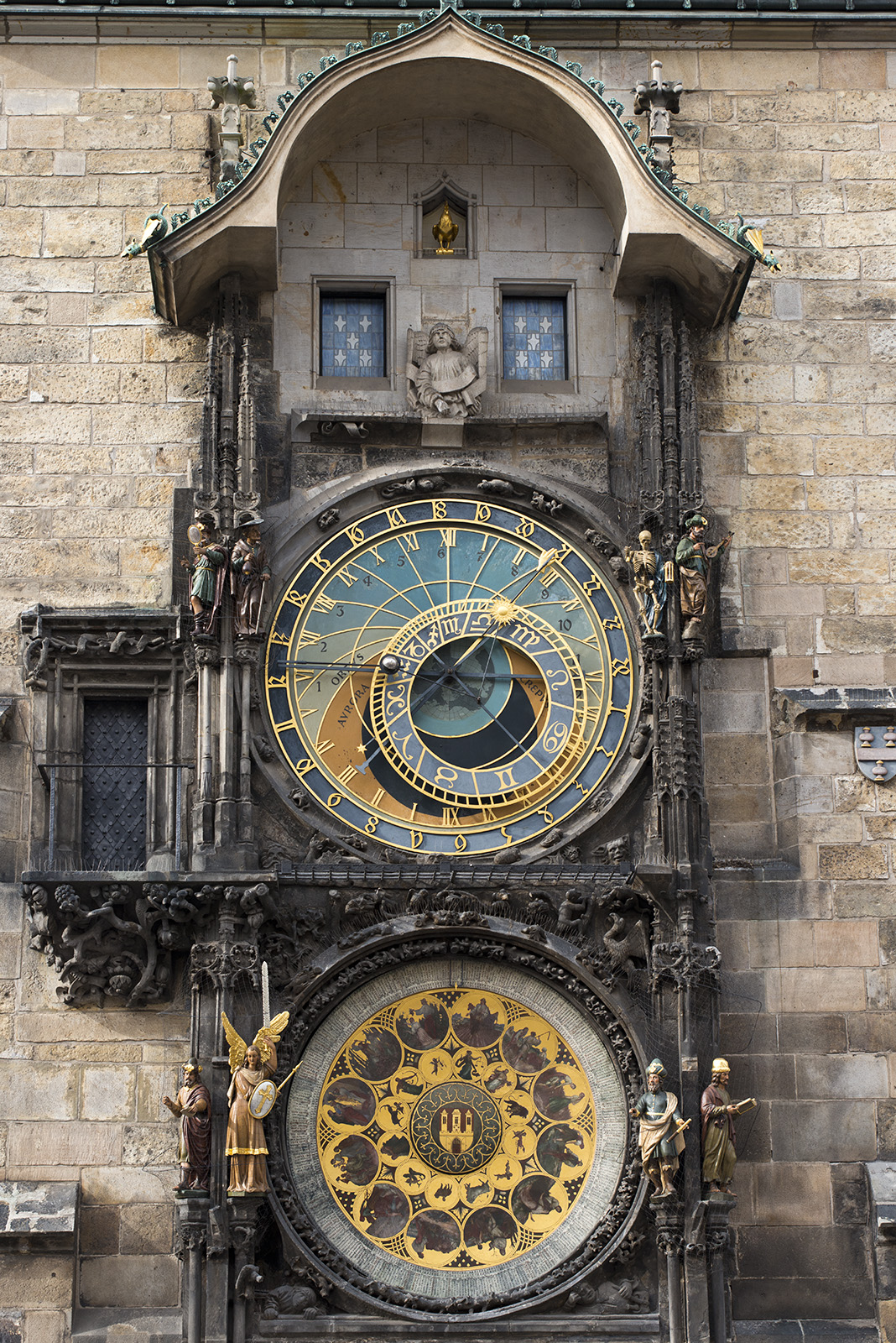
Highlights: the clock on the south face of the tower was made in 1410 by Mikuláš of Kadaň and improved at the end of the fifteenth century by Hanuš of Růže. It is the oldest one still running, and the operator says so. That Hanuš made it is a legend by the writer Jirásek, as the official text states. On the hour a skeleton pulls a rope to ring a bell, the twelve apostles pass in turn across two windows, and a cockerel crows as they close. Beside them a miser nods with his purse and a vain man looks into a mirror.
Practical note: the procession of the apostles runs on the hour, from 8:00 to 23:00 by the official notice. A wall of people forms just before the hour, so take a position early. The tower is CZK 350 by the stairs and CZK 450 with the lift, and the first hour after opening is half price, so with a 9:00 opening from April to December, entering by 10:00 costs CZK 175. The viewing gallery is 42 m up.
- Tower admission
- Adult CZK 350 (with lift CZK 450); ages 6–15 and over 65 CZK 230
- Hours
- Apr–Dec daily 9:00–20:00; Jan–Mar 10:00–19:00
- Historical halls and cellars
- CZK 150 on top of the base ticket (cellars only CZK 100), paid on site on the day only
- Nearest
- Staroměstská on metro A; Náměstí Republiky on metro B
The guided circuit through the Gothic chapel, the reception rooms and the cellars is not a separate ticket but a supplement to the base tower price. From the chapel you see the apostle figures from behind. The supplement is CZK 150, or CZK 100 for the cellars alone. It cannot be bought online and is only paid on site. It runs at fixed times, so you ask about the next departure as you go in.
The Týn Church across the square closes on Mondays. Entry is by voluntary donation and the church suggests around CZK 50. No photography, no food or drink and no talking inside, and men remove their hats. Historical explanation is only allowed outside the building. Inside are the tomb of the astronomer Tycho Brahe and the oldest organ in Prague, built in 1673.
Afternoon: one ticket covers six sites in the Jewish Quarter, and Saturday is closed
Highlights: the Maisel, Pinkas, Klausen and Spanish synagogues, the Old Jewish Cemetery and the Old-New Synagogue, six places on one ticket. The walls of the Pinkas Synagogue carry the names of the Holocaust victims of Bohemia and Moravia. In the Old Jewish Cemetery the graves are layered over each other in a narrow plot, and the density of stones leaning out of the ground is the length of the history made visible.
Practical note: closed on Saturdays and Jewish holidays. An itinerary that puts day two on a Saturday loses this whole afternoon. The ticket is CZK 600 for an adult and, for individual visitors, valid across three open days, though each site admits you once. The separate Old-New Synagogue ticket was discontinued on 1 January 2024 and folded into the combined one. Sales stop 30 minutes before closing. The official estimate is two to three hours.
- Admission
- Adult CZK 600; students under 26 CZK 400; ages 7–15 CZK 200; under 6 free
- Hours
- 1 September to 17 October 9:00–18:00 (varies by season)
- Closed
- Saturdays and Jewish holidays
- Nearest
- Staroměstská on metro A
The evening is beer. The standard rate of VAT is 21%, but food in a restaurant takes the reduced rate of 12%. Drinks are outside that, and alcohol including beer carries the standard 21%. On one bill in one restaurant, the plate and the glass are taxed differently.
There is no official rule on tipping. In a survey of about 3,000 people published in September 2026 by the loyalty platform Rondo.cz and the company Nomce, the most common answer for a satisfying meal was 6 to 10% of the bill, at 29.4%. That is a reference figure rather than an official posting, but it gives the order of magnitude. If a line marked obsluha appears on the bill, that is the service charge and nothing needs adding.
DAY 3The cathedral cannot be entered on a Sunday morning, and that fixes the castle day
Why this order: pin the castle, which opens at 9:00, to the morning and walk downhill from there. Come back to the riverbank as the light goes.
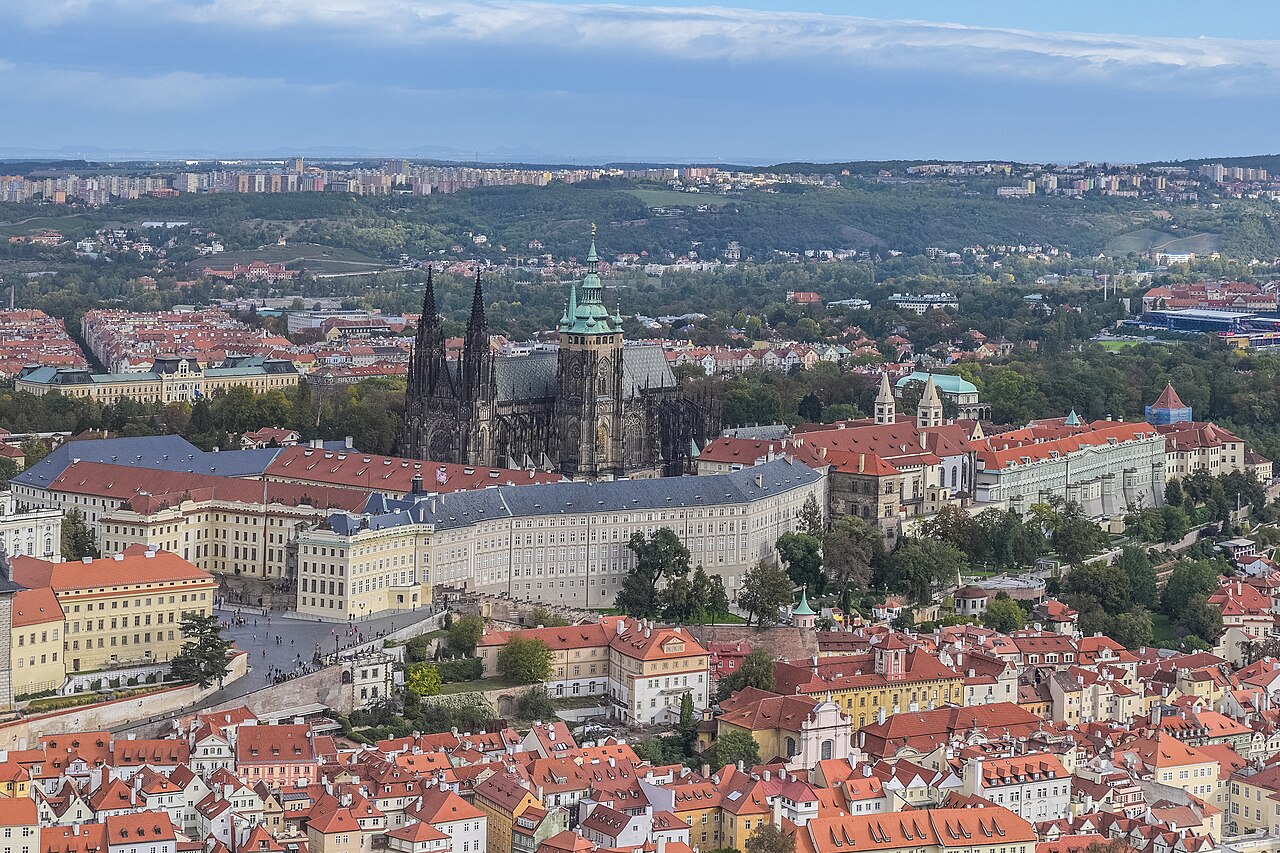
Highlights: the castle grounds themselves are free to walk from 6:00 to 22:00. What is charged for is the insides of the buildings, and the current ticket is a single Main circuit covering four of them: the Old Royal Palace, St George’s Basilica, St Vitus Cathedral, and the Golden Lane with the Daliborka tower. The west end of the cathedral was only finished in 1929, and one of the makers of the new stained glass installed for that completion was Alphonse Mucha. Works by Kysela and Švabinský date from the same moment.
Practical note: on Sundays sightseeing begins at 12:00, with the morning given to masses at 8:30 and 10:00. The standing official timetable says closing at 17:00, while the day-by-day calendar actually runs to 16:00, so planning on being inside until five will catch you out on the ground. Last admission is 20 minutes before closing. Even on weekdays it can close all day for technical reasons, and holidays take the morning. Reading the official calendar for your own date before setting out is the reliable move.
- Main circuit
- Adult CZK 450; ages 6–16, students up to 26 and over 65 CZK 300; family CZK 950
- Validity
- 2 days (each building once only)
- Cathedral visiting
- Mon–Sat from 9:00; Sunday from 12:00 (in practice closing at 16:00, last admission 20 minutes before)
- Grounds
- Daily 6:00–22:00, CZK 0
The Circuit A and Circuit B tickets that older guides mention do not exist on the official site now. The only things sold separately are the cathedral’s viewing tower (CZK 200, 287 steps) and the Prague Castle Picture Gallery (CZK 200), and there is no ticket that admits you to the nave of the cathedral alone. A separate permanent-exhibitions circuit at CZK 300 takes in the picture gallery, the Story of Prague Castle exhibition, the Mihulka powder tower and the Rožmberk Palace.
The guard changes at the gate on every hour from 9:00 to 18:00. At noon alone there is a fanfare and the exchange of standards in the first courtyard. Arriving for the 9:00 opening lands you on the first of them.
Afternoon: Kafka lived at number 22, from 1916 to 1917
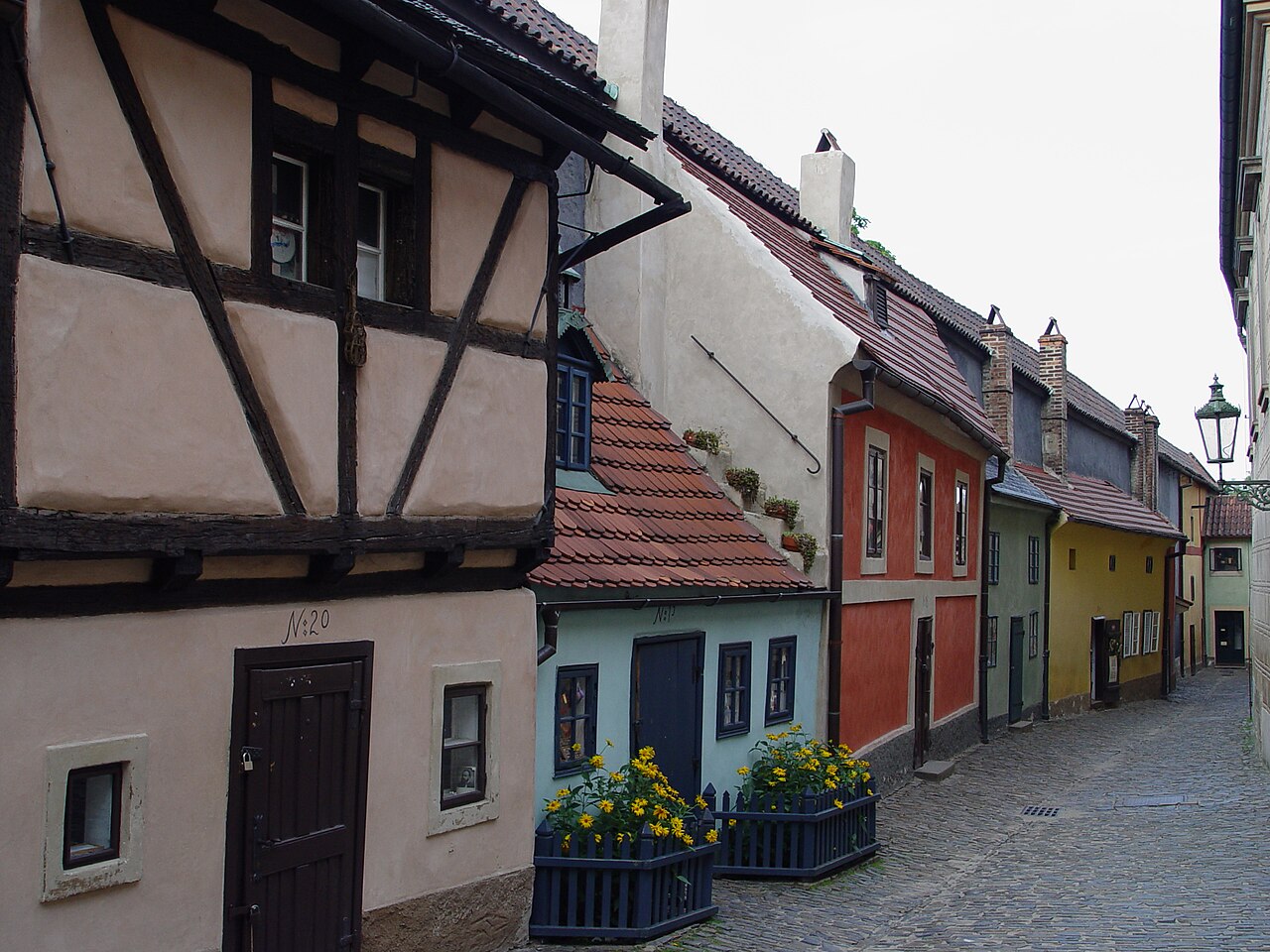
Highlights: a passage of sixteen small houses along the castle wall, nine of them laid out as permanent displays of five centuries of living here. The rest are craft and souvenir shops. A defensive corridor runs above the roofs, lined with armour. The official account states that Franz Kafka lived and worked at number 22 from 1916 to 1917.
Practical note: there is no separate ticket; it is inside the Main circuit. After closing, the lane itself is free to walk. The houses cannot be entered, but the cobbles and the row of facades work perfectly well in the evening. The defensive corridor and the tower are not step-free.
- Entry
- Inside the Main circuit (no separate ticket)
- Hours
- Apr–Oct 9:00–17:00; Nov–Mar 9:00–16:00
- After closing
- The lane is free to walk (not the houses)
- Kafka’s house
- Number 22 (1916 to 1917)
Down from the castle is Malá Strana. St Nicholas Church is the best-known baroque church in Prague, and the official text calls it one of the most valuable baroque buildings north of the Alps. The dome is 20 m across and the interior reaches close to 57 m to the top of the lantern, the tallest interior space in the city. Admission is CZK 150 for an adult and CZK 90 reduced, cash or card only, with no tourist cards accepted. Last admission is 15 minutes before closing.
The bell tower of St Nicholas next door has a similar name and is a different institution with its own price. It is a viewing tower run by the city tourist board, CZK 200 for an adult, and the church ticket does not admit you.
The Lennon Wall belongs to the Knights of Malta and has no admission. At the centre of the wall, remade on 7 November 2019, is a map of the world with the word for freedom in thirty languages on it. Anyone may add to it in pencil, marker or chalk; spray paint is prohibited.
Evening: the lit castle is bigger seen from the far bank
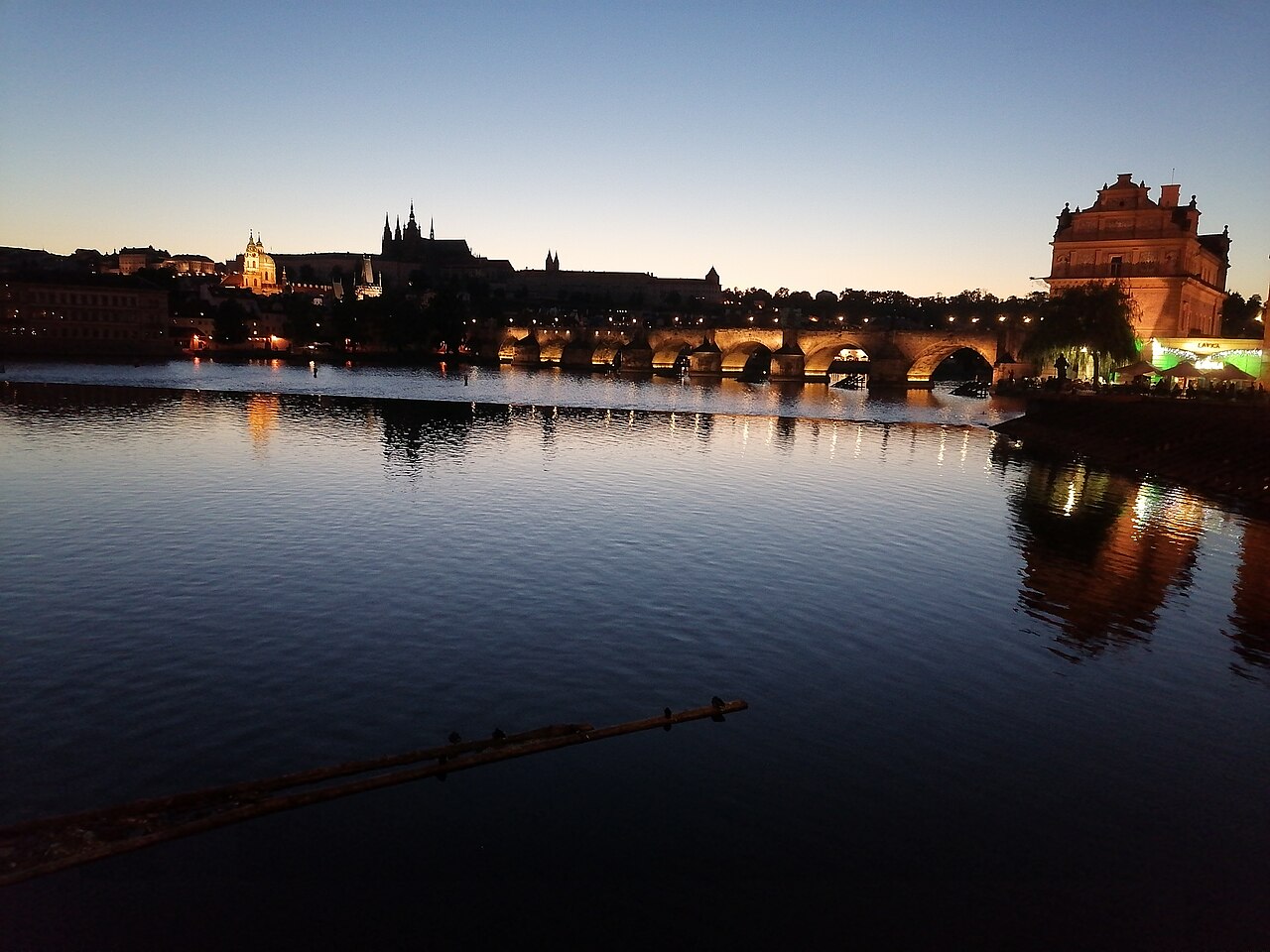
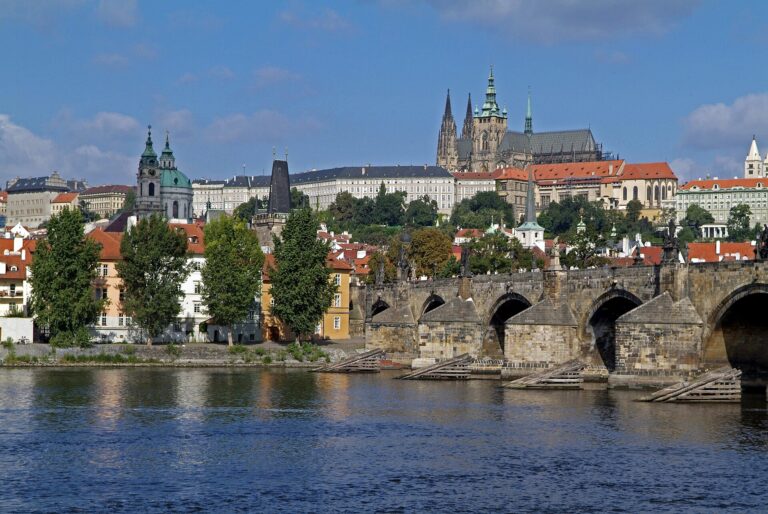
Go back to the river once the light drops. The castle runs long across its hill, so the nearer you get the less of it fits. From the old-town bank opposite, the castle, the cathedral and Charles Bridge sit in one frame. The window is while there is still colour in the sky; once it is fully dark the buildings dissolve into the background.
The lookout tower on Petřín hill is the other night-view candidate, but the funicular up the hill is suspended until 21 September 2026 and reopens on the 22nd with new cars. From the 22nd to the 27th, entry is 20% off. The funicular has its own fare of CZK 60 with no transfers, and neither the 30-minute nor the 90-minute ticket is valid on it.
DAY 4-5The lodging tax counts days of stay, not nights, and skips the first
Why this order: count backwards from the time you need to be at the airport. Keep the morning inside walking distance and put the metro ride with the luggage at midday.
At checkout a charge appears that was not in the booking-site price. It is the Prague lodging tax, CZK 50 per person per night. The ordinance is worded unusually: what is charged is each commenced day of the stay, excluding the day the stay begins. Three nights is CZK 150 a head. Under-18s are exempt, and a stay of more than 60 consecutive days in the same property falls outside it.
Do the morning’s shopping in the old town. The commercial centre runs from Wenceslas Square to the Old Town Square, with Můstek, where metro lines A and B cross, in the middle of it. Bohemian glass, wooden toys and named beers are the standard things to take home.
Retrace the way in to reach the airport. The metro runs from about 5:00 to about midnight, and you change to the 59 or the 100. The Airport Express goes in one from the main station. Taxis are something the Japanese foreign ministry names specifically, warning that cars charging extremely high fares still operate. Do not flag one down; use an airport taxi or a dispatched one, and confirm an estimate before getting in. AAA and Tick Tack are named as reliable companies where English is spoken.
What closes by the day and what shrinks by the hour
An itinerary in this city is decided by opening hours rather than by prices. Set out what you want to see across three nights and every place has a different closing condition, and some of them land on the same day.
The bad one is leaving Japan on a Friday. Day two falls on the Saturday with the Jewish Quarter closed, and day three on the Sunday with the cathedral’s morning unavailable. Half the plan goes on two consecutive days. Add a day of leave to a weekend and the Friday departure is what falls out naturally, so the easiest day for anyone with a job is the weakest day in this city.
If Friday is the only option, swap days two and three. Go to the castle on the Saturday and the cathedral opens at 9:00; go to the Jewish Quarter on the Sunday and it is open. Only the Týn Church is treated inconsistently on Sundays, and there you follow the notice on the door.
Alternatives
Rainy-day swap
Day three is the weak one. The castle is on a hill, and moving around the grounds, the Golden Lane and the walk down into Malá Strana are all outdoors. Cobbles get slippery when they are wet.
What it swaps with is the afternoon of day two. All six Jewish Quarter sites are indoors, and apart from the Old Jewish Cemetery you can keep the umbrella folded. The Old Town Hall’s historical halls and cellars are indoors too, and the CZK 150 supplement fills an hour. Where the forecast arrives early enough to exchange days two and three, less is lost that way.
What to check before swapping is the weekday. Land on a Saturday and the Jewish Quarter is closed; land on a Sunday and the cathedral’s morning is gone. Dodging the rain onto a closing day loses both.
If the flight is delayed by an hour or more
Because day one has nothing on a clock, a late outbound costs only the evening walk. Transport from the airport also runs through the night: from 00:15 to 05:00 the night buses 910 and 907 go every 30 to 60 minutes, with no surcharge.
The return is where it bites. The metro runs from about 5:00 to about midnight, so an early flight leaves you without it. The Airport Express covers those hours around the clock, so getting to the main station and paying the CZK 200 fare is the reliable answer.
The castle ticket is valid for two days, so anything left over from day three can be picked up on the morning of day four. Each building admits you once, though, and there is no re-entry.
When you’re tired
Towers go first. The Old Town Hall tower, the bridge towers and the cathedral’s viewing tower all add view and subtract legs. The town hall has a lift for a CZK 100 supplement. The cathedral tower is 287 steps with no lift at all.
Next is Malá Strana on the afternoon of day three, the stretch of churches and lanes after walking down from the castle, which returns CZK 300 to the two of you. The Lennon Wall and the view of the bridge work for nothing.
What must not be cut is the morning of day three. Because the cathedral cannot be entered on a Sunday morning, missing it on a day when it is open leaves no substitute. Who this route does not suit is anyone whose feet hurt after a day on cobbles. The old-town lanes, the climb to the castle and the Golden Lane are all uneven setts, and thin soles will shorten your stride by the afternoon of day three.
Where to stay
What to ask of a room here is that it is within walking distance of a station on metro line A or B, and that the stretch where you pull a suitcase holds no cobbled slope. The surfaces in the old town are uneven, so the same “five minutes from the station” means different things for luggage.
Staying in the old town, Staré Město, puts the whole of day two within walking distance. Charles Bridge, the Old Town Square and the Jewish Quarter are all on foot, and there are people on the streets at night. The theft hotspots the Japanese foreign ministry names are concentrated in this area, though, and the Old Town Square and Charles Bridge are among them. Whether your route home at night runs down a narrow lane is worth looking at on a map before booking.
Around Wenceslas Square in the new town, Nové Město, all three metro lines are available. The main station is close, so the Airport Express runs there directly and the distance carrying luggage is at its shortest. The old town is about ten minutes on foot, and room rates are calmer than inside it.
Malá Strana starts day three outside the door, with the climb to the castle and St Nicholas Church both within walking distance. In exchange, the old town is across the river, so day two means Charles Bridge or a tram each time. It is a district of slopes, which lengthens the distance the bags travel on the arrival and departure days.
Book in three stages: the weekday of the flight, the room, then the tickets on the ground. Little in Prague has to be held in advance. The castle, the astronomical clock tower and the Jewish Museum are all sold at the window on the day, with no time slots. Only the weekday cannot be moved, so that is what gets decided first. Connectivity is split by party size in the eSIM and pocket Wi-Fi break-even.
What this trip costs
Assumptions: two adults, a 72-hour transport ticket, and paid entry at four places, the Prague Castle Main circuit, the Old Town Hall tower, the six Jewish Museum sites and St Nicholas Church. Charles Bridge, the castle grounds and the Lennon Wall are free. The lodging tax for three nights is included; flights, rooms and meals are out of the total.
Every figure above is the published rate as of 2026-09-20. The yen conversion uses JPY 7.434 to the koruna, derived from the Czech National Bank rate of 2026-09-18 (JPY 100 = CZK 13.451).
Of the CZK 4,100, admissions are CZK 3,100, transport CZK 700 and the lodging tax CZK 300. The Jewish Quarter combined ticket takes close to 40% of the admissions. CZK 600 a head is more than the castle Main circuit, but it opens six sites and is valid across three open days, which makes it cheap per site.
Where there is room to cut is the towers. Taking the Old Town Hall tower in the half-price first hour makes it CZK 350 for two, and dropping it saves CZK 700. From April to December it opens at 9:00, so entering by 10:00 halves it on its own. The same half-price hour applies to the bridge towers and works well with the CZK 340 two-tower ticket.
Going the other way, the castle’s permanent-exhibitions circuit is CZK 600 for two, the cathedral’s viewing tower CZK 400 and the combined old-town and Malá Strana bridge towers CZK 680. All three together is CZK 1,680, which in a western European city is one admission. What is cheap about this place shows up in the order of magnitude of its admissions rather than in its food or its rooms.
Leave room in the exchange rate. The Czech National Bank rate gives JPY 7.434 to the koruna, and across the 64 business days from 22 June to 18 September 2026 it ran between JPY 7.348 and JPY 7.738, a swing of about 5%. The same CZK 4,100 is about JPY 30,100 at JPY 7.35 and about JPY 31,700 at JPY 7.74. That is 6% above the JPY 7 that older budgets assume, so taking the figures from an old article leaves you short.
Who this route does not suit is anyone who wants to spend a day on one place. Day two packs the bridge, the square, a tower and six Jewish Quarter sites into one date and walks the whole of it against closing times. To look at museums and exhibitions properly, give the Jewish Quarter half a day on its own and take four nights.
The temporary closures in 2026 bear directly on the dates. The Old Royal Palace is shut from 4 September to 1 October while the crown jewels display is prepared, and the Petřín funicular is suspended until 21 September. Check both again before departure. For a neighbouring city over the same three nights, the Vienna three-night plan is a train ride away, and to add a castle, Munich and Neuschwanstein over four nights is the closest in scale.
Sources: the Prague Castle Administration; St Vitus Cathedral (Metropolitní kapitula u sv. Víta); Prague City Tourism (prague.eu); the Jewish Museum in Prague; the Old-New Synagogue; the Týn Church parish; St Nicholas Church; Prague Public Transit (DPP) and Prague Integrated Transport (PID); Václav Havel Airport; the City of Prague (lodging tax ordinances OZV 18/2019 and 19/2021); the Czech financial administration (VAT); the Czech National Bank (exchange rates); the European Commission and the EU (EES, ETIAS); the Czech foreign ministry; the Japanese embassy in Prague; the Japanese Ministry of Foreign Affairs travel safety pages / Tipping reference figure: Rondo.cz and Nomce survey published September 2026, 3,000 respondents / Checked on 2026-09-20 / Photographs: A.Savin, Steve Collis, Tamorlan, Bengt Nyman, Maroš Mraz, MichaelOpdenacker (Wikimedia Commons, FAL / CC BY 2.0 / CC BY-SA 3.0 / CC BY-SA 4.0) / Featured image: Gregorini Demetrio, CC BY-SA 3.0 (Wikimedia Commons)
Other sales ending soon




 4 days leftuntil Oct 24Air Busan Takamatsu-Busan Coupon: Up to 9,000 Yen Off Until October 24
 5 days leftuntil Oct 25JAL Hong Kong Campaign: Tokyo–Hong Kong Round Trip from 75,800 Yen (until 25 Oct)
 11 days leftuntil Oct 31Jin Air Kobe–Seoul: 5,000 yen off a round trip with code KTOUKB1, until 31 October
 11 days leftuntil Oct 31Jin Air to Busan: 4,000 yen off a round trip with code KTOPUS, first 300 only