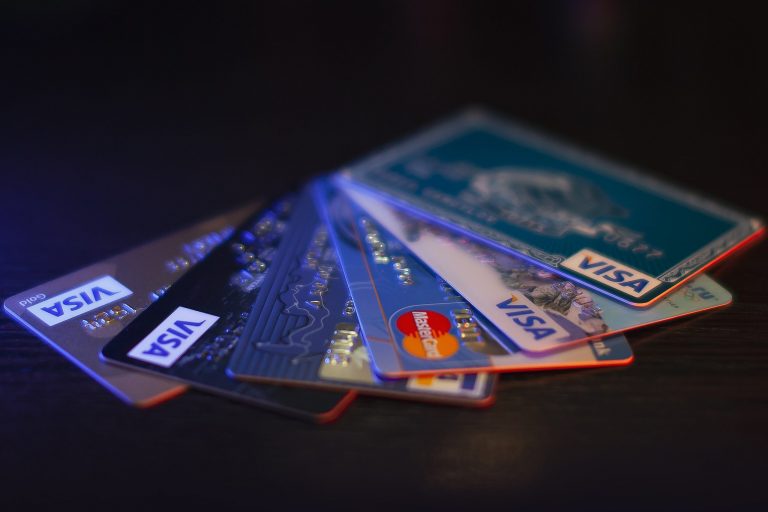
Does Card Travel Insurance Stack? Two Japanese Cards Abroad
AuthorMIRUTOBE editors
Table of Contents5 items
Carrying two Japanese credit cards does not double the cover. Treatment and liability aggregate; accidental death and permanent disability do not, and the highest single sum is the ceiling. What really differs is which payment switches each policy on.
That last point is where the accidents happen: one card qualified for the trip and the other quietly did not.
Check first: which reason are you adding a second card for?
- You want a deeper allowance for medical treatment
- You want two different card networks, so one shop refusing a brand is not the end of it
- The trip will strain your credit limit, hotel deposits included
- You want a spare kept somewhere else, against loss, theft or a dead chip
- You want companions to hold cards too, so one payment covers the group
If the first line is your reason, the choice turns on whether you can satisfy the qualifying condition rather than on which card it is. If the fourth is your reason, the cover does not matter at all — add any fee-free card on a different network and you are done. Different reasons point at different cards, and mixing them is how people end up with the wrong one.
What a second card raises, and what it does not
The aggregation rules are as published on the Epos Card and Rakuten Card pages. Corporate cards and other cards are calculated separately from each other.
The first row is the one that gets misread. Accidental death and permanent disability alone does not aggregate. Epos writes that the sums insured are not added together, that the highest sum is the limit and that it is apportioned according to the amount attached to each card; Rakuten writes that the ceiling is the highest of the accidental death and permanent disability sums across the cards. Hold two cards with JPY 30,000,000 each and you do not have JPY 60,000,000.
Treatment cover, in contrast, simply stacks. Because payment is capped at the actual loss, you never collect more than you spent — which means the second card only earns its place when the bill is large. Rescuer expenses work the same way, and Epos’s JPY 1,000,000 per trip is thin for family flying out and staying near a hospital, so deepening that line is a real reason to hold a second card.
Each card defines the qualifying payment differently
STEP 2 is the single most useful line here. A Rakuten Card policy does not activate on a flight purchase. It has to be the price of an organised package tour — a travel agent’s package. Anyone booking flights and rooms separately is therefore leaving Japan with no Rakuten cover at all. The identical payment satisfies the Epos condition, which is precisely where holding two cards pays off. The detail of those conditions is set out in the sums insured and qualifying conditions on the Epos Card.
Where people trip up
An aggregated claim needs a report on your other cards
Among the 19 documents Rakuten Card lists for a claim is a “report concerning other credit cards”. Claiming across several cards means declaring what the other issuers cover. The paperwork grows with the number of cards. Claims also have to be reported within 30 days of the incident, so starting to assemble documents after treatment abroad and a flight home leaves very little of that window. A second card is a question about the work after an accident as much as about the sums insured.
The insurance desk numbers do not work from abroad
Rakuten Card’s insurance desk (Rakuten General Insurance) answers on 0120-456-029 around the clock, but the page states plainly that the number cannot be used from outside Japan. From an IP phone and similar, the number is 018-888-9289 and the call is chargeable. Epos’s claims centre on 0120-11-0101 is the same. Two cards means two sets of numbers to carry. Saving both overseas numbers on your phone before departure is the preparation that comes with the extra card.
Arrive with no cash and cards will not save you
“You never need to change money” is offered as a benefit of carrying several cards, and it depends entirely on where you are going. Street stalls, small local restaurants, some taxis and certain admission desks remain cash-only, and three cards do not help there. Adding cards and carrying a little local currency are two separate preparations, in my view. Where to change money turns less on the commission rate than on how much you intend to change.
How many cards is right
Two. Split the networks between Visa and Mastercard, have overseas travel insurance on both, and make sure one of them can be activated by a public transport fare. A third adds a deeper treatment allowance and more claim forms, and nothing else that outweighs the cost of keeping track of it.
As a pairing, the Epos Card works because the joining fee and annual fee are permanently free and the policy can be switched on by something as loose as a public transport fare. Rakuten Card, limited to package tour prices, cannot be expected to do insurance work on an independently booked trip. For someone who travels by package the judgement reverses. Which of the two you are decides how the roles are divided.
Some of the protection has nothing to do with the number of cards. Chip and magnetic stripe failures happen at the terminal end, so keep the cards physically apart. Hotel deposits tie up part of a credit limit for a while, so separate the card you spend on from the one held in reserve. Both are solved by adding a single fee-free card on a different network, whatever its policy says.
Sorting the equipment out in advance also cuts the number of decisions you make on the ground. For connectivity, start by checking whether your existing plan travels with you, and if it does not, size it from the number of people using the eSIM and rental Wi-Fi comparison. Among the things you pack, power bank capacity in the cabin is the likeliest reason to be stopped at the airport.
- Epos Card — overseas travel insurance (cover and the aggregation rules) ↗Checked on 2026-09-14
- Rakuten Card — overseas travel insurance (conditions of use, claim documents) ↗Checked on 2026-09-14
- Epos Card — overseas travel insurance policy booklet ↗Checked on 2026-09-14
Source: the reference block above / Checked on 2026-09-14 / Featured image: Yuri Samoilov, CC BY 2.0 (Wikimedia Commons)
Other sales ending soon

 4 days leftuntil Oct 24Air Busan Takamatsu-Busan Coupon: Up to 9,000 Yen Off Until October 24
 5 days leftuntil Oct 25JAL Hong Kong Campaign: Tokyo–Hong Kong Round Trip from 75,800 Yen (until 25 Oct)
 11 days leftuntil Oct 31Jin Air Kobe–Seoul: 5,000 yen off a round trip with code KTOUKB1, until 31 October
 11 days leftuntil Oct 31Jin Air to Busan: 4,000 yen off a round trip with code KTOPUS, first 300 only