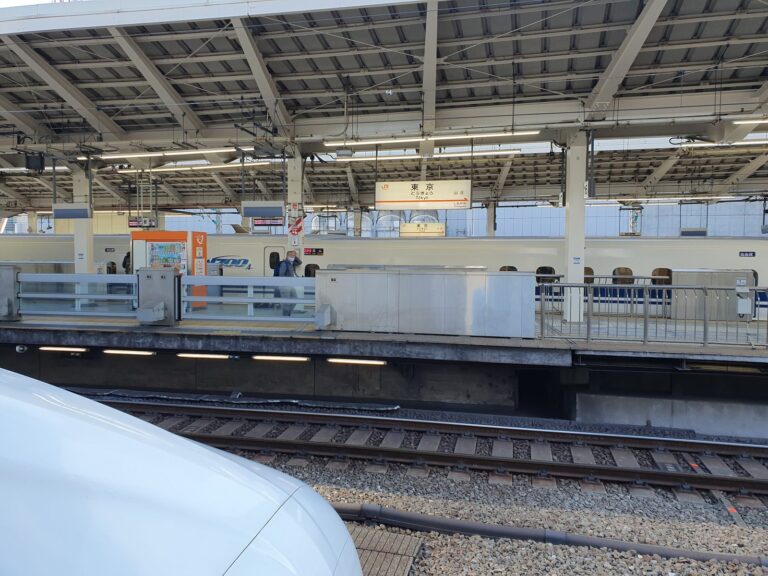
View Card JRE POINT Earning Rates: From 0.5% to 10%, Sorted by Use
AuthorMIRUTOBE editors
Table of Contents6 items
- Check first: which bracket your spending falls into
- The rates, sorted by what you are buying
- On 1 September 2026 the station-building rate opened up to six cards
- Where people trip up
- What if you want the annual fee back: it hangs on the Shinkansen
- Common questions: converting to miles, expiry, rail or air
Ordinary shopping earns 0.5%, a Suica top-up 1.5%, a Mobile Suica commuter pass 5%, and an Eki-Net Shinkansen e-ticket 10% on the Gold card. Calling View Card an unremarkable half-percent card is only accurate for someone using none of its rail routes.
View Card is JR East’s credit card, issued in Japan against a Japanese account, and JRE POINT is the loyalty currency behind it. Everything below is in yen. If you are visiting rather than living here, the equivalent move is a pass or a ticket bought in advance — Klook lists Japanese rail passes and tickets priced in your own currency.
Check first: which bracket your spending falls into
- You buy your commuter pass through Mobile Suica, not at a window or a machine
- You book the Shinkansen as an Eki-Net e-ticket and travel ticketless
- The Suica you carry is a registered one (an unregistered card-type Suica does not qualify)
- The station building you use is on the JRE CARD preferred-store list
- Your JRE BANK account is the direct debit account, or is about to be
None of the five and the card earns an effective 0.5%. In a market where 1% has become ordinary that is worth comparing against other issuers. Two or more of them and the amount the same annual fee returns changes by an order of magnitude.
The rates, sorted by what you are buying
Taken from View Card’s own earning-points pages (in the reference block below). The Eki-Net example is a return on the Hokuriku Shinkansen, Tokyo to Kanazawa, reserved seat in normal season at JPY 14,400 one way.
The reason this card exists comes down, in practice, to 1.5% on Suica top-ups. The points are settled at the moment you top up, so the balance earns the same rate whether it is spent in a convenience store or a vending machine. Treat it as 1.5% everywhere Suica is accepted. Auto top-up is limited by area, so living outside the JR East region means going after the same 1.5% with manual top-ups on Mobile Suica instead.
Double figures exist only in commuter passes, Green car tickets and the Shinkansen. The mechanism is identical in each case: 2% attached to the product plus 3% for paying with a View Card, with Gold adding 5% on Green tickets and Shinkansen e-tickets and 1% on commuter passes.
On 1 September 2026 the station-building rate opened up to six cards
The cards earning up to 3.5% in eligible station buildings and in-station shops went from one to six. The 3.5% is built from 1% in ordinary points per JPY 100 before tax at the time of use, 2% in limited-period points credited by the following day, and 0.5% in ordinary points per JPY 1,000 including tax when the bill is settled.
For the five cards being added this is a straight gain. JRE CARD is the one where the headline 3.5% stayed identical while its contents were swapped: two of the three percentage points that used to arrive as ordinary points now arrive as limited-period ones. Same nominal rate, less usable.
Lumine Card’s condition runs against intuition. Spend at Lumine or NEWoMan, its home ground, and the 3.5% does not apply; you get the 0.5% at billing and nothing else. Read that caveat alongside the table rather than after it. From spending on 6 March 2027, JRE CARD also joins the View Thanks Bonus, the bonus points awarded on annual spend.
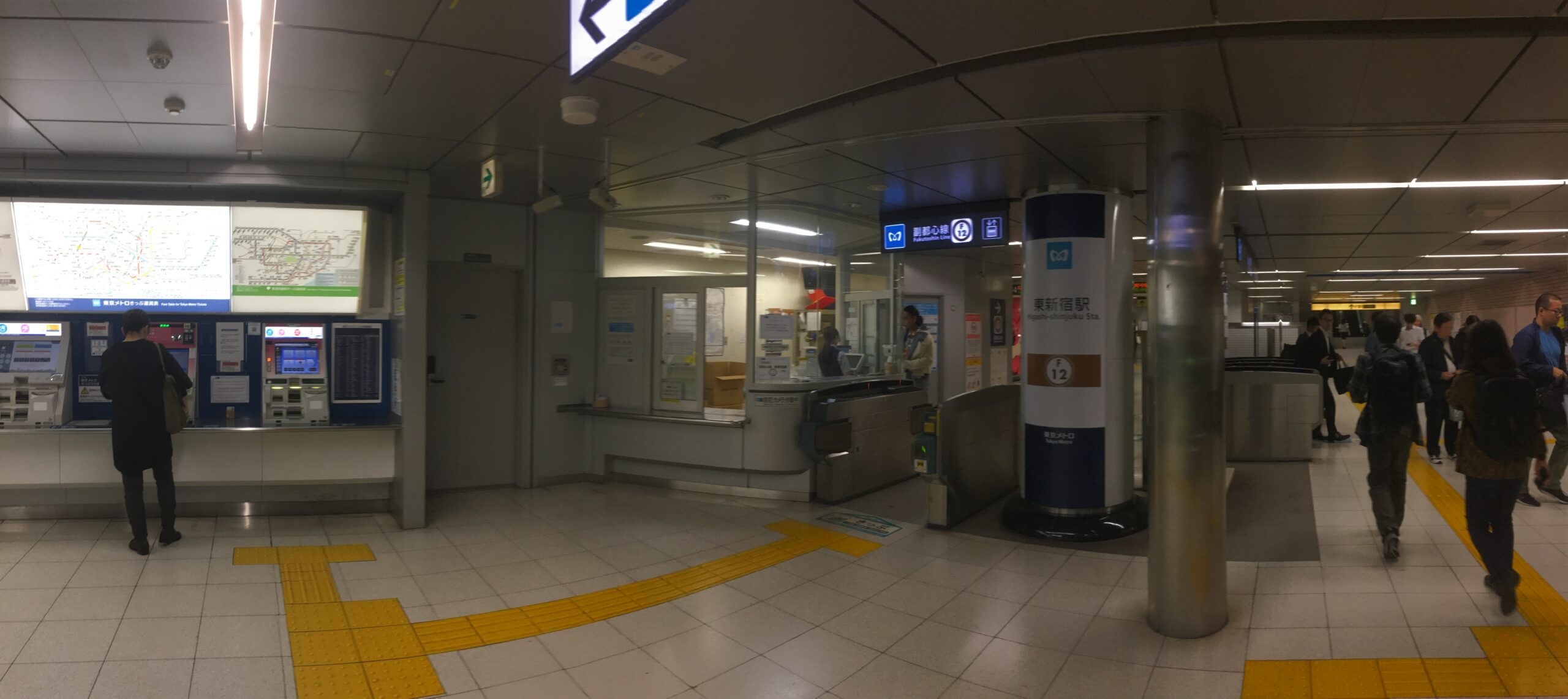
What qualifies is a facility designated a JRE CARD preferred store: Gransta at Tokyo, Atre Shinagawa and Ecute Shinagawa, Atre Ueno and Ecute Ueno, Ecute Omiya and Lumine Omiya, Akihabara, Lumine and NEWoMan at Shinjuku, Yurakucho, Tachikawa, Yokohama, Oimachi, NEWoMan Takanawa at Takanawa Gateway, and Makuhari Toyosuna. Written out, the list is almost entirely terminal stations in and around Tokyo. The station buildings at Sendai, Niigata and Nagano are not on it.
For a traveller that means the ones you pass through on the way out and the way back: Tokyo, Shinjuku, Yokohama. An ekiben or a box of souvenirs at Gransta, or whatever you buy at Lumine before leaving, qualifies for the 3.5%. Shifting the purchases to the departure end multiplies the rate by seven against 0.5%, and no station building at the far end will do the same.
Where people trip up
Buying the pass at a window costs you nine tenths of it
Through Mobile Suica it is 5%; at a Midori-no-Madoguchi or a ticket machine it is 0.5%. On a JPY 70,000 commuter pass that is JPY 3,500 against JPY 350, a gap of JPY 3,150. For anyone holding a View Card and still buying passes at a window, this is the single largest thing being left behind. Switching needs nothing but registering in the Mobile Suica app; the card itself does not change.
A limited-period point is not the same point
Putting ordinary and limited-period points on the same footing leads to bad decisions. Limited-period points expire quickly: those awarded in the first half of the year, April to September, last until the end of the following March, and those from the second half, October to March, until the end of the following September. They are not auto-extended by activity the way ordinary points are.
They also cannot top up a Suica, which closes off the most flexible exit of all, one point to one yen. They cannot be converted to JAL miles either, and most exchange items are out of reach. The awards made in September 2026 are an exception, extended to the end of September 2027. In practice, hold limited-period points on the assumption that they go back into station-building shopping, and do not count them as funds for a trip.
The JAL Card Suica variants sit outside three of these brackets
JAL Card Suica and JAL Card Suica CLUB-A Gold, the cards that collect JAL miles and JRE POINT together, carry three exclusions no other View Card has. First, the special-partner multipliers do not apply: not STATION WORK at three times, not Bebicaru at three, not Ekiren at two, not Bellemaison at two, not ENEOS electricity and city gas at two, and not View Card’s Karada insurance at two.
Second, no View Thanks Bonus: the annual-spend bonus covers View Card Standard, Standard revolving and View Card Gold, and no others. Third, the six cards that gained the station-building 3.5% on 1 September 2026 do not include the JAL Card Suica pair.
Which makes it a card built entirely around two things: 10% through Eki-Net and JAL miles stacked on top. Someone who does not ride the Shinkansen but does shop in station buildings is better served, and for a lower annual fee, by View Card Gold or JRE CARD. The principle from the travel credit card comparison — that one card should not have to do everything — applies here unchanged.
What if you want the annual fee back: it hangs on the Shinkansen
View Card publishes worked examples of a year’s earning, and they are usable as evidence. On View Card Gold, with a Mobile Suica commuter pass at JPY 130,000 a year, auto top-ups of JPY 3,000 a month, nothing at all on the Shinkansen, JPY 25,000 a month on phone and utility bills and JPY 100,000 a month on everything else, the year comes to 21,240 points: 13,240 ordinary, 3,000 bonus and 5,000 as the spending benefit. On a Lumine Card with no commuter pass, JPY 15,000 a month of auto top-ups, JPY 50,000 a year of Shinkansen travel and JPY 60,000 a month of other spending, it comes to 7,800.
The detail worth noticing is that the Gold example puts Shinkansen spending at zero. It still reaches 21,240 because the 5,000-point spending benefit and the 3,000-point bonus are doing the work. Add JPY 100,000 a year of Shinkansen e-tickets at 10% and another 10,000 points land on top, taking the total into the thirty thousands. Which also says that in a year without Shinkansen travel, those 10,000 simply do not exist. Whether the Gold fee comes back is decided by rail spending, not by total spending.
Naming a JRE BANK account as the direct debit account earns 10 JRE POINT for every debit of JPY 5,000 or more, which is about 120 points a year. Small in itself; the substance is what sits behind it. Subject to conditions including assets of JPY 500,000 or more, the account issues preferential vouchers taking 40% off a one-way fare within JR East, up to ten a year; discount coupons letting you use Dokokani Byuun for 4,000 points, up to twelve a year; and ordinary Green car tickets, up to four a year. The assessment dates are the close of 25 June and 25 December, of 25 March and 25 September, and of 25 March, June, September and December respectively.
Ten vouchers at 40% frequently beat the gap between a 0.5% and a 1.5% card in absolute terms. Tokyo to Kanazawa at JPY 14,400 one way saves JPY 5,760 a sheet, and ten sheets is over JPY 50,000. Before comparing cards in half-point increments, check whether the benefits on the account side have been used up.
One hole View Card does not fill. Domestic and overseas travel insurance varies widely by card type, and the fee-free tiers carry thin overseas cover. If what you want is to bolt overseas cover on, the standard answer is a second card that meets the conditions without an annual fee. The conditions are worked through in the examination of the Epos card’s overseas travel insurance.
Common questions: converting to miles, expiry, rail or air
Is converting JRE POINT to JAL miles worth doing?
With a JAL Card Suica the rate is 1,500 points to 1,000 miles and there is no fee. But JRE POINT tops up a Suica at one point per yen, so you are paying JPY 1,500 of value for 1,000 miles — buying a mile at JPY 1.5. There is no conversion in the other direction, from miles back to JRE POINT.
For a mystery-destination trip, rail or air?
Converted into JRE POINT the difference is clear. Dokokani Byuun costs 6,000 points, or 5,000 from some stations. Dokokani Mile costs 7,000 miles, which bought at 1,500 points per 1,000 miles is 10,500 points. For the same single round trip, rail is 4,500 points cheaper, so points are more efficient left as points and spent on the railway. The order to run balances down in is in the comparison by funding source.
How long does JRE POINT last?
To the end of the month two years after you last earned or spent any, extended automatically every time the balance moves. Use it for Suica top-ups as a matter of routine and expiry never becomes something you have to think about. The exception is limited-period points, which lapse on their own fixed schedule.
- View Card — earning points (rates by use, special partners, worked examples) ↗Checked on 2026-09-20
- View Card — official home (card functions and news releases) ↗Checked on 2026-09-20
- JAL Card Suica (JRE POINT to mile conversion rate, annual fees) ↗Checked on 2026-09-20
- JRE BANK (preferential vouchers, discount coupons, assessment dates) ↗Checked on 2026-08-12
Source: the reference block above / Photos: Wikimedia Commons / Checked on: the cards and facilities covered by the station-building 3.5%, and the JRE BANK benefits, 2026-08-12; everything else 2026-09-20
Other sales ending soon

 4 days leftuntil Oct 24Air Busan Takamatsu-Busan Coupon: Up to 9,000 Yen Off Until October 24
 5 days leftuntil Oct 25JAL Hong Kong Campaign: Tokyo–Hong Kong Round Trip from 75,800 Yen (until 25 Oct)
 11 days leftuntil Oct 31Jin Air Kobe–Seoul: 5,000 yen off a round trip with code KTOUKB1, until 31 October
 11 days leftuntil Oct 31Jin Air to Busan: 4,000 yen off a round trip with code KTOPUS, first 300 only