
Miles or JRE POINT: Comparing Round-Trip Costs by Funding Source
AuthorMIRUTOBE editors
Table of Contents6 items
- Check first: which of the two you can actually enter
- Ranked on the exit multiple alone
- The exchange runs one way, and coming back costs you a third
- Where people trip up
- What if you want to pick the destination: it carries a four- to fivefold price
- Common questions: the order by situation, peak dates, companions
Both currencies have a floor of one unit to one yen in cash-equivalent terms, and the order you spend them in is decided by what they turn into above that. Rail wins on the multiple. Miles expire after 36 months and reach places the railway does not.
These are two Japanese loyalty currencies: JRE POINT, earned from JR East, and JAL miles. Both have a scheme where you spend a fixed amount and a computer picks the destination. Everything below is in yen.
Check first: which of the two you can actually enter
- You start at Tokyo, Ueno, Omiya, Sendai, Morioka, Niigata or Nagano (the rail side)
- You start at Haneda, Itami, Kansai, Fukuoka, New Chitose or Okadama (the air side)
- You hold a JAL Card Suica, which is what makes a mile worth one yen
- You have a JRE BANK account and know how many discount coupons are left
- You have not yet decided where you are going (with a destination fixed, this is a question about ordinary award tickets instead)
The line most people fail is the first or the second. Both schemes assume you leave from a major urban terminal, and living outside those cities means the cost of getting to the departure point eats the saving. Work out whether you can reach the starting line before working out how cheap the journey is.
Ranked on the exit multiple alone
Discussion of points usually stops at the earning rate. But however high the rate on the way in, if the way out is worth one yen a unit then the card is a cash-discount card with extra steps. The number that decides things is the multiple at the exit. Both currencies have a one-yen exit, so that is the 1.0 baseline.
Taken from JAL, JR East and View Card’s own pages (listed in the reference block below). The rail figures are back-calculated from standard ordinary-car reserved fares in normal season.
Same mystery-destination idea, higher multiple on rail. The multiple is not everything, though. Miles carry you to Okinawa and the Nansei islands, and to Hokkaido — places no railway reaches. What the multiple settles is which currency you spend down first; which one you collect is settled by where you want to go.
There are really only three entrances. Flying, card spending, and using the railway itself. The third exists only on the JRE POINT side, and it is also the only place where the rate reaches double figures. With a commuter pass and Shinkansen trips home, the JRE entrance is enormously wider; barely use a train and you are left with Suica top-ups at 1.5%, which is not far off any 1% cashback card.
On card spending the ranking inverts. A JAL Card Suica CLUB-A Gold carrying Shopping Mile Premium earns a mile per JPY 100, so JPY 500,000 a year is 5,000 miles, JPY 1,000,000 is 10,000 and JPY 2,000,000 is 20,000. View Card’s ordinary 0.5% gives 2,500, 5,000 and 10,000 points on the same spend. Held at one unit to one yen, miles are twice as efficient on payments, and View Card only stands up because it owns the rail entrance. Put rail-related spending on View Card’s high-rate categories and everyday spending on a card that earns miles at 1%. Consolidating onto one card means throwing away one of the two entrances.
One entrance for earning miles outside card payments is JAL Mobile powered by ahamo, launched by JAL and NTT Docomo. It adds 125 miles every month, and once a year it comes with a coupon for using Dokokani Mile at 1,500 miles.
The exchange runs one way, and coming back costs you a third
This is where the design usually goes wrong. Hold a JAL Card Suica and 1,500 JRE POINT converts to 1,000 miles at no fee. There is no route in the other direction. The cash-equivalent exit on the mile side is the JAL Card Suica-only Suica top-up: 10,000 miles for JPY 10,000, twice a year, capped at 20,000 miles in total.
The last row is the one never to do. Something usable at one yen has been reduced to 67 sen. Paying 1,500 JRE POINT for 1,000 miles is buying a mile at JPY 1.5, and spending that mile at one yen erases the difference. Converting to miles “and deciding later” loses money every time it is done before the destination is known.
Where people trip up
Expiry works the opposite way round, so the multiple and the order disagree
JRE POINT is valid to the end of the month two years after you last earned or spent any, and every movement of the balance extends it. Use it for Suica top-ups in ordinary life and it behaves as though it has no expiry at all. JAL miles run to the end of the month 36 months after the flight or the earning date. JAL CLUB EST, for members in their twenties, stretches that to 60 months, but anything earned after the membership lapses reverts to 36.
Miles do not auto-extend, so unspent miles are lost miles. That puts miles first in the spending order and JRE POINT second. Judged on the multiple alone you would want to start with rail; add expiry and the order reverses. Miles being saved “for an award ticket one day” are usually being quietly trimmed by the clock.
“One unit, one yen” only holds for JAL Card Suica holders
This whole comparison rests on both currencies converting to cash at one unit per yen. That carries a caveat: the yen on the mile side is an exit that exists only for people holding a JAL Card Suica.
The 10,000 miles for JPY 10,000 of Suica credit is a benefit for principal members of JAL Card Suica, CLUB-A Gold included, capped at two uses and 20,000 miles in the April-to-March year. Family members cannot apply for it. Without the card, the cash-equivalent exit for miles is worse than this and the one-yen premise itself stops holding. Whether miles can be valued in cash at all is decided by which card you carry, not by how you earn them.
Applying at full price with JRE BANK benefits still unused
A JRE BANK account brings up to twelve discount coupons a year that let you use Dokokani Byuun for 4,000 points instead of 6,000. Applying at the standard price with those sitting there is simply money left behind. The assessment dates are the close of 25 March and 25 September; for the 40%-off preferential vouchers, up to ten a year, they are 25 June and 25 December. They expire, so check what is left before you apply.
One more: do not count limited-period points as travel funds. Part of what View Card awards for spending in station buildings and in-station shops comes as limited-period points, and those work for neither a Suica top-up nor a mile exchange. Counting them leaves you short. The breakdown is in the View Card earning rates sorted by use.
What if you want to pick the destination: it carries a four- to fivefold price
Everything so far has compared the mystery-destination schemes, but both currencies also have an ordinary award where you choose. The multiple drops, and for a trip with a fixed destination it is the only option.
A JRE POINT award ticket from Tokyo to Akita and back is 28,000 points, which is 4.7 times the 6,000 that Dokokani Byuun asks. On the JAL side, an ordinary domestic award from Haneda is 11,000 miles return on the shortest sector and 19,000 return to Okinawa, against Dokokani Mile’s 7,000. Choosing where you go costs roughly four to five times as much by rail and 1.6 to 3 times as much by air. That gap is what the mystery-destination schemes really are.
Which is why judging each draw on its own multiple is the wrong method. Draw something close and 6,000 points still bought JPY 16,900, 2.8 times what a Suica top-up would have given. Better still, handling the short runs with points keeps the 40% vouchers, whose value grows with distance, in reserve. The honest measure is how you allocated a year’s currency and vouchers across long and short journeys. Feeling cheated comes from looking at one draw in isolation. The per-station figures are laid out in the break-even on the rail side.
As an example of a draw that missed, there is a solo three-day, two-night trip around Misawa and Hachinohe on Dokokani Mile. The four candidates were Izumo, Misawa, Nanki-Shirahama and Komatsu, and the draw landed on Misawa rather than the Izumo that had been the aim.
There will be stretches when the balance is simply too low. Rather than forcing a redemption at a poor multiple, keep the cash side cheap and let the balance rebuild. If that means rethinking the cards, the quickest way in is to accept that one card will not do it: the division of labour is set out in the travel credit card comparison, which also covers adding overseas cover at no annual fee. For the parts of a trip you pay cash for, Klook prices Japanese rail passes and tickets in your own currency.

Common questions: the order by situation, peak dates, companions
In my situation, which should I use first?
Living in the Tokyo area with a commuter pass and Shinkansen trips home, the entrances are the Mobile Suica commuter pass and Eki-Net’s Shinkansen e-ticket, and the spending order is the JRE BANK discount coupon, then Dokokani Byuun, then whatever miles are left. Barely using trains, spend the miles with their clock on them first and return JRE POINT to everyday Suica top-ups. Living outside the big cities but near an airport, Dokokani Mile’s four departure areas make ordinary award tickets the better call. Travelling a few times a year for work, the cleanest arrangement is to put the Shinkansen points earned on business into a personal Dokokani Byuun.
Are both unusable in peak weeks?
They restrict differently. On the rail side an application covering the Obon period may simply return no candidate destinations. On the air side, for August to November 2026, travel was excluded outbound on 7 to 10 August and on the return 14 to 17 August. Rail gives you “no candidates”; air gives you named dates that are out. With fixed plans, reading the air side’s excluded dates first is quicker.
How do companions’ balances work?
On rail you can apply together with people who hold no points at all, and the seats are held together. On the air side every companion has to complete their own mile deduction, and the booking is cancelled automatically if they do not all finish. Taking along someone with no balance is much less work by rail. With children there is a further split: the rail side has run a summer-only 50% children’s offer, capped by number of uses, while the air side does not accept infants who need a seat and cannot be used by children travelling alone.
- JAL Card Suica (mile and JRE POINT exchange rates, 36-month mile expiry) ↗Checked on 2026-09-20
- JAL Dokokani Mile (miles required, departure points, excluded dates) ↗Checked on 2026-09-20
- View Card — earning points (rates by category and JRE POINT expiry) ↗Checked on 2026-09-20
- Eki-Net — Dokokani Byuun (points required, departure stations, peak restrictions) ↗Checked on 2026-08-12
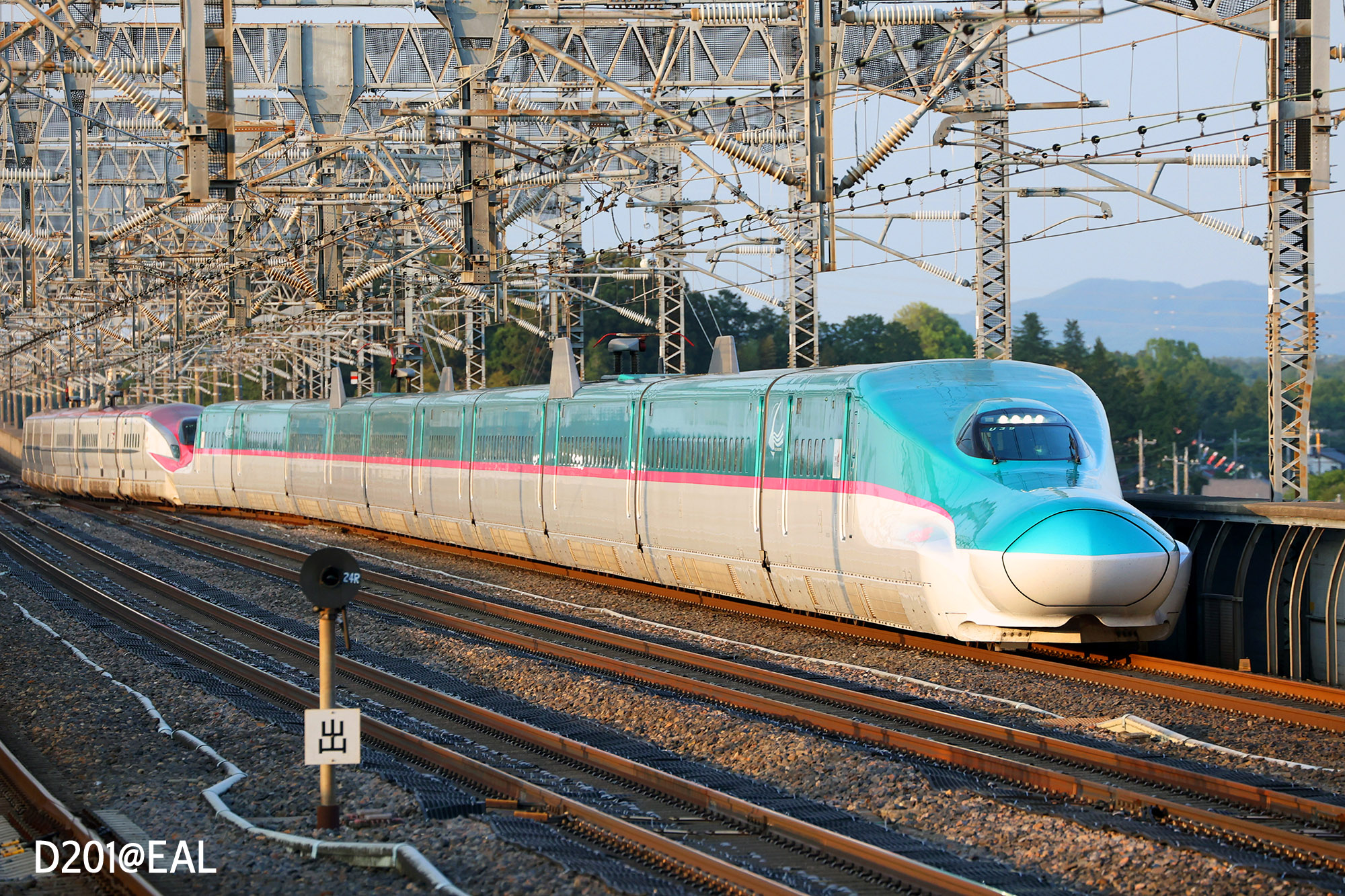
Source: the reference block above / Photos: Wikimedia Commons / Checked on: the rail-side point requirements and the JRE BANK benefits 2026-08-12, the mile side and the earning rates 2026-09-20 / Featured image: MaedaAkihiko, CC BY-SA 4.0 (Wikimedia Commons)
Other sales ending soon




 4 days leftuntil Oct 24Air Busan Takamatsu-Busan Coupon: Up to 9,000 Yen Off Until October 24
 5 days leftuntil Oct 25JAL Hong Kong Campaign: Tokyo–Hong Kong Round Trip from 75,800 Yen (until 25 Oct)
 11 days leftuntil Oct 31Jin Air Kobe–Seoul: 5,000 yen off a round trip with code KTOUKB1, until 31 October
 11 days leftuntil Oct 31Jin Air to Busan: 4,000 yen off a round trip with code KTOPUS, first 300 only