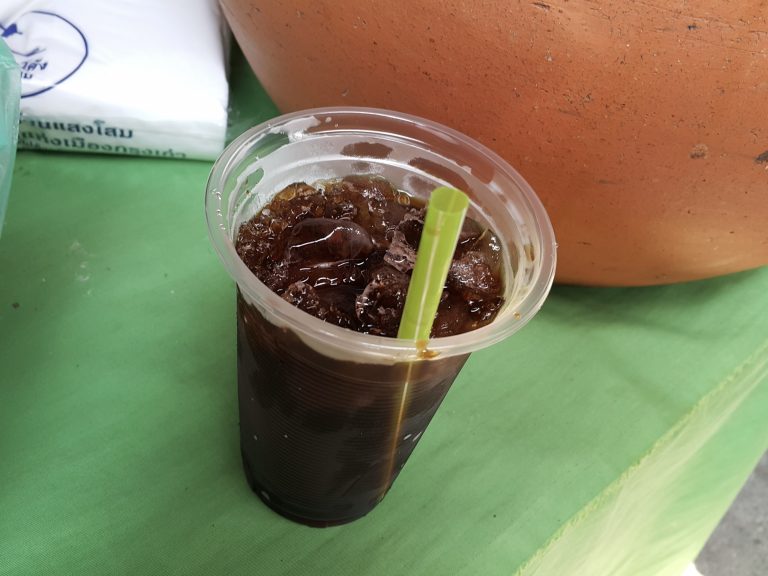
What a Two-Hour Thai Roadside Coffee Teaches About ROI
AuthorMIRUTOBE editors
Table of Contents6 items
The International Coffee Organization put robusta at 173.02 US cents a pound on 11 September 2026. Converted at the Japanese customs rates of 158.81 yen to the dollar and 4.80 yen to the baht, green beans come to about 606 yen a kilogram, so 20g is 12 yen, or 2.5 baht.
Bangkok’s minimum wage, meanwhile, is 400 baht a day, which over eight hours is 50 baht an hour. The heaviest line in the cost of that cup is not the coffee. It is the time of the person pouring it.
Check first: the name you order by decides what goes in
- You are ordering in a country where coffee is sweet by default
- Ordering anything cold means ice, and you have read the advice on water
- Stalls are cash. You are carrying 20-baht notes and coins separately
- You know the bean and the vocabulary both change between the south and the north
- You are judging the price against local wages rather than prices at home
The Tourism Authority of Thailand describes everyday Thai coffee as strong, bitter and firmly sweet. Sugar and condensed milk go in as standard, which means the only point at which sweetness can be adjusted is when you order.
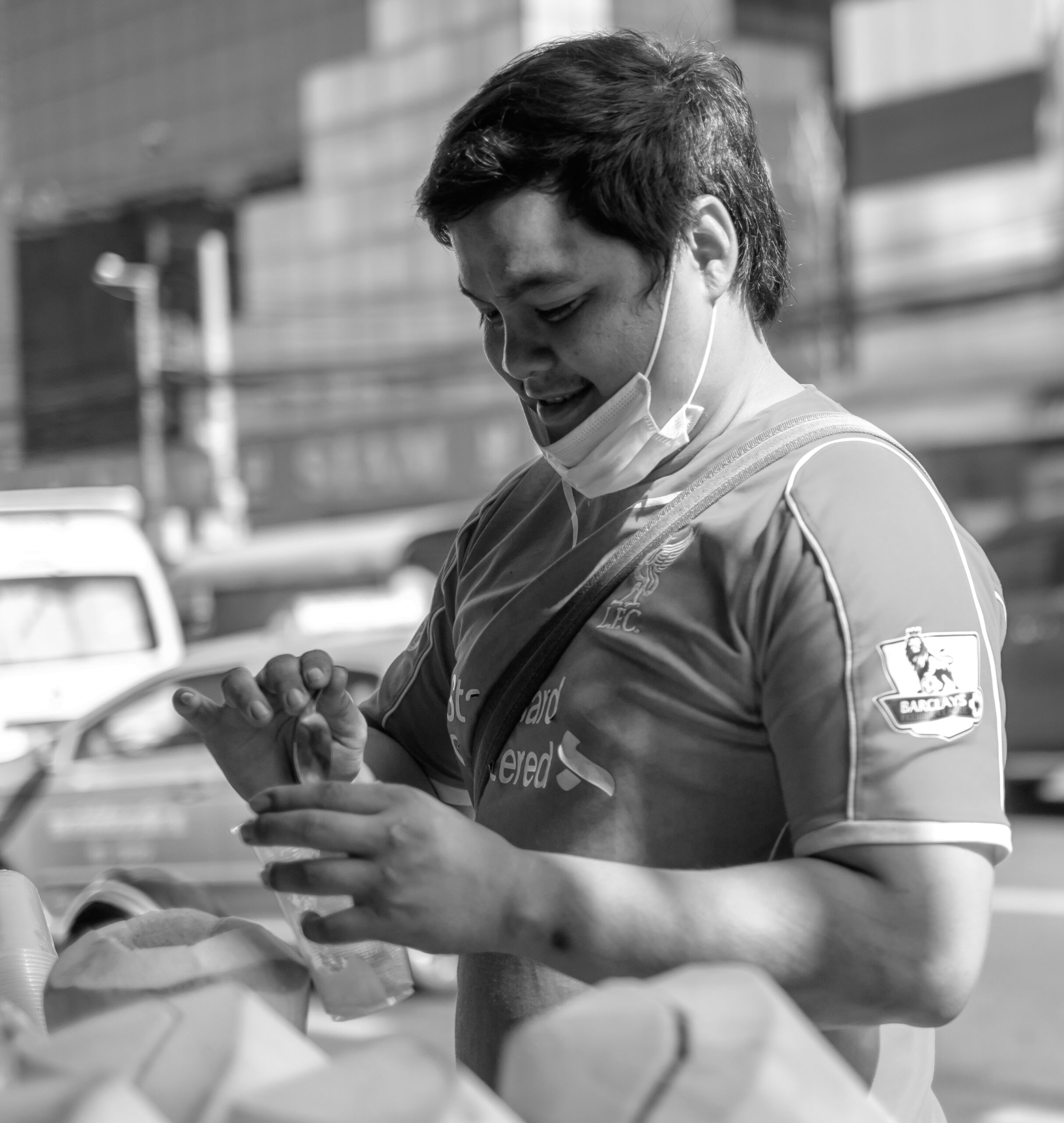
Five steps that build the price from the bottom
Step 5 is the line where this page has to be careful. No published statistic establishes the price of a cup at a street stall, so no selling price is asserted here; the cup is bracketed from below by the cost of the beans and the cost of the time.
One thing is nevertheless settled: the price of the beans is not what sets the price of the cup. Against 2.5 baht for 20g of robusta, simply valuing the work between the order and the handover at the minimum wage produces a figure several times to several dozen times larger.
The full picture: what each name contains
Those six are the ones the Tourism Authority of Thailand lists, and they work at a stall, in a mall or in a restaurant. Versions cut with fresh juice have spread too: orange, coconut, sugar cane, passion fruit, the lime-and-soda cafe manao soda, and coffee with cola.
The beans carry their own local history. Robusta in the south is traced to around 1904, planted in the Ban Thanot area of Saba Yoi district in Songkhla, while arabica in the north dates from 1950. In 1969 King Rama IX promoted coffee as a replacement for opium poppies, and in 1988 the Princess Mother launched the Doi Tung project.
Where people trip up
“Black” gets understood, and there is still sugar in it
The “o” in o liang means black, but what arrives is sweet iced coffee. It signals the absence of dairy, not the absence of sugar. The tourism authority notes that some people now order it less sweet for health reasons, which is another way of saying that the default sits on the sweet side.
If you want the sugar out, say so before it is poured. There is nothing on the stall counter to dilute it with afterwards.
Cold means ice, and the official advice on water is explicit
The Thailand page run by Japan’s quarantine service states that acute diarrhoeal illness is the most common complaint, advises against drinking tap water as it is, and recommends choosing places with proper hygiene when eating out and eating thoroughly cooked food while it is still hot. It also notes that the rainy season from June to October is humid and prone to food poisoning.
Where the ice at any particular stall came from is not something official sources document. What you can judge is the stall: how the ice is stored and how fast it turns over are both visible from outside. With hot-season highs reaching 38 to 40 degrees, avoiding cold drinks altogether is not a realistic policy. Splitting the decision — cold drinks at some stalls, cooked food at others — is the version that works.
Put a cup at 40 baht and it means five times as much depending on who pays
Since the selling price is unknown, take 40 baht as a working figure. At Bangkok’s 50 baht an hour that is 48 minutes of work. In Japan, with all 47 prefectural recommendations for fiscal 2026 now in, the national weighted-average minimum wage is 1,177 yen, up from 1,121, and Tokyo is 1,280 — so 40 baht, at 192 yen, is about ten minutes. The same cup, a gap of nearly five times.
“Thailand is cheap” is usually a statement about the yen figure alone. Lined up as a ratio to the local hourly wage, the cheapness for a visitor and the expense for someone working there turn out to be the same number seen from two sides. The same dismantling of price against satisfaction is done at more length in how to drink a 3,000-yen bottle of wine.
What if a single cup takes two hours?
Weigh the beans after the order, boil the water, strain it through cloth several times over. Say a stall working that way takes two hours over one cup: those two hours at the minimum wage are 100 baht, around 40 times the 2.5 baht of beans. Measured in cups per hour, the business does not work.
It works anyway, because nobody stands over it for two hours. While the water heats, the seller handles other customers, steps away from the pot, talks to the neighbours. Output per hour is a yardstick built on the assumption that a person is fixed to one task, and it does not describe a stall running several at once. Change the denominator to the hours that person is actually tied up and the same two hours are assessed the other way round.
Pricing behaves the same way. Doi Tung coffee, registered by Japan’s agriculture ministry as GI number 138 on 20 July 2023, comes from 93,515 rai (149.62 square kilometres) in Chiang Rai, and the register records that it trades domestically at two to two and a half times ordinary coffee. The cost of the beans is not what produces that multiple. What sits on the label is the history: an opium replacement crop that took hold, the assessment by the UN Office on Drugs and Crime, and royal sponsorship.
Travellers can use the same substitution. Measure two hours of travel in kilometres covered and the bullet train wins; measure it in what you saw and the night bus has a case. A trip with only one yardstick keeps the efficient itineraries and loses the reason for going. The same swap applied to time itself is recorded in 72 hours without opening a laptop.
Which card to carry for the parts that are not cash is compared in our travel credit card round-up.
Common questions: the market, the origin, and small notes
When the bean market moves, does the stall price move?
The market moves far faster. The ICO composite indicator was 279.85 US cents a pound on 1 September 2026 and 265.31 on the 11th: down 5 per cent in ten days. No stall rewrites its prices at that speed, so the swing is absorbed on the buying side. It also helps that at 2.5 baht of beans per cup, 5 per cent is 0.13 baht.
Can you tell at the stall whether the beans are Thai?
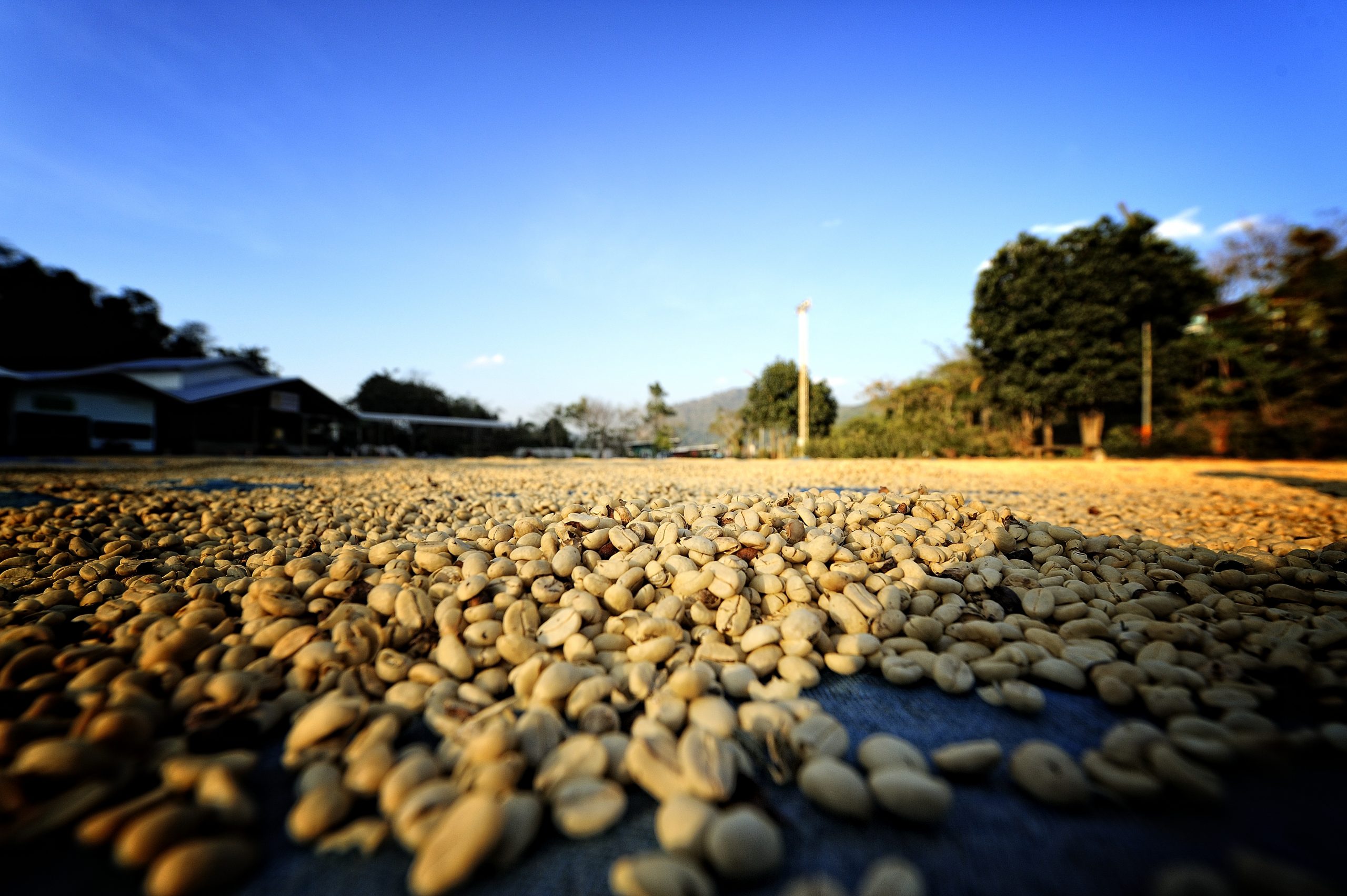
Origin appears on signage at cafes; stalls usually display nothing. The clue is geography. Robusta comes from the south — Chumphon, Ranong, Krabi, Trang — and arabica from the northern highlands. GI-registered Doi Tung coffee is confined to the Doi Tung development project area in Chiang Rai.
Should I get small notes before looking for a stall?
A 1,000-baht note is too much change to ask of a single cup. Either ask for small denominations when you change money or break one at a convenience store first. Remembering that Bangkok’s minimum wage is 400 baht a day makes it clear how large a 1,000-baht note is in that context.
- International Coffee Organization — ICO indicator prices (daily, September 2026)↗Checked on 2026-09-14
- Japan Customs — exchange rates for customs valuation (applicable 13–19 September 2026)↗Checked on 2026-09-14
- JETRO — Bangkok minimum wage raised to 400 baht a day↗Checked on 2026-09-14
- MHLW — regional minimum wage recommendations for FY2026 (weighted average 1,177 yen)↗Checked on 2026-09-14
- MAFF — GI registration no. 138, Doi Tung coffee (area, characteristics, trading price)↗Checked on 2026-09-14
- Tourism Authority of Thailand — about Thai coffee (names, history, growing areas)↗Checked on 2026-09-14
- FORTH, Japan quarantine service — Thailand (diarrhoeal illness, water and food, seasons)↗Checked on 2026-09-14
Source: the reference block above / Photos: Tord Remme, CC0 and LannaPhoto, CC BY-SA 4.0 (both Wikimedia Commons) / Checked on 2026-09-14 / Featured image: Chainwit., CC BY-SA 4.0 (Wikimedia Commons)
Other sales ending soon
 4 days leftuntil Oct 24Air Busan Takamatsu-Busan Coupon: Up to 9,000 Yen Off Until October 24
 5 days leftuntil Oct 25JAL Hong Kong Campaign: Tokyo–Hong Kong Round Trip from 75,800 Yen (until 25 Oct)
 11 days leftuntil Oct 31Jin Air Kobe–Seoul: 5,000 yen off a round trip with code KTOUKB1, until 31 October
 11 days leftuntil Oct 31Jin Air to Busan: 4,000 yen off a round trip with code KTOPUS, first 300 only