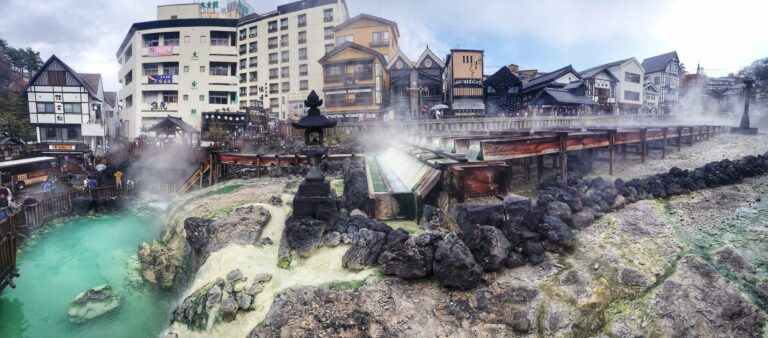
Ideal for a Workation: A Guide to Long Stays in Hot Spring Country
AuthorMIRUTOBE editors
Table of Contents6 items
Japan’s tourism agency defines a workation as working somewhere other than your usual workplace or home, using teleworking, while also spending time of your own, and sets out two patterns: leisure-led and work-led. On a long onsen stay, the item that stacks up night by night alongside the room rate is the bathing tax.
The Local Tax Act sets the standard at 150 yen per person per day. Both the amount and the treatment of long stays are then decided by each municipality’s own ordinance.
Check first: does a long stay in an onsen town actually work?
- Your employer’s rules permit working from somewhere other than home
- You can establish the room’s connectivity, and whether it has a desk and chair, before booking
- You have checked the bathing tax for that municipality at the rate in its ordinance
- If the stay runs past seven nights, you know whether that municipality has a long-stay band
- You know whether the advertised rate includes tax, and whether the bathing tax is inside it
The third and fourth lines are where the money is. The bathing tax is charged per night, so a two-week stay carries fourteen of them. At the standard 150 yen that is 2,100, and more where the municipality charges above the standard. It does not appear in a rate comparison, and can surface for the first time at checkout.
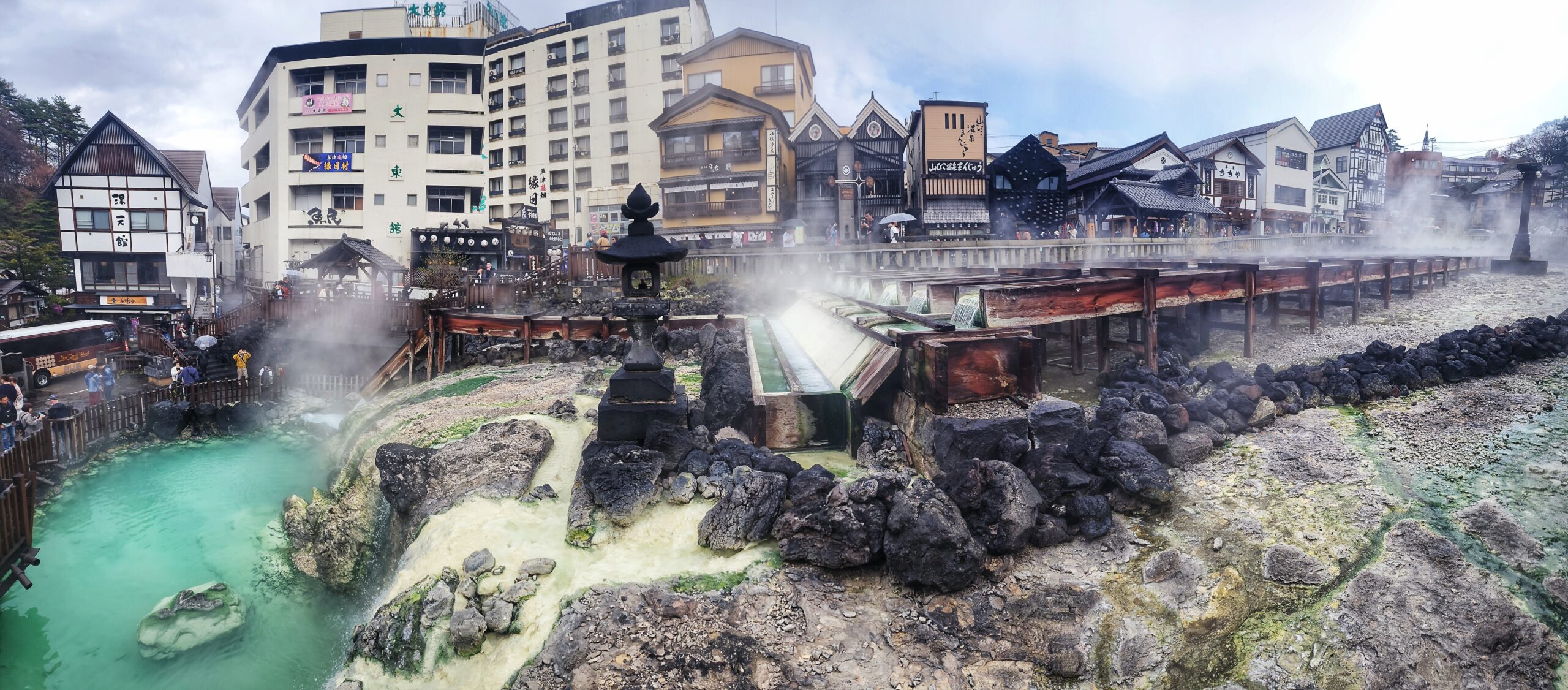
Five steps to choosing where to stay
The 79 in step 2 is a small number as onsen areas go — a fraction of the country’s total, and the absence of a designation says nothing about whether a place suits a long stay. Since the criteria say nothing about connectivity or a place to work, the designation sits on a different axis from whether you can get anything done there.
Shirahama is at the other end of that, running workation hosting as municipal policy. Its newer IT business office, ANCHOR, has seven rooms for company use plus shared coworking space, a multipurpose room and a garden. Planning an itinerary that assumes a guest room and nothing else writes options like that out from the start.
The full picture: the tax differs by municipality, in amount and in structure
Beppu is the one that splits the rate by length of stay. Day visitors through to six nights and seven days are short-stay; seven nights and eight days or more is long-stay, and every band on the long-stay side is halved. In a room charged between 6,001 and 50,000 yen, 250 yen a night becomes 125. The surcharge took effect on 1 April 2019 and was extended for a further five years on 1 April 2024.
Over fourteen nights the difference is plain. At the standard 150 yen the total is 2,100. On Beppu’s short-stay band it would be 250 times 14, or 3,500 — but crossing into long-stay makes it 125 times 14, or 1,750. Same fourteen nights, 1,750 yen apart.
Where people trip up
The inn collects it on the municipality’s behalf, so it is not in the rate
Article 701-3 of the Local Tax Act requires the bathing tax to be collected by the special collection method, and article 701-4 designates bathhouse operators and others well placed to collect it as special collection agents. The inn takes it from the guest and remits it to the municipality.
What a booking site displays is the room rate, so the bathing tax can fall to settlement on arrival. For one night it is a conversation about 150 yen; over consecutive nights it multiplies. Whether the total on the booking screen includes it matters more the longer you stay.
The exemptions turn on treatment, and on not having bathed
Hakone lists people requiring long-term treatment for illness among its exemptions. Kusatsu exempts guests who do not actually bathe because of illness or injury, and occasions such as wedding receptions where no bathing takes place.
As the name says, what is taxed is the bathing rather than the night. Article 701 of the Local Tax Act imposes the tax on bathers in respect of bathing at a mineral spring bathhouse. How that is applied in practice still depends on each municipality’s ordinance and administration, so where a case looks borderline, asking the municipal tax office rather than the inn settles it faster.
A National Health Resort designation guarantees nothing about working there
The environment ministry’s selection criteria run to four headings covering water quality and flow, the natural setting and townscape, a doctor in place or a structure for medical guidance, protection of the spring resource, hygiene management and disaster prevention. Connectivity and workspace appear nowhere in them.
The most recent designations were made in October 2022: Yura Onsen in Yamagata, and Yunoko and Yunotsuru in Kumamoto. The scheme dates back to 1954, but 79 places is a small share of the country’s onsen areas. Reading the designation as “therefore suited to a long stay” is how you end up in an inn whose Wi-Fi does not reach the guest rooms.
What if there is nowhere in the room to work
If the alternative is eight hours a day at a low table on a legless chair, establishing first whether there is a shared space with proper chairs on the premises is quicker than finding out on day one. Lobbies and lounges keep opening hours, and some are unusable over the breakfast service.
Where the municipality provides somewhere, building the trip around that is an option. Shirahama sets out connectivity and things to do on your time off as its conditions for a workation, and runs several IT business offices. The second of them lets at 1,260 yen per square metre per month, with the service charge for electricity, gas and water in the shared areas included in that figure.
Choosing on the accommodation side comes down to three checks: whether the room has a desk and a chair, whether the Wi-Fi reaches the room, and how cleaning is handled on consecutive nights. The third is the one that gets missed. An inn that cleans daily and wants the room empty in the morning makes a fixed meeting slot impossible.
Choosing the inn itself is close to choosing one for a long solo stay. The conditions for meals in the room and private baths are in our guide to onsen inns that take solo guests, and how the price of a night with two meals is assembled is taken apart in the anatomy of a 9,800-yen inn.
Common questions: who pays, the accommodation tax, day visits
Is the bathing tax included in the room rate?
The inn holds it and remits it, so where the displayed rate excludes tax it is added at settlement. Article 701-3 of the Local Tax Act requires the special collection method and article 701-4 designates bathhouse operators as the collecting agents. The person liable is the bather — the guest.
Is the bathing tax the same thing as the accommodation tax?
No. The bathing tax is an earmarked tax under article 701 of the Local Tax Act, levied by municipalities that have mineral spring bathhouses. Its uses are limited by the statute to environmental hygiene facilities, facilities protecting and managing spring sources, fire service facilities and other facilities needed for firefighting, and tourism promotion including tourism facilities. An accommodation tax is a separate levy set by a local government, and where both exist you pay both.
Does a day visit attract the bathing tax?
It depends on the ordinance. Hakone charges day visitors 50 yen per person, and Kusatsu charges 50 yen for day use or a rest. Use of communal and general public bathhouses is outside the tax in both towns. If you plan to work through the outdoor baths during a stay, which bathhouses are in scope changes the running total.
For the etiquette before you get in, see how to bathe and how tattoos are handled. For a stay closed off in three days rather than a fortnight, the Kanazawa and Kaga Onsen itinerary is the nearer shape.
- Japan Tourism Agency — workation and bleisure (definitions and formats)↗Checked on 2026-09-14
- Ministry of the Environment — National Health Resort Onsen Areas (number designated, criteria)↗Checked on 2026-09-14
- e-Gov — Local Tax Act (articles 701 and 701-2 to 701-4, bathing tax)↗Checked on 2026-09-14
- Hakone — bathing tax (rates and exemptions)↗Checked on 2026-09-14
- Kusatsu — bathing tax (rates and exemptions)↗Checked on 2026-09-14
- Beppu — bathing tax (rate tables for short and long stays)↗Checked on 2026-09-14
- Shirahama — workation programme and the second IT business office↗Checked on 2026-09-14
Source: the reference block above. Tax figures are the Japanese rates and are set by each municipality / Photo: YedidyaPopper, CC BY 4.0 (Wikimedia Commons) / Checked on 2026-09-14
Other sales ending soon




 4 days leftuntil Oct 24Air Busan Takamatsu-Busan Coupon: Up to 9,000 Yen Off Until October 24
 5 days leftuntil Oct 25JAL Hong Kong Campaign: Tokyo–Hong Kong Round Trip from 75,800 Yen (until 25 Oct)
 11 days leftuntil Oct 31Jin Air Kobe–Seoul: 5,000 yen off a round trip with code KTOUKB1, until 31 October
 11 days leftuntil Oct 31Jin Air to Busan: 4,000 yen off a round trip with code KTOPUS, first 300 only