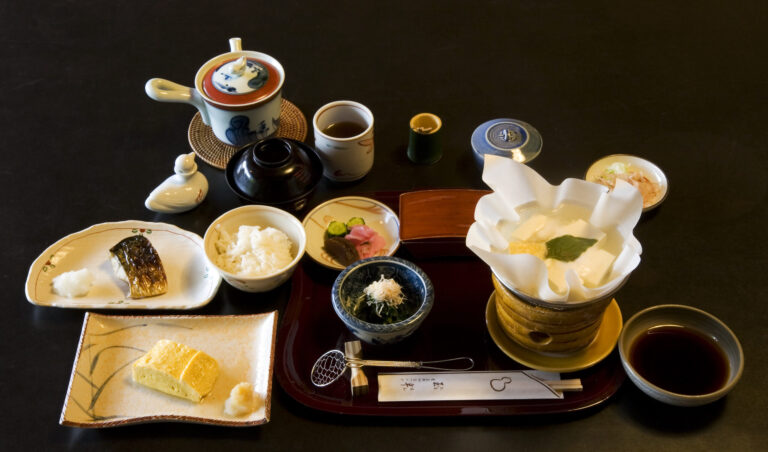
Inside a 9,800-Yen Onsen Inn With Two Meals
AuthorMIRUTOBE editors
Table of Contents6 items
A hot-spring inn advertised at JPY 9,800 for a night with two meals will not necessarily take exactly JPY 9,800 out of your wallet. Municipalities with mineral-spring baths levy a bathing tax, and the standard rate is JPY 150 per bather per day.
Some local authorities charge an accommodation tax on top of that. What sits inside the advertised figure and what rides outside it is the whole question, and there are fixed places on a booking screen where the answer shows.
Check first: what is inside the 9,800
- You have seen whether the figure is per person or per room
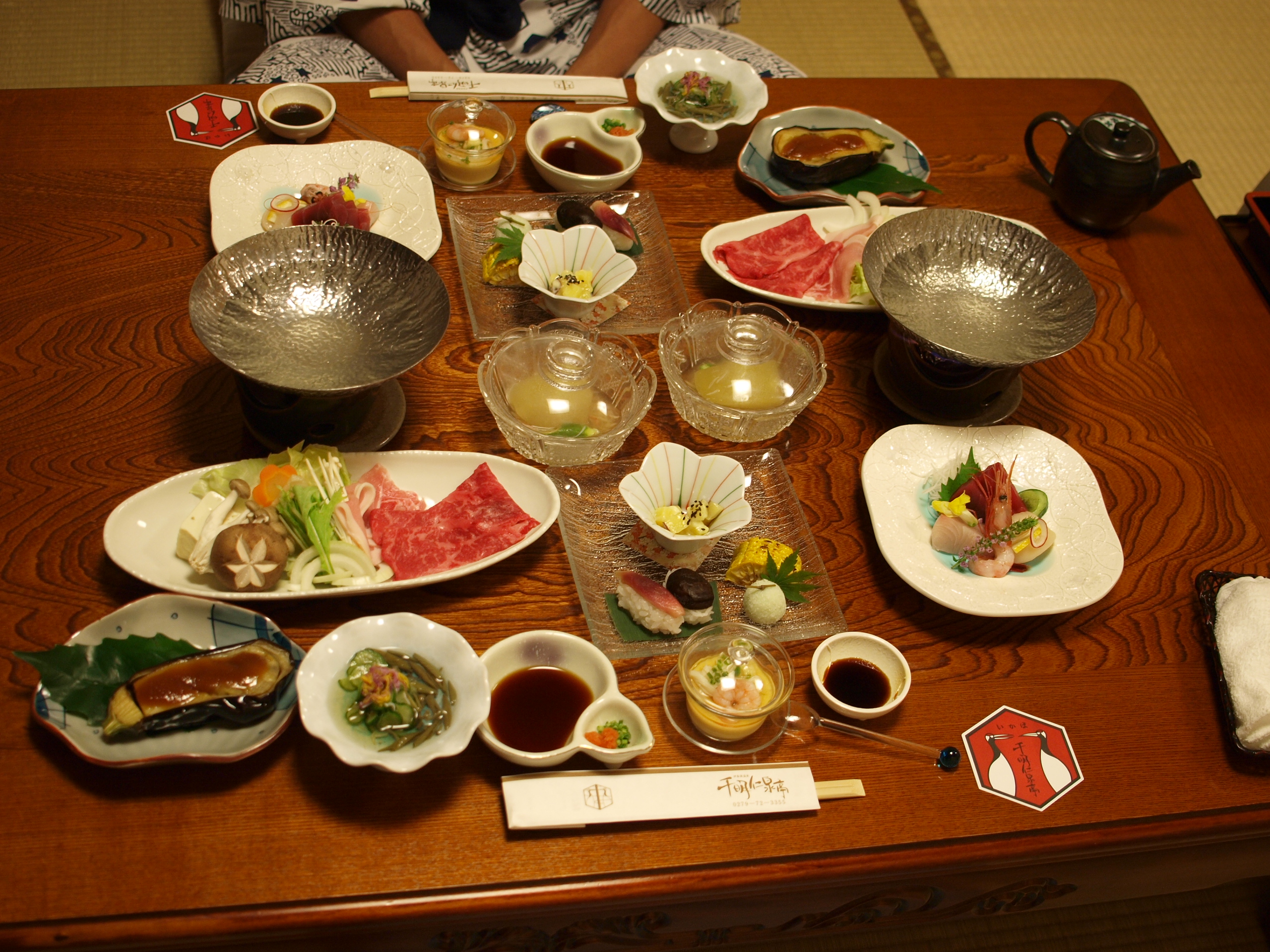
- The two meals in “one night, two meals” are dinner and breakfast
- You have checked whether the bathing tax is included or paid on arrival
- You have looked up whether the municipality levies an accommodation tax
- You know that drinks and extra dishes are charged separately
The third and fourth lines are the ones that bite on the day. Both are taxes, so the inn has no room to waive either. Being asked for cash at check-out, to your surprise, is almost always one of these two.
The second has more variation in it than people expect. “One night, two meals” can still mean a single fixed dinner sitting you do not get to choose, a banquet hall rather than a table of your own, or an inn that will not serve dinner at all if you arrive late. On an itinerary that gets you in after 8pm, a two-meal plan is the wrong purchase; room-only and eating out ends up cheaper. Allergies and dislikes also often cannot be handled on the night, so check in advance whether the booking form has somewhere to say so.
Four steps on the booking screen
The bathing tax itself is small. Two people for one night is JPY 300, not even 3% of the room rate. The reason to put it in early is not the size but the nature of it: this is not a cost the inn can choose to drop.
The full picture: what rides outside the advertised price
The bathing tax provisions are Articles 701 to 701-3 of the Local Tax Act (Act No. 226 of 1950).
Of those four rows, only the bottom two are revenue for the inn. The bathing tax and the accommodation tax are held on the municipality’s behalf and passed on. So when the question is “JPY 9,800 looks too cheap, where is the money made?”, the tax rows come out of the denominator before you start.
Urban accommodation taxes are designed differently from one authority to the next, so the same room rate produces a different charge in a different city. Five cities recalculated on identical terms are in what the accommodation tax adds per night. Stay in a hot-spring town and the bathing tax sits on top of that.
Where people trip up
The bathing tax is not the inn’s money
Article 701-3 of the Local Tax Act requires the bathing tax to be collected by the special collection method. The operator of the bathhouse is designated a special collector under the municipality’s ordinance and remits what it takes. For the inn it is money held, not turnover. The uses are written into the statute as well: it is an earmarked tax for environmental sanitation facilities, for facilities protecting and managing the spring sources, for fire-fighting facilities and other equipment needed for firefighting, and for tourism promotion. The street lights and the fire kit in a hot-spring town are what JPY 150 at a time adds up to.
JPY 150 is a standard, not a flat rate
The wording is that the rate “shall be standardised at 150 yen per bather per day”. Being a standard rate, a municipality may set a different figure by ordinance. Some split the amount between day visits and overnight stays; some grant exemptions by age. The exact figure cannot be produced without reading the ordinance of the town you are staying in. For a budget sheet, putting JPY 150 in and correcting it on arrival is the realistic level of precision.
An inn with a bath does not always attract the tax
What is taxed is bathing at a mineral-spring bathhouse. A large communal bath filled with heated tap water, or an artificial carbonated bath, is not a mineral-spring bathhouse and falls outside the tax. Whether the inn’s description says “natural hot spring” is therefore a statement about the water and, at the same time, about whether a line appears on your bill. If you have ever booked a city hotel for its big bath and found no bathing tax at check-out, this is usually why.
What if the same room costs a different amount tomorrow
A hot-spring inn is a business whose costs sit mostly in the building and the water. One guest or a full house, the upkeep of the building and of the spring runs at the same rate. An empty room is the state in which only the costs move.
Midweek discounts, multi-night plans, last-minute sales: none of these is a fire sale, they are pricing aimed at the slots that have not filled. From the traveller’s side, choosing a weekday or a second night means stepping into the slot the inn most wants filled. The premium on Saturday nights and public holidays is the same logic inverted. Having found a JPY 9,800 rate, look first at whether it is a weekday slot or a year-round one, and the inn’s situation reads straight off it.
That said, this price bracket does not suit everyone. An inn where you cannot choose the hour or the table for dinner is wrong for anyone who wants to keep their own pace. Some will not take single occupancy at all, and some have no multi-night discount to offer. Anyone who wants recent fittings will also find JPY 9,800 a narrow window: when the reason for the price is that an old building has been kept in good repair rather than replaced, opinions split on whether that is charm or a compromise.
The route you book through changes what stays in your pocket too. Some inns put a benefit only on their own site; some hold back a room that can be had by telephone alone. Putting the official site and a booking site side by side on the same dates, and reading the differences in conditions before deciding, is the reliable way through.
Common questions: children, day visits, and overlapping taxes
Does the bathing tax apply to children?
The scope of any exemption is set by the municipality’s ordinance. Some draw a line by age, and where that line falls differs from town to town. For a family stay, the reliable check is the bathing tax section of the inn’s booking page or of the town’s ordinance. The amount itself is around JPY 150 a head, so it is not going to decide the total.
Is it charged on a day visit?
The tax is on bathing, not on staying. Some municipalities charge it on day visits as well, collected together with the bathing fee, and some set a lower figure for those by ordinance. On a day spent going round several baths, it quietly accumulates.
Can the accommodation tax and the bathing tax both apply?
They rest on different authority, so in some municipalities both do. The bathing tax is an earmarked tax under the Local Tax Act; an accommodation tax is created by a local authority’s own ordinance. At an inn in a hot-spring town inside a city that levies one, two lines appear. If you want to be ready for a cash request at the morning settlement, carry the sum of the two.
How to get value out of the hotel breakfast is in the piece on business hotel breakfast buffets, and eating on the move is in how to choose an ekiben. Building a stay that keeps you off a screen is in the 72-hour digital detox.
- e-Gov Law Search — Local Tax Act, Articles 701 to 701-4 (bathing tax) ↗Checked on 2026-09-14
Source: the reference block above / Photos: Tomo, CC BY 2.0; Syced, CC0 (both Wikimedia Commons) / Checked on 2026-09-14
Other sales ending soon
 4 days leftuntil Oct 24Air Busan Takamatsu-Busan Coupon: Up to 9,000 Yen Off Until October 24
 5 days leftuntil Oct 25JAL Hong Kong Campaign: Tokyo–Hong Kong Round Trip from 75,800 Yen (until 25 Oct)
 11 days leftuntil Oct 31Jin Air Kobe–Seoul: 5,000 yen off a round trip with code KTOUKB1, until 31 October
 11 days leftuntil Oct 31Jin Air to Busan: 4,000 yen off a round trip with code KTOPUS, first 300 only