Dissecting the Business Hotel Breakfast Buffet
AuthorMIRUTOBE editors
Table of Contents6 items
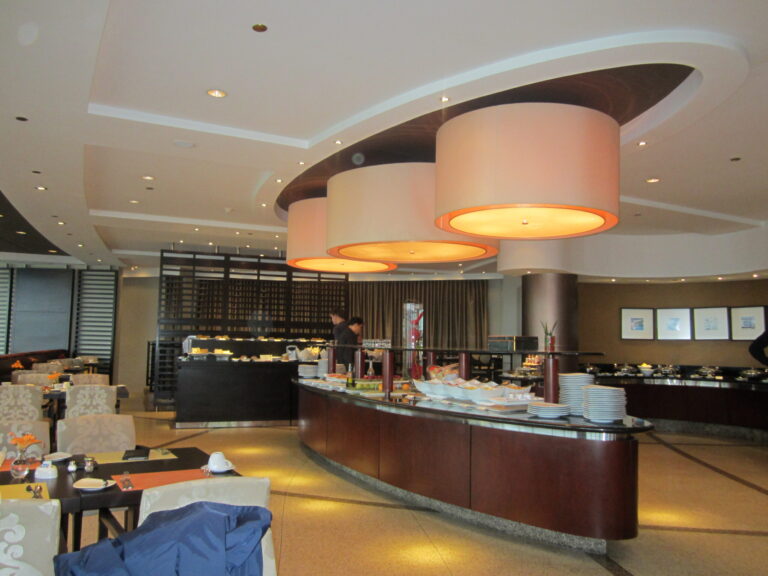
Breakfast at a Japanese business hotel finishes before check-out does. Toyoko Inn Utsunomiya-ekimae 2 serves 6:30 to 9:00, Hotel Route-Inn Tokyo Asagaya 6:45 to 9:00, Super Hotel Akihabara-Suehirocho 7:00 to 9:30.
Even where check-out is 10:00, the room shuts somewhere between thirty and sixty minutes before that. What follows is whether your breakfast is actually free, what time to walk in to avoid the queue, and what is left on a morning you miss it.
Check first: is that breakfast included or extra
- The plan you booked has “with breakfast” in its name
- You booked through the hotel’s own website
- You have confirmed the exact brand of the building you are staying in, from the booking email
- The room opens before the time you have to leave the hotel
- You have checked how allergens are handled (one chain publishes nothing)
With all five true, the only decision left on the morning is what time to walk in. Where a line fails, check that line against the table below. The second and third are where conditions diverge between properties flying the same sign, and they are where an unexpected charge comes from.
Four steps to settle the night before
Those four take three minutes the night before. Leave them to the morning and you end up rebuilding your timetable in the doorway, and those minutes become your position in the queue. On an itinerary like a Fukuoka trip that lands after midnight, whether you intend to make a 6:30 opening changes how you cut the night’s sleep.
The full picture: what varies by chain is the condition, not the price
Route-Inn Grantia
Ark HotelFree if booked on the official siteVaries by propertyChange the booking route and the same breakfast in the same room becomes a paid extra
The times are worked examples published on each hotel’s own page; they move from property to property inside the same chain.
The price column fills up with the word free. The difference lives in the second row: breakfast at Hotel Route-Inn Grand, Route-Inn Grantia and the Ark Hotels is free only when you book through the official site. Take the same room through a travel site and breakfast is charged separately. Compare the headline totals on a booking screen and this is the one line that quietly moves.
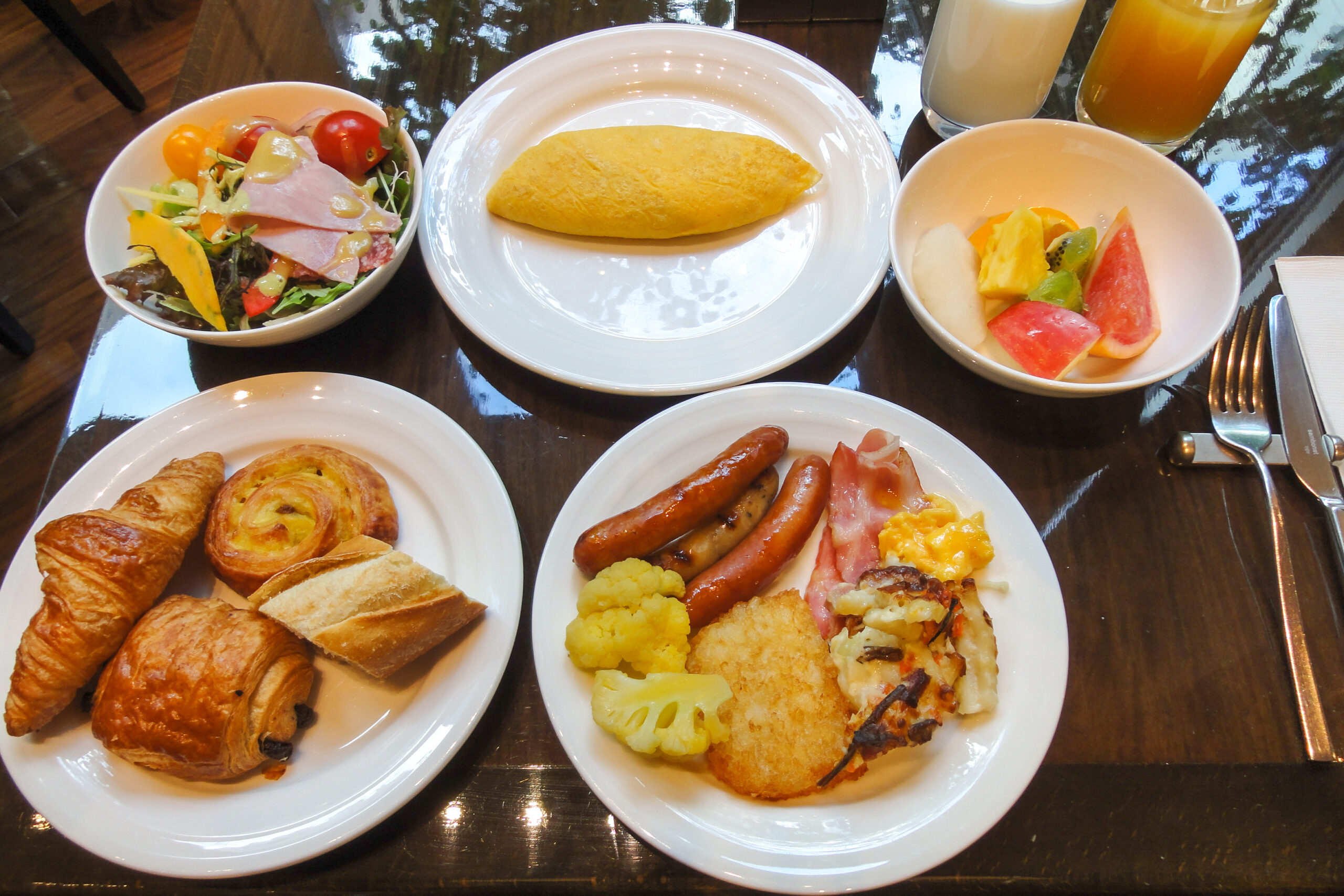
How thick the spread is does differ plainly. Route-Inn publishes a figure of more than 30 items at all times, built as four breads from a list including Laugenbrötchen, ciabatta and kaiser rolls, two egg dishes made up of one of omelette, scrambled or boiled plus either a thick rolled omelette or a dashi-rolled one, and one fish, such as salt-grilled or miso-simmered mackerel. Super Hotel leans on the ingredients instead: specially grown rice from Komatsu in Ishikawa, an organic “BIO roll”, and all five of its dressings free from Japan’s 28 designated allergens. Choose on the number of plates and it is Route-Inn; choose on what the ingredients are and it is Super Hotel. They are that different in character.
There is another way round the room, which is to look first for the label carrying a place name. Super Hotel puts regional dishes into breakfast — freshly baked whitebait bread, senbei-jiru, chagayu, soup curry — so the same chain in a different town sets a different table. Route-Inn rotates its fish among mackerel, trout and horse mackerel, so the second morning of a two-night stay is already slightly different. Thirty seconds spent walking the counters and reading the labels, instead of joining the queue on the way in, decides what you get that day.
Where people trip up
“Free” is drawn along the brand line
Route-Inn Hotels states that the free breakfast operates at Hotel Route-Inn and Hotel Route-Inn Court. At Hotel Route-Inn Grand, Route-Inn Grantia and the Ark Hotels it is free on bookings made through the official site. The signs look alike and the properties are in the same group, so a list of search results will not separate them. What settles it is the property name on your booking confirmation: if it contains “Grand” or “Grantia”, the thing to review is the route you booked through.
Allergen information is not displayed
Route-Inn Hotels states in as many words that it does not display food allergen information, and that everything is prepared in a single kitchen so cross-contact is possible. What it offers instead is a low-allergen retort curry, available on request at the desk, made without any of nine ingredients: shrimp, crab, walnut, wheat, buckwheat, egg, milk, peanut and cashew. It also permits guests to eat food they have brought with them in the restaurant. Anyone with an allergy who raises it at the front desk the night before will not be standing still in the breakfast room the next morning.
A 7:00 opening does not suit an early start
Breakfast at Super Hotel Akihabara-Suehirocho begins at 7:00. On a day built around a Shinkansen or a limited express in the six o’clock hour, a breakfast-included plan feeds you nothing. Toyoko Inn’s 6:30 and Route-Inn’s 6:45 do not reach an itinerary that leaves the hotel before six either. On those mornings, the useful thing to research is the opening time of the station kiosk rather than whether breakfast is included. Read the other way, a room that serves until 9:30 hands you that extra half hour on a day you are using the morning slowly.
What if you miss it
Whether the price of a breakfast you did not eat comes back depends on the property and the plan. Building the plan on the assumption that it does not is the safer approach, and in that case the only question left is whether anything can be taken away. At a hotel like Toyoko Inn, where containers are provided, bread and fruit can be wrapped and eaten in transit. Where no notice about containers exists, ask a member of staff before anything leaves the room.
There is one move available at the booking stage as well: look at the difference between the breakfast-included rate and the room-only one, and ask whether that difference would buy you a meal at a shop by the station. A few hundred yen and eating in the hotel is faster. More than JPY 1,000 more, and booking room-only and choosing locally becomes a real option. The gap moves with the property and the date, so it is not in the table above. How to compare the room rate itself is set out in the recalculation of the accommodation tax across five cities.
One more line is worth deciding on the morning itself. In a hotel whose room closes at 9:00, if you are going in after 8:30, do not join the queue for the eggs or whatever is being cooked to order. While you wait the counters stop being refilled, and the usual result is that you get neither. Once the last 30 minutes have started, deciding to take what is already out fills the plate better.
I would go in straight after opening. The refilling is at its heaviest, the tables can be chosen, and the packing can wait.
Common questions: the busy hour, the room-only difference, taking food away
When is the breakfast room busiest?
With check-out at 10:00 and breakfast ending at 9:00, everybody who has done the arithmetic arrives in the first half of the eight o’clock hour. The first 15 minutes after opening and the final 30 minutes are the easier windows. On days when a conference or a tournament is on nearby, the whole breakfast period can shift earlier, so asking at the desk the night before stops you guessing wrong.
Breakfast-included or room-only?
The difference decides it. Where the room opens at 6:30 and you are leaving after eight, breakfast-included is the straightforward answer. On a day built around the first train, or where the place you want is by the station, room-only fits better. If you are staying at a Route-Inn Grand, Grantia or Ark Hotel, booking on the official site makes breakfast free anyway, which removes one reason to go room-only.
Can I take what I cannot finish back to the room?
Toyoko Inn provides containers for taking food from the buffet back to the room. Where no such notice exists, splitting what you take into two trips is the safer approach: main dish and eggs first, fruit and bread second, which also leaves less on the plate. The principle from the piece on ekiben — choose on the assumption you are eating it in transit — works here too.
The same question seen from the inn’s side, where breakfast is part of what the room rate has to cover, is in the 9,800-yen onsen inn taken apart. A free business hotel breakfast has the same structure inside the price of the room.
- Route-Inn Hotels — Morning Style buffet breakfast (which brands are free, item counts) ↗Checked on 2026-09-14
- Route-Inn Hotels — on the display of food allergens (and the low-allergen curry) ↗Checked on 2026-09-14
- Toyoko Inn Utsunomiya-ekimae 2 — facilities and services (hours, takeaway containers) ↗Checked on 2026-09-14
- Super Hotel Akihabara-Suehirocho — breakfast hours and ingredients ↗Checked on 2026-09-14
Source: the reference block above / Photos: Kim, CC BY-SA 2.0; J o, CC BY-SA 4.0 (both Wikimedia Commons) / Checked on 2026-09-14
Other sales ending soon
 4 days leftuntil Oct 24Air Busan Takamatsu-Busan Coupon: Up to 9,000 Yen Off Until October 24
 5 days leftuntil Oct 25JAL Hong Kong Campaign: Tokyo–Hong Kong Round Trip from 75,800 Yen (until 25 Oct)
 11 days leftuntil Oct 31Jin Air Kobe–Seoul: 5,000 yen off a round trip with code KTOUKB1, until 31 October
 11 days leftuntil Oct 31Jin Air to Busan: 4,000 yen off a round trip with code KTOPUS, first 300 only