
Travel Credit Cards in Japan (2026): Fees, Waivers and Miles
AuthorMIRUTOBE editors
Table of Contents6 items
With travel credit cards issued in Japan, what decides the real cost is not the headline annual fee but how much you have to spend to waive the fee or unlock the benefit. Epos Gold and Mitsui Sumitomo Card Gold (NL) drop their annual fees to zero for life from the following year once you cross their annual spend thresholds even once, whereas the hotel-branded American Express cards have no fee waiver at all — you pay a fixed tens of thousands of yen every year in exchange for free nights and elite status.
Check first: which threshold you actually land on
- You know your annual card spend (which of JPY 500,000, 1 million, 1.5 million, 2.5 million or 4 million you fall on)
- You have counted how many airport lounge visits a year you make (Rakuten Premium gives 5 free)
- You have settled on one destination for the points: ANA miles, JAL miles or hotel points
- You have decided whether card-attached cover alone is your overseas travel insurance
- You have decided which card pays for the trip (what triggers the cover differs card by card)
The first line does the most work. The more expensive the card, the more its free nights and elite status are tied to what you spent that year. The Hilton Honors American Express card, at JPY 16,500, gives a weekend free night on JPY 1.5 million of annual spend plus renewal; the Marriott Bonvoy American Express, at JPY 34,100, needs JPY 2.5 million. Fall short of the line and all that leaves the account is the fee. How far a self-employed traveller can push spending onto a card in the first place is set out in where the line sits for expensing travel.
Five steps to narrow it to one or two cards
Translating Steps 1 and 2 into monthly spending makes the choice concrete. Putting JPY 42,000 a month in utilities, phone bills and groceries on a card comes to JPY 504,000 a year — clearing Epos Gold’s JPY 500,000 waiver line and earning the 2,500-point annual bonus on top of the 2,500 base points (an effective 1.0% return, with the annual fee dropping to zero from year two). At JPY 84,000 a month (JPY 1,008,000 a year), both Epos Gold and Mitsui Sumitomo Card Gold (NL) pay a 10,000-point annual bonus for a 1.5% effective return, and once you hit that threshold in a single year the gold card and its domestic airport lounge access stay free for life even if you spend nothing in later years.
In Step 3, when comparing airline co-branded cards, include the conversion fee required to earn 1 mile per JPY 100 spent. On a standard ANA card the 2x miles course adds JPY 6,600 a year; on a standard JAL card Shopping Mile Premium adds JPY 4,950. Because ANA Wide Gold (JPY 15,400) and JAL CLUB-A Gold (JPY 17,600) include those courses automatically and return 2,000 miles on every annual renewal, the net gap between a standard card configured for 1% mileage accrual and the Gold version is roughly JPY 6,000 to JPY 10,000 a year — worth paying if you fly often enough to use the 25% flight bonus miles and business-class check-in desks, and unnecessary if you only earn miles on the ground.
The full picture: fees, and what makes them go away
Annual fees and benefit conditions from each issuer’s own pages, checked 14 October 2026.
Read the table downwards and the condition moves further than the fee does. Epos Gold asks JPY 500,000 against a JPY 5,000 fee; Marriott Bonvoy Premium asks JPY 4 million against JPY 82,500. The fee is about sixteen times larger, the spending requirement eight. The less certain you are of your annual total, the safer it is to start from the loose end.
On the hotel co-brands, the break-even turns on two questions: whether complimentary breakfast comes with the card out of the box, and whether your annual spend actually reaches the free-night line. The standard Hilton Honors Amex (JPY 16,500) grants Hilton Gold simply for holding the card, which includes free breakfast for two at Hilton properties — so even if you never spend JPY 1.5 million for the weekend free night, two or three stays a year where breakfast costs JPY 4,000 per person per morning recover the JPY 16,500 fee. By contrast, the Gold Elite status attached to the Marriott Bonvoy Amex (JPY 34,100; Premium JPY 82,500) does not include free breakfast (which requires Platinum Elite at JPY 5 million of annual spend on the Premium card). Spend JPY 2 million a year on a Marriott card and you get neither a free night nor free breakfast. How to value a hotel breakfast itself is taken apart in the piece on business hotel buffets.
Where people trip up
Stacking policies is apportioned, and capped at the actual loss
Holding overseas travel cover on several cards does not produce duplicate payouts for the same hospital bill. Accidental death and residual disability are not aggregated at all: the highest single sum insured is the limit, apportioned across the cards in proportion to their sums insured. Medical treatment costs and personal effects do aggregate their ceilings, but actual payment is apportioned across the underwriters and capped at the actual loss. Tokio Marine & Nichido, Mitsui Sumitomo Card and Epos Card all state the same rule on their official pages.
Where stacking genuinely helps is in raising the ceiling for overseas hospitalisation and surgery. Epos Card (standard) covers illness treatment to JPY 2.7 million, Rakuten Card to JPY 2 million and Mitsui Sumitomo Card (NL) to JPY 500,000. Activate all three and the combined ceiling reaches JPY 5.2 million. If an emergency hospital stay abroad costs JPY 3.5 million, Epos alone would cap out at JPY 2.7 million and leave JPY 800,000 out of pocket, whereas activating all three covers the full JPY 3.5 million apportioned across the three insurers (and if the bill is JPY 1 million, the combined payout is JPY 1 million). The exact clauses are laid out in what the Epos card actually covers and on what conditions.
Buying a flight does not switch the Rakuten cover on
All three major free cards are use-activated, and their trigger clauses differ. Epos accepts the price of a packaged tour including accommodation, or public transport fares. Mitsui Sumitomo Card (NL) accepts public transport used before leaving Japan, or the price of a packaged tour. Rakuten alone is limited to the price of a packaged tour, and states plainly that buying air tickets on their own is not included. Since 1 October 2020, paying for public transport no longer meets its condition.
On an independent trip where you book flights and hotels separately, paying for the flight on a standard Rakuten Card leaves you with zero insurance. Because Epos Card and Mitsui Sumitomo Card (NL) both trigger on public transport in Japan before departure, paying the Narita Express, Keisei Skyliner, Tokyo Monorail or airport limousine bus fare on one card and a connecting train or bus fare on the other switches both policies on for up to 90 days. Note also that the standard Rakuten Card provides zero cover for personal effects, so luggage damage or camera theft has to be covered by activating Epos (JPY 200,000 limit, JPY 3,000 deductible) or another card.
Earning points by topping up e-money ended across 2025 and 2026
From transactions dated 11 November 2025, Saison cards stopped awarding Eikyu Fumetsu points and SAISON MILE CLUB points on charges to e-money and prepaid cards. Charges to Rakuten Edy and nanaco were already outside the scheme when that notice went out. Epos ended point accrual on charges to payment services and transport IC from 1 August 2026.
The Epos exclusion list is wide — Mobile Suica, Mobile PASMO, Mobile ICOCA, Rakuten Edy, au PAY, Kyash, JAL Pay and more, including top-ups through Apple Pay and Google Pay. Those charges do, however, still count towards the annual spend tally used for Epos Gold’s JPY 500,000 waiver and annual bonus points. On Mitsui Sumitomo Card Gold (NL), Mobile Suica and Mobile PASMO top-ups count towards the JPY 1 million waiver tally, whereas SBI Securities credit-card investment contributions, national pension payments, and Edy/WAON/nanaco top-ups are explicitly excluded.
What if the fee never pays for itself
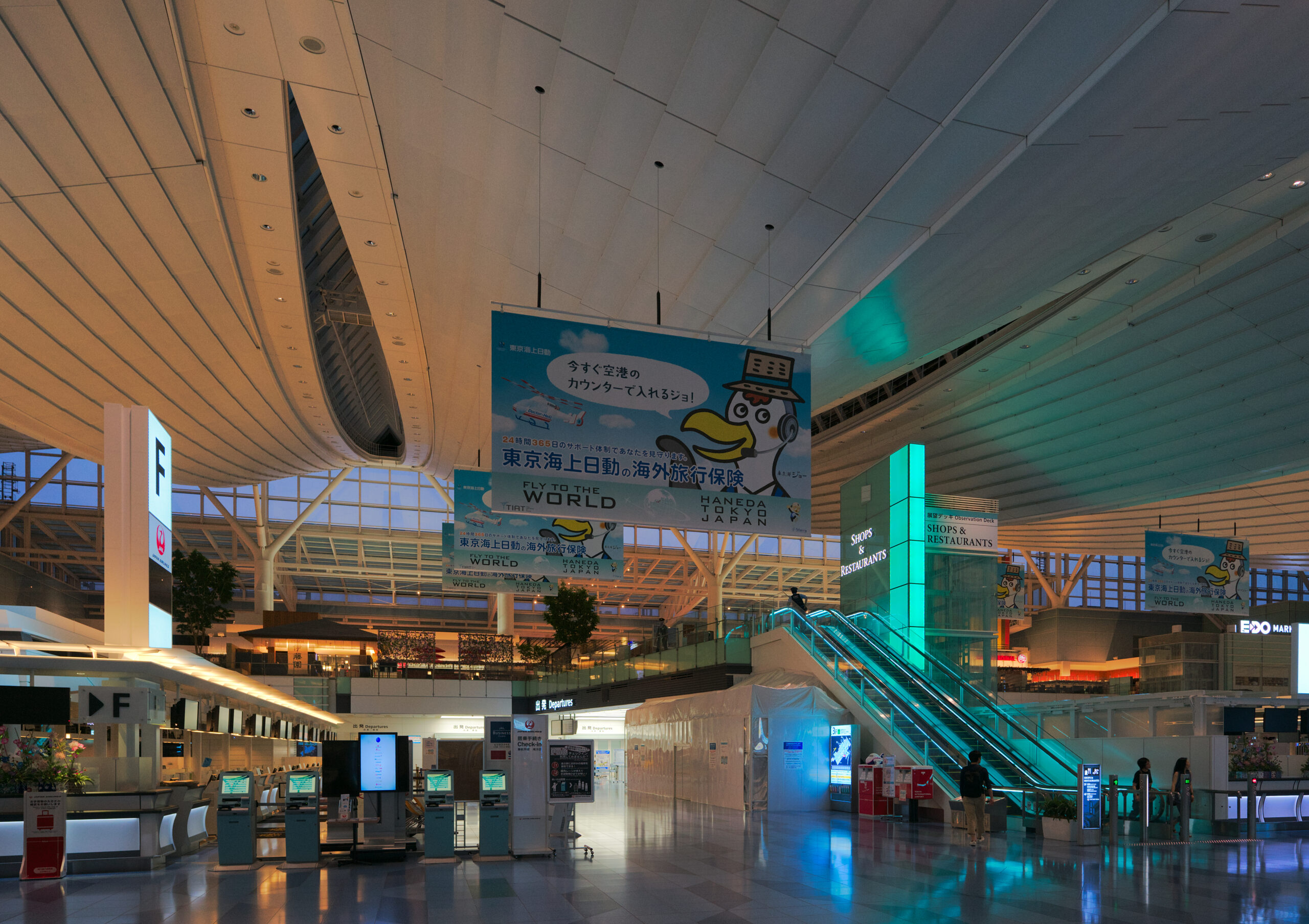
Counting lounge visits is the quickest test. Rakuten Premium is JPY 11,000 for five a year, then US$35 a visit. The count runs for one year from the date the digital membership card is issued, and domestic lounges are inside it. Contract Priority Pass directly and Standard is US$99 a year with every visit at US$35, Standard Plus is US$329 with ten visits included, and Prestige is US$469 with unlimited visits for the member. Valuing each visit at US$35 (around JPY 5,250 at JPY 150/USD), Rakuten Premium’s JPY 11,000 fee breaks even at three lounge visits a year (around JPY 15,750 in value) and reaches around JPY 26,250 if you use all five. Below that — one overseas trip a year and two lounge visits — you cannot recover JPY 11,000 from the lounge alone.
The miles side changed in 2025 as well. For bookings and issues from 24 June 2025, ANA revised the mileage needed for international award tickets: Japan to Hawaii in Business in high season went from 90,000 miles to 135,000, and Europe in Business from 120,000 to 180,000. Low and regular seasons were left alone, so anyone who can move the dates is unaffected. Anyone who cannot has that much less justification for a mileage card’s annual fee. The chart is in the roadmap for circling the globe on 100,000 miles.
Common questions: free cards alone, choosing a network, when the waiver starts
Is card-attached cover on free cards enough?
It depends on the destination and the length of stay. Treatment ceilings are JPY 2.7 million for illness and JPY 2 million for injury on the Epos Card, JPY 2 million each on the standard Rakuten Card, and JPY 500,000 each on Mitsui Sumitomo Card (NL). All three are use-activated, so the trip costs have to be split across them to switch each one on. Rakuten is limited to the price of a packaged tour, and a flight alone does not qualify. For a long stay in a country with high medical costs, a separate travel policy gives a ceiling you can actually read.
Which international network should I choose?
What can be verified officially stops at the size of the acceptance network and the partnerships. As at the end of March 2026, JCB reported 181.92 million members and around 72 million merchants in Japan and abroad; its partnership with American Express extends acceptance in Australia, New Zealand and Canada, and its partnership with Discover does the same in the United States and elsewhere. American Express, for its part, states that the JCB partnership widened its own acceptance inside Japan. Carrying two cards, the fewer gaps come from picking two that do not share the same partnership.
When does a gold card’s fee actually stop?
From the year after you meet the condition. Epos Gold needs JPY 500,000 of annual spend and Mitsui Sumitomo Card Gold (NL) JPY 1 million, and both then become free for life from the following year. Year one is charged whether or not you get there, so plan on paying the JPY 5,000 or JPY 5,500 once. Epos Gold also has two routes to being free from the start: an invitation, or a referral from a family member who is already a platinum or gold cardholder.
- Epos Card — overseas travel accident insurance (sums insured, activation conditions, aggregation) ↗Checked on 2026-10-14
- Rakuten Card official site, “Overseas travel accident insurance” (limited to the price of a packaged tour; whether cover is automatic)Checked on 2026-10-14
- Mitsui Sumitomo Card — overseas travel accident insurance (sums insured and conditions) ↗Checked on 2026-10-14
- Rakuten Card official site, notice dated 28 November 2024, “Changes to Priority Pass” (five visits a year, digital membership card)Checked on 2026-10-14
- Epos Card — end of point accrual on charges, 1 August 2026 ↗Checked on 2026-10-14
- Saison Card — end of points on e-money and prepaid charges, 11 November 2025 ↗Checked on 2026-10-14
Source: the reference block above / Annual fees and benefit conditions from each issuer’s official pages (the two Rakuten items are given by page name rather than link) / Checked on 2026-10-14 / Photos: Bahnfrend, CC BY-SA 4.0; Izcool, Public domain; Daniel L. Lu (user:dllu), CC BY-SA 4.0 (all Wikimedia Commons)
Other sales ending soon




 4 days leftuntil Oct 24Air Busan Takamatsu-Busan Coupon: Up to 9,000 Yen Off Until October 24
 5 days leftuntil Oct 25JAL Hong Kong Campaign: Tokyo–Hong Kong Round Trip from 75,800 Yen (until 25 Oct)
 11 days leftuntil Oct 31Jin Air Kobe–Seoul: 5,000 yen off a round trip with code KTOUKB1, until 31 October
 11 days leftuntil Oct 31Jin Air to Busan: 4,000 yen off a round trip with code KTOPUS, first 300 only