Amsterdam 5-Day Art Trip: Canals, Van Gogh and the Windmills
AuthorMIRUTOBE editors
Table of Contents8 items
- Itinerary
- DAY 1 An evening arrival needs nothing more than a walk along the canal
- DAY 2 Two large museums in one day, and the order you buy in is decided first
- DAY 3 Count this day back from whatever hour the Anne Frank House gave you
- DAY 4–5 The last half day counts back from seventeen minutes to the airport
- Alternatives
- Where to stay
- What this trip costs
Three nights in Amsterdam around three museums, all reached on public transport. On the ground the two of you spend EUR 221.00. The Anne Frank House fixes the dates: tickets appear at 10:00 on Tuesdays, for the day six weeks ahead, and for no other.
Itinerary
DAY 1An evening arrival needs nothing more than a walk along the canal
Why this order: nothing with a fixed time goes into the arrival day. The walk stops at the Damrak, which you can reach from the hotel on foot, and the body gets the night to catch up before the first booked slot tomorrow morning.
Evening: Schiphol to Centraal is 17 minutes, EUR 5.50
Amsterdam keeps its airport unusually close for a European capital. NS runs eight Sprinters an hour between Schiphol and Centraal, the journey takes 17 minutes, and a single adult fare is EUR 5.50. The platforms are directly under the arrivals hall, so there is no change of train and no transfer between terminals and a station.
One decision is worth making before you reach the ticket machines. They sell the Amsterdam Travel Ticket, a visitor day pass at EUR 20.00 in 2026 that covers the airport train in both directions plus GVB trams, buses and the metro. On this arrival day you use exactly two things: one leg in from the airport, and one tram to the hotel. A single train ticket at EUR 5.50 plus a GVB day ticket at EUR 10.00 is EUR 15.50, so buying the pass on the day you land costs you EUR 4.50 for nothing. It pays off for the traveller who walks out of the airport into a full day of moving around, which is not what an evening landing gives you.
For the single hop to the hotel, a GVB one-hour ticket at EUR 3.40 is enough, and so is tapping a contactless credit card through OVpay. The 2026 OVpay distance fare is a EUR 1.16 boarding charge plus EUR 0.217 a kilometre, so two or three kilometres out of Centraal lands at roughly EUR 1.60 to EUR 1.80 a head. Counting the queue at the machine, tapping is the shortest move available on the first night.
Night: the leaning houses are a five-minute walk from the station
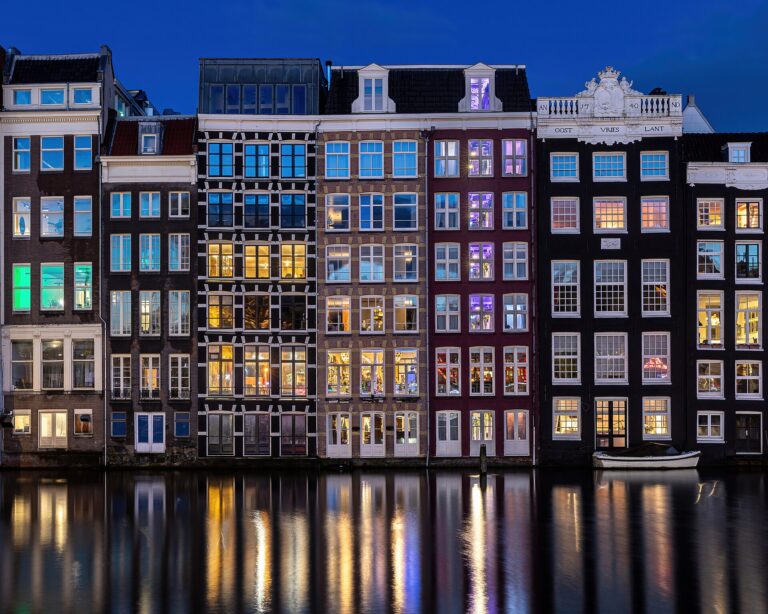
Putting a museum into a day that starts with jet lag wastes the ticket. The Damrak runs south from the front of Centraal, and the row of gabled houses along the water there, slowly tilting into one another, is the corner of the city you have already seen in photographs. Out and back on foot takes half an hour.
Highlights: leave the station, cross the bridge in front of you and work round to the west bank of the water, and the houses line up at the angle that shows the lean. English-language guides call them the Dancing Houses; the tilt comes from the ground settling under them. At dusk the water goes flat and the facades repeat themselves upside down.
Practical note: from the square in front of the station you are shooting into the light. Cross to the far bank and face south, and for the half hour before sunset the light lands on the front of the row instead of behind it.
- Nearest
- 5 minutes on foot from Amsterdam Centraal
- Walking
- EUR 0
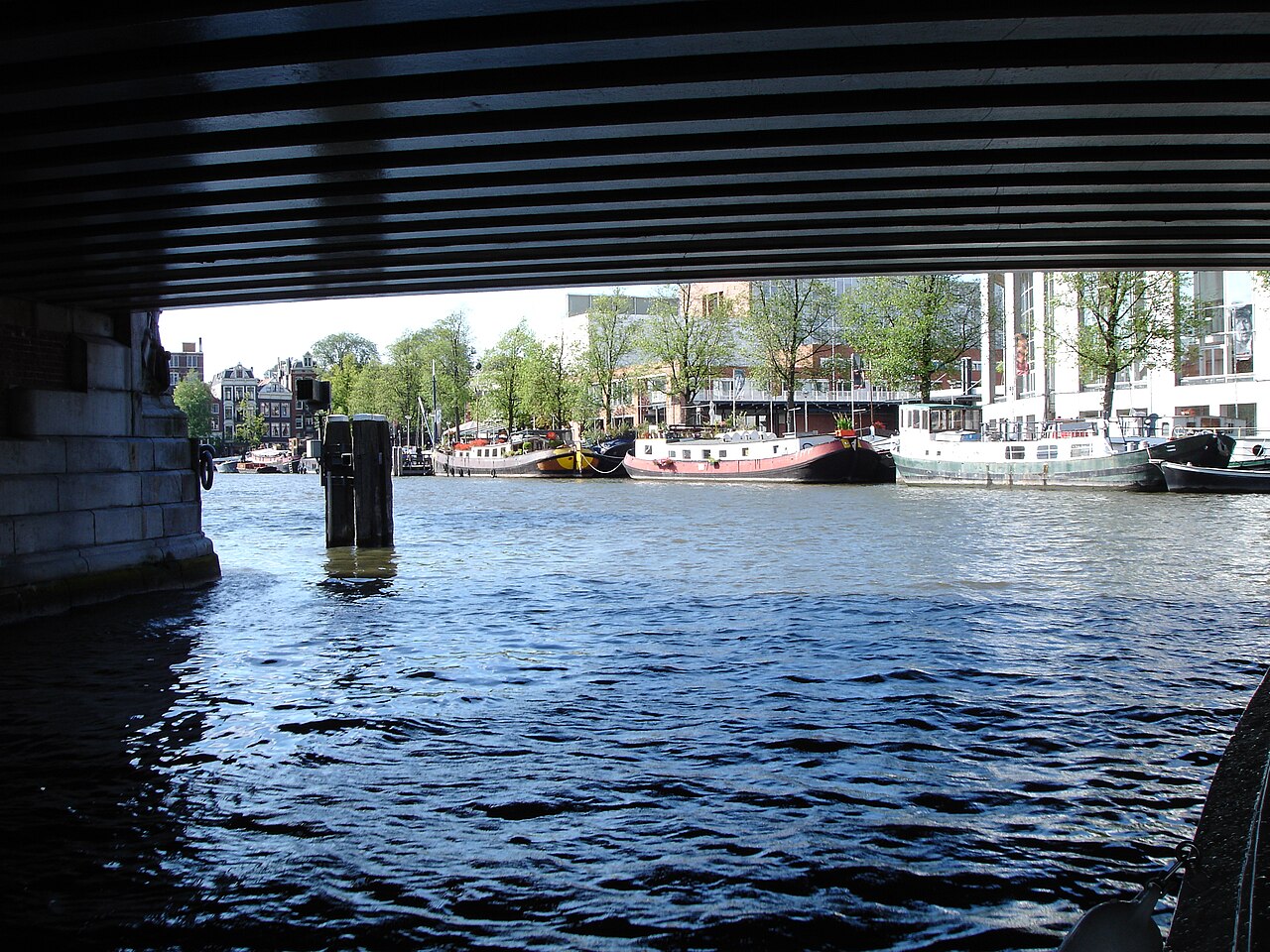
Several of the flat-bottomed boats tied up at the waterline are houseboats rather than tour boats, and people are inside them. The etiquette is simple enough: if the curtains are drawn, you do not look in.
One job is worth doing tonight because it makes tomorrow lighter. All three museums on this trip admit by timed slot, and two of them cannot be bought at the door at all. Opening a booking page on weak hotel Wi-Fi is where that goes wrong. Which way of carrying data abroad costs least is worked through in the comparison of eSIM and pocket Wi-Fi.
DAY 2Two large museums in one day, and the order you buy in is decided first
Why this order: the morning is for reading the shape of the city off the water, and the afternoon never leaves one square. The Rijksmuseum and the Van Gogh Museum both face Museumplein, three minutes apart on foot.
Morning: the cruise is the ninety minutes that puts the map in your head
Central Amsterdam is a set of semicircular waterways nested inside the Singel. The formal name of the UNESCO World Heritage listing is the Seventeenth-century canal ring area of Amsterdam inside the Singelgracht, and the nesting itself is what is inscribed, not any single building along it. On a map it reads as a tangle. Going round once by boat sorts out which bridge belongs to which ring, and whatever you lost to wrong turns on the first evening comes back in this hour and a half.
Cruise fares move with the operator and the season, so they are not in the cost table at the end. The figure to anchor on is the city tourist board’s combined ticket at EUR 17.00 for an adult, which boards with any of the main operators. If you are willing to commit to one company, its own site is usually cheaper; if you would rather decide at the jetty which boat to take, the combined ticket is what that flexibility costs. To pin a date and a departure time down in advance, slots are sold through Klook as well as by the operators.
Afternoon: one square, two museums, opposite ticketing
The Rijksmuseum opens 09:00 to 17:00 every day of the year, public holidays included. For a major European museum that is rare, and it means your choice of departure day is barely constrained. Everyone needs a timed entry slot, but a limited number of same-day tickets is released at the entrance.
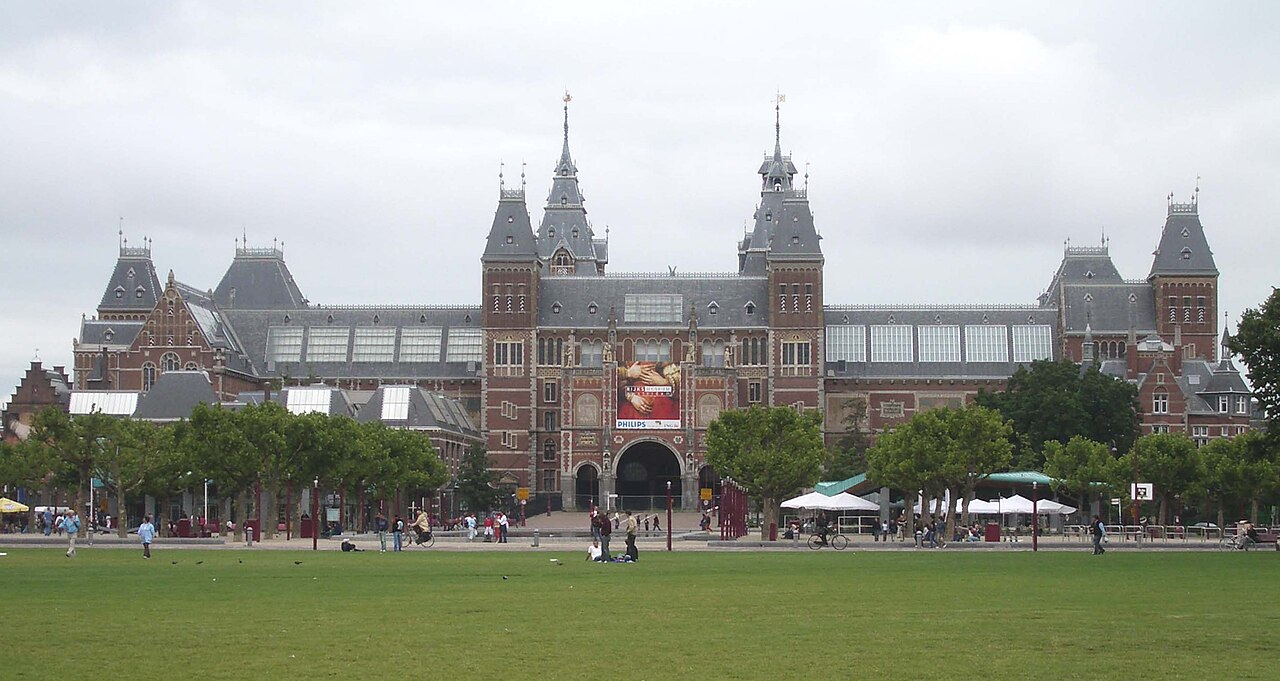
Highlights: Rembrandt’s Night Watch and Vermeer’s Milkmaid hang on the same floor. The Night Watch, though, is in the middle of the conservation programme called Operation Night Watch and stays on view inside a purpose-built glass chamber. Varnish is being lifted off it, so parts of the surface look temporarily matte. Treat it as a chance to watch conservation happening and the visit lands better than if you arrive expecting the postcard.
Practical note: payment is by card only, with no cash accepted anywhere in the building. Through the summer the garden is free and open 09:00 to 18:00 with sculpture in it, which is where to wait if you arrive before your slot.
- Nearest
- Rijksmuseum tram stop
- Hours
- Daily 09:00–17:00, no closing days
- Admission
- Adult EUR 25.00; under 18 free
- Booking
- Timed entry required; same-day tickets limited
- Official
- Official site ↗
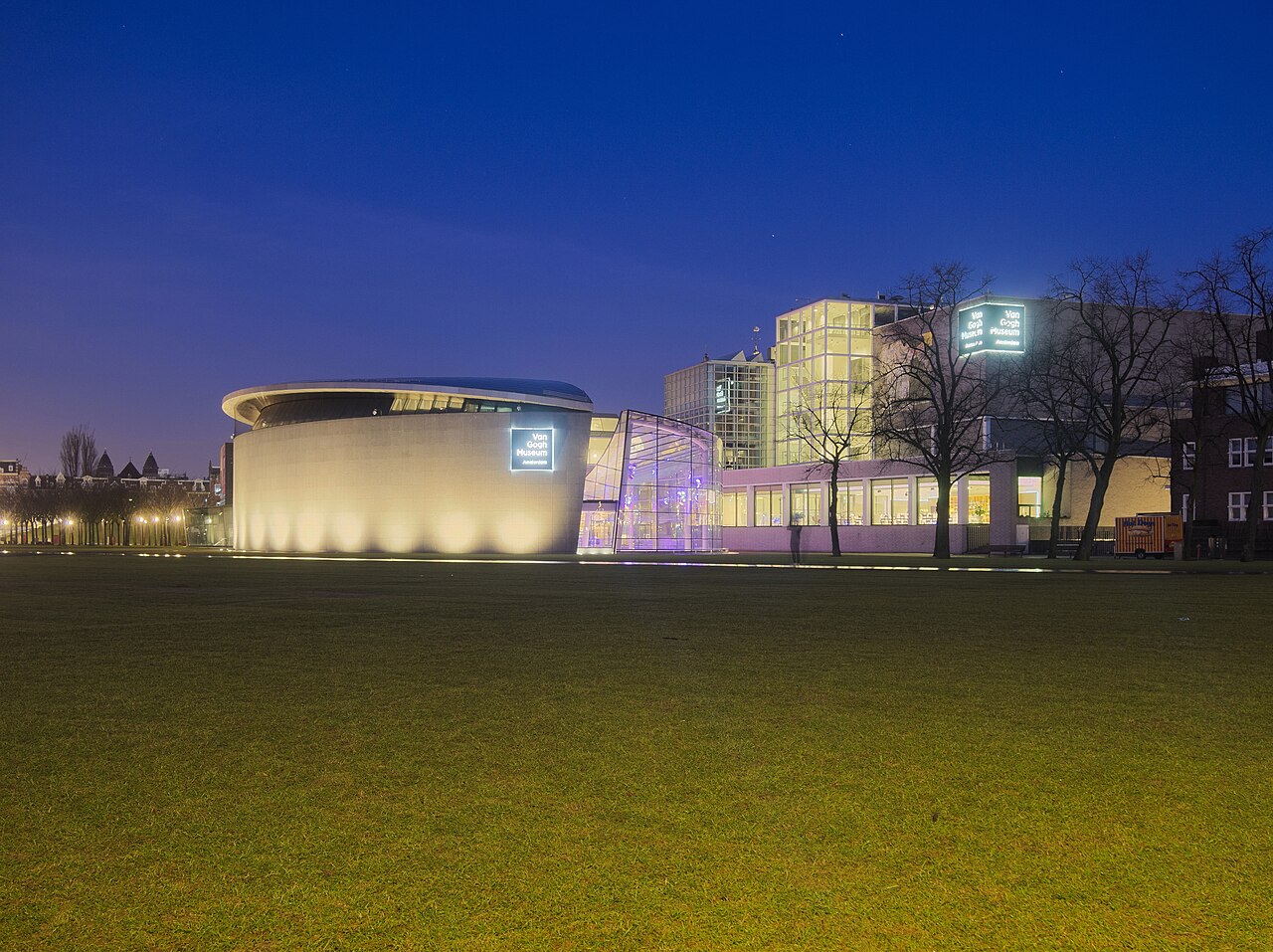
Highlights: the collection, Sunflowers included, is hung by period rather than by theme. Walk it in order from the earliest rooms and the point where the handling of paint changes is impossible to miss.
Practical note: tickets are sold online only and there is no counter. Under-18s go free, but a free ticket still carries a time on it. Closing time varies by date — some days 17:00, some 18:00, and certain Fridays 21:00. If you are counting on a Friday evening, check that your Friday is one of them before you build the day around it.
- Nearest
- 3 minutes on foot from the Rijksmuseum
- Hours
- Opens 09:00; closes 17:00, 18:00 or 21:00 on Fridays, depending on the date
- Admission
- Adult EUR 25.00; under 18 free; EU/EEA students EUR 16.00
- Booking
- Online only, timed
- Official
- Official site ↗
This is the point where most people stall over the I amsterdam City Card. It opens more than seventy museums, throws in a canal cruise and a day’s bike hire, and in its Total Experience tier covers city public transport as well. Almost every guide recommends it. Applied to this particular itinerary, the answer comes out the other way.
The Van Gogh Museum left the City Card scheme on 1 June 2022 and is no longer covered. The Anne Frank House was never in it and offers no discount through it. So of the three museums in this plan the card opens exactly one, and the other two still cost EUR 83.00 on top. The card earns its price for someone widening the trip to the Stedelijk, the maritime museum and the rest. Narrowed to these three, buying separately is cheaper.
Evening: Museumplein is a local park rather than a sight
Museumplein is the lawn enclosed by three museums. What the city lists as being on it is grass and a pond, a skate park, a basketball court, play equipment and benches — closer to a neighbourhood park where people walk dogs and children rattle around on boards than to an attraction. The giant free-standing letters that appear in older guidebook photographs are absent from every current official description of the square. Walking about looking for them is time better spent sitting on the grass and resting two museums’ worth of standing.
Dinner is either around Museumplein or back near your hotel. The streets here belong to Oud-Zuid, a residential district that goes quiet after dark. If you want somewhere with noise in it, budget twenty minutes on the tram back into the centre.
DAY 3Count this day back from whatever hour the Anne Frank House gave you
Why this order: the morning stays beside the Westerkerk and the afternoon leaves town. A direct bus runs from Centraal to the windmill village, so the day contains no changes.
Morning: tickets exist only at 10:00 on a Tuesday
The Anne Frank House is the first thing to deal with on this whole trip. Tickets are not sold at the door, only online, and they are not on sale continuously. Every Tuesday at 10:00 Central European Summer Time, the entire allocation for the date six weeks ahead is released at once. Convert that hour into your own time zone before the Tuesday arrives, because the release is not staggered and the good slots do not last.
That mechanism changes the order in which a trip gets planned. Book the flights first and go looking for museum tickets afterwards and the day you chose may already be gone. Decide earlier than six weeks out and the tickets for your date do not exist yet. The one opening is the Tuesday immediately after your date falls inside the six-week window. Since the ticket cannot be refunded, changed or transferred, what follows is that you take the slot you are given and bend the rest of the itinerary around it.
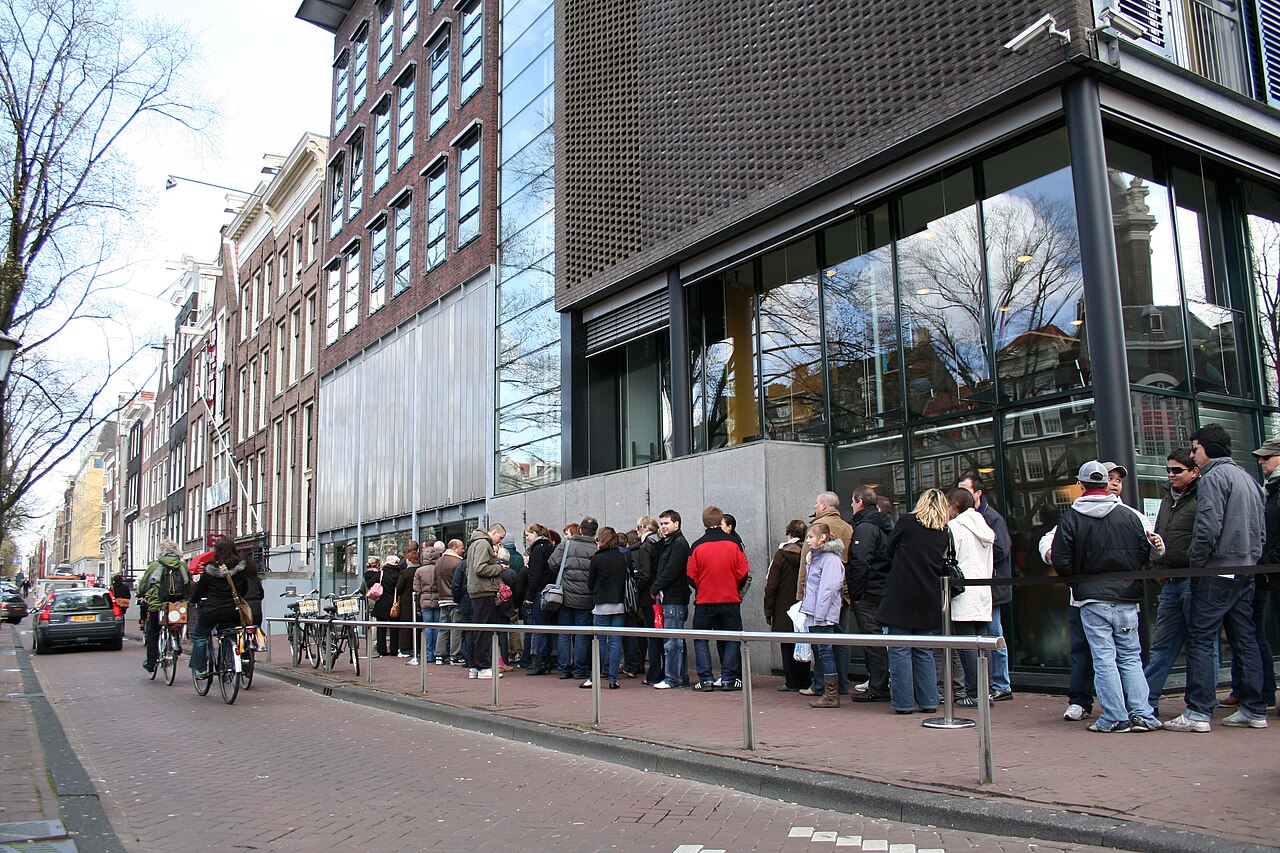
Highlights: the secret annexe where the diary was written survives with its rooms in their original arrangement. The way in is the bookcase on the landing — the museum’s own wording — a movable case that swings towards you rather than rotating like a film set. The stairs beyond it are narrow and steep, and carrying anything up them is not realistic.
Practical note: bags larger than A4 are not admitted. Payment is by card only, and the ticket cannot be refunded, changed or passed to someone else. The museum advises against bringing children under 10, so with a small child in the party it is more sensible to leave this out of the plan from the start than to find out at the door.
- Nearest
- Beside the Westerkerk; Westermarkt tram stop
- Hours
- Daily 09:00–22:00 (shorter hours and closures on some holidays)
- Admission
- Adult EUR 16.50 including the EUR 1.00 booking fee; ages 10–17 EUR 7.00
- On sale
- Tuesdays at 10:00, for the date six weeks ahead
- Official
- Official site ↗
A handful of dates each year are closed or shortened. In 2026 the museum shuts for four consecutive days over Yom Kippur, 21 to 24 September, and closes at 17:00 on 20 September. King’s Day on 27 April and 4 May also end at 17:00. If your trip lands in late September, take those four days out of the calendar before you place anything else.
Highlights: the district spreading north-west of the Anne Frank House, a grid of narrow canals and small bridges. It was built as workers’ housing, so the frontages are tight and the streets measurably narrower than in the grand stretch of the main canal ring. Walking straight out of the museum into it works as a way of changing register without getting on anything.
Practical note: a market fills the Noordermarkt on Monday mornings. If your DAY 3 falls on a Monday, this is the one place in the day worth giving extra time to.
- Nearest
- Continuous with the Anne Frank House
- Walking
- EUR 0
Afternoon: the windmill village is 24 minutes by direct bus
Zaanse Schans, out beyond the city boundary, is reached without a change. Bus 800, branded the Zaanse Schans Express, runs from Centraal every fifteen minutes between 09:00 and 17:00 and takes about 24 minutes. The stop is alongside the Zaans Museum, which means you step off at the entrance to the village.
This is the one day a city ticket will not cover. Zaanse Schans lies outside the municipal boundary, so a GVB day ticket does not reach it. The Amsterdam & Region Travel Ticket does: EUR 23.00 in 2026, valid on the city trams and on the regional buses and trains out to the village. It is also simpler to reason about than paying each leg separately, which is why the cost table below is built on it.
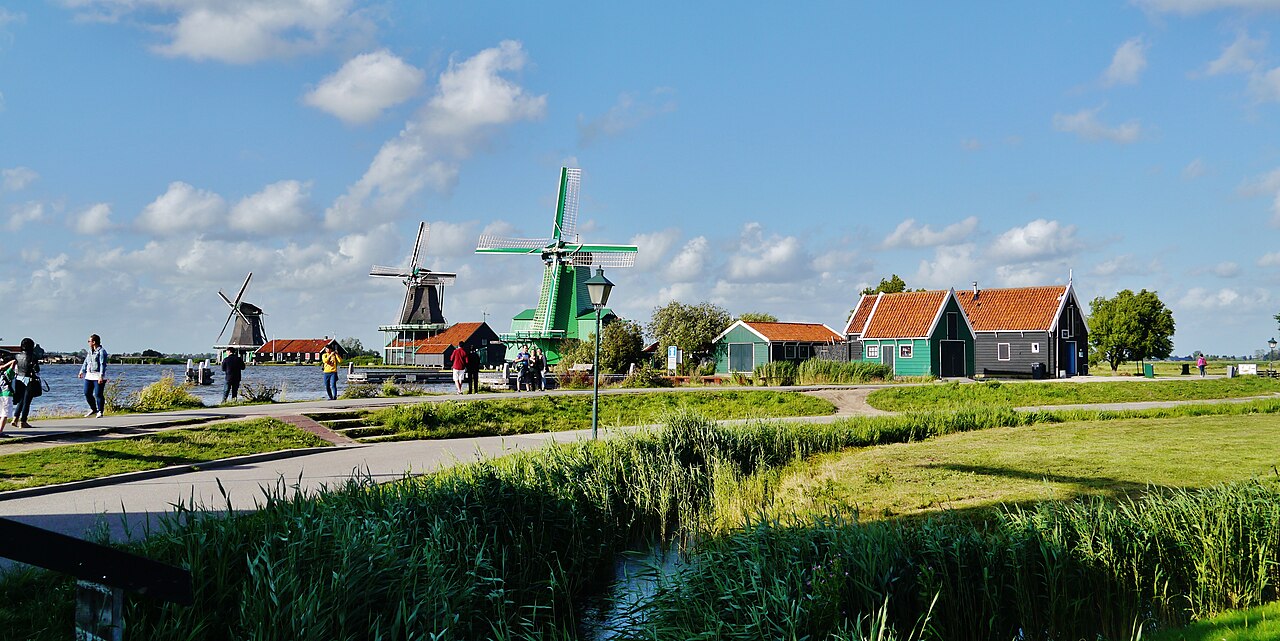
Highlights: working timber windmills stand along the river with their sails turning. The village charges nothing to enter and the paths and the green are free to walk; you pay only to go inside the buildings. The combined Ticket Zaanse Schans is EUR 29.50 for an adult and EUR 20.00 for a child, and covers the Zaans Museum, the weaver’s house, the cooperage and the clock museum, plus two of whichever mills are open that day.
Practical note: which mills open changes from day to day, which is exactly why the combined ticket is written as a choice of two rather than a fixed list. Arriving set on one particular mill is how people end up disappointed. If the shape of the sails and the noise they make is what you came for, walking the village without a ticket is a complete visit. The toilets cost EUR 1 and take debit cards only, no cash.
- Nearest
- Zaanse Schans stop, bus 800
- Information centre
- 09:00–17:00 (individual buildings vary by day)
- Entry to the village
- EUR 0
- Combined ticket
- Adult EUR 29.50; child EUR 20.00
- Official
- Official site ↗
The bus back stops at 17:00 as well, so staying for sunset is not an option this itinerary supports. Past that hour you are walking the fifteen minutes to the station for a local train. Summer evenings stay bright long enough that the deadline is easy to forget while you are standing there. The same problem — deciding in advance what time a day trip out of the city has to end — turns up in exactly this form in the London four-night plan.
DAY 4–5The last half day counts back from seventeen minutes to the airport
Why this order: with the airport this close, the final day can stay in the city far longer than usual. Leave the cases in a locker at Centraal and do the last morning without them.
Morning: a stroopwafel off the iron is a different food from the packet
A stroopwafel is two thin waffle discs with syrup between them. Souvenir shops stack the packaged kind; market stalls hand you one straight off the iron with the syrup still warm. They carry the same name and are not really the same thing.

Highlights: to take home, packaged stroopwafels, Gouda or Edam, and salted herring sold by weight at the market. Herring will not travel in hand baggage, so if you want it, eat it standing at the stall.
Practical note: there are coin lockers at Centraal. Dragging a suitcase over cobbles down narrow streets between checkout and the airport train wastes the morning. Leaving the bags first changes how much ground the same two hours covers.
- Nearest
- Around Amsterdam Centraal
- Shopping
- Whatever you spend
Afternoon: the airport is near enough to stay in town until late
Seventeen minutes from Centraal to Schiphol, eight trains an hour. That distance makes the final day unusually flexible. Even working backwards from a three-hour check-in for a long-haul departure, you leave the city three and a half hours before the flight. On an afternoon departure the entire morning survives.
One thing on the return leg catches people out. Centraal has ticket gates you pass through; Schiphol has none, only check-in poles standing before the platform. Miss the tap on arrival and the fare never settles correctly. Anyone riding on OVpay rather than a paper ticket is the most likely to walk straight past them.
Alternatives
Rainy-day swap
This itinerary handles rain better than most. DAY 2 is a covered boat and two indoor buildings, and the morning of DAY 3 is a museum and a short walk. The only block that falls apart in the wet is the afternoon of DAY 3. Zaanse Schans is somewhere you go to be outdoors: in rain the photographs do not work and the floors inside the mills are wet underfoot.
The swap is to put that afternoon into a museum in town. The Zaanse Schans combined ticket is bought on the spot in the village, so deciding not to go frees EUR 29.50 a head for something else. The Anne Frank House, on the other hand, cannot be moved for weather at all: the ticket is fixed to a date and a time and takes neither a change nor a refund. Knowing from the outset that the windmills are the only weather-flexible part of the trip makes the call on the morning of a wet day quick.
If the plan involved hiring bikes, switch to the tram when it rains rather than pressing on. The cycle lanes here are a commuting network, and a visitor riding slowly gets overtaken from behind all day. Junctions where wet cobbles cross tram rails are not a place to learn.
If the flight is delayed by an hour or more
A delay on DAY 1 costs this plan almost nothing. All that sits in the arrival day is the journey to the hotel and a walk along the Damrak, and neither has a time attached. Even landing near midnight, the next morning starts in the same shape.
It bites when the delay pushes into DAY 2. Both museums are bought as timed entries, so arriving after your slot means not getting in. The Rijksmuseum leaves some room, because a limited number of same-day tickets goes on sale at the door. The Van Gogh Museum leaves none, being online only with no counter to queue at. On a routing where delays are plausible, take the later afternoon slots on DAY 2 rather than the early ones.
Only the Anne Frank House is unrecoverable. The ticket cannot be refunded or moved, so an hour lost against that slot is money gone. If the outbound journey involves even one connection, keep the museum on DAY 3 or later so that two days of slack sit between landing and the appointment.
When you’re tired
The order things come out in is settled. First to go is Zaanse Schans on the afternoon of DAY 3. It takes half a day between travel and the visit, and the village itself is walked rather than sat in, which makes it the heaviest block in the trip. Cutting it removes the EUR 46.00 regional day ticket for two, replaced by a EUR 20.00 city day ticket, so the total drops by EUR 26.00 as well.
Next is the canal cruise on DAY 2. Its purpose is to give you the shape of the city, so if the map is already in your head the rest of the itinerary survives without it. What is not worth cutting is either museum. They involve the least walking of anything here and they have chairs in them — on a tired day they are what you keep.
To lighten a whole day instead, leave DAY 2 as the Van Gogh Museum alone and move the Rijksmuseum to the morning of DAY 4. It has no closing days and opens at 09:00, which makes it one of the few museums that still works on a departure morning. You lose shopping time, and seventeen minutes to the airport absorbs most of that loss.
Where to stay
Central Amsterdam is small enough to cross on foot, so no hotel location breaks this itinerary. What decides it is which morning starts earliest.
Here the earliest morning is DAY 3, the Anne Frank House slot. With a nine o’clock ticket, staying around the Westerkerk reduces that morning’s travel to nothing. If DAY 2 and the museums matter more, the Museumplein side wins; if handling luggage and the two airport runs is what you care about, stay near Centraal. Whichever of the three you pick, the other two are inside fifteen minutes by tram.
Budgeting from the displayed room rate alone leaves a gap at the desk. Amsterdam’s tourist tax is 12.5 per cent of the room rate excluding VAT, among the highest in any major European city. A EUR 200 room therefore carries roughly EUR 25 a night, EUR 75 across three nights, and that is charged to the room rather than per person, so two travellers pay it once. How the same charge is written in other cities, and what it actually adds per night, is set out in the recalculation across five cities.
Book in four stages: the Anne Frank House, then flights, then the room, then the other two museums. Only the first has a release date you cannot influence, so let the ticket decide the dates, fit the flights to it and look for a room afterwards. That order produces the fewest rebookings. Slots at the two art museums usually survive until close to the day, which is why they come last.
What this trip costs
Assumptions: two adults, arriving by air at Schiphol, moving around on public transport only. Airfares are out of the total because they swing too far by route and season, and rooms and meals are out for the same reason. What is listed is the part that barely moves — published fares and published admissions. At EUR 1 = JPY 179 the total below is about JPY 39,600.
Every figure above is the published rate as of 2026-09-14. The conversion uses the European Central Bank reference rate of JPY 178.56 on 2026-09-11.
That EUR 221.00 is the part that does not move. Flights, rooms and meals sit on top of it and all three answer to your own choices, which means those three are the only places worth pushing on when you tighten the budget.
Split it and transport is EUR 88.00 against EUR 133.00 in admissions. Trying to save on the transport side mostly backfires: on DAY 2, three or more tram rides make the EUR 10.00 day ticket cheaper than repeating a EUR 3.40 hour ticket, and on DAY 3 you leave the municipality, so the regional ticket is the only thing that works. The only real cut is dropping the windmill village entirely, and at that point it is a different trip.
The admissions side moves a lot with who is travelling. Both art museums are free for under-18s, and the Anne Frank House charges EUR 7.00 for ages 10 to 17. Two adults and a teenager therefore add EUR 7.00 to the total and nothing else. As European museum pricing goes that is gentle on families — and it is also why two adults travelling alone have nothing to trim here.
One point about payment. The Anne Frank House and the Rijksmuseum both take cards only, with no cash accepted. In the first case you are buying a non-refundable ticket online, so a declined transaction stops the trip rather than delaying it. Against a limit being hit or a fraud check firing, carrying two cards on different networks earns its place in this city in particular.
Entry formalities changed in the past two years. Visitors from countries with visa-free access to the Schengen area may stay 90 days in any 180, but the Entry/Exit System went fully live on 10 April 2026, so fingerprints and a facial image are now recorded at the border in practice. ETIAS, the electronic travel authorisation, is scheduled for the fourth quarter of 2026 and the European Commission has not published a start date. If the trip falls late in the year, check whether it has begun before you book. Flying out of Japan adds a separate line that sits inside the fare rather than beside it: the international tourist tax rises to JPY 3,000 on tickets issued from 1 July 2026.
Two kinds of traveller should not follow this plan as written. Anyone building a late-September trip around the Anne Frank House runs into four consecutive closed days, and anyone bringing a child under 10 is going against the museum’s own advice. In either case, dropping that museum and running the trip on the Rijksmuseum and Zaanse Schans holds together better than forcing it. How much a city’s opening hours and closing days dictate the order of a trip varies a great deal between European capitals, and the way to compare them is the departure-day reasoning set out in the Paris four-night plan. Durations and visit lengths here are estimates built from official distances and typical viewing times.
If you want to venture further north, there is also the six-night, seven-day itinerary connecting the three Scandinavian capitals of Copenhagen, Oslo, and Stockholm by rail. All three countries are within the Schengen Area, but Sweden has reintroduced border controls, including the land border with Denmark, so keep your passport handy on the train.
Sources: Rijksmuseum; Van Gogh Museum; Anne Frank House; Zaanse Schans; GVB; NS; City of Amsterdam; I amsterdam / European Commission (EES, ETIAS) / European Central Bank reference rates / Checked on 2026-09-14 / Photographs: Lyn Gateley, Markus Würfel, C messier, Massimo Catarinella, Zairon, Takeaway (Wikimedia Commons, CC BY 2.0 / CC BY-SA 3.0 / CC BY-SA 4.0) / Featured image: Basile Morin, CC BY-SA 4.0 (Wikimedia Commons)
Other sales ending soon




 4 days leftuntil Oct 24Air Busan Takamatsu-Busan Coupon: Up to 9,000 Yen Off Until October 24
 5 days leftuntil Oct 25JAL Hong Kong Campaign: Tokyo–Hong Kong Round Trip from 75,800 Yen (until 25 Oct)
 11 days leftuntil Oct 31Jin Air Kobe–Seoul: 5,000 yen off a round trip with code KTOUKB1, until 31 October
 11 days leftuntil Oct 31Jin Air to Busan: 4,000 yen off a round trip with code KTOPUS, first 300 only