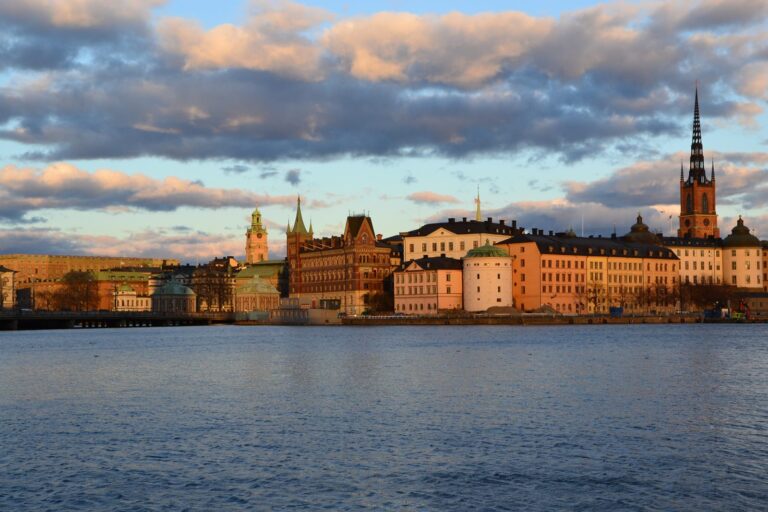
Copenhagen, Oslo and Stockholm by Rail: 7-Day Model Plan
AuthorMIRUTOBE editors
Table of Contents12 items
- Itinerary at a glance
- DAY 1 Copenhagen: keep to what you can walk, Nyhavn and the Round Tower
- DAY 2 Copenhagen: Rosenborg Castle admits visitors in ten-minute slots
- DAY 3 Copenhagen to Oslo: one 6:29 train, with a change at Gothenburg
- DAY 4 Oslo: book a Munch Museum slot, and end the day in Vigeland Park
- DAY 5 Oslo to Stockholm: walk the fortress in the morning, take the 11:46 SJ
- DAY 6 Stockholm: the Vasa Museum and City Hall on the same day
- DAY 7 Stockholm: on the day you fly out, walk the old town early
- Changes to the itinerary
- Why the Norwegian fjords and Bergen are left out
- Where to stay
- What this trip costs
Six nights, seven days from Copenhagen through Oslo to Stockholm, linked by rail only and no flights. The 6:29 train from Copenhagen reaches Oslo at 13:45 the same day, and from Oslo a morning or midday SJ train runs on to Stockholm. Between Copenhagen and Oslo there is a single change, at Gothenburg.
As of October 2026 Sweden has reintroduced border control on its internal borders, including the land border with Denmark, and the train from Copenhagen to Gothenburg crosses it. All three countries are in the Schengen Area, but keep your passport with you on the train. Sweden’s current period runs to 11 November 2026, and the European Commission’s list shows an extension from 12 November 2026 to 11 May 2027.
Itinerary at a glance
DAY 1Copenhagen: keep to what you can walk, Nyhavn and the Round Tower
Why this order: nothing with a fixed time goes on arrival day. Two places linked on foot, from the canal to the old town, and an early night.
Afternoon: from the Nyhavn canal to the Round Tower
Nyhavn is a canal dug in the 17th century, with houses in different colours along the water and sailing ships moored at the quay. Walk to the end of the canal and come back along the opposite bank, and you see both rows of houses. It costs nothing to walk, so even if the journey in has left you tired, the plan does not break.
Colourful houses facing the canal and wooden sailing ships moored at the water’s edge.
Walk the quay once each way, then pick a place to eat on the old-town side, and you will not be circling for a table.
- Fee
- Free to walk
Link the canal to the old town on foot and you arrive at the Round Tower (Rundetaarn). The tower has stood since 1642, and a spiral ramp rather than stairs runs to the top. 2026 is the 350th anniversary of Ole Rømer’s measurement of the speed of light, and special exhibitions and events run through the year. The floor of the Library Hall holds changing exhibitions, and your admission ticket covers them. The hall closes during exhibition changes and some events.
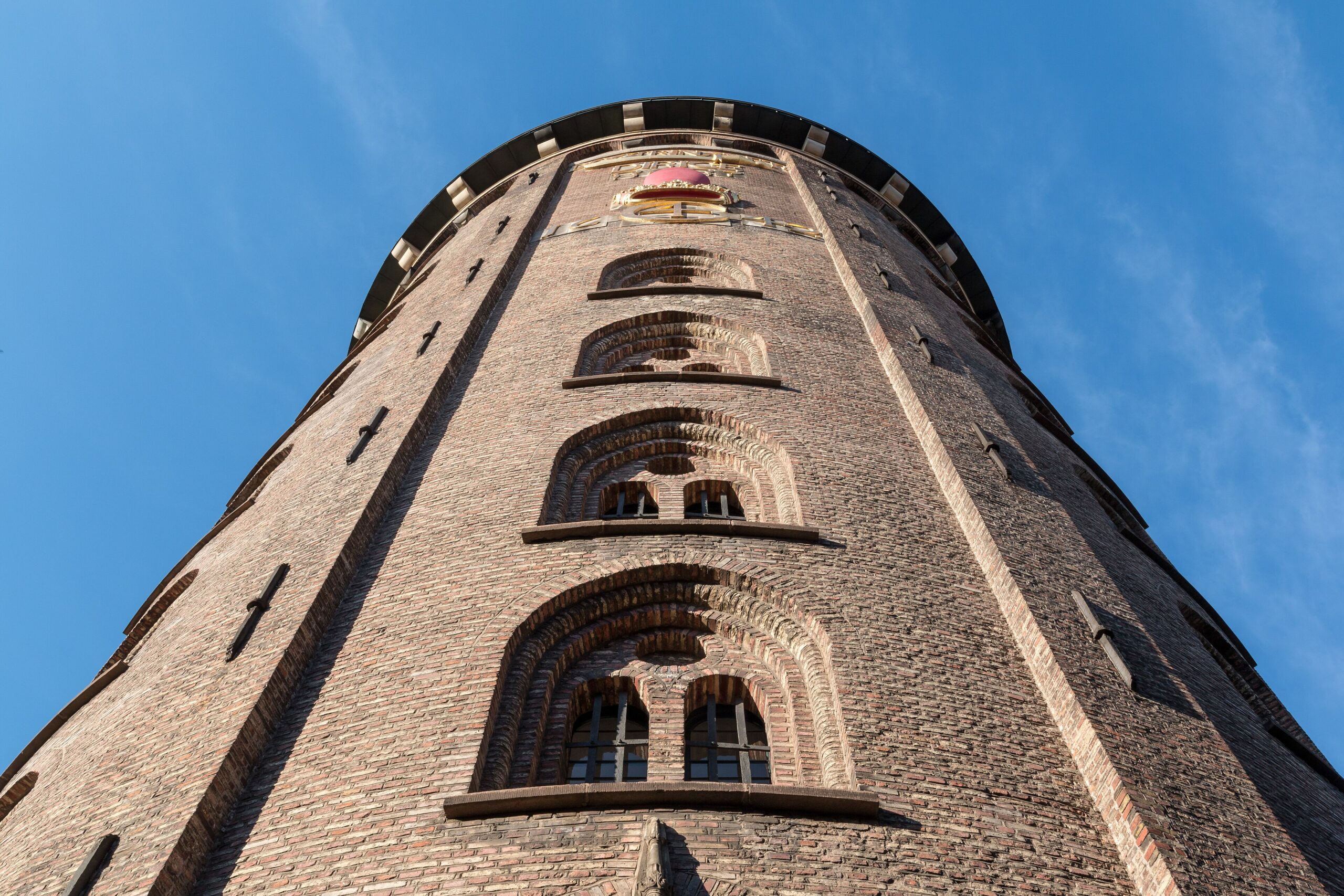
A spiral ramp links the Library Hall halfway up with the viewing platform at the top.
Tickets are sold at the ticket office on the day, with no advance sales. You can pay in cash (kroner and euros) or by card.
- Hours
- October to March: Monday and Tuesday 10:00-21:00, Wednesday to Sunday 10:00-18:00. April to September: daily 10:00-20:00
- Fee
- Adults DKK 60 (students DKK 40, free up to age 17)
- Official
- Rundetaarn official site ↗
The observatory at the top opens on Monday and Tuesday evenings from 18:00 to 21:00 in winter, but the official site says the observatory is being restored in 2026. Check whether it is open before you plan around the stars.
The tower is open until 21:00 on Monday and Tuesday, so if DAY 1 falls on one of those days you can swap the order: take the Round Tower after dinner and give the afternoon to a walk around Nyhavn.
DAY 2Copenhagen: Rosenborg Castle admits visitors in ten-minute slots
Why this order: the castle with timed entry goes in the morning, the afternoon is left open for walking, and you are back early for the 6:29 train the next day.
Morning: book your Rosenborg slot in advance
Rosenborg Castle began in 1606 as a summer residence for Christian IV, and the Danish crown jewels are kept in the Treasury beneath it. It is a small castle and only a limited number of visitors can enter at a time, so tickets are sold only with a time slot, one every ten minutes. In peak season the slots sell out, and buying online lets you go straight to the entrance without queueing at the desk. Online costs DKK 140 and the door price is DKK 150, so you save DKK 10 per ticket. From 2 November to 23 December the castle is closed on Mondays, so avoid a start date that puts DAY 2 on a Monday in that period.
The Treasury holds four main sets: the Emerald Set, the Rose-Cut Diamond Set, the Brilliant-Cut Diamond Set and the Pearl-Ruby Set. The Emerald Set was made in the 1840s and is the only one of the sets that included a tiara from the start. The pearls in the Pearl-Ruby Set date from the late 17th century, among the oldest pieces in the royal family’s possession.
There are rules for what you carry in. Backpacks are not allowed, and handbags must be no larger than 15 x 23 x 15 cm and worn in front. Larger bags can be left free of charge in the cloakroom lockers at the entrance, but there is no room for suitcases and you cannot retrieve items after closing. Pack what you need in the castle into a small bag before you leave the hotel. The castle has no lift, many stairs and narrow doorways.
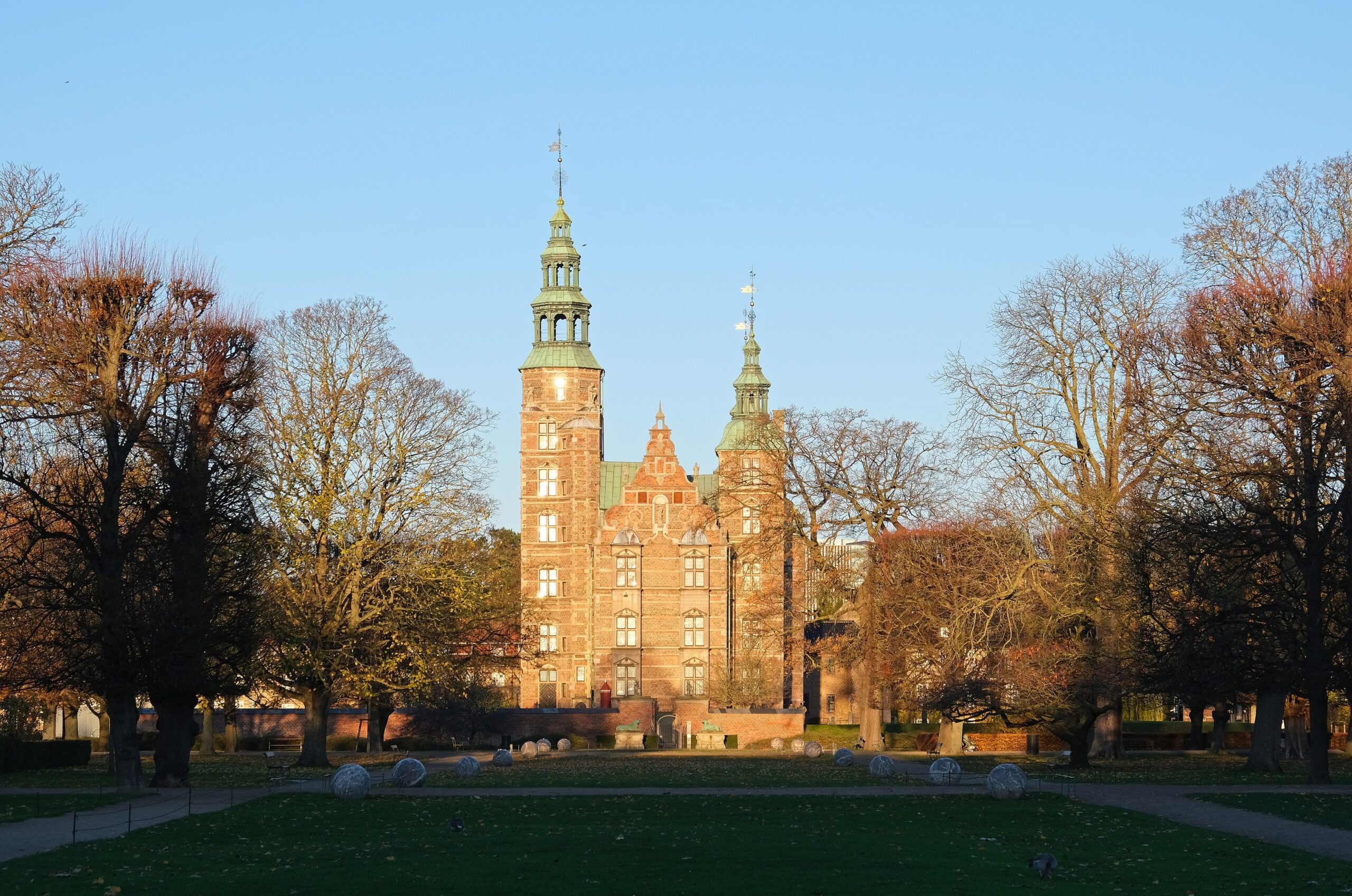
A Renaissance summer residence: Christian IV’s audience rooms, the bedchamber where he died, and the crown jewels in the Treasury below.
The nearest station is Nørreport, about 200 metres from the grounds. The entrance is at Øster Voldgade 4A.
- Hours
- Daily 10:00-17:00; from 2 November to 23 December closed on Mondays and 10:00-16:00 Tuesday to Sunday (ticket sales close 30 minutes before closing)
- Fee
- Adults DKK 140 online / DKK 150 at the door
- Official
- Rosenborg Castle official site ↗
Afternoon: from the castle garden through the old town
The castle stands inside Kongens Have (the King’s Garden), and when you come out you can walk straight through the garden. Head back towards Nørreport and you are in the old town; leave the afternoon unplanned, walk, and sit for a long time wherever you like the look of. The DAY 3 train leaves in the 6:00 hour, so eat early, pack your bags and check the walk to the station for the next morning.
If you want to see three palaces, the Royal Palace Pass covers Rosenborg Castle, the Amalienborg Museum and Christiansborg Palace on one ticket valid for three days, at DKK 245 online or DKK 255 at the door. This plan keeps to one castle, Rosenborg, so single tickets are enough.
DAY 3Copenhagen to Oslo: one 6:29 train, with a change at Gothenburg
Why this order: a transfer day uses half the day on the move, so the afternoon you arrive holds only open-air places with long opening hours.
Morning: Copenhagen Central 6:29, change at Gothenburg, Oslo 13:45
The all-rail route to Oslo is a single line of travel: from Copenhagen Central across the Øresund to Gothenburg, then a cross-border train on to Oslo. Entur, Norway’s official public transport journey planner, gives these combinations for weekdays on 9 and 10 November 2026.
The first leg is the Öresundståg from Copenhagen to Gothenburg, and the second is Vy’s RE20 from Gothenburg to Oslo. The change is inside Gothenburg Central station and leaves only nine or ten minutes. What to do if the 6:29 runs late and you miss the connection is set out under the changes to the itinerary below. Fares move with the date and when you buy, so decide from the price your booking screen shows for the day you travel. They are not in this article’s cost table.
Afternoon: straight to the Opera House roof
Arrive at Oslo Central at 13:45, leave your bags at the hotel and walk to the Opera House. The architects, Snøhetta, designed the roof of the Opera House in Bjørvika as a platform open to everyone, and white Carrara marble slopes gently down towards the water. The foyer is open 11:00-16:00 Monday to Saturday and 12:00-16:00 on Sunday, so if you want to see the inside, go in as soon as you arrive.
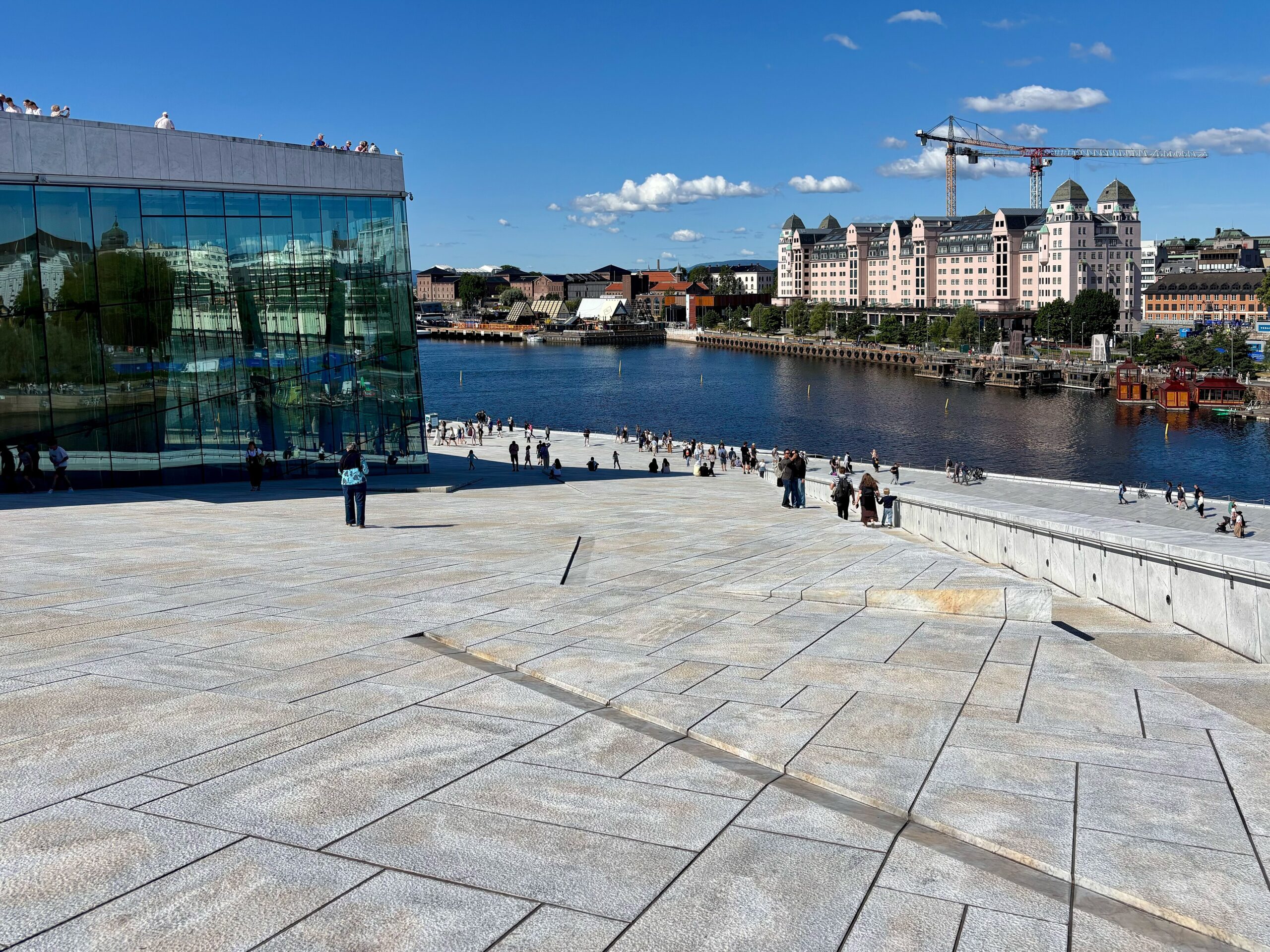
Walk the white marble roof and look out over the harbour and the mouth of the fjord.
The foyer is recognisable by its undulating oak wall, and it closes after 16:00.
- Foyer
- Monday-Saturday 11:00-16:00, Sunday 12:00-16:00 (until the end of the performance on show days)
- Fee
- Free if you only walk the roof
- Official
- Oslo Opera House official site ↗
Look at the harbour from the roof before dark, then walk back to the hotel. That is all there is on arrival day.
DAY 4Oslo: book a Munch Museum slot, and end the day in Vigeland Park
Why this order: the timed indoor place goes in the morning, and the afternoon is a park that is open all day, reached by public transport. Keep the journeys to two.
Morning: the Munch Museum
The Munch Museum is in the same Bjørvika district as the Opera House, and you can walk to it if your hotel is around Oslo Central. Entry is by timed ticket, and the museum advises you to buy a timed ticket in advance. It is open 10:00-18:00 Sunday to Tuesday and 10:00-21:00 Wednesday to Saturday, and adults pay NOK 220. Under-25s pay NOK 100 and children up to 17 are free.
Entry is free from 18:00 to 21:00 on the first Wednesday of each month. There is no booking; you collect tickets at the museum on the day, and July, August and September are excluded. If your dates fit, set DAY 4 on that Wednesday and go in the evening, and two people save NOK 440.
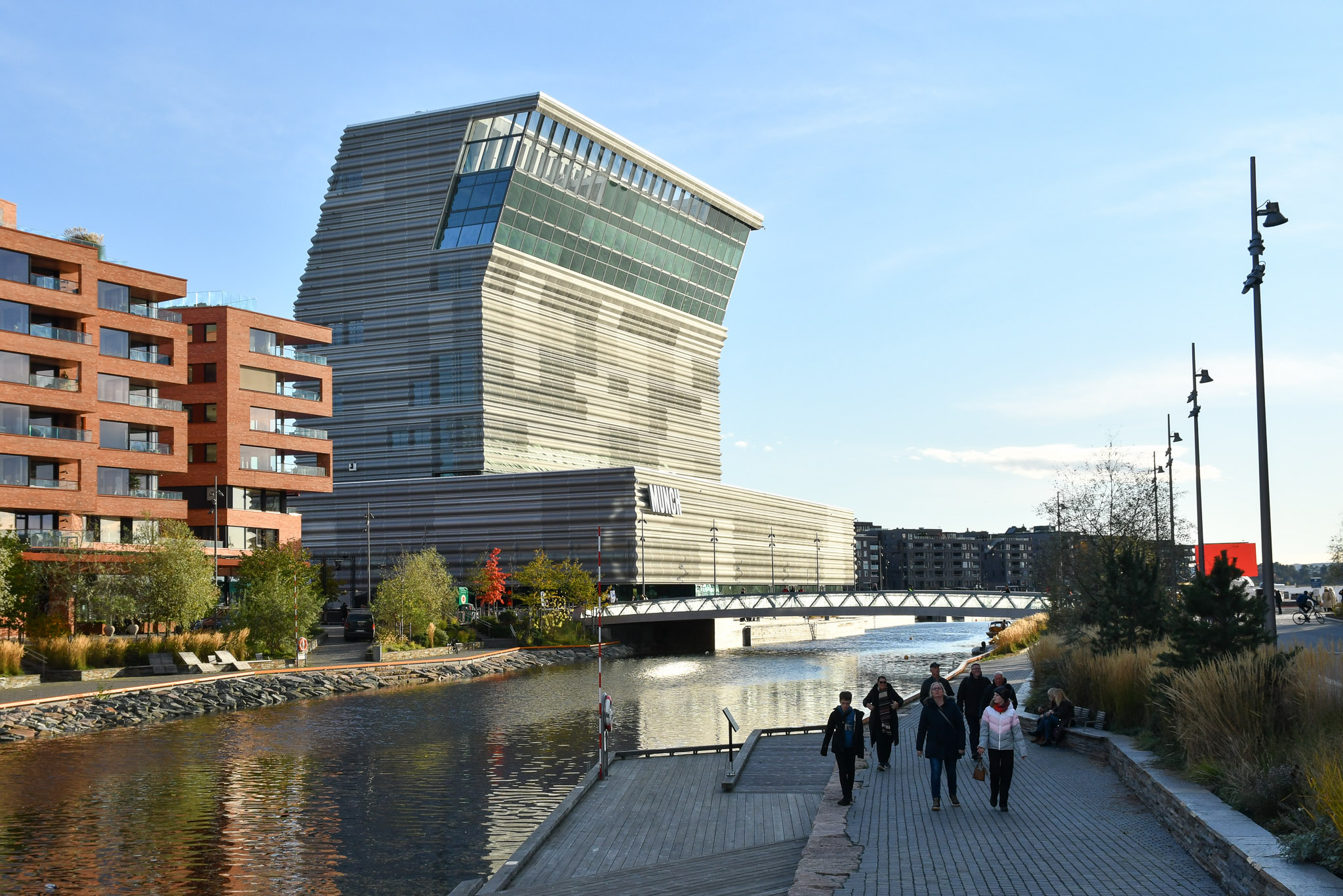
A museum of Munch’s work, with galleries stacked inside a tall building on the waterfront.
The early slots are quieter. Buy the timed ticket on the museum’s own booking page, and if you cannot show an electronic ticket, ask the museum hosts for help.
- Hours
- Sunday-Tuesday 10:00-18:00, Wednesday-Saturday 10:00-21:00
- Fee
- Adults NOK 220 (under 25 NOK 100, free up to 17)
- Official
- MUNCH official site ↗
Afternoon: on to Vigeland Park
Vigeland Park is on the west side of the city, reached by metro, tram or bus. A Ruter zone 1 single ticket costs NOK 46 for an adult and is valid for 60 minutes from when you start it. Within the city the one ticket carries you across trams, buses, the metro and boats. On this plan you make only the two journeys out and back. Ruter says a 24-hour ticket pays off on days with more than three trips, so you do not need one, and you buy four single tickets for two people. Buy them in the Ruter app; buying on board costs a little more.
The park holds more than 200 sculptures in granite, bronze and wrought iron, most of them installed between 1940 and 1949. The Fountain, the Bridge, the Monolith and the Wheel of Life are the main sights, and the park is always open with no admission fee. The Monolith is a single column of stacked human figures, and from the steps of its terrace you take in the whole of it.
The Fountain was first meant for Eidsvolls plass, in front of the Parliament. That plan was never carried out, and in 1924 the city council agreed that it would stand in Frogner Park. By then the plans for the park had grown to include the Monolith and the Bridge, and the work took more than 40 years.
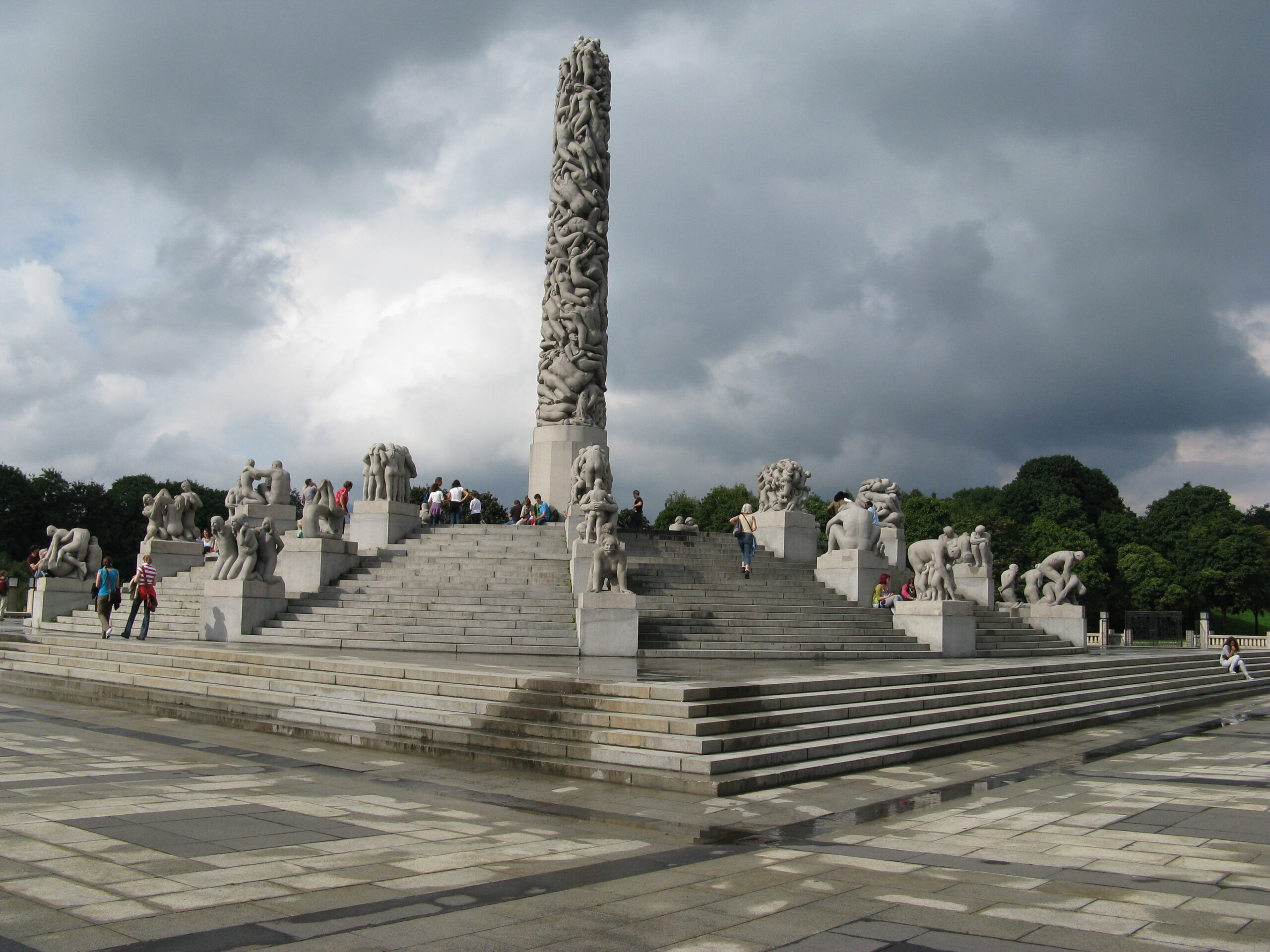
A park of Gustav Vigeland’s sculptures, with one axis running from the Fountain and the Bridge to the Monolith terrace.
Start with the sculptures on the Bridge, then the Fountain, the Monolith and the Wheel of Life, and you walk towards the end of the path. Wear shoes you can walk in even in rain.
- Open
- Always open
- Fee
- Free (the neighbouring Vigeland Museum charges separately)
- Official
- Vigeland Museum official site ↗
DAY 5Oslo to Stockholm: walk the fortress in the morning, take the 11:46 SJ
Why this order: a midday train leaves room for one place in Oslo in the morning. You skip the train before 6:00, and in exchange you reach Stockholm in the evening.
Morning: Akershus Fortress
Akershus Fortress was begun around 1290 and has been a centre of kings and the state for 700 years. It is the best-preserved medieval fortress in Norway, and the Renaissance castle holds a royal mausoleum. The grounds hold Akershus Castle, the Armed Forces Museum and the Norwegian Resistance Museum, all within a walk that fits after leaving your bags at the hotel.
The fortress was first tested in battle in an attack in 1308. In the 16th and 17th centuries it was rebuilt as a bastion fortress under Christian IV, and the castle became a Renaissance palace. Its last battle was an attack by King Charles XII of Sweden in 1716, and after 1814 it served for a time as a national prison, a school and a depot. The town of Oslo was re-founded in 1624 under the fortress walls. At night new LED lighting picks out the walls and towers.
A green hilltop in the middle of the city, with a view of the harbour from the walls.
The train leaves at 11:46, so finish the fortress in the 10:00 hour and collect your bags from the hotel. If you go into the museums, check their opening hours and fees on the official site that day.
- Official
- Forsvarsbygg official site ↗
Afternoon: Oslo Central 11:46, Stockholm Central 17:16
From Oslo Central to Stockholm Central you take SJ’s through train (line 70). Entur’s times for Tuesday 10 November 2026 show five departures: 5:47 arriving 11:17 (5 h 30 min), 7:16 arriving 13:20 (6 h 4 min), 11:46 arriving 17:16 (5 h 30 min), 14:31 arriving 20:20 (5 h 49 min) and 16:52 arriving 22:24 (5 h 32 min). There is no change. Choosing the 11:46 spares you a rushed evening the night before and leaves time to walk the fortress in the morning.
When you reach Stockholm Central in the evening, drop your bags at the hotel and walk through the old town, Gamla Stan. That is all for the evening of arrival, and Stockholm’s transport is covered by a 72-hour ticket that you start on arrival. You can buy the 72-hour ticket in the SL app ahead of time and keep it dormant for up to 60 days. It becomes valid when you press activate in the app or when you first tap the card.
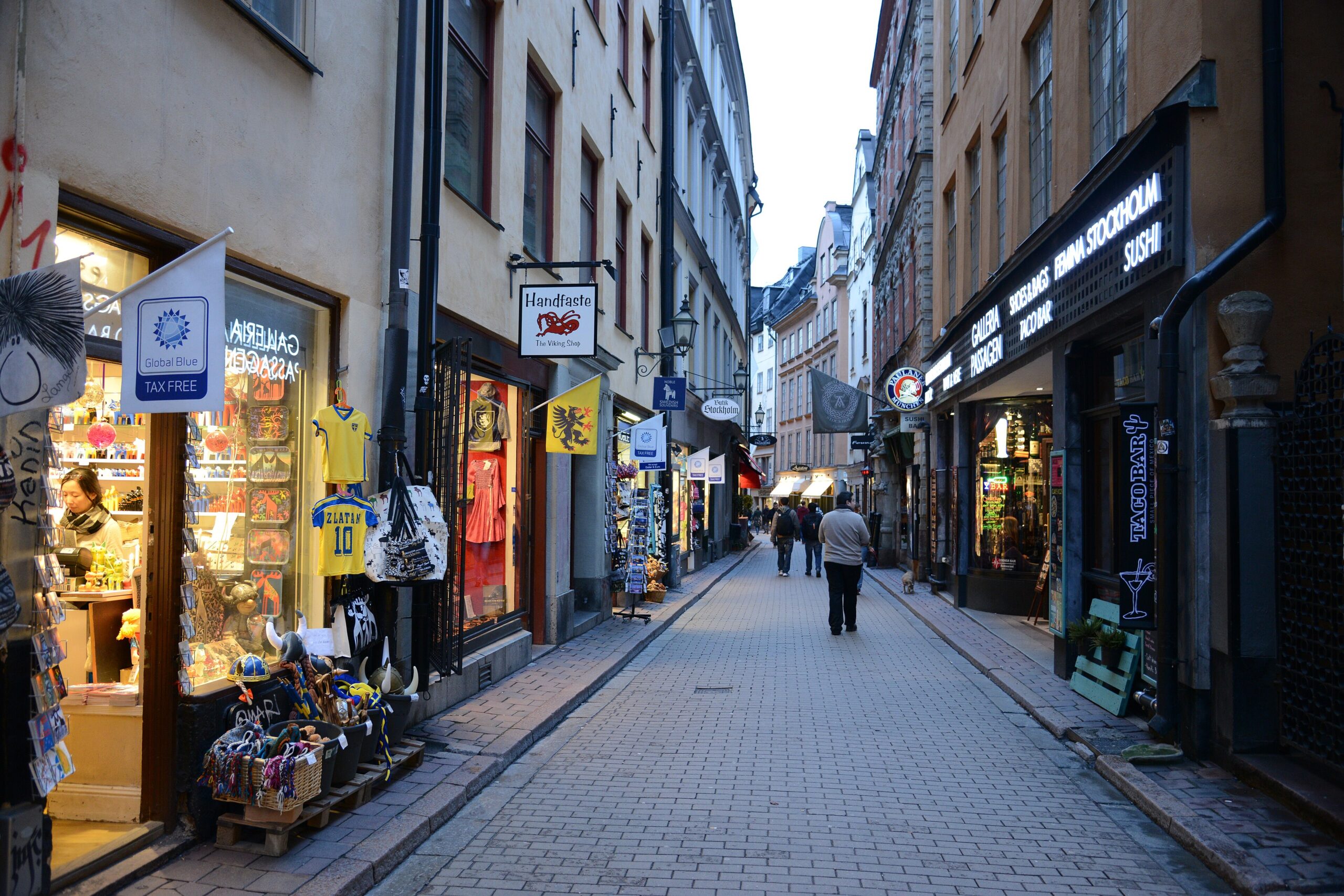
The old town of Stockholm, with narrow cobbled streets that bend their way across an island.
The narrow lanes that run parallel to the main street bring you closer to the shop signs and the old walls. In the evening the lights come on and the streets change character.
- Fee
- Free to walk
DAY 6Stockholm: the Vasa Museum and City Hall on the same day
Why this order: the museum that you enter at opening goes in the morning and the guided tour with a fixed time in the afternoon, with the SL 72-hour ticket for the trip between them.
Morning: the Vasa Museum
The Vasa was a warship that sank on her maiden voyage in 1628 and was raised in 1961. The museum holds the hull almost exactly as she was. It is open daily from 10:00 to 17:00 from September to May, with Wednesdays open until 20:00, and from 8:30 to 18:00 from June to August.
Prices change with the season. Adults pay SEK 195 from January to April and October to December and SEK 240 from May to September, and visitors aged 18 and under are free. Payment is by card only, and you can buy tickets on arrival. Tickets bought in advance do not give priority in the queue. The combination ticket with the Vrak Museum of Wrecks is valid for 72 hours, at SEK 315 from October to April and SEK 359 from May to September.
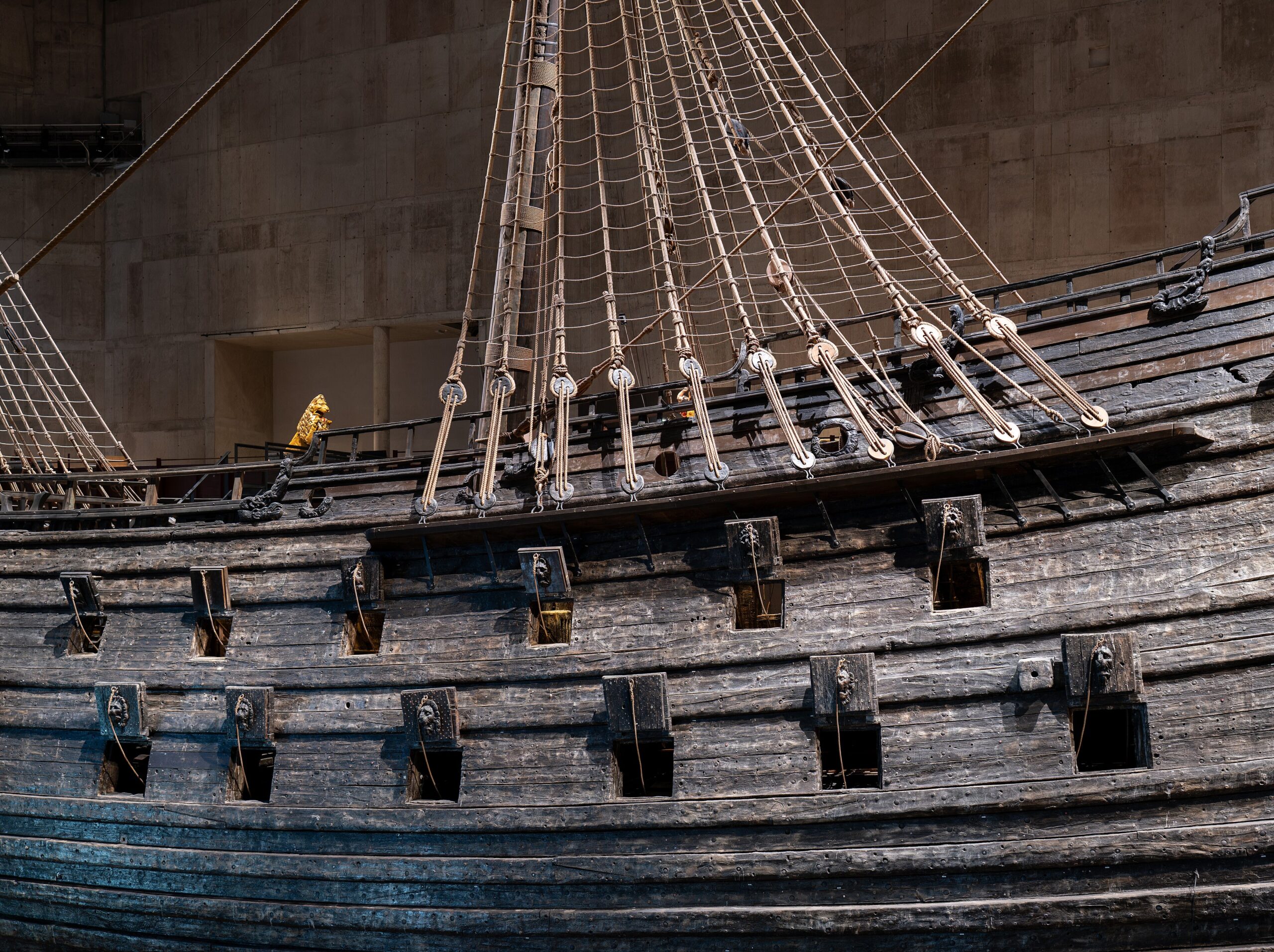
A 17th-century warship, with most of the hull displayed in the hall just as she was.
From September to May the museum is open until 20:00 on Wednesday, so if DAY 6 is a Wednesday you can swap and put the museum in the evening and City Hall in the morning.
- Hours
- September-May daily 10:00-17:00 (Wednesday until 20:00), June-August 8:30-18:00. Closed 24 and 25 December
- Fee
- Adults SEK 195 (January-April, October-December) / SEK 240 (May-September)
- Official
- Vasa Museum official site ↗
Afternoon: the City Hall guided tour
Stockholm City Hall can be entered only on a guided tour. The building went up in 1923 and used about eight million bricks. The tour includes the Blue Hall, the Golden Hall, the Council Chamber and the Prince’s Gallery. The Blue Hall is where the Nobel banquet is held. The tour takes about 45 minutes and runs in Swedish and English.
Tickets are released a week in advance. To buy on the day, go to the City Hall shop, whose ticket desk opens at 8:30. Adults pay SEK 150, pensioners and students SEK 130, ages 7 to 18 SEK 60, and children up to 6 are free. The Prince’s Gallery is closed on Saturdays because of weddings. Tours can change or be cancelled at short notice, so recheck the official timetable the day before.
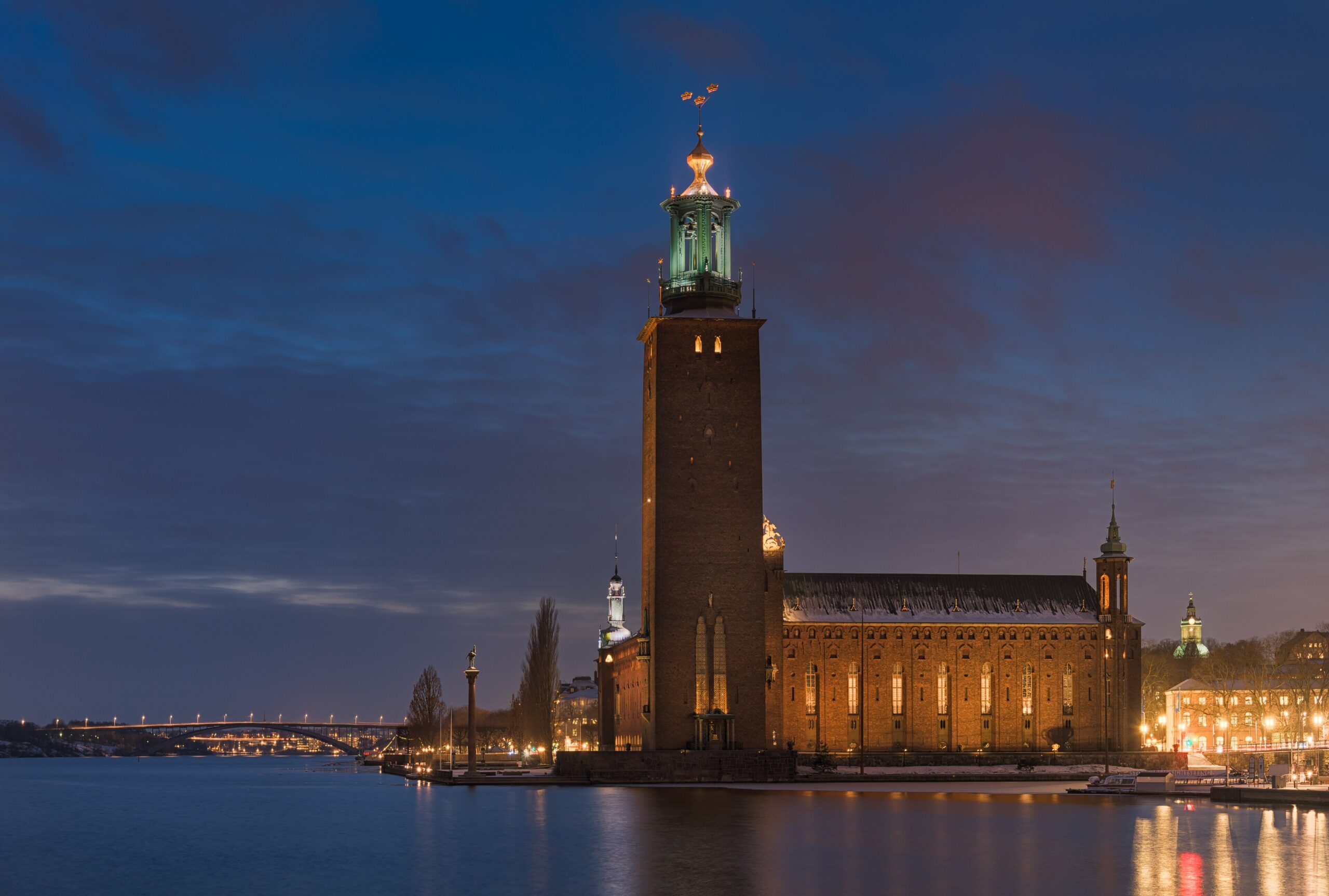
The venue of the Nobel banquet sits inside a red brick building.
The only way in is a guided tour, and the time depends on the official schedule for the day. After the tour, walk the park on the lake side and see the building from the water.
- Fee
- Adults SEK 150 (pensioners and students SEK 130, ages 7-18 SEK 60, free up to 6)
- Duration
- About 45 minutes
- Official
- Stockholm City Hall official site ↗
DAY 7Stockholm: on the day you fly out, walk the old town early
Why this order: on a day with a fixed departure time, leave no gap before the journey. One place in the city, in the morning.
The last day is set by your flight time. With an afternoon flight, leave your bags at the hotel, walk another street of the old town in the morning and return to Stockholm Central before noon. The Arlanda Express takes 18 minutes from the Central station, runs every 12 to 15 minutes, and your ticket is valid on any departure. The 72-hour ticket you started on the evening of DAY 5 runs to the evening of DAY 7. The rail line to Arlanda airport is not covered by the SL ticket, though, and needs a separate one. The Arlanda Express ticket includes a service where you leave your bags in the lounge and collect them at your destination. If you have time before the flight, you can also put your bags in a locker and walk without them.
Changes to the itinerary
Rearranging for a rainy day
The mainly open-air places are Nyhavn on DAY 1, the Opera House roof on DAY 3, Vigeland Park on DAY 4, the outer grounds of Akershus Fortress on DAY 5 and Gamla Stan. On a wet day, shift your time to the places built around the indoors. The Round Tower, Rosenborg Castle, the Munch Museum, the Vasa Museum and the City Hall tour can all be entered whatever the weather. On DAY 4 in particular, give the Munch Museum 90 to 120 minutes in the morning and keep Vigeland Park for whichever hours the rain lifts. The Munch Museum is open until 21:00 from Wednesday to Saturday, so you can also move it to the afternoon and use it into the evening.
If a train is more than an hour late
DAY 3 is the day most likely to come apart. If the 6:29 from Copenhagen is late and you miss the connection at Gothenburg, take a later Vy RE20. On the same day the RE20 leaves Gothenburg at 10:14, then at 12:15, 14:14 and 16:10. The 8:30 from Copenhagen arrives at 15:47 and the 10:29 at 17:44, and the Opera House moves to the next morning. The foyer closes at 16:00, so if you want to see inside, go in on the morning of DAY 4. On DAY 5 from Oslo, if you miss the 11:46, the 14:31 and the 16:52 remain.
A compromise for tired legs
Three of the seven days spend half the day on the move. On a day when you have no energy, drop Vigeland Park on DAY 4 and finish with a walk along the water near the hotel. On DAY 5, keep to the outside of Akershus Fortress, go into the station early and eat lunch there. On DAY 2 you can leave Rosenborg Castle after an hour and give the whole afternoon to rest.
Why the Norwegian fjords and Bergen are left out
The fjords and Bergen’s harbour, the places many people picture when they think of Scandinavia, are not in this plan. On this plan DAY 3 and DAY 5 are transfer days and DAY 7 is the flight home, which leaves only about four days for the three capitals. There is no time left for a day trip from Oslo to a fjord, so the plan keeps to museums, parks and castles inside the cities. If you want the fjords, do not add a night in Oslo; rebuild the whole trip as eight nights or more.
Where to stay
In all three cities, a hotel near the station makes the morning of a transfer day easier. Room prices move with the date and the room, so they are not listed in this article.
What this trip costs
This assumes two adults arriving in Copenhagen on DAY 1 and leaving from Stockholm on DAY 7. Flights, transfers between the airports and the city, intercity rail fares, hotels and meals vary greatly with the date and with your choices, so the total includes only the entrance fees and local transport in each of the three countries. Because there are three currencies, nothing is converted to yen.
All prices in the table are the official figures shown as of 12 October 2026.
The Vasa Museum adult price is SEK 240 from May to September, so for a summer departure the Swedish total becomes SEK 1,500. If you go to the Munch Museum on the first Wednesday evening of a month (excluding July to September), NOK 440 comes off the Norwegian total.
This plan puts the timed places in the morning and builds the afternoons from transfers and open-air places. The cost is that it is tight for anyone who is not a morning person or who does not want sightseeing on a transfer day. To make the 6:29 you need an early night on DAY 2, and the nine-minute change leaves no slack. If you want a lighter transfer, switch to the 8:30 and add one place in Copenhagen on the morning of DAY 3. Intercity fares change with when you buy, even on the same train. Once booking opens, look at the price on the screen for your travel day and compare it with flying.
For other European cities, see the Amsterdam 3-night, 5-day plan, the London 4-night, 6-day plan and the Munich and Neuschwanstein 4-night, 6-day plan. For a mobile connection abroad, the eSIM versus pocket Wi-Fi comparison will help.
Sources: Royal Danish Collection (Rosenborg Castle), Rundetaarn, MUNCH, Vigeland Museum, Oslo Opera House, Forsvarsbygg, Ruter, Entur, Vasa Museum, Stockholm City Hall, SL, Arlanda Express, European Commission (reintroduced border control) / Checked 12 October 2026 / Featured image: 2benny, CC BY 2.0 (Wikimedia Commons)
Other sales ending soon




 4 days leftuntil Oct 24Air Busan Takamatsu-Busan Coupon: Up to 9,000 Yen Off Until October 24
 5 days leftuntil Oct 25JAL Hong Kong Campaign: Tokyo–Hong Kong Round Trip from 75,800 Yen (until 25 Oct)
 11 days leftuntil Oct 31Jin Air Kobe–Seoul: 5,000 yen off a round trip with code KTOUKB1, until 31 October
 11 days leftuntil Oct 31Jin Air to Busan: 4,000 yen off a round trip with code KTOPUS, first 300 only