Ekispert Reaches 100% Coverage of Japan’s Scheduled Ferry and Passenger Ship Routes
AuthorMIRUTOBE editors
Table of Contents1 items
- Announced by
- Val Laboratory Corporation
- Applies to
- Every Ekispert service, consumer and corporate
- Announced on
- 2026-06-26
- What was added
- Timetables and fares
- Coverage reached
- 100% of the scheduled services listed in the transport ministry’s operating information for passenger ship and ferry operators
- Checked on
- 2026-09-14
Val Laboratory announced on 26 June 2026 that the Ekispert route search now carries timetables and fares for 469 routes and 754 ports of scheduled sea service in Japan, across every one of its products. Measured against the scheduled sailings in the transport ministry’s operating information for passenger ship and ferry operators, that is complete coverage.
469 routes and 754 ports with timetables and fares, and scheduled sailings reach full coverage
What changes when a ferry appears next to a train, a bus and a flight in the same result is the cost of comparing. Until now a sailing meant opening each operator’s own site and copying out the departure times and the fare, then lining that up by hand against a rail connection to see which arrived first. With 469 routes inside one search, a corridor where sea and land genuinely compete — the Inland Sea, or Kansai against Kyushu — can be read for arrival time and price in a single look.
What went in stops at timetables and fares. Seat availability and booking are not included, so actually travelling still means moving to the operator’s own reservation site. Because the source list is the ministry’s record of scheduled services, seasonal extra sailings and cruise ships are not covered. Small boats to the smaller islands are cancelled often, and appearing in a search result is not the same as sailing on the day: the wave-height limit is set route by route, so on one morning some ships go and others stay tied up.
The stage where this earns its place, to my mind, is before the destination is fixed. Working out how far a given budget reaches, or how many days a run of islands needs, used to stall on the sea legs, which took the longest to look up. A question like how far JPY 10,000 gets you from Tokyo gets sharper when the candidates can be laid out quickly.
When does the next airfare sale come? Six weeks of records and what is bookable now →
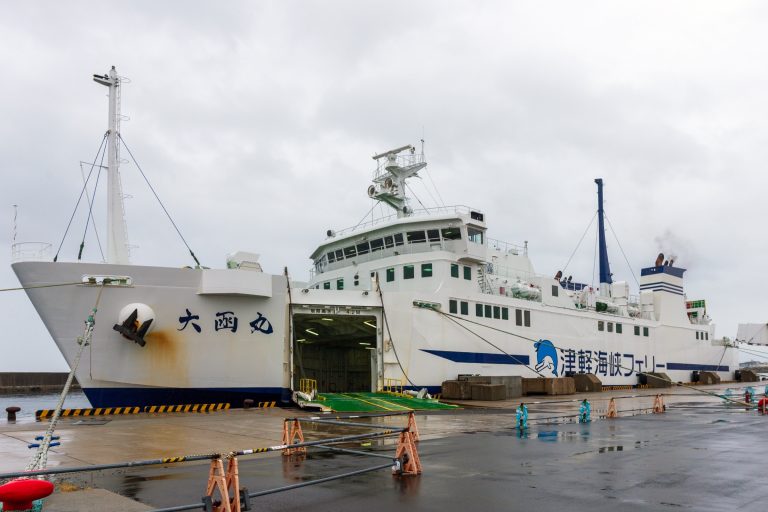
Source: Val Laboratory Corporation press release, 26 June 2026 / Ekispert official site / Photo: 松岡明芳, CC BY-SA 4.0 (Wikimedia Commons) / Checked on 2026-09-14 / Featured image: Yasu, CC BY-SA 3.0 (Wikimedia Commons)
Other sales ending soon




 4 days leftuntil Oct 24Air Busan Takamatsu-Busan Coupon: Up to 9,000 Yen Off Until October 24
 5 days leftuntil Oct 25JAL Hong Kong Campaign: Tokyo–Hong Kong Round Trip from 75,800 Yen (until 25 Oct)
 11 days leftuntil Oct 31Jin Air Kobe–Seoul: 5,000 yen off a round trip with code KTOUKB1, until 31 October
 11 days leftuntil Oct 31Jin Air to Busan: 4,000 yen off a round trip with code KTOPUS, first 300 only