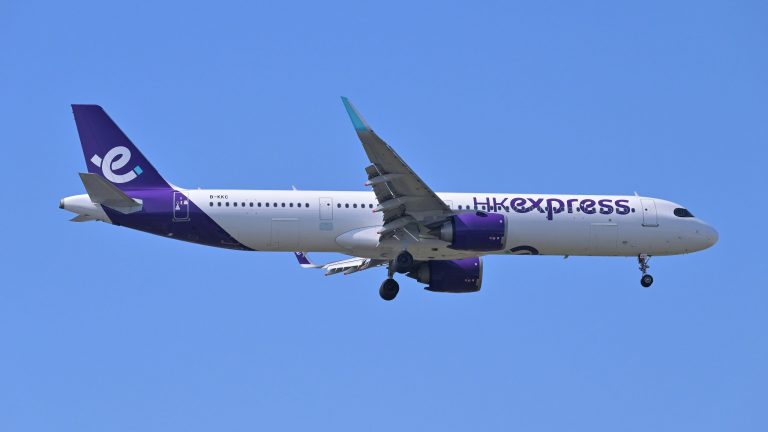
HK Express Launches an Express Sale on Nine Japan Routes, from JPY 5,800 One Way
AuthorMIRUTOBE editors
Table of Contents6 items
HK Express advertises figures like JPY 5,800 one way. That is the fare for one leg when you book a return, before the fuel surcharge and airport taxes. Moving a date costs JPY 11,200 per sector, and refunds are not part of the deal.
These are fares sold for departures from Japan and quoted in Japanese yen, so the surcharge and the tax lines below are the ones that appear on a Japanese booking. The cheap part is the fare. The total, and how lightly you have to travel to keep it, are separate arithmetic.
Check first: which fare type is enough for you
- Everything you are carrying fits in the cabin, 7 kg in total
- You have decided whether one personal item is enough or you also want a cabin bag
- Your dates are fixed — a change costs JPY 11,200 per sector
- You can buy on the assumption that you will not cancel; neither fare nor surcharge is refunded
- Your budget is built on the advertised figure plus the surcharge and the taxes
The third and fourth lines carry the weight here. HK Express states that all flights, fares and surcharges are non-refundable except where its own guidelines apply. Even shifting a date has a deadline — 48 hours before scheduled departure — and costs JPY 11,200 a sector plus any difference in fare and tax. Move both legs and that is JPY 22,400, more than the return fare you bought in the sale.
Five steps between the advertised figure and the amount you pay
The January 2026 round was on sale from 11:00 on 21 January until 23:59 the next day — 37 hours — for travel between 23 February and 8 July. A window that short rewards people who already know which route and which month they want. Opening the page and then starting to think about it is how the window closes.
What each of the four fare types carries
The two that fall furthest in a sale are the two at the top. In January 2026 UltraLite went to JPY 4,000 one way and Lite to JPY 5,000 — a gap of JPY 1,000. Whether one extra cabin bag is worth that thousand yen depends on how long you are going for, and for a single night it usually is not.
The 7 kg is a total, not a per-bag figure. Even on Lite, which lets you bring a personal item and a cabin bag, the two together cannot exceed 7 kg. A cabin-sized suitcase weighs 2–3 kg empty, so what you can actually put inside is closer to 4 kg. Misread that and you pay for checked baggage at the gate. For a trip built around buying things — the kind of route a four-day Hong Kong itinerary tends to turn into — starting at Essential costs less overall than upgrading late.
The fuel surcharge is set by point of departure, and the revision dates do not line up between countries. From Hong Kong it is HKD 339 one way to everywhere except Hong Kong and mainland China, and HKD 198 on Hong Kong–mainland sectors. From Korea it rose from KRW 46,000 to KRW 65,000 for travel from 1 September 2026, and from the Philippines from PHP 1,280 to PHP 1,395. The same aircraft, the same route, and a different amount added depending on which end you started from.
There is one exception in how heads are counted. The surcharge is the same for adults and children, and only infants under two travelling without a seat are outside it. A family of three flying with a lap infant adds it twice, not three times. Count per person and the budget lands a few thousand yen off.
The surcharge is fixed when you pay. If the amount or the rule changes afterwards, no adjustment follows. The exception is a voluntary change: reissue the ticket to move your dates and the surcharge is recalculated, with any difference settled then. So a date change made after an increase has been announced will not necessarily be priced at the old figure.
Where people trip up
“From JPY 5,800 one way” assumes you are booking both legs
It does not mean a single one-way ticket costs JPY 5,800. It is the per-leg fare when the booking is a return, and a one-way booking will not price at the same figure. Once that is clear, the thing you should be comparing it against changes too: it is a return total, not a one-way ticket.
The fuel surcharge applies to each leg. At the JPY 4,300 in the January 2026 notice that is JPY 8,600 for a return. Put it next to a return fare of JPY 11,600 and you are at JPY 20,200 before airport taxes and charges. A budget built on the fare alone roughly doubles by the time the payment screen loads.
Moving a date by one day costs JPY 11,200
Changes to the date and time of a flight are accepted up to 48 hours before scheduled departure. The fee is JPY 11,200 per sector, and any difference in fare or tax is payable on top. Depending on the date and what is still open, the flight you want may not be available anyway.
Sale fares live between JPY 4,000 and JPY 5,800 a leg; the change fee is JPY 11,200. The two numbers are an order of magnitude apart, which is why chasing a sale before your dates are settled is a poor trade. Buying again from scratch being cheaper than changing is an ordinary outcome, not an edge case.
Neither the fare nor the surcharge is refundable
HK Express states that all flights, fares and surcharges are non-refundable other than under its own guidelines. If your plans fall through, the amount that comes back is zero. That is the assumption the price is built on, and it is worth holding in mind while the sale page is open.
With no way to recover anything afterwards, the only lever left is when you buy. Which returns the whole question to something simple: book once the dates are fixed.
If this round has already closed
HK Express runs these several times a year. An August 2026 round started at JPY 3,000 one way from Haneda, Narita and Kansai, against JPY 4,000 in January. Routes and floor prices are reshuffled each time, so widening the dates you could travel on works better than waiting for a particular sale to come round again.
Other airlines fly the same sectors. Line up Hong Kong Airlines’ discount from five Japanese cities or the full-service side, such as JAL’s Hong Kong campaign, on total price rather than headline fare and the order can invert once surcharges and checked baggage are in. One more line belongs in that total from international departures: the JPY 3,000 international tourist tax on tickets issued from 1 July 2026.
Common questions: the total, the baggage, and how often the sale runs
Can I really fly to Hong Kong for JPY 5,800 one way?
That is the fare alone — one leg of a return booking — with the fuel surcharge and airport taxes and charges still to come. The January 2026 announcement put the surcharge from Japan at JPY 4,300 one way, so at that level a single leg lands somewhere in the ten-thousands. To compare properly, add the return fare, two surcharges and the taxes and work with that figure.
Is the 7 kg cabin allowance per bag?
It is the total. UltraLite allows one personal item within 7 kg; Lite allows a personal item and a cabin bag within 7 kg between them. More pieces does not mean more weight. Checked baggage comes only with Essential (one piece at 20 kg) and Max (one piece at 32 kg).
When is the next sale?
The airline does not publish a schedule, so the date cannot be read in advance. What is known is that the window is short: the January 2026 round ran from 11:00 on 21 January to 23:59 on 22 January, 37 hours in all, for travel from 23 February to 8 July — about six weeks after the sale closed. Deciding the month and the airport beforehand is what makes the difference when one opens.
- HK Express — Express Sale, 11 routes to and from Japan (routes, fares, sale period, notes) ↗Checked on 2026-09-14
- HK Express — Fare types (baggage on all four, change fee, refund treatment) ↗Checked on 2026-09-14
- HK Express — Fuel surcharge (amount per leg and the conditions that apply) ↗Checked on 2026-09-14
- HK Express — Baggage guide (checked and cabin allowances) ↗Checked on 2026-09-14
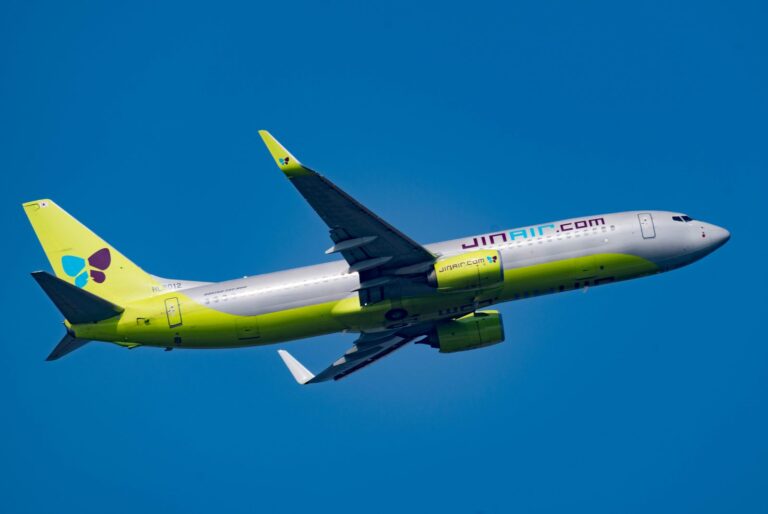
Source: the reference block above / Checked on 2026-09-14 / Photo: 4300streetcar, CC BY 4.0 (Wikimedia Commons)
Other sales ending soon
 4 days leftuntil Oct 24Air Busan Takamatsu-Busan Coupon: Up to 9,000 Yen Off Until October 24
 5 days leftuntil Oct 25JAL Hong Kong Campaign: Tokyo–Hong Kong Round Trip from 75,800 Yen (until 25 Oct)
 11 days leftuntil Oct 31Jin Air Kobe–Seoul: 5,000 yen off a round trip with code KTOUKB1, until 31 October
 11 days leftuntil Oct 31Jin Air to Busan: 4,000 yen off a round trip with code KTOPUS, first 300 only