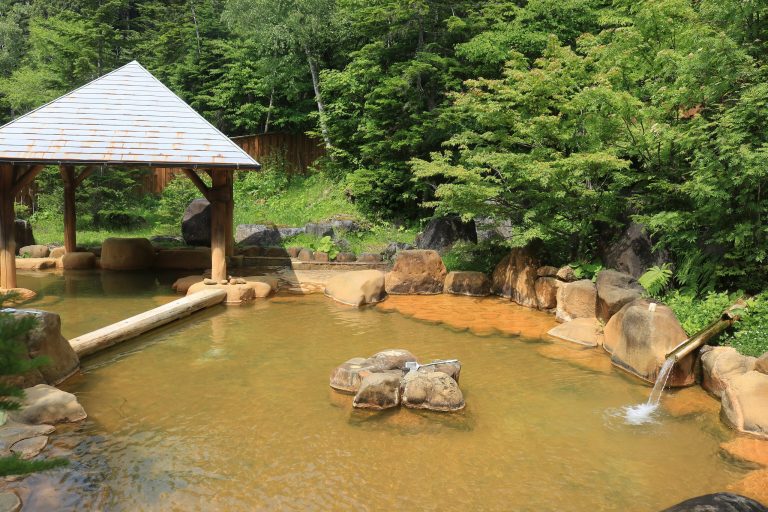
Onsen Etiquette Guide for First-Timers (2026)
AuthorMIRUTOBE editors
Table of Contents6 items
Very few onsen customs have legal backing. The notice standard issued by Japan’s Ministry of the Environment under Article 18 of the Hot Springs Act covers rinsing and washing, keeping towels out of the bath, avoiding alcohol and the hour around meals, and getting out after 3 to 10 minutes on a first soak.
Everything below is Japanese regulation, and it is posted on the changing-room wall of the inn you are standing in. The tattoo question is handled separately, by a 2016 paper from the Japan Tourism Agency that sets out three ways a facility can say yes.
Check first: are you well enough to bathe today?
- You have no fever (the active phase of an illness means, above all, the feverish part)
- Mild exertion does not leave you short of breath
- There is no visible bleeding
- You have not just eaten, and you have not been drinking
- At least 30 minutes have passed since you stopped exercising
The first three are part of what the standard lists as general contraindications for bathing: a feverish period, active tuberculosis, marked physical debility such as advanced malignancy or severe anaemia, serious heart or lung disease, serious kidney disease with oedema, gastrointestinal bleeding, visible bleeding, and the acute worsening of a chronic condition. The sheet headed “contraindications” pinned up in the changing room is a copy of exactly this.
The last two are about accidents. The standard says to avoid bathing immediately before or after a meal and after drinking, and to avoid it particularly when intoxicated; after exercise it asks for about 30 minutes of rest first. Which puts the classic ryokan rhythm — a quick soak before dinner — outside what the standard envisages, since it is also immediately after lunch for many people. If you have to pick, bathe on arrival or at least an hour after dinner.
Six steps, as the Ministry of the Environment sets them out
From Appendix 1 of the Ministry of the Environment’s standard for posting contraindications and precautions for bathing and drinking under Article 18(1) of the Hot Springs Act (1 July 2014, notification 1407012). Figures and conditions are as the original states them. Checked on 2026-09-20.
Of the six, STEP 6 is where visitors most often go wrong. Leaving the minerals on your skin is indeed in the standard — and the exception sits directly beside it. In acidic and sulphur springs, and anywhere chlorinated, rinsing is the better course. If the strong waters at Kusatsu or Beppu leave your skin red, there is no reason to endure it for the sake of the minerals.
The standard also notes that between three days and about a week into a course of bathing, a reaction known as yuatari can appear: malaise, sleeplessness, digestive symptoms, dermatitis. On a one- or two-night trip it would be unusual; on a longer stay with three baths a day it is a real possibility. If it happens, cut the frequency or skip the day.
Tattoos: facilities answer in one of three ways
In March 2016 the Japan Tourism Agency published a note on points to consider, with worked examples, for bathing by foreign visitors with tattoos. It is not a yes-or-no document: it sets out three ways of accommodating people. What a facility does today almost always falls into one of them.
Worth being clear about: this is advice to operators, not a right granted to bathers. Places that refuse still exist. Asking at the desk settles it in one sentence, and it is far less awkward than being told in the changing room. By telephone, “I have a tattoo — may I bathe?” gets you the answer, and tells you which of the three approaches applies.
A private bath solves the problem regardless of tattoos. Most are booked in 45- or 60-minute slots for a fee, and some ryokan let you choose a room with its own open-air bath. Working out what to check when booking an inn for one first tells you which boxes to look for on the reservation page.
Where people trip up
Towels stay out of the water because the rule says so, not out of politeness
Whether the small towel goes on your head or on the rim is a staple of etiquette guides, and the basis for it is one line of the standard: keep towels out of the bath so that the water stays clean. It is hygiene rather than manners, and the same reasoning ties up long hair. The tourism ministry’s own ryokan guidance lists the same set — shower before entering the large bath, no towels in the water, tie long hair back, no swimming costumes. Other bathers do notice whether you follow it. This, and not your body, is what they are looking at.
Wet the changing room and the next person slips
Squeeze out the small towel and wipe yourself down before you step back into the changing room. Tatami and wooden floors soak it up, and whoever comes out after you skids. The standard puts it in the same order — pat dry with a towel, then dress and keep warm — which places the drying in the bathroom rather than outside it. In practice, one pass with a wrung-out towel visibly reduces how much water reaches the floor.
A yukata goes right side against the skin first
Put your own right-hand panel against your skin first and lay the left over it. That is how Japanese clothing closes, and reversing it is how the dead are dressed. It is the one detail where a mistake changes the meaning, so check in a mirror before you wind the sash. Men generally tie the belt low on the hips and women at the waist, but nobody is inconvenienced if you get that wrong. Whether you may walk around the building in a yukata varies by inn, so read the guest information before heading to the dining room.
What if you are refused, or start to feel unwell in the water
If you are turned away, negotiating at the desk will not change the answer. Operators run under the Public Bath Houses Act and set their own conditions of use. The next move is another day-use bath in the same town, or switching to an inn with a private one. Some hot-spring towns, Beppu and Kinosaki among them, are noticeably more open across the board. And a foot bath on the street needs no undressing and no question about admission; most of them are free.
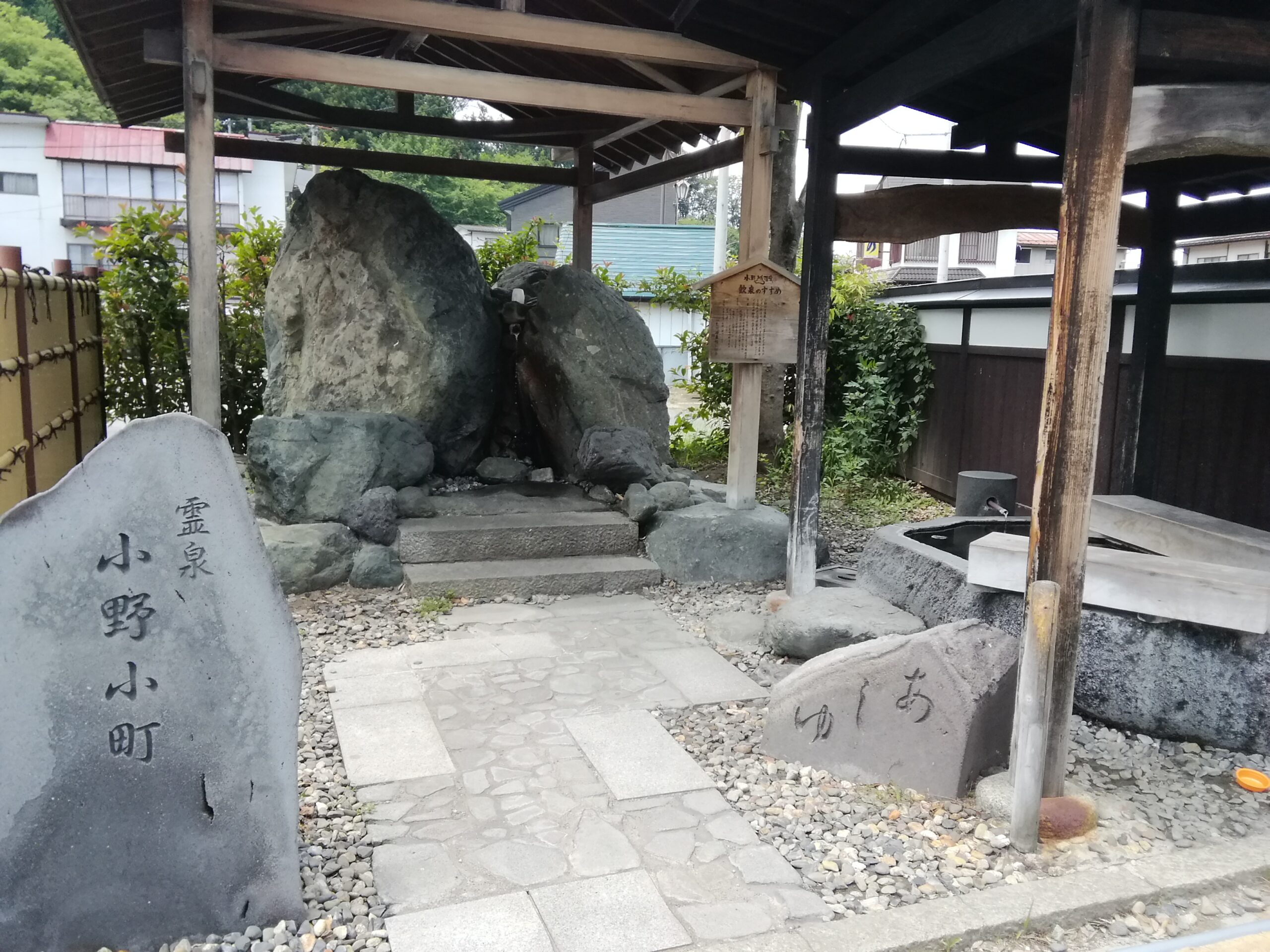
If you feel unwell in the bath, the standard spells out the sequence. Call to whoever is nearby, keep your head low while you climb out slowly, then lie down until it passes. Standing up and then collapsing is the dangerous version, so the head goes down first. The same text adds that older people, children and people with disabilities are best not bathing alone.
On cost, a day-use bath runs from a few hundred yen to about JPY 2,000, and plenty of them are the same water as the ryokan’s own baths. Separately from the room rate, municipalities with hot-spring baths levy a bathing tax. The standard rate is JPY 150 per person per day, charged on top of the accommodation bill; whether it is collected on day visits depends on the municipal ordinance. On an itinerary with several nights in hot-spring towns, working out the total first in our guide to budgeting rooms and meals puts that JPY 150 back into proportion.
For a first attempt, a mid-sized place on a weekday afternoon is the calmest. The smallest communal baths run on dense local custom and the big resort baths are crowded. To soak with a mountain in view, read when and from where Mt Fuji is actually visible; to build a trip around hot springs, the three days through Kanazawa and Kaga Onsen gets you as far as deciding which hour you bathe.
Common questions: swimsuits, hair, and bathing with children
Can I wear a swimming costume?
Not in an ordinary onsen. The tourism ministry’s ryokan guidance lists no swimming costumes alongside showering first and keeping towels out of the water. Bathing suits belong to spa facilities that advertise mixed-gender bathing, which are a separate category with their own rules posted at the entrance.
What do I do with long hair?
Tie it up so it does not reach the water — the same guidance that keeps towels out. Bands are often provided in the changing room, but a spare hair tie in your bag saves a search. The small towel can go on your head, which is the traditional answer to where to put it.
Can children come in?
Generally yes, though the standard asks that children, older people and people with disabilities do not bathe alone. The temperature limit matters more here than the etiquette: keep to the cooler tub, and keep the soak to the short end of the three-to-ten-minute range. Facilities set their own age limits for which changing room a child uses, and that one is posted at the entrance.
- Ministry of the Environment, standard for posting contraindications and bathing precautions under Article 18(1) of the Hot Springs Act ↗Checked on 2026-09-20
- Ministry of the Environment, notices and guidelines on the Hot Springs Act ↗Checked on 2026-09-20
- Japan Tourism Agency, bathing by foreign visitors with tattoos ↗Checked on 2026-09-20
- Japan Tourism Agency, ryokan Q&A (using the large bath, tattoo policies) ↗Checked on 2026-09-20
- Ministry of Internal Affairs and Communications, bathing tax (standard rate JPY 150 per person per day) ↗Checked on 2026-09-20
Source: the reference block above / Photos: Alpsdake, CC BY-SA 4.0; 妖精書士, CC0 (both Wikimedia Commons) / Checked on 2026-09-20
Other sales ending soon
 4 days leftuntil Oct 24Air Busan Takamatsu-Busan Coupon: Up to 9,000 Yen Off Until October 24
 5 days leftuntil Oct 25JAL Hong Kong Campaign: Tokyo–Hong Kong Round Trip from 75,800 Yen (until 25 Oct)
 11 days leftuntil Oct 31Jin Air Kobe–Seoul: 5,000 yen off a round trip with code KTOUKB1, until 31 October
 11 days leftuntil Oct 31Jin Air to Busan: 4,000 yen off a round trip with code KTOPUS, first 300 only