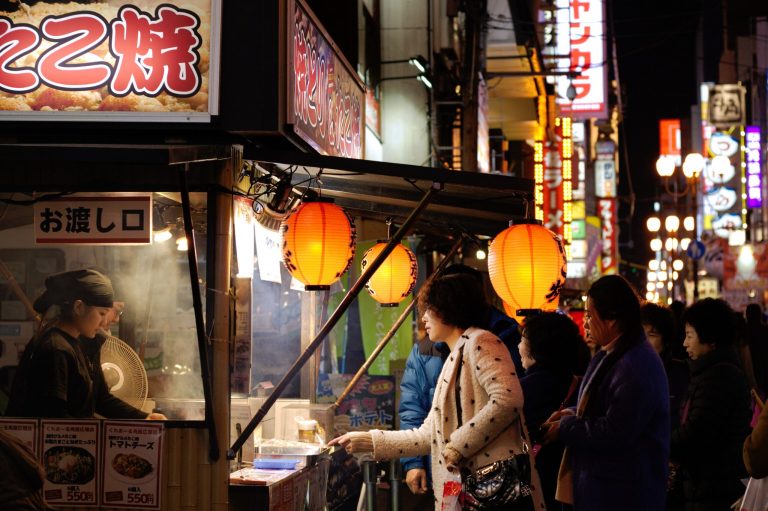
Osaka Food Guide: What to Eat & Where to Go (2026)
AuthorMIRUTOBE editors
Table of Contents6 items
- Check first: is this route the right one for you?
- The full picture: five dishes, and when each district is open
- Six steps: into Shinsekai at 16:00, finished in Tenma by 23:00
- Where people trip up
- What if you only have half a day: the order in which things go
- Common questions: queues, dietary needs, and eating alone
Eating in Osaka is decided by the direction you walk rather than the restaurants you pick. Kushikatsu Daruma’s Shinsekai flagship has 12 counter seats. Minami’s takoyaki windows run from lunchtime to late. Tenma’s standing bars only wake up after 21:00. One-way from south to north, the same five dishes cost you the least waiting.
Prices below are in yen and were read off the operators’ own pages. Osaka’s eating districts sit close enough together that the timetable, not the map, is what goes wrong.
Check first: is this route the right one for you?
- You can block out the hours from about 16:00 to 23:00 for eating
- You would rather order a plate at a time than fill up in one sitting
- You are carrying about JPY 3,000 in cash (small counter places are sometimes cash-only)
- There are no more than three of you
- You expect more than four subway rides that day
Fail the fourth line and the route has to be rebuilt. Shinsekai’s old establishments are counters and nothing else: Kushikatsu Daruma’s Shinsekai flagship seats 12. Four or more people either split up or walk to another shop on the same street, and the evening is off its rails at the first stop. With a larger group, fix a place with tables first and hang the takoyaki and the market grazing either side of it.
The fifth line is about transport. Osaka Metro charges JPY 190 for zone 1, up to 3km, and JPY 240 for zone 2, from 3km to 7km. The Enjoy Eco Card day pass is JPY 820 for adults on weekdays and JPY 620 at weekends and on holidays. On zone-1 hops alone the pass wins from the fifth ride on a weekday and the fourth at a weekend; mix in any zone-2 journeys and the crossover moves to four and three. Shinsekai to Minami, Minami to Tenma, with a detour to Umeda in the middle, gets you there quickly.
The full picture: five dishes, and when each district is open
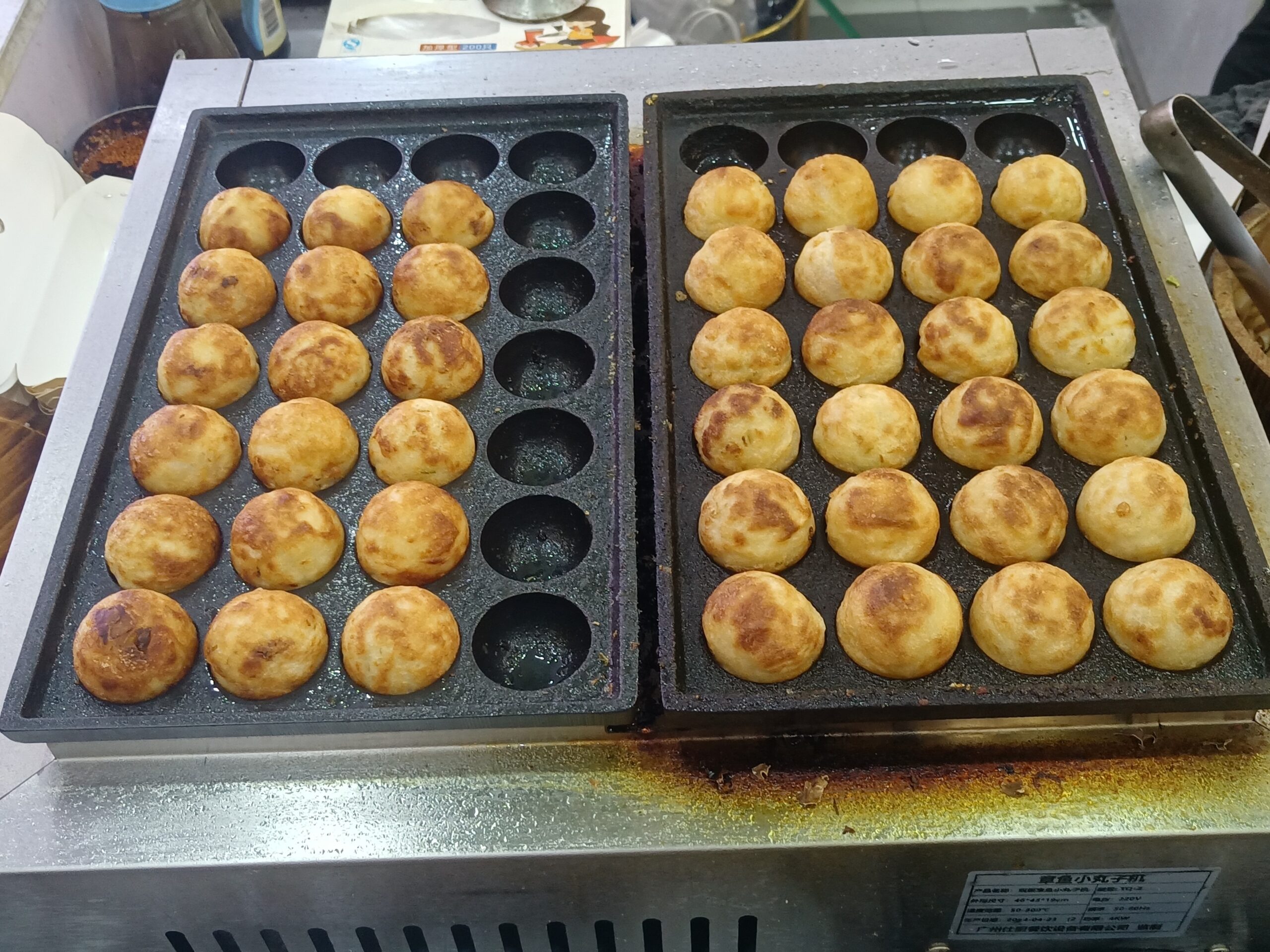
The flour-and-fryer dishes Osaka is known for are distributed differently and open at different hours. To catch them all in one day, sort them by opening time rather than by appetite.
Seat counts, hours and prices are from each business and the Osaka Convention & Tourism Bureau; fares are Osaka Metro’s published table, all read on 2026-09-20. The kushikatsu average spend is Daruma’s own figure. The takoyaki budget marked indicative comes from the shop listing for Aizuya at Tennoji Mio, the operator of the building, and is a guide rather than an official price list.
The bottom row is the one most often misread. Tenjinbashisuji gets introduced as Japan’s longest shopping arcade, but its length is not a distance you are meant to cover — treat it as insurance that you can stop anywhere. Walk it dutifully from Minamimorimachi to Tenjinbashisuji Rokuchome and you have spent the better part of an hour. To eat, get off at Tenma or Ogimachi and work the stretch between the third and sixth blocks, where the shops are dense and your legs survive.
Whether to keep Kuromon Market is a question of hours too. One hundred and fifty shops in 580 metres is a spectacle, but skewered seafood and cut fruit are priced the way tourist districts price them, and the same money buys more inside a restaurant in Minami. Put it first on a day that starts early, or drop it. On an evening-only plan most of the market is already shutting.
Six steps: into Shinsekai at 16:00, finished in Tenma by 23:00
Only STEP 1 is fixed. Shinsekai’s old shops have few seats and close in the 22:00 hour, so moving them later traps you between the queue and the shutters. The other five are interchangeable: in the rain, drop Kuromon and Tenma and stay indoors in Minami; on a day you can start in the morning, put the market at the front.
Where people trip up
No double-dipping still holds, but the vessel has changed
Never dipping a skewer twice into the shared sauce is the house rule across Osaka. Kushikatsu Tanaka Holdings states in its own announcement that it has long promoted the no-double-dipping rule as a feature of kushikatsu, and that for hygiene it now serves fresh sauce to each group and discards what is left rather than reusing it. The company changed the serving method itself in 2020, and more shops now bring a pot or a bottle per group instead of a communal tub. With a bottle, double-dipping cannot physically happen; the trick of lifting a cabbage leaf and using it to spoon sauce over the skewer survives anyway. If a communal tub is on the counter, it is one dip per skewer.
The day pass loses money below four rides
The Enjoy Eco Card is JPY 820 on weekdays and JPY 620 at weekends and on holidays, covering the whole Osaka Metro network (except Yumeshima station) and all Osaka City Bus routes. The catch is that Osaka’s nightlife districts are packed into walking distance: Shinsekai to Namba is two stops, Namba to Shinsaibashi is one. A determined day can end on two rides. Two zone-1 journeys come to JPY 380, which is JPY 440 below the weekday pass. Breaking even takes five rides on a weekday and four at a weekend, and below that the ordinary fare is cheaper. Push out to Umeda or Tennoji, though, and the pass earns its keep — plus discounts on presentation at around 20 attractions. Counting the rides before buying is the same discipline as pricing each leg before deciding on a JR Pass.
The places that need cash are predictable
Chains and ticket machines are fine on an IC card or a credit card. The problems are the old counters with a handful of seats and the small stalls inside the market, where cash-only still survives and where you end up hunting for a convenience store ATM at night. Break about JPY 3,000 into small notes and a day of eating will not run short. Which IC card to carry is covered in our guide to Suica, ICOCA and PASMO.
What if you only have half a day: the order in which things go
Evening-only is a common shape. Cut in order of travel time. Tenma goes first: it is about ten minutes from Namba on the Sakaisuji line, the shops only start moving after 21:00, and one stop there puts the last train in view. Kuromon goes second, and barely counts as a cut, since it is closing by late afternoon anyway.
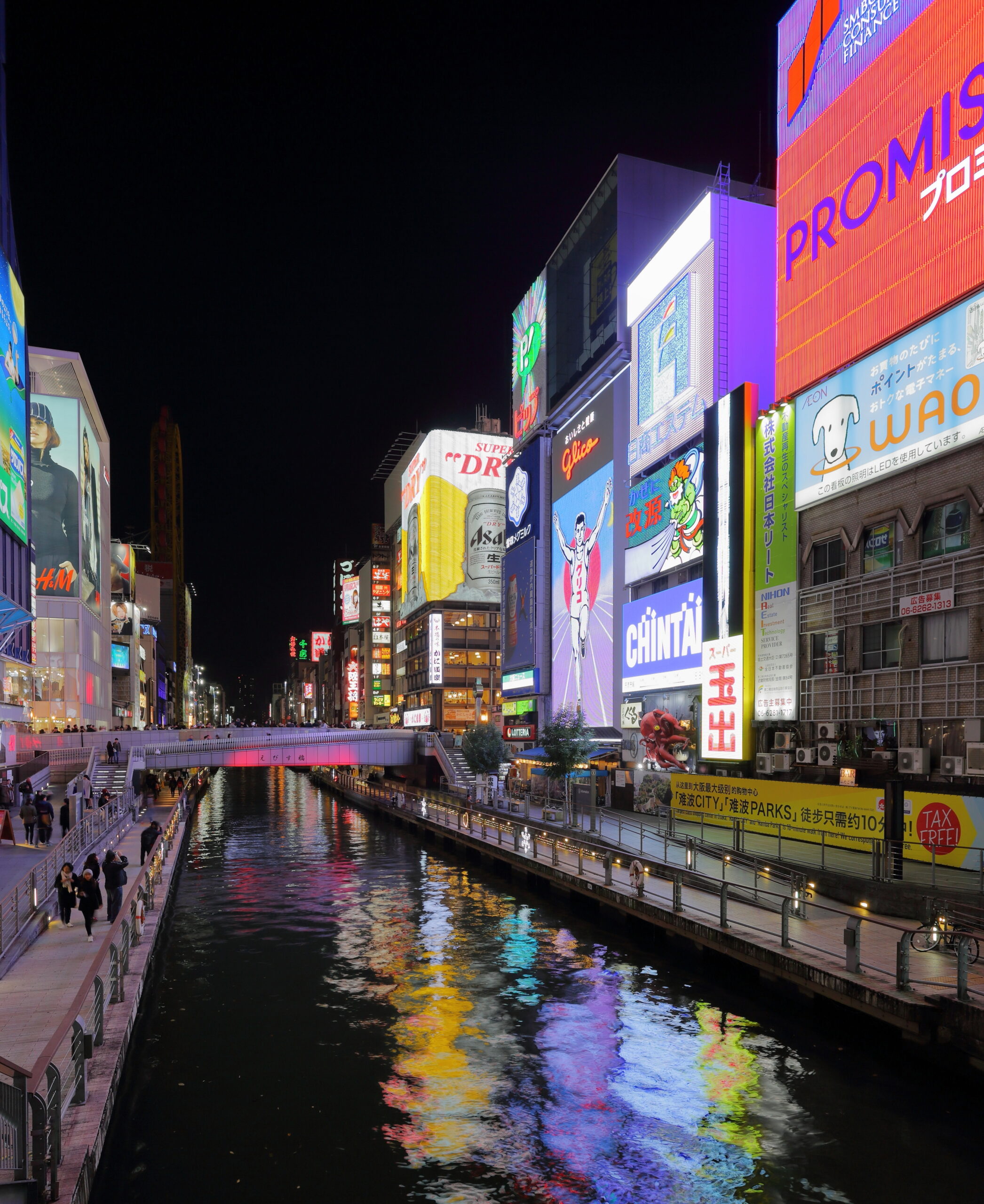
That leaves Shinsekai and Minami, two subway stops or about 30 minutes on foot from each other. Kushikatsu in Shinsekai at 16:00, takoyaki in Dotonbori at 19:00, okonomiyaki in Sennichimae or Ura-Namba at 20:00 — three dishes in three and a half hours, with one journey between them. No day pass required.
Sometimes it is stomach capacity rather than the clock that runs out first. Kushikatsu one skewer at a time, one tray of takoyaki between you, one okonomiyaki shared by two. Ordering the smallest unit everywhere is the only way five dishes happen. Fill up in order and you stop at the third.
If you are eating late and moving early the next morning, staying in Minami or Tenma removes the journey altogether. Umeda has the better transport and sits one step outside the late-night eating. Beyond the room rate, whether an accommodation tax applies per person per night — in Osaka Prefecture it is banded by the room-only rate — is set out in our recalculation of the accommodation tax across five cities.
If eating is the point of the trip, Osaka is easier to schedule than a city measured out in temple opening hours: it closes late and the density is walkable. Somewhere that needs its sightseeing and its meals timetabled separately is handled differently, and the two- to three-day Kyoto route by district shows that shape.
Common questions: queues, dietary needs, and eating alone
How long will I queue at the famous kushikatsu shop?
Unpredictable after 17:00, which is the argument for arriving at 16:00. Twelve seats at the Shinsekai flagship means the line outside grows faster than it moves, and closing at 22:30 with last orders 30 minutes earlier caps how long you can afford to wait. Other Daruma branches and neighbouring shops on the same street absorb the overflow.
Can I do this route without a subway pass?
Yes, and on a short version you should. Two zone-1 rides are JPY 380 against JPY 820 for the weekday pass. The pass only pays from five rides on a weekday or four at a weekend, so buy it on the day you add Umeda or Tennoji, not on the day you walk between Shinsekai and Minami.
Is any of this manageable alone?
It suits one person better than four. Counter seating is the norm at both the kushikatsu shops and the standing bars, and one skewer, one tray and half a griddle are the natural portions. The trip-wide question of where the food budget actually goes is in our guide to travelling Japan cheaply.
- Osaka Metro fares (zone 1 from JPY 190) ↗Checked on 2026-09-20
- Osaka Metro Enjoy Eco Card (JPY 820 weekdays, JPY 620 weekends and holidays) ↗Checked on 2026-09-20
- Tsutenkaku visitor information (deck prices, hours) ↗Checked on 2026-09-20
- Kushikatsu Daruma, Shinsekai flagship (seats, hours) ↗Checked on 2026-09-20
- Kuromon Market shopping street association (580m, about 150 shops) ↗Checked on 2026-09-20
- Tennoji Mio, Aizuya shop listing (indicative budget) ↗Checked on 2026-09-20
- Kushikatsu Tanaka Holdings, change to how the sauce is served ↗Checked on 2026-09-20
Source: the reference block above / Chibo official menu / Osaka Convention & Tourism Bureau on Tenjinbashisuji / Photos: chopstuey, CC BY 2.0; Fumikas Sagisavas, CC0; Martin Falbisoner, CC BY-SA 4.0 (all Wikimedia Commons) / Checked on 2026-09-20
Other sales ending soon
 4 days leftuntil Oct 24Air Busan Takamatsu-Busan Coupon: Up to 9,000 Yen Off Until October 24
 5 days leftuntil Oct 25JAL Hong Kong Campaign: Tokyo–Hong Kong Round Trip from 75,800 Yen (until 25 Oct)
 11 days leftuntil Oct 31Jin Air Kobe–Seoul: 5,000 yen off a round trip with code KTOUKB1, until 31 October
 11 days leftuntil Oct 31Jin Air to Busan: 4,000 yen off a round trip with code KTOPUS, first 300 only