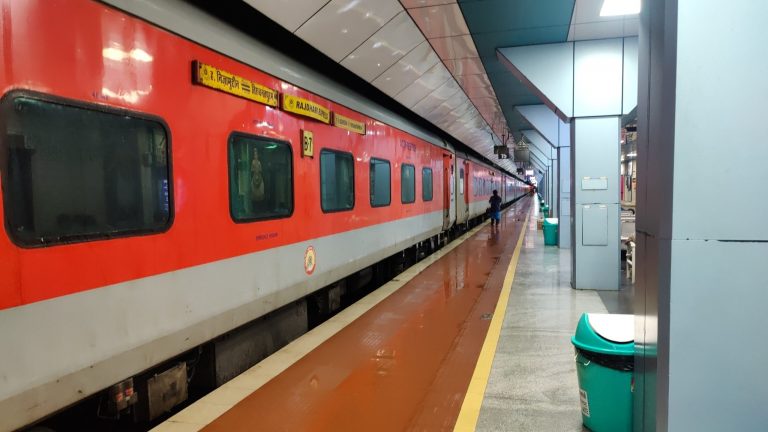
How to Ride India’s Trains: A Complete Guide From Booking to Boarding
AuthorMIRUTOBE editors
Table of Contents6 items
Reserved seat booking on Indian Railways runs on two tracks: the General Quota and the Foreign Tourist Quota. Which track you use sets the day booking opens, the fare you pay, and what comes back if you cancel.
Check first: general quota or the Foreign Tourist Quota?
- Your travel date falls inside 60 days (general quota) or 365 days (Foreign Tourist Quota)
- You can register with IRCTC — a one-time password arrives by email and by SMS, and both are verified
- You can pay with an international debit or credit card (nothing else is accepted for the tourist quota)
- You can carry the original passport on the day (the tourist quota also requires a valid visa)
- Your itinerary does not depend on Tatkal, the next-day release
The fifth line changed in 2025. From 1 July that year, only users who have completed Aadhaar authentication can book Tatkal on the IRCTC website and app, and from 15 July an Aadhaar-based one-time password became compulsory as well; counters and authorised agents came under the same rule on the same dates. Aadhaar is India’s national identity number, and a short-term visitor cannot hold one. With no way to clear that authentication, treat Tatkal as a quota that stays shut to visitors and build the itinerary around it. The step before all of this — the visa — is set out in our guide to the Indian e-Visa.
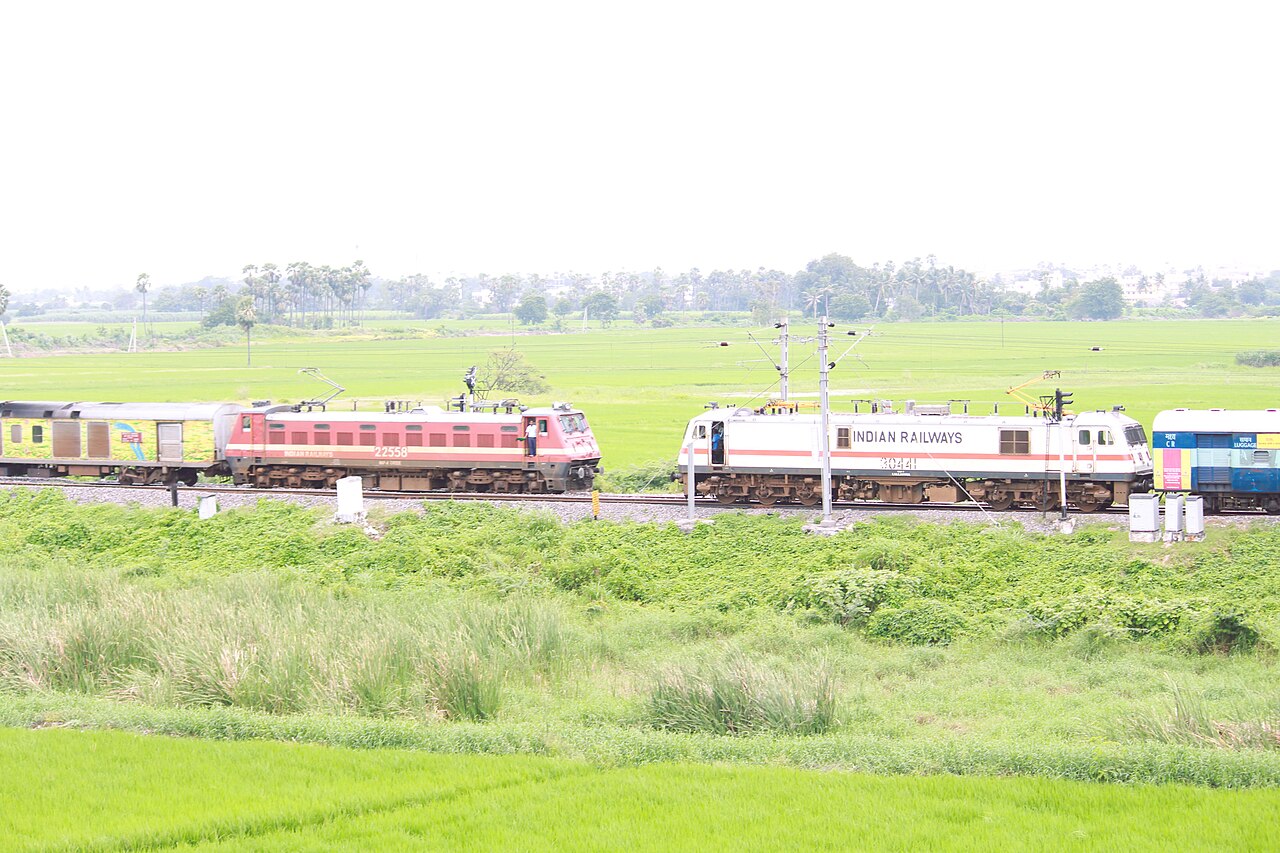
Five steps, from account to platform
The first place people get stuck is account creation and payment in Step 1. When registering with a non-Indian mobile number, you pay the international registration fee of Rs.100 plus GST by card and then enter two separate one-time passwords (OTPs) — one sent to your email address and one by SMS to your mobile phone — to activate the account. On the ticket payment screen, skip domestic UPI or Indian net-banking gateways and choose an international card gateway under Multiple Payment Service that supports Visa, Mastercard or American Express with 3D Secure verification. Because foreign rail transactions frequently trigger bank fraud filters, keeping at least two cards from different issuers on hand saves a lot of trouble (foreign transaction fees and travel insurance terms are compared in our comparison of travel credit cards).
Every booking generates a 10-digit PNR (Passenger Name Record), which tracks where your seat stands. CNF (Confirmed) means a berth or seat is held for you, though the specific coach and berth number only appear when the reservation chart is prepared a few hours before departure. RAC (Reservation Against Cancellation) is an Indian Railways halfway status: two passengers share a side lower berth as seats until a cancellation frees up a full berth, and you can board the train as normal with an RAC ticket. Waiting List (WL) tickets also come in several flavours: GNWL (General Waiting List), drawn from the originating station’s main pool, clears fastest, whereas RLWL (Remote Location Waiting List) and PQWL (Pooled Quota Waiting List) for intermediate stations draw from much smaller pools and can fail to clear even from single-digit numbers.
The passport is not the only document that counts. The official list also takes the photo voter card issued by India’s Election Commission, a driving licence, a PAN card, a serially numbered photo identity card issued by central or state government, a student identity card from a recognised school, and a passbook with a photograph from a nationalised bank. Aadhaar and a driving licence produced from DigiLocker are valid too — but only from the Issued Document section. Anything sitting in Uploaded Document, which is where your own scans land, is not accepted.
The full picture: class codes, and what the tourist quota reaches
If you cannot decide: 2A or 3A overnight, CC or EC on a daytime express. Top-tier 1A (First AC) divides the coach into lockable two-berth coupes and four-berth cabins; you can state a preference at booking, but the actual room assignment is only fixed when the chart is drawn up. 2A (Second AC) stacks berths two high (four in the main bay plus two along the aisle for six per section), offering more headroom and aisle curtains that make solo overnight travel noticeably quieter. 3A (Third AC) stacks three berths high on each side of the bay plus two along the aisle — eight berths per section, 72 to a coach — and like 1A and 2A includes a freshly laundered bedding pack of two sheets, a pillow and a blanket.
The 3E (3 AC Economy) coach has the same air conditioning as 3A and costs 8 per cent less, and the reason is visible in the count: by reworking the end equipment bays, it fits 83 berths where 3A fits 72, leaving slightly tighter vertical clearance on the middle and upper tiers. Because 3E sits outside the tourist quota, wanting 3E means booking on the general quota when it opens at 60 days. SL (Sleeper Class) shares the three-tier layout of 3A but has neither air conditioning nor sealed glass windows, and no bedding is provided; dust, outside heat or cold, and station hawkers come straight through, so first-time overnight travellers are usually happier in 3A or 2A. How the three northern cities join up by rail is laid out in our Golden Triangle plan.
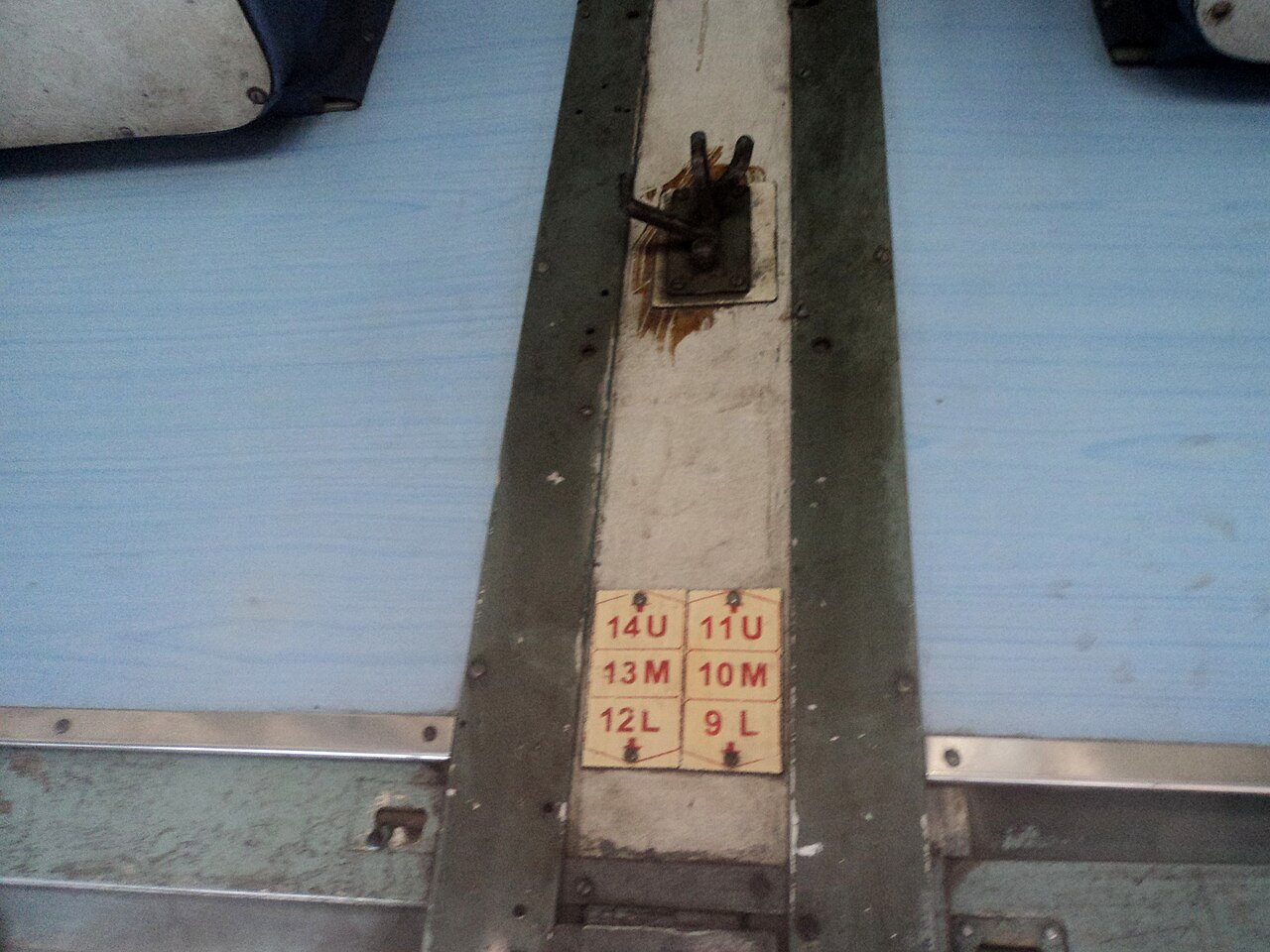
The letters on the wall plates stand for L (Lower), M (Middle), U (Upper), and across the aisle SL (Side Lower) and SU (Side Upper). In three-tier coaches, the middle berth (M) folds up on chains to form a bunk at night; during daytime hours (officially 6:00 to 22:00) it folds down as the backrest so all three passengers — L, M and U — can sit upright on the lower berth. If you want to lie down during the day without negotiating with bay-mates, set your Berth Preference to U (Upper) or SU (Side Upper) when booking, since the top bunk remains yours around the clock. Heavy suitcases slide under the lower berth, where steel rings let you secure your bag with a cable lock overnight.
Where people trip up
If everyone on the booking stays waitlisted, your names leave the chart
When every passenger on one PNR is still waitlisted at chart preparation, the names are dropped and do not appear on the chart. You are not permitted to travel, and if you are found on board you are treated as ticketless. IRCTC cancels the booking itself after the chart is prepared and the refund returns electronically to the account you paid from. Nothing is asked of you — but the train goes without you.
Partial confirmation changes the outcome completely. If two of you book and one comes up CNF while the other stays WL, both names go on the chart and both travel. The whole thing turns on whether anybody on that PNR is confirmed.
IRCTC states that the chart is prepared roughly four hours before the train is due out of its originating station, and that trains departing before midday are charted the previous evening. A second chart follows no later than 30 minutes before departure. In June 2025 the Ministry of Railways did propose moving preparation to eight hours out, and directed a phased rollout. The IRCTC FAQ still describes four hours, and four hours is what governs both the time you leave for the station and the last time you look at the PNR.
The tourist quota is not a cheaper way of booking legitimately
Indian Railways prices Foreign Tourist Quota tickets at a flat 1.5 times the normal fare. On top of that sits an IRCTC service charge of Rs.200 plus GST per ticket, and the Rs.100 plus GST that international users pay to register or update a mobile number. Cancellation is heavier still: 50 per cent of the fare is deducted flat, the usual cancellation charge applies on top, and that 50 per cent refund is only available up to four hours before departure and only through the website.
What you buy with it is inventory and time. Booking opens 365 days ahead and the quota exists on virtually every train and in every class — Rajdhani, Shatabdi, Duronto and Gatimaan included, with only Suvidha trains excluded. Agent bookings, name changes, travel insurance and VIKALP, the alternate-train transfer scheme, are all unavailable on it. I would spend the tourist quota only on the legs where the dates are fixed and a sold-out train would break the trip, and take the rest on the general quota at 60 days.
Buying at a counter means one of eleven cities
Booking offices for foreign tourists exist in eleven places: Kolkata, Chennai, Bengaluru, Ahmedabad, Secunderabad, Jaipur, Jodhpur, Varanasi, New Delhi, Agra Cantt and Mumbai. Only two of them, New Delhi and Varanasi, carry the formal title of International Tourist Bureau. The New Delhi office has run 24 hours a day since 12 December 2014; it is on the ground floor of the station building, on 91-11-42625156.
Counters take US dollars, pounds sterling, euros and Indian rupees, against a valid passport. One historical note worth carrying: the Indrail Pass, once sold to foreign visitors, was withdrawn with effect from 19 September 2017. The old fare tables are still sitting on the same official page, which is how people end up planning around a pass that no longer exists.
What if you have to cancel: how much comes back
Cancel a confirmed reserved ticket more than 48 hours before departure and the minimum charge per passenger is Rs.240 in 1AC and Executive, Rs.200 in 2AC and First Class, Rs.180 in 3AC, AC Chair Car and 3 AC Economy, Rs.120 in Sleeper and Rs.60 in Second Class. Between 48 and 12 hours the deduction is 25 per cent of the fare; between 12 hours and four hours — or chart preparation, whichever comes first — it is 50 per cent. After that nothing comes back.
Unused RAC and waitlisted tickets are handled far more gently: they are accepted up to 30 minutes before scheduled departure, against clerkage of Rs.30 for unreserved second class and Rs.60 for reserved second class and every other class. E-tickets on a cancelled train have been refunded automatically since 1 July 2015, with no TDR to file. Once the chart is prepared, online cancellation closes and the route is a TDR filed online instead.
Tatkal runs on its own arithmetic. Tickets are released the previous morning, at 10:00 for air-conditioned classes and 11:00 for the rest, with a premium of 10 per cent of the basic fare in second sitting and 30 per cent elsewhere, bounded by a floor and a ceiling — Rs.100 to Rs.200 in Sleeper, Rs.300 to Rs.400 in 3AC. A confirmed Tatkal ticket refunds nothing when cancelled. Only narrow exceptions, such as the train leaving its originating station more than three hours late, bring the full fare back.
Choosing between a roaming line, an eSIM and a rented router is a separate calculation, set out in our comparison of mobile data for travel abroad.
Common questions: opening dates, official trackers, and the ladies’ quota
When does booking actually open?
Sixty days before the date of travel on the general quota, excluding the day itself. It was cut from 120 days on 1 November 2024. The Foreign Tourist Quota was left out of that change and still runs to the old 365-day window. Daytime expresses such as the Taj Express and the Gomti Express always had shorter windows of their own, and those are unchanged too.
Which trackers are official?
PNR status belongs to PNR Enquiry on indianrail.gov.in, and reservation charts to Online Charts on irctc.co.in. On the app side, IRCTC Rail Connect (reservations) and the NTES app (running status) are the assets Indian Railways owns. ixigo, Where is my Train, 12Go, Cleartrip and MakeMyTrip are all third parties. IRCTC calls only Rail Connect and its Tourism App official on its own site. Where a third-party app and the enquiry screen on indianrail.gov.in disagree, the enquiry screen is the one to act on.
Is there a women-only quota?
Yes, coded LD for Ladies Quota: six berths in Sleeper on long-distance Mail and Express trains, and six in 3AC on Garib Rath, Rajdhani, Duronto and fully air-conditioned Express trains. There is no age condition and it works for a woman travelling alone or in a group. A separate SS quota sets aside lower berths for senior citizens, women over 45 and expectant mothers — six or seven per coach in Sleeper, four or five in 3AC, three or four in 2AC — and these are allotted automatically, without a request.
- Railway Board Commercial Circular 10 of 2024 (advance reservation cut from 120 to 60 days, effective 1 November 2024) ↗Checked on 2026-10-14
- IRCTC Foreign Tourist Quota terms (1.5x fare, payment, cancellation, documents) ↗Checked on 2026-10-14
- Indian Railways refund rules (cancellation charges, RAC/WL deadlines, clerkage) ↗Checked on 2026-10-14
- Indian Railways Tatkal scheme (release times, premium, refunds) ↗Checked on 2026-10-14
- IRCTC e-ticket FAQ (chart timing, accepted identity documents, waitlist handling) ↗Checked on 2026-10-14
- Indian Railways booking offices for foreign tourists (eleven cities, currencies, Indrail Pass withdrawal) ↗Checked on 2026-10-14
Source: the reference block above / Checked on 2026-10-14 / Photos: Saishna96, CC BY-SA 4.0; தகவலுழவன், CC BY-SA 3.0 (all Wikimedia Commons) / Featured image: Ravi Dwivedi / CC BY-SA 4.0 (Wikimedia Commons)
Other sales ending soon




 4 days leftuntil Oct 24Air Busan Takamatsu-Busan Coupon: Up to 9,000 Yen Off Until October 24
 5 days leftuntil Oct 25JAL Hong Kong Campaign: Tokyo–Hong Kong Round Trip from 75,800 Yen (until 25 Oct)
 11 days leftuntil Oct 31Jin Air Kobe–Seoul: 5,000 yen off a round trip with code KTOUKB1, until 31 October
 11 days leftuntil Oct 31Jin Air to Busan: 4,000 yen off a round trip with code KTOPUS, first 300 only