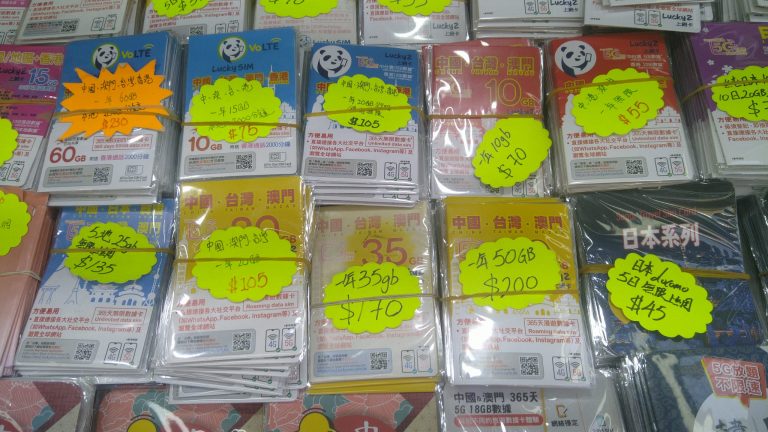
Mobile Data for Travel Abroad: ahamo, eSIM and Pocket Wi-Fi Compared
AuthorMIRUTOBE editors
Table of Contents5 items
If your phone is already on ahamo or the Rakuten Saikyo Plan, you land abroad with data and buy nothing. The ceilings are 15 days for ahamo and 2GB a month for Rakuten. Only a trip that passes one of those needs an eSIM or a rented router.
What follows is about Japanese mobile contracts — the plans sold by docomo, KDDI and Rakuten to people living in Japan — and what they do once you leave the country. If you are visiting Japan on a foreign line, this is the wrong page; you want a prepaid Japanese eSIM instead.
Check first: can you travel on the contract you already hold?
- Your line is ahamo or the Rakuten Saikyo Plan
- Your destination is inside the covered area (ahamo 91 countries and regions, Rakuten 107)
- You will be out of Japan for 15 days or less
- Nobody travelling with you needs to share the connection
- You do not intend to make or take phone calls (voice and SMS sit outside the flat rate)
Five out of five and the only preparation left is turning data roaming on in the phone’s settings. ahamo needs no application and charges no monthly fee for the overseas allowance; it is simply part of the JPY 2,970 you already pay. Rakuten Mobile has one extra step, and it has to happen before you go: connect to the Rakuten network inside Japan and complete the Rakuten Link authentication. In some areas that authentication cannot be completed once you have landed, which makes it a job for the night before the flight rather than the departure lounge.
The full picture: what each route actually gives you
Checked on the carriers’ own sites on 2026-09-14. The eSIM figure is Airalo’s unlimited 3-day Korea plan; the pocket Wi-Fi figure is the Imoto no WiFi Korea A plan at the web rate plus the JPY 550 handover fee.
The top two rows and the bottom two are not variations on one purchase. They are different kinds of money. ahamo and Rakuten have already taken theirs in the monthly bill, so the marginal cost of the trip is nothing. povo sits in between: you buy a topping for a named destination and a fixed number of days. The eSIM and the router are bought fresh for each trip, and they are where the numbers get large.
Which is why the first question is not what each one costs. It is whether your own contract is in the top two rows. On ahamo, three days in Korea costs nothing in data, and the JPY 1,950 eSIM and the JPY 4,990 router are both things you would be buying twice. Open a comparison table before you check your own plan and that is exactly what happens.
Top-up prices diverge by an order of magnitude once you do run out. An extra gigabyte on ahamo is JPY 550; on Rakuten Mobile the overseas charge is JPY 500. povo’s area toppings run JPY 680 for 1GB over three days in Korea and Taiwan, JPY 760 for the United States, Thailand and Vietnam, and JPY 840 for the nine European countries; stretched to 3GB over seven days they become JPY 1,980, JPY 2,200 and JPY 2,430. Per gigabyte Rakuten is the cheapest of them and povo’s Europe topping the dearest — but povo’s toppings also expire on the calendar, so three days means three days whether or not the gigabyte is gone.
One asymmetry catches ahamo subscribers who pay for more data at home. The Ōmori option adds 80GB for JPY 1,980 and none of it crosses the border: the overseas figure stays at 30GB, and the 110GB you hold domestically is not portable. Tethering, on the other hand, works abroad exactly as it does at home. povo users have their own piece of homework, because roaming has to be switched on by application — after signing up you contact the chat desk — and the small print warns that a 5G SA SIM can leave you with no data, no voice and no SMS in certain countries. Check the destination against that list before you buy the topping, not after.
Where people trip up
ahamo’s 15-day limit cannot be bought off
ahamo throttles in two different ways and only one of them is reversible. Use up the 30GB and the line drops to a maximum of 1Mbps, which lifts as soon as you buy more data. The other is the calendar. Counting from the day you first send data abroad, once 15 days have passed the line falls to a maximum of 128kbps from midnight Japan time, and no amount of purchased data brings it back. It stays there until you are home in Japan and have used data on a domestic network. For anything longer than a fortnight, plan on the sixteenth day onwards being unusable. Subscribers on the Ōmori option should note a second clause in the same place: while that option is active, a speed restriction is not lifted until the end of the month.
The hotel Wi-Fi you think you joined, and the roaming running behind it
ahamo says plainly in its notes that if data roaming is left on, traffic can go over the roaming connection even while you believe you are on free Wi-Fi, and that it consumes the month’s allowance when it does. Airport and café networks are the usual culprits, because nothing is actually connected until you have cleared the captive portal, and the handset spends those minutes on the mobile network. Leave automatic photo backup and cloud sync running through that window and several gigabytes can disappear into it. Turning background refresh and cloud sync off before departure is the single most effective thing you can do.
Calls and SMS sit outside the flat rate, and JPY 50,000 stops the data too
Neither ahamo’s five free minutes nor its unlimited-calling option covers calls made or received abroad. Worse, once overseas voice and SMS charges pass JPY 50,000 in a month — the suspension guide figure — overseas data stops as well for the rest of that month, and buying data does not restore it. povo works the same way, and its Korean rates show the shape of the risk: JPY 50 a minute for calls inside the country, JPY 125 a minute to Japan, JPY 70 a minute to answer an incoming call, and JPY 100 per SMS sent. Being billed for answering is the part that catches people used to Japanese domestic rules; take a run of nuisance calls and the figure climbs on its own. Move everything to a messaging app and treat the dialler as off-limits, incoming calls included.
What if the trip runs past 15 days, or you are three or more
The third and fourth lines of the checklist are the ones that send you out to buy something. Past 15 days, the sixteenth day onwards has to be covered by a second connection, because ahamo will be sitting at 128kbps. From three people upwards, a single rented router beats buying a line each: JPY 4,990 for three days in Korea split four ways is JPY 1,248 a head, against JPY 1,950 each for the eSIM.
Alone or as a pair, the eSIM wins. It is a single purchase with no collection counter, no return envelope and no damage waiver, and the profile installs over the Wi-Fi you already have at home. The per-head crossover and the line-by-line breakdown of those extra fees are set out in our comparison of eSIM and pocket Wi-Fi totals.
On a work trip with a laptop the argument can tip back towards the router, purely on tethering stability. How much of that bill you can put through the books is a separate question, handled in our piece on where the line falls for expensing travel. On the packing side, a roaming handset drains faster than one on home turf, so it is worth settling how large a power bank you may carry into the cabin and whether you need a converter or only a plug adapter before you leave, rather than buying both again at the destination.
Common questions: what to pick, and what to set up
So which one should I choose?
On ahamo or the Rakuten Saikyo Plan, travelling alone, back inside 15 days: buy nothing and turn data roaming on. On any other contract, one or two people take the eSIM and three or more take the rented router. On povo, start from the area topping for your destination — Korea is JPY 680 for 1GB over three days — because it is the shortest route from where you already are.
Is any of this difficult to set up?
Roaming is one switch in the settings app marked data roaming. An eSIM means installing the profile before you fly and switching lines once you arrive; start the purchase after landing and you are trying to buy a connection with no connection, which is where people get stuck. A rented router needs a power button and a password, and nothing else.
Do I need any of it for an overnight dash?
Yes, if you intend to use a map or a transit app. On ahamo or Rakuten the question does not arise, since nothing is added. On a fare like Peach’s bullet return, where you come home the next day, you are connected for roughly 24 hours — and most eSIM plans start at three days, so a one-day trip still buys three.
- ahamo overseas data (charges, conditions, speed restrictions) ↗Checked on 2026-09-14
- ahamo plan and data allowance ↗Checked on 2026-09-14
- Rakuten Mobile international roaming (data) ↗Checked on 2026-09-14
- povo2.0 international roaming (area toppings, call charges) ↗Checked on 2026-09-14
Source: the reference block above / Airalo and Imoto no WiFi official sites / Photo: MNXANL, CC BY-SA 4.0 (Wikimedia Commons) / Checked on 2026-09-14 / Featured image: Jonashtand, CC BY-SA 4.0 (Wikimedia Commons)
Other sales ending soon




 4 days leftuntil Oct 24Air Busan Takamatsu-Busan Coupon: Up to 9,000 Yen Off Until October 24
 5 days leftuntil Oct 25JAL Hong Kong Campaign: Tokyo–Hong Kong Round Trip from 75,800 Yen (until 25 Oct)
 11 days leftuntil Oct 31Jin Air Kobe–Seoul: 5,000 yen off a round trip with code KTOUKB1, until 31 October
 11 days leftuntil Oct 31Jin Air to Busan: 4,000 yen off a round trip with code KTOPUS, first 300 only