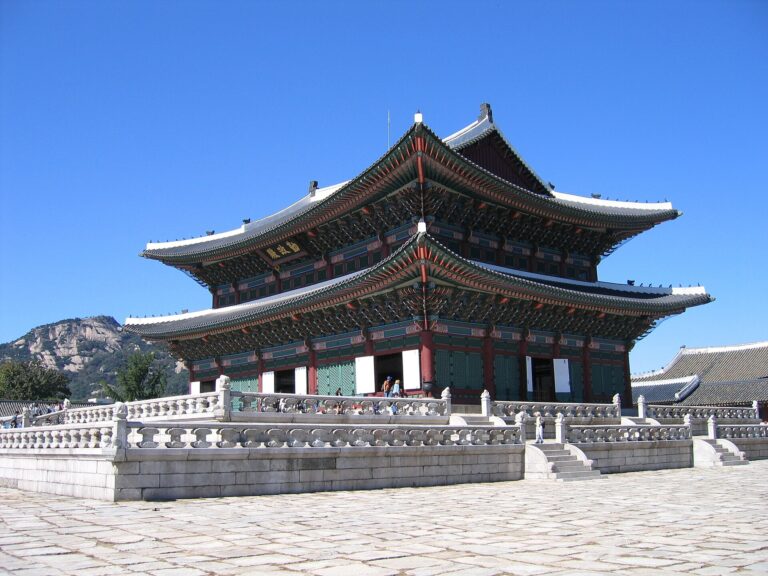
Seoul 2-Night, 3-Day Model Plan: Cosmetics, Food and Night Views
AuthorMIRUTOBE editors
Table of Contents7 items
Seoul sits in the same time zone as Japan. Land in the afternoon, leave on the last evening, and you have roughly 22 usable hours. Put the things whose length you cannot predict on day one and the things with fixed times on day two, and the plan stops falling apart.
Itinerary
DAY 1Finish the shopping in Myeongdong, then switch to the view from Namsan
Why this order: the only thing on day one is the shopping, because shopping has no predictable length. The palace and the ceremony, which run to a clock, go on day two, where a late arrival cannot reach them.
This plan assumes an afternoon arrival on day one and an evening departure on day three. Allowing an hour and a half for immigration and the ride in, day one gives you about six hours. Day two is a full twelve, the last day is a morning of four, and the three together come to roughly 22 hours.
Into those 22 hours go shopping, a palace, a night view, a market and cafes. One rule keeps it from breaking: whatever has no predictable length goes on the first day. A palace visit can be estimated at an hour to an hour and a half. Choosing cosmetics takes two hours or it takes four.
Before you leave, only entry paperwork and the plug need settling
Entry has two layers. K-ETA, the electronic travel authorisation, is temporarily waived for 22 countries and territories including Japan, and the current waiver runs from 1 January 2026 to 31 December 2026. It is not permanent; it has been extended at each expiry so far. For a trip in 2027 or later, check whether the waiver is still running in that period.
What is waived is the K-ETA alone. The arrival declaration itself remains. The e-Arrival Card is free, can be filled in from three days before you land, and lapses automatically 72 hours after submission. Anyone who obtained a K-ETA is exempt from the declaration; travellers on a waived passport are not. The order runs opposite to intuition, which is where people get it wrong.
The plug is type C, and the supply is 220 V. Equipment built for 100 V can be destroyed by being plugged straight in, so work out which of your devices handles it using the difference between a plug adapter and a transformer before you pack.
Afternoon: making Olive Young the first shop decides everything after it
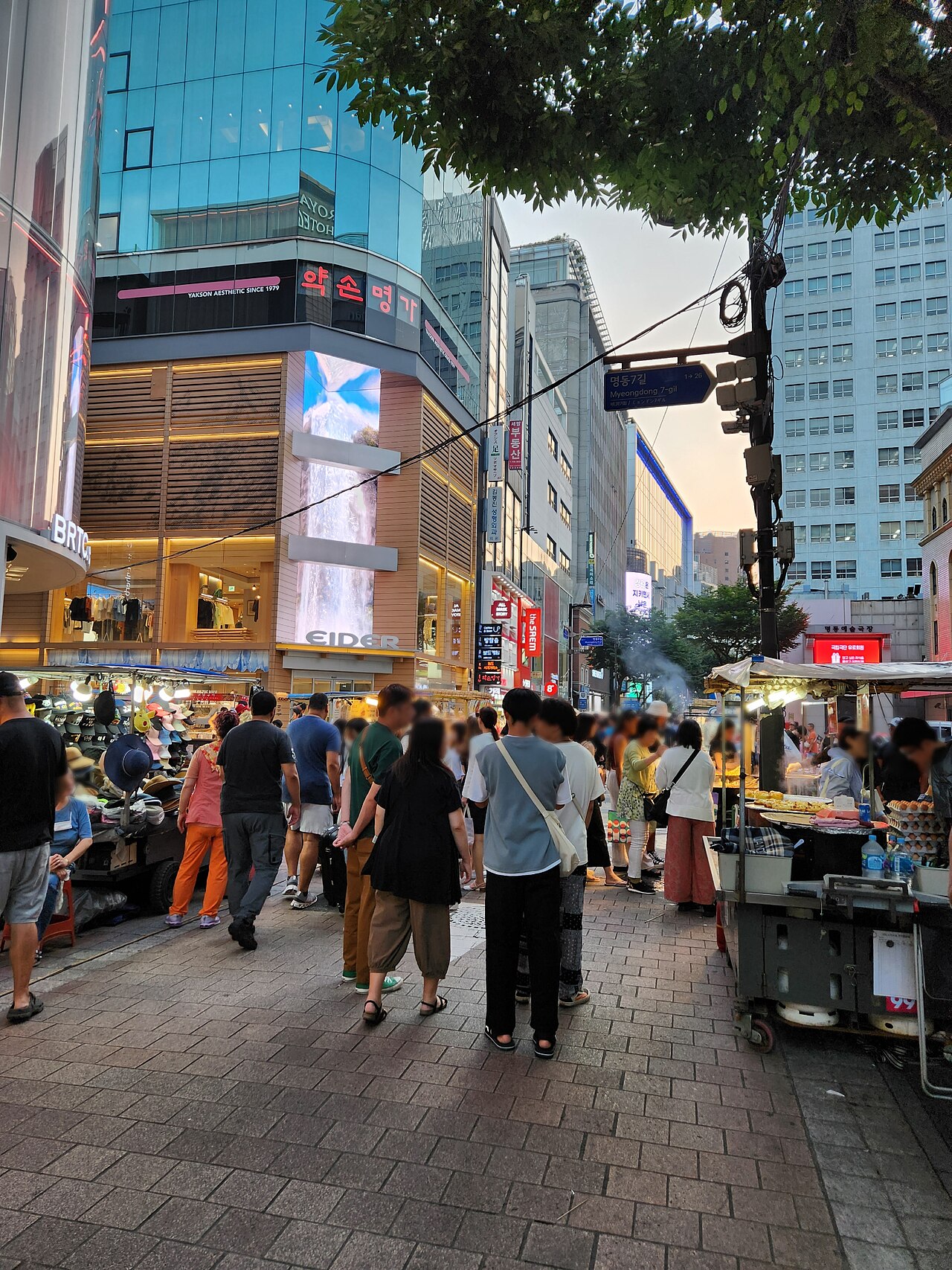
Highlights: the shops divide into two kinds, the drugstore format of Olive Young and the single-brand road shops. Go into Olive Young first and you can compare several brands side by side, which narrows down where you go afterwards. Start with the road shops and you look at one brand at a time in depth, losing time to the walk between each.
Practical note: multibuy discounts are set shop by shop, and a three-for-one-price structure is common. If you intend to buy several of the same thing, check the single-unit price in the first shop before committing; it usually ends up cheaper.
- Nearest
- Myeongdong station, Line 4
- Street food
- Tteokbokki, hotteok, cheese corn dogs
What shopping does to the itinerary is about weight, not volume. Toner, sheet masks and drinks are bulky. Buying in quantity in Myeongdong means the plan has to include a leg back to the room to drop it all off. With a hotel in or near Myeongdong that becomes buy, drop, view. Take a room in a district further out and you carry the bags up Namsan.
Liquids cannot go in the cabin. If the plan is a lot of toner and ampoules, look at the checked-baggage allowance first. Low-cost carriers usually charge for hold luggage and cap it low, and having the cheap fare eaten by the baggage fee is the standard way this trip goes wrong. Travelling out light is what buys you room on the way back.
Evening: the cable car is walkable from Myeongdong station
There is more than one way up Namsan. The usual one is the cable car, whose lower station is seven to eight minutes on foot from exit 3 of Myeongdong station. A free shuttle bus links the station and the cable car every ten minutes, so there is no need for a taxi.
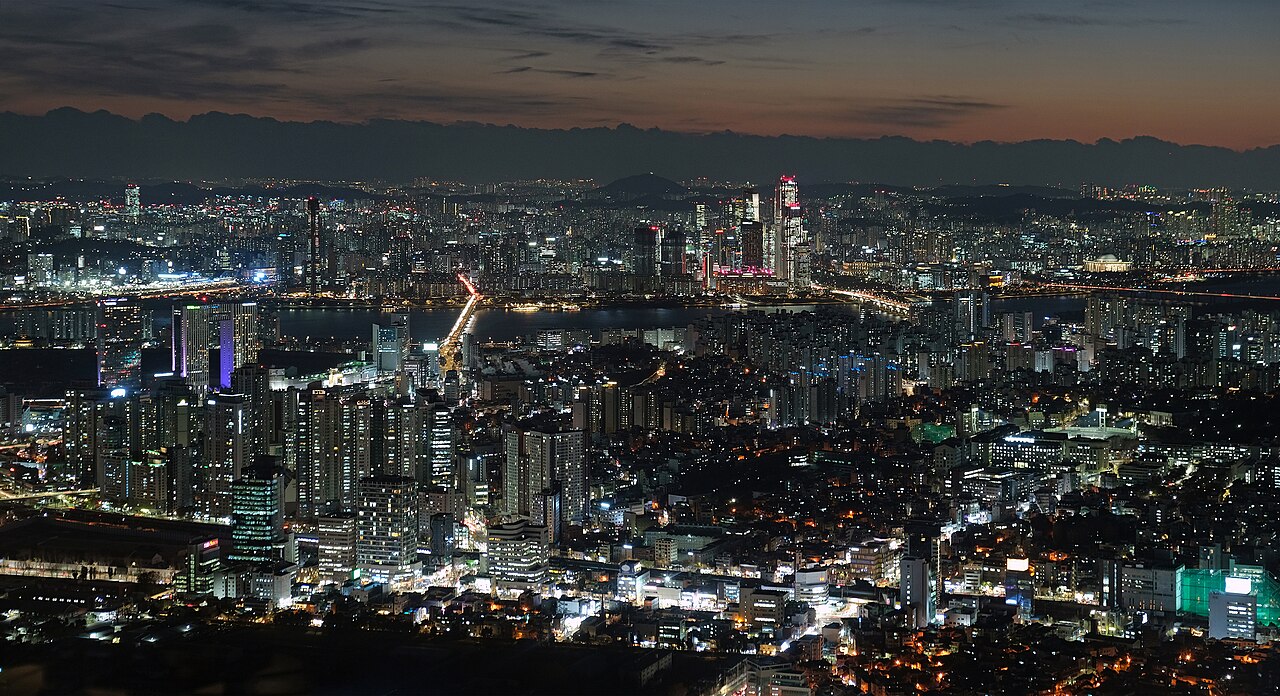
Highlights: the observatory opens 10:00 to 22:30 on weekdays and to 23:00 at weekends and on public holidays, every day of the year, with last entry thirty minutes before closing. The love locks at the foot of the tower are outside the ticket barrier and cost nothing to see. Getting up the mountain and getting into the observatory are charged separately, so you buy two tickets.
Practical note: a queue forms at the cable car station around sunset at weekends. Plan to be there thirty minutes before the sun goes down and you catch the summit during the shift from dusk to night. Set off once it is fully dark and the hour you came for finishes while you are still in line.
- Observatory
- Adult KRW 29,000; ages 3 to 12 KRW 23,000 (over 65 pay the child rate)
- Hours
- Weekdays 10:00–22:30; weekends and holidays 10:00–23:00 (open all year)
- Official
- Official site ↗
The summit is windy and feels colder than the forecast. The observatory itself is indoors, but a fair amount of the walk to it is not. A layer is worth carrying even in summer, and there are winter days when a down jacket still is not enough.
Later: eat the barbecue after you come back down
You can eat at the summit, but the first evening gives you more choice back down in Myeongdong. Cable car ticket sales stop at 22:30, so lingering at the top means walking the descent.
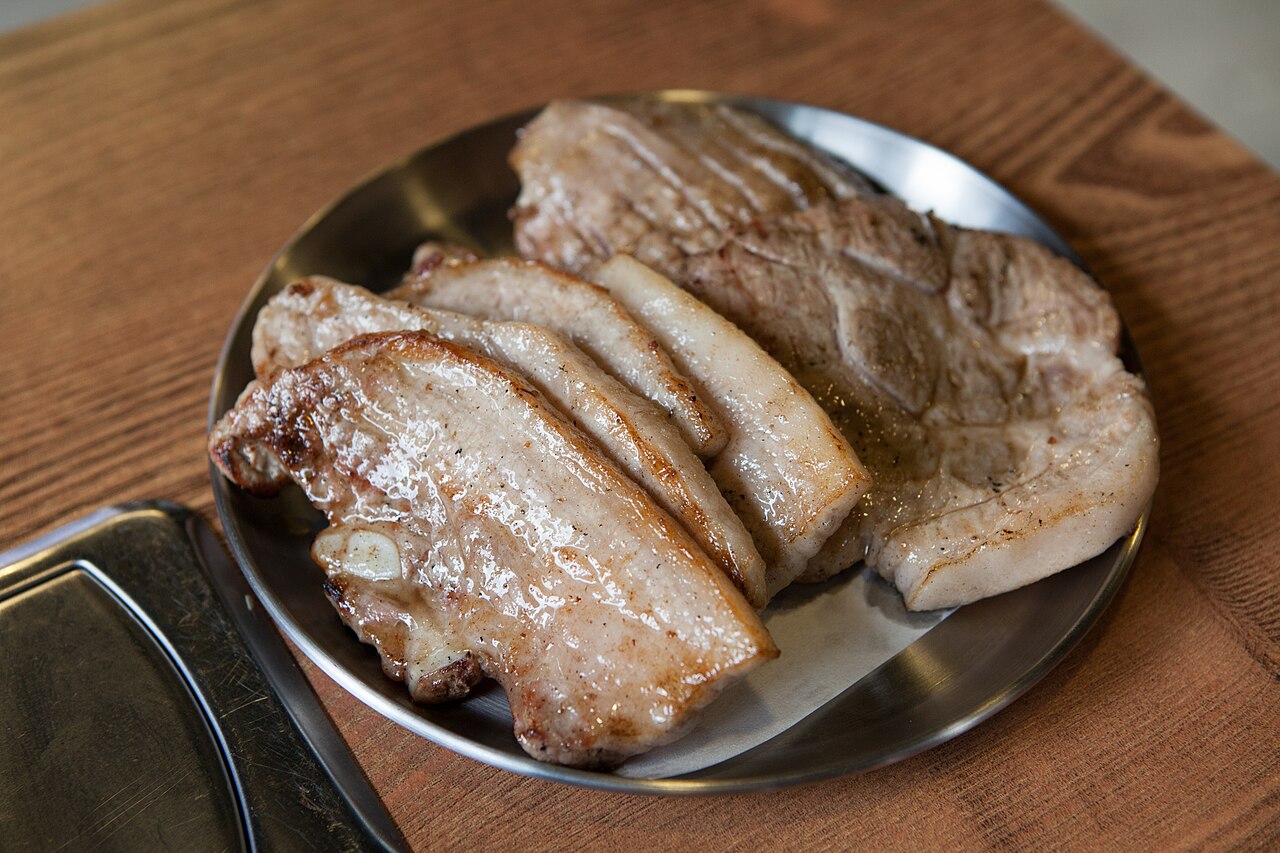
Most samgyeopsal restaurants take orders from two portions upwards, which makes it awkward for one person. Grill the pork belly, wrap it in ssam leaves, and finish with bokkeumbap, fried rice, is the usual shape of the meal. Dakgalbi is the same, two portions or more in a lot of places. With an odd number in the party, dishes that work as a single serving, bibimbap or sundubu jjigae, leave you freer.
For something sweet after, there is bingsu shaved ice at Sulbing or the Korean macaron, tteungcarong. Both have specialist shops clustered in Myeongdong and Hongdae, on the way back from the shopping.
DAY 2Gyeongbokgung to Bukchon to Gwangjang, on foot and a few stops of subway
Why this order: all three sit within walking distance and a few subway stops of each other. The only fixed times are the ceremony and the closing of the gates, so the hanbok rental slot is set by counting back from those.
Morning: the ceremony happens twice, at 10:00 and at 14:00
The changing of the royal guard at Gwanghwamun, the main gate of Gyeongbokgung, runs twice a day, at 10:00 and 14:00, for twenty minutes. Watching is free and no palace ticket is needed, because it happens outside the walls. There is also a gate inspection at 11:00 and 13:00 lasting ten minutes, and a public drill by the guard at 09:35 and 13:35 lasting about fifteen.
Heading straight for the palace in the morning lands you naturally on the 10:00 performance. Spend the morning on a hanbok fitting first and you miss it and wait until two. Working backwards from the rental shop’s booking time is the practical way round.
The ceremony also does not run on the palace’s closed day. On a Tuesday there is no palace and no ceremony.
Highlights: built in 1395, the fourth year of Taejo, as the principal palace of the Joseon dynasty. It burned in the Imjin War of 1592 and was rebuilt by Gojong in 1867. The two anchors are the main gate, Gwanghwamun, and Gyeonghoeru, the pavilion that appears to float on its pond. Admission is KRW 3,000 for adults, KRW 2,400 for groups of ten or more, and free if you are wearing hanbok.
Practical note: the free-in-hanbok rule specifies the form. You need the upper garment, jeogori, together with a lower garment, chima or baji. A durumagi on its own, or a jeogori over jeans, does not qualify. Modernised hanbok does qualify, and foreign visitors are treated identically.
- Closed
- Tuesdays (Changdeokgung, Deoksugung and Changgyeonggung close Mondays)
- Hours
- Jan–Feb and Nov–Dec 09:00–17:00; Mar–May and Sep–Oct 09:00–18:00; Jun–Aug 09:00–18:30
- Last entry
- One hour before closing (16:00 / 17:00 / 17:30)
- Admission
- Adult KRW 3,000; free in hanbok; free on the last Wednesday of each month
- Official
- Official site ↗
To add a second palace, an integrated ticket covering one visit to each of the four palaces and Jongmyo is KRW 6,000, valid six months from purchase. It excludes the Huwon, the secret garden at Changdeokgung. The Huwon is KRW 5,000 for adults and has to be bought together with the KRW 3,000 palace ticket, so getting into the garden costs KRW 8,000 in total. Online sales open at 10:00 six days before the visit date and close the day before; same-day tickets go on sale at 09:00 on site, first come first served. Entry is timed, 100 people at a time, with a guide accompanying the group.
Afternoon: part of Bukchon is closed to visitors from 17:00 until 10:00
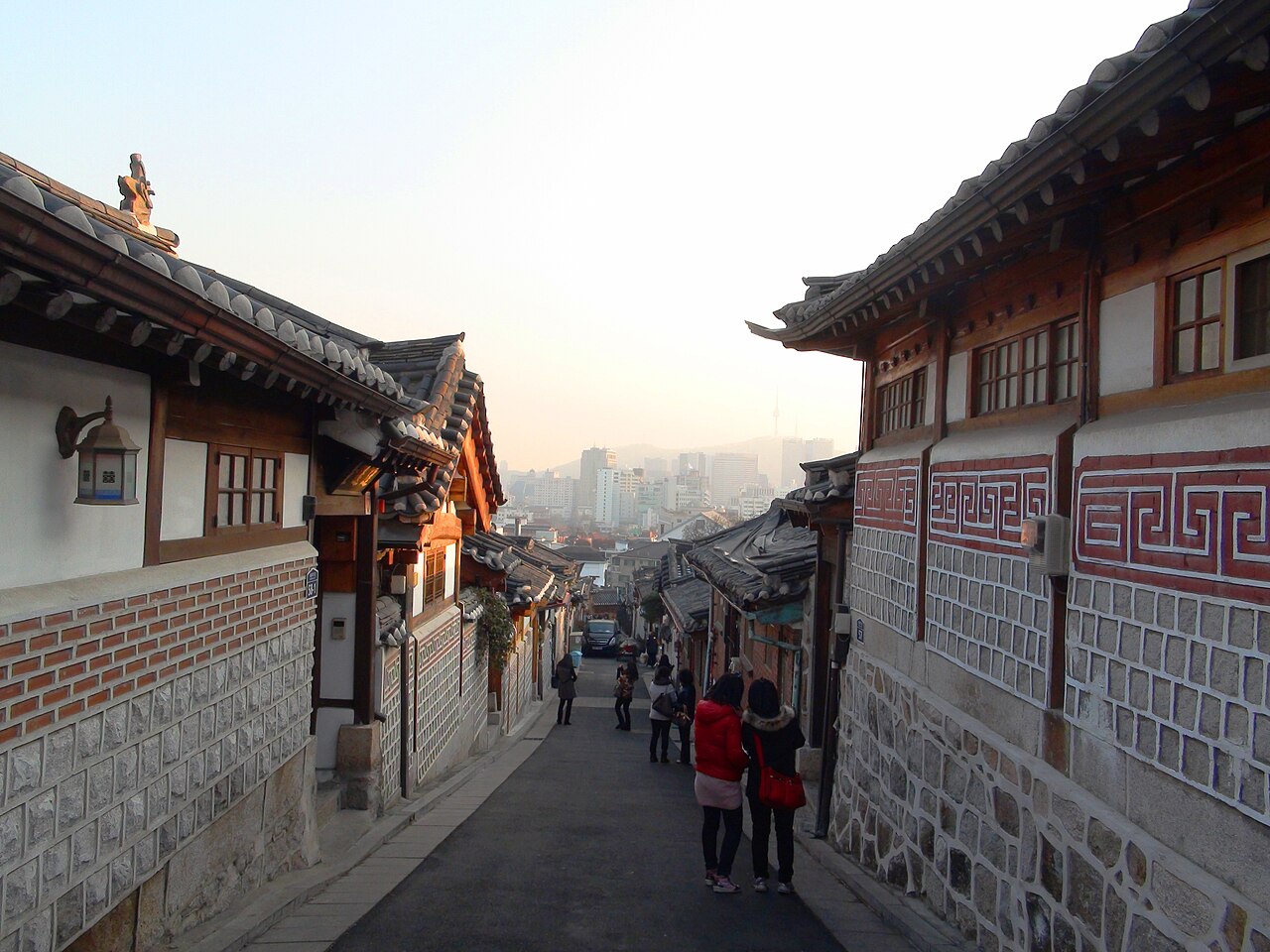
Bukchon Hanok Village is not a visitor attraction. It is a residential street where people live. To deal with the noise, Seoul city designated about 34,000 square metres around Bukchon-ro 11-gil a red zone and banned tourist access from 17:00 until 10:00 the following morning. An information period began in November 2024 and enforcement started on 1 March 2025, with a KRW 100,000 fine for breaches. From 1 January 2026 chartered coaches have also been permanently barred from about 2.3 kilometres of streets including Bukchon-ro.
Walking Bukchon in the evening, in other words, is no longer a plan that exists. This itinerary puts it in the early afternoon not only because that is the natural line from Gyeongbokgung but because of the restriction. To avoid crowds, a weekday morning is the best slot; on a weekend afternoon the slope fills with people taking photographs.
Keeping the hanbok on for Bukchon works for the pictures too. Gyeongbokgung is large and busy, which pushes you towards wide shots, while Bukchon’s lanes are narrow enough that tiled roofs and the slope fill the frame. One rental gives you the grandeur of the palace and the lived-in feel of the back streets, two different pictures for one day’s hire.
Evening: at Gwangjang, only the food stalls stay open to 23:00
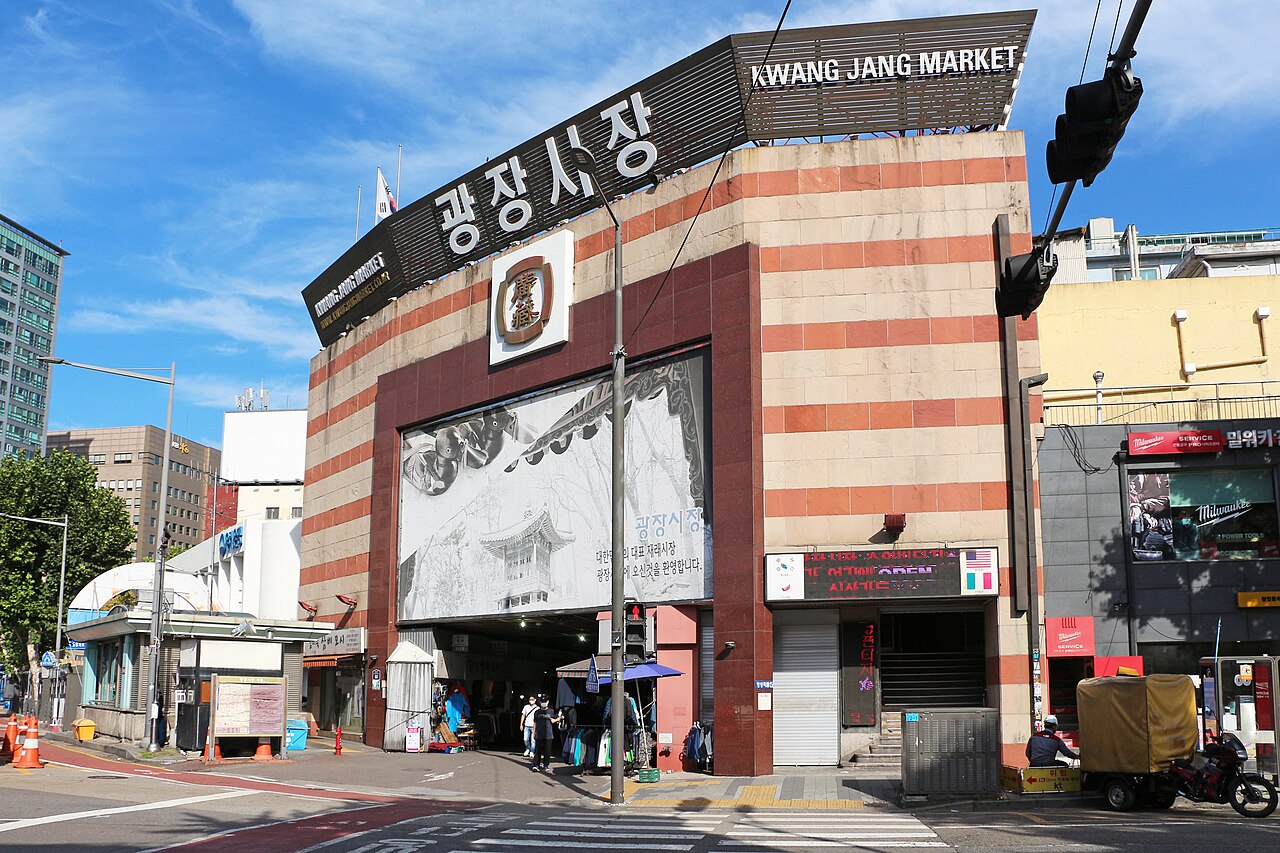
Highlights: opened in 1904, the 41st year of Gojong. The signature dishes are bindaetteok, the mung bean pancake, modeum-jeon, mayak gimbap, sundae, yukhoe and dongeurangttaeng. The Korea Tourism Organization’s sample prices put bindaetteok at KRW 4,000 a piece, yukhoe at KRW 15,000 a plate, dongeurangttaeng at KRW 13,000 a portion and mayak gimbap at KRW 3,000.
Practical note: the market keeps three different sets of hours. Ordinary shops run 09:00 to 18:00, the used-clothing floor 10:00 to 19:00, and only the food stalls run 09:00 to 23:00. On Sundays the ordinary shops close and the stalls alone open, so a Sunday evening visit finds half the market shuttered.
- Address
- 88 Changgyeonggung-ro, Jongno-gu, Seoul
- Hours
- Shops 09:00–18:00; used clothing 10:00–19:00; food stalls 09:00–23:00
- Closed
- Sundays, ordinary shops only
The stalls run on cash. Card payment works almost everywhere else in Seoul, but market stalls are the standing exception. Carry a few 10,000-won notes already broken into smaller ones and nothing stalls. Rates in the city are usually better than at the airport, so changing money in Myeongdong the day before keeps this evening moving.
The busy window is easy to read. Queues form at the popular bindaetteok and yukhoe stalls from about 17:00. To sit down, arrive before five or push it past eight. Counting the ride from Bukchon, arriving before five is the easier of the two to build.
DAY 3Finish at Dongdaemun and take the AREX back to the airport
Why this order: about four hours are left on the last day. Stay in one district and make the move to the airport a single leg.
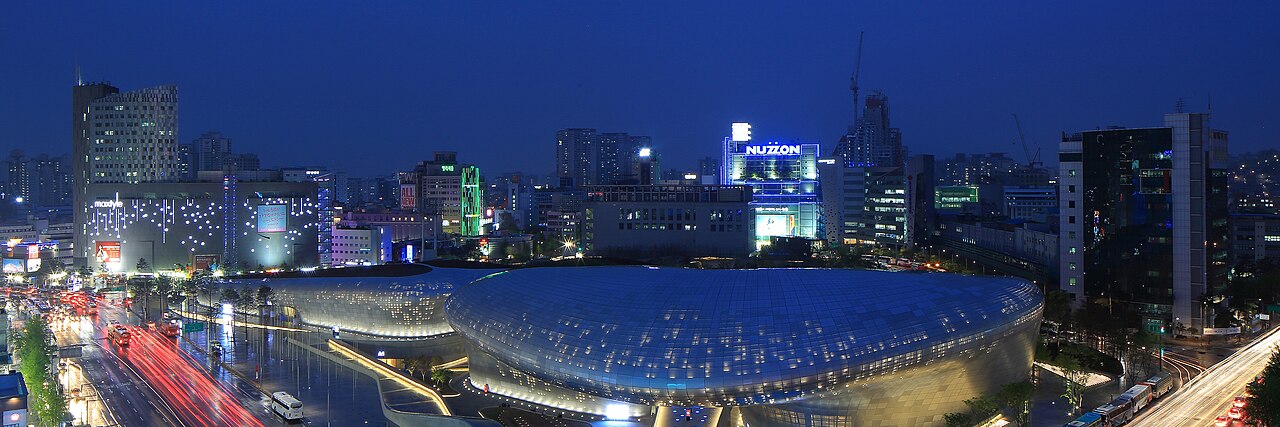
Highlights: a building made entirely of curves, connected directly to exits 1 and 2 of Dongdaemun History and Culture Park station. It operates 10:00 to 20:00. Fashion malls surround it, and Doota Mall’s tenants run from 10:30 to as late as midnight. What stays open into the small hours is the wholesale end; treat the retail malls as closing at midnight and you will not be caught out.
Practical note: the Dongdaemun History Museum on the same site closes on Mondays. The exterior can be seen at any hour, which also makes this a workable substitute on a wet day.
- Address
- 281 Eulji-ro, Jung-gu, Seoul
- Nearest
- Dongdaemun History and Culture Park (Lines 2, 4, 5), exits 1 and 2
- Hours
- 10:00–20:00
- Official
- Official site ↗
Whether to add Hongdae is the one real decision of the day. Dongdaemun and Hongdae are more than twenty minutes apart by subway, and covering both inside four real hours is a stretch. Picking one gets you more out of the morning.
What decides it is what you still have not bought. Clothes and fashion accessories point to Dongdaemun; cafes and small things aimed at a younger crowd point to Hongdae. Dongdaemun is the cleaner line towards the airport, and if you do choose Hongdae, board the AREX at Hongik University station rather than Seoul Station and run straight out to Incheon, which keeps it to a single move.
The AREX goes back to the airport. The express takes about 43 minutes from Incheon Terminal 1 to Seoul Station and about 51 from Terminal 2. The all-stop service is about 59 minutes from Terminal 1 and about 66 from Terminal 2, and a transit card works on it directly. Setting off three hours before the flight leaves room to pick up anything forgotten in the duty-free hall.
The fare is not in the cost table. The operator’s fare page does not currently load, so the amount is unverified. The official guidance does establish that the express and the all-stop service are priced differently and that the all-stop accepts a transit card as it is, which leaves you only one thing to settle on the ground: whether to buy an express ticket. Heavy bags, take the reserved-seat express; travelling light, take the all-stop.
Alternatives
Rainy-day swap
What rain damages here is the slope at Bukchon and the summit of Namsan. Both involve long stretches outdoors. On a wet day, swap Bukchon for the DDP or a museum and push Namsan to the following evening, and the shape holds. Gwangjang has its stalls inside the building, so it works in the rain unchanged.
The season matters more than the weather on any one day. In January and February the high stays below freezing on some days, which cuts into an itinerary built this much around being outside, and Gyeongbokgung closes at 17:00 from November to February. Winter’s answer is to pull day two forward: do Gyeongbokgung in the nine o’clock hour right after opening, walk Bukchon before noon, and be indoors before the light goes. The earlier closing is exactly what creates the room to move it all earlier.
Spring, April and May, and autumn, September and October, stretch the palace hours to 18:00 and are the most comfortable seasons to walk. Those two are where this plan works as written. June to August has the longest hours at 18:30 but high humidity, which makes walking in hanbok hard work, and it catches the rainy season, so the design needs two or three hours deliberately parked indoors after lunch. A short hanbok rental is the realistic choice in summer.
If the flight is delayed by an hour or more
Day one only has six hours, so an hour of delay costs you either the Myeongdong shopping or the Namsan view. Keep the shopping. N Seoul Tower is open until 23:00 and can move to the second evening, whereas the cosmetics shops shut early, and missing them on day one pushes them into the four hours of the last morning.
The larger trap is the day of the week. This plan puts Gyeongbokgung in the morning of day two, and Gyeongbokgung closes on Tuesdays. Day one is the day you fly, so a Monday departure makes day two a Tuesday and the palace, the hanbok and the ceremony all disappear together. A Tuesday departure gives you Wednesday, a Friday one gives you Saturday, and both are fine. Building around a weekend plus one day avoids it naturally, but in a year where a long weekend starts on a Monday, look at the calendar before you buy the ticket.
If you do land on a Tuesday, switch to Changdeokgung, which closes on Mondays and is therefore open. Seoul staggers the palace closing days so that one of them is open on any day of the week. Changdeokgung is a UNESCO World Heritage site, laid out to follow the natural ground rather than a symmetrical plan, so it looks different from Gyeongbokgung, but as an experience in hanbok it is the same thing. It is also close to Bukchon Hanok Village, so the afternoon runs on unchanged.
When you’re tired
The cutting order is settled. Hongdae on the last day goes first. Then cafe-hopping, because Korean cafes come with a wait and holding to one a day is what keeps the plan intact. A day trip out of the city is never in it to begin with. Suwon or old Incheon is three to four hours there and back, and spending four of your 22 hours on travel does not pay over two nights.
With one more night available, add it after day two, the palace day. Day one and day three are pinned to flight times, so extending them adds awkward fragments. Put it in the middle and you gain a clean twelve hours.
What that extra day goes on is nearly settled too, because the palaces are the one thing this plan leaves thin. Seeing Gyeongbokgung and walking on to Bukchon is the whole of it, and adding the Huwon at Changdeokgung or Deoksugung does not fit into half a day. More shopping also favours the middle, since anything missed on the first day can be collected two days later. That recovery is not available over two nights.
Where to stay
What counts in this plan is not the hotel’s facilities but whether you can drop shopping bags quickly. Day one buys in bulk in Myeongdong and goes straight up Namsan afterwards.
A room in Myeongdong makes the problem disappear. Buy, drop, view runs in sequence, and Gyeongbokgung and Bukchon the next day are a short subway ride away. Myeongdong is also the only district you can walk to the cable car from.
If you want to go deeper on the palaces, Jongno and Gwanghwamun suit better. Getting into Gyeongbokgung right at opening is easier, and Bukchon is walkable. The cost is that evening shopping means travelling to Myeongdong. Dongdaemun is a third option: the last morning becomes shopping the moment you leave the lobby, at the price of a journey to both the Myeongdong evening and the palace morning.
Prices move on identical dates, which is why none appear in the table above. For hanbok rental and other things to book before you land, Klook lists Seoul experiences and tickets, which is quicker than arranging them on the day.
What this trip costs
Assumptions: two adults, two nights, city travel by subway. Flights, rooms and meals are outside the total because they move with the season; what is listed is only what has a published price. One won is roughly JPY 0.1147, and the rate moves.
Every figure above is the published rate as of 2026-09-14. The yen conversion uses the reference rate of 11 September 2026.
The largest line is N Seoul Tower at KRW 58,000 for two. Add the cable car and the pair comes to KRW 88,000, about seventy per cent of the fixed cost. Which is to say: drop the night view and the on-the-ground spending of this trip falls off a cliff.
Subway fares were revised on 28 June 2025 to KRW 1,550 on a transit card and KRW 1,650 on a single-journey ticket. Beyond 10 km the fare rises KRW 100 for every 5 km. A single-journey ticket carries a KRW 500 deposit, refunded at a machine in the station after you exit. Buses are KRW 1,500 on trunk and branch routes, KRW 1,400 on circulars, KRW 3,000 on wide-area and KRW 2,500 at night. Transfers between subway and bus are discounted when you board again within thirty minutes of alighting, for up to five consecutive legs.
Since 7 March 2026, failing to tap out on exit adds a base fare automatically to your next journey, at every station in the capital region. There is no station you can leave without passing a gate, so real harm is unlikely, but forget to touch the card and KRW 1,550 goes on quietly.
Taxis start at KRW 4,800 for the first 1.6 km in a mid-size car, then KRW 100 for every 131 metres. There is a late-night surcharge: from 22:00 to 23:00 and from 02:00 to 04:00 the KRW 4,800 becomes KRW 5,800, and between 23:00 and 02:00 it is KRW 6,700.
Putting a per-person figure on the whole thing: a return low-cost fare of JPY 25,000 to 40,000, two hotel nights at JPY 10,000 to 18,000 sharing a twin, food and cafes JPY 12,000 to 18,000, transport, sights and hanbok JPY 6,000 to 10,000, and cosmetics and gifts JPY 10,000 to 20,000. That is a range of JPY 60,000 to 80,000. Of all of it, the only part that does not move is the KRW 125,000 in the table.
Hanbok rental is absent from the table because there is no single operator and the price moves by shop and by package. Some of the hire comes back through the palace, which is free while you are wearing it. That is only KRW 6,000 for two, so the offset is small, but if you keep it on as far as Bukchon, one day’s hire buys pictures in two places.
The other absence is connectivity. In Seoul, both the subway transfers and finding a shop run through a map app, so you need a connection from the moment you land. Korean eSIMs are priced by days and data volume, while a rented pocket router is one device split between two, which works in your favour. Against that, the collection fee and the damage waiver are billed separately, narrowing the gap at two travellers. The break-even by party size is worked out in the eSIM against pocket Wi-Fi comparison.
Cards work in convenience stores, cafes, department stores and taxis. You will reach for cash less often than in Japan; the exceptions are market stalls and some small shops. Contactless cards issued in one country do sometimes get rejected by terminals in another, so carrying two or more is the safer setup. On a trip where shopping is the point, a card that will not work costs you more than usual. How to put the combination together is set out in why to carry several credit cards abroad.
Who this plan does not suit is anyone who wants to look slowly. The weight sits on shopping and eating, and the walking adds up: Myeongdong, Namsan, Gyeongbokgung, Bukchon, Gwangjang and Dongdaemun are all done on foot. Bukchon is a slope, and in shoes you are not used to wearing with hanbok it is tiring. To go deeper, cut the day-one shopping and do two palaces instead. What this article covers is a city weekend; provincial Korea and its landscapes are not in it. To compare another city at a similar distance, put the Taipei three-night plan and the Hong Kong three-night plan side by side and count the usable hours in each.
Sources: official sites of the Royal Palaces and Tombs Center of the Korea Heritage Service (Gyeongbokgung and Changdeokgung); the Korea Cultural Heritage Foundation (the guard-changing ceremony); N Seoul Tower; Namsan Cable Car; the Seoul Metropolitan Government (transport fares and the Bukchon access restriction); the DDP; the Korea Tourism Organization (Gwangjang Market and the AREX); and K-ETA and the e-Arrival Card / Checked on 2026-09-14 / Photographs: the credits given in each caption / Featured image: Svdmolen, CC BY-SA 3.0 (Wikimedia Commons)
Other sales ending soon




 4 days leftuntil Oct 24Air Busan Takamatsu-Busan Coupon: Up to 9,000 Yen Off Until October 24
 5 days leftuntil Oct 25JAL Hong Kong Campaign: Tokyo–Hong Kong Round Trip from 75,800 Yen (until 25 Oct)
 11 days leftuntil Oct 31Jin Air Kobe–Seoul: 5,000 yen off a round trip with code KTOUKB1, until 31 October
 11 days leftuntil Oct 31Jin Air to Busan: 4,000 yen off a round trip with code KTOPUS, first 300 only