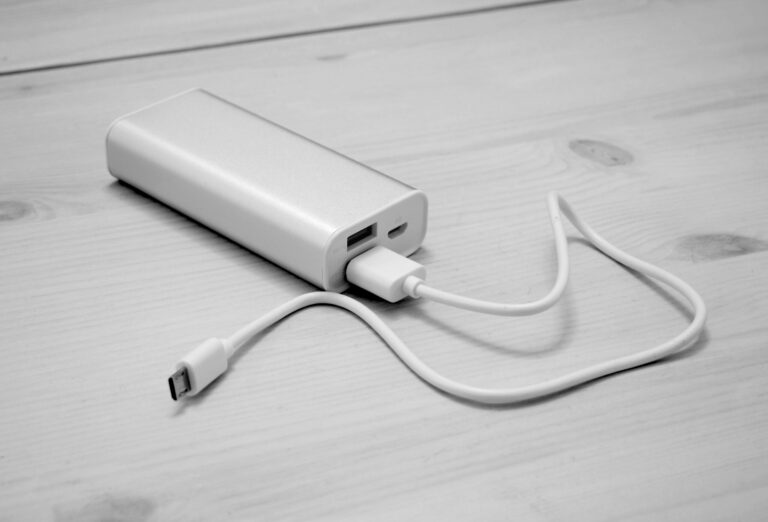
Power Bank Rules, Flights from Japan 2026: 160Wh, Two Max
AuthorMIRUTOBE editors
Table of Contents6 items
A power bank cannot go in checked baggage at all. It may only travel in the cabin, it must be rated at 160Wh or less, and since 24 April 2026 each passenger may carry no more than two.
The same change stops you charging the bank from the seat power outlet, and stops you running a phone off the bank while the aircraft is in the air. It also has to stay within reach: the overhead bin is not an allowed place for it.
Check first: can the bank in your bag fly?
- The watt-hour rating printed on the body is 160Wh or less
- You are carrying no more than two power banks between you
- They are in the bag you keep with you, not in the suitcase you check
- The terminals are covered, and the bank is not loose in a pouch with keys or coins
- The airline you are flying has not published a stricter rule of its own
Five out of five and there is nothing at the screening point to stop you. The last line is the one that catches people out. Japan’s Ministry of Land, Infrastructure, Transport and Tourism sets these figures as the floor and says in writing that carriers may impose tighter conditions than the national rule. Domestic flights in Japan work to one common standard, but if your itinerary hands you over to a foreign carrier on the next leg, that carrier’s own notice governs.
Four steps before you leave the house
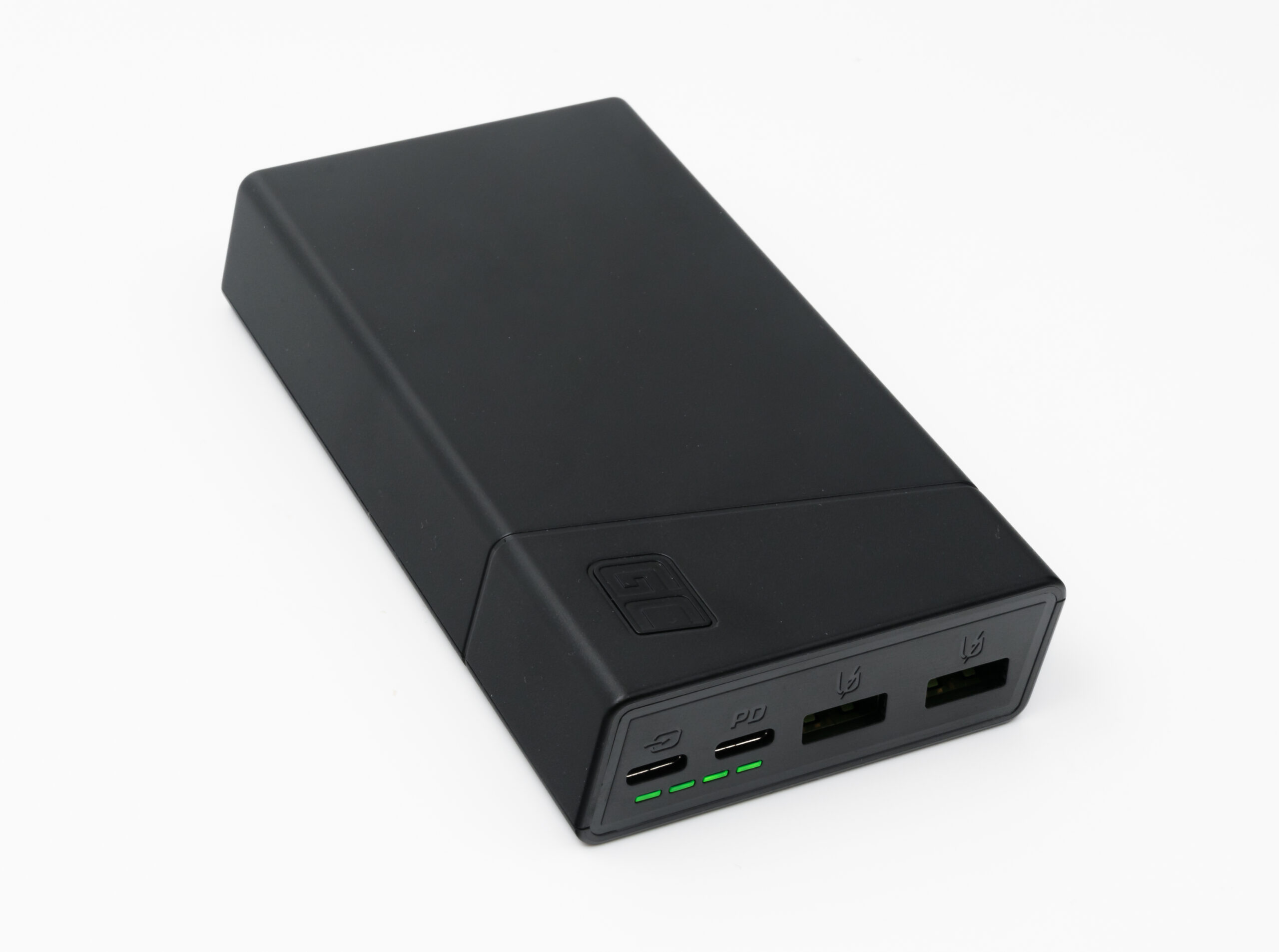
Run the arithmetic and the boundary turns into a number you can recognise on a shelf. At the 3.7V cell voltage most makers use, a 10,000mAh bank is 37Wh and a 20,000mAh bank is 74Wh. You reach 100Wh somewhere around 27,000mAh, and the 160Wh ceiling somewhere around 43,000mAh. Since the bulk of what is sold sits near 20,000mAh, the typical traveller is not close to either threshold. Most of the worry attached to this rule evaporates the moment someone turns the bank over and reads it.
The awkward case is the unit you cannot read: worn smooth by years in a bag, label peeled off, or a no-name product that never printed a voltage in the first place. Then the decision belongs to airline staff or the screening officer at the airport, and if nobody can establish the rating it does not fly. Carrying a bank with illegible markings on an international trip is a gamble with no upside, and I would leave it at home.
The full picture: what may be carried and what may be checked
The split that matters runs between a battery sealed inside a device and a battery you can hold on its own. A laptop or a camera may go in the suitcase with its battery inside it. Take that battery out, or bring a power bank, and it has to travel in the cabin. This is the distinction people get wrong while packing, because nothing about the object changes — only whether it is currently part of a machine.
Spare batteries removed from a device are counted in a separate allowance from power banks. The ministry sets out the combinations like this.
Read down the columns and one rule explains the whole grid: only cells above 100Wh compete for the two-unit allowance. Anything at or below 100Wh is unlimited in number. For a photographer carrying five spare bodies’ worth of camera batteries, that single line is the whole answer. The people squeezed by the April 2026 change are at the other end — cinema camera rigs and drone packs in the 100Wh-plus band, where two units is now the hard stop.
Where people trip up
No charging in flight, so the battery you land with is the battery you have
This is the part of the 24 April 2026 change that alters how a travel day actually feels. Charging a power bank from the aircraft’s seat power is prohibited, and so is running a phone off the power bank while airborne. If you want a phone topped up during the flight, it has to be plugged straight into the seat outlet.
Long overnight sectors are where this bites. Ten hours on an aircraft with no seat power, a couple of films watched, and you walk off with whatever is left. If the first hour after landing involves a map and a ride-hailing app, either start the flight at 100 per cent or rearrange the arrival so you reach a socket quickly. Hunting for a charging point in an arrivals hall takes an amount of time nobody can predict.
The mAh figure on the box does not tell you the watt-hours
The regulation is written in watt-hours, not milliamp-hours. Two banks both marked 20,000mAh land on different numbers depending on cell voltage: 72Wh at 3.6V, 77Wh at 3.85V. Where no voltage is printed, there is nothing to multiply by, which is exactly why unlabelled units end up being refused.
The second trap is the laptop-class bank. Products sold as laptop-capable run past 25,000mAh, which puts them into the 100Wh band at 3.7V. Within Japan they are still fine, because the limit is 160Wh and two units. On a foreign carrier, crossing 100Wh is often the point at which advance approval is required, so a bank of that size is a reason to read the airline’s own notice before you pack rather than at the gate.
Putting it in the overhead bin breaks the rule
The conditions do not stop once you are through security. A power bank has to stay out of the overhead bin and in the seat pocket or somewhere else within arm’s reach. The reason is plain: smoke or heat has to be noticed immediately. Lift the whole rucksack into the bin and the battery inside it is now somewhere you cannot get to without asking a cabin crew member to let you stand up.
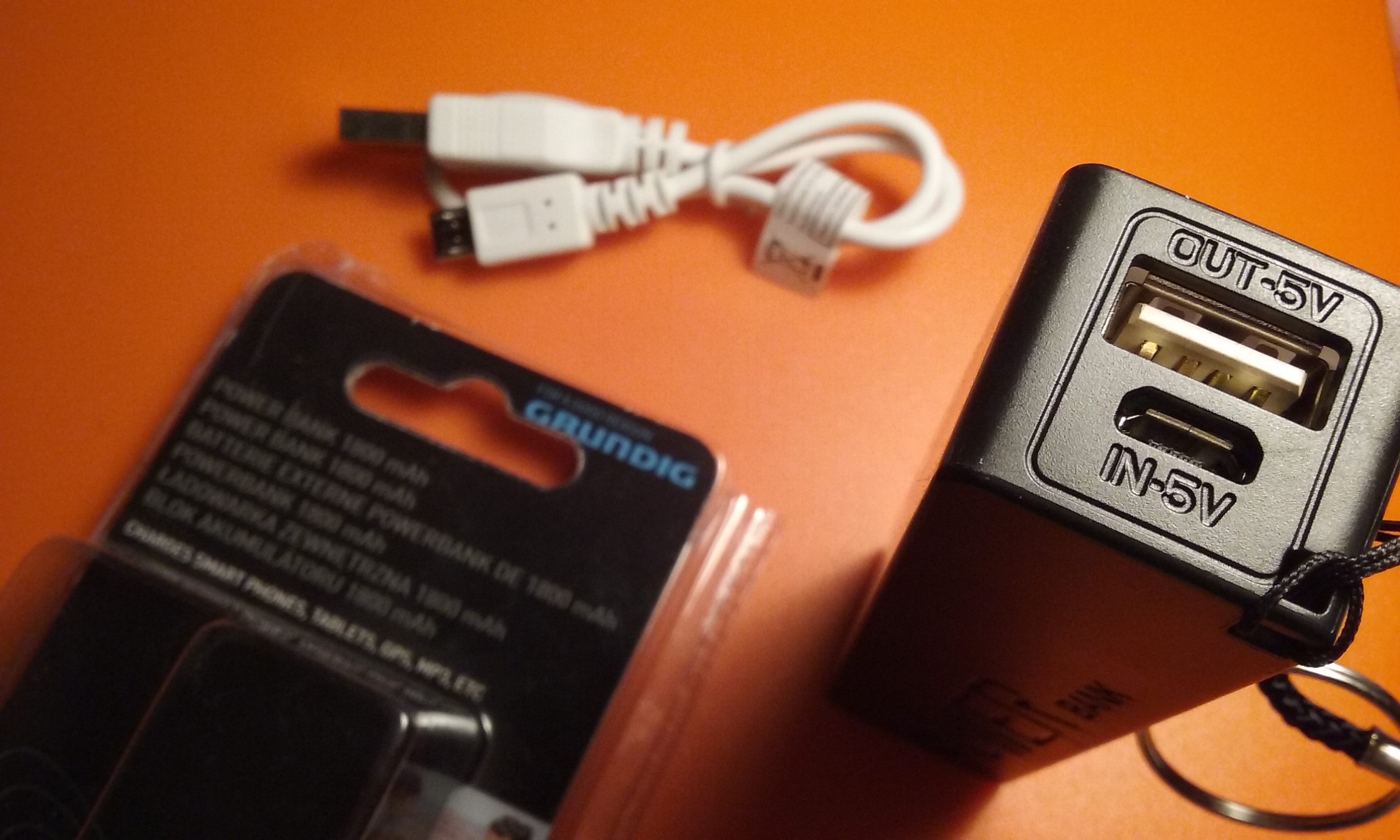
Packing the banks into one small pouch, and keeping that pouch where it can come straight out into the seat pocket, removes the business of unpacking a bag at the gate. It is the same principle as keeping a budget airline carry-on under 7kg: whatever you need during the flight lives on the outside.
What happens if you are over the limit
If screening turns up a bank above 160Wh, or a third one, you surrender it there. Some airports keep a disposal bin for exactly this. What you cannot do is move it into checked baggage instead, because checked baggage is closed to power banks at any capacity.
Posting it home is a narrower escape than it sounds. The ministry warns that a power bank refused at the cabin door may also be barred from travelling as air cargo, and that the carrier has to be told what is in the parcel. Sealing one into a box without declaring it is not an option.
Five prohibitions carry legal weight here: no power banks in checked baggage, nothing above 160Wh in the cabin, terminals protected against short circuit, no more than two units, and no charging in either direction during the flight. The ministry states that breaching them can attract penalties under the Civil Aeronautics Act. This has stopped being the kind of rule that not knowing about excuses.
There is a second lever, which is spending less. A phone abroad drains fastest when it is hunting for a network it cannot find, and when it is acting as a hotspot for someone else’s tablet. How you arrange data changes how long a charge lasts, so it is worth settling alongside the battery question — the options are compared in our piece on eSIM, pocket Wi-Fi and roaming. For charging at the hotel end, the difference between a plug adapter and a voltage converter is worth settling before you buy anything, because the wrong one is useless on arrival.
Common questions: counting, missing labels, using it in the air
Is the limit of two per person or per family?
Per person. The ministry’s wording is that up to two power banks, each 160Wh or less, may be brought into the cabin, counted per passenger. A family of four is therefore allowed eight between them. Putting somebody else’s banks in a bag you are not personally carrying is where you invite questions at screening.
What if neither the watt-hours nor the voltage is printed on it?
Then it becomes a question for airline staff or the screening officer at the airport. Narita International Airport tells passengers to ask a member of staff about any lithium-ion battery whose watt-hour rating is unclear. Since an unverifiable rating means it does not travel, assume the worst and bring a bank you can read instead.
Is there any way left to charge a phone during the flight?
Yes, from the seat outlet directly. What the rule closes off is the route through a power bank: charging the bank from aircraft power, and running a device from the bank. On an aircraft with no seat power, there is now no way to add charge in flight at all.
- Ministry of Land, Infrastructure, Transport and Tourism — new rules on carrying power banks into the cabin↗Checked on 2026-09-14
- Same, annex 1: notice to passengers on carrying power banks (PDF)↗Checked on 2026-09-14
- Narita International Airport — carrying batteries on board↗Checked on 2026-09-14
- Japan Airlines — change to the number of power banks allowed and to in-flight charging↗Checked on 2026-09-14
Source: the reference block above / Photos: Jacek Halicki, CC BY-SA 4.0 and WrS.tm.pl, Public domain (Wikimedia Commons) / Checked on 2026-09-14
Other sales ending soon




 4 days leftuntil Oct 24Air Busan Takamatsu-Busan Coupon: Up to 9,000 Yen Off Until October 24
 5 days leftuntil Oct 25JAL Hong Kong Campaign: Tokyo–Hong Kong Round Trip from 75,800 Yen (until 25 Oct)
 11 days leftuntil Oct 31Jin Air Kobe–Seoul: 5,000 yen off a round trip with code KTOUKB1, until 31 October
 11 days leftuntil Oct 31Jin Air to Busan: 4,000 yen off a round trip with code KTOPUS, first 300 only