Tottori Sand Dunes and Kurayoshi Shirakabe Storehouses in 1 Day | A Model Itinerary Along the Blue Sea of Japan
AuthorMIRUTOBE editors
Table of Contents6 items
Total for Two Travelers (Excluding Long-Distance Flights & Transport): 21,480 yen (10,740 yen per person; breakdown and confirmation dates in the cost table at the end).
This 1-day day-trip model itinerary takes you through the Kurayoshi Shirakabe Storehouse District in central Tottori Prefecture and the expansive Tottori Sand Dunes along the Sea of Japan in the east, relying entirely on public transportation (JR limited express trains and local buses). It is structured to minimize transit waste: explore the preserved merchant streets of Kurayoshi first thing in the morning, catch the Limited Express Super Matzukaze to Tottori in the afternoon, and walk the dramatic sand dunes and The Sand Museum before evening. Below, you will find a realistic timetable requiring no rental car, alongside a verified breakdown of local transport fares, admission fees, and meal expenses for two adults.
When riding trains and buses in the San’in region, keep in mind the limits of IC transit cards. While ICOA and major cards can be used on select lines, certain regional routes and local bus lines require cash or paper tickets. Purchasing your train tickets and limited express seat vouchers together at the ticket vending machines at Kurayoshi Station or Tottori Station will make your travel remarkably smooth.
Itinerary Table
| Time | Main Route & Key Stops | Transportation & Duration |
|---|---|---|
| Morning (09:00–12:30) | Arrive at Kurayoshi Station → Stroll Kurayoshi Shirakabe Storehouses & Utsubuki-Tamagawa → Lunch with local beef bone ramen in the Akagawara historic area | Local bus from Kurayoshi Station (approx. 12 min), followed by walking around the district |
| Afternoon (13:00–16:30) | Transfer from Kurayoshi Station to Tottori Station by limited express → Local bus to Tottori Sand Dunes → Umanose ridge & Sea of Japan viewpoints → The Sand Museum | JR Limited Express Super Matzukaze (approx. 28 min) + Local bus (approx. 22 min) |
| Evening & Night (17:00–19:30) | Return from Tottori Sand Dunes to Tottori Station → Coffee break at Sunaba Coffee → Seafood dinner around the station → Return journey | Local bus (approx. 22 min), walking around Tottori Station area |
DAY 1 Kurayoshi and Tottori Sand Dunes — From White-Walled Storehouses to the Sea of Japan
Route Intent: Prioritizing a calm morning stroll through the historic Kurayoshi Shirakabe Storehouses before tour crowds arrive, followed by an afternoon visit to the Tottori Sand Dunes when the descending sunlight creates dramatic wind ripples and shadows across the sand slopes.
Morning: Strolling the Kurayoshi Shirakabe Storehouses and Utsubuki-Tamagawa
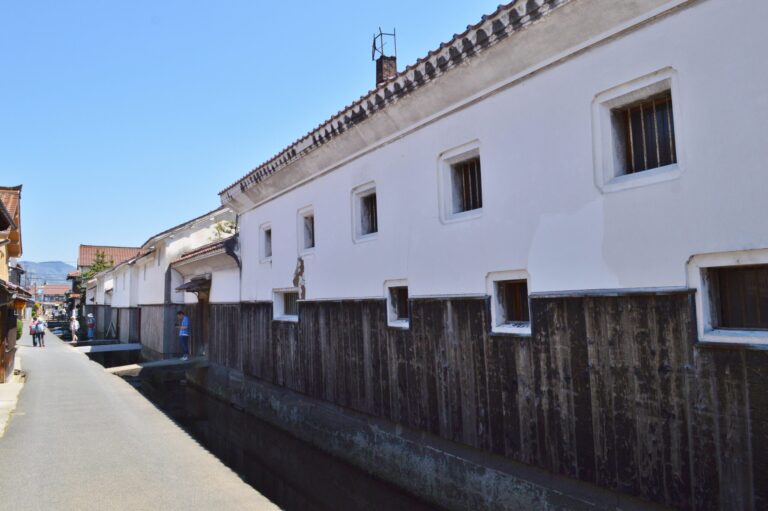
Begin your morning by arriving at JR Kurayoshi Station, boarding a local bus from bus stop #2 on the South Exit, and heading toward the Shirakabe Storehouse District (get off at Akagawara/Shirakabe Dozogun). The white-walled storehouses (Shirakabe Dozo) along the Tamagawa River date from the Edo and Meiji periods. They feature distinctive red Sekishu roof tiles (Akagawara) and black-cedar clapboard sidings on their lower walls, creating a remarkably atmospheric townscape. Originally built as sake breweries and soy sauce factories, many of these heritage storehouses have been carefully revitalized as craft studios, galleries, and cafes while retaining their historic wooden structural charm.
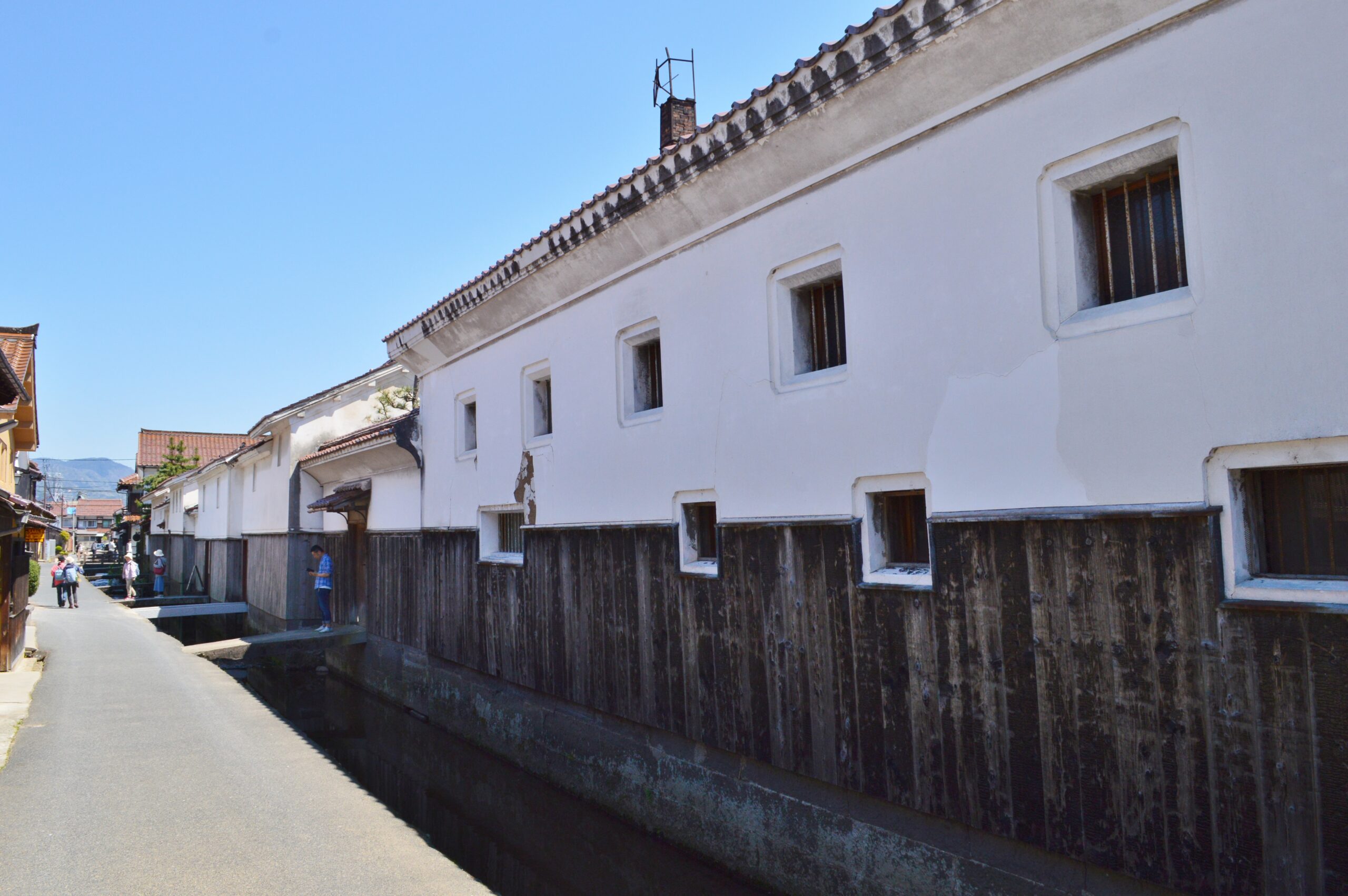
Wandering alongside the crystal-clear Tamagawa River, where stone bridges cross the water and colorful carp swim among gentle currents, offers a peaceful encounter with traditional Japanese craftsmanship. Highlights include Akagawara Building No. 1 (a former warehouse transformed into a specialty shop selling Kurayoshi Kasuri textiles and San’in handicrafts) and Akagawara Building No. 2 (a workshop where visitors can view traditional Kurayoshi Hakota wooden dolls). Strolling the stone-paved alleys away from the main streets reveals quiet sake warehouses and nostalgic stone staircases, making the district ideal for calm exploration.
For lunch, savor Kurayoshi’s signature local soul food: “Gyukotsu Ramen” (beef bone broth ramen). Unlike typical Japanese pork bone (tonkotsu) or chicken-based broths, this regional specialty uses an aromatic broth simmered slowly from beef marrow bones. It yields an astonishingly clear, golden soup characterized by subtle sweetness and a rich, fragrant beef savor. Enjoying a bowl paired with local condiments at an authentic shop in the Akagawara area will replenish your energy for the afternoon journey.
Afternoon: The Blue Sea of Japan and Tottori Sand Dunes
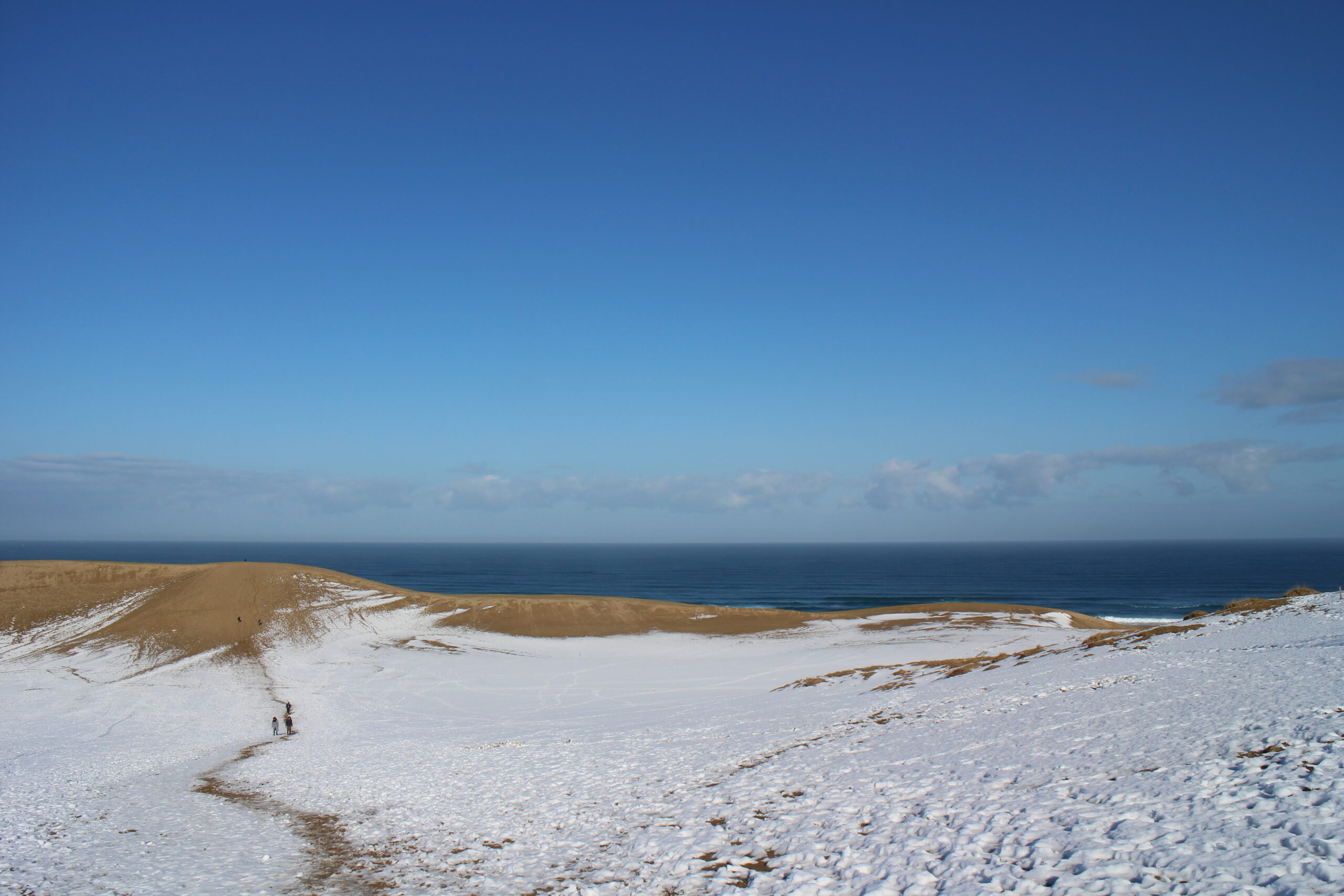
Take the local bus back to JR Kurayoshi Station, then board the JR Limited Express Super Matzukaze bound for Tottori. In just about 28 minutes, you will arrive at JR Tottori Station. From the bus terminal outside Tottori Station North Exit, hop on the local bus bound for the Tottori Sand Dunes (approx. 22 minutes to the main Tottori Sakyu bus stop). As you step off the bus, the vast coastal dune landscape opens before you—stretching approximately 16 kilometers east to west and 2.4 kilometers north to south along the Japan Sea coastline.
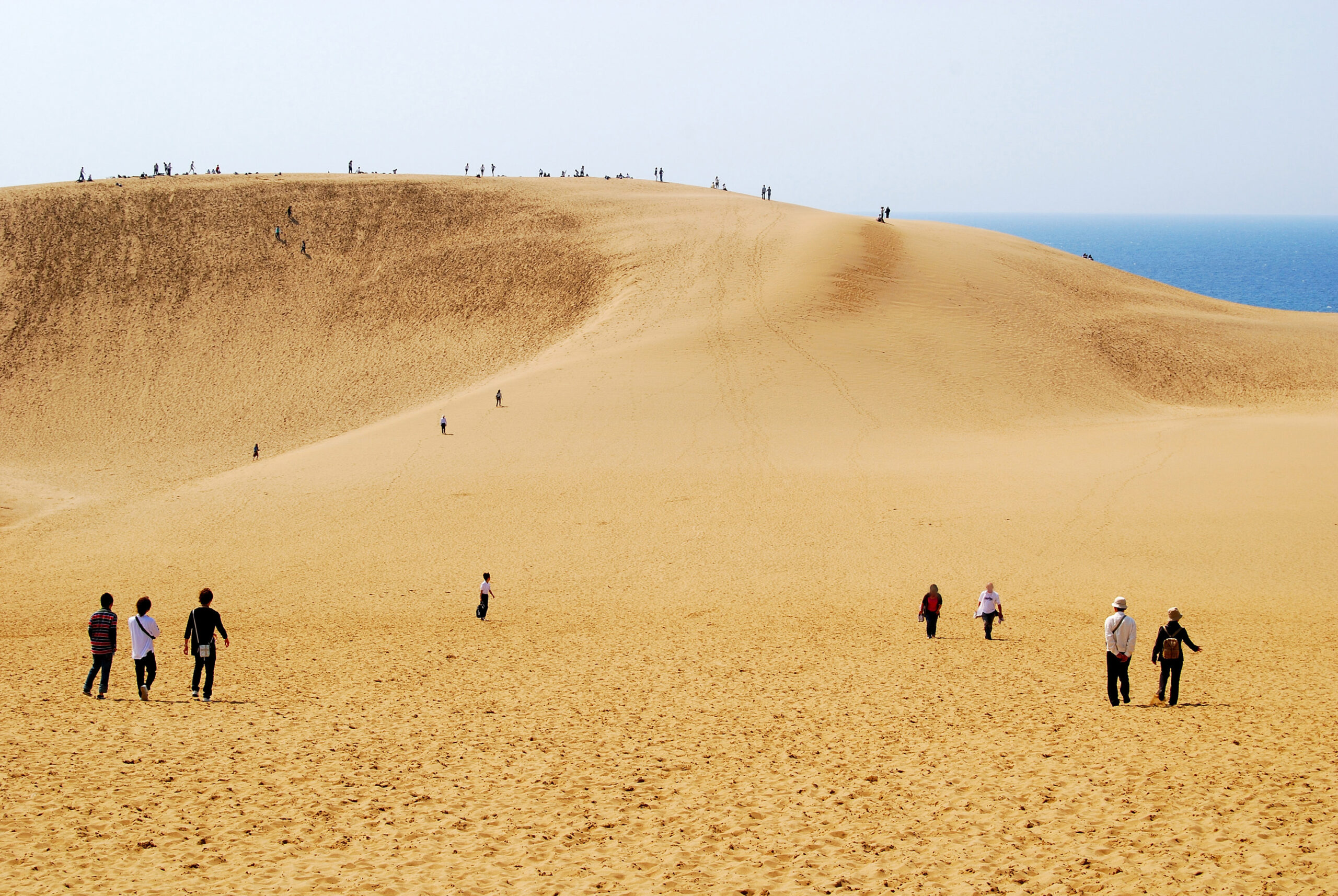
The primary highlight of the dunes is climbing the iconic “Umanose” (Horse’s Back), a massive natural sand ridge standing roughly 47 meters tall. Ascending the steep slope through the soft, fine sand is an invigorating physical challenge, but reaching the summit rewards you with an awe-inspiring 360-degree panorama: rolling gold-toned dunes on one side and the deep cobalt waters of the Sea of Japan breaking against the shore on the other. Depending on the coastal breeze, you may also observe exquisite wind ripple patterns (famon) etched naturally into the crests of the sand.
To fully enjoy your walk across the sand dunes, proper footwear and sun preparation are essential. The sand is extremely fine, meaning grains will easily penetrate ordinary sneakers. Rental boots and sand sandals are available at the rest house and visitor center near the entrance, which are highly recommended if you want to keep your shoes clean. During midsummer or on clear sunny afternoons, sand surface temperatures can reach nearly 50 degrees Celsius, so walking barefoot carries a serious burn risk and should be avoided. As there is zero shade within the dunes, carrying a hat, UV protection, and a water bottle is an absolute safety prerequisite.
Evening: The Sand Museum and Around Tottori Station
After experiencing the dunes, walk about 5 minutes east from the main entrance to reach “The Sand Museum.” Established in 2006 as an outdoor exhibition and upgraded in 2012 to become the world’s first all-weather indoor sand sculpture museum, it operates under the overarching concept of “Travel Around the World in Sand.” Each year, a specific country, region, or historic era is chosen, inviting world-class sand sculptors from across the globe to craft massive, awe-inspiring artistic masterpieces.
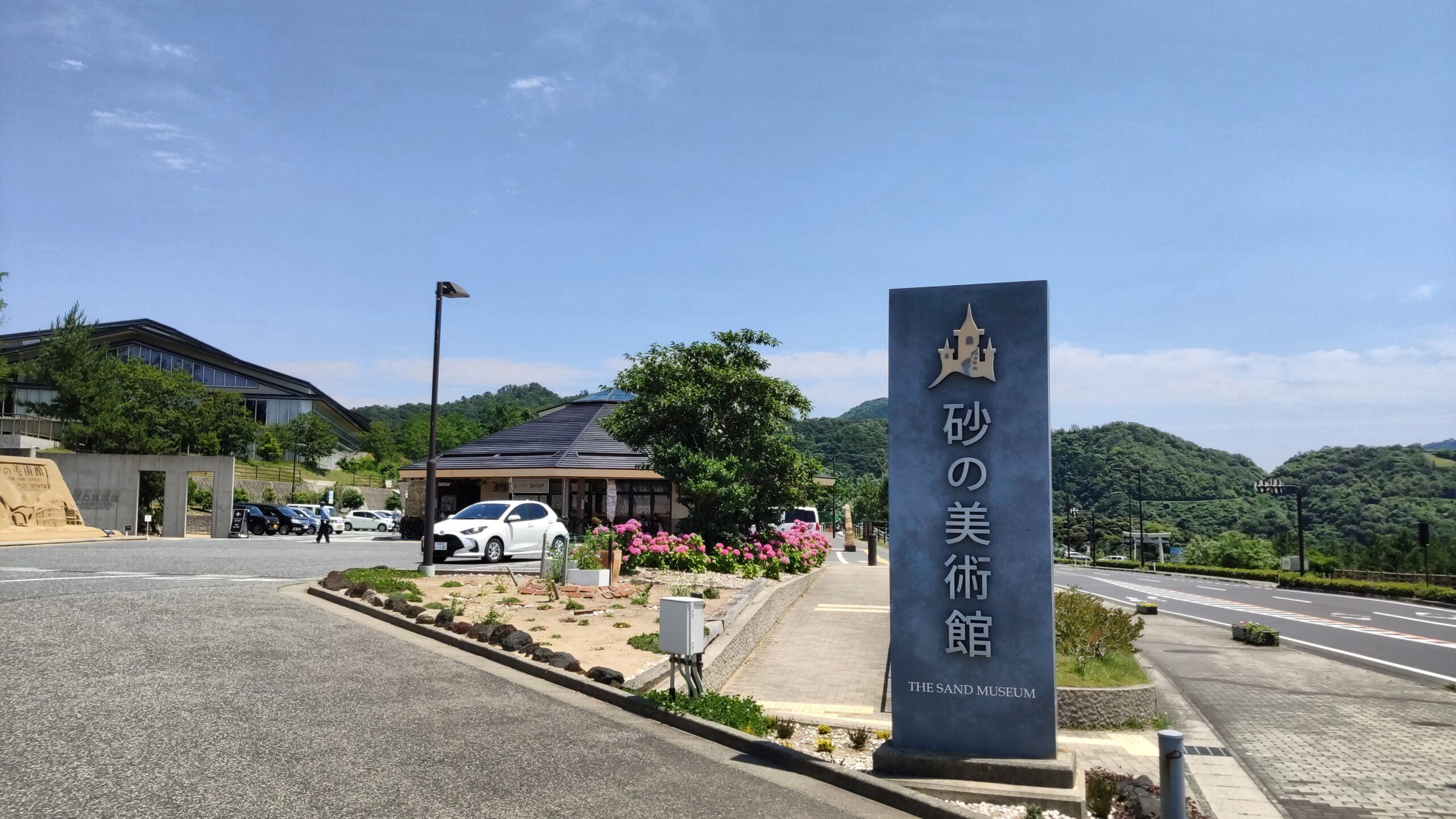
These breathtaking sand sculptures are crafted without any adhesives or chemical setting agents—artists pack only sand and water from the Tottori dunes into wooden frames, compact them tightly, and carve every detail using spatulas and precision knives. The delicate folds of clothing, lifelike human facial expressions, and grand architectural reliefs are reproduced with astounding precision. At the conclusion of each annual exhibition period, every sculpture is returned to raw sand, earning this venue international acclaim as a home of ephemeral, once-in-a-lifetime art. The indoor hall is climate-controlled, allowing visitors to admire the detailed textures and lighting in complete comfort.
After touring The Sand Museum, board the local bus back to Tottori Station. In the late afternoon, make a relaxing stop at “Sunaba Coffee,” the famous homegrown cafe founded in response to a witty remark by Tottori’s former governor: “We might not have a Starbucks, but we have Japan’s best sand dune (sunaba)!” Today, it is an iconic local institution. Savoring their siphon-brewed Taisho Blend coffee, a specialty hot sandwich with local mosa-ebi shrimp, or a rich caramel Vienna coffee provides the perfect recharge.
For dinner, head to one of the renowned seafood izakayas or regional restaurants surrounding Tottori Station that source their catches directly from nearby Karo Port. Depending on the season, you can feast on prized Matsuba crab in winter, succulent sweet raw mosa-ebi shrimp (a rare delicacy caught from autumn to spring), grilled sandfish (hatahata), or fresh shiro-ika squid. Pairing these ocean delicacies with celebrated local sake brands such as Chiyomusubi, Hiokizakura, or Takaisami caps off an unforgettable day trip before boarding your return train or connecting flight.
Itinerary Variations
Rainy-Day Alternatives
Weather in the San’in region can be unpredictable, famously captured in the old local proverb: “Never forget your umbrella even if you forget your bento.” Having a practical bad-weather alternative ready ensures a rewarding trip even under heavy rain or high winds.
If rain strikes, shorten the outdoor walk on the sand dunes to a brief view from the observation deck, and extend your time inside the indoor Sand Museum to a leisurely 90 minutes. The museum’s dome provides an entirely sheltered, comfortable experience. In Kurayoshi, you can similarly shorten outdoor walking and visit the “Enkei Gekijo Kurayoshi Figure Museum”—a unique indoor museum housed in Japan’s oldest surviving circular schoolhouse, displaying hundreds of masterwork anime, sci-fi, and Kaiyodo figures. In Tottori City, indoor cultural facilities like the Warabekan Toy Museum or the historic French Renaissance-style Jinpukaku residence (subject to ongoing restoration schedules) offer rich indoor sightseeing options.
Adjustments If the Bus Is Delayed by 15+ Minutes
During peak holiday travel seasons and long weekends, localized traffic bottlenecks can occur around the sand dunes and major Tottori City intersections. If your route bus is delayed by more than 15 minutes, attempting to rush through every planned stop may jeopardize your evening connection to your limited express train or flight.
When bus delays arise, eliminate optional stops like the Sakyu Center observation lift and extended souvenir shopping, concentrating solely on the main dune basin and The Sand Museum. This easily reclaims around 30 minutes in your overall schedule. In public transit travel, prioritizing which spots to scale back relative to your final departure time is the golden rule for stress-free exploration.
Additionally, during the train journey from Kurayoshi to Tottori, travelers with extra time might consider stopping off at Hamamura Onsen or the Aoya Kamijichi Archaeological Site along the San’in Main Line. The latter is renowned as an “underground Yayoi museum,” having yielded remarkably preserved wooden artifacts and human skeletal remains from the ancient Yayoi period. In the event of substantial bus disruptions around the dunes, taking a taxi directly from the dunes back to Tottori Station (approx. 15 minutes, 2,500 to 3,000 yen) serves as an effective contingency backup.
When You’re Tired
The climb up the Umanose ridge in the afternoon takes more out of you than flat ground, because the sand gives way under every step, and it comes after 90 to 120 minutes on foot in Kurayoshi. If you are flagging, skip the ridge, look out over the sand from the entrance of the dunes and move on to The Sand Museum. The exhibits are indoors, so the weather does not matter. The temperature inside is close to that outdoors, so add a layer in the cold months.
On a day when even that is too much, skip the wait for the bus, take a taxi back to Tottori Station, leave out Sunaba Coffee and have dinner near the station. According to the museum’s FAQ, the taxi ride from the museum to the station takes about 15 minutes. A taxi is not always waiting nearby, but one called by phone usually arrives in 10 to 15 minutes, so a call shortly before you leave means no wait.
Why We Excluded Misasa Onsen from the Day-Trip Course
Misasa Onsen, celebrated for having one of the world’s highest concentrations of radioactive radium mineral springs, is an iconic hot spring destination in central Tottori often paired with Kurayoshi. With historic multi-story wooden ryokan lining the clean Misasa River, open-air riverbank baths (Kawaraburo), and beloved public bathhouses like Kabuyu, it holds immense appeal for onsen enthusiasts. However, for this specific 1-day itinerary connecting the Shirakabe Storehouses and the Tottori Sand Dunes, we deliberately chose to omit Misasa Onsen.
The decisive reason lies in transfer times and bus connection logistics. Traveling between JR Kurayoshi Station and Misasa Onsen requires roughly 20 to 25 minutes each way by local bus. Even traveling directly between the Shirakabe Storehouses and Misasa Onsen, factoring in bus wait times adds over an hour of transit. Adding the time needed for a proper day-use bath and street stroll (at least 60 to 90 minutes) pushes your central Tottori stay far past noon. Consequently, arrival at the Tottori Sand Dunes would be pushed into late twilight, missing the last entry for The Sand Museum (16:30 cutoff) or cutting dune exploration to under 30 minutes. Rather than rushing through world-class natural scenery, the best way to enjoy Misasa Onsen’s therapeutic waters and tranquil atmosphere is to make it the centerpiece of a dedicated 2-day, 1-night journey.
How to Choose Where to Stay
While this itinerary is designed to finish cleanly within a single day, here is an overview of top accommodation hubs if you wish to add an overnight stay before or after your trip:
Around Tottori Station Area (Focus on convenience and evening dining):
The central transit hub where JR San’in Main Line and Inbi Line express trains converge. Business hotels and city hotels are clustered within walking distance, surrounded by late-night seafood izakayas and regional dining spots. Ideal for travelers prioritizing transit efficiency.
Budget guide: approx. 12,000 to 20,000 yen per room (2 adults).
Misasa Onsen & Kurayoshi Area (Focus on historic atmosphere and hot springs):
A storied onsen village with over 850 years of heritage. Prestigious ryokan line the Misasa River, offering restorative radon-rich thermal baths and seasonal San’in kaiseki banquets. Perfect for travelers seeking peaceful morning walks through the quiet Shirakabe Storehouses.
Budget guide: approx. 28,000 to 50,000 yen per room for two (including dinner and breakfast).
For verified travel timetables and budget planning in nearby regions, see our Hiroshima to Miyajima Day Trip Model Course or our standard route guide in the Kanazawa 2-Day 1-Night Model Plan. For analysis on timing your domestic transport purchases, refer to our breakdown on How Flights Get Cheaper by the Day You Fly.
Staying near Tottori Station offers the significant advantage of diverse onward travel options next morning. Frequent Limited Express Super Hakuto trains provide direct links to Kyoto and Osaka, while the Limited Express Inaba connects smoothly to Okayama and the Sanyo Shinkansen bullet train network. Inside Tottori Station, the Omiyage Rakichi gift shop offers Tottori’s finest confectioneries, including Inaba no Shirousagi pastries, 20th Century pear jellies, and artisan tofu-chikuwa fish cakes. Conversely, an overnight stay at Misasa Onsen allows you to wander along the riverside in a traditional yukata robe and wooden geta clogs after check-in, hopping between atmospheric public footbaths. Choose the area that best matches your travel style and next destination.
Trip Costs and Budget Breakdown
Here is the full breakdown of local on-the-ground expenses required for two adult travelers following this model itinerary. Long-distance transport from major cities to Kurayoshi or Tottori (such as Shinkansen or domestic airfares) varies widely depending on your departure point and is excluded, providing an accurate total of actual local train express tickets, route bus fares, admission tickets, and dining expenses incurred on site.
| Expense Item & Payee | Unit / Breakdown | Amount for 2 Adults | Notes & Calculation Basis |
|---|---|---|---|
| JR San’in Main Line (Tottori to Kurayoshi) | Limited Express Super Matzukaze non-reserved seats (2 adults round trip) | 4,760 yen | One-way base fare 680 yen + express surcharge 510 yen = 1,190 yen x 4 rides |
| Nihon Kotsu Local Bus (Kurayoshi Area) | Kurayoshi Station to Akagawara/Shirakabe Dozo (round trip for 2) | 1,040 yen | 260 yen one-way per adult x 4 rides |
| Nihon Kotsu Local Bus (Tottori Area) | Tottori Station to Tottori Sand Dunes (round trip for 2) | 1,560 yen | 390 yen one-way per adult x 4 rides |
| The Sand Museum Admission | General adult admission (2 adults) | 1,600 yen | 800 yen per adult x 2 |
| Lunch in Kurayoshi (Akagawara) | Local beef bone ramen & side dishes (2 adults) | 2,500 yen | Approx. 1,250 yen per person including toppings and sides |
| Cafe Break (Sunaba Coffee) | Specialty siphon coffee & snacks (2 adults) | 2,020 yen | Taisho blend coffee (approx. 510 yen) + snacks for two |
| Dinner around Tottori Station | Seasonal San’in seafood dinner & local sake (2 adults) | 8,000 yen | Fresh seafood sashimi, grilled seasonal fish, and local sake pairing for two |
All transport fares and admission fees in the table above are compiled based on officially announced rates as of the confirmation date: 2026-09-21.
To optimize local travel costs further, some regional 3-day unlimited bus passes are sold for Tottori City. However, for a single-day itinerary combining one round trip to the Tottori Sand Dunes with train transfers to Kurayoshi as presented here, paying individual standard fares turns out to be cheaper than purchasing multi-day passes. Regarding JR train travel, utilizing non-reserved limited express seating (510 yen surcharge) saves approximately 530 yen per person (1,060 yen for two) compared to standard reserved seating (1,040 yen surcharge during regular seasons). Allocating these saved funds toward fresh coastal seafood or souvenir confections will enhance your overall journey.
Source: JR West Official Fare & Surcharge Tables, Nihon Kotsu Co., Ltd. Route Bus Fare Tables, The Sand Museum Official Visitor Guide, Kurayoshi Tourism & MICE Association Official Guide. Confirmation Date: 2026-09-21.
Other sales ending soon
 4 days leftuntil Oct 24Air Busan Takamatsu-Busan Coupon: Up to 9,000 Yen Off Until October 24
 5 days leftuntil Oct 25JAL Hong Kong Campaign: Tokyo–Hong Kong Round Trip from 75,800 Yen (until 25 Oct)
 11 days leftuntil Oct 31Jin Air Kobe–Seoul: 5,000 yen off a round trip with code KTOUKB1, until 31 October
 11 days leftuntil Oct 31Jin Air to Busan: 4,000 yen off a round trip with code KTOPUS, first 300 only