How Much the Accommodation Tax Adds per Night: Five Cities Recalculated on the Same Terms
AuthorMIRUTOBE editors
Table of Contents6 items
Japan’s lodging tax is not a percentage of the room rate. It steps up in bands, so the same JPY 15,000 room is taxed anywhere from nothing to JPY 400 depending on the city, and what is judged is the room-only rate before consumption tax.
This is a local tax levied by individual Japanese municipalities, charged per person per night and usually collected at the property. Five cities are compared here on identical terms, in yen.
Check first: which band your booking falls into
- You know whether the municipality you are staying in levies a lodging tax at all
- You know the room-only equivalent of your rate, before consumption tax
- That figure sits at least JPY 1,000 away from a band boundary
- You have looked for a lodging tax line in the booking site’s breakdown
- You have multiplied it out by the number of people and nights
Only bookings that fail the third line — the ones sitting close to a boundary — actually change their tax depending on which room you take. In Kyoto, moving a room-only rate of JPY 50,000 down to JPY 49,999 takes JPY 3,000 off per person per night. One yen doing that much is what a banded design produces, as opposed to a rate.
The second line catches more people, because the tax is not assessed on the total. The base is the room-only charge and it excludes consumption tax and anything you ate. Kanazawa states outright that the accommodation charge is the room-only price excluding food, drink and taxes including consumption tax, and Tokyo includes the room charge and the service charge on it while excluding service charges for meals, parking and spa treatments.
The full picture: room-only rate against five cities
All figures are per person per night against the room-only rate before consumption tax. Kyoto’s are the rates in force from 1 March 2026, Osaka’s from 1 September 2025 and Kanazawa’s from October 2024. Nagoya does not levy a lodging tax. The official pages of the Tokyo Metropolitan Tax Bureau, the City of Kyoto, Osaka Prefecture and the City of Kanazawa were checked on 2026-08-25.
Read the table downwards and each city’s character shows. Tokyo exempts everything below JPY 10,000, then goes to 100 and 200, and stops at 200 — take an expensive room and it is still 200. Kyoto is the mirror image: no exemption threshold, but it climbs steeply, reaching 4,000 at JPY 50,000 and 10,000 at JPY 100,000 and above. Osaka and Kanazawa sit between the two, sharing an exemption at JPY 5,000 and a band at JPY 20,000. Expressed against the room rate, a JPY 50,000 night carries 8% in Kyoto and 0.4% in Tokyo.
Kyoto’s rates changed as recently as 1 March 2026, and what moved was the middle and upper part of the scale. From JPY 20,000 to under 50,000 went from 500 to 1,000, and from JPY 50,000 to under 100,000 went from 1,000 to 4,000. In proportional terms that is a rise of 300% on the JPY 50,000 band and 100% on the JPY 20,000 band, while the 200 below JPY 6,000 and the 10,000 above JPY 100,000 were left alone. On an itinerary using the upper grades of a ryokan or hotel, the same room as last year now carries JPY 3,000 more tax. Which municipalities have introduced one, and when each took effect, is listed in the table of every municipality with a rate and a threshold.
Five steps to your own figure
Four people for three nights in Kyoto means JPY 4,800 that may fall due at the desk, so leaving that much in cash keeps the checkout moving. The mismatch where you thought the card had covered everything and are then asked for cash comes from not having read that one line.
Where people trip up
One yen at a boundary moves the tax by JPY 3,000
Bring a Kyoto room-only rate of JPY 50,000 down to JPY 49,999 and the tax per person per night falls from JPY 4,000 to JPY 1,000. At the JPY 20,000 band it goes from 1,000 to 400, a move of 600. Kanazawa’s JPY 20,000 band goes from 500 to 200, crossing the JPY 5,000 exemption in Osaka or Kanazawa turns 200 into nothing, and Tokyo’s JPY 10,000 threshold moves 100 on a single yen. Ranked by the sum involved, Kyoto’s JPY 50,000 band stands well clear of the rest.
Dropping a hotel to cross a band breaks something else first
Travel time and the quality of breakfast go before the few hundred yen of tax you save. If the room-only rate falls by several thousand and the band changes as a consequence, fine; hunting for a room one yen below a boundary is not a good use of an evening. Bringing the room rate itself down is an order of magnitude more effective, and aiming at a day when coupons are released does that — Rakuten Travel’s 48-hour windows are one example. What sits outside the advertised rate at the upper grades is covered in what a night’s quoted price does and does not include. Lodging tax is a way of reading the total, not a reason to choose a hotel.
The more of you there are, the more the city matters
Because it is charged per person per night, it scales with the product of people and nights. In the standard band, a room-only JPY 15,000 in Kyoto is JPY 400 for one person for one night, JPY 1,600 for two people over two nights, and JPY 4,800 for four people over three. The same conditions in Nagoya come to nothing. Against the cost of a whole trip it is a small sum, but at four people and up it stops being ignorable. The difference in the room rates themselves is orders of magnitude larger, though, so changing destination over the tax alone does not add up.
What if you are still choosing: the order to book in
By length of stay, the burden in the standard band looks like this. At a room-only JPY 15,000 per person, one night is JPY 400 in Kyoto and Osaka, JPY 200 in Tokyo and Kanazawa and nothing in Nagoya. Two nights doubles that to 800 and 400, three nights makes 1,200 and 600. The widest gap, at three nights, is JPY 1,200. Small change against a travel budget, but it is the part that lands at the desk rather than on the booking screen.
Check which band the room-only unit price falls into, and only look at the breakdown when it is near a boundary. That is the whole procedure. Do it the other way round, building upwards from the tax to choose a hotel, and you will spend an evening chasing a few hundred yen.
Where a hotel offers a room-only rate and a half-board rate side by side, comparing the two plans is the quickest way to separate the components. A higher total can still put the room-only part in a lower band, so an itemised booking is worth reading. How to build an itinerary around staying in Kyoto is in the two or three first days in Kyoto, and how a Kanazawa total is put together is in the Kanazawa two-day plan. In both, the room costs two orders of magnitude more than the tax, which is the argument for starting the budget with the room.
Common questions: when it is paid, half board, Tokyo’s revision
When do I actually pay the lodging tax?
In most municipalities, at the property. It is often not part of the total a booking site displays, and it is charged separately at check-in or check-out. If the breakdown on the booking screen has no lodging tax line, budget on the assumption that it will be added locally and the difference will not surprise you.
How is it calculated on a plan with dinner and breakfast?
The tax base is the room-only equivalent. Kanazawa specifies the room-only price excluding food, drink and taxes such as consumption tax, and Tokyo likewise excludes service charges on meals. So a total of JPY 20,000 with a room-only equivalent of JPY 12,000 is judged in the 12,000 band.
Is Tokyo’s tax about to change?
Yes. Tokyo plans to move to a percentage system at 3%, raising the exemption threshold to under JPY 13,000 per person per night. The published commencement date is 1 April 2027, so stays through the 2026 fiscal year remain on the present banded flat amounts.
- Tokyo Metropolitan Tax Bureau (lodging tax rates, tax base, planned revision) ↗Checked on 2026-08-25
- City of Kyoto (lodging tax, rates in force from 1 March 2026) ↗Checked on 2026-08-25
- Osaka Prefecture (lodging tax, rates in force from 1 September 2025) ↗Checked on 2026-08-25
- City of Kanazawa (lodging tax; the base is the room-only charge) ↗Checked on 2026-08-25
- Ministry of Internal Affairs and Communications — non-statutory taxes (where the lodging tax sits) ↗Checked on 2026-09-20
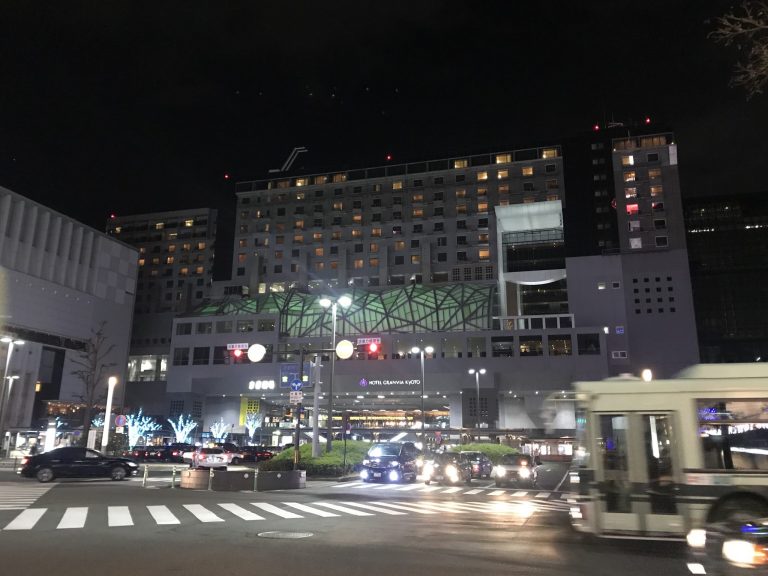
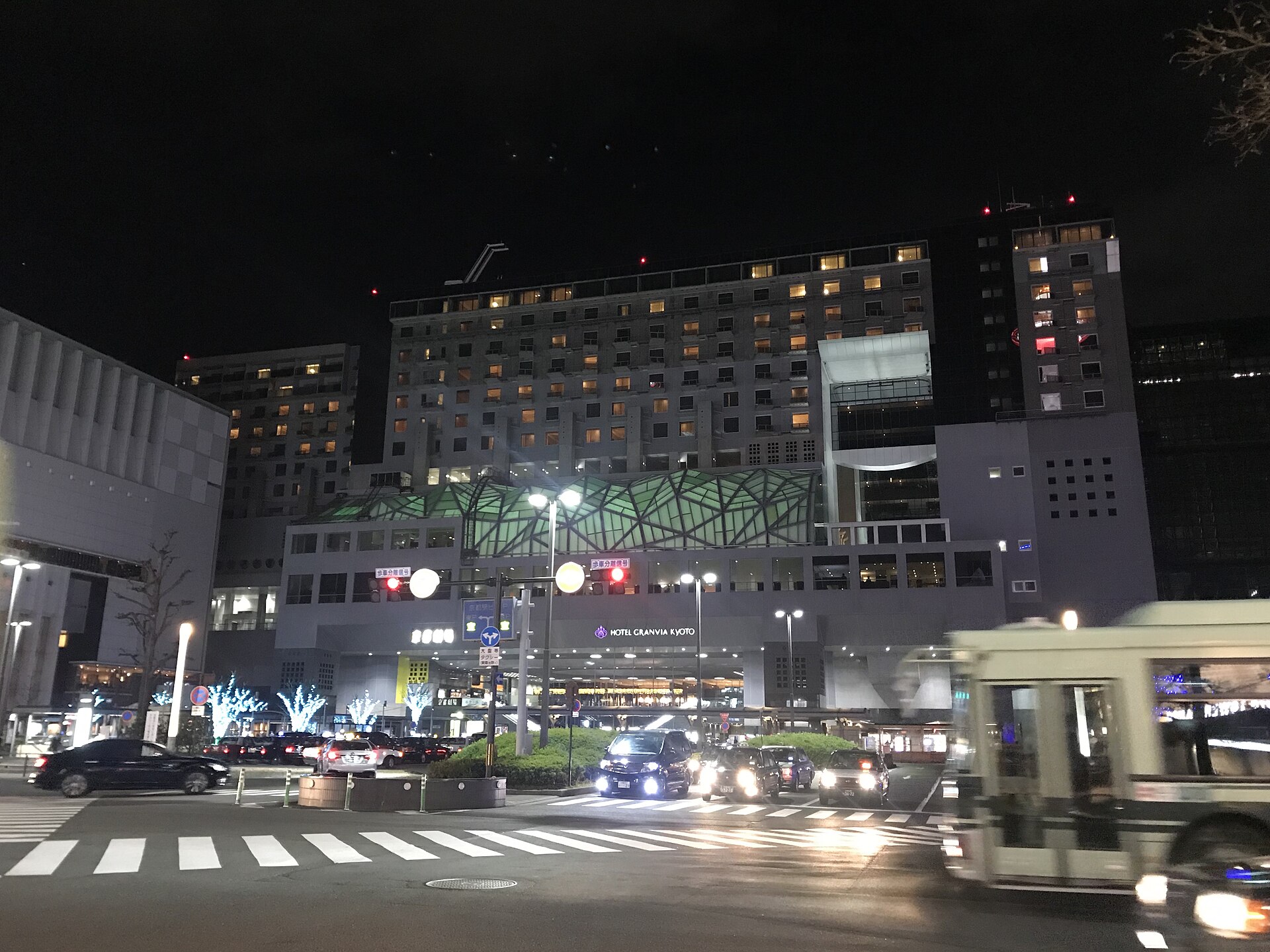
Source: the reference block above / Whether the displayed booking total includes the lodging tax varies from property to property / Photo: Soramimi, CC BY-SA 4.0 (Wikimedia Commons) / Checked on 2026-09-20
Other sales ending soon




 4 days leftuntil Oct 24Air Busan Takamatsu-Busan Coupon: Up to 9,000 Yen Off Until October 24
 5 days leftuntil Oct 25JAL Hong Kong Campaign: Tokyo–Hong Kong Round Trip from 75,800 Yen (until 25 Oct)
 11 days leftuntil Oct 31Jin Air Kobe–Seoul: 5,000 yen off a round trip with code KTOUKB1, until 31 October
 11 days leftuntil Oct 31Jin Air to Busan: 4,000 yen off a round trip with code KTOPUS, first 300 only