Kanazawa 2-Day, 1-Night Model Plan: The Standard Route for Around 40,000 Yen
AuthorMIRUTOBE editors
Table of Contents7 items
The standard two-day route through Kanazawa, with no car. Day one is one wide loop from Kenrokuen to the teahouse district; day two ends by midday with the market and the Ninja Temple. With the Shinkansen, a room and meals it lands in the JPY 40,000s a head.
Itinerary
DAY 1Work south from the north-west, then double back north-east to the teahouses
Why this order: Kenrokuen, the castle and the museum stand next to one another on foot. Finish those in one run, then move to the teahouse district on the Asano river to arrive around dusk.
Central Kanazawa joins Kenrokuen, Kanazawa Castle Park and the 21st Century Museum of Contemporary Art with the Ishikawa bridge and a single road. Splitting those three across different days means riding out from the station and back each time. Running them continuously from the first morning into the afternoon is what keeps the number of bus boardings down.
Morning: buying two JPY 320 tickets loses you JPY 140
Take the Hokuriku Shinkansen to Kanazawa. Out of the east exit and onto the loop bus, Kenrokuen is 10 to 15 minutes away. Buy the Kanazawa City One-Day Pass first, at the station: JPY 800 for an adult and JPY 400 for a child, covering the Kanazawa Loop Bus, local buses within a defined city zone and the Kanazawa Flat Bus. It is not sold on board, so you need the Hokuriku Railroad ticket centre at the west exit or the information desk at the east.
A single ride is JPY 220, so three rides pay for it. Day one takes at least three — station to Kenrokuen, Korinbo to Higashi Chaya, and the teahouses back to the hotel — which makes it worth having.
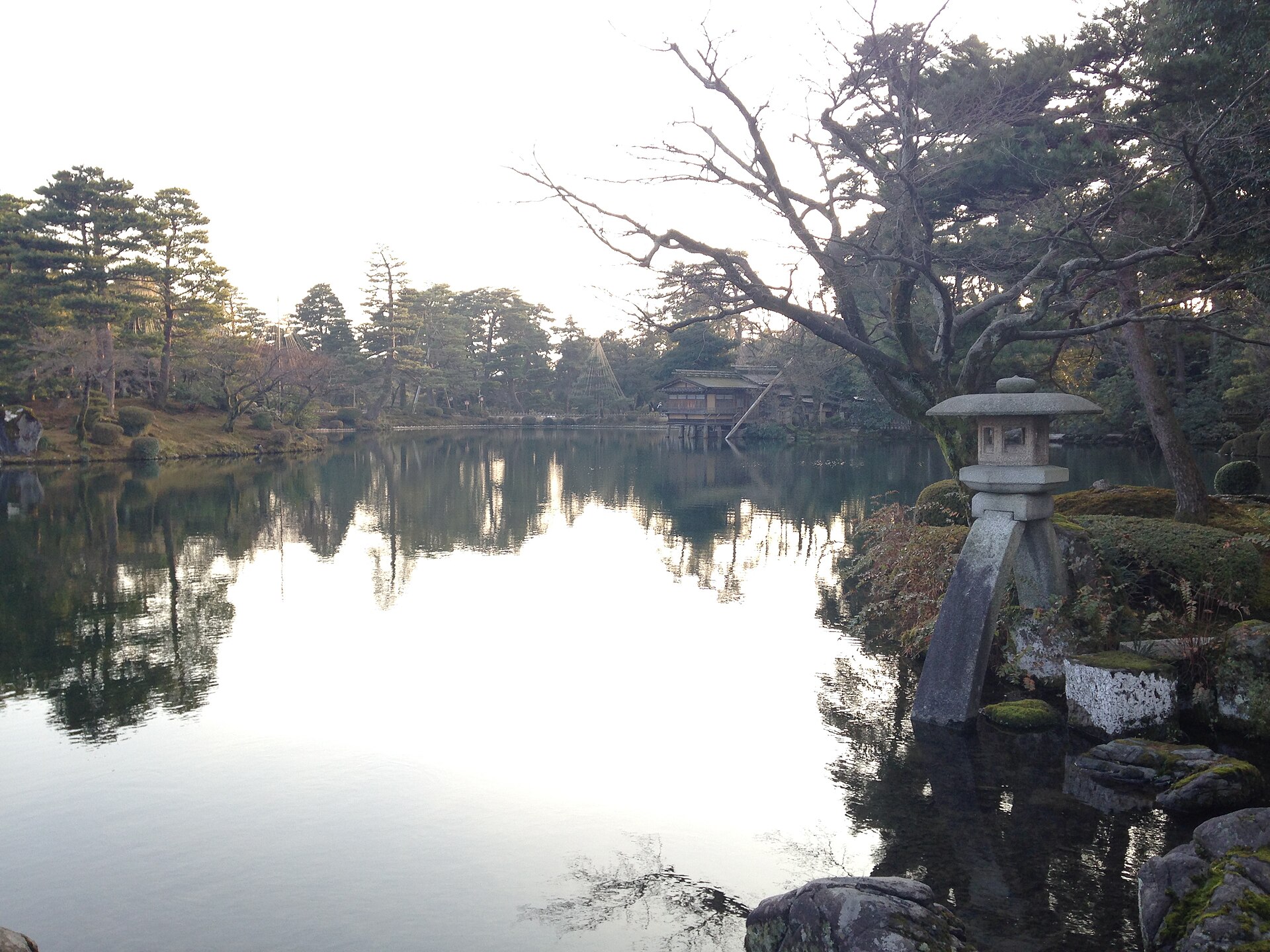
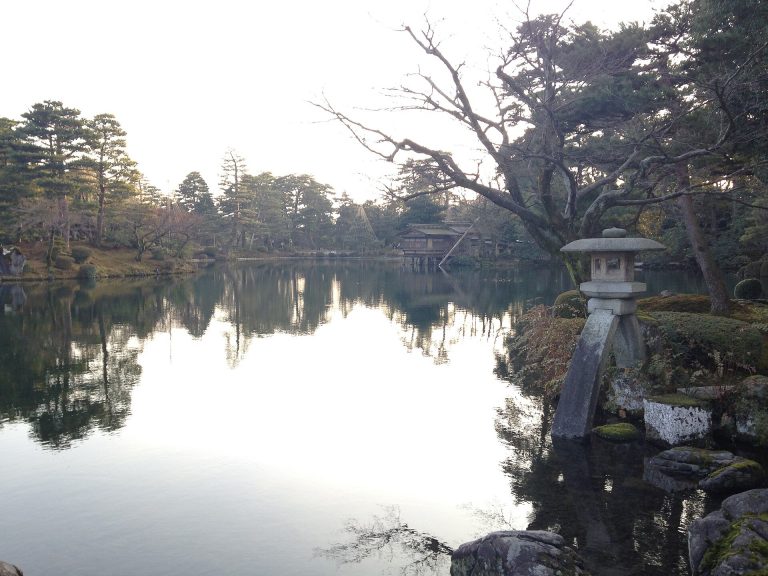
Highlights: admission is JPY 320 for adults from 18 and JPY 100 for children aged 6 to under 18. It opens 07:00–18:00 from 1 March to 15 October, with last entry at 17:30, and 08:00–17:00 from 16 October to the end of February, with last entry at 16:30. The standard composition puts the Kotoji lantern by Kasumigaike pond together with the Niji bridge in front of it, and the reflection reads better in the morning when the water is still.
Practical note: visitors of 65 and over are exempt on showing official identification at the window, and so are holders of a disability certificate plus one carer. Residents of Ishikawa Prefecture go free every Saturday and Sunday, and five free days a year — the cherry season, the Hyakumangoku festival, the old Bon period, Culture Day and the new year — are free for everyone. If your dates land on one of those, ask at the window before buying a combined ticket.
- Admission
- Adult JPY 320; child JPY 100
- Hours
- 1 March–15 October 7:00–18:00; 16 October–end February 8:00–17:00
- Exemptions
- 65 and over; disability certificate holder plus one carer
- Official
- Official site ↗
There is one more option, available only to anyone who can shift the day either side. Before the paid hours the garden opens free: 04:00–06:45 from 1 April to 31 August, 05:00–06:45 from 1 September to 15 October and in March, 05:00–07:45 from 16 to 31 October, and 06:00–07:45 from 1 November to the end of February. Entry is through two gates only, Renchimon and Zuishinzaka, and the rule is that you must be out 15 minutes before the paid opening.
Afternoon: more of the castle is free than is charged
Leave Kenrokuen by the Katsurazaka gate, cross the Ishikawa bridge and you are in Kanazawa Castle Park. Walking the grounds is free; the only charge is the inside of the Hishi Turret, the Fifty-Ken Storehouse and the Hashizumemon Continuing Turret. If you intend to go in, the choice changes at the moment you buy the Kenrokuen ticket.
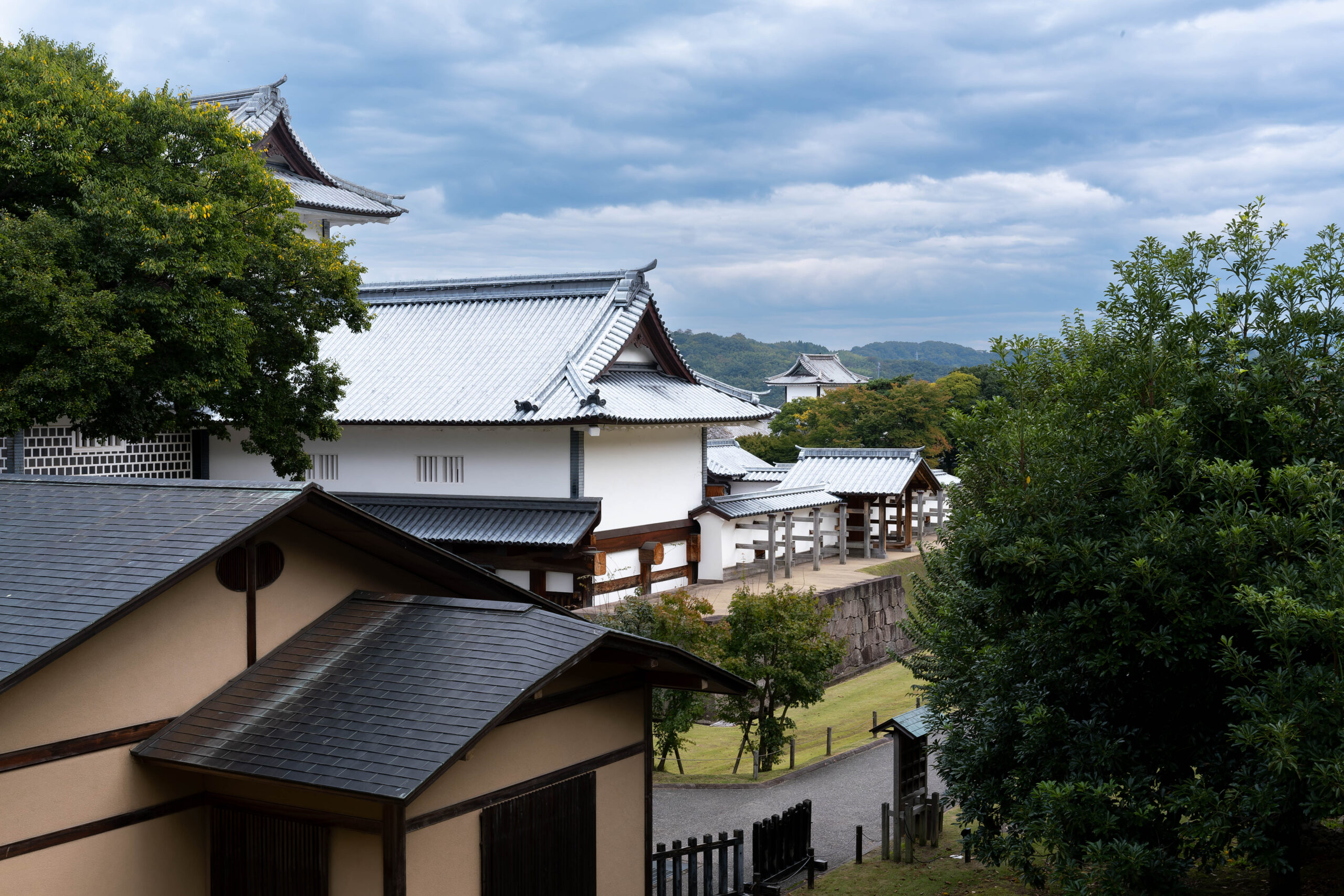
Highlights: the interiors of the Hishi Turret, the Fifty-Ken Storehouse and the Hashizumemon Continuing Turret are JPY 320 for adults and JPY 100 for children, free below school age, open 09:00 to 16:30 with last entry at 16:00, every day of the year. Walking the perimeter takes 20 to 30 minutes and going inside brings it to about an hour. The stonework is laid differently from section to section, and comparing as you go makes that half hour pass quickly.
Practical note: more buildings are free than not. The Kahokumon and the Nezumitamon are both free to enter, 09:00 to 16:30, and so is the Tsuru-no-maru rest house, 09:00–18:00 from 1 March to 15 October and 09:00–17:00 from 16 October to the end of February. Skipping the charged section still gets you inside substantial timber buildings.
- Grounds
- JPY 0 (the turret interiors are JPY 320 for adults)
- Hours
- 9:00–16:30 (last entry 16:00), open daily
- Free buildings
- Kahokumon, Nezumitamon, the Tsuru-no-maru rest house
- Official
- Official site ↗
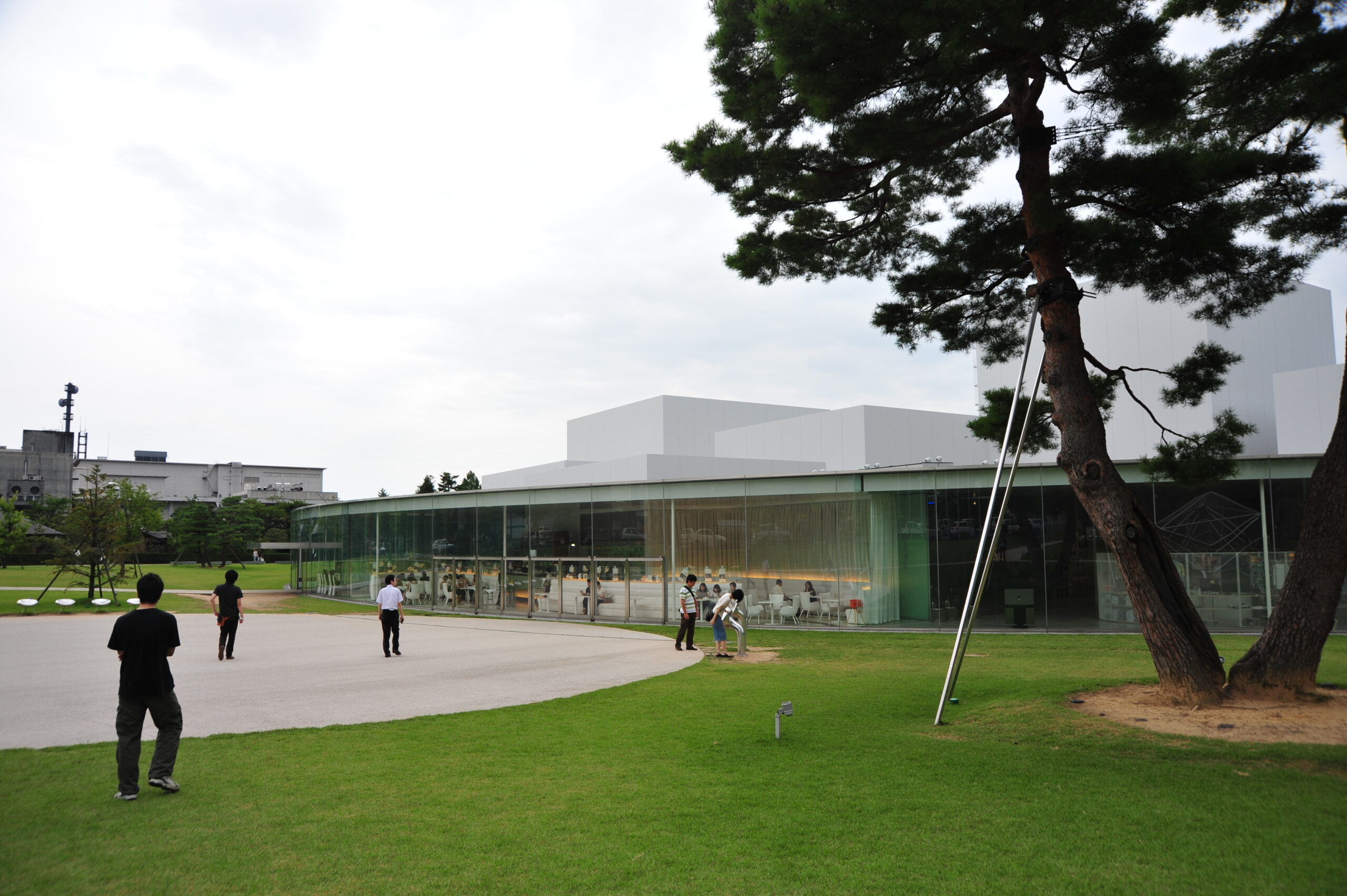
Highlights: the building divides into a public zone and an exhibition zone. The public zone is free and open 09:00 to 22:00, and the lawn and the outdoor works can be seen from there alone. The exhibition zone runs 10:00 to 18:00, to 20:00 on Fridays and Saturdays, and the price depends on what is showing.
Practical note: it closes on Mondays, or the next weekday when a Monday is a public holiday. A first day falling on a Monday shuts the exhibition zone, but the public zone opens at 09:00 regardless, so the plan survives. Because the price varies, check the dates and the fee officially before putting a figure in a budget. Some exhibitions apply the group rate on production of the Kanazawa City One-Day Pass.
- Public zone
- JPY 0; 09:00–22:00
- Exhibition zone
- 10:00–18:00 (to 20:00 Friday and Saturday); price varies by exhibition
- Closed
- Mondays (the next weekday if a public holiday); the new year period
- Official
- Official site ↗
What causes the queue here is the lower part of Leandro Erlich’s Swimming Pool. Looking down into it from above is free from the public zone; getting in underneath, to look up at the water from below, takes a booking. Reservations open at 09:00 on the day of your visit, taken online or from the ticket machine at the Hontodori entrance information desk. Bookings are not taken by telephone. You have five minutes below the surface, and if more than 20 minutes pass after you are called, the slot is cancelled automatically.
In other words, the underside of that one work cannot be secured in advance. You book at 09:00 on the day and get to the room within 20 minutes of being called. On an itinerary that does Kenrokuen before the museum, the question becomes where you are standing when 09:00 arrives. Doing it on a phone while queueing at the Kenrokuen gate is the realistic answer.
Korinbo and Katamachi, a short walk from the museum, are Kanazawa’s main commercial district — a good place for a late lunch or a break, and where to look for coin lockers. Leaving the bags here makes the teahouse district that follows considerably lighter.
Evening: the teahouse streets empty out after dark
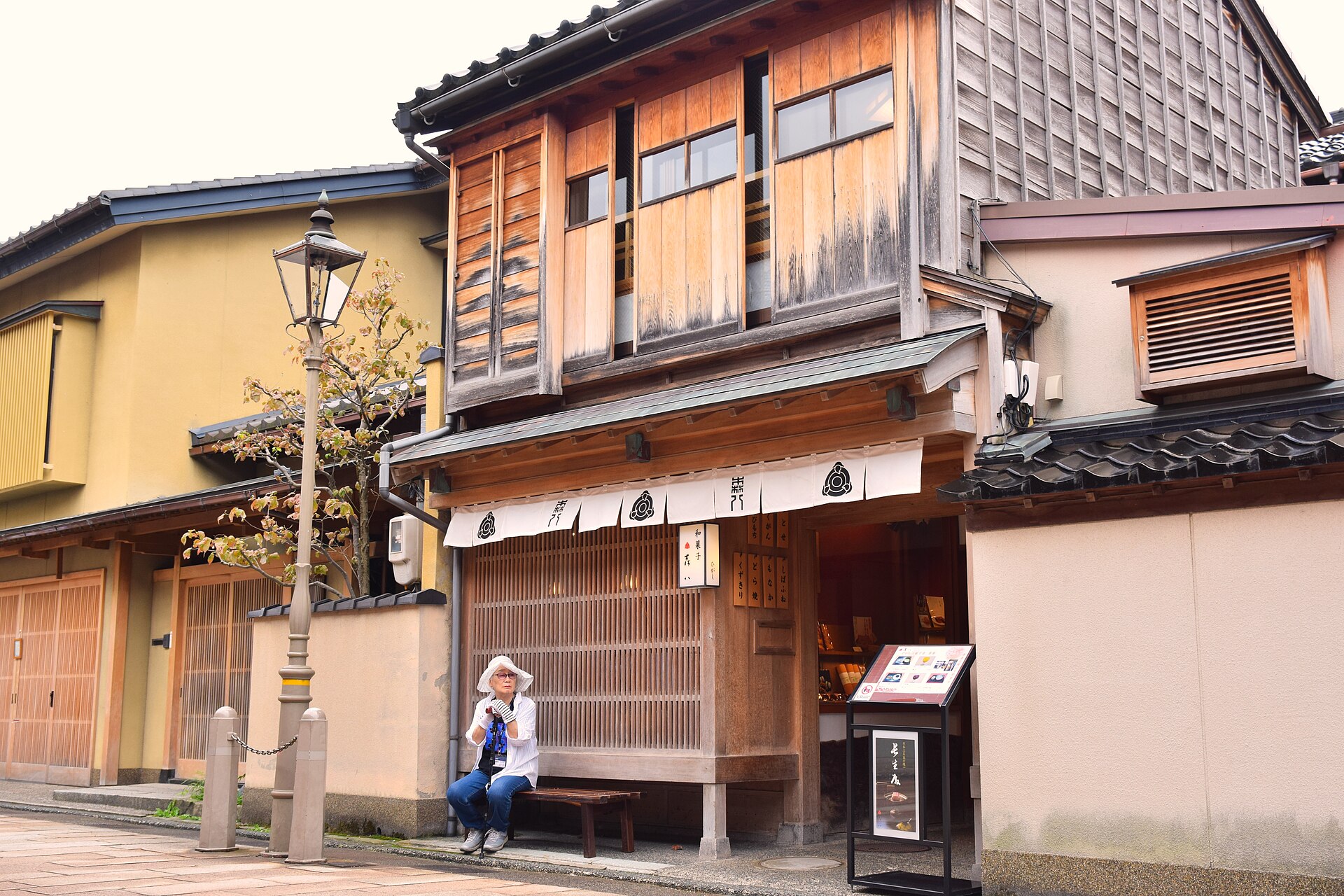
Highlights: about fifteen minutes from Korinbo on the loop bus, or a walk along the Asano river. It is an Important Preservation District for Groups of Traditional Buildings and costs nothing to walk. The streets of fine slatted lattice, called kimusuko, take shadow better in the evening once the lanterns come on than under direct midday sun.
Practical note: to see inside, the teahouses Shima, a nationally designated Important Cultural Property, and Kaikaro are open for a charge. Showing the Kanazawa City One-Day Pass takes JPY 50 off Shima and JPY 100 off Kaikaro. Kaikaro opens 10:00 to 17:00 with irregular closing days, so check it is open if an interior visit is in the plan. The paving is slippery in the wet.
- Nearest
- Loop bus to Hashiba-cho
- Walking
- JPY 0
- Discount
- With the one-day pass, JPY 50 off Shima and JPY 100 off Kaikaro
Dinner is easiest around Omicho Market or among the izakaya and sushi counters of Katamachi. On a day when lunch was seafood, switching to jibuni, the local duck and wheat-gluten stew, or to Kanazawa curry with its thick sauce and shredded cabbage, keeps the evening from repeating it. The tax on a room differs by municipality: Kanazawa charges nothing below JPY 5,000 per person per night, JPY 200 from JPY 5,000 to under JPY 20,000, and JPY 500 at JPY 20,000 and above, so a room-only business hotel can fall in the exempt band. The figures across the country are set out in the municipalities that levy a lodging tax and what they charge.
DAY 2The Ninja Temple can only be booked by telephone
Why this order: start at the market near the station, take in Myoryuji and Nagamachi to the south-west, then return to the station. None of it retraces day one.
Morning: bookings open one month ahead to the day, by phone only
The centre of day two is Myoryuji. Because it has to be settled before the itinerary is built, the booking conditions come first.
Highlights: admission is JPY 1,200 from junior high age and JPY 800 for primary pupils, open 09:00 to 16:00, and you go round with a guide. From outside it looks like two storeys and is in fact far more complicated, with hidden staircases and an offertory box built as a pitfall. It was raised as a prayer hall for the Kaga domain; no ninja ever lived in it.
Practical note: the booking rules are detailed. It must be by telephone, and bookings open one month ahead to the same date. The line is staffed 08:30 to 17:00, and there is no internet booking. Admission begins ten minutes before your time and the tour starts exactly on the hour stated. The temple states that arriving after your time cancels the reservation. Payment is cash only. Pre-school children are not admitted, and children in the lower primary years may be asked to show an insurance card or similar as proof of age. It closes on 1 and 2 January and on days when services are held.
- Address
- 1-2-12 Nomachi, Kanazawa
- Admission
- Junior high and above JPY 1,200; primary JPY 800
- Hours
- 09:00–16:00; telephone booking only (line open 08:30–17:00)
- Note
- No pre-school children; cash only; late arrival cancels the booking
- Official
- Official site ↗
Of those conditions, the one that wrecks itineraries is admission ten minutes early with late arrival cancelled. Omicho Market to Myoryuji is about twenty minutes on foot, and taking the loop bus means a connection. Start eating at the market and then set off, and twenty minutes will not always be enough. If the booking is for 10:30, build the day so that you are walking away from the market during the nine o’clock hour.
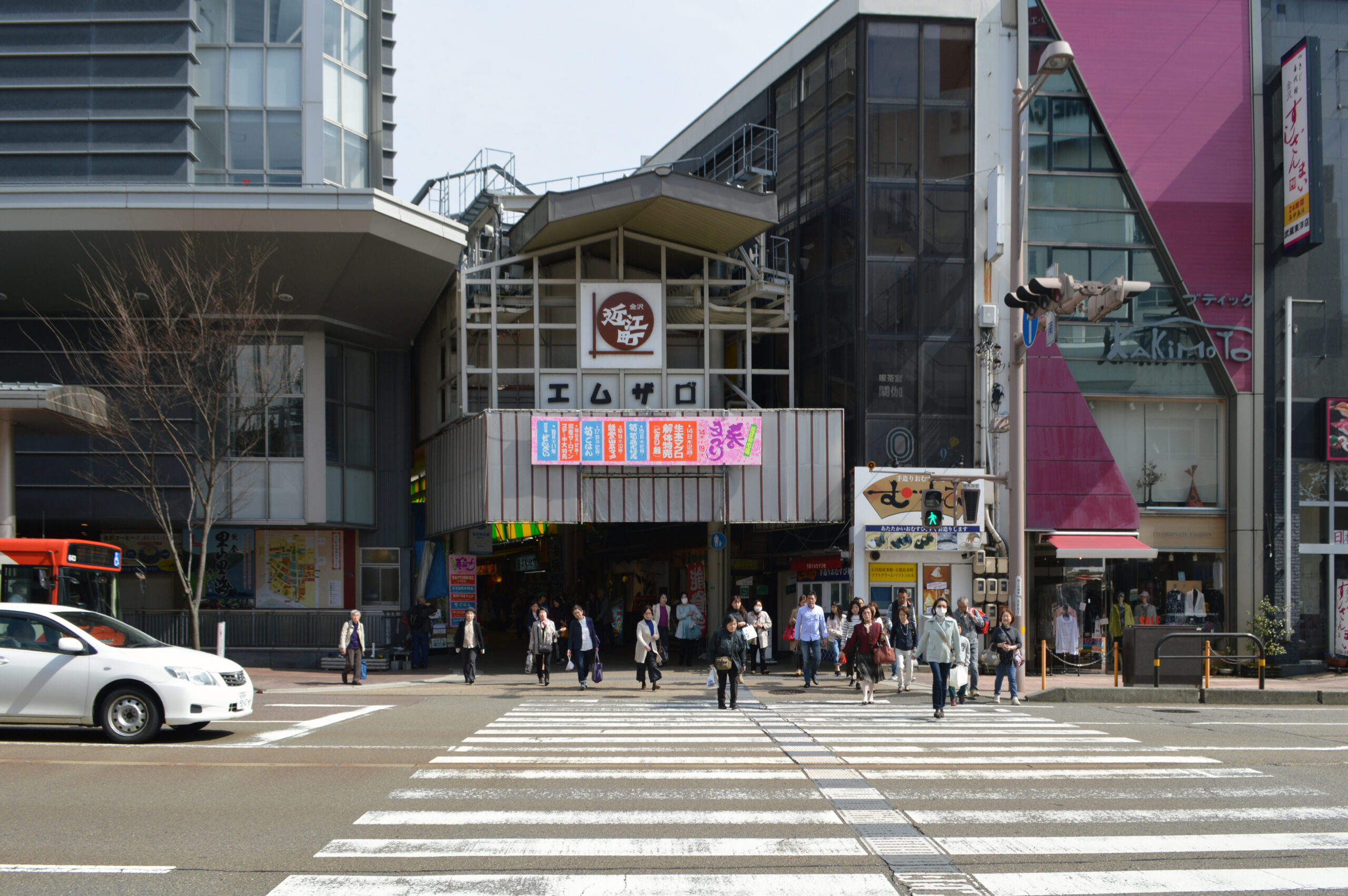
Highlights: about 170 shops along narrow lanes, trading here for some three hundred years since the domain period, fifteen minutes on foot from Kanazawa Station. Seafood bowls generally run JPY 2,000 to JPY 3,000, and some shops do a smaller bowl at around JPY 1,600. Standing sushi counters and seafood skewers are common, and the fish is at its fullest early.
Practical note: the lanes are narrow, so a large case is better left at the hotel or in a station locker. The Hokutetsu bus service centre in the Musashi Emza store beside the market (10:00–19:00) also sells the Kanazawa City One-Day Pass, which is where to go if you want a second one on day two.
- Nearest
- 15 minutes on foot from Kanazawa Station
- Entry
- JPY 0
- Shops
- About 170
- Official
- Omicho Market ↗
Afternoon: the walled lanes are free, the house inside is JPY 550
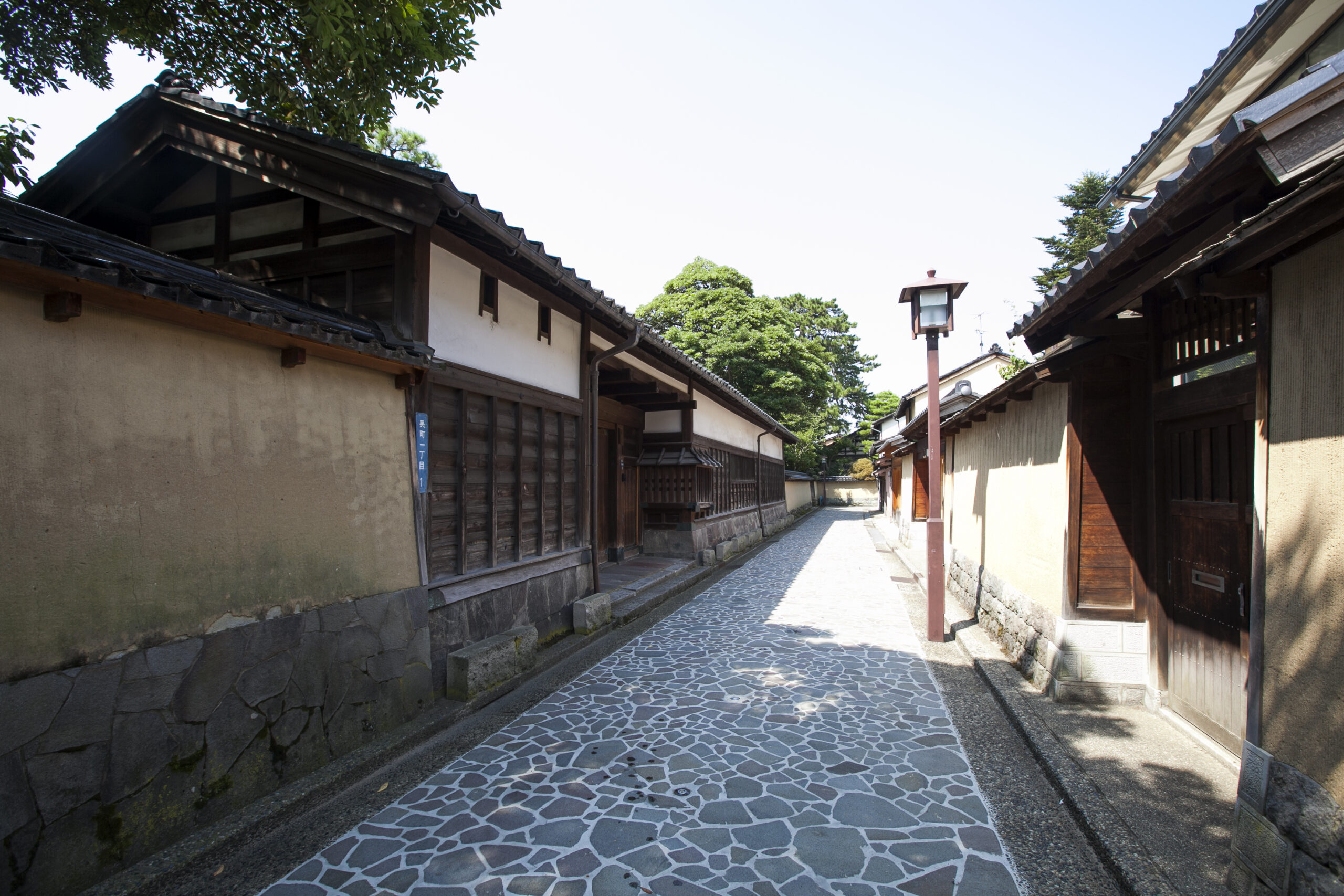
Highlights: walking the walled lanes of Nagamachi is free. To see a house and its garden you go into the Nomura residence: JPY 550 for adults, JPY 400 for senior high pupils and JPY 250 for primary and junior high. It opens 08:30–17:30 from April to September and 08:30–16:30 from October to March, with entry until 30 minutes before closing. Allow about half an hour.
Practical note: showing the Kanazawa City One-Day Pass takes JPY 50 off admission, which only helps if you bought a pass for day two as well. It is five minutes on foot from the Korinbo stop on the Kanazawa Loop Bus, or one minute from the Nagamachi Buke Yashiki stop on the Flat Bus Nagamachi route. Walking these lanes with luggage is tiring on the paving, so use a station locker first.
- Nearest
- 5 minutes from the Korinbo loop bus stop
- Admission
- Adult JPY 550; senior high JPY 400; primary and junior high JPY 250
- Hours
- April–September 8:30–17:30; October–March 8:30–16:30 (entry until 30 minutes before closing)
Kanazawa’s street plan survives from the Edo period because the castle town of the Maeda family of the Kaga domain escaped major fire and disaster. Kenrokuen, the castle, Nagamachi and Higashi Chaya all stand on those original plots. That is also why the streets do not meet at right angles and why a map application alone leaves you disoriented; navigating by the names of the loop bus stops keeps you straighter. The other thing to register is that people still live behind the earthen walls in Nagamachi, which is not how a purpose-built tourist district behaves.
Finish back at Kanazawa Station, choosing souvenirs in the Kanazawa Hyakubangai Anto arcade. What Kanazawa sells divides broadly into gold leaf, small items in Kaga Yuzen dyeing, and confectionery, with long-established makers such as Morihachi and Shibafune Koide holding shops inside the station. Individually wrapped things that keep are the easiest to hand out. To avoid carrying them, some shops will send them home by courier.
Alternatives
Rainy-day swap
Kanazawa gets a great many wet days. On the Japan Meteorological Agency normals for 1991–2020, the local observatory records 177.3 days a year with 1 mm of rain or more. That is better than one day in three, so the odds of meeting rain even over two days are not small. January is the wettest month at 23.4 days and August the driest at 9.3, which is the statistical backing for the fact that an outdoor-heavy summer itinerary is easier to plan.
What rain exposes here is the gravel in Kenrokuen and the paving in Higashi Chaya. Both are walkable, and your shoes get wet. To move indoors, take longer in the museum’s exhibition zone and stretch the time under the covered part of Omicho Market. Myoryuji is an indoor guided tour to begin with and is barely affected by weather.
Shifting more of the movement onto buses is the other answer. With the one-day pass in hand, replacing walking sections with bus rides costs nothing extra. If keeping luggage dry matters, use the lockers at the station or in Korinbo early rather than late.
If your train is delayed by an hour or more
A late first day does not do much damage. Kenrokuen runs to 18:00 from March to mid-October, and the charged part of the castle to 16:30. Arriving in the early afternoon, give up the castle interiors and narrow to Kenrokuen and the museum, and it still finishes by evening. Skipping the combined ticket for the JPY 320 Kenrokuen-only one saves JPY 180 a head.
Day two is what breaks. Myoryuji starts its tour exactly on the hour booked and cancels a late arrival. If the train or the hotel is likely to put your morning behind, telephone the previous day and move the time. The temple does state, though, that it does not accept changes when it is busy, so in peak periods assume it cannot be moved.
If the booking never came through at all, giving the second morning to the Nagamachi lanes and the Nomura house and returning to whatever you did not finish at the museum keeps the density. Myoryuji is a fine visit and not an essential one; it is the item in this plan that can be rearranged around availability.
When you’re tired
The order is the charged part of the castle, then Nagamachi, then Higashi Chaya. Giving up the castle interiors removes the need for the combined ticket, saving JPY 180 a head and half an hour. Dropping Nagamachi clears the whole of the second afternoon and lets you take an earlier Shinkansen.
To cut the walking, fixing the hotel around Omicho Market and Musashigatsuji and narrowing the trip to the central trio — Kenrokuen, the castle and the 21st Century Museum, which join on foot — and leaving Higashi Chaya for another visit is a defensible plan. This itinerary covers roughly five to seven kilometres a day on foot, so whether the shoes are broken in decides how much of the second afternoon is left in you.
With children, the visit to Myoryuji can involve a long spell kneeling. Pre-school children are not admitted at all, so depending on ages it is more realistic to give the time to eating at Omicho Market and walking Nagamachi and save the Ninja Temple for another trip.
Travelling by wheelchair, Kenrokuen lends both manual and powered chairs at each of its ticket offices — Katsurazaka, Renchimon, Kodatsuno and Zuishinzaka. Much of the garden’s path is gravel, and the castle park side mixes stone steps with slopes. If you add bus rides to cut the walking, that also settles whether the one-day pass pays for itself.
Why we skipped the rental car and the paid Kenrokuen guide
Two days in Kanazawa do not use a hire car because the central sights are joined by walking and buses. Kenrokuen, the castle and the 21st Century Museum adjoin each other, and Higashi Chaya, Nagamachi and Myoryuji are all walkable from a loop bus stop. Add the time spent finding a space, parking and getting out again and there is hardly a section where driving beats the bus. Going out of the city to the Kaga hot springs is a different matter, and for that the three days across Kanazawa and Kaga Onsen is the itinerary that fits.
The paid guided tour of Kenrokuen is left out too. It is booked through the Kenrokuen Tourism Association office, but this plan gives the garden ninety minutes, and listening to a guide means losing either the castle or the museum. It is for people who want to go into the history of the garden, and it does not sit well with a two-day run through the standard sights.
Arriving by air is another option. Komatsu Airport to Kanazawa Station is about 40 minutes by airport coach, and from western Japan the total can come in below the Shinkansen. How to find sale fares, and how to think about seat selection and baggage charges, is set out in the guide to booking cheap flights, so depending on where you start, compare it against the train before deciding.
Where to stay
Kanazawa’s rooms fall into three districts, and the choice changes how the second morning starts.
Around Kanazawa Station is the easiest for anyone arriving by Shinkansen, with everything from large hotels down to business chains. Korinbo and Katamachi are close to the nightlife and easy for dinner, but the station needs a bus or a taxi. Musashigatsuji is directly in front of Omicho Market, for anyone who wants to be at the market first thing on day two. For an itinerary like this — Korinbo and the teahouses on day one, the market and the Ninja Temple on day two — somewhere between the station and Musashigatsuji, extreme in neither direction, moves best.
Rates move even for identical dates, which is why no room figure appears in the table below. If you want to fix timed activities around the stay, Klook lists Kanazawa slots by date.
Book in this order: Myoryuji, the Shinkansen, then the room. Myoryuji takes telephone bookings from one month ahead to the day, and the popular times go first. Secure it, choose your trains around it, and take the room last. To avoid the periods when room rates climb, the price patterns for summer travel is worth reading for the timing, because the same itinerary costs different amounts depending on when you book it.
What this trip costs
Assumptions: two adults, no car, two days and one night inside Kanazawa. The Shinkansen, the room and meals vary too far by seat class, day of the week and season to belong in the total, so what is listed is the part with a published price on it.
Every figure above is the published rate as of 2026-09-20.
Here is where the figure in the title comes from. The Kagayaki on the Hokuriku Shinkansen from Tokyo to Kanazawa runs around JPY 14,000-something one way in an ordinary reserved seat in the standard season, so call the return JPY 28,000-something. A room-only business hotel is around JPY 5,000 a night and meals around JPY 6,000 over two days. Add the JPY 3,490 a head from the table above and you land somewhere between JPY 42,000 and JPY 43,000 per person. Only three of those move — train, room and food. The money spent on the ground does not shift unless the itinerary does.
Which means the savings are all in those three. Reserved-seat prices change with the season, and e-ticket and advance-purchase discounts apply. Looking at the JR East and JR West booking sites the moment the dates are settled is the single most effective economy available. Trying to economise after you arrive achieves little, because the ground costs are only JPY 6,980 to begin with.
The bus arithmetic is worth checking too. The one-day pass is JPY 800 and a single ride is JPY 220, so three rides is JPY 660 and four is JPY 880 — it turns over on the fourth. Day one takes three: station to Kenrokuen, Korinbo to Higashi Chaya, teahouses to the hotel, JPY 660. Add one more and the pass wins; without that fourth ride, paying per ride is JPY 140 cheaper. That is why day two is costed at two rides paid singly. Count the boardings before you decide.
The season shifts the centre of gravity as well. Spring is the cherry blossom in Kenrokuen, early summer the new leaves, autumn the colour, and winter the rope rigging that protects the garden’s trees from snow. The same route produces completely different photographs depending on the month. In winter the ground ices over, which raises the importance of the shoes. Building it in summer, garden and castle in the morning, somewhere under a roof such as the museum or the market in the middle of the day, and Higashi Chaya from late afternoon is, in itself, the heat strategy.
With room in the budget, three things can be added. Tea at the Gyokusen’an teahouse inside Kanazawa Castle Park is JPY 1,000 for matcha with a fresh sweet, served 09:00–12:00 and 13:00–16:30, closed over the new year. The interiors of Shima and Kaikaro in Higashi Chaya. And the exhibition zone at the 21st Century Museum. All three run around JPY 1,000 a head and all three get you inside something you cannot see from the street.
This plan does not suit anyone whose first day falls on a Monday, nor anyone arriving on day two without a Myoryuji booking. The first loses the museum’s exhibition zone; the second loses forty minutes outright unless a same-day slot happens to be free. On payment, the independent shops in Omicho Market and Higashi Chaya, and Myoryuji, want cash. Do not lean entirely on cards; carry notes and coins. Photographing all day drains a phone, and how to size a battery for that is set out in the note on choosing a power bank.
Sources: Ishikawa Prefecture Kanazawa Castle and Kenrokuen Management Office; 21st Century Museum of Contemporary Art, Kanazawa; Hokuriku Railroad; Omicho Market; Myoryuji; Hot Ishikawa Tabinet; City of Kanazawa; Japan Meteorological Agency / Checked on 2026-09-20 / Photographs: Soramimi (CC BY-SA 4.0), Raita Futo (CC BY 2.0) and as credited in each caption
Other sales ending soon




 4 days leftuntil Oct 24Air Busan Takamatsu-Busan Coupon: Up to 9,000 Yen Off Until October 24
 5 days leftuntil Oct 25JAL Hong Kong Campaign: Tokyo–Hong Kong Round Trip from 75,800 Yen (until 25 Oct)
 11 days leftuntil Oct 31Jin Air Kobe–Seoul: 5,000 yen off a round trip with code KTOUKB1, until 31 October
 11 days leftuntil Oct 31Jin Air to Busan: 4,000 yen off a round trip with code KTOPUS, first 300 only