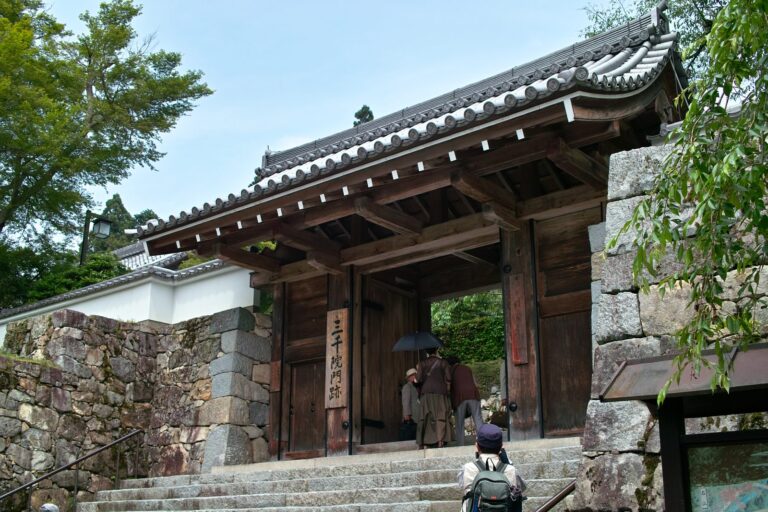
Kyoto’s Hidden Autumn Leaf Spots: Quiet Temples and Walking Routes
AuthorMIRUTOBE editors
Table of Contents4 items
Avoiding the crowds in Kyoto is not a matter of skipping the famous temples. It is a matter of counting backwards from closing time. Sanzen-in at Ohara runs 8:45 to 16:45 through November, and Shisendo at Ichijoji stops admitting visitors at 16:45.
Zuishin-in in Yamashina closes its gate at 17:00 but takes its last visitor at 16:30. On the pattern this article uses — the city in the morning, the outskirts in the afternoon — that half hour is the whole difference between getting in and not.
Check first: does this way of moving suit you?
- You can make a one-hour journey from Kyoto Station or Shijo twice in a day
- You can build a day that reaches each gate before last admission, between 16:30 and 16:45
- You can manage 30 minutes or more of stone steps and slopes in total
- You are not using a pushchair or a wheelchair — one of these temples does not admit them
- If you are driving, you accept that you will park away from the temple
If the first line is where you fall out, a day confined to temples in the city centre will be fuller than one spent reaching the outskirts. Ohara is about an hour north of Kyoto Station by bus, and Yamashina and Ichijoji are around 40 minutes once changes are counted; the plan assumes two hours of the day go into travelling. For a day built inside the city, the two- to three-day Kyoto itinerary for first-time visitors sets the order out by district. The fourth line is there because Zuishin-in states plainly that it cannot admit visitors with pushchairs or wheelchairs.
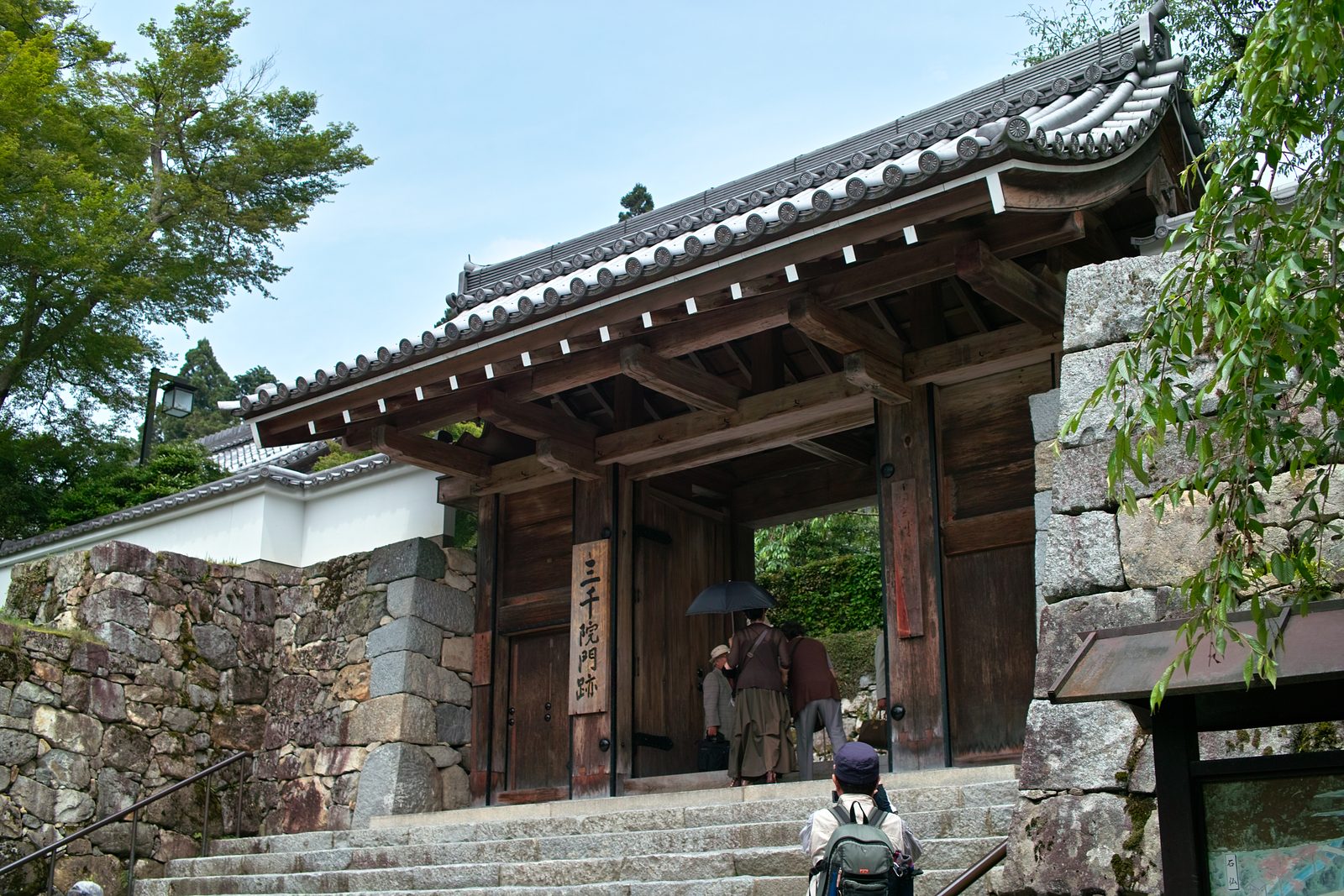
Opening hours and admission at the four temples
Ordinary-season information as published on each temple’s own site. Special openings and evening viewings are set at different hours and prices.
Admission sits between JPY 500 and JPY 700, which is not much of a basis for choosing between them. The hours are where the differences live. All four say “until 17:00”, and yet Shisendo stops at 16:45 and Zuishin-in at 16:30. Arrive at 16:40 with the closing time in your head and Zuishin-in turns you round at the gate.
Something else eats time. If you want to copy a sutra or trace a Buddha image alongside the visit, Zuishin-in takes bookings for that between 9:00 and 14:00 — two and a half hours earlier than the visiting desk. And Sanzen-in has the Enyuzo, its own storehouse and exhibition room for cultural properties, inside the grounds, which puts a good 30 minutes between seeing the garden and seeing the collection. Fix your estimate at an hour per temple and these two break it.
Special events come with their own hours and prices. Zuishin-in’s special opening of its principal image, from 1 to 31 March 2026, ran 9:00 to 16:30 at JPY 500 for an adult and JPY 300 for junior high school pupils — half an hour shorter than the ordinary day. Dates change from year to year, so once the month is settled, look at the temple’s own announcements shortly before you go.
The two at Ohara have different characters. Sanzen-in is open every day of the year, and walking it properly, including the seal office and the Enyuzo exhibition room, needs an hour. Jakko-in is a small temple associated with Kenreimon-in, and 30 minutes covers the grounds. It calls the money an offering rather than an admission charge because it is framed as a contribution towards preserving the garden and the cultural properties, and the categories of visitor exempt from it are published too.
Where people trip up
In November both ends of the day move at Sanzen-in
November at Sanzen-in is 8:45 to 16:45: the gate opens 15 minutes earlier and closes 15 minutes earlier. The whole day is shifted forward for the busy season, so a plan to “be there first thing” that assembles at 9:00 is already late. At the other end, a 16:45 close in a month when the sun goes down early takes autumn colour in evening light off the table entirely. From December to February the day shrinks again, to 9:00–16:30. It is easier to think of one temple as having three timetables by season.
Shisendo on 23 May, and Jakko-in over the first three days of January
Shisendo closes to visitors on 23 May each year. That falls when the young maples are at their densest, so anyone going to Ichijoji for the new green has exactly one date to avoid. Jakko-in runs 10:00 to 16:00 from 1 to 3 January, opening an hour later and closing an hour earlier than usual. Go to Ohara over the New Year with the morning planned too early and you will be waiting outside the gate. Sanzen-in, which never closes, does not behave this way.
Drive there and you still cannot stop at the gate
Sanzen-in states on its own site that it has no car park, so the assumption is a private one nearby. From the Ohara bus stop to the temple is an uphill approach, about ten minutes beside the Ryosen stream. You end up walking either way, so coming in on Kyoto Bus route 17 spares you the question of where to leave anything. That route links Kyoto Station and Ohara via Demachiyanagi Station, and can also be picked up at Shijo-Karasuma, Shijo-Kawaramachi and Sanjo-Keihan. If a pushchair is part of the plan, Zuishin-in declining them altogether is the next thing to read.
Ohara, or Yamashina and Ichijoji: which one gets the day
Trying to take all three areas in one day leaves nothing but travelling. Ohara is north of the city, Yamashina is over the far side of the Higashiyama hills and Ichijoji is to the north-east, with no direct service between any pair of them. If you are going to split the day, the shape is the city in the morning and one outlying area in the afternoon.
On an Ohara day, Sanzen-in and Jakko-in fill the half day between them. Even within Ohara the two sit apart — Sanzen-in in Raigoin-cho, Jakko-in in Kusao-cho, about 20 minutes on foot. To see both and catch a bus back some time after 16:00, the latest you can arrive in Ohara is 13:00. An Ichijoji day is an hour at Shisendo plus the bookshops and sweet shops around it, so around three hours. Zuishin-in in Yamashina is associated with Ono no Komachi, and draws people in plum season and at the time of the Hanezu dance.
Set autumn colour against the green maples and the crowds are on completely different scales. In November the Ohara buses sometimes leave people behind, while the same road in May and June is empty. The photographs come back entirely green, but this is the season in which the approach can be walked without looking at the back of someone’s head. I would take the new green.
Travelling as a group lowers the admission column another step. Sanzen-in charges JPY 600 for adults in parties of 30 or more and JPY 300 for secondary school pupils in the same size of party. Jakko-in’s group discount for school pupils also starts at 30, at JPY 500 for high school and JPY 300 for junior high. Zuishin-in becomes JPY 450 for general admission in parties of 20 or more. Jakko-in asks parties of 10 or more to make contact in advance so that the visit runs smoothly. The exemptions from its offering are published as well — religious practitioners, people with disabilities, and teachers accompanying students — so the larger the group, the more the official notes repay reading.
Checking the addresses reveals the holes in a plan. Sanzen-in is at 540 Ohara Raigoin-cho, Sakyo-ku, and Jakko-in at 676 Ohara Kusao-cho, Sakyo-ku: the same Ohara, different neighbourhoods. Shisendo is at 27 Ichijoji Monguchi-cho, Sakyo-ku, up the slope beyond Shirakawa-dori from Ichijoji station on the Eizan Electric Railway. These are all places where the walk takes longer than the straight-line distance suggests, so allowing 15 minutes from each bus stop or station to each gate keeps the day from collapsing.
Rurikoin at Yase is known for the reflection of green or scarlet maples in the polished top of a desk. It does not open year-round, though: it opens only for the special spring, summer and autumn viewings. The dates move from year to year and the current period and price are unconfirmed here, so read the temple’s own announcement before going rather than carrying a figure heard second-hand.
The awkward part of this way of moving is that the walking is hard to predict. The Ohara approach climbs, Ichijoji is a slope from Shirakawa-dori to the temple, and Yamashina is flat from the station but long from the station to the gate. Shoes you can walk in, and one layer you can take off.
The same idea — walk the quiet side — can be built outside Kyoto. In Hokuriku, the Kanazawa and Kaga Onsen itinerary separates the standard sights from the hot springs, and for a day out of Tokyo, scenic day trips from Tokyo and seven day trips by train line destinations up by journey time against what you get for it.
- Sanzen-in, Ohara, Kyoto (Tendai school) — hours and admission ↗Checked on 2026-09-14
- Jakko-in, Ohara, Kyoto — hours and offering ↗Checked on 2026-09-14
- Shisendo Jozanji — opening hours and admission ↗Checked on 2026-09-14
- Zuishin-in head temple — visiting (hours and admission) ↗Checked on 2026-09-14
Source: the reference block above / Rurikoin opening period and price: unconfirmed / Photo: Wikimedia Commons / Checked on 2026-09-14
Other sales ending soon


 4 days leftuntil Oct 24Air Busan Takamatsu-Busan Coupon: Up to 9,000 Yen Off Until October 24
 5 days leftuntil Oct 25JAL Hong Kong Campaign: Tokyo–Hong Kong Round Trip from 75,800 Yen (until 25 Oct)
 11 days leftuntil Oct 31Jin Air Kobe–Seoul: 5,000 yen off a round trip with code KTOUKB1, until 31 October
 11 days leftuntil Oct 31Jin Air to Busan: 4,000 yen off a round trip with code KTOPUS, first 300 only