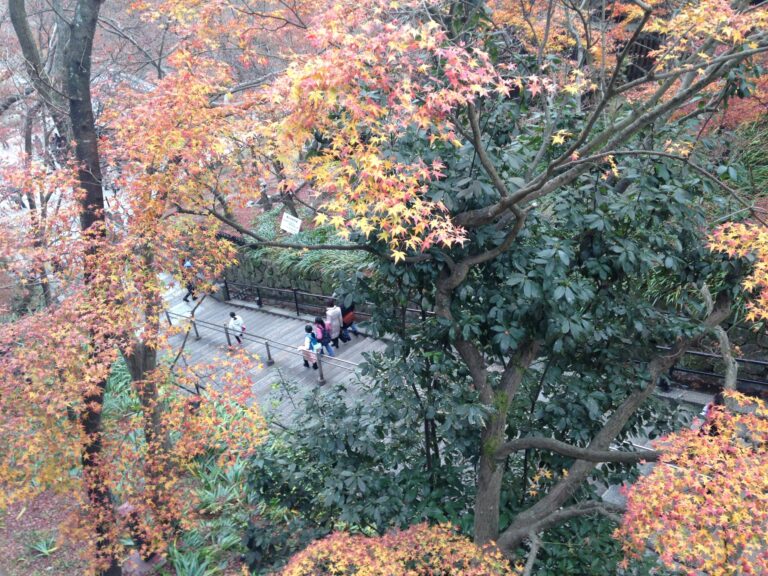
Japan Autumn Foliage 2026: Spots & Timing Guide
AuthorMIRUTOBE editors
Table of Contents6 items
In autumn the temples change their own rules. Tofuku-ji brings the Tsutenkyo bridge forward to 08:30 from 14 November to 6 December, lifts adult admission from JPY 600 to JPY 1,000, and stops selling the combined ticket with the abbot’s garden. That early half-hour is where the crowds are avoided.
Prices and hours below are Japanese, in yen, copied from each temple’s own page. The wave itself moves north to south and high to low, and it shifts a week or two either way depending on the summer.
Check first: which part of the wave do your dates hit?
- In October, you can point the trip at the mountains or the north-east
- From mid to late November, either Kyoto or Tokyo will be in colour
- You can be at a temple gate between 08:00 and 09:00
- You know that admission runs about 1.7 times the ordinary price in that window
- You can hold a room two to four months out on a cancellable rate
Fail the third line and most of this page stops being useful. Kyoto in autumn is a different city for the half-hour after opening and again after dark; in between you are buying your place in a queue with your time. If early starts are impossible, skip Kyoto and put the same hours into a Tokyo garden or a mountain, where you will see more of them.
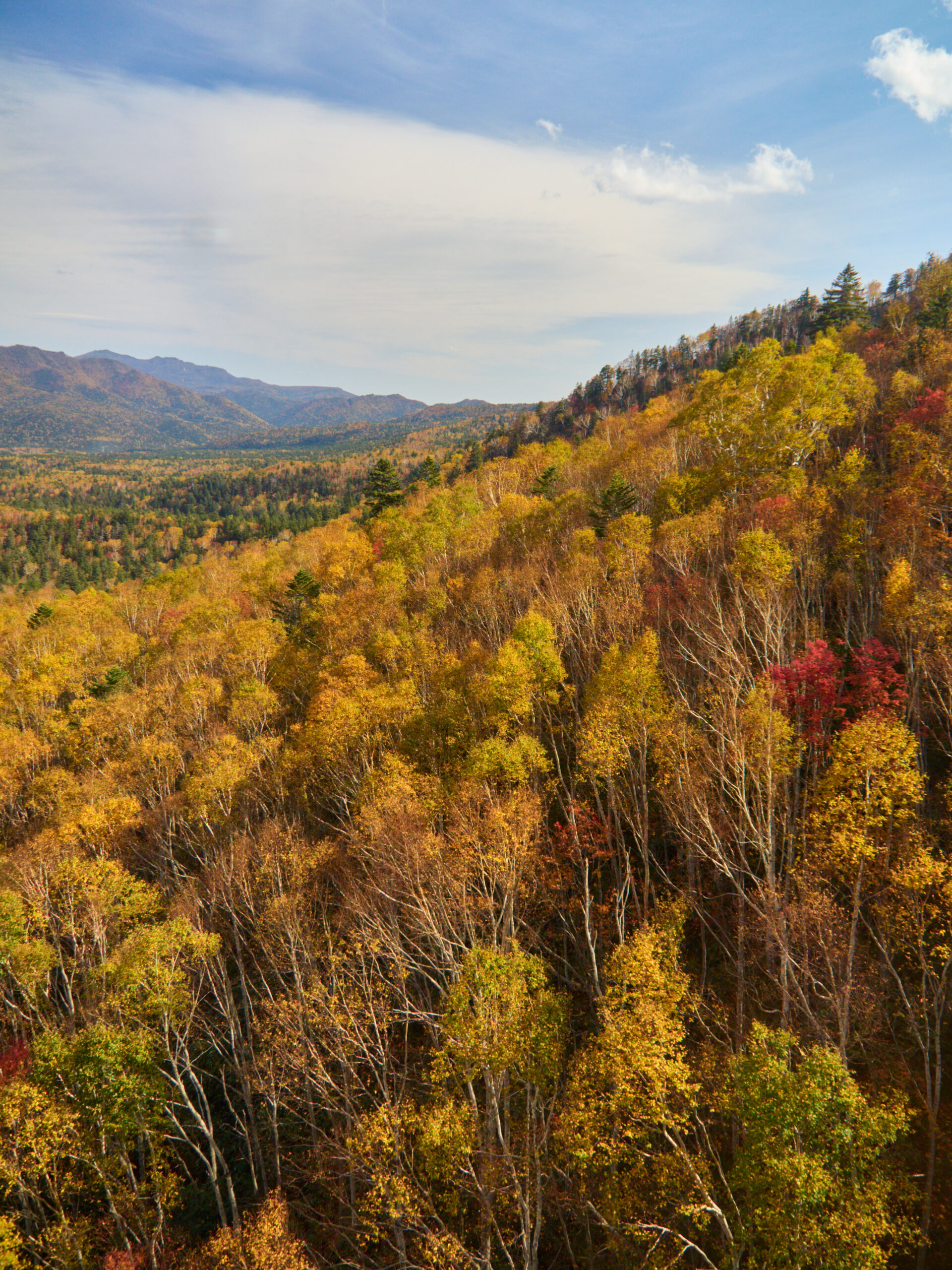
The wave is simple enough. Leaves need cold nights, so it starts where it is cold: the mountains of Hokkaido and the high Alps from late September to mid-October; the gorges of Tohoku and the upper reaches around Nikko from mid to late October; the Fuji Five Lakes and Nagano in the first half of November; the gardens of Kyoto, Nara and Tokyo from the middle to the end of the month; the last of Kyoto and the coasts of Shikoku and Kyushu from late November into early December. A hot summer moves all of it by one to two weeks, so read the forecasts published by Weathernews and the Japan Meteorological Business Support Center a month ahead before fixing anything.
The full picture: what moves in autumn, and by how much
Copied from the visitor pages of Tofuku-ji and Eikando on 2026-09-20. The dates and prices of the special period change from year to year, so the same pages have to be opened again before you travel.
The first row carries the most useful number on this page. Only Tsutenkyo opens at 08:30. The Hojo garden still opens at 09:00, so standing at the gate at 08:25 buys you half an hour on the bridge with few people on it before you move across. Arrive at 09:00 instead and you join both queues at the moment they start moving together.
The prices are worth reading twice. Tsutenkyo goes from JPY 600 to JPY 1,000 and the Hojo garden from JPY 500 — JPY 600 from 1 November 2026 — to JPY 1,000, and because the combined ticket is withdrawn in the special period, doing both costs JPY 2,000. In the ordinary season the same pair is JPY 1,000 on one ticket. For two people that is JPY 4,000, which is more than a day of city transport in Kyoto.
Five steps: how to divide a Kyoto day
The point of that division is throwing away the middle four hours. Decide to lose them and they become travelling and eating time rather than queueing time. How to group Kyoto by district so the walking works is set out in the realistic route through Kyoto by area.
Where people trip up
The combined ticket vanishes in the special period
In the ordinary season Tofuku-ji sells one ticket covering Tsutenkyo, the Kaisando and the Hojo garden, at JPY 1,000 for an adult and JPY 500 for school age. Between 14 November and 6 December the temple states plainly that no combined ticket is available. Both areas therefore cost JPY 1,000 each, JPY 2,000 in total. Budget from last year’s memory of the combined ticket and that JPY 1,000 is simply missing. If you are choosing one, Tsutenkyo has the denser canopy.
From December, entry closes half an hour earlier
Tofuku-ji’s visiting hours are 09:00–16:00 from 1 April to 31 October and 09:00–15:30 from 7 December to 31 March. Come in early December for the fallen leaves and the gate closes while you are still crossing the city after lunch. December days in Kyoto are short and the temples shut early with them, so plan on two places a day rather than four. Fallen leaves over moss do draw thinner crowds than the peak week, which makes it a reasonable trade if you go in knowing it.
Rain is not a reason to cancel
Wet leaves hold deeper colour and the crowds thin out. Moss gardens are at their best in rain. Taking an umbrella and going anyway will usually beat the same place in sunshine. What does ruin a day is wind: a strong night strips the colour, and it does not come back. If it blew hard yesterday, switch this morning to a temple where fallen leaves are the view.
What if you skip Kyoto: where else the colour is
For an October trip, Kyoto is simply too early. Daisetsuzan in Hokkaido turns from late September, the Irohazaka road and Lake Chuzenji around Nikko from the middle to the end of October, and the Oirase gorge late in the month. Kamikochi and the Tateyama Kurobe Alpine Route are October mountains, both with winter closures, so confirm the operating period officially before you build around them. Go to Kyoto in October and the only colour is on the mountain side, at places like Takao.
Tokyo is underrated here. Its season runs from mid-November into early December, later than first-time visitors expect: the ginkgo avenue at Meiji Jingu Gaien, the gardens at Rikugien and Koishikawa Korakuen, the maples and plane trees of Shinjuku Gyoen. Engaku-ji and Meigetsu-in in Kita-Kamakura are one train away and combine the colour with a day trip. In the weeks when Kyoto’s rooms have been gone for two to four months, Tokyo still has options.
Going to the mountains puts a deadline on the itinerary instead. Kamikochi closes for winter and the Tateyama Kurobe Alpine Route operates its full length only within a season. Both involve private-car restrictions and connecting sections, so the access has to be checked officially before the dates are set. An October mountain does not offer the Kyoto luxury of arriving late and catching next week: after the colour comes snow.
The forecasts have a quirk of their own. Weathernews and the meteorological services publish separate dates for when colour begins and when it peaks at each location. Plan against the peak; line the trip up with the first date and you arrive to something half green. The forecasts are revised, so opening them a month out and again a week before departure is the realistic number of times.
For Kyoto and Nikko in season, securing a room is the first gate. Book two to four months out on a cancellable rate, then firm the dates once the forecast settles. The order in which to cut the rest of the budget is in the savings ranked by how much they move. Extend to the Fuji Five Lakes and November overlaps with the season when Mt Fuji is most reliably visible, which puts autumn colour and a snow-capped mountain in the same day.
The next thing to do is open the pages of the temples you want and copy down this year’s special-period dates and hours. They move every year.
Common questions: booking, evening viewing, and late arrivals
Do I need to book temple entry in advance?
At Tofuku-ji and Eikando, tickets are bought at the gate, which is why being there before opening does more than any reservation would. Some temples run ticketed evening sessions separately from daytime admission, so if an illumination is the reason for the trip, check that particular temple’s page rather than assuming.
Is evening viewing worth the second ticket?
It is a different photograph rather than a better one — lit from below, against a black sky, with the garden context gone. Allowing 90 minutes per site, two illuminations fill an evening. If you only do one, pair it with a daytime visit somewhere else rather than seeing the same temple twice.
I can only come in early December. Too late?
For Kyoto’s peak, yes; for fallen leaves over moss, no. The trade is real: entry closes at 15:30 from 7 December, daylight is short, and two places a day is the honest ceiling. In exchange the crowds are a fraction of the peak week. The coasts of Shikoku and Kyushu are also still turning at that point.
- Tofuku-ji visitor information (ordinary and autumn special hours and prices) ↗Checked on 2026-09-20
- Eikando (Zenrin-ji) visitor information ↗Checked on 2026-09-20
- Kamikochi official site (access and private-car restrictions) ↗Checked on 2026-09-20
- Tateyama Kurobe Alpine Route official site (operations and fares) ↗Checked on 2026-09-20
Source: the reference block above / Photos: lumoplank, CC0; そらみみ, CC BY-SA 3.0 (both Wikimedia Commons) / Checked on 2026-09-20
Other sales ending soon


 4 days leftuntil Oct 24Air Busan Takamatsu-Busan Coupon: Up to 9,000 Yen Off Until October 24
 5 days leftuntil Oct 25JAL Hong Kong Campaign: Tokyo–Hong Kong Round Trip from 75,800 Yen (until 25 Oct)
 11 days leftuntil Oct 31Jin Air Kobe–Seoul: 5,000 yen off a round trip with code KTOUKB1, until 31 October
 11 days leftuntil Oct 31Jin Air to Busan: 4,000 yen off a round trip with code KTOPUS, first 300 only