Barcelona 4-Night, 6-Day Model Plan: Gaudí Architecture and a Mediterranean City
AuthorMIRUTOBE editors
Table of Contents10 items
- Itinerary
- DAY 1 The ticket out of the airport has a different name and a different price from the city one
- DAY 2 With the three Gaudí buildings, the times on your tickets are the itinerary
- DAY 3 Enter the old town through the market and leave through the museum
- DAY 4 The nights the fountain runs decide the whole four days backwards
- DAY 5-6 The last day is the lodging tax and the arithmetic to the airport
- Why we skipped the inside of Casa Milà
- Alternatives
- Where to stay
- What this trip costs
Four nights in Barcelona, split into a Gaudí day, an old-town day and a day of sea and hill. On the ground the two of you spend EUR 223.60. Every major building here is sold by timed slot, and the order you get the tickets in becomes the order of the trip.
Itinerary
DAY 1The ticket out of the airport has a different name and a different price from the city one
Why this order: nothing with a timed slot goes on day one. Get the travelling and the ticketing done, and spend the evening looking at facades.
Metro line L9 Sud runs from El Prat airport into the city, and the ticket it takes is not a city ticket. Entering or leaving the airport stations requires the dedicated airport ticket, EUR 5.90 one way. Neither the single at EUR 2.90 nor the ten-ride T-casual opens those gates.
What moves you around town is the T-casual: ten rides for EUR 13.00, so EUR 1.30 a journey. A single is EUR 2.90, which means the ten-ride card has paid for itself by the fifth trip. This route takes around eight rides a person, so the T-casual is the cheapest option available. It is not personalised, but it is a single-traveller card, so two people cannot pass one back and forth. Buy two.
Hola Barcelona does include the airport, but EUR 18.00 only beats singles from the seventh journey of the day onwards. The busiest day on this route, day three, uses the metro four times. There is no way to build a seven-ride day here, so the card cannot be used up.
Entry procedure has changed shape over the past two years. A Japanese passport still needs no tourist visa for 90 days in any 180 under the Schengen rules, but the EES border system went into full operation on 10 April 2026 and records fingerprints and a facial image in place of a passport stamp. ETIAS, the electronic travel authorisation, has been announced for the fourth quarter of 2026, with the formal start date to be given several months in advance. On dates near the end of the year, check whether it has begun before you book.
Power is 230 V on type C and type F plugs. Phone and camera chargers generally take up to 240 V, so an adapter is all that is needed.
Once the bags are down, make the evening a walk along Passeig de Gràcia and nothing else. Casa Batlló and Casa Milà are both free from the pavement, and the lighting comes on after dark. Going inside happens on the evening of day two, so standing in front of them tonight and reading only the shapes changes what you see tomorrow.
DAY 2With the three Gaudí buildings, the times on your tickets are the itinerary
Why this order: pin the Sagrada Família, which has the tightest slot rules, to the morning; put Park Güell on the hill at midday; and leave Passeig de Gràcia for the hour the light goes.
All three places today make you choose an entry time first. The Sagrada Família sells tickets online and nowhere else. There is no ticket window, so buying on the spot on the day is not an option that exists. Park Güell requires you to enter within 30 minutes of the time printed on the ticket, and a later arrival voids it. Casa Batlló does sell at the door, at EUR 4 to 15 more than online.
Which puts the booking order at flights, Sagrada Família, the other two houses, then the hotel.
Morning: whether to pay the EUR 10 for the towers
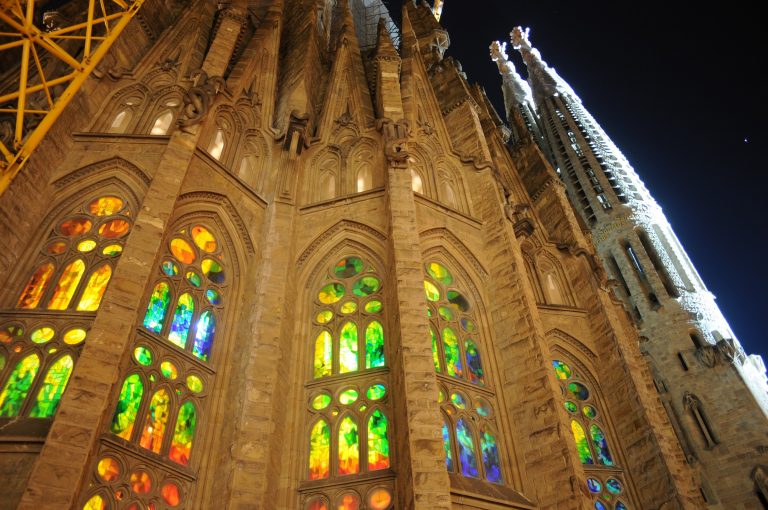
Highlights: the foundation stone went down on 19 March 1882 and the work is now in its 144th year. Inside, the columns branch like a forest, and the stained glass on the east side turns the morning light blue and green while the west side turns the afternoon red and orange. Going in before noon or after it gives you a different colour of building. The towers look out over the city and the Mediterranean, and they are not in the basic ticket.
Practical note: the basic ticket is EUR 26 and the version with the towers EUR 36. What that EUR 10 buys is the lift up and the spiral staircase down. Tickets are sold only through the official website; there is no counter. It does not close on any day of the year.
- Admission
- Basic EUR 26; with towers EUR 36; guided EUR 30; guided with towers EUR 40
- Hours
- Apr–Sep Mon–Fri 9:00–20:00, Sat 9:00–18:00, Sun 10:30–20:00; Nov–Feb Mon–Sat 9:00–18:00, Sun 10:30–18:00
- Booking
- Online only, timed slot
- Nearest
- Sagrada Família metro
Sunday opens late, at 10:30, because the morning is given to mass. Landing on a Sunday takes an hour and a half out of this morning. Unless the Park Güell slot can be pulled earlier, swapping day two with day three is the cleaner fix.
Afternoon: the free hours at Park Güell are not open to visitors
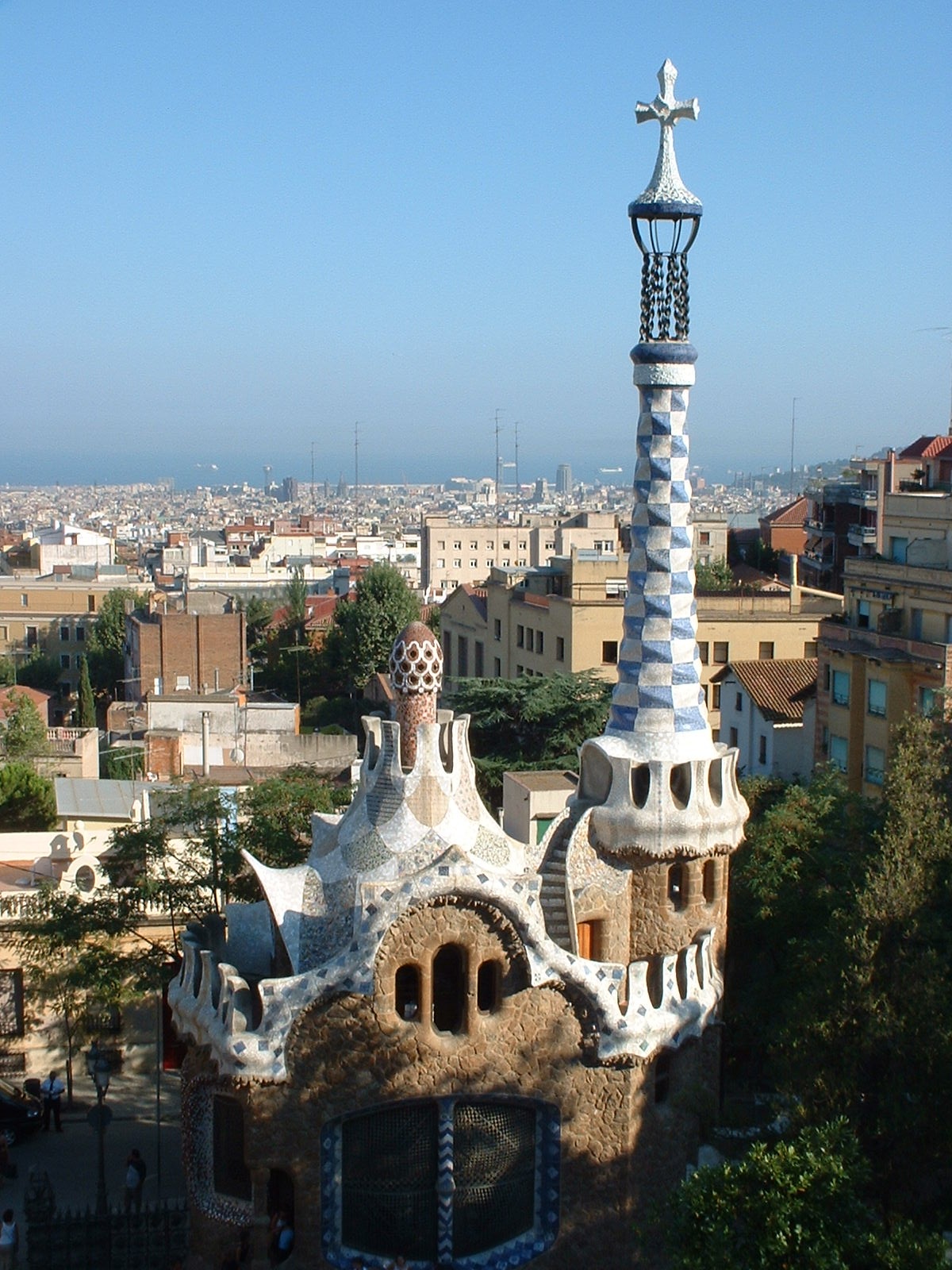
Highlights: what is charged for is not the whole park but the Monumental Zone, where Gaudí’s work is concentrated. The mosaic lizard, the undulating bench, the great staircase with the city laid out below it. It was planned as a housing estate, failed to sell and became a park instead, and that history is still legible in the retaining walls and the shape of the paths.
Practical note: tickets run in timed slots from 9:30 to 19:30, and you cannot get in more than 30 minutes after the time on yours. The BON DIA BARCELONA hours from 7:00 to 9:30 and the BON VESPRE BARCELONA hours from 20:00 to 22:00 are reserved for residents and local pass holders, so visitors have no way into them.
- Admission
- General EUR 18; ages 7–12 and over 65 EUR 13.50; under 6 EUR 0
- Slots
- 9:30–19:30 (timed)
- Closed
- Open all year
- Nearest
- Lesseps or Vallcarca metro, then uphill
It is a climb from either station. The Vallcarca side has a run of escalators; the Lesseps side is a paved slope on foot. With no luggage neither matters. Coming down, the bus is kinder to your legs.
Evening: buying Casa Batlló at the door costs up to EUR 15 more
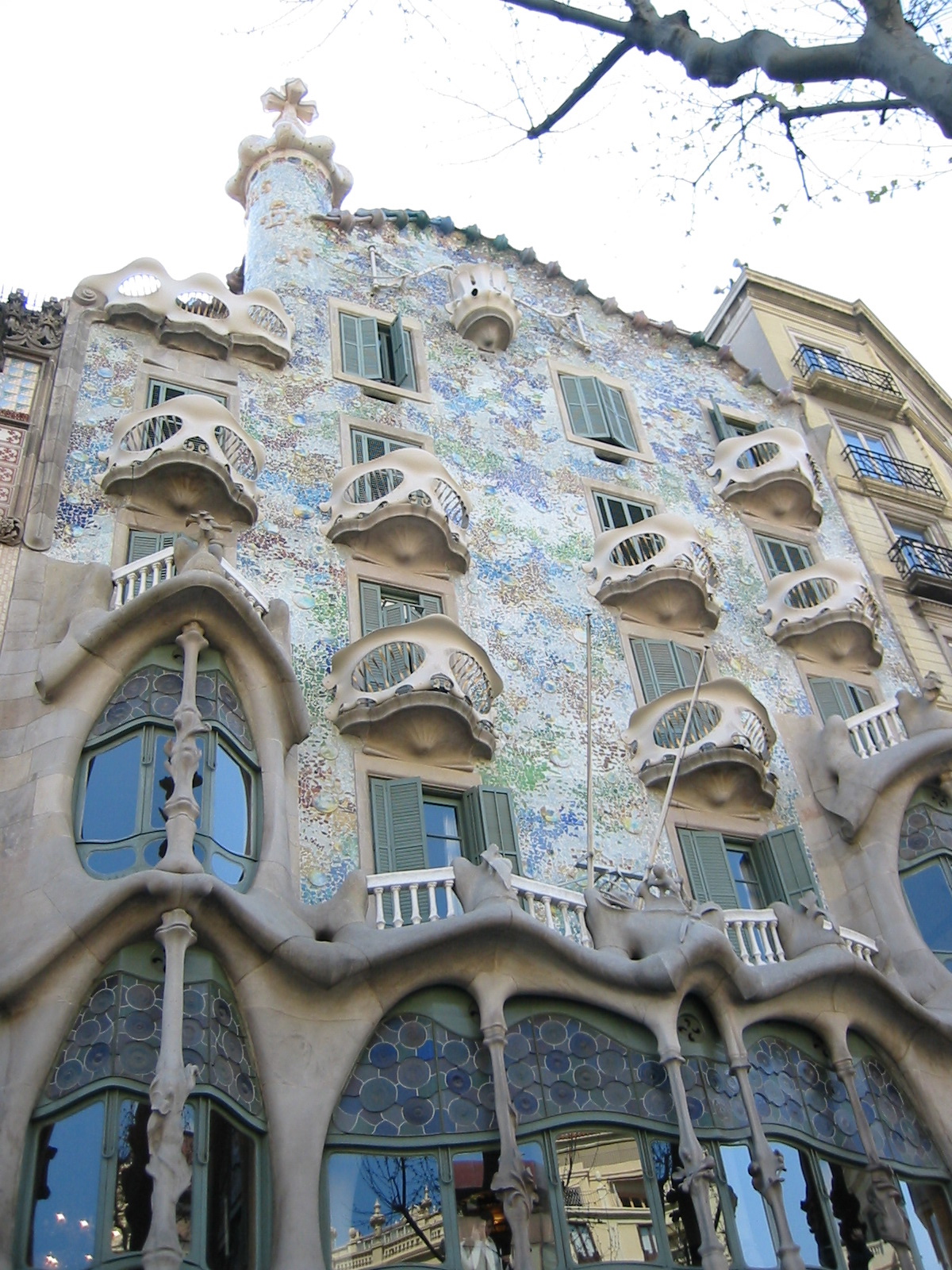
Highlights: the broken tile across the front reads blue or green depending on the angle of the light. Inside there is no straight line in a window frame, a staircase or a handrail, and the tiling of the lightwell deepens in blue towards the upper floors. That gradient evens out the daylight, which makes it engineering rather than decoration. The roof, ridged like a dragon’s back, finishes the building off.
Practical note: pricing moves with demand and general entry starts at EUR 29. Booking earlier costs less, and buying at the door on the day runs EUR 4 to 15 above the online price. Under-12s go free. It stays open to 19:15, which makes the late slots easy to get.
- Admission
- General entry from EUR 29 (the door is EUR 4–15 higher)
- Hours
- 9:00–19:15
- Nearest
- Passeig de Gràcia metro
Casa Milà, on the same street, is open under the name La Pedrera. General entry there also starts at EUR 29, with a sunset ticket from 17:30 starting at EUR 25. Go inside both and you are at EUR 58 a head, which makes it the heaviest admission line in this trip.
DAY 3Enter the old town through the market and leave through the museum
Why this order: the market has the fullest counters before noon. From there walk south down La Rambla into the lanes, and go into the museum once the light has dropped.
The metro barely features today. La Boqueria to the cathedral is ten minutes on foot, and the cathedral to the Picasso Museum another ten. La Rambla and the Gothic Quarter are the walking that joins those three points.
Morning: the market closes on Sundays, and that shapes the whole trip
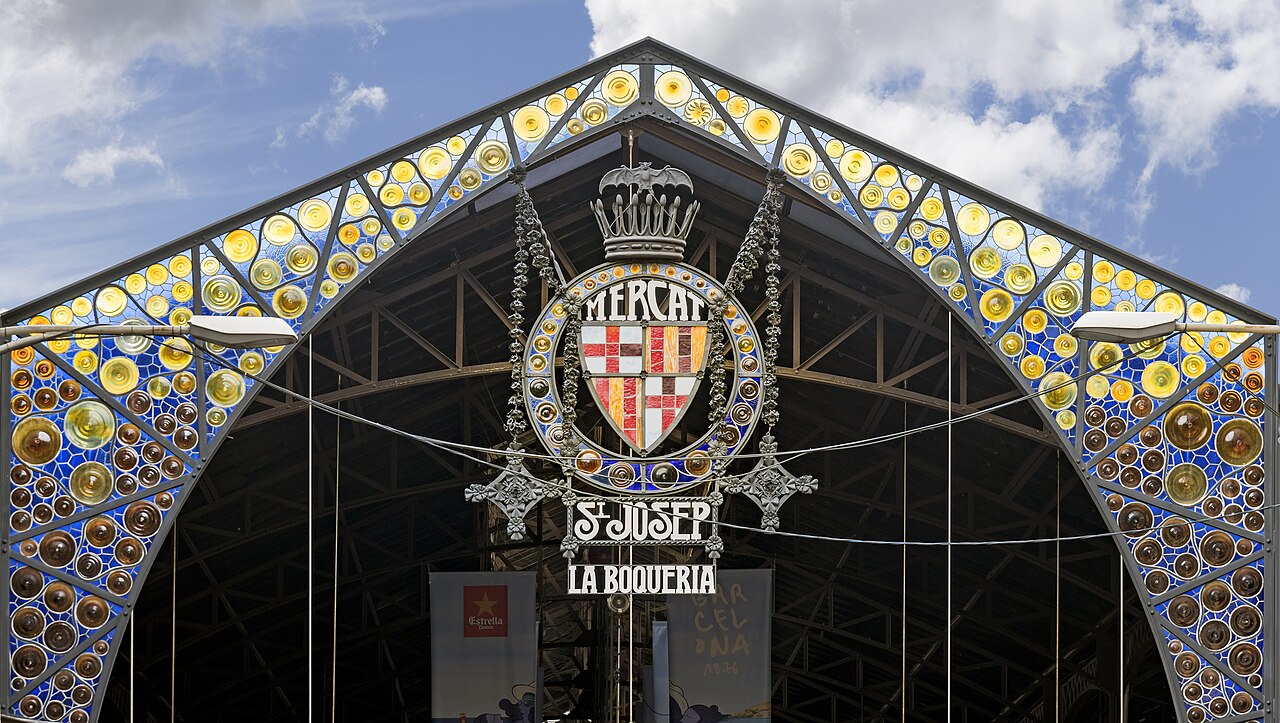
Highlights: fruit, cured ham and seafood, each gathered along its own aisle. The further in you go the fewer skewers and juice cups aimed at visitors there are, and the more stalls selling by weight. Bars inside the market serve at the counter, where ham and cava arrive from the morning onwards. The entrance on La Rambla is the congested one; coming in from the back moves faster.
Practical note: it trades Monday to Saturday from 8:00 to 20:30 and closes on Sundays. Some stalls start shutting in the late afternoon, so the counters are fullest before noon. The crowd is dense, and this is the stretch of La Rambla that the Japanese consulate general in Barcelona names specifically for pickpocketing.
- Entry
- EUR 0
- Hours
- Mon–Sat 8:00–20:30 (closed Sunday)
- Nearest
- Liceu metro
La Rambla runs just under a kilometre south from the market to the Columbus monument at the harbour, a promenade down the middle with a carriageway on each side. The flow of people looks one-way and is not, so those stopping and those walking collide continuously. Carrying your bag in front of you is the practical answer.
Afternoon: the cathedral charges differently depending on the hour
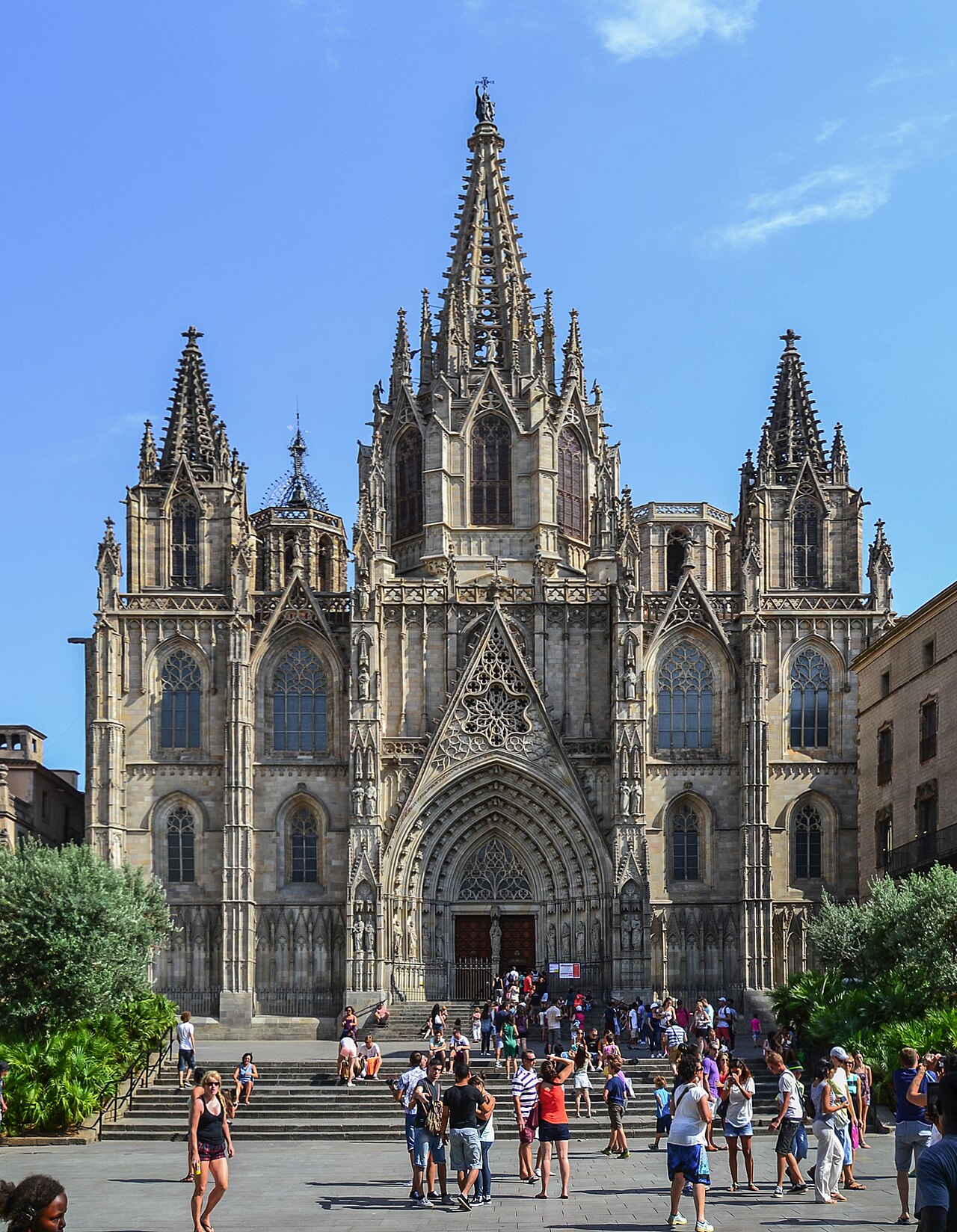
Highlights: twin towers on the front and a spire at the centre, and in the cloister garden thirteen white geese, one for each year of Saint Eulalia’s life when she was martyred. The Gothic Quarter around it folds into a maze of stone lanes with almost no straight streets in it. Rather than walking with a map open, you get through faster by taking a fresh bearing every time you come out into a square.
Practical note: the cathedral charges by time of day, with a donation asked during the visiting hours in the middle of the day. Take the figure from the notice at the door on the day you go.
- Admission
- Varies by time of day (posted on site; not confirmed)
- Nearest
- Jaume I metro
Evening: the Picasso Museum shuts on Mondays, and the free slots fill from four days out
The Picasso Museum is EUR 14 online and EUR 15 at the door. What matters more than that euro is the free window: in summer, Thursday to Saturday from 19:00 to 21:00; in winter, Thursdays from 16:00 to 19:00. The first Sunday of each month is free as well. All of them need a booking, and reservations open at 10:00 four days before the visit.
The collection leans on early work, with the Barcelona years before the blue period held together in one place. The 58 canvases of the Las Meninas series are in the same building. Picasso was in this city from 14 to 19, and the hang lets you follow that. It closes on Mondays, and on 1 January, 1 May, 24 June and 25 December.
Dinner starts after 20:00. Spanish kitchens are often not working at seven, and even a tapas bar does not fill properly until around nine. The form is to order a little at a time and let the plates accumulate: patatas bravas, tortilla, pinchos and a plate of ham, with cava or sangria to drink. Not hurrying is what fits the place.
DAY 4The nights the fountain runs decide the whole four days backwards
Why this order: sea in the morning, hill in the afternoon, then wait at the foot of the hill until the light goes and the fountain starts. Ride up, walk down.
The Magic Fountain on Montjuïc only runs on Wednesday to Sunday evenings. The 2026 summer season is 3 June to 27 September, with shows at 21:30 and 22:00. Nothing happens on Monday or Tuesday, so if this day falls on one of those, the evening of day four is empty.
Lay that over the market’s Sunday closure and the museum’s Monday closure and the workable departure days narrow. With day one as the day you leave Japan, day three two days later and day four three days later, it comes out like this.
Two departures fail, Friday and Saturday, and each of them loses two things at once. Those are exactly the two days easiest to take off work, so booking the Friday flight without thinking means giving up both the market and the fountain. Leaving on a Tuesday, Wednesday or Thursday puts the summer free window at the Picasso Museum, Thursday to Saturday from 19:00 to 21:00, on day three and saves the two of you EUR 28.
Morning: the promenade takes more walking than the sand does
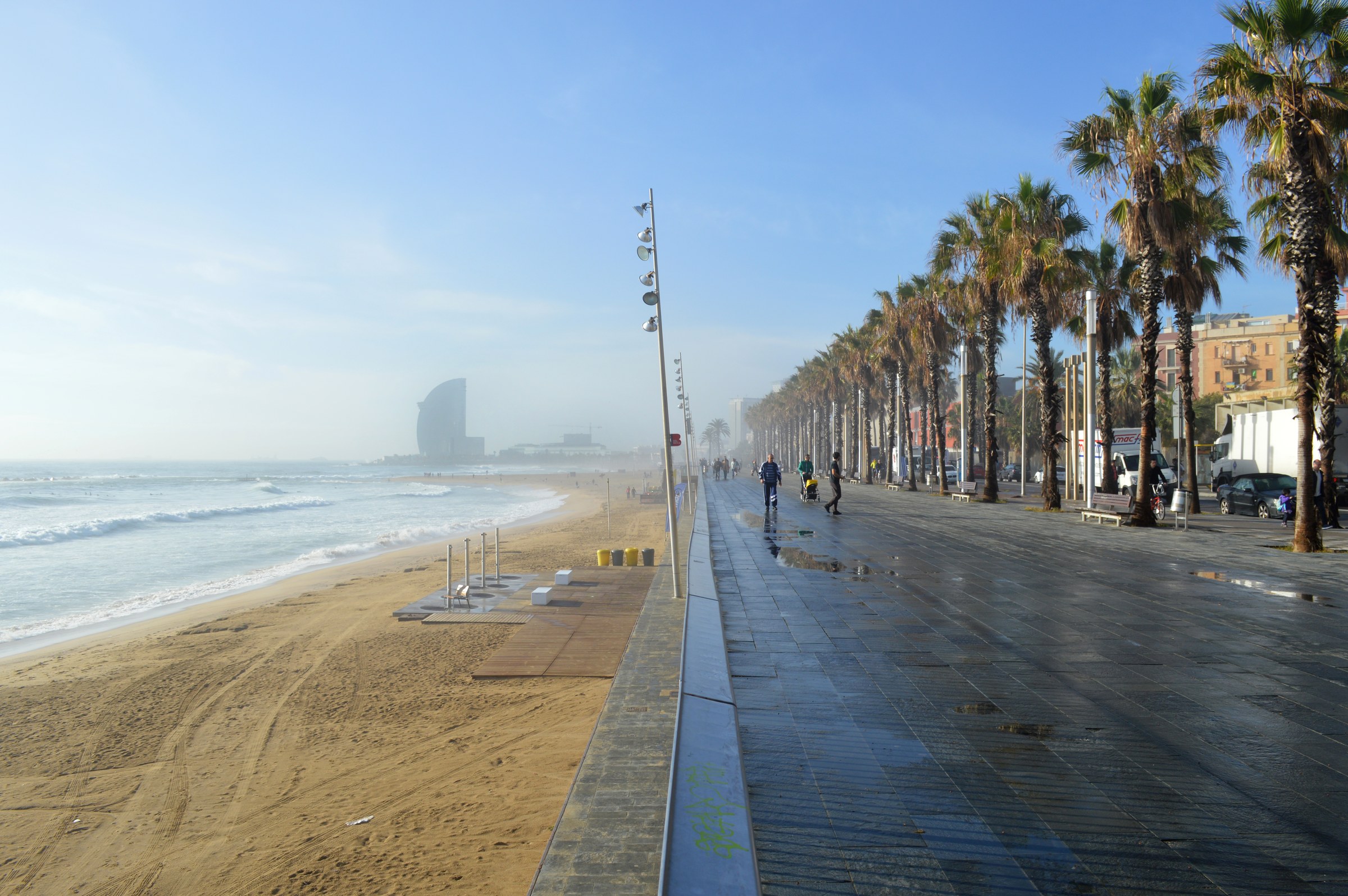
Highlights: the promenade behind the beach is the more interesting walk of the two. Palms and a cycle path run alongside each other, with volleyball courts and showers scattered on the sea side. Walk north and the sail shape of the Hotel W appears; walk south and you reach the marina and the old warehouses. Two morning hours go here without anybody swimming.
Practical note: it is about ten minutes on foot from Barceloneta metro to the water, and the streets inside the district are narrow and straight. There is almost no shade in the middle of a summer day, so walking early and moving to a market or indoors at noon leaves something in your legs.
- Entry
- EUR 0
- Nearest
- Barceloneta metro
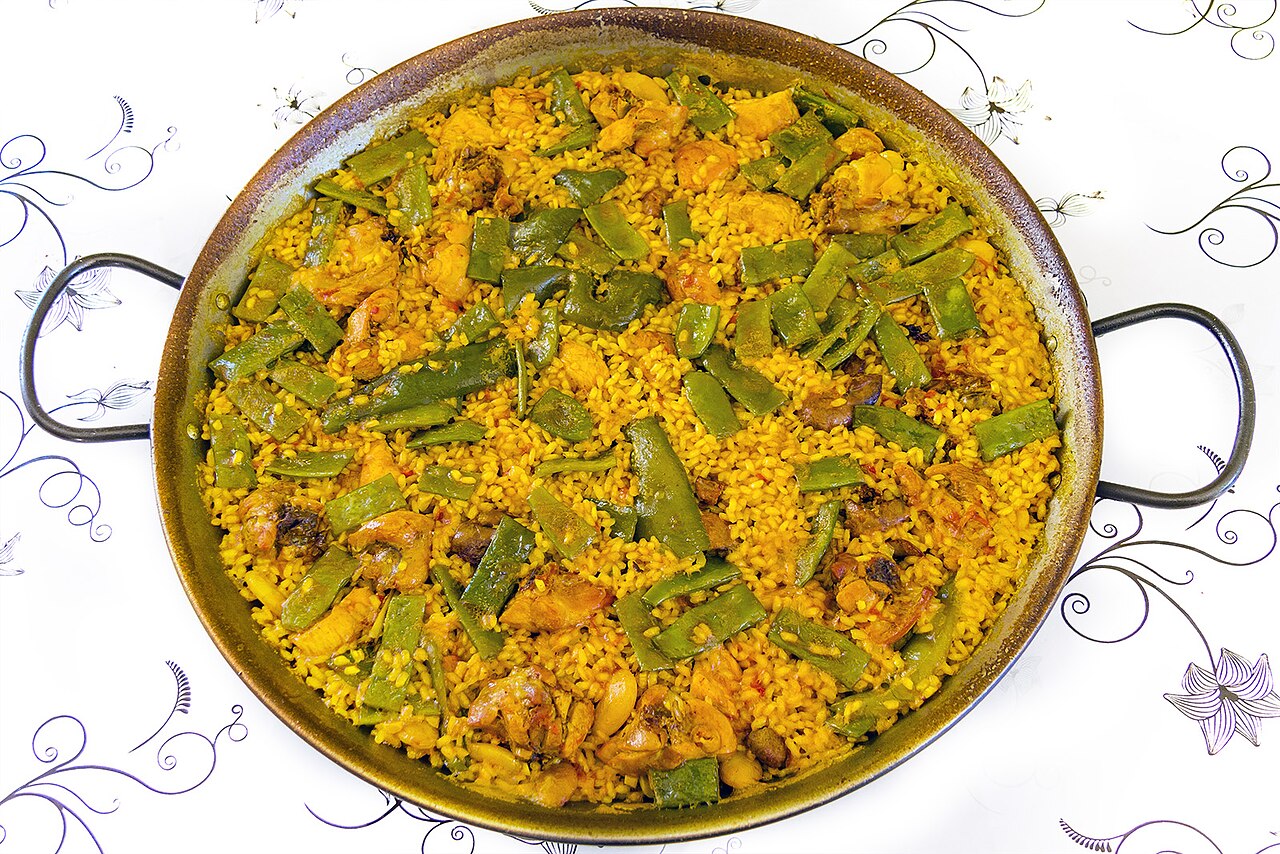
Lunch is rice, at a restaurant on the water. Paella is known abroad in its seafood form, but the original from Valencia is chicken and rabbit with flat green beans. The seafood version has its own name, paella de marisco. Either takes more than 20 minutes from the order to the pan coming off, which makes it the wrong lunch on a day with a clock in it.
Afternoon into evening: go up the hill, come down, and wait for the water
Montjuïc is the hill south-west of the centre as you look from the sea, and it holds the port and the city in one view. On it are the Miró Foundation, the Olympic stadium and the castle at the top. A cable car and a funicular both run up, which saves walking the slope.
Come down around sunset to the fountain terrace in front of the national art museum. The show is free, at 21:30 and 22:00, water and light and music working together for about 20 minutes a time. The steps around the square start filling half an hour before it begins.
In winter the show is not running. The 2026 season is 3 June to 27 September, and whether anything happens outside that varies by year. On winter dates, moving the evening of day four to the lights on Passeig de Gràcia or to a bar in the Gothic Quarter is the reliable version.
DAY 5-6The last day is the lodging tax and the arithmetic to the airport
Why this order: build backwards from the time you leave for the airport. Do not put the hours spent dragging a suitcase over cobbles into the itinerary.
At checkout a charge appears that was not in the booking-site price. It is the lodging tax. The Catalan tourist tax changed rate on 1 April 2026, and Barcelona’s municipal surcharge sits on top of it, so the bill has two storeys. The combined per-night figure is worth asking the hotel for when you book, and then the settlement at the desk holds no surprises.
Cities take different approaches to this, and the range is set out in five cities recalculated to a per-night figure.
The airport is back the way you came, on L9 Sud. The airport ticket is EUR 5.90 one way, EUR 11.80 a head for the return. The run from the centre to the airport station takes around 30 minutes, with check-in and security on top of that. For a morning flight you are leaving the city before dawn.
Why we skipped the inside of Casa Milà
There are two Gaudí buildings on Passeig de Gràcia and most itineraries go into both. These four nights go inside one of them, Casa Batlló.
Two reasons. EUR 29 a head charged twice, and a visit that is close to identical. Both are apartment blocks by the same architect from the same period on the same street, and both run you through the same sequence: see an apartment, go up to the roof. Entering the second thins whatever impression the first one made.
Choosing Casa Milà instead makes the roof the point. The chimneys up there, shaped like helmeted soldiers, stand on a terrace wider than Casa Batlló’s and open enough to walk around. Its sunset ticket from 17:30 starts at EUR 25, EUR 4 under general entry, and it falls at the hour the light goes. If the roof is what you want, swap them.
Alternatives
Rainy-day swap
Day four is the fragile one. The promenade, the hill and the fountain terrace are all outdoors and none of them has a roof. Rain takes the morning, the afternoon and the evening together.
What it swaps with is day three. La Boqueria is a covered market and the Picasso Museum is indoors, and the lanes of the Gothic Quarter are tight enough between buildings to walk under an umbrella. Where the forecast arrives early enough to exchange days three and four, less is lost that way. Check the market’s Sunday closure and the museum’s Monday closure before you move anything.
Day two holds up well in rain. The Sagrada Família and Casa Batlló are both indoors and only Park Güell is not. If the slot can be rebooked, the park moves to another day and that time goes to the inside of Casa Milà.
If the flight is delayed by an hour or more
Because day one has nothing timed in it, a late outbound costs only the evening walk on Passeig de Gràcia. That stretch is free, so no money goes with it.
Day two is the frightening one. The Sagrada Família and Park Güell both run on slots, and Park Güell will not let you in more than 30 minutes past the time on your ticket. To absorb a possible delay, book the Sagrada Família for 11:00 or later rather than 9:00. None of these places refunds as a rule, so a missed slot cannot be rebought.
A delay on the way home only lengthens the wait at the airport, but a late start out of the city is a different matter. L9 Sud does not pass through the centre and takes one or two changes to reach. With a bag to check, work on leaving the hotel three hours before departure.
When you’re tired
The first thing to go is Montjuïc on the afternoon of day four. Going up the hill and coming back down uses close to three hours and most of that is travel. The fountain can be watched from the square at the foot without going up at all, so clearing the entire afternoon leaves the evening intact.
Park Güell on day two goes next. The climb from the station and the steps inside the park are the hardest stretch on your legs in this whole route. Dropping it returns EUR 36 to the two of you.
What must not be cut is the morning of day two. The Sagrada Família is online-only and timed, the one place here you cannot decide to re-enter on a whim, so it needs the morning while your legs are fresh. Who this route does not suit is anyone who feels 15,000 steps the following day. Day three is walked end to end on stone lanes. To hold the step count down, break day three’s afternoon with a taxi, or take five nights and split the old town across two days.
Where to stay
Two conditions matter for a room on this route: within five minutes of a metro station on foot, and not much cobblestone on the stretch where you are pulling a suitcase. Barcelona’s districts are built very differently from one another, and the same “five minutes from the station” means different things for luggage.
The Eixample, around Passeig de Gràcia, was laid out on a grid in the nineteenth century. Every block corner is chamfered, so the junctions are wide and so are the pavements. It is the easiest district to pull a bag through, and all three of the day-two buildings are either walkable or one metro line away. The drawback is price: the same room costs more here than in the old town.
The Gothic Quarter and El Raval are inside the old town and put the whole of day three within walking distance of the room. There are people on the streets at night and the widest choice of bars. In exchange the lanes are narrow and cobbled, and your suitcase wheels announce themselves on the arrival and departure days. These are also the districts the consulate general names for theft, so it is worth looking at the map before booking to see whether your route home at night runs down a narrow lane.
Barceloneta starts day four outside the front door. It faces the seafront promenade and its streets run straight, and L9 Sud reaches it from the airport with one change. Against that, the old town and Passeig de Gràcia are a metro ride away every day, so the ride count runs higher than in the other districts.
Book in four stages: flights, the Sagrada Família slot, Park Güell and Casa Batlló, then the room. Admissions come before the hotel because the Sagrada Família ticket exists only online, and lining the other two up against whatever slot you got is quicker than the reverse. Dated tickets and experiences on the ground are on Klook’s Barcelona listings, searchable by date.
Splitting how you pay is worth doing. The method the consulate general names is scattering coins or cards on the pavement to pull your attention while a wallet comes out of your bag. Lose the wallet and the cash and the cards go together, so carrying two cards on different networks, kept apart is the practical defence. Connectivity is split by condition in the eSIM and pocket Wi-Fi comparison.
What this trip costs
Assumptions: two adults, arriving at El Prat and using L9 Sud both ways, going inside two of the Gaudí buildings on the basic Sagrada Família ticket and at Casa Batlló, and booking the Picasso Museum online. Flights, rooms and meals are out of the total because they move on the same dates. The metro count comes from the route itself: three rides on day two, one on day three, three on day four and one on day five, eight in all.
Every figure above is the published rate as of 2026-09-14. The yen conversion uses the European Central Bank reference rate of 2026-09-11, JPY 178.56 to the euro. The cathedral admission and the combined Barcelona lodging tax are not confirmed.
Of that EUR 223.60, admissions are EUR 174 and transport EUR 49.60. Unlike Rome or Paris, the airport run here is cheap and the buildings are what weigh. It is not that the city is walkable so transport is light; it is that the metro is inexpensive. EUR 1.30 a ride is at the low end for a western European city of this size.
There are three places to bring the admissions down. Hitting the free window at the Picasso Museum saves EUR 28 for two, leaving Casa Batlló to its exterior saves EUR 58, and dropping Park Güell saves EUR 36. Do all three and the total falls to EUR 101.60, at which point you have not been inside a single Gaudí building. Going the other way, the Sagrada Família tower ticket adds EUR 20 for two and the inside of Casa Milà EUR 58.
On top of this sit the flights, the room and the food. The airfare moves most, close to doubling between a non-stop and a connection and between seasons. Rooms spread by district and month, and food is predictable if you build it out of small plates in bars. Terrace tables facing La Rambla carry a cover charge, so the same plate costs more there than it does one lane back.
Durations and time on site above are built from the published opening hours. For another European city across four nights, the Rome four-night plan leans even harder on walking, and the Paris four-night plan is shaped by which day each museum closes.
Sources: Sagrada Família; Park Güell; Casa Batlló; Casa Milà (La Pedrera); Picasso Museum; La Boqueria; Barcelona City Council (Magic Fountain); TMB; the Catalan tax agency / the Consulate General of Japan in Barcelona / the European Commission (EES and ETIAS) / European Central Bank reference rates / Checked on 2026-09-14 / Photographs: Wikimedia Commons, Rapomon, Didier Descouens, Mromanchenko, DimiTalen, Jan Harenburg (Wikimedia Commons, CC0 / CC BY-SA 3.0 / CC BY-SA 4.0) / Featured image: Jcca76, CC BY-SA 4.0 (Wikimedia Commons)
Other sales ending soon
 4 days leftuntil Oct 24Air Busan Takamatsu-Busan Coupon: Up to 9,000 Yen Off Until October 24
 5 days leftuntil Oct 25JAL Hong Kong Campaign: Tokyo–Hong Kong Round Trip from 75,800 Yen (until 25 Oct)
 11 days leftuntil Oct 31Jin Air Kobe–Seoul: 5,000 yen off a round trip with code KTOUKB1, until 31 October
 11 days leftuntil Oct 31Jin Air to Busan: 4,000 yen off a round trip with code KTOPUS, first 300 only