Siem Reap 3-Night, 5-Day Model Plan: A Journey Through World Heritage Angkor
AuthorMIRUTOBE editors
Table of Contents8 items
- Itinerary
- DAY 1 Entry has two separate procedures, introduced at different times
- DAY 2 Passes are sold on Road 60 only. Anything bought elsewhere is void
- DAY 3 Carving 25 km north-east, and a lake whose tickets are counter-only
- DAY 4 Shop in town and leave to suit the connection
- Alternatives
- Where to stay
- What this trip costs
Valid passes are sold only at the official counter and online, and that counter is on Road 60, four kilometres out of the centre. Even with just two days at the ruins, a three-day pass costs USD 12 less a head than two one-day passes.
Itinerary
DAY 1Entry has two separate procedures, introduced at different times
Why this order: day one is a single leg from the airport to the hotel. The gates open at 05:00 tomorrow, so nothing goes into this evening.
Before you go: the e-Visa and e-Arrival are different systems from different years
Entering Cambodia needs a tourist visa and Cambodia e-Arrival. It is often written as though both became compulsory in September 2024, which is not accurate. The tourist visa system long predates that; what began in 2024 was e-Arrival.
e-Arrival was built by the General Department of Immigration and merges four things into one online form: visa on arrival, the arrival card, the health declaration and the customs declaration. It can be submitted from seven days before entry up to the day itself, and there is no fee. Reading it as the paper forms consolidated into one is enough.
The tourist visa fee could not be confirmed, because the official site returns a bot-protection screen and does not open. The figure of about USD 30 circulates widely, but with no primary source behind it, it is not in the cost table. What is clear is where to apply: the Ministry of Foreign Affairs and International Cooperation links evisa.gov.kh as the official channel. That single site is the government’s, not the agent sites that rank above it in a search.
Night: the airport moved to a different site in 2023
Siem Reap’s airport was replaced on 16 October 2023. The present Siem Reap Angkor International Airport occupies 700 hectares with a 3,600 by 45 metre runway and a terminal floor area of 81,800 square metres, rated for seven million passengers a year. In 2025 it handled 15,200 movements, 1.478 million passengers and 1,202 tonnes of cargo. It is developed and operated by a company backed by three Yunnan-based firms under a 55-year build-operate-transfer agreement with the Royal Government of Cambodia. It is not the airport just outside town that older guides describe, so borrowing their sense of the distance to your hotel will be wrong.
The arrivals layout is published. About 80 m from the international exit is the shuttle bus stop, about 60 m the designated Grab pick-up point, and then the taxi rank. The city-side bus stop is in front of ACE School on 7 Makara Road. Neither the distance to town, nor the journey time, nor a fixed fare appears on the official site, however. Articles that give a number of minutes by car are using untraceable figures, so confirming the time with the driver after you land is faster.
The US dollar circulates widely. According to the Cambodian tourism office in Japan, change is given at roughly 4,000 riel to the dollar, and carrying small notes of USD 50 and below means street stalls are never a problem. As a yen benchmark, USD 1 is JPY 153.61. The dry season runs from November to May, and November to January is described as the least rainy and easiest for walking.
Voltage and plug type do not appear on Electricite du Cambodge’s official site. The established description is a mix of type A and C at 230 V, but with no primary source confirming it, what your equipment accepts has to be read off the equipment. How to tell the two jobs apart is set out in the difference between a plug adapter and a transformer.
DAY 2Passes are sold on Road 60 only. Anything bought elsewhere is void
Why this order: the gates open at 05:00 and close at 18:30. Leave for sunrise and finish the two central sites before the sun is high. Buy the pass the day before.
Highlights: three passes, one day at USD 37, three days at USD 62 and seven days at USD 72. Validity is counted differently for each: the one-day is that day only, the three-day gives you three days within seven of issue, and the seven-day gives seven days within thirty. They need not be consecutive, so putting a lake day or a city day in between wastes nothing. More than 50 sites are covered.
Practical note: passes are sold only by the Angkor Ticket Office, Angkor Enterprise, and anything bought elsewhere is void. The physical office is on Road 60, four kilometres from the centre. Otherwise there are five channels: the official site, the official Angkor Pass app, kiosks and accredited guides. Payment is by Visa, Mastercard or UnionPay. The one-day pass needs no photograph; the three-day and seven-day do. Under-12s are exempt from the fee and need no pass at all, though a passport may be requested to confirm age.
- One day
- USD 37 (that day only)
- Three days
- USD 62 (three days within seven of issue)
- Seven days
- USD 72 (seven days within thirty of issue)
- Gates
- Daily 5:00–18:30; more than 50 sites covered
- Counter
- Road 60, 4 km from the centre, plus the official site and app
- Official
- Angkor Enterprise ↗
Which pass to buy is settled by arithmetic. This plan enters the park on two days, DAY 2 and DAY 3, and two one-day passes cost USD 74. The three-day is USD 62, so even using it twice it is USD 12 cheaper a head. There is no obligation to use all three days. The three-day only loses when you go to the ruins on a single day.
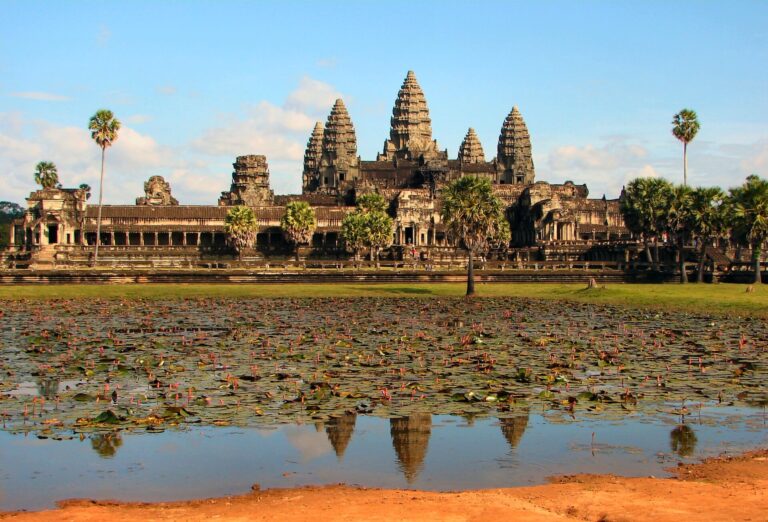
Dawn: Angkor Wat covers 162.6 hectares
The largest religious building in the world, on a site of 162.6 hectares. Suryavarman II began it in the first half of the twelfth century, and by the end of that century it had passed from a Hindu temple to a Buddhist one. The five towers reflected in the pool beside the western causeway, with the sun coming up behind them, draw the biggest crowd of any hour in this town. The gates open at 05:00, so you leave the hotel in the dark. Take something that works as a torch.
Once the sun is up, go into the galleries. Whole walls of relief carving, including the churning of the sea of milk, and they are easier to take in once the sunrise crowd has gone. The stairs to the central sanctuary are steep, so going back to the hotel after sunrise and returning in the cooler part of the day is a workable shape.
Morning: the number of towers at the Bayon is not officially published
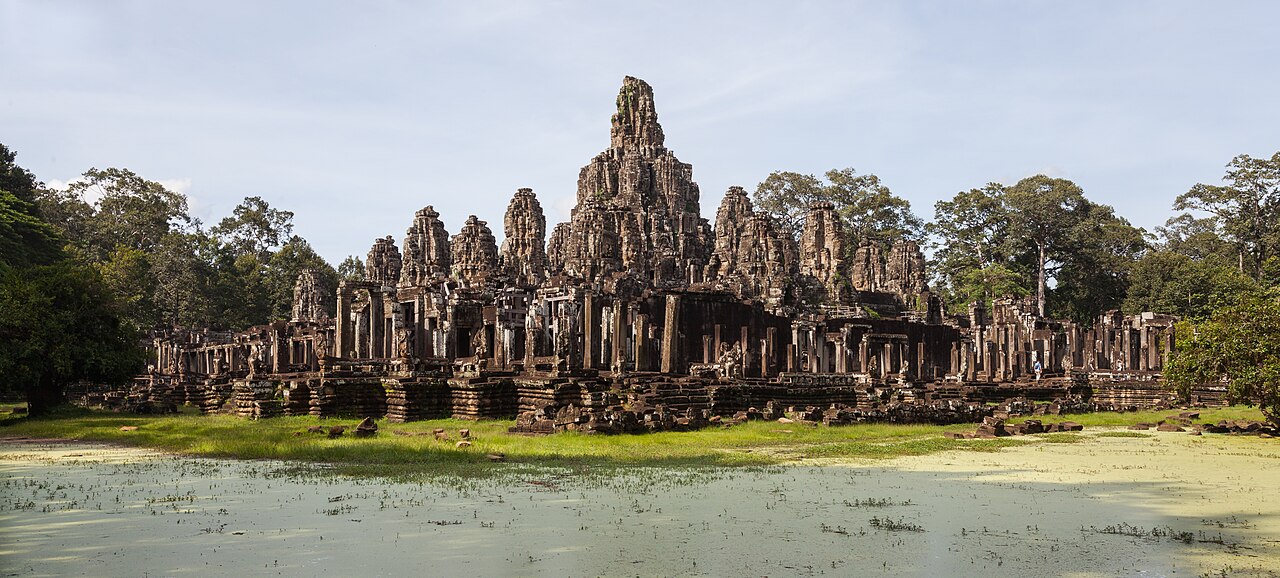
The Bayon stands at the centre of the royal city of Angkor Thom. Jayavarman VII, a Mahayana Buddhist, built it as the state temple at the end of the twelfth century and the start of the thirteenth. The faces called the smile of the Khmer are carved on all four sides of the towers.
The figure of about 50 towers appears everywhere, but no official statement of the Bayon’s tower count could be found. The 50 that appears on the Angkor Enterprise site is the number of sites the pass admits you to. The number has taken on a life of its own, so it is left out here.
North-west of the Bayon, inside the same Angkor Thom, is the Baphuon, a three-tiered temple mountain built as the state temple by Udayadityavarman II in the middle of the eleventh century and dedicated to Shiva. Seeing them in sequence shows you a Buddhist and a Hindu temple standing inside the same royal city. The Terrace of the Elephants and the Terrace of the Leper King are in the same block and connect on foot.
More than 50 sites are on the same pass, so covering them in two days is not a goal worth setting. The official introduction says there are over a thousand temples. Beyond the three central ones, here are the named sites within the pass.
Preah Khan was built in the twelfth century by Jayavarman VII in honour of his father, north-east of Angkor Thom on the west side of the Jayatataka baray. Phnom Bakheng is a Hindu and Buddhist temple mountain from the reign of Yasovarman at the end of the ninth century, dedicated to Shiva. Both sit between the eras of Angkor Wat and the Bayon, so visiting them after the two central sites lets you see the span of the dynasty’s time.
Buying a three-day pass and using two leaves room to put the remaining day into those two. Because the days need only fall within seven of issue and need not be consecutive, adding half a day on the DAY 4 morning also works.
Afternoon: at Ta Prohm the trees and the stone are still pushing
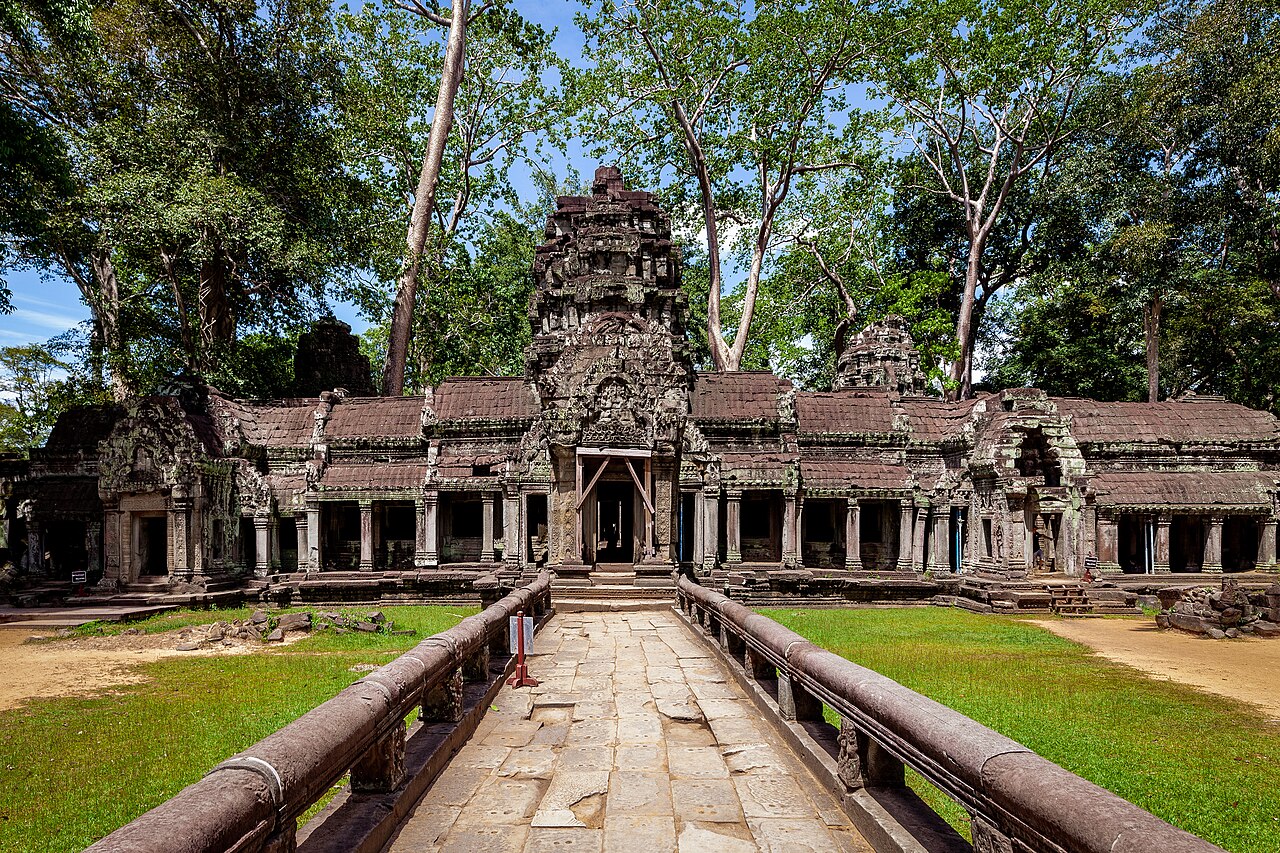
Here the roots of the spung trees have taken hold of the masonry. Restoration policy has been to leave the trees standing rather than cut them, so you see what people built and what the trees are doing to it still in contest. Mid-afternoon, when light comes through the canopy, is when it reads best.
What is forbidden at the ruins: the official code has seven parts
Angkor has an official code of conduct for visitors, divided into seven headings. These are the kind of things you get corrected for without knowing, so reading it once before you buy a pass is worth the time.
The dress rules are the most specific. Shorts and skirts above the knee, and clothing that leaves the shoulders bare, are prohibited in sacred areas. Cover your shoulders and knees is the right direction, and the official wording puts it as a prohibition.
On the structures, it is strictly forbidden to touch the carvings, to sit on fragile structures, to lean on the temples, to move or remove artefacts, and to write graffiti. Additionally, backpacks, pointed umbrellas, tripods and high heels are not recommended inside the temples. The tripod line bites if sunrise photography is why you came.
Angkor has been non-smoking since 2012, as a measure connected to its status with the World Health Organization, with cigarettes causing wildfires given as a reason. Litter is treated the same way.
On monks, it states that you should ask permission before photographing them, and that women should not touch a monk or stand or sit close to one. Then there is what to do about children: buying from them, or giving them sweets or money, is described officially as encouraging them to beg rather than go to school. If you want to help, the guidance is to donate to an accredited organisation.
The remaining two are to respect closure signs and not climb on unstable stone, and to keep noise down because these are sacred places. All of it looks like ordinary courtesy, but since the code names each one, they are things you will be pulled up on.
DAY 3Carving 25 km north-east, and a lake whose tickets are counter-only
Why this order: the outlying site in the morning, the lake in the afternoon. Boat tickets for the lake cannot be bought online, so build in the time to call at the counter.
Morning: Banteay Srei is tenth-century and dedicated to Shiva
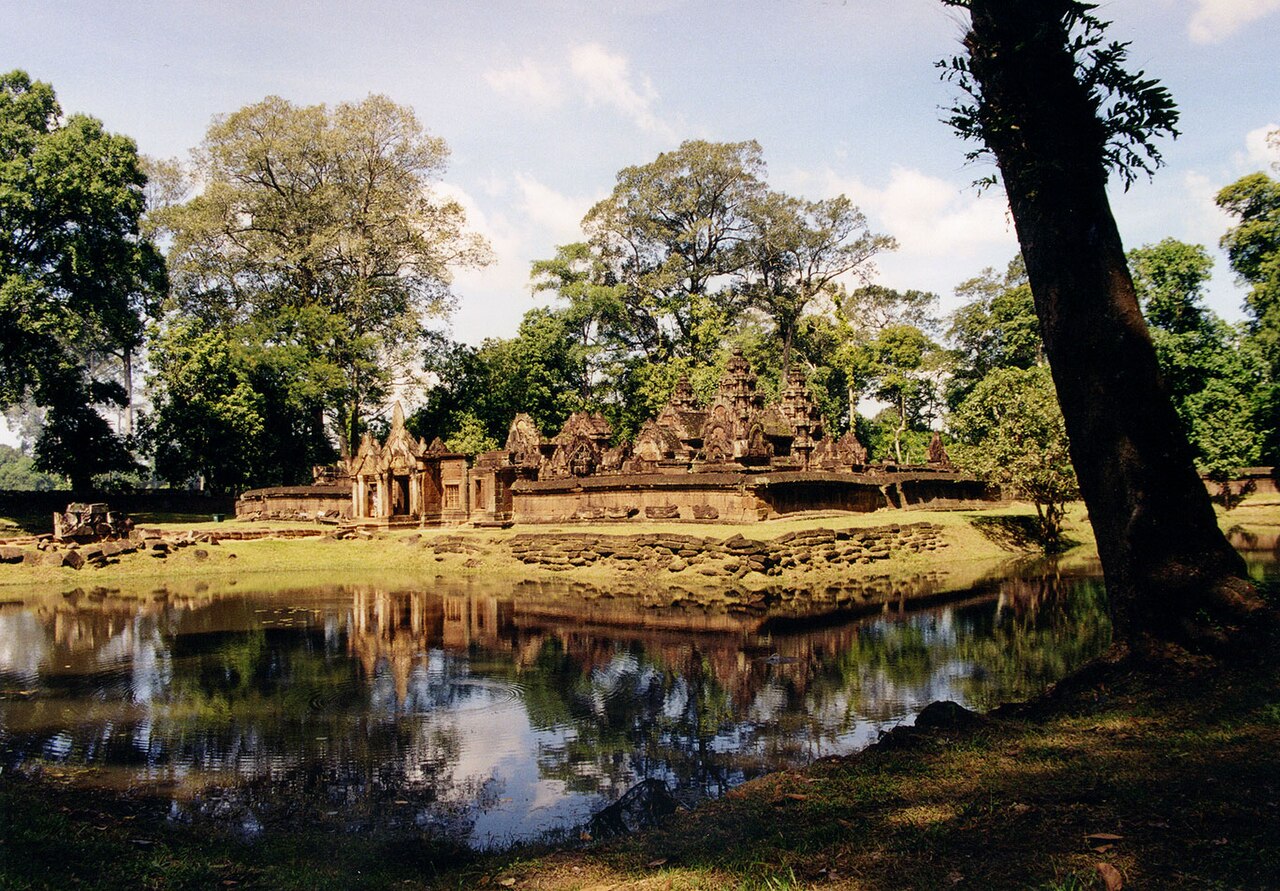
Built in the tenth century and dedicated to Shiva, it stands near the hill of Phnom Dei, and the official location is given as 25 km north-east of the main Angkor group. This temple has long been described as about forty minutes by car from town, but what the official source gives is a distance, and the starting point is central Angkor rather than Siem Reap town. To estimate a journey in minutes, you first have to settle which of the two you are measuring from.
It is known for the fineness of the carving in red sandstone, including the female figure often called the Oriental Mona Lisa. The buildings are small and the ground you cover is far less than at the central sites. As the day after the central group, it fits the way your energy is going.
Afternoon: Tonle Sap tickets cannot be bought online
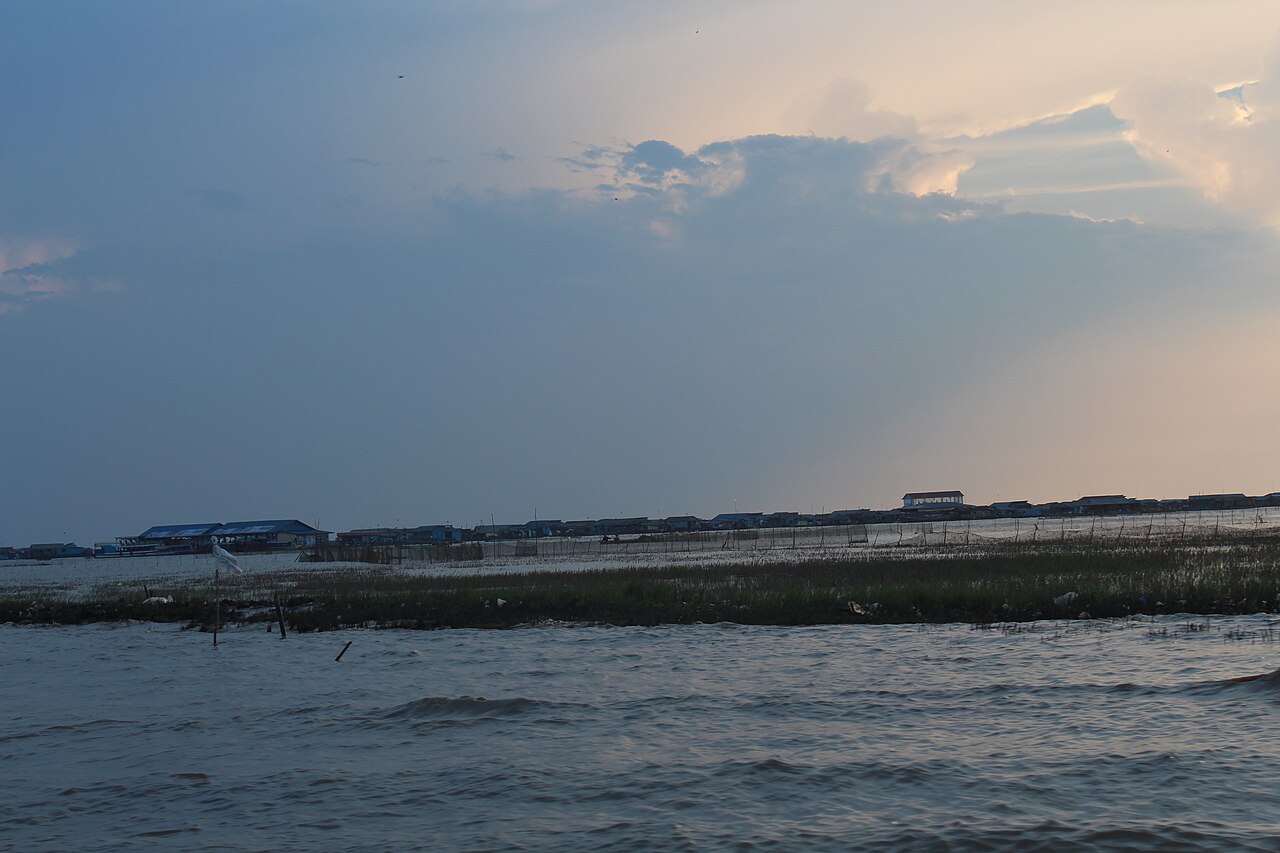
Chong Kneas is the gateway to the lake, and boat tickets are handled by the same operator as the Angkor Pass. These, though, cannot be bought online. The official site states that Chong Kneas tickets are not sold online and must be purchased in person at the counter. There are three ticket types, small, medium and large boat, and the price is quoted at the window.
That is why the line is absent from the cost table. The Angkor Pass has a figure you can know in advance and the boat does not. Even among official charges, this itinerary mixes prices you can read with prices you cannot.
The fact that the lake boats sit with the same operator as the ruins is worth knowing in itself. The official site describes itself as the place to buy entry to the archaeological park and to take a boat around Chong Kneas, so the lake is inside the same frame rather than an afterthought. It also means there is a counter you can buy from without going through anyone who approaches you in the street.
The lake changes size between seasons. The dry season, November to May, is easier for walking but the water level drops; the wet season spreads the water and makes movement harder to predict. Which one you take changes what this day looks like.
Evening: Pub Street is concentrated into one road
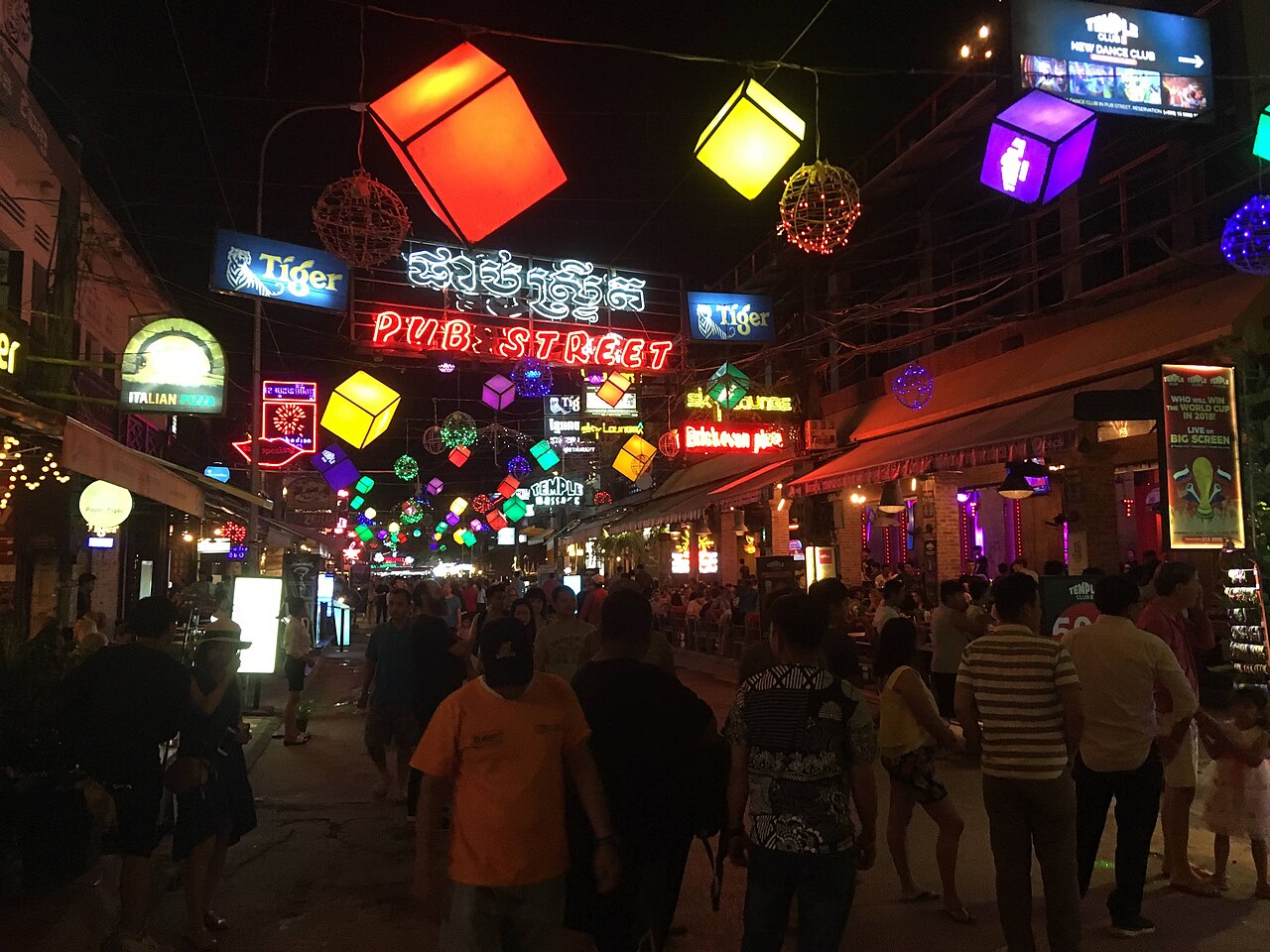
Restaurants and bars cluster around Pub Street in the town centre. The whole range of options is within walking distance of where you get back from the ruins, so the evening needs no travel. For a cold Angkor beer, this road has the highest density there is.
DAY 4Shop in town and leave to suit the connection
Why this order: the journey time to the airport is not published, so leave more slack than feels necessary. No ruins on the last day.
Look for souvenirs at the Old Market and get your legs back with a Khmer massage. Keeping the day inside the town is because there is no direct flight to Japan and you are connecting. Putting the things you could drop onto the last day is what protects the rest of the trip when something slips.
At the market you can pay in dollars or riel. Change comes back at 4,000 riel to the dollar, so anything under a dollar returns as riel. To spend it all before leaving, paying for the last day’s shopping in riel clears your pockets, while keeping larger amounts in dollar notes saves you changing money.
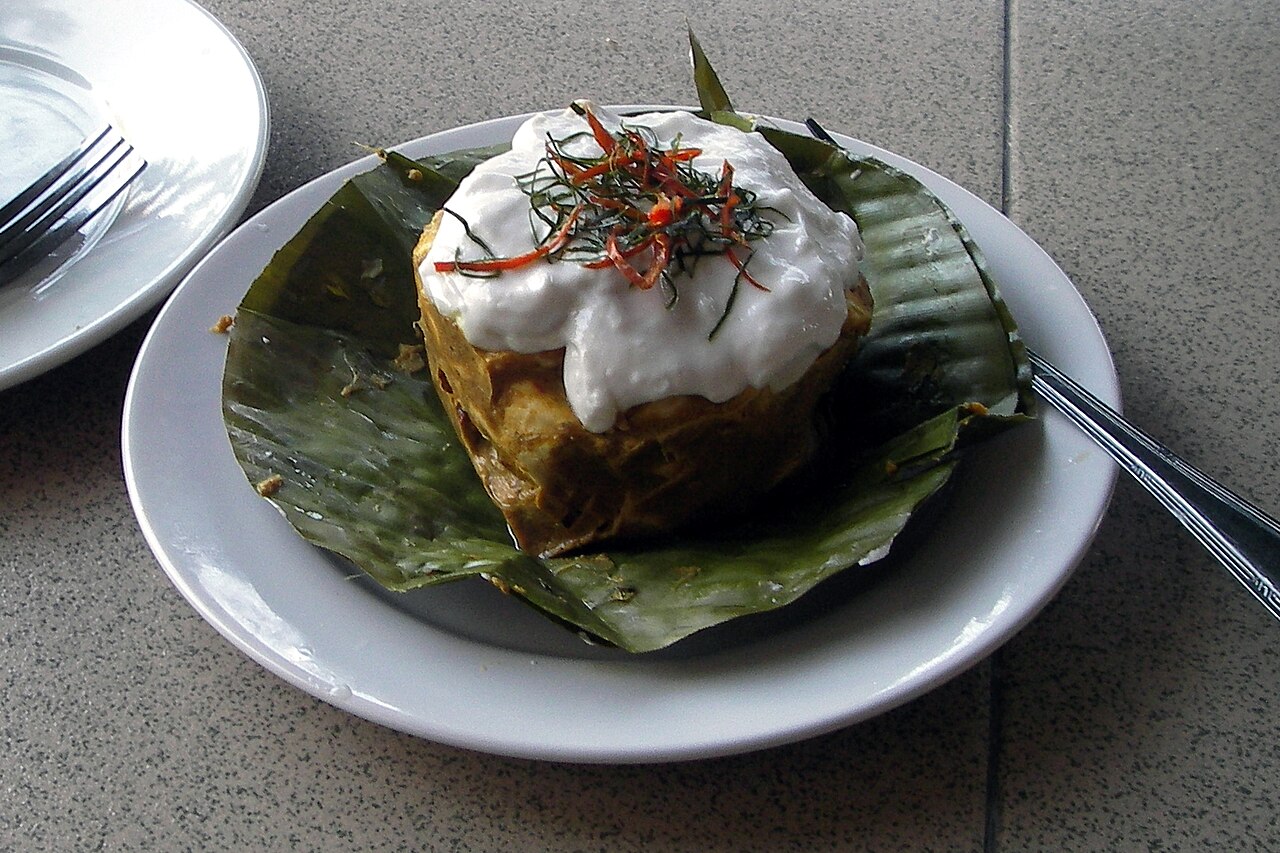
Khmer food is not strongly spicy. Amok, the best known, is a curry steamed with coconut; lok lak is stir-fried beef eaten with rice; kuy teav is a rice-noodle soup and the standard breakfast. Spring rolls come both fried and fresh. After a day walking the ruins, the soup goes down more easily than the rest.
Alternatives
Rainy-day swap
The ruins have no roof. The galleries keep the rain off, but moving around Angkor Thom and walking the causeway at Ta Prohm are outdoors. On a wet day, lengthen the time inside the galleries and cut down the sections in the open.
If photography is why you came, one more rule bites. Tripods are officially not recommended inside the temples. Pack around a tripod for the sunrise and you will be leaving it behind on the day. Choosing gear you can hand-hold keeps the plan intact.
This is where the three-day pass earns its keep. Three days within seven of issue, and they need not be consecutive, so a DAY 2 lost to rain can move to DAY 3 or DAY 4 without wasting the pass. With one-day tickets, that swap is not available.
The lake is higher in the wet season. Going in the dry season, November to May, makes walking easier and changes how the floating village looks against a year with more water.
If the flight is delayed by an hour or more
Coming from Japan means connecting, so the first day’s arrival is hard to predict anyway. Because this plan puts nothing on DAY 1, the same itinerary starts the next morning, and all that breaks is the hotel check-in.
What it does affect is when you buy the pass. The three-day and seven-day need a photograph, so the counter or app process takes time. If a delay stops you buying on the day you land, buying in the app in advance is the reliable way to make the 05:00 opening the next morning.
A delay on the way home matters little. DAY 4 holds shopping in town and a massage, so there is nothing to cut.
When you’re tired
What goes first is the sunrise at Angkor Wat. The gates open at 05:00, which means leaving the hotel some time after four. Drop it and the day is two hours lighter, and the gallery reliefs move to the cooler part of the day instead. The price of the pass does not change.
To lighten the pass itself, narrow the ruins to one day and buy the one-day at USD 37. That is USD 74 for two, USD 50 less than the three-day. It does mean doing Angkor Wat, Angkor Thom and Ta Prohm in a single day, which adds to how much you walk in the heat.
With an extra day available, you can add sites on a different ticket. Beng Mealea is a one-day ticket at USD 10, and Koh Ker Archaeological Park is USD 15 for a one-day ticket covering more than ten sites. Both are separate from the Angkor Pass, so they are bought in addition rather than out of the third day. Koh Ker opens at 06:00 and closes at 18:30 like Angkor, and because it opens an hour later there is no sunrise plan to make. Beng Mealea is a single-site ticket, which suits a half day out and back to one place.
Where to stay
Two things are asked of a hotel here: being able to leave after four in the morning, and being able to walk back at night. You go out to the ruins by tuk-tuk every morning, so where in town you sleep barely changes the distance to them. The difference is in the evening.
Hiring a tuk-tuk by the day is the standard arrangement, but there is no official tariff. Having the hotel arrange it lets you give the four o’clock departure the evening before and removes the negotiation on the day. The figure is settled between the hotel and the driver, so the order is to give them the itinerary and have it quoted against the number of sites.
Around Pub Street the choice of food is widest and the evening needs no travel. The cost is noise late into the night, which does not help when you are getting up after four.
Around the Old Market it is one street quieter than Pub Street, and the last day’s shopping happens outside the door. It fits an itinerary that stays inside the town better than anywhere else.
A resort outside town buys you quiet, at the cost of ordering a car every time you want dinner. Giving one of the three nights to the outskirts gets you both a quiet night and walkable ones.
Prices move on identical dates, which is why none appear in the table above. Book flights, then the room, then the Angkor Pass; the pass can be bought in the official app beforehand, which cuts what has to be arranged after you land. To have the driving around the ruins and a guide arranged together, Klook lists Siem Reap tours with a chartered tuk-tuk and a guide combined. Without someone explaining them, the reliefs read as patterns in stone. What a guide’s fee buys is that difference.
What this trip costs
Assumptions: two adults, three nights, flying with a connection both ways. Air fares are outside the total because they swing too far by route and season, and rooms and meals move on identical dates. Tuk-tuk charter and guide fees, the tourist visa and the lake boat have no officially published price, so they cannot go in the table. What is listed is only what the government operator publishes.
Every figure above is the published rate as of 2026-09-14. The yen conversion uses the market rate on the same day, USD 1 = JPY 153.61.
What characterises this trip is that the Angkor Pass is the only line with a readable price. Tuk-tuk charter, guide fees, the tourist visa and the lake boat all lack a published tariff. The old estimate that allowed JPY 15,000 to 25,000 for food, tuk-tuks and a guide carried a JPY 10,000 spread precisely because of that uncertainty.
Time is worth stacking up as well. DAY 2 leaves the hotel after four for the 05:00 opening, with sunrise finished in the six o’clock hour. Then across to Angkor Thom for the morning and back to the hotel at midday. The afternoon goes to Ta Prohm, leaving before the 18:30 close. DAY 3 takes Banteay Srei, 25 km north-east, in the morning and the lake in the afternoon; putting the ticket counter into that morning saves waiting when you arrange the boat.
The walking is lopsided towards DAY 2. Linking the galleries and central sanctuary of Angkor Wat, the royal city of Angkor Thom and the causeway at Ta Prohm in one day runs to more than twelve hours counting from sunrise. The two hours back at the hotel at midday are in the plan for that reason, and cutting them turns the afternoon at Ta Prohm into a walk-through.
How you buy the pass, at least, can be fixed. Valid passes are sold only at the official counter on Road 60 and through the official online channels, and it is stated plainly that anything bought elsewhere is void. If a hotel or a tuk-tuk driver offers to go and buy one for you, unless they are an accredited guide there is a real chance the pass will not work.
Outside the table is data. This is an itinerary that runs a map and a ride app while moving between temples, so being connected from the moment you land is quicker. The break-even by party size is worked out in the eSIM against pocket Wi-Fi comparison.
Where this plan does not work is for anyone who cannot get up after four in the morning. The gates open at 05:00 and the itinerary assumes the sunrise, so skipping it adds to how much you walk in the heat of the day. Taking the sunrise once and giving the rest to the galleries at midday is the more realistic split of energy over three nights. For another Southeast Asian trip built on ruins, the Bangkok four-night plan; for a World Heritage town and the sea kept apart, the Da Nang and Hoi An four-night plan; and for more days split between hills and coast, the Bali five-night plan.
Sources: official sites of Angkor Archaeological Park (angkorenterprise.gov.kh); the General Department of Immigration of Cambodia (immigration.gov.kh and arrival.gov.kh); the Ministry of Foreign Affairs and International Cooperation (mfaic.gov.kh); Siem Reap Angkor International Airport (sai-airport.com); and the Cambodian tourism office at the Royal Embassy of Cambodia in Japan / Checked on 2026-09-14 / Featured image: Bjørn Christian Tørrissen, CC BY-SA 4.0 (Wikimedia Commons)
Other sales ending soon




 4 days leftuntil Oct 24Air Busan Takamatsu-Busan Coupon: Up to 9,000 Yen Off Until October 24
 5 days leftuntil Oct 25JAL Hong Kong Campaign: Tokyo–Hong Kong Round Trip from 75,800 Yen (until 25 Oct)
 11 days leftuntil Oct 31Jin Air Kobe–Seoul: 5,000 yen off a round trip with code KTOUKB1, until 31 October
 11 days leftuntil Oct 31Jin Air to Busan: 4,000 yen off a round trip with code KTOPUS, first 300 only