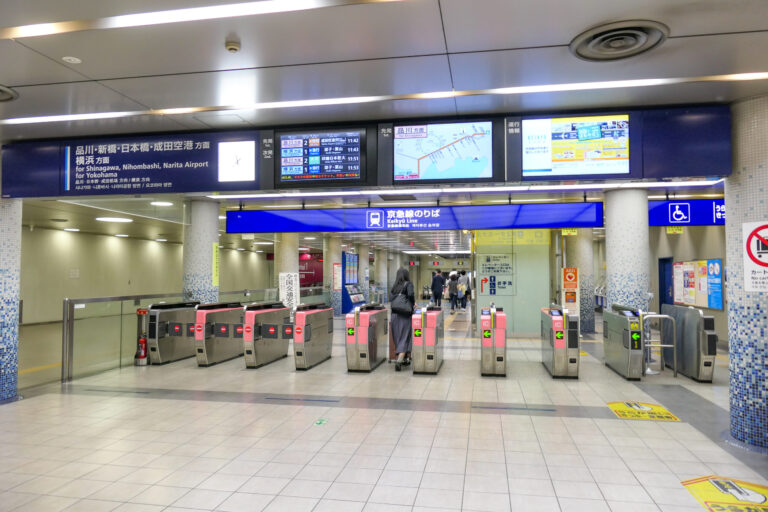
Access from Major Japanese Airports to City Centers | Travel Times and Fares Compared Under Standard Conditions
AuthorMIRUTOBE editors
Table of Contents6 items
- First Check: Criteria for Choosing Your Ideal Transportation Mode
- Standardized Conditions and Back-Calculation for Route Comparisons
- Overview: Access Matrix for Major Japanese Airports to City Centers
- Common Friction Points and Practical Pitfalls in Airport Access
- Contingency Actions for Train Delays and Missed Connections
- Frequently Asked Questions: Luggage, Transit Variability, and Late-Night Logistics
During domestic travel or business trips in Japan, ground access between the airport and downtown city centers often impacts overall itinerary efficiency more than flight duration itself. While transportation operators frequently advertise their fastest theoretical travel times on official websites, actual journeys from exiting the arrival lobby to clearing downtown station ticket gates involve substantial walking, service intervals, and transfers. Under standardized weekday daytime conditions, this guide systematically compares railway, bus, and taxi options across Japan’s major hubs: Haneda, Narita, New Chitose, Itami, Kansai, and Fukuoka.
First Check: Criteria for Choosing Your Ideal Transportation Mode
When selecting airport ground transportation, relying solely on advertised travel speed frequently introduces unexpected physical strain from luggage transfers or prolonged transit waits. The optimal choice varies depending on travel party size, luggage volume, and whether your destination connects directly to a station or hotel entrance. Review these initial criteria to guide your decision:
- Are you traveling with large suitcases or multiple bags, requiring minimal stair climbing and gate navigation?
- Do you need strictly predictable travel times to meet fixed downtown schedules or train connections?
- Are you traveling solo or on business, prioritizing low costs and high departure frequencies?
- Are you in a small group or family where splitting taxi fares provides greater overall convenience?
- Do you prioritize door-to-door transit time from the arrivals hall to the central station exit?
Evaluating these criteria highlights the distinct advantages and constraints of each mode. For absolute punctuality, rail-based systems (trains, monorails, subways) serve as the primary recommendation. For guaranteed seating without baggage hauling, dedicated airport limousine buses offer distinct benefits. If your lodging sits far from train terminals or you arrive late at night, direct taxi services represent a rational choice.
Standardized Conditions and Back-Calculation for Route Comparisons
The core requirement for objective transit comparisons is evaluating typical traveler experiences against a uniform baseline rather than comparing cherry-picked maximum speeds. This analysis standardizes baseline parameters across the following steps:
| Step | Measurement Criteria and Standard Conditions |
|---|---|
| Starting Point | The baseline starts upon exiting the airport terminal arrival lobby, not at aircraft touchdown or gate parking. This accounts for walking time immediately following baggage claim exit. |
| Ending Point | The terminus is defined as exiting downtown station ticket gates, rather than train arrival on the platform. This normalizes long walking corridors from deep underground platforms to ground level. |
| Service Baseline | Calculations utilize standard weekday daytime timetables rather than peak commuter rushes, irregular night runs, or non-stop express services that bypass passing tracks. |
| Transfer Times | For routes requiring mid-journey transfers, standardized transfer buffers (platform-to-platform walking plus scheduled connection margins) are added. |
| Fare Criteria | Fares clearly distinguish between standard commuter trains requiring only basic fares and limited express services requiring mandatory reserved-seat surcharges. |
By standardizing the departure point at the arrival lobby exit and the destination at downtown ticket gates, these metrics fairly reflect the extended terminal corridors and deep underground vertical transfers omitted from promotional brochures.
Overview: Access Matrix for Major Japanese Airports to City Centers
The standard operating characteristics from airport arrival halls to central railway stations across Japan’s primary domestic hubs are summarized below, covering service frequencies and essential operational notes.
| Airport & Primary Destination | Primary Transportation Modes | Frequency & Timetable Attributes | Key Benefits & Operational Notes |
|---|---|---|---|
| Haneda Airport to Tokyo / Shinagawa Station | Tokyo Monorail / Keikyu Railway / Limousine Bus | High-frequency service throughout daytime hours | Monorail requires transfer at Hamamatsucho; Keikyu offers direct runs toward Shinagawa. Proximity to downtown ensures high reliability. |
| Narita Airport to Tokyo / Nippori Station | Narita Express (N’EX) / Keisei Skyliner / Highway Bus | Regular interval limited express and rapid services | Keisei Skyliner runs non-stop to Nippori. Narita Express terminates at Tokyo Station’s deep underground platforms. Highway buses remain subject to expressway traffic. |
| New Chitose Airport to Sapporo Station | JR Rapid Airport / Airport Limousine Bus | High-frequency JR Rapid Airport train departures | JR Rapid Airport is the primary workhorse. Winter snowstorms require monitoring real-time railway service alerts and highway bus alternatives. |
| Itami Airport to Osaka Station (Umeda) | Airport Limousine Bus / Osaka Monorail (with transfer) | Frequent limousine bus departures | Direct limousine buses via the Hanshin Expressway provide seamless transit. Rail options require transferring to the Hankyu Takarazuka Line at Hotarugaike. |
| Kansai International Airport to Osaka / Namba Station | JR Kansai Airport Rapid & Haruka / Nankai Rapi:t & Airport Express | Regularly scheduled JR and Nankai departures | Nankai offers superior access toward Namba, while JR leads toward Umeda and Tennoji. Access bridge operations may be halted during gale-force winds. |
| Fukuoka Airport to Hakata / Tenjin Station | Fukuoka City Subway Kuko Line / Local Buses | Frequent subway departures every few minutes | Direct terminal connection via subway reaches Hakata Station within minutes, offering Japan’s most convenient city-center airport access. |
As demonstrated in this matrix, geographic factors create massive divergence across airports: Fukuoka Airport connects directly to central Hakata in minutes via dedicated subway, whereas Narita and Kansai International sit on distant metropolitan peripheries, requiring long-distance express trains or bridge crossings.
Common Friction Points and Practical Pitfalls in Airport Access
When navigating Japanese airport transit systems, international visitors frequently encounter predictable logistical hurdles and procedural oversights:
Extended Walking Distances from Arrival Halls to Platforms
The distance from aircraft gate arrival through baggage claim to railway ticket barriers varies substantially between terminals. In massive multi-terminal airports and dedicated low-cost carrier (LCC) terminals, reaching train platforms demands extensive walking. Even if a train departure appears imminent on timetables, failing to account for terminal walking times often leads to missed connections.
Physical Exertion at Deep Underground Platforms and Complex Transfer Hubs
Major metropolitan hubs feature platforms situated deep underground or high on elevated viaducts, such as Tokyo Station’s Sobu Underground platforms for the Narita Express or Hamamatsucho Station’s transfer between the Tokyo Monorail and JR lines. Navigating escalators or waiting for crowded elevators with bulky luggage adds considerable transit time, creating clear variance between traveling light and hauling heavy suitcases.
Expressway Congestion Risks and Time-of-Day Fluctuations for Buses and Taxis
While highway buses and taxis provide seamless point-to-point comfort with dedicated baggage storage, they remain inherently vulnerable to traffic delays along metropolitan expressways like the Shuto Expressway or Hanshin Expressway. Morning and evening rush hours or inclement weather substantially increase transit times. For time-sensitive return trips to catch flights, rail transit remains the safer choice.
Mandatory Reserved Seating Requirements and Sold-Out Train Risks
All-reserved limited express services, including the Narita Express and Keisei Skyliner, frequently sell out during holiday peaks and periods of concentrated inbound travel. Long queues at ticket vending machines can push travelers onto later departures. Utilizing mobile booking applications immediately after touchdown helps guarantee smooth transfers.
Contingency Actions for Train Delays and Missed Connections
When unexpected disruptions arise due to severe weather, track incidents, or roadway closures, travelers should follow structured backup protocols:
First, at airports featuring parallel rail and bus infrastructure (Haneda, Narita, Kansai, Itami), check the alternative mode immediately upon detecting transport delays. When train services suspend, airport bus stops quickly form long lines. Verify transit status apps before clearing baggage claim to pivot quickly. For structural context on airline rebooking policies and ticket constraints, review our analysis on Realistic Airline Sale Discount Rates and Fare Rules.
Second, utilize bypass routes connecting through intermediate transfer hubs. If JR lines encounter delays from Narita Airport, taking the Keisei Skyliner to Nippori and transferring to the Yamanote Line provides a viable detour. Similarly, if winter blizzards suspend JR services at New Chitose Airport, check whether highway express buses remain operational or choose to wait within the terminal complex. For regional rail strategies across northern Japan, our guide on JR Hokkaido Weekday Pass Day Trip Verification outlines practical precautions.
Third, when facing potential missed return departures, inspect airline status dashboards for flight delays or schedule adjustments. During major transit breakdowns, carriers occasionally hold departures or authorize fee-free transfers to later flights. For practical planning on LCC international connections via Narita, consult our Peach Narita-Seoul Practical Travel Itinerary for realistic transit buffers.
Frequently Asked Questions: Luggage, Transit Variability, and Late-Night Logistics
How much buffer time should travelers allow between airport arrival and city-center destinations?
Beyond published rail schedules, budget realistic allowances for taxiway taxiing, baggage retrieval, and platform navigation. Factoring in train headway intervals, scheduling generous transit buffers from scheduled touchdown to downtown arrival represents the standard baseline for robust itineraries.
When traveling with heavy luggage, is rail or an airport limousine bus more convenient?
If your final lodging sits adjacent to a major hotel bus stop or station rotunda, limousine buses eliminate physical exhaustion by stowing heavy bags in dedicated cargo holds. Conversely, if you prioritize strict arrival punctuality and can manage station elevators, reserved limited express rail services offer optimal reliability.
How can travelers confirm transit availability for late-night or early-morning flights?
Flights operating outside standard daytime windows frequently arrive after final trains have departed or before morning services resume. While select hubs provide late-night buses with premium night surcharges, frequencies remain limited. When landing during transit curfews, reserving fixed-rate airport taxis in advance or booking on-site airport transit hotels represents an essential precaution.
SOURCES
- Keisei Electric Railway Skyliner Timetable & Service Guide (Verified: October 9, 2026)
- Fukuoka City Transportation Bureau Subway Route Guide (Verified: October 9, 2026)
Source: Verified against official operator transit timetables.
Featured Image Photo: MaedaAkihiko / CC BY-SA 4.0 via Wikimedia Commons
Other sales ending soon




 4 days leftuntil Oct 24Air Busan Takamatsu-Busan Coupon: Up to 9,000 Yen Off Until October 24
 5 days leftuntil Oct 25JAL Hong Kong Campaign: Tokyo–Hong Kong Round Trip from 75,800 Yen (until 25 Oct)
 11 days leftuntil Oct 31Jin Air Kobe–Seoul: 5,000 yen off a round trip with code KTOUKB1, until 31 October
 11 days leftuntil Oct 31Jin Air to Busan: 4,000 yen off a round trip with code KTOPUS, first 300 only