Sale Coverage by Airline: What 36 Bulletins Show About Frequency
AuthorMIRUTOBE editors
Table of Contents6 items
Nearly all of the increase is Korea. Korean carriers went from 6 bulletins to 20, which is 39% of the total. ANA fell from 5 to 2 and JAL rose from 3 to 6, so the earlier reading that full-service carriers announce steadily held for JAL and broke for ANA.
Check first: what this count actually answers
- What is counted is not how many sales ran, but how many times this site wrote one up
- Bulletins are written, as a rule, on the day the official announcement appears
- One airline’s sale split across two articles counts as two
- Articles naming no airline — booking technique, hotel coupons, the running timeline — are excluded
- Only the Japanese-language posts are counted, so the English mirrors are not double-counted
Announcements that were missed are not in here. That makes the table a record of whether a given airline’s announcement surfaced in that window, not of how often it actually discounts. The sample stays small either way. Line up two 43-day windows counted on the same terms, though, and at least the movement in the order is visible.
Two 43-day windows, counted the same way
The earlier window ran from 27 June to 8 August 2026: 43 days, 36 bulletins, 22 airlines. This one starts the day after and runs from 9 August to 20 September 2026: 43 days, 51 bulletins, 24 airlines. The lengths match, so the counts compare directly.
The tally covers published Japanese-language posts on yurutabi.blog whose title contains an airline name together with one of fare, sale, campaign or coupon. Base date 2026-09-20.
The twelve that appear once are Aero K, Air Macau, LOT Polish Airlines, Fiji Airways, Cebu Pacific, IBEX Airlines, Qantas, Air France, Amakusa Airlines, Tigerair Taiwan, AirAsia and StarFlyer. Only four of them — Cebu Pacific, IBEX, Qantas and AirAsia — also appeared in the previous thirteen. The other eight did not show up at all last window. Carriers that discount once or twice a year rotate through the tail, and between them they keep it populated.
Where people trip up
Seven Korean carriers between them took 39% of the window
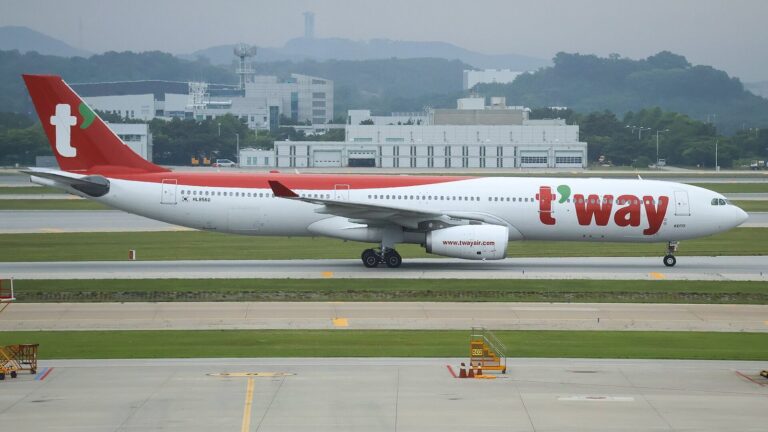
Jin Air 5, Jeju Air 4, Eastar Jet 3, T’way 3, Air Busan 2, Air Seoul 2 and Aero K 1 — 20 bulletins out of 51, or 39%. Last window it was four Korean carriers and 6 bulletins, a 17% share. The proportion has more than doubled inside three months.
What follows from that is that waiting on Korea does not require picking an airline. Seven of them are sitting on the same routes and one of them always has a price out. Set the same strategy of waiting for a sale against any other destination and you are waiting on a carrier that produced one bulletin in 43 days.
How the announcements behave differs as much as how many there are. The Korean ones come with short deadlines: Air Seoul’s on 16 September, Yonago to Seoul from JPY 12,130 one way, closed on 30 September, and Tigerair Taiwan’s on 16 September closed two days later on the 18th. Those are the kind you decide on the day you see them. AirAsia’s announcement on 20 September, by contrast, had a travel period running out to August 2027 — an order of magnitude more time to think. Counting bulletins does not show that difference at all.
A change at the top is not a change of policy at one airline
ANA fell from 5 to 2 and JAL rose from 3 to 6. Reading that as ANA cutting back on sales gets it wrong. Four of JAL’s six landed in the two days of 13 and 14 September 2026, a simultaneous announcement across Honolulu, Taipei, Hong Kong and Delhi. Bulletins are split by route here, so one announcement was counted four times.
Which means the bulletin count is closer to a measure of routes announced than of announcements made, and airlines that bundle come out ahead on it. To know what one airline’s real cycle looks like, the gap between sale dates is the better measure, and single-airline records such as the Jetstar sale record or StarFlyer’s monthly STARFRIDAY slot are more use than this table.
The sample is small enough that one bulletin reorders it
Fifty-one bulletins over 24 airlines is 2.1 each. The top three together account for 15, or 29% of everything; last window they had 11, or 31%. Concentration at the top has barely moved. What moved is the order, and with numbers this small the difference between two and three reshuffles it.
Seasonality is not visible yet. Two 43-day windows cannot separate a summer-to-early-autumn effect from a year-round level. Until there are four of them — six months — the shape of the distribution is the part worth reading, not the ranking.
Short haul and long haul advertise differently
Sort the prices that appear in the headlines by distance and the word “sale” turns out to mean two things. On short haul the pitch is the floor price. Cebu Pacific ran Chubu to Cebu from JPY 100 one way, Eastar Jet’s Super Star Festa from JPY 100 one way, Spring Japan had Narita to Hakodate at JPY 4,880, and Jetstar’s Super Star Sale started at JPY 3,820 one way.
Long haul stays expensive even after the discount, so the decision is made on the total rather than on how low the entry price sounds. Qantas offered New Zealand from JPY 108,000 return, STARLUX had the United States and Prague from JPY 168,000, and ANA’s international time sale put Hawaii at JPY 114,000 return. This window is the same shape: LOT Polish Airlines from JPY 152,160 return to Europe, JAL’s Delhi route from JPY 99,000 return.
The steepest discount of either window belongs to the earlier one: Fuji Dream Airlines’ summer sale, up to 80% off to mark 17 years of operation. The pattern that the less often an airline discounts, the further it goes when it does, shows up here too.
Which airlines to watch, and what to check before you wait
With the destination already chosen, the quickest approach is to watch every carrier on that route at once. At 2.1 bulletins per airline, naming one and waiting more often than not means 43 days with nothing. For Korea that is seven names; for Taipei it is Tigerair Taiwan, STARLUX, China Airlines and StarFlyer side by side, and you decide when one of them moves.
Domestically there is no reason to shift off the JAL and ANA time sales. ANA dropping to two is a fact about these 43 days; the time sale itself still runs as a standing programme. For deciding the dates first and looking for a fare afterwards, those two remain the pair to use.
Long haul is the case where waiting by frequency is the wrong method. The bulletins are rare and the discount is large when one arrives, so fixing a target figure in advance is what lets you act. Decide that you buy below JPY 100,000 return and the decision is already made on the day the announcement lands.
Worth checking before you commit to waiting: sale fares usually treat changes and refunds differently from ordinary ones, and on a trip whose dates might move the cheap ticket is the expensive one. Some are capped rather than timed — Amakusa Airlines’ Amakusa lodging-support fare was limited to the first 500 seats, and Trinity Airlines’ coupons ended when the allocation ran out. Reading the deadline and the cap is a better filter than picking the airline that appears most often.
The list of sales open right now, and the timeline behind it, is kept up to date in when the next airfare sale comes. How to read a total once seat selection and baggage are added is in the low-cost booking techniques.
Common questions: the sample, the English posts, the next update
Does a higher bulletin count mean an airline holds more sales?
Close, but not the same thing. An airline that splits one announcement into a bulletin per route ends up with a higher count — four of JAL’s six falling inside two days is that effect. An airline like Peach, which puts domestic and international into a single announcement, shows a lower count for a sale of the same size.
Are the English posts included in the count?
No. The English posts mirror the Japanese ones, so counting both would record the same announcement twice. The 36 of the previous window and the 51 of this one are Japanese-language posts only.
When is this counted again?
In 43-day blocks, stacked up. Two of them cannot show seasonality; once there are four, which is half a year, it becomes possible to say whether an airline’s frequency genuinely moved. Discount depth and floor price will be added as a second axis at that point.
- When does the next airfare sale come? (the running timeline of rounds) ↗Checked on 2026-09-20
- JAL — international campaign announcements of 13–14 September 2026 ↗Checked on 2026-09-20
- ANA — domestic time sale (the standing programme) ↗Checked on 2026-09-20
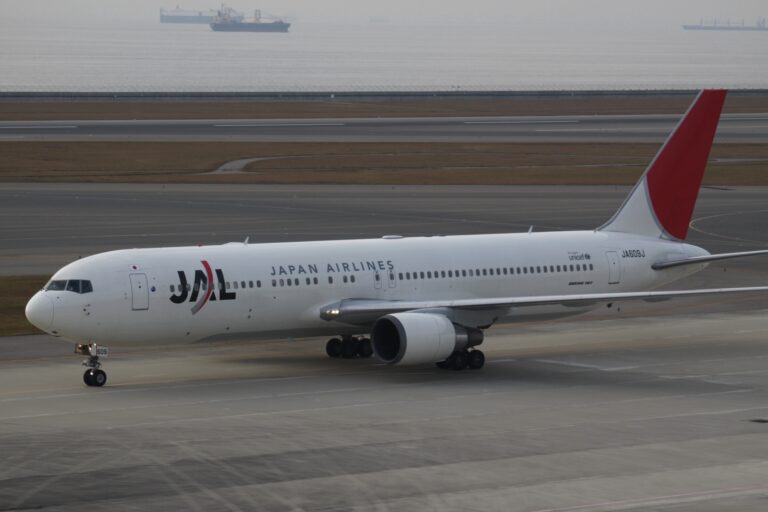
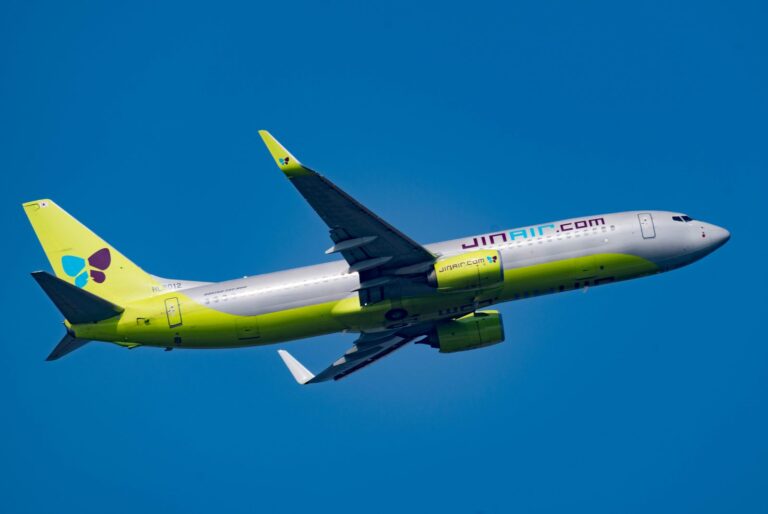
Source: the reference block above / each airline’s own announcement, cited individually in the corresponding bulletin / Checked on 2026-09-20 / Featured image: Aeroprints.com, CC BY-SA 3.0 (Wikimedia Commons)
Other sales ending soon
 4 days leftuntil Oct 24Air Busan Takamatsu-Busan Coupon: Up to 9,000 Yen Off Until October 24
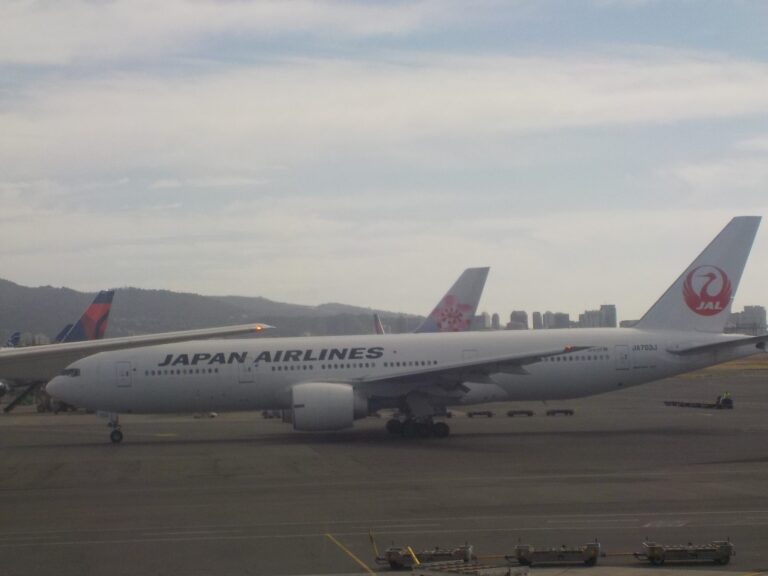
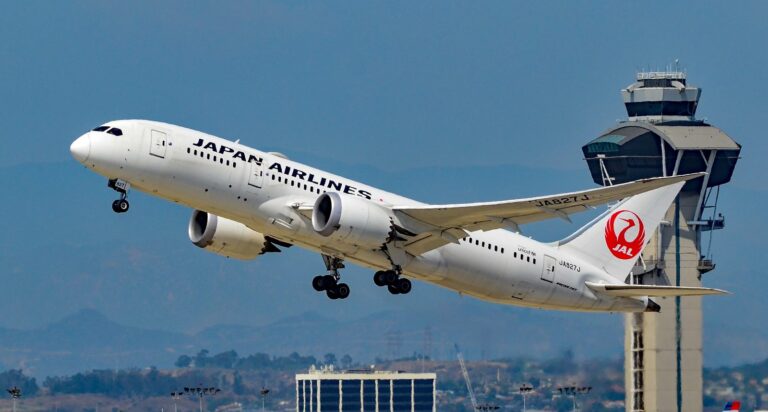
 5 days leftuntil Oct 25JAL Hong Kong Campaign: Tokyo–Hong Kong Round Trip from 75,800 Yen (until 25 Oct)
 11 days leftuntil Oct 31Jin Air Kobe–Seoul: 5,000 yen off a round trip with code KTOUKB1, until 31 October
 11 days leftuntil Oct 31Jin Air to Busan: 4,000 yen off a round trip with code KTOPUS, first 300 only