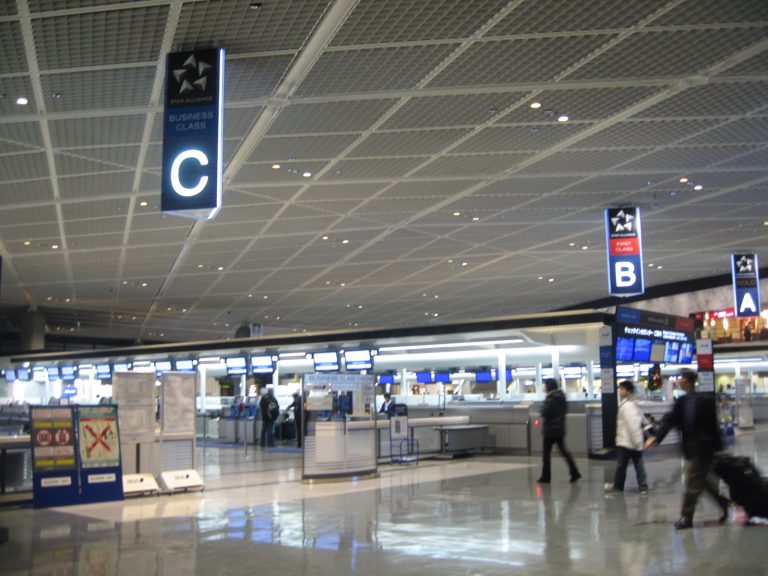
Japan Departure Tax Hike 2026: The JPY 3,000 Tourist Tax
AuthorMIRUTOBE editors
Table of Contents5 items
- JPY 3,000 is the law as it stands: passed on 31 March 2026, applied to departures from 1 July
- A ticket issued by 30 June keeps JPY 1,000, unless the departure date moves
- Only under-twos and certain transit passengers are exempt, and a primary-school child pays JPY 3,000
- The tax is collected with the fare, and settled before you board
- The revenue goes to three fields, from airport gates to bins at tourist sites
- Tax
- International Tourist Tax (widely called the departure tax)
- Who pays
- Every passenger leaving Japan by aircraft or ship, whatever their nationality or reason for travel
- How it was enacted
- Passed and promulgated on 2026-03-31 (Act No. 12 of Reiwa 8), in force from 2026-07-01
- In effect from
- Departures on or after 2026-07-01
- Transitional measure
- JPY 1,000 still applies where the carriage contract was concluded before 1 July and the departure date was already fixed
- Main exemptions
- Children under 2 on the day of departure, certain transit passengers leaving within 24 hours of arrival
- Checked on
- 2026-10-12
The International Tourist Tax, the departure tax, is JPY 3,000 a person for departures from 1 July 2026. It is the first change to the JPY 1,000 rate set when the tax began on 7 January 2019; the law passed and was promulgated on 31 March and took effect on 1 July. It falls on everyone leaving Japan by aircraft or ship, whatever the passport and whatever the purpose.
JPY 3,000 is the law as it stands: passed on 31 March 2026, applied to departures from 1 July
The rise is part of the FY2026 tax reform. The ruling parties settled their tax reform outline on 19 December 2025 and the Cabinet approved it on 26 December. The bill amending the Income Tax Act and other laws went to the Diet on 20 February 2026, passed on 31 March, and was promulgated the same day (Act No. 12 of Reiwa 8). The rate clause of the International Tourist Tax Act has fixed the tax at JPY 3,000 per departure since the amendment took effect on 1 July, so the figure you read now is neither a proposal nor a forecast.
The Ministry of Finance gives the reasons as measures against crowding and bad manners where visitors concentrate, encouraging travel to the regions and spreading demand, and fuller outbound-travel policy, and it notes that the number of Japanese leaving the country has not returned to its level before the pandemic. The estimated gain in revenue is JPY 120 billion in a full year and JPY 70 billion in the first year, FY2026.
| Item | Departures to 30 June 2026 | Departures from 1 July 2026 |
|---|---|---|
| Tax per departure | JPY 1,000 | JPY 3,000 |
| Family of four: two adults, an 8-year-old and a 1-year-old | JPY 3,000 | JPY 9,000 |
| Who pays | Passengers leaving Japan by aircraft or ship | The same |
| How it is collected | Carrier adds it to the fare | The same |
Families feel the difference most because the only reduction is the exemption for under-twos. Of the four, only the one-year-old pays nothing; the eight-year-old pays the adult JPY 3,000, so three people each pay JPY 2,000 more and the family is JPY 6,000 worse off.
A ticket issued by 30 June keeps JPY 1,000, unless the departure date moves
What decides whether the old rate survives is the day the carriage contract was concluded, not the day of departure. The National Tax Agency’s Q&A (revised April 2026) says that a contract concluded before 1 July 2026 with the departure date already fixed stays at JPY 1,000 even for a departure on or after 1 July. The Japan Tourism Agency leaflet puts it as eligible tickets issued on or before 30 June 2026. A seat reserved in June and paid for and issued on or after 1 July is charged JPY 3,000. With an LCC that issues at once the question rarely arises; with legacy fares that hold a ticketing deadline open, or seats a travel agent is holding in a tour block, the Date of Issue on the e-ticket receipt is the answer.
| The ticket in your hand | Tax |
|---|---|
| Issued by 30 June, and you leave on the date already fixed | JPY 1,000 |
| Issued earlier, but the departure date is changed on or after 1 July (for example, a 3 July departure moved to 4 July on 2 July) | JPY 3,000 |
| An open ticket or coupon book with no departure date, where the date is set on or after 1 July | JPY 3,000 |
| A carriage contract whose terms say the tax is collected apart from the fare | JPY 3,000 |
| Issued on or after 1 July | JPY 3,000 |
Even on a ticket bought at the old rate, changing the date on or after 1 July brings in the new JPY 3,000, so a JPY 2,000 difference per person arises separately from whatever change fee the fare rules charge.
Only under-twos and certain transit passengers are exempt, and a primary-school child pays JPY 3,000
Travellers have two exemptions to work with: a child whose age on the day of departure is under two, and a transit passenger who leaves Japan within 24 hours of arriving. Crew, diplomats on official duty and state guests also sit on the side that pays nothing, but none of that describes a holiday.
| Category | Tax | Condition |
|---|---|---|
| Under 2 on the day of departure | Exempt | Judged by completed years of age |
| Transit passenger leaving within 24 hours of entering Japan | Exempt | Aircraft only, not ships. A single ticket must show that arrival and departure are within 24 hours. If the airport you flew from just before entering Japan is the same as the one you reach just after leaving, the exemption does not apply |
| Age 2 and over, primary-school children included | JPY 3,000 | No reduction for age |
| Someone who left but returned to Japan without calling at a foreign port, because of bad weather or equipment trouble | Not charged | Applies even after the aircraft or ship has left Japanese airspace or waters |
| Crew, passengers on a government aircraft, people being deported | Not charged | Does not describe a traveller |
| Foreign ambassadors and consuls on official duty, state guests | Tax-free | Papers are submitted when the carriage contract is made |
There are rules on counting too. A cruise that leaves from port A in Japan, calls abroad and leaves again from port B is taxed at each departure. Buying two seats for one person, to make room for an instrument, still means one departing person and one tax.
The tax is collected with the fare, and settled before you board
The airline or shipping company acts as the collector. It takes the tax from the passenger together with the fare by the time of boarding and remits it to the state by the end of the second month after the month of departure. Nobody pays at a tax office or an airport counter. When a fare is priced in a foreign currency, the carrier collects the amount that converts to JPY 3,000 by its own method, because the law sets no exchange rate. Only departures outside a carrier’s service, such as a private jet, are paid by the passenger to Customs before boarding.
If the extra JPY 2,000 has to come back from somewhere, the movable parts of a travel budget are the room and the connection: eSIM against pocket Wi-Fi moves a few thousand yen either way, and carrying more than one card decides what the exchange rate and the attached insurance cost you. On rooms, fixing the dates early is what makes a total readable, and Klook is one place to hold them.
The revenue goes to three fields, from airport gates to bins at tourist sites
The Japan Tourism Agency says the revenue is used in three fields: a stress-free, comfortable travel environment; easier access to information about Japan’s many attractions; and tourism resources built on local culture and nature. Its examples under the FY2026 budget are self-service bag drop and walk-through gates, a park-and-ride pilot programme, smart waste bins, upkeep of mountain trails, streetscape work that puts utility lines underground, and the public opening of important cultural properties such as the former Mikasa Hotel.
When does the next airfare sale come? Six weeks of records and what is bookable now →
Source: National Tax Agency, Information about International Tourist Tax and the Q&A (April 2018, revised April 2026) / Japan Tourism Agency, Utilization of the International Tourist Tax and the leaflet on the rise to JPY 3,000 / Ministry of Finance, Explanation of the FY2026 Tax Reform / e-Gov Law Search, International Tourist Tax Act / Photos: Terence Ong, CC BY 2.5, and MaedaAkihiko, CC BY-SA 4.0 (Wikimedia Commons) / Checked on 2026-10-12
Other sales ending soon
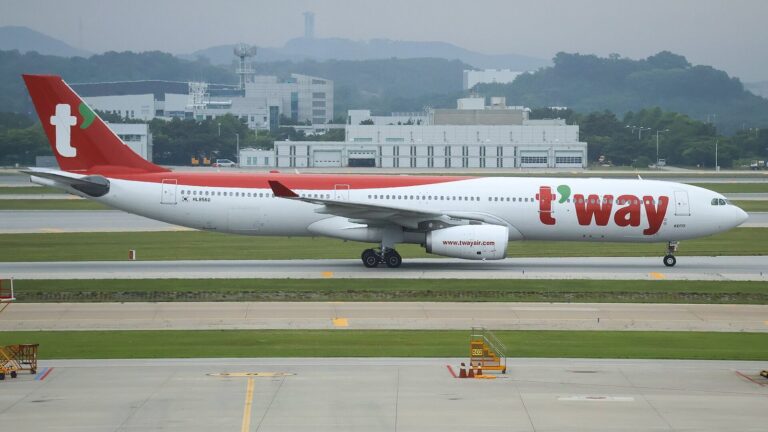
 4 days leftuntil Oct 24Air Busan Takamatsu-Busan Coupon: Up to 9,000 Yen Off Until October 24
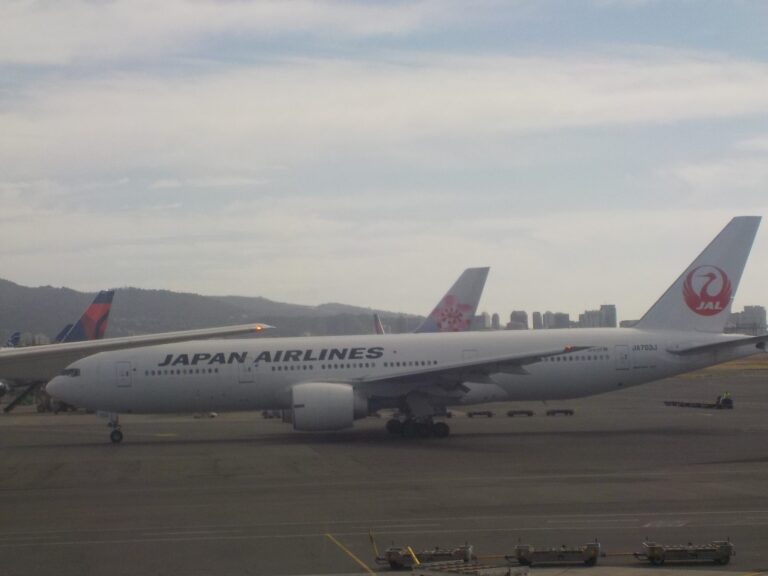
 5 days leftuntil Oct 25JAL Hong Kong Campaign: Tokyo–Hong Kong Round Trip from 75,800 Yen (until 25 Oct)
 11 days leftuntil Oct 31Jin Air Kobe–Seoul: 5,000 yen off a round trip with code KTOUKB1, until 31 October
 11 days leftuntil Oct 31Jin Air to Busan: 4,000 yen off a round trip with code KTOPUS, first 300 only