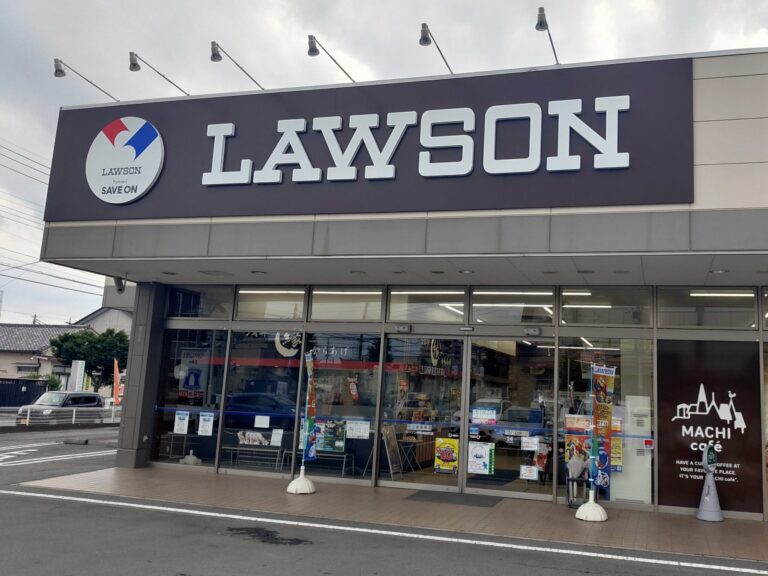
Japanese Konbini Guide: 7-Eleven, Lawson & FamilyMart
AuthorMIRUTOBE editors
Table of Contents6 items
A Japanese convenience store compresses a pharmacy, a café, a bank, a post office and a lunch counter into 100 square metres. There are more than 50,000 of them. The rice balls can wait: what unsticks a trip is the equipment, and the equipment is much the same in every chain.
Konbini is the Japanese word, and it covers a category rather than a brand — Seven-Eleven, Lawson and FamilyMart are the three national chains, with regional names on top. Prices below are in yen.
Check first: what are you walking in for?
- You need cash (an izakaya or a small shop turned out to be cash-only)
- You have a day with a big suitcase and a Shinkansen ride in it
- Something has to come out on paper — a boarding pass, a voucher
- Your IC card balance is running low
- You want breakfast cheap so the money goes to dinner or the room instead
The first line comes up most often. Card payment is widely accepted in Japan, and yet old izakaya, small restaurants, rural buses and shrine offices are still cash-only. The moment you notice the wallet is empty, the nearest konbini is the fastest way out of it.
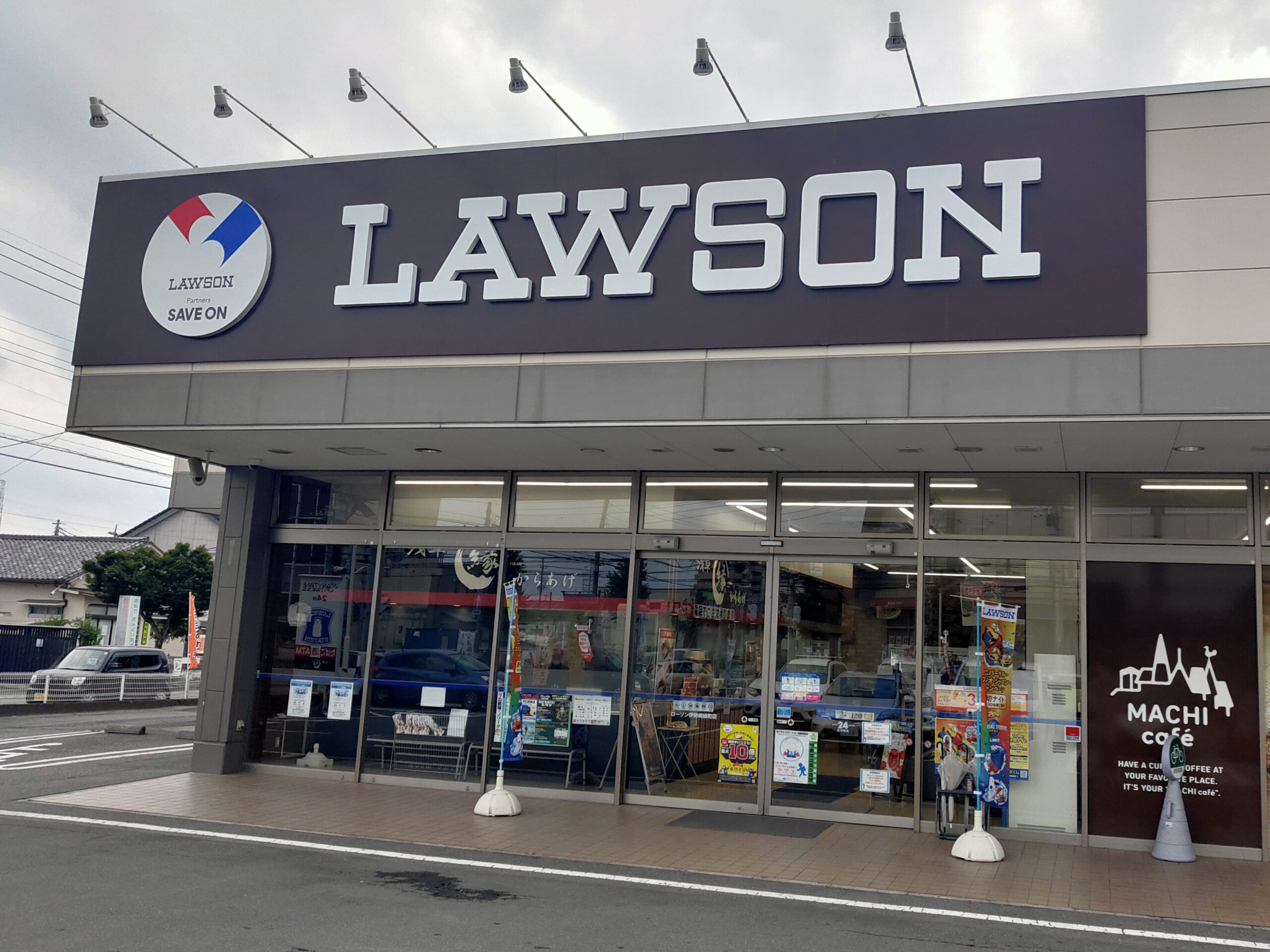
The full picture: the equipment that unsticks a trip
Card brands and withdrawal limits are as published by Seven Bank (see the reference block). UnionPay, American Express and Diners Club run to slightly narrower hours — 00:10–23:50 and 00:05–23:55 respectively. Checked on 2026-09-20.
The ATM is the headline. Foreign-issued cards get refused by Japanese ATMs often enough to be a real problem, and Seven Bank covers nearly every major brand and offers English. Since there is one in every Seven-Eleven, there is no searching involved either. Lawson’s ATMs also accept a wide range of foreign cards.
The courier service takes the weight out of a heavy day. Send the suitcase from hotel to hotel, or ahead to the airport, and the oversized-baggage reservation on the Shinkansen stops being necessary as well. The price depends on size and distance, so weighing and measuring the bag before you fill in the form at reception speeds up the quote. Your IC card balance can be topped up at the same till, which makes it one errand rather than two.
Where the chains differ: the food
Eating the same thing in all three chains is a legitimate travel activity. Start with the egg sandwich. Crustless soft white bread holds mashed boiled egg mixed with Kewpie mayonnaise, which uses only the yolk and therefore tastes richer than the mayonnaise you know. Lawson’s is the one that built a reputation abroad; Seven-Eleven’s tastes more strongly of egg; FamilyMart’s runs sweeter and softer. The prices barely differ.
Fried chicken splits into camps. FamilyMart’s Famichiki is boneless and juicy, and the chain sells a bun so you can build the sandwich yourself. Lawson answers with L-Chiki and with Karaage-kun, bite-sized nuggets in a box that come in Regular, Red and Cheese. Ordering is a matter of pointing at the glass case and saying the product name followed by hitotsu, meaning one.
Where people trip up
The bins are for what you bought there
Konbini bins exist to take the packaging of things bought in that shop. Rubbish carried out of a hotel room, or a container from somewhere else, is not what they are for. And public bins in Japan are genuinely scarce — inside station gates and beside vending machines is roughly the whole list — so plan on carrying whatever you generate back to your accommodation.
Eating works on the same logic. Eat what you bought outside the shop, or at the counter inside if there is one. Eating while walking along a narrow street is not well regarded. Street-food districts are the exception, where that is exactly the intended behaviour — Osaka’s eating streets being the obvious case.
Cash goes in the tray, and a bag costs extra unless you ask
Queue at the mark on the floor and move up when you are called. Cash goes into the tray rather than the cashier’s hand; an IC card is simply tapped on the reader. Carrier bags are chargeable and you will not be given one unless you ask, so say fukuro onegaishimasu if you want one. It costs a few yen.
Coffee is self-serve. For a hot one, say “hot coffee” at the till with the size, take the paper cup you are handed and carry it to the machine near the entrance. For iced, take a cup of ice from the freezer case, pay first, then run it through the machine. Seven-Eleven’s machines detect the cup automatically; Lawson and FamilyMart use buttons. Sugar and milk are beside the machine.
Strong Zero is a 9 per cent alcoholic drink
The canned chuhai in the drinks case include products at 9 per cent alcohol. They are fruit-flavoured, cheap and go down like fizzy drinks, and they are strong — close to twice the strength of beer. Picking one up to rehydrate is a mistake people make exactly once.
For hydration the standard is an isotonic drink such as Pocari Sweat; to avoid caffeine, barley tea; for unsweetened green tea, Oi Ocha. All of them sit in the same case, so read the alcohol percentage rather than the colour of the can. On a day with a lot of walking in it, one isotonic drink in the bag changes how the afternoon feels.
What if you move breakfast here: the daily budget shifts
Rice balls run JPY 120 to 250 and counter coffee JPY 110 to 250. Move breakfast to the konbini and it lands around JPY 400 a head, with the gap against a hotel buffet going straight into dinner or a better room. As savings go this one is near the top of the list, and it appears high up in our guide to travelling Japan cheaply for that reason.
Rice balls have an opening ritual. Pull tab 1 down the centre seam, then draw tabs 2 and 3 gently outwards, and the film slides out from under the seaweed. The packaging exists so that the seaweed never touches the rice until the moment you bite, which is what keeps it crisp. If it is your first, take a standard filling: tuna mayonnaise (rich, familiar), salted grilled salmon flaked through the rice, or umeboshi — a sour pickled plum that divides opinion and is startlingly refreshing in hot weather.
Arrive between October and March and two steaming counters appear. Oden is an assortment simmered in dashi broth, chosen piece by piece and ladled out by the staff, with daikon, seasoned egg and chikuwa the popular picks. The other is the steamer of nikuman, buns of seasoned minced pork and vegetables, alongside curry, pizza and the sweet red-bean anman. The chilled dessert case is its own world: Lawson’s Premium Roll Cake, matcha warabi mochi and other Japanese sweets, custard puddings and double cream puffs, at patisserie quality for a fraction of patisserie prices.
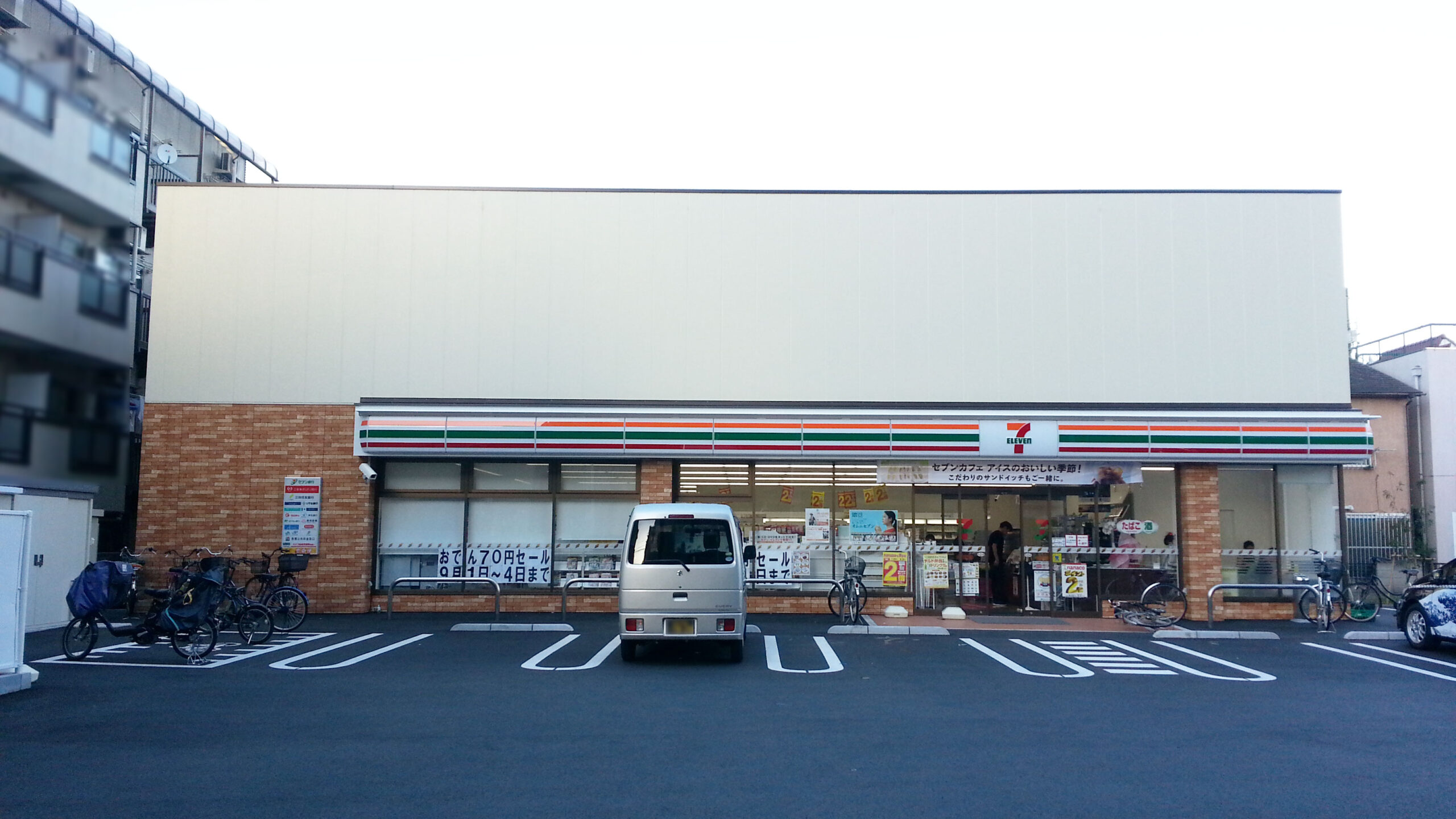
Common questions: payment, the small hours, and the countryside
Will my foreign credit card just work?
At the till, the major brands go through. So do withdrawals at a Seven Bank ATM, which takes VISA, Mastercard, UnionPay, American Express, JCB, Discover and Diners Club. Seven Bank’s own notice is blunter than the logos suggest — a card carrying the right mark is sometimes not accepted — so arriving with no cash at all is the wrong plan for a trip that takes in small restaurants, rural buses and shrine offices.
Does everything work in the middle of the night?
Stores are generally open 24 hours and both the copier and the ATM keep running. The exception is a few card brands: UnionPay, American Express and Diners Club are confined to 00:10–23:50 and 00:05–23:55, so a withdrawal on one of those three is not permitted in the ten minutes either side of midnight. Move the errand before or after that window.
Is it the same outside the cities?
The equipment is. What changes is density, and the fact that some rural branches are not open 24 hours. Regional chains can also beat the nationals on range, as Seicomart does in Hokkaido. If you are touring the countryside, asking at check-in how late the nearest store stays open saves a midnight walk. On a trip with an onsen town in it — the three days through Kanazawa and Kaga Onsen, for instance — the distance from the inn to the nearest konbini is in a different order of magnitude from the city.
- Seven Bank, cards issued overseas (brands, hours, withdrawal limits) ↗Checked on 2026-09-20
- Seven-Eleven services (multi-copier, delivery, ticketing) ↗Checked on 2026-09-20
- Yamato Transport, Takkyubin (pricing by size and distance) ↗Checked on 2026-09-20
Source: the reference block above / Product names and price ranges are indicative, from in-store displays at each chain / Photos: Wikimedia Commons / Checked on 2026-09-20
Other sales ending soon




 4 days leftuntil Oct 24Air Busan Takamatsu-Busan Coupon: Up to 9,000 Yen Off Until October 24
 5 days leftuntil Oct 25JAL Hong Kong Campaign: Tokyo–Hong Kong Round Trip from 75,800 Yen (until 25 Oct)
 11 days leftuntil Oct 31Jin Air Kobe–Seoul: 5,000 yen off a round trip with code KTOUKB1, until 31 October
 11 days leftuntil Oct 31Jin Air to Busan: 4,000 yen off a round trip with code KTOPUS, first 300 only