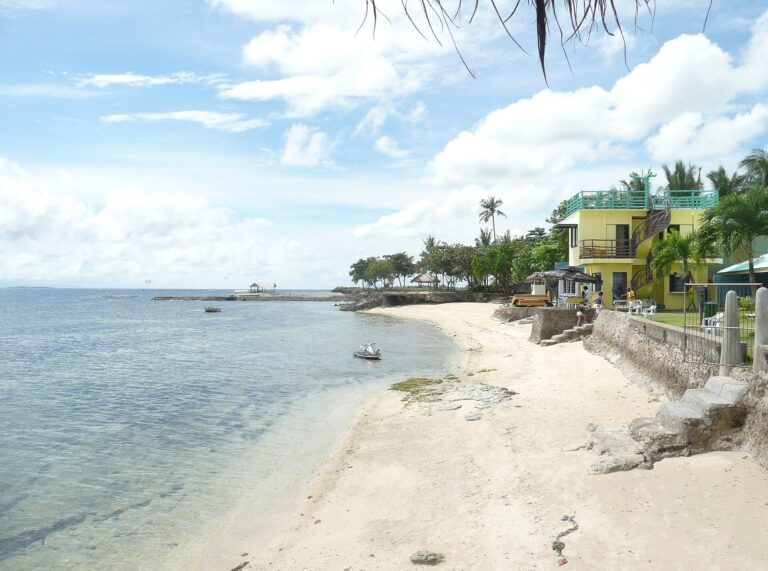
Cebu 4-Night, 6-Day Model Plan: Whale Sharks and Island Hopping
AuthorMIRUTOBE editors
Table of Contents9 items
- Itinerary
- DAY 1 On an evening arrival, do nothing but the ride to the hotel
- DAY 2 Spend the day on the water and let your body meet the heat
- DAY 3 South down the island. Half the day disappears into the drive
- DAY 4 Half a day covers the city’s historic sites
- DAY 5-6 Recover at the resort and leave on an evening flight
- Alternatives
- Where to stay
- What this trip costs
Two adults based at a Mactan resort: two days on the water, one day to the south of the island, half a day in the city. Entry costs nothing officially, visa and eTravel both PHP 0. What you pay on the ground is four things plus the airport runs, and each figure below is an operator’s published indicative price.
Itinerary
DAY 1On an evening arrival, do nothing but the ride to the hotel
Why this order: the flight lands at night, so nothing goes into day one. Entry formalities can be cleared from three days before departure, which shortens the queue at the airport.
Before you go: no visa needed, but eTravel registration is
A Japanese passport needs no visa for tourism. The Bureau of Immigration’s visa waiver page states that tourists from non-visa-required countries are admitted for an initial 30 days. That page was updated on 13 July 2026.
Even the extension increments are set officially. The first extension adds 29 days, taking the total to 59. Beyond that, extensions are processed individually at an immigration office, up to a maximum of 36 months for nationals of non-visa-required countries and 24 months for others. None of this matters over four nights, but the figure of 30 days has taken on a life of its own and few people know that 59 is reachable through a standard procedure.
The other item is eTravel registration. You can register from 72 hours before either entry or exit, and the QR code it produces is shown to airline staff before boarding.
Registration is completely free. The official FAQ says “absolutely free of charge” and states that no online payment is requested at any point. It also warns by name against fake sites that ask for payment to register or update. That warning exists because people really do pay a fee to a page that ranked high in a search.
Check the passport validity requirement with the airline you are flying. The widely circulated rule is six months beyond the end of your stay, but the carrier makes the final decision on boarding. Reading the required-documents page for the flight you booked is the fastest route.
The supply is 220 V at 60 Hz, with type A, B and C plugs (indicative, from the socket standards database plugsandoutlets.com; not in government primary material). Equipment built only for 100 V will be destroyed by being plugged in, so check that the device is marked 100-240 V before you leave. Hairdryers and straighteners are where this bites, because single-voltage models are still common. Whether an adapter is enough or a transformer is needed is set out in the difference between a plug adapter and a transformer.
Night: from the airport to a resort on Mactan
Mactan-Cebu International Airport is on Mactan Island, linked to Cebu proper by bridge, and most of the resorts are on the same side as the airport. Being able to reach the hotel without going into the city is why day one can be this short.
From the airport to the Mactan resort strip is ten to twenty minutes by car. For a sense of the fare, Grab’s own airport transfer page quotes PHP 300 to 500 per car for the run into Cebu City, while airport guides list metered white taxis at PHP 250 to 350 and the airport yellow taxis and Grab at PHP 400 to 550. Those are all indicative figures for the city, and the resort strip is nearer, so it comes in below them. Because you see the figure before you ride, Grab produces fewer arguments on a night arrival.
The MyBus shuttle into the city is PHP 50 per person, running every 20 to 30 minutes from around 07:30 to around 21:40. It goes to SM City Cebu and the Ayala area, though, and does not call at the Mactan resort strip. Knowing it is not an option saves you hesitating in the arrivals hall.
A hotel transfer is the third route. Prices vary by property, so ask whether they offer one and what it costs when you book, and a late landing needs no thinking about. Give them the flight number and they are more likely to wait if it slips.
DAY 2Spend the day on the water and let your body meet the heat
Why this order: tomorrow’s Oslob trip leaves before dawn, so day two boards a boat from in front of the hotel and creates no travel. Deal with the sun today rather than carrying the debt to the last day.
Morning: out to the marine sanctuaries by bangka
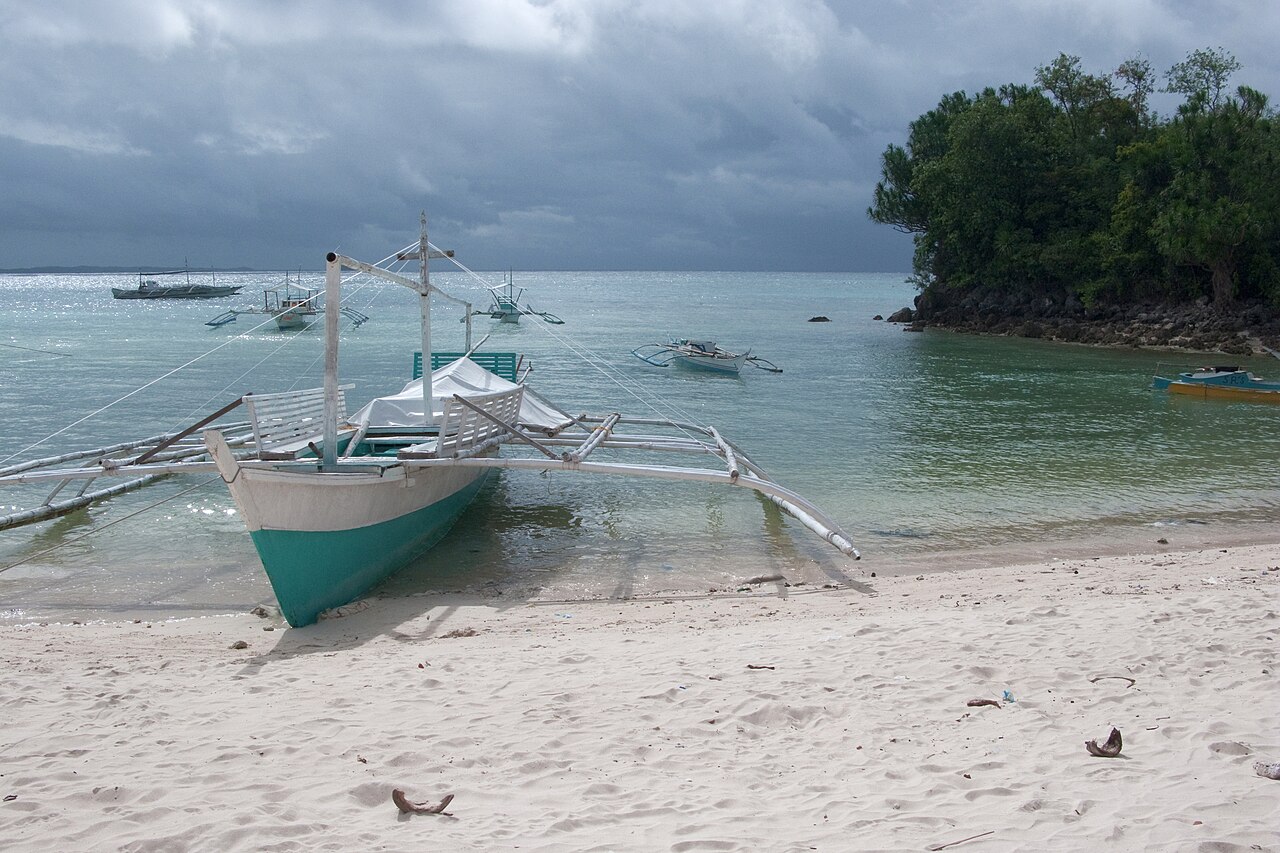
Island hopping is done in a bangka: a narrow hull with bamboo outriggers on each side, which makes it hard to capsize in a swell. As the photograph shows, it runs its bow straight onto the sand to let passengers off. No jetty is needed, which is why it can land almost anywhere.
The destinations are the marine sanctuaries scattered around Mactan. Hilutungan and Nalusuan are both administered by the municipality of Cordova and managed as sanctuaries. Hilutungan also appears spelled Gilutongan, so the name can differ when you book.
Each island charges an environmental fee to enter. Local tour operators publish Hilutungan at PHP 150 to 250 per person and Nalusuan at PHP 400 to 550 (published rates, KR Travel and Tours). It is paid in cash directly to a collector once you step off the boat, so carry small notes separately from the boat fare. The same company publishes a boat charter at PHP 1,800 for up to five people, which is the same figure whether two of you go or five.
The islands add to their notices that fees may change without warning. So the practical move is to fix the figure with the boat operator instead: charter, per-island fees, lunch, equipment hire. Whether those are billed separately or included differs by company, so having the total written down in advance is what makes the day’s cash predictable.
Afternoon: snorkelling and lunch on the boat
Water inside the sanctuaries is clear enough that even a first-timer meets shoals of reef fish. On some days you can land on a sandbar and walk it; on others the tide has taken it. Grilled fish and shellfish are usually served on board, so you do not go back ashore to eat.
The most useful item today is a rash guard. You are in the water a long time with the sun on your back and shoulders continuously. Rely on sunscreen alone and tomorrow at Oslob your back hurts too much to concentrate when you get in. Water shoes matter for the same reason, because the edge of a sandbar cuts your feet on broken coral.
Who this day does not suit is anyone prone to seasickness. A bangka rolls very little but moves up and down in a swell. Get sick in the morning and the afternoon’s snorkelling goes with it.
DAY 3South down the island. Half the day disappears into the drive
Why this order: Oslob is near the southern end of the island and the return drive alone eats half a day. Give one whole day to that direction and keep the days either side on Mactan.
Dawn: the whale sharks rest on an administrative order from 1998
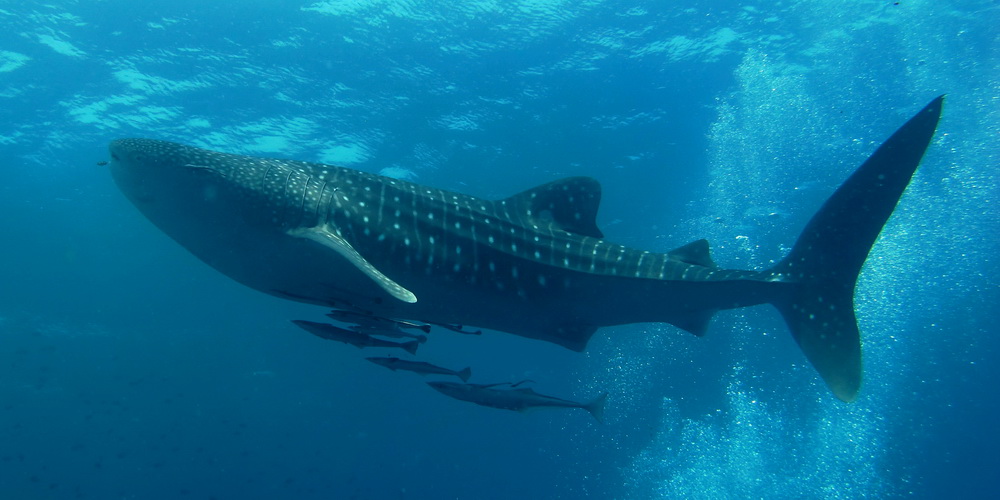
Whale sharks can be seen at Oslob because the protection came first. Fisheries Administrative Order 193, issued by the Bureau of Fisheries and Aquatic Resources on 25 March 1998, banned the taking, selling, possessing, transporting and exporting of whale sharks and manta rays in Philippine waters outright.
The penalties are written into it: a fine of PHP 500 to 5,000, imprisonment of six months to four years, or both. Separately, the director may impose an administrative fine of up to PHP 5,000, revoke permits and licences, and confiscate the specimen. That order is the point at which a fish that had been caught became a fish that is looked at.
The location is published. The Department of Tourism has a page on the Oslob whale shark experience giving the site as Barangay Tan-awan, and the Cebu provincial news uses the same name, reporting the blessing of a new toilet block on 5 March 2026 and the governor’s own visit on 3 July that year.
Those same provincial releases show the province keeps working on the site: the governor inspected the visitor centre on 1 August 2025, the new toilet block was blessed on 5 March 2026, and the governor took part himself on 3 July 2026. There is no municipal website, and yet provincial communications report each change to the facilities. The prices are unreadable because the town has no published counter, not because the place is neglected.
The tourism page adds one practical thing: you can choose between swimming with them and watching only. Watching from the boat makes it work for non-swimmers and small children.
Registration runs from 06:00 to noon, with no afternoon slots. Paying at the desk directly is around PHP 1,000 a head, covering registration, a marshal, a life jacket and your time in the water, with PHP 200 to 300 added for snorkelling. The town publishes no official tariff, so these are indicative figures taken from notices on site.
Coming from Mactan, a tour with transfers makes the figure easier to read. Local operators publish around PHP 1,700 a head for air-conditioned transfers, a guide, the boat, 30 minutes of snorkelling with the sharks and government taxes (published rates, Island Trek Tours). Pick-up is 04:00 from Mactan hotels and 05:00 from Cebu City, arriving at Oslob around 08:00. Lunch is separate, around PHP 300.
Before you get in, the desk briefs you on the rules: come no closer than four metres, do not touch, do not hold on, no flash, and wash off your sunscreen first. The notices even give the reason for the sunscreen, that it dissolves into the water and stays in the sea. Break the rules and you are taken out of the water.
It is about three hours each way by car (operators’ published figures). On days when the southern coast road is busy it approaches four, and stringing public buses together takes longer still. DAY 3 is built around leaving in the dark because that round trip consumes the daylight.
Afternoon: the falls are in Badian, the canyoneering starts in Alegria
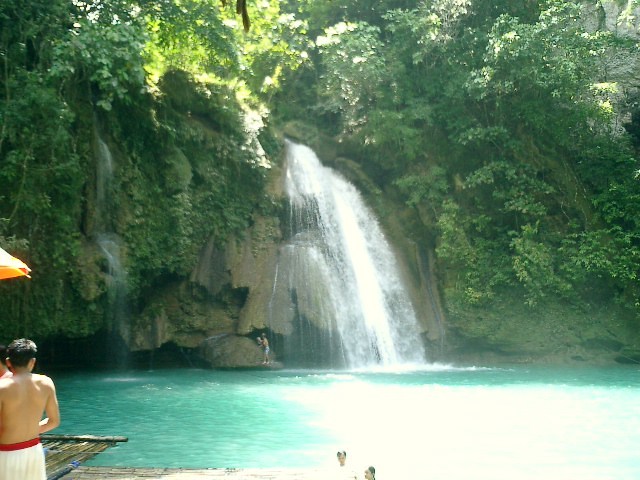
Kawasan Falls is in the municipality of Badian. The Cebu provincial site lists it as an attraction and gives Badian as its location. The canyoneering, jumping from ledges while descending the river, is called Alegria-Badian canyoneering in provincial material, because you enter from neighbouring Alegria and come out at the falls in Badian.
At the falls themselves you can take a raft right under the water. The bamboo raft in the photograph is that, and going under the falling water means being hit all over. The water is cold all year, and even at midday you cannot stay in for long.
Just seeing the falls and swimming is around PHP 200 a head, while canyoneering, meeting on site, runs about PHP 1,500 to 1,800. That covers a municipality-accredited guide, the environmental fee, the motorcycle transfer to the jump-in point, helmet, life jacket and water shoes, and lunch at the falls (published rates from two local operators). Some notices quote PHP 2,000 plus PHP 100 for transfers, so the sources differ.
Arranged from Cebu City or Mactan with transfers, it rises to around PHP 2,000 to 2,500 a head. On site it is cash only and there are no ATMs. After heavy rain it can be suspended for days, so confirm the day before that it is running.
Oslob and Kawasan go on the same day because both are in the south of the island. Split them across days and you do the half-day drive twice. The cost is that this is the longest day of the trip: out before first light, back after dark.
DAY 4Half a day covers the city’s historic sites
Why this order: yesterday was a return trip south, so keep the walking short today. Both historic sites are in the same block, which lets you finish in the morning.
Morning: Magellan’s Cross goes back to 1521
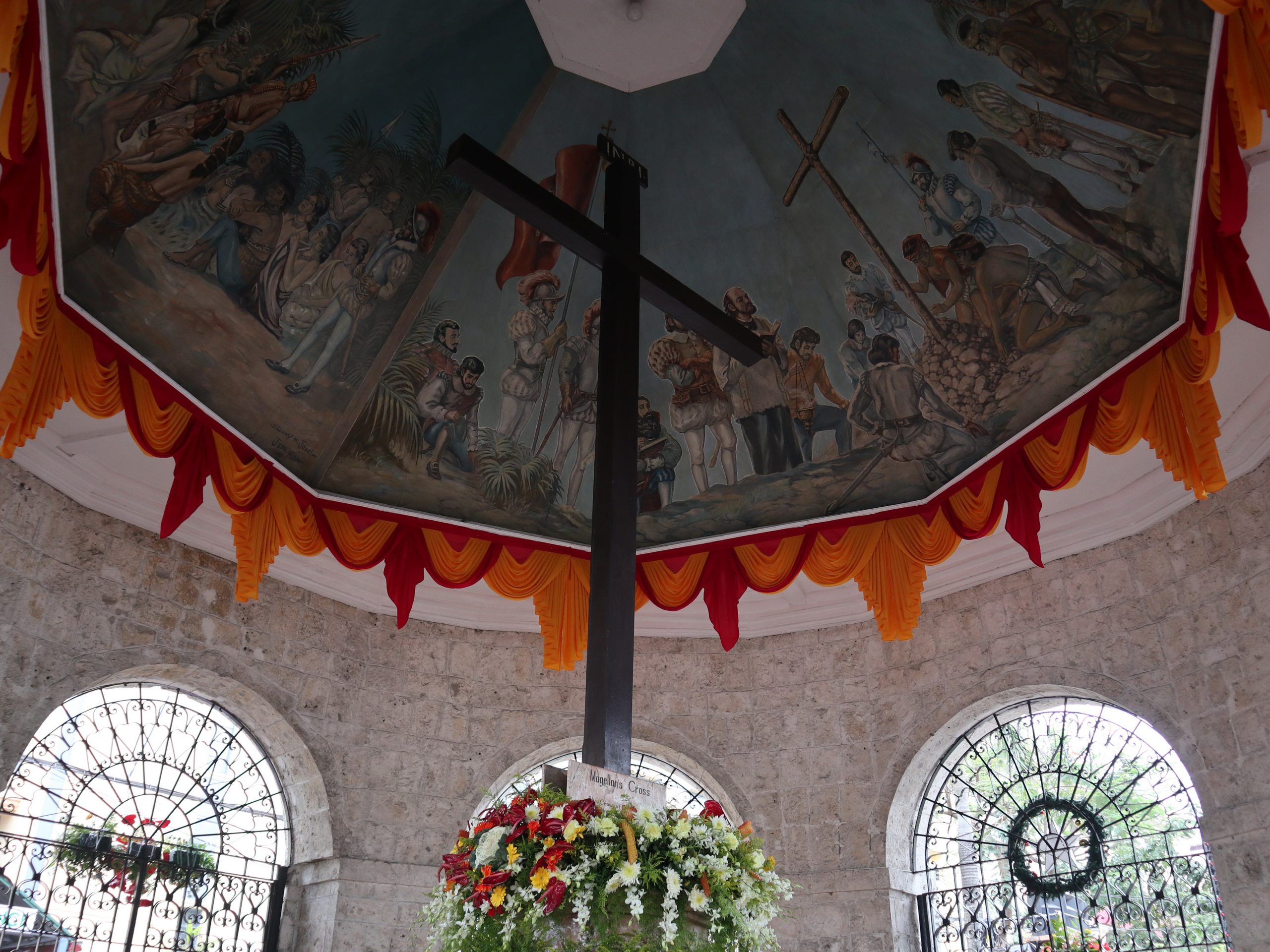
The origin of the cross is given on the basilica’s own site. Antonio Pigafetta recorded that a cross was planted when Ferdinand Magellan’s party reached Cebu in 1521, and the baptism of Rajah Humabon belongs to the same scene.
What stands in the chapel today is not the original untouched. Father Juan Albarran worked on it in 1735 and Bishop Santos Gomez Maranon in 1834. The plaque on the base states that a tindalo-wood cross encases the original, so what you see from outside is the casing.
The basilica also notes that a plenary indulgence attaches to the site. It is not standing there as a tourist attraction; it is still treated as an object of devotion. At certain hours, more people inside the chapel are praying than photographing.
The chapel is octagonal, with ceiling murals of the landing and the baptism running around it. The floor area you can enter is small, and looking at it takes five to ten minutes. It fills up around the morning services.
Morning: the Santo Nino basilica opens at four in the morning
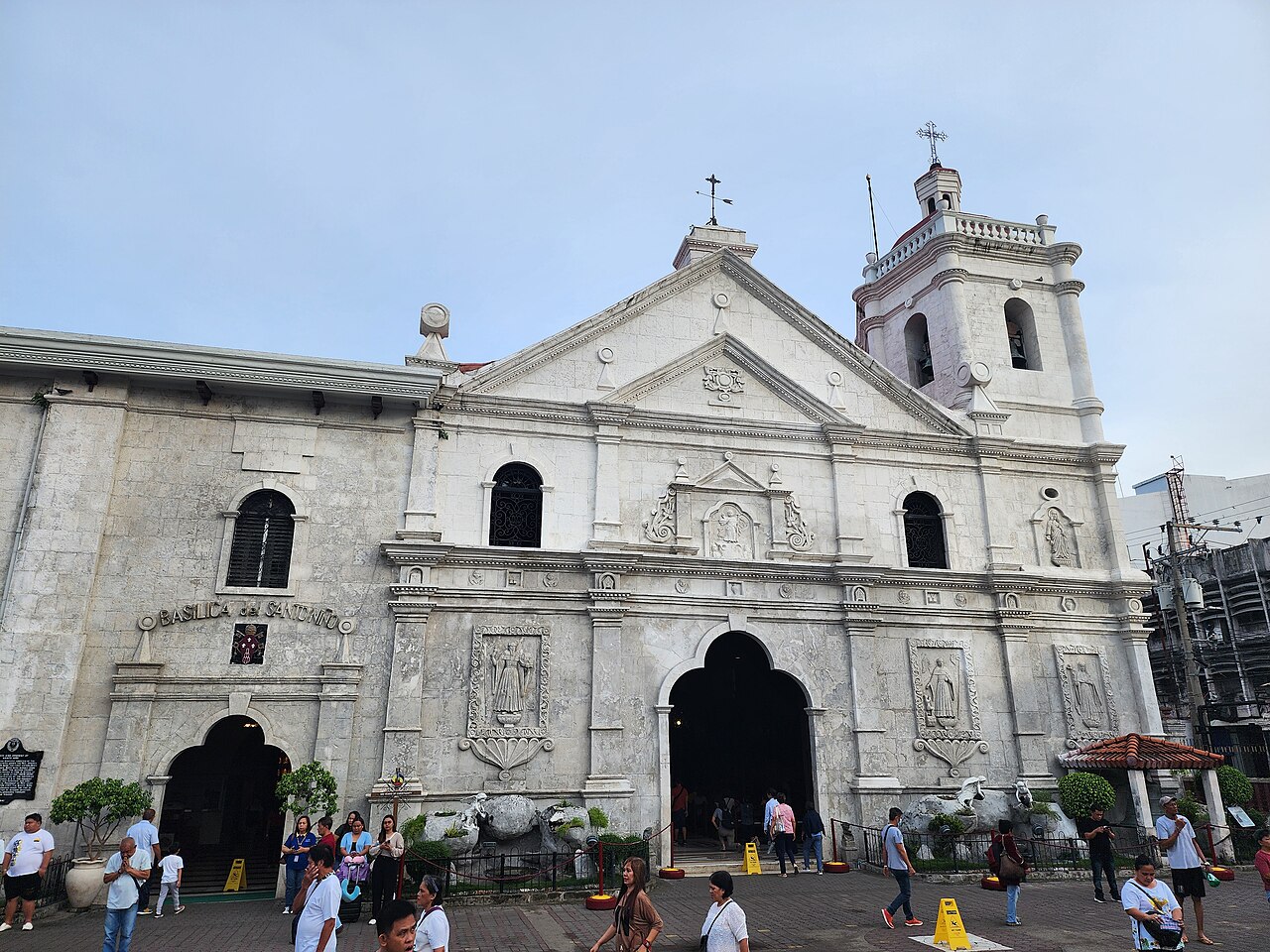
Next to Magellan’s Cross is the Santo Nino church, formally the Basilica Minore del Santo Nino. It is regarded as the oldest church in the Philippines and houses the image of the Holy Child Jesus.
It opens daily at 04:00 and closes at 21:00. That is a parish timetable rather than a visitor attraction’s, which is why the morning starts so early. To miss the daytime crowds, go around six in the morning and the density of people is a different thing entirely.
The attached museum keeps separate hours, 08:00 to 11:45 and 13:00 to 16:45, with more than an hour closed over the middle of the day. No admission price appears on the official site.
Fort San Pedro is in the same block nearby. Its opening hours and admission are not officially posted, so doing the two historic sites first and calling in afterwards means a closed gate does not break the plan.
Afternoon: a spa, some shopping, and lechon
The afternoon goes to a spa to work off the sea and a mall for souvenirs. Dried mango and mango sweets are the standard, and Cebu mangoes are known for how sweet they are.
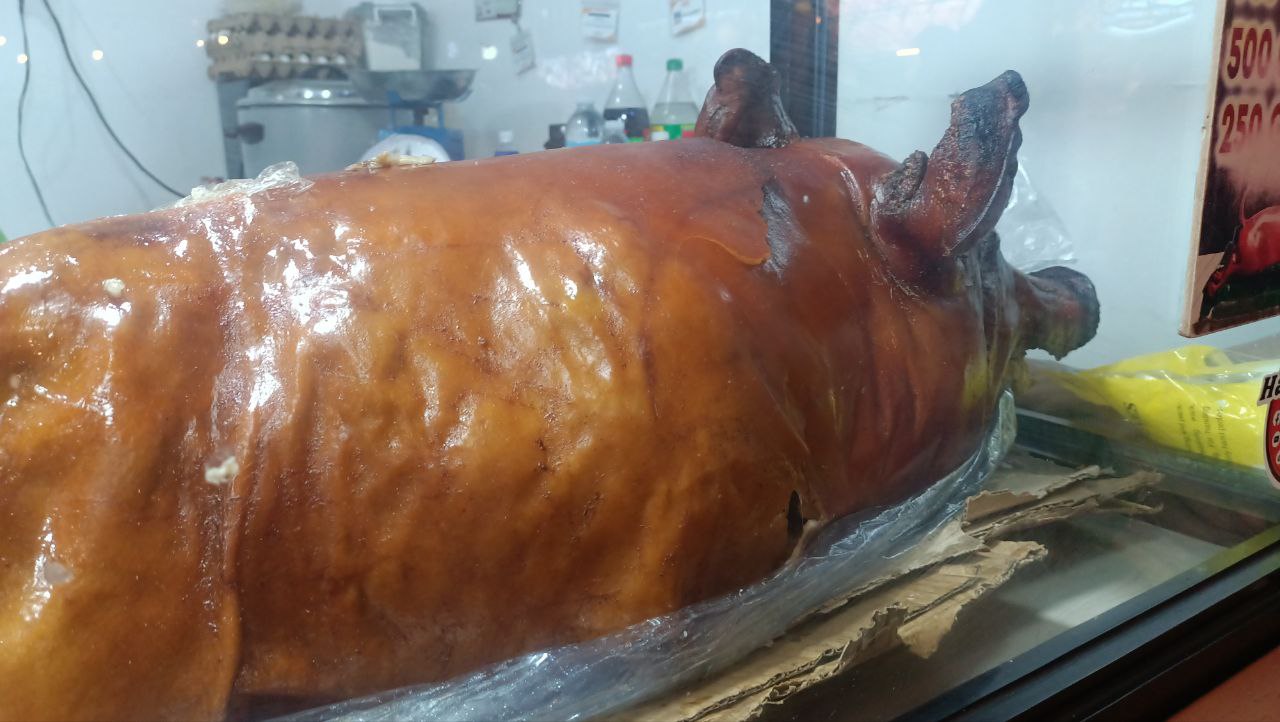
Dinner is lechon, a whole roasted pig, with the Cebu version characterised by a stuffing that includes lemongrass. The skin pulled tight and amber, as in the photograph, is what a finished one looks like, and it cracks audibly when carved. It is eaten with a vinegar and chilli dip.
The other names that come up are sinigang, a sour soup, grilled seafood over charcoal, and halo-halo shaved ice. Sinigang is strongly sour, which is exactly why it goes down on a day the heat has taken your appetite.
DAY 5-6Recover at the resort and leave on an evening flight
Why this order: put nothing on the last day. Keep it as the day for recovering what the third day took, and work only around the flight time.
Day five does not leave the hotel. Pool, sea and a massage, getting your body back in order for the flight. Being able to spend one whole day like this is part of the point of taking four nights rather than three.
Most flights to Japan leave in the evening and land the next morning. The hours between checkout and departure have to be filled either with a late checkout or somewhere with a shower. Confirm the extra charge when you book and you avoid negotiating on the day.
One procedure is easy to drop here. eTravel is not only for arrival. The official FAQ says you can register from 72 hours before, for entry and for exit alike. Turn up at the airport without having done the departure one and you fill it in on the spot on the day you fly. Doing it on the morning of day five, while the hotel connection is still stable, is the safe version.
Getting to the airport is day one in reverse: ten to twenty minutes by ride-hailing or taxi, in the PHP 300 to 550 range. If you are using the hotel transfer, tell them the time by the morning of day five.
Alternatives
Rainy-day swap
The weak day here is DAY 2. It is the day you go out by boat, and a rising wind cancels it. The operator decides on the morning, so it cannot be settled the night before.
The day to swap it with is DAY 4. The city’s historic sites are all under roofs and the basilica is open from 04:00 to 21:00. Move the city into a morning the boat cannot sail and take the sea on a clear day, and you lose neither.
What will not move is DAY 3. Oslob is built on leaving before dawn, and a later start pushes the return drive into the evening. The falls have their own failure mode: canyoneering is cancelled when the river is high. For the day heading south, moving the whole day to suit the forecast is more reliable than adjusting within it.
If the flight is delayed by an hour or more
Day one holds only entry and the ride to the hotel, so a delay on the way out barely registers. eTravel can be registered from 72 hours before departure, so a changed flight needs no re-registration.
What it does affect is a hotel transfer. If one is booked against your stated arrival time, how long they will wait varies by property. Giving them the flight number when you book makes waiting more likely.
A delay on the way home matters as little. Nothing is scheduled on DAY 5, so there is nothing to cut.
When you’re tired
If something has to go, it is DAY 3. Half a day of driving, out before first light, back after sunset. It takes more out of you than anything else in the four nights. Cut it and the trip closes down to Mactan and Cebu City, with nothing more than an hour away.
What goes with it is the whale sharks and the falls. All that is left is swimming and history, which does not suit anyone who came for the things you can only do in Cebu.
Half of it can go instead. Do Oslob and come back without Kawasan. The canyoneering is the heavier half, descending the river in gear, so finishing in the morning leaves the afternoon free to swim back on Mactan.
With an extra day available, insert it between DAY 3 and DAY 4. That makes the day after the southern run a rest day and lowers the load on the whole trip.
Where to stay
What this plan wants from a hotel is a short run in from the airport at night and the ability to send a car out before dawn. The DAY 1 evening and the DAY 3 morning both turn on those two.
The Mactan resort strip is on the same island as the airport, so you reach the room without crossing a bridge. The DAY 2 boat usually leaves from in front of the hotel, and the property carries DAY 5 as well. It is the position that fits this plan. The cost is that once you step outside the grounds, the choice of places to eat drops sharply.
Staying in Cebu City puts the DAY 4 historic sites within walking distance and maximises the food and the malls. But the airport is across a bridge, which lengthens both the late arrival and the early DAY 3 start, and there is no morning where you wake up in front of the sea.
Moving one night south, nearer Oslob, is another shape. The DAY 3 dawn drive shortens and you do not leave in the dark. Against that, you add one move with luggage, and one of the four nights is no longer at a resort with clear water. Keeping it to one place, Mactan, near both the airport and the boat, is the version least likely to go wrong.
Prices move on identical dates, which is why none appear in the table above. Whether a transfer is offered, and what it costs, differs by property, so ask before you book.
What this trip costs
Assumptions: two adults, four nights. Air fares are outside the total because they swing too far by route and season, and rooms and meals move on identical dates. What is left comes to PHP 9,900 to 11,500 for two, roughly JPY 25,000 to 29,000. Only two lines, the visa and eTravel, have a government tariff; the rest are indicative figures published by operators on the ground, with the source and check date in the right-hand column.
The PHP 0 for the visa and eTravel are official figures. The other lines have no official tariff and are indicative prices published by operators on the ground, all checked on 2026-09-20. What you pay on the day moves with the operator and the season. The yen conversion uses the Bangko Sentral ng Pilipinas reference rate quoted on 18 September 2026, PHP 1 = JPY 2.4839.
Rooms and meals, which are absent from the table, move a great deal on identical dates. Mactan resorts have a wide nightly range, and eating inside the resort against eating outside it is close to a factor of two. If you want the total fixed early, book the room first and stack the rest on top.
The yen conversion moves as well. The central bank’s reference rate quoted on 18 September 2026 is PHP 0.4026 to the yen, which is PHP 1 = JPY 2.4839. Market data on the same day gives 2.5055, a gap of 0.87 per cent. The difference itself is small, but publishing yen figures without saying which rate produced them means a reader who redoes the arithmetic does not get the same answer. This article uses the central bank’s quote and rounds it coarsely to about JPY 2.5. Estimating in pesos and converting at the end drifts less.
The other question is how much cash to carry. Kawasan is cash only with no ATM on site. The island fees are paid to a collector after you land, and the Oslob fee is paid at the desk on the spot. Essentially all of the figures above leave your hands as cash, so a thick stack of small peso notes makes the day easier.
Air fares are published officially, but the airline’s own note says the fares shown were collected within the last 48 hours and may not exist at the moment of booking, which makes them unusable as a going rate. Quoting a displayed figure as though it were a market price diverges immediately from the screen the reader sees. If your dates can move, waiting for a round to come by via the record of when airfare sales come reads better than guessing at a wide range.
The indicative figures above come from notices on the ground and what you pay will move from them. Oslob, Kawasan and the marine sanctuaries all have an operator as the counter, so getting the total in writing in advance is what fixes the budget. Klook lists Cebu tours, including the form that strings Oslob and Kawasan together in one day with transfers, which stops you arranging the driving and the entry separately.
Time is worth stacking up too. DAY 3 leaves in the dark, spends half a day going south, takes in the falls and returns after sunset. DAY 2 is about six hours on a boat. Those two use most of the energy, which is why DAY 5 is left entirely clear. The DAY 4 historic sites finish in a morning if you use the basilica’s 04:00 opening.
Outside the table is data. This is an itinerary that runs a map and a ride-hailing app while travelling to the far south of the island, so being connected from the moment you land is quicker. The break-even by party size is worked out in the eSIM against pocket Wi-Fi comparison.
Where this plan does not work is for anyone who wants the total fixed to the last yen before departure. Everything paid on the ground is priced by the individual operator and moves within the ranges above. Bundling the sea, Oslob and Kawasan into one tour each to fix the total in advance, and leaving only rooms and meals variable, is the easier way to carry this island. For the same sea and island resort with terraces and temples added, the Bali five-night plan; for a beach and a World Heritage town kept separate, the Da Nang and Hoi An four-night plan.
Sources: official sites of the Philippine Bureau of Immigration (immigration.gov.ph); eTravel (etravel.gov.ph); the Bureau of Fisheries and Aquatic Resources (bfar.da.gov.ph); the Department of Tourism (tourism.gov.ph); the Province of Cebu (cebu.gov.ph); the Basilica Minore del Santo Niño (santoninodecebubasilica.org); Bangko Sentral ng Pilipinas (bsp.gov.ph); and Philippine Airlines (philippineairlines.com) / Indicative figures from: Grab airport rides (grab.com/global/airport-rides/mactan-cebu-international-airport/), KR Travel and Tours (krcebutours.com), Island Trek Tours (oslobwhalesharks.com), WhyCebu (whycebu.com), Cebu Destinations (cebudestinations.com), AiFly airport guide (aifly.one) and plugsandoutlets.com / Unverified: the original wording of the passport validity requirement and of the in-water rules at Oslob / Checked on 2026-09-20 / Featured image: Lsj, CC BY-SA 3.0 (Wikimedia Commons)
Other sales ending soon

 4 days leftuntil Oct 24Air Busan Takamatsu-Busan Coupon: Up to 9,000 Yen Off Until October 24
 5 days leftuntil Oct 25JAL Hong Kong Campaign: Tokyo–Hong Kong Round Trip from 75,800 Yen (until 25 Oct)
 11 days leftuntil Oct 31Jin Air Kobe–Seoul: 5,000 yen off a round trip with code KTOUKB1, until 31 October
 11 days leftuntil Oct 31Jin Air to Busan: 4,000 yen off a round trip with code KTOPUS, first 300 only