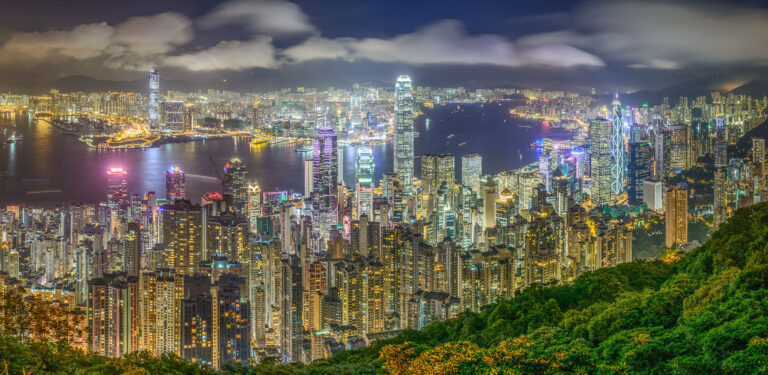
Hong Kong 4-Day Itinerary: Night View, Big Buddha and Dim Sum
AuthorMIRUTOBE editors
Table of Contents9 items
- Itinerary
- DAY 1 On an evening arrival, do nothing but the boat and the waterfront
- DAY 2 Climb the hill city from the bottom up, then cross back to Kowloon
- DAY 3 Lantau is the day you hand your plans to one cable car
- DAY 4 Dim sum in the morning, then straight to the airport with the bags
- Alternatives
- Why we skipped Hong Kong Disneyland
- Where to stay
- What this trip costs
Three nights in Hong Kong for two adults on one Octopus card and the ferry, with no car. Three items carry more than nine tenths of the cost: the airport railway, the Peak Tram and Ngong Ping 360. A Symphony of Lights has been suspended since the evening of 9 September 2026.
Itinerary
DAY 1On an evening arrival, do nothing but the boat and the waterfront
Why this order: get two things done on day one, immigration and a transit card. Keep the evening to a single item and save your legs for the hills tomorrow.
Before you go: no visa, one hour of time difference, 220 volts
A Japanese passport needs no visa for Hong Kong. On the Immigration Department’s country and territory table, the row for Japan reads 90 days. That table itself was revised on 26 August 2026, so this is the condition in the current edition. Three nights is comfortably inside it, though passport validity is required separately, so check the expiry date before you leave.
The time difference is one hour, Hong Kong at UTC+8 against Japan at UTC+9. An evening arrival still lands in daylight, and having the whole first evening available is a premise of this plan. Neither territory changes clocks for summer, so the gap does not shift by season.
The supply is 220 volts at 50 hertz. Hong Kong Electric’s terms of supply describe it as normally 220 volts single-phase two-wire or 380 volts three-phase four-wire at 50 hertz, and the Electrical and Mechanical Services Department’s appliance guidance states plainly that 220 volts AC is the domestic voltage in Hong Kong. The department’s guidance note sets the plug as the three-pin type to BS 1363 Part 1, which is the British-style plug.
One thing the department prohibits outright: connecting equipment rated below 200 volts AC, a 110-volt audio unit for instance, directly to a 220-volt domestic socket. A travel adapter matches the shape of the pins and does nothing to the voltage. How to tell one job from the other is set out in the difference between a plug adapter and a transformer.
On arrival: the ordinary Octopus card is not sold at the airport station
Getting around the city runs on an Octopus card. The On-Loan version, the one you pay a deposit for, cannot be had at Airport station: the official list of sales points names the airport as an exception among the MTR customer service centres. Anyone wanting a card the moment they land trips over this.
What the airport does sell is the sold-outright version. The Tourist Octopus costs HKD 42 for the card with no deposit, and the adult version with the initial stored value is HKD 42 plus HKD 128, HKD 170 in total. It is available from the ticket machines and the customer service centre at Airport station. The HKD 42 card fee does not come back.
The On-Loan card is HKD 200: a HKD 50 deposit plus HKD 150 of stored value, the HKD 150 being prepaid fares. The deposit is refunded on return, with conditions. Returning it within 90 days of issue, having used it five times or fewer, or holding a balance of HKD 1,000 or more each triggers a charge of HKD 11 or one per cent of the balance, whichever is higher. A three-night trip is inevitably within 90 days, so handing the card back before you fly costs HKD 11.
Two choices, then: settle it at the airport and write off HKD 42, or wait for a city station and take the version whose deposit comes back. This plan takes the second. Pay for the single ride in from the airport with a ticket, and one card bought in town covers everything after that.
The Airport Express reaches Hong Kong station in 24 minutes. The fare is HKD 130 one way on a Smart Ticket to Hong Kong station, or HKD 120 with Octopus; to Kowloon station it is HKD 115 and HKD 105. The first train is at 05:54, the last at 00:48, at roughly ten-minute intervals. These figures come from the Airport Authority’s own pages.
Buses are the cheap way in. The overnight N21 runs to the Star Ferry pier in Tsim Sha Tsui for HKD 23.8, operating from 00:20 to 04:40. In daylight the A21 goes to Hung Hom station for HKD 34.6. Under a third of the rail fare, and correspondingly slower.
Dusk: the Star Ferry began as a crossing 146 years ago
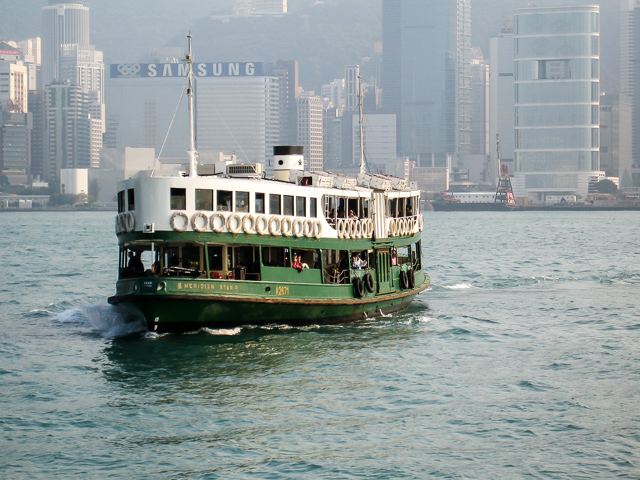
Highlights: it began in 1880, when Dorabjee Naorojee Mithaiwala started crossing Victoria Harbour with the steamer Morning Star under the name Kowloon Ferry Company. It was reorganised as the Star Ferry Company in May 1898 and marked its centenary in 1998. Nine vessels work two routes today, and the 2025 passenger count was 16,165,528.
Practical note: a four-day visitor pass is HKD 50 and covers unlimited travel on both the Central and Wan Chai crossings to Tsim Sha Tsui. It is sold at exactly one place, the control centre at the Tsim Sha Tsui pier. Octopus cards are not sold on the boats, so get one before you board. Paying cash, the only notes and coins accepted are HKD 10 and HKD 20.
- Fare (weekday)
- Adult lower deck HKD 4.0; upper deck HKD 5.0
- Fare (weekend and holiday)
- Adult lower deck HKD 5.6; upper deck HKD 6.5
- Child and 65+
- Weekday upper HKD 2.9 / lower HKD 2.8 (weekends HKD 3.9 / 3.7)
- Four-day pass
- HKD 50 (both routes, unlimited)
- Service
- Both piers 6:30–23:30; every 6 minutes at peak
- Official
- Star Ferry ↗
The boat is usually introduced as having more than a century of history. Counted from the beginning it is 146 years, and even from 1898, when the name settled, it is 128. The usual phrasing undersells it.
The difference between decks is about a dollar. The lower deck sits closer to the engine, louder, with the windows lower down. Take the upper deck out and the lower deck back and even a ten-minute crossing reads differently. Go from Tsim Sha Tsui to Central just before the sun goes and you get the sky darkening on the way out and a lit-up waterfront on the way back.
Whether the four-day pass pays is a question of crossings. The maximum single fare is HKD 6.5, so HKD 50 divided by that is eight. Cross the harbour eight or more times over three nights and it wins; finish with two returns, four crossings, and paying each time is cheaper. This plan crosses on the first and second evenings, which puts it right on the line.
Night: the light show has been off since the evening of 9 September 2026
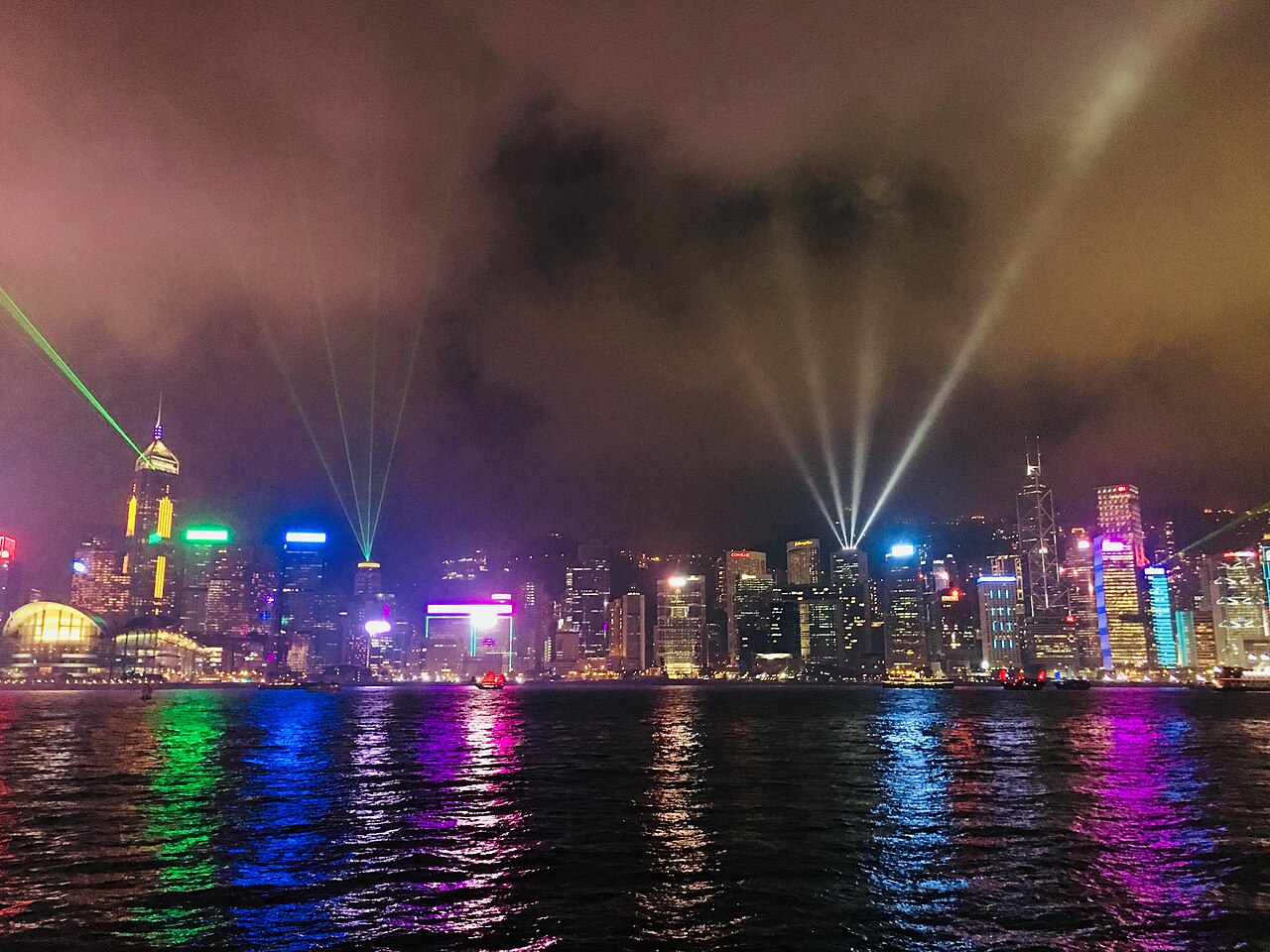
This itinerary used to close its first evening on the light and sound show at 20:00. That no longer works. The press release the Tourism Commission issued at 17:20 on 9 September 2026 is a single sentence: A Symphony of Lights will be suspended from tonight until further notice. It gives no reason and no duration.
The government has announced neither a restart nor an ending. The Tourism Commission’s special announcements page still carries the same sentence, last updated on 10 September.
One line of intent does appear on the Commission’s programme page: that it is working with the Hong Kong Tourism Board to explore and launch a new version of the show. That page was last revised on 4 February 2026. Ending, or rebuilt and returning. What the government’s own text supports is the intent to rebuild. It does not say when.
The normal schedule is still published. It began in 2004, runs about ten minutes from 20:00 every evening, and is free with no ticket. In December 2017 the music was replaced with a new recording by the Hong Kong Philharmonic Orchestra, and 43 buildings plus two other structures take part. In 2005 it was recognised by Guinness World Records as the largest permanent light and sound show. It does not run if a typhoon signal 3 or above, or a red or black rainstorm warning, is in force after 15:00 on the day, even if the warning is lifted before 20:00.
Pinning the first evening on it is not reasonable at the moment. This plan makes the waterfront itself the destination instead. The Tsim Sha Tsui promenade, the Avenue of Stars, shows you the skyline across the water with or without a show, and the Bruce Lee statue stands there. It is a few minutes’ walk from the ferry, so the boat and the waterfront are enough for a first evening.
DAY 2Climb the hill city from the bottom up, then cross back to Kowloon
Why this order: start walking after 10:00, when the escalator switches to running uphill, and be at the Peak thirty minutes before sunset. The evening crosses the water back to Kowloon in one line without doubling back.
Morning: until 10:00 the escalator only runs downhill
The Mid-Levels Escalator from Central up to Half Way changes direction through the day. Every day it runs downhill from 06:00 to 10:00 and uphill from 10:00 to midnight. The pattern follows the commute, so arriving at nine intending to ride uphill puts you in front of something moving the other way. Start a walk here after ten.
The Transport Department’s page gives the opening year as 1993 and describes the structure as a covered walkway linking 16 reversible escalators and 3 reversible moving walkways, running from Queen’s Road Central to Conduit Road. At the end of 2024 it was carrying about 99,000 people a day. It is a commuter route, not a visitor attraction.
The figure of more than 800 metres has stuck to it, but what the Transport Department publishes is only the endpoints, with no distance given. The section runs from Queen’s Road Central to Conduit Road.
Walk on to Sheung Wan and the streets turn into dried-seafood wholesalers, shop after shop of dried shrimp and scallop, about ten minutes on foot from the towers of Central. Ride the upper deck of a tram and you can come back along the same road slowly. Octopus works by touch, so using it for the single stop from Sheung Wan to Central is perfectly reasonable.
Afternoon: the Peak Tram opened in 1888 and tops out at 396 metres
Highlights: opened in 1888, making it a funicular of more than 138 years. The highest point is 396 metres above sea level, and the gradient varies from 4 degrees to 25.7. On the steep sections the buildings outside the window appear to lean over, an effect a University of Hong Kong researcher reported in a 2013 journal paper as the Peak Tram Illusion. You are the one tilting; the buildings are vertical.
Practical note: the combined return and Sky Terrace ticket is the cheaper way in. A tram return alone is HKD 116 for an adult and the Sky Terrace on its own is HKD 80, HKD 196 bought separately, against a combined ticket from HKD 146, or from HKD 120 on the early-purchase tier. The Night Special after 19:00 is HKD 155 for an adult, which is more than the ordinary combined ticket. Going up before sunset, as this plan does, the ordinary combined ticket is the cheaper one.
- Tram return
- Adult HKD 116 (ages 3–11 and 65+ HKD 75)
- Sky Terrace 428
- On its own, adult HKD 80 (ages 3–11 and 65+ HKD 50)
- Combined
- From HKD 146; early purchase from HKD 120
- Night Special
- After 19:00, adult HKD 155
- Hours
- Tram terminus 7:30–23:00; Peak Tower 7:00–23:00; Sky Terrace 8:30–22:00
- Official
- The Peak ↗
Choosing the time to go up is simple. Sky Terrace closes at 22:00 and the tram terminus at 23:00. Be at the summit thirty minutes before sunset and you see both the harbour in daylight and the lights after it. Arrive in full darkness and all you get is points of light, with no sense of the shape of the bay.
Intermediate stations sometimes close on public holidays. The notice appears in the announcement panel on the operator’s home page, in the form of Barker Road station being shut for certain hours on certain days to manage crowds. If you intend to get off part way up, look at that panel the day before.
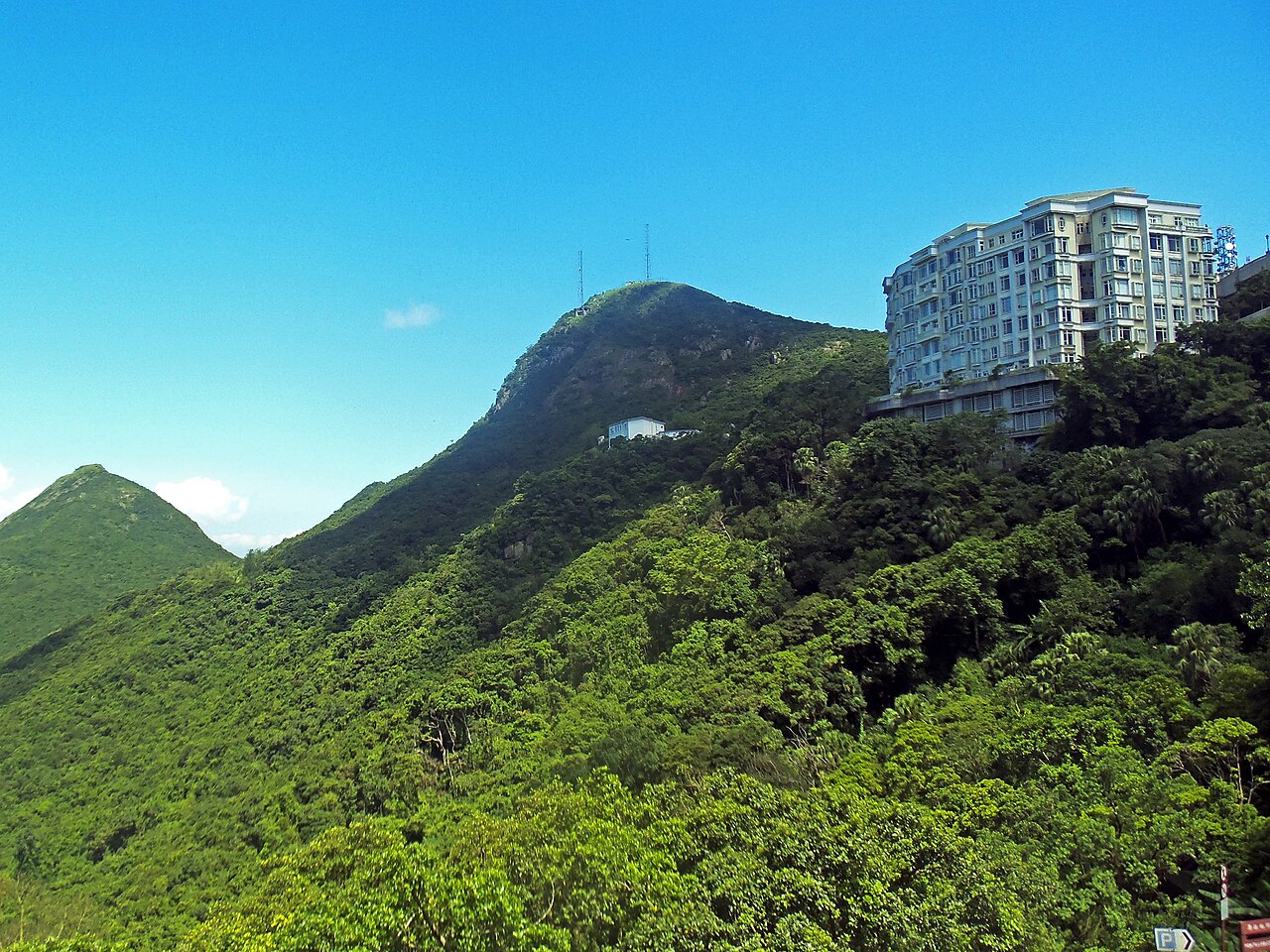
That photograph is not the view from the terrace. It is the mountain itself, shot from a distance, with the mast on top and housing climbing partway up the slope. The Peak is a viewpoint and also a very steep place where people live, and the second of those is easier to see from below.
The tram is not the only way up. Three options are worth laying out before you buy anything.
This plan assumes the combined ticket. Thirty dollars on top of the HKD 116 tram return buys the terrace, so the expensive mistake is going up first and then adding a standalone terrace ticket at HKD 80.
Evening: Temple Street is on the other side of the water
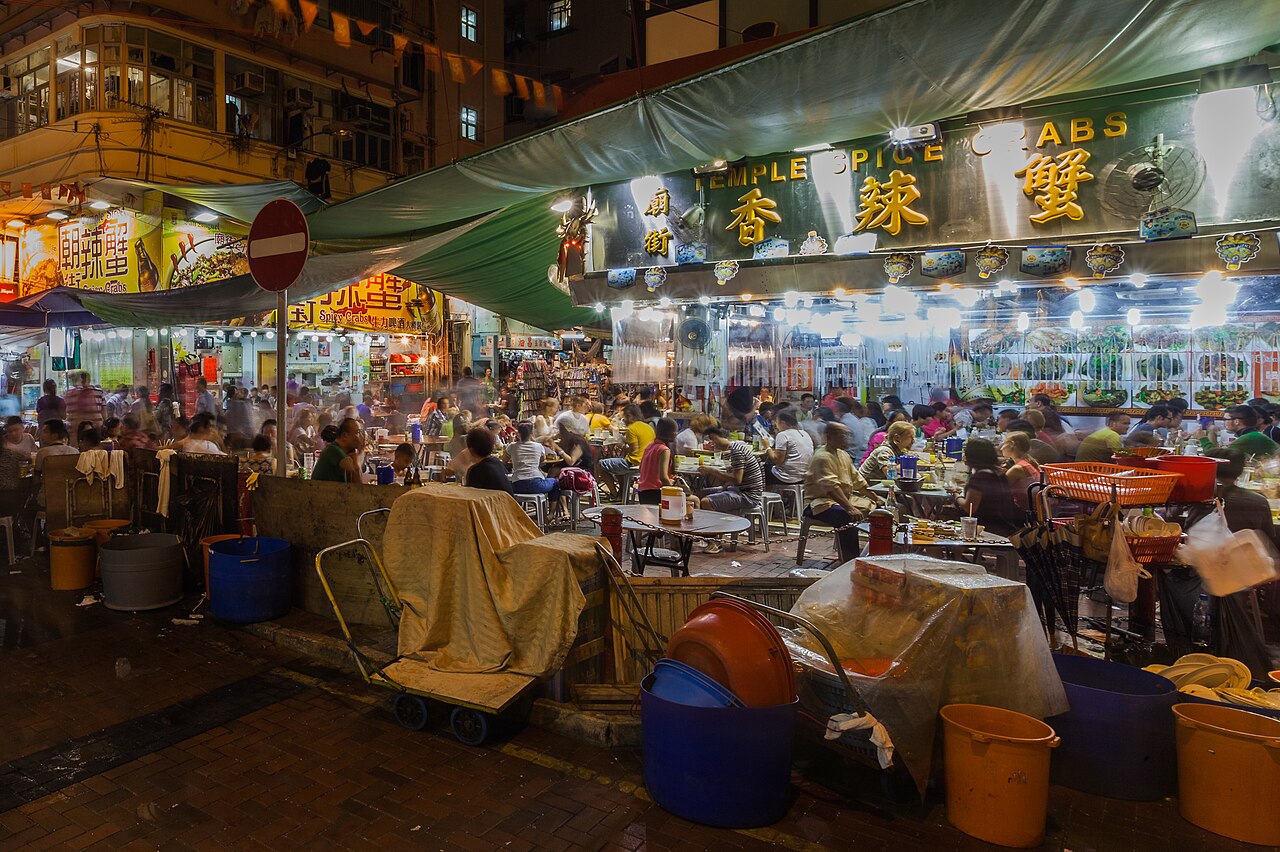
Coming down from the Peak, take the boat from Central back to Tsim Sha Tsui. Temple Street is on the Kowloon side, running from Yau Ma Tei down towards Jordan. Crossing the water rather than ending the day on Hong Kong Island is a consequence of the hotel being in Tsim Sha Tsui, so the day reads as island in the daytime, Kowloon at night.
The stalls are a mix of household goods, fortune tellers and seafood. The spicy crab on the sign in the photograph is crab stir-fried with chilli. Sit-down stalls cluster in one part of the street, so the grazing section and the sitting section are separate.
Opening hours are not published on the official side. Neither the Tourism Board’s page nor the Food and Environmental Hygiene Department’s facility entry, which administers the hawker area, lists anything but the address.
DAY 3Lantau is the day you hand your plans to one cable car
Why this order: the cable car stops in the early evening, so leave in the morning. Check on the official page the day before whether it is running, and if it is not, swap the climb for the bus.
Morning: look for maintenance closures in the notice panel, not in a diary
Highlights: 25 minutes from the Tung Chung terminal to Ngong Ping, over water and over the ridge. Three cabin types run, and the glass-floored Crystal Cabin puts the sea and the slope directly under your feet. From Ngong Ping Village at the far end it is about ten minutes on foot to the Big Buddha.
Practical note: operating hours are 10:00 to 18:00 on weekdays and 09:00 to 18:30 at weekends and on public holidays, so it finishes in the early evening. That is why this plan leaves in the morning. Maintenance closures fall on a handful of days each year; some days the operating-hours page says none is currently scheduled, and on others a notice goes up. Reading that panel the day before is more reliable than memorising dates. Bags over 48 by 34 by 23 cm or over 4 kg cannot be carried under the bylaws, and left luggage is HKD 100 per item.
- Return (Standard)
- Adult HKD 295; ages 3–11 HKD 150
- Return (Crystal)
- Adult HKD 365; ages 3–11 HKD 220
- Return (Crystal+)
- Adult HKD 545; ages 3–11 HKD 400
- Hours
- Weekdays 10:00–18:00; weekends and holidays 9:00–18:30
- Terminal
- 5 minutes on foot from exit B, MTR Tung Chung; 10–15 minutes from the Shun Tung Road bus stop
- Official
- Ngong Ping 360 ↗
Writing maintenance dates into a calendar achieves nothing. The timing moves from year to year, and once a closure is over the date is just history. Whether one is scheduled shows up on the operating-hours page, so that is where to look.
Even with the cable car down, the Buddha is reachable. New Lantao Bus runs a service to Ngong Ping, and the cable car’s own Tung Chung terminal is ten to fifteen minutes on foot from the Shun Tung Road stop. On Sundays and public holidays route 1R runs direct from the Hung Hom ferry pier to Ngong Ping. The mountain road makes it slower than the cable car, but you swap the method of climbing rather than rebuilding the whole day.
Getting to Tung Chung is documented officially: about 30 minutes by rail from Hong Kong station. By taxi it is about 30 minutes from Central at roughly HKD 290 including tunnel and bridge tolls, or about 37 minutes from Tsim Sha Tsui at HKD 220. Split between two, a taxi can be the cheaper option, at the cost of handing your schedule to the morning traffic.
Which cabin to take is a matter of preference, but Standard to Crystal is HKD 70 a head. Think of it as buying the minutes of that 25 during which you can see your own feet, and the decision gets easier. Crystal+ is HKD 545 return, HKD 1,090 for two, which would put seventy per cent of this trip’s entire transport and admission budget into one cabin type.
One discount here does not apply to visitors. The senior fare on this line is restricted to Hong Kong residents holding a JoyYou or Elder card. Travellers over 65 pay the adult fare.
Afternoon: the Buddha is 34 metres overall and 26.4 metres as a statue
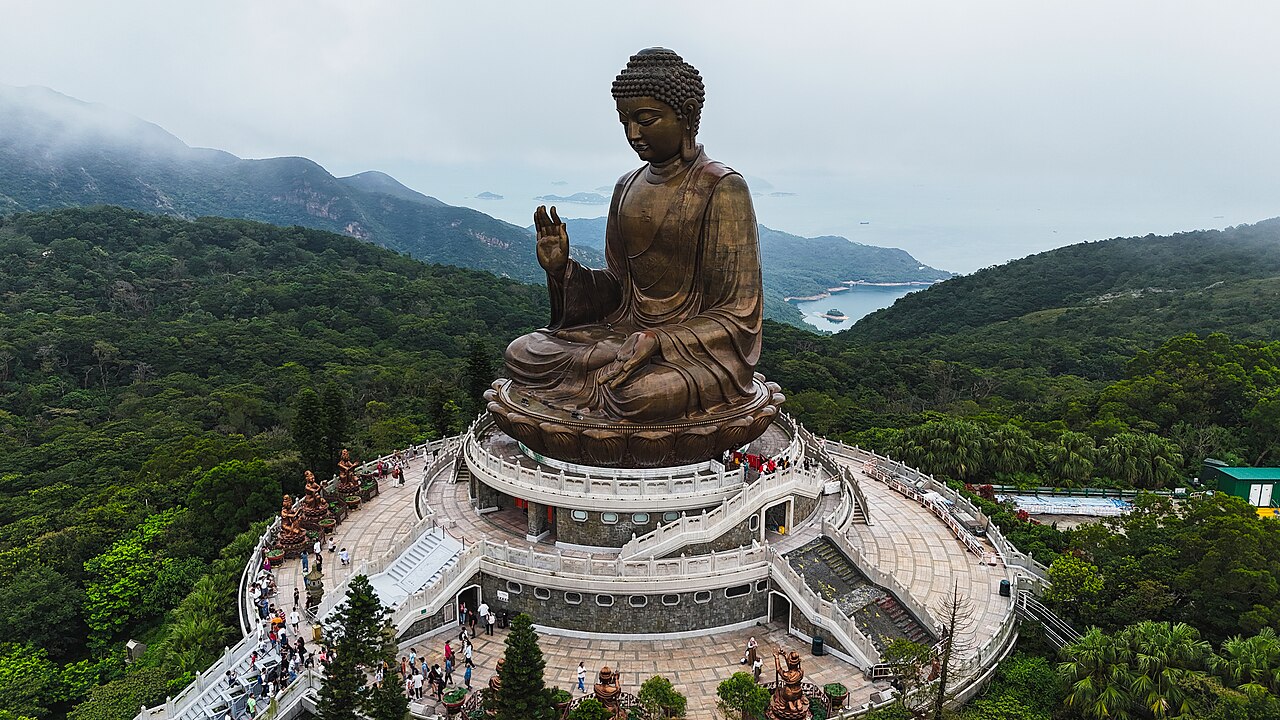
The official height of the Tian Tan Buddha is 34 metres overall. That figure includes the lotus throne and the platform; the statue itself is 26.4 metres. It used 250 tonnes of bronze and took twelve years to build. It sits on the summit of Muk Yue Peak, facing north towards Beijing.
It is not an ancient statue. It was completed in December 1993. Po Lin Monastery below it was founded in 1906 on the Ngong Ping plateau at 400 metres, and formally named Po Lin in 1924. The monastery came nearly ninety years first, and the Buddha was added on top of it.
The figure of 268 steps appears on neither the Ngong Ping 360 site nor the monastery’s. The monastery’s own wording is that you climb and descend a long flight of stone steps, with no number attached. Expect a substantial climb from the cable car to the foot of the Buddha with whatever you are carrying, and that is enough to plan on.
The monastery is open 09:00 to 18:00, and its vegetarian kitchen serves from 11:30 to 16:30. Even on a weekday, when the cable car starts at 10:00, the 25-minute ride plus the ten-minute walk from the village plus the steps still lands you well inside the kitchen’s hours. If lunch there is the plan, a morning departure is not optional.
Ngong Ping Village is the commercial strip at the gate, with food and souvenirs. It and the indoor attractions stay open during maintenance closures, so arriving by bus on a day the cable car is down does not leave you without anywhere to eat.
Evening: dim sum is a morning meal, not an evening one
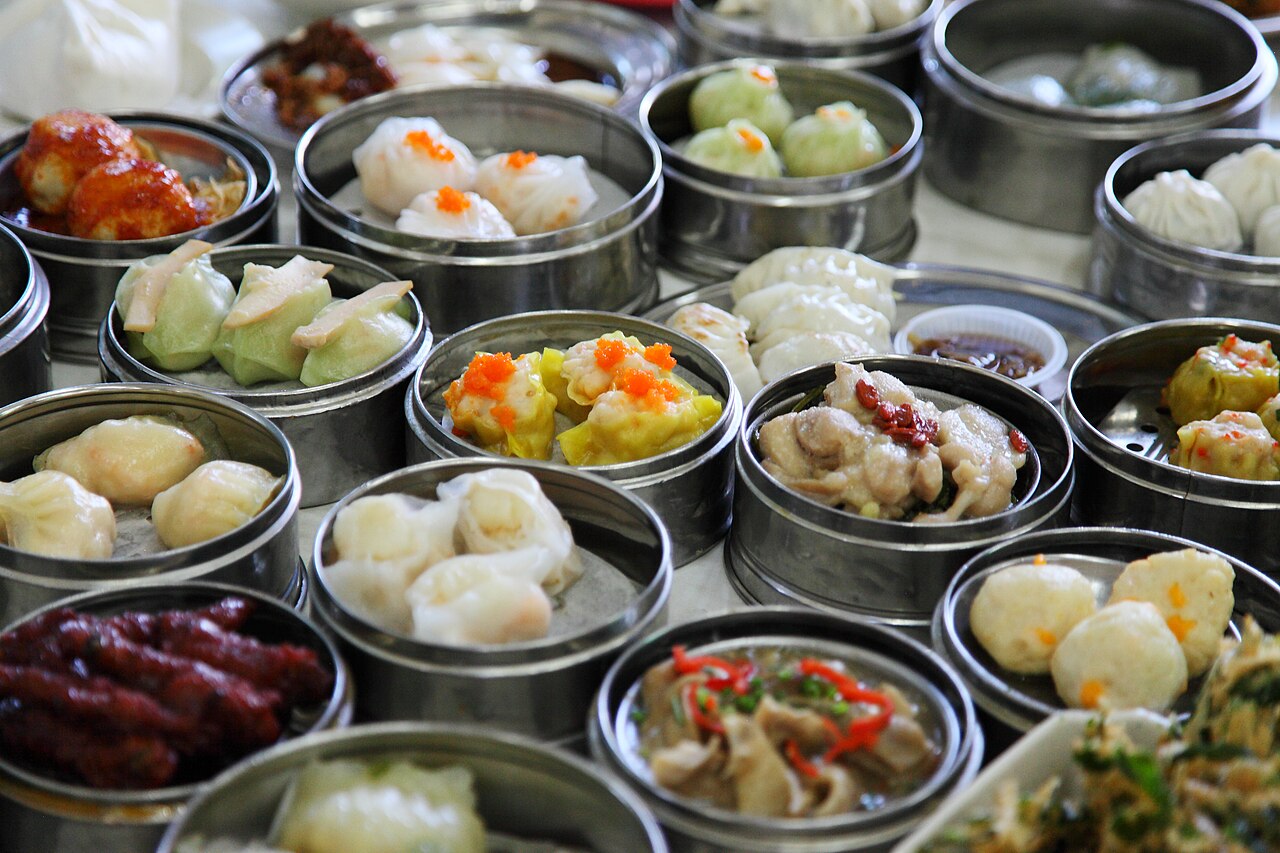
Yum cha is properly a morning-to-midday meal, tea with small dishes alongside. Some places do serve it in the evening, but the tea houses that keep carrying steamers to your table generally close after lunch. That is why dim sum sits on the DAY 4 morning here, and why a canteen or a cha chaan teng fits the DAY 3 evening better.
A cha chaan teng is the Hong Kong everyday diner: char siu over rice, wonton noodles, and the strong black tea with evaporated milk that is Hong Kong-style milk tea. A meal runs to a few tens of dollars a head, which suits an evening that has already spent its fixed budget on a funicular and a cable car. Egg tarts come out of the oven on a schedule that each shop sets for itself, and missing it means buying them cold.
DAY 4Dim sum in the morning, then straight to the airport with the bags
Why this order: the last day makes one move. Only things you could drop without breaking the plan belong on it.
The final morning goes to yum cha: har gow, siu mai, cheung fun and char siu bao out of the steamers. Having eaten at a cha chaan teng on the third evening, nothing here repeats. Tea houses open early, so a flight in the early afternoon leaves plenty of room.
Then shopping. Mango sweets and tea can be bought at the airport too, but there is no time on the last day to go back to the dried-goods streets of Sheung Wan. Finishing near the hotel keeps the journey with luggage down to one leg.
The Airport Express takes you back: 24 minutes from Hong Kong station, HKD 120 with Octopus. From Kowloon station it is HKD 105, and that is the nearer one from Tsim Sha Tsui. Both Hong Kong and Kowloon stations offer in-town check-in, so you can hand over the bags and go back into the city. The last train is at 00:48.
Decide today whether to return the Octopus card or keep it. Three nights is inside 90 days of issue, so returning it costs HKD 11 or one per cent of the balance, whichever is higher. Spending the balance down on the last day’s shopping and keeping the card avoids the fee entirely.
For reference, the city rail fares as the operator publishes them: Tsim Sha Tsui to Central is HKD 10.6 on Octopus and HKD 12.5 on a single-journey ticket, and Hong Kong station to Tung Chung is HKD 24.3 and HKD 28.0. That dataset was last updated on 2 April 2026 and does not reflect any revision since, so treat the numbers as indicative.
Alternatives
Rainy-day swap
What rain hurts here is the DAY 2 evening and the DAY 3 morning. Cloud settling on the Peak erases the view, and you will have paid HKD 116 a head for a tram ride to look at white. Ngong Ping 360 suspends service for wind and lightning.
Swapping works. The Peak is tied to sunset, not to a day of the week, so a wet DAY 2 evening moves to the DAY 3 evening, and a rough DAY 3 moves into the DAY 2 daytime. What cannot move is the dim sum, because the tea houses close after lunch and it will not go into an evening.
The indoor fallbacks are in Sheung Wan and Central. The dried-goods streets run under arcades and shop awnings, and the Mid-Levels Escalator is a covered walkway. After 10:00 it runs uphill, so on a wet day you can get to the high side without walking the slope.
The light and sound show is cancelled on any day with a typhoon signal 3 or above, or a red or black rainstorm warning issued after 15:00, and it does not run even if the warning lifts before 20:00. Since 9 September, though, the suspension makes the weather beside the point.
If the flight is delayed by an hour or more
Day one holds four things: immigration, sorting out a transit card, the Star Ferry and the waterfront. An hour of delay costs you at most one sailing. The ferries run until 23:30 on both sides, the last Airport Express is at 00:48, and even a middle-of-the-night landing has the N21 bus from 00:20 to 04:40.
Where it bites is DAY 3. The cable car finishes at 18:00 on weekdays and 18:30 at weekends, so carrying a first-day delay forward into DAY 3 means not getting up the mountain at all. When something slips, cut the DAY 1 evening and leave every later time as it was.
A delay on the way home barely matters. DAY 4 holds dim sum and shopping, so there is nothing to cut.
When you’re tired
If something has to go, it is DAY 3. The trip out to Tung Chung, 25 minutes of cable car, ten minutes on foot from the village and then the steps. It takes a full day and costs the most energy. Dropping it puts HKD 590 back for the two of you and brings the transport and admission total down to HKD 892.
What goes with it is the mountain and the monastery. What remains is towers, water and markets, an urban trip across Hong Kong Island and Kowloon. It does not suit anyone who wanted both the city and the landscape inside three nights.
If it is only the steps that put you off, ride the cable car and turn back at Ngong Ping Village. The HKD 295 return is unchanged, but skipping the climb gets you home in half a day.
With an extra day available, insert it between DAY 2 and DAY 3. DAY 1 and DAY 4 are pinned to flight times, so stretching them adds awkward fragments.
Why we skipped Hong Kong Disneyland
Hong Kong Disneyland is left out of this plan because it takes a whole day. It opens at 10:00 or 10:30 depending on the date and closes at 20:00. Across three nights the days you can actually use are DAY 2 to DAY 4, and giving one of those to the park deletes either Hong Kong Island, Kowloon or Lantau.
Location is the other problem. The park is on the northern side of Lantau, the same island as Ngong Ping on DAY 3, but the rail connection goes a different way. Put both into one day and one of them becomes a two-hour dash. Because the cable car ends in the early evening, the sequence of Ngong Ping first and the park afterwards does not work either.
The way to include it is to replace DAY 3 wholesale. Drop the Buddha and the monastery, give the park a full day, and the balance of the trip holds. Entry does require an advance visit reservation, which the park states explicitly, so it is not a decision you can make on the morning.
Where to stay
What this plan wants from a hotel is dinner within walking distance and a ferry pier nearby. The first evening and the second evening both turn on those two conditions.
Tsim Sha Tsui puts the ferry pier and the Avenue of Stars in walking distance and Temple Street a few stops away on the Kowloon side. Kowloon station on the Airport Express is close, and the fare back to the airport from there is HKD 15 less than from Hong Kong station. The first evening starts at the hotel, the second ends there. It is where this plan fits best. The cost is that the area is priced for visitors, so identical facilities come dearer than elsewhere.
Staying on the Central side means DAY 2 begins at the hotel door. The foot of the Mid-Levels Escalator is close and the Peak Tram station is walkable. Against that, the district turns back into a business quarter at night and the choice of places to eat collapses. You end up taking the boat to Kowloon every evening, which is a detour unless the boat is the point.
Yau Ma Tei and Jordan sit at the foot of Temple Street and are the cheapest of the three. Having the night market on the doorstep is a real advantage; a quiet morning is not something to expect. Keeping all three nights in one place, Tsim Sha Tsui, with both the boat and the food close, is the version least likely to go wrong.
Prices move on identical dates, which is why none appear in the table above. Book flights, then the room, then the Peak Tram ticket; the tram can be bought from the operator in advance, which cuts down what has to be arranged after you land. For the Lantau day in one package, Klook lists Hong Kong tours and tickets, including operators who run the Buddha and the monastery by bus during a cable car closure.
What this trip costs
Assumptions: two adults, three nights, a direct return flight. Air fares are outside the total because they swing too far by route and season, and rooms and meals move on identical dates. What is listed is only transport and admissions with a published price. The airport run is costed as a Smart Ticket outbound and Octopus inbound, because the On-Loan card cannot be bought at Airport station and the first ride therefore has to be a ticket.
Every figure above is the published rate as of 2026-09-20. The yen conversion uses the market rate on the same day, HKD 1 = JPY 20.06.
Of that HKD 1,482, the airport railway, the cable car and the tram account for HKD 1,382, or 93 per cent. Any decision to cut has to come from one of those three; trimming boat fares and card deposits moves the total barely at all. Upgrading Ngong Ping 360 from Standard to Crystal adds HKD 140 for two, and catching the Peak Tram’s early-purchase tier takes HKD 52 off. Replacing the airport run with the bus brings it down to HKD 95.2 for two on the N21.
Time is worth stacking up as well. DAY 2 starts moving at 10:00, when the escalator reverses, and aims to be at the summit thirty minutes before sunset. DAY 3 on a weekday leaves for Tung Chung for the 10:00 first cable car, and even adding 25 minutes of cable car, ten minutes on foot and the steps, more than four hours remain before the monastery kitchen closes at 16:30. Both days need the whole morning clear or everything behind them slides.
On the air fare there is one published example. Japan Airlines has been selling Tokyo to Hong Kong economy returns from JPY 75,800, on sale until 25 October 2026 for departures up to 25 October. It is not a fare that lets you lock in a cheap date far ahead, so it suits people whose dates are already fixed. The conditions are in the JAL Hong Kong campaign fare, and if you would rather wait for the next round, the record of when airfare sales come sets out how to read the cycle.
Connectivity is absent from the table. This is an itinerary that crosses water and climbs a mountain with a map app and a ride-hailing app open, so being connected from the moment you land is worth arranging. The break-even by party size is worked out in the eSIM against pocket Wi-Fi comparison.
Who this plan does not suit is anyone coming to Hong Kong for the light and sound show. It has been off since 9 September, and the government has published neither a restart date nor an ending. Taking the night view from the waterfront and the summit instead, without counting on the show, is the reliable version at the moment. For another Asian city built on night markets and rail, the Taipei three-night plan is close in shape; for one that separates the night view from the food, the Singapore three-night plan is the nearer comparison.
Sources: official sites of the Hong Kong Immigration Department (immd.gov.hk); the Tourism Commission (tourism.gov.hk and info.gov.hk); the Transport Department (td.gov.hk); the Electrical and Mechanical Services Department (emsd.gov.hk); Hong Kong Electric (hkelectric.com); Hong Kong International Airport (hongkongairport.com); the Star Ferry (starferry.com.hk); The Peak (thepeak.com.hk); Ngong Ping 360 (np360.com.hk); Po Lin Monastery (plm.org.hk); Octopus Cards (octopus.com.hk); and Hong Kong Disneyland (hongkongdisneyland.com) / Unverified: flying time between Japan and Hong Kong, the length of the Mid-Levels Escalator, the number of steps to the Big Buddha, Temple Street opening hours, Hong Kong Disneyland day-ticket prices, Airport Express return discounts / Checked on 2026-09-20 / Featured image: Haydn Hsin, CC BY-SA 3.0 (Wikimedia Commons)
Other sales ending soon
 4 days leftuntil Oct 24Air Busan Takamatsu-Busan Coupon: Up to 9,000 Yen Off Until October 24
 5 days leftuntil Oct 25JAL Hong Kong Campaign: Tokyo–Hong Kong Round Trip from 75,800 Yen (until 25 Oct)
 11 days leftuntil Oct 31Jin Air Kobe–Seoul: 5,000 yen off a round trip with code KTOUKB1, until 31 October
 11 days leftuntil Oct 31Jin Air to Busan: 4,000 yen off a round trip with code KTOPUS, first 300 only