This article contains advertising (affiliate links). We may earn a commission when you buy or sign up through a link in this article.
Median Lowest One-Way Fare Across 16 Published Airline Sales5,360 JPYMinimum JPY 3,790; 7 sales (44%) priced at JPY 4,999 or below
Across 16 comparable airline promotional sales compiled on Mirutobe, the median lowest advertised one-way fare was JPY 5,360 (minimum JPY 3,790), with 7 sales (44%) starting at or below JPY 4,999.
When an airline promotional banner advertises fares “starting from X yen one-way,” what price level does that headline figure actually represent in practice? Across the promotional airfare articles published on Mirutobe where an explicit minimum one-way fare was stated in the headline, we compiled all 16 directly comparable sales and found that the median lowest one-way fare was JPY 5,360, with an absolute minimum of JPY 3,790. Seven sales (44% of the sample) started at JPY 4,999 or less, while only three sales exceeded JPY 8,000 one-way.
Compilation Methodology: Target Articles and Exclusion Criteria
The figures presented in this article are not third-party industry averages; they represent first-hand empirical data compiled directly from the promotional sale articles published on Mirutobe. To prevent arbitrary cherry-picking or post-hoc filtering, we fixed the inclusion and exclusion criteria before calculating the distribution.
The observation window spans June 27, 2026 to August 5, 2026 based on publication date, covering roughly six weeks of continuous tracking. Out of all 178 published articles on Mirutobe at the time of extraction, 33 articles contained promotional keywords (“Sale,” “Coupon,” “Discount,” or “Promotion”) in the headline. Within those 33 promotional articles, 19 stated a specific yen amount directly in the headline. After excluding 3 articles whose pricing units could not be compared on a one-way fare basis, we retained 16 articles with directly comparable minimum one-way fares as our final analytical sample.
The three excluded articles are listed below. Because mixing discount amounts or round-trip fares into a one-way fare sample would distort the mean and median, we disclose each excluded item alongside the exact reason for exclusion.
| Article Subject |
Headline Figure |
Reason for Exclusion |
| Star Flyer STAR TRIP Coupon Sale |
Up to JPY 15,000 off |
Represents a discount amount on a package rather than a ticket price |
| Cathay Pacific Promotional Sale |
Up to JPY 15,000 discount |
Represents a discount amount rather than an absolute one-way fare |
| Malaysia Airlines Sale |
From JPY 64,000 round-trip |
Quoted as a round-trip fare and cannot be compared directly with one-way fares |
The summary statistics across all 16 minimum one-way promotional fares are shown in the table below.
| Statistical Metric |
One-Way Fare (JPY) |
| Minimum |
JPY 3,790 |
| Median |
JPY 5,360 |
| Arithmetic Mean |
JPY 6,426 |
| Maximum |
JPY 15,000 |
Breaking the 16 promotional sales down by price bracket reveals a clear concentration below the JPY 8,000 threshold.
| One-Way Fare Bracket |
Number of Sales |
Share of Sample |
| Up to JPY 4,999 |
7 sales |
44% |
| JPY 5,000 to JPY 7,999 |
6 sales |
38% |
| JPY 8,000 to JPY 11,999 |
2 sales |
12% |
| JPY 12,000 and above |
1 sale |
6% |
In concrete terms, more than 80% of the tracked airline sales (13 out of 16) advertised a headline starting fare below JPY 8,000 one-way. The arithmetic mean (JPY 6,426) sits roughly JPY 1,000 above the median because a small number of higher-priced international or medium-haul promotions pull the average upward; for domestic and short-haul travelers, the median of JPY 5,360 reflects the typical promotional benchmark much more accurately. If your travel dates are already fixed and you want to compare ground transport, airport transfers, and local rail passes alongside flight options, you can check current rates on Klook (Airport Transfers, Rail Passes, and Local Tours in English) before locking in your itinerary.
Breakdown of the Seven Sales Below JPY 5,000
All seven promotional sales that entered the lowest price bracket (under JPY 5,000 one-way) are listed by carrier and publication date below.
| Lowest One-Way Fare |
Published Date |
Airline Sale Name |
| JPY 3,790 |
August 2 |
Jetstar Domestic Sale |
| JPY 3,820 |
July 17 |
Jetstar Super Star Sale |
| JPY 3,820 |
June 29 |
Jetstar Super Star Sale |
| JPY 4,000 |
July 7 |
Peach Tanabata Sale (Domestic & International) |
| JPY 4,500 |
August 3 |
Spring Japan 12th Anniversary Sale |
| JPY 4,730 |
July 10 |
JAL Domestic Time Sale |
| JPY 4,880 |
July 2 |
Spring Japan Narita–Hakodate Route Sale |
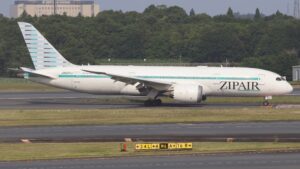
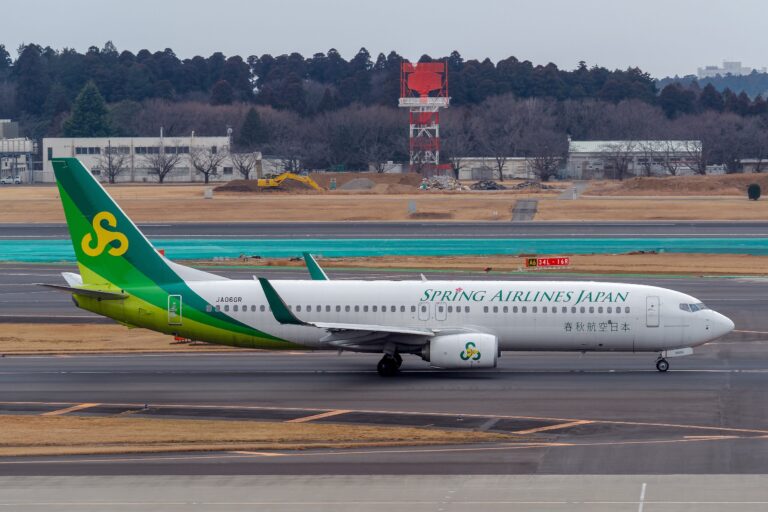
Out of these seven sub-JPY 5,000 campaigns, six were operated by low-cost carriers (Jetstar Japan accounted for three sales, Peach Aviation accounted for one sale, and Spring Japan accounted for two sales), while only a single campaign came from a full-service carrier (Japan Airlines at JPY 4,730). Notably, Jetstar Japan released sub-JPY 4,000 starting fares three separate times within a six-week window. This repetition of identical price floors by the same carrier is one of the clearest structural patterns observable in our six-week record.
For the companion analysis examining how frequently each airline launches a sale and which days of the week campaigns cluster on, see When Does the Next Airfare Sale Come? Six Weeks of Records and What You Can Expect.
Reading a statistical median of JPY 5,360 as “I can buy any domestic flight for JPY 5,360 during a sale” leads to immediate disappointment at checkout. A promotional “from X yen” figure strictly denotes the single lowest-priced route and fare tier inside the campaign, and four practical constraints almost always apply:
First, route availability is restricted, because the headline floor price typically applies only to one short-haul trunk or regional route (such as Narita–Takamatsu or Narita–Hakodate) rather than across the airline’s entire network. Second, seat inventory at the floor price is strictly capped; promotional seat allocations on popular Friday evening or Saturday morning departures frequently sell out within minutes of launch, meaning the floor price may no longer exist even while the sale period remains open.
Third, travel windows target off-peak months, as most promotional sales cover travel dates several weeks or months ahead during shoulder seasons and explicitly black out peak holiday periods such as Obon, Year-End/New Year, and Golden Week. Fourth, base fares exclude ancillary fees on LCCs: on low-cost carriers, the advertised floor price covers only a basic seat and a strict cabin baggage allowance (typically 7 kg). Adding a 20 kg checked suitcase, advance seat selection, and payment processing fees routinely adds JPY 2,500 to JPY 4,500 per leg, which means a “JPY 4,000” LCC base fare and a “JPY 4,730” full-service JAL fare carry very different out-of-pocket totals when traveling with checked luggage.
In short, this distribution serves as an empirical yardstick for judging whether a newly announced sale is genuinely aggressive or merely routine, rather than a prediction of your final checkout total. When you see a domestic sale advertised starting at JPY 8,500 or higher, you can immediately tell from the JPY 5,360 median that either the cheapest fare buckets have already sold out or the route itself has a structurally higher floor.
Ongoing Monthly Recalculation Policy
The figures in this initial baseline reflect a compact six-week sample of 16 comparable sales. As our archive grows across autumn, winter, and spring schedules, both the median and bracket shares will shift with seasonal demand. We recalculate and update this distribution on a monthly basis. Every update explicitly states the exact date range and number of included sales in the methodology section so readers can always verify the sample behind the numbers.
You can check the latest active and upcoming airline promotions on our Airline Sale Calendar and Six-Week Archive Hub. / Featured image: Melv_L - MACASR / CC BY-SA 2.0 (Wikimedia Commons)
Data Sources and Verification Notes
The primary source for this analysis is the archive of published promotional articles on Mirutobe (yurutabi.blog), where all 178 published posts were cataloged and headline fare amounts were verified across the archive (initial compilation date: August 5, 2026; latest verification date: October 23, 2026). The analytical sample consists of 16 promotional sale articles stating an explicit one-way minimum fare, selected from 33 sale-related posts published between June 27, 2026 and August 5, 2026. All quoted fares reflect the official starting “from X yen one-way” figures announced by each airline at the time of publication and do not represent live real-time seat availability.