This article contains advertising (affiliate links). We may earn a commission when you buy or sign up through a link in this article.
Across 127 flight sale articles on Mirutobe (June 27 to November 2, 2026), Narita ranked 1st with 75 sales (59.1%), Fukuoka 2nd with 72 (56.7%), Kansai 3rd with 67 (52.8%), and Centrair 4th with 59 (46.5%).
New Chitose placed fifth with 48 articles (37.8%), Haneda sixth with 44 (34.6%), and Naha seventh with 40 (31.5%). While Narita and Kansai lead in low-cost carrier (LCC) promotions, Haneda and Itami specialize in full-service carrier (ANA and JAL) and mid-cost carrier time sales.
When searching for cheap domestic or international flights in Japan, travelers often ask whether it is better to monitor departures from major international hubs like Narita and Kansai, or urban airports like Haneda, Itami, and Fukuoka. Because each airline operates from a different base, the frequency of promotional sales varies significantly by departure airport.
To quantify these differences, we tallied every domestic airport listed in the 127 flight sale, coupon, and special fare articles published in Mirutobe’s Flights category from June 27 to November 2, 2026. Below is the complete airport ranking, the breakdown between low-cost carriers (LCCs) and full-service or mid-cost carriers (FSCs/MCCs), and the ground transport downsides that can reverse the total cost of a ticket.
Airport Ranking Across 127 Flight Sale Articles
Among all 167 articles published in our Flights category through November 2, 2026, 127 covered specific airline time sales, discount codes, or promotional fares (excluding 40 general analysis and route guide articles). When an article covered a nationwide network sale by ANA, JAL, Peach, or Jetstar Japan, every eligible domestic departure and arrival airport named in the route list was counted once per sale event.
| Rank & Airport |
Sale Appearances (Share) |
Carrier Title Breakdown (LCC vs. FSC/MCC) |
Primary Route Profile & Sale Characteristics |
| 1. Narita (NRT) |
75 articles (59.1%) |
LCC: 48 / FSC & MCC: 7 (Multi-carrier: 20) |
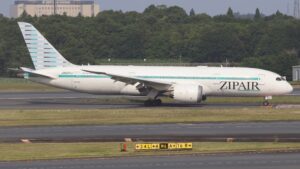
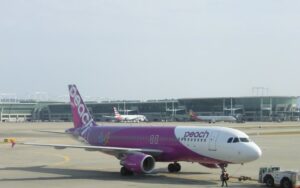
Japan’s largest LCC sale hub: Jetstar Japan, Peach, Spring Japan, ZIPAIR, and Korean LCCs |
| 2. Fukuoka (FUK) |
72 articles (56.7%) |
LCC: 46 / FSC & MCC: 18 (Multi-carrier: 8) |
Single-airport concentration combining domestic trunk lines, domestic LCCs, and Korea/Taiwan routes |
| 3. Kansai (KIX) |
67 articles (52.8%) |
LCC: 45 / FSC & MCC: 10 (Multi-carrier: 12) |
Peach’s primary hub plus Jetstar, Korean LCCs, and Southeast Asia promotional fares |
| 4. Chubu Centrair (NGO) |
59 articles (46.5%) |
LCC: 36 / FSC & MCC: 17 (Multi-carrier: 6) |
Balanced mix of Peach, Jetstar, Skymark, StarFlyer, ANA/JAL, and Korean LCC sales |
| 5. New Chitose (CTS) |
48 articles (37.8%) |
LCC: 29 / FSC & MCC: 15 (Multi-carrier: 4) |
High-demand Hokkaido trunk routes with frequent LCC, AIRDO, Skymark, and ANA/JAL campaigns |
| 6. Haneda (HND) |
44 articles (34.6%) |
LCC: 15 / FSC & MCC: 21 (Multi-carrier: 8) |
Led by ANA (11) and JAL (8) domestic sales, plus Skymark, Solaseed Air, AIRDO, and late-night international LCCs |
| 7. Naha (OKA) |
40 articles (31.5%) |
LCC: 27 / FSC & MCC: 12 (Multi-carrier: 1) |
Major leisure destination served by Peach, Jetstar, Solaseed Air, Skymark, and Taiwan/Korea LCCs |
| 8. Kumamoto (KMJ) |
25 articles (19.7%) |
LCC: 11 / FSC & MCC: 11 (Multi-carrier: 3) |
Leads regional Kyushu airports via Jetstar, Solaseed Air, ANA/JAL, and Korea routes |
| 9. Sendai (SDJ) |
23 articles (18.1%) |
LCC: 13 / FSC & MCC: 8 (Multi-carrier: 2) |
Tohoku gateway with Peach, IBEX Airlines, Skymark, and ANA/JAL promotions |
| 10. Kagoshima (KOJ) |
20 articles (15.7%) |
LCC: 8 / FSC & MCC: 10 (Multi-carrier: 2) |
Strong presence in Solaseed Air, Skymark, Jetstar, and Peach domestic sales |
| 11. Matsuyama (MYJ) |
19 articles (15.0%) |
LCC: 11 / FSC & MCC: 8 (Multi-carrier: 0) |
Top Shikoku airport driven by Jetstar Narita flights, Jeju Air, and ANA/JAL sales |
| 12. Kobe (UKB) / Hiroshima (HIJ) |
16 articles each (12.6%) |
Kobe: LCC 0 / FSC & MCC 11
Hiroshima: LCC 10 / FSC & MCC 6 |
Kobe centers on Skymark, Solaseed Air, and Toki Air; Hiroshima features Spring Japan and international LCCs |
| 14. Nagasaki (NGS) |
15 articles (11.8%) |
LCC: 6 / FSC & MCC: 8 (Multi-carrier: 1) |
Peach Kansai/Narita routes alongside Solaseed Air, Skymark, and ANA/JAL sales |
| 15. Takamatsu (TAK) / Itami (ITM) |
14 articles each (11.0%) |
Takamatsu: LCC 12 / FSC & MCC 0
Itami: LCC 0 / FSC & MCC 13 |
Takamatsu is purely LCC-driven (Jetstar & Korea LCCs); Itami is purely domestic FSC/regional |
Rounding out the top 18 airports were Oita Airport in 17th place with 12 articles (9.4%) and Miyazaki Airport in 18th place with 6 articles (4.7%). For a closer look at how far in advance these discounted seats are released, see our Airline Sale Travel Period Guide: How Far in Advance Flights Are Offered.
How LCC and Full-Service Carrier Sales Diverge Across Hub and Regional Airports
Looking beyond total article counts reveals a sharp structural divide when we classify each sale by the airline type named in its headline: low-cost carriers (Peach, Jetstar, Spring Japan, ZIPAIR, Jeju Air, Jin Air, Trinity Airways, Tigerair Taiwan, AirAsia) versus full-service, mid-cost, and regional carriers (ANA, JAL, Skymark, Solaseed Air, AIRDO, StarFlyer, Toki Air, FDA, IBEX).
Greater Tokyo Splits Between Narita (48 LCC Sales) and Haneda (21 FSC/MCC Sales)
For travelers departing from the Greater Tokyo area, Narita Airport leads in total sale volume with 75 articles, outpacing Haneda Airport (44 articles, 34.6%) by 31 sales. Among single-carrier sale headlines featuring Narita, 48 articles were LCC promotions. Jetstar Japan, Peach, Spring Japan (all four domestic routes plus international routes), ZIPAIR, and South Korean LCCs such as Jeju Air, Jin Air, and Trinity Airways almost always include Narita departures.
In contrast, Haneda Airport’s 44 appearances are led by 21 full-service and mid-cost carrier campaigns, including ANA time sales and award discount campaigns (11 articles), JAL Domestic Time Sales (8 articles), Skymark, Solaseed Air, AIRDO, and StarFlyer. Because domestic LCCs do not operate daytime networks at Haneda, Haneda’s 15 LCC appearances are limited to late-night or early-morning international flights on Peach and Tigerair Taiwan. If you want sub-JPY 5,000 domestic LCC promo fares, Narita is the primary gateway; if you prefer departing from Haneda, monitoring ANA, JAL, and Solaseed Air time sales is essential (for benchmark pricing across recent promotions, see What Does One-Way From X Yen Mean? Median Lowest Fare Across 16 Airline Sales Was JPY 5,360).
Why Fukuoka Airport (72 Sales) Outranked Kansai (67 Sales) for Second Place Overall
One of the most notable findings in our dataset is that Fukuoka Airport finished second overall with 72 sale appearances, edging out Kansai International Airport (67 articles, 52.8%) by five sales. Why does a regional hub generate more sale listings than Osaka’s main international airport?
The reason is structural consolidation. Whereas Greater Tokyo splits traffic between Narita and Haneda and the Kansai region divides routes across Kansai, Itami, and Kobe, Fukuoka Airport concentrates all domestic trunk flights, regional routes, and international LCC routes into a single facility. Fukuoka recorded 46 LCC headline sales (Peach and Jetstar domestic routes plus Jin Air, Jeju Air, and Trinity Airways flights to Busan and Incheon) alongside 18 FSC/MCC headline sales (ANA, JAL, StarFlyer, and FDA), the second-highest FSC/MCC count in Japan behind Haneda’s 21. Travelers based in northern Kyushu can monitor a single airport and capture both ultra-low LCC fares and major carrier time sales.
The Three-Airport Split in Kansai (KIX 67, Kobe 16, Itami 14) and Regional Polarization
In western Japan, Kansai International Airport accounts for 67 sale articles (45 LCC and 10 FSC/MCC), serving as the overwhelming volume leader. Closer to central Osaka and Kobe, Kobe Airport appeared in 16 sales (Skymark, Toki Air, Solaseed Air) and Osaka Itami Airport appeared in 14 sales. As noted in the Japan Civil Aviation Bureau (MLIT) slot allocation announcements on October 23, 2026, Itami operates under strict domestic congestion slot rules with zero LCC service; consequently, 13 of Itami’s 14 appearances come from ANA, JAL, and IBEX domestic time sales.
Comparing the two airports tied for 15th place with 14 articles (11.0%) highlights this polarization. Takamatsu Airport recorded 12 LCC sales and 0 FSC sales, driven by Jetstar flights to Narita and Korean LCC coupons to Seoul Incheon, whereas Itami recorded 0 LCC sales and 13 FSC/regional sales. Meanwhile, mid-sized regional airports where domestic LCCs compete directly with MCCs, such as Kumamoto (25 sales), Sendai (23), Kagoshima (20), and Matsuyama (19), see three to four times as many sale events as single-segment airports like Miyazaki (6 sales).
How Rail Access Time and Terminal Transfers Can Reverse Cheap Sale Fares
Choosing Narita or Kansai simply because they appear in more sale articles does not guarantee the lowest door-to-door trip cost. Once you add rail fares from city centers, travel duration, and walking time to dedicated LCC terminals, an offshore LCC fare is often not suitable for travelers with checked bags or tight schedules, and an urban airport sale from Haneda, Itami, or Fukuoka can easily beat it in total spend.
| Airport (Sale Count) |
Rail Travel Time from Major City Stations |
Station Gate to Terminal Transfer |
Key Cost & Time Reversal Factors |
| Narita (75 sales) |
Keisei Skyliner from Ueno/Nippori, Access Express from Shinagawa/Nihombashi, or JR Narita Express from Tokyo/Shinjuku/Yokohama (approx. 1 hr 45 min from Haneda) |
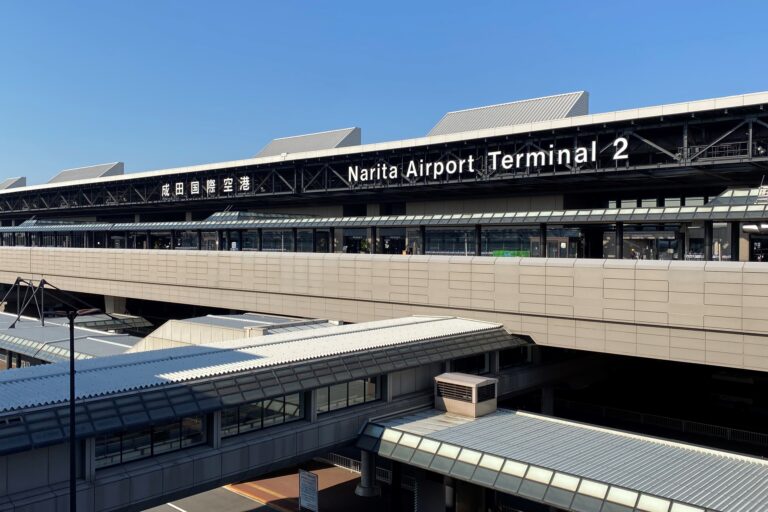
Terminal 1: 5-min walk from Narita Airport Station; Terminal 2: 5-min walk and Terminal 3: 10-min walk from Airport Terminal 2 Station |
Early-morning LCC departures from Terminal 3 require a 10-minute walk from the station, often forcing an airport hotel stay or costly early transit |
| Haneda (44 sales) |
Approx. 15 min from Shinagawa, 20 min from Hamamatsucho, 30 min from Tokyo/Yokohama, 40 min from Ueno, 45 min from Shibuya, 50 min from Shinjuku |
Terminals 1, 2, and 3 connect directly to Keikyu Line and Tokyo Monorail ticket gates inside the terminal buildings |
Despite 31 fewer sales than Narita, low rail fares and included 20 kg checked baggage on ANA/JAL/MCC sales frequently make Haneda cheaper overall |
| Kansai (67 sales) |
Nankai Limited Express Rapi:t from Namba in 34 min fastest (38 min standard; 34 min from Tengachaya); Airport Express in 44 min (39 min from Tengachaya) |
Terminal 1 connects directly to Kansai Airport Station; Terminal 2 (Peach & Jeju Air) requires a free shuttle bus transfer |
From northern Osaka (Umeda/Shin-Osaka) or Kyoto, rail fares and transfer time narrow the gap against Itami or Kobe sales |
| Fukuoka (72 sales) |
Fukuoka City Subway connects directly to Hakata and Tenjin districts (Domestic Terminal B2F access hall links straight to subway gates) |
Domestic Terminal connects directly via the south escalator outside the subway gate; International Terminal requires a free shuttle bus from Bus Stop 1 |
Domestic access is unmatched in Japan, but international LCC flyers must budget extra transfer time for the inter-terminal shuttle bus |
Official airport rail access data illustrates why terminal layout matters. According to Narita International Airport’s official rail guide, Terminal 1 is a 5-minute walk from Narita Airport Station and Terminal 2 is a 5-minute walk from Airport Terminal 2 Station, but Terminal 3, used by Jetstar Japan and Spring Japan, requires a 10-minute walk from Airport Terminal 2 Station. By contrast, Haneda Airport’s official access guide lists travel times of roughly 15 minutes from Shinagawa, 20 minutes from Hamamatsucho, 30 minutes from Tokyo or Yokohama, and 50 minutes from Shinjuku, with direct indoor access to every terminal (and for travelers weighing early-morning LCC flights against overnight buses, see our Overnight Highway Bus vs. Early-Morning LCC from Tokyo: Total Cost Comparison Across 5 Routes).
The same trade-off applies in Kansai. According to Nankai Electric Railway’s Kansai Airport access guide, the Limited Express Rapi:t connects Nankai Namba to Kansai Airport Station in 34 minutes fastest (38 minutes standard, or 34 minutes from Tengachaya), while the no-surcharge Airport Express takes 44 minutes from Namba (39 minutes from Tengachaya). Travelers departing from Namba or Tennoji can reach Terminal 1 quickly, and pre-booking discounted airport rail tickets via Klook (Kansai & Narita Airport Rail Passes) helps trim ground transport costs. However, travelers starting near Kyoto (about 60 minutes to Tengachaya plus 34 to 39 minutes to KIX) or Kobe Sannomiya often save both time and money by booking an Itami or Kobe Airport time sale.
How to Choose Your Departure Airport by Luggage, Time of Day, and Region
If you are traveling light with a carry-on bag up to 7 kg and flexible midday hours, focus on Narita (75 sales), Fukuoka (72 sales), Kansai (67 sales), and Centrair (59 sales). Unbundled LCC promotional fares from Peach, Jetstar, and Korean LCCs deliver the steepest discounts when you do not pay for checked bags or peak express trains.
Conversely, if you are checking a 20 kg suitcase or departing within 30 minutes of central Tokyo or Osaka, prioritize Haneda (44 sales), Itami (14 sales), and Kobe (16 sales). Once you add LCC checked baggage fees and airport express tickets, ANA, JAL, Skymark, and Solaseed Air time sales from urban airports often cost less door-to-door.
When departing from regional hubs such as Fukuoka, Centrair, New Chitose, Naha, Kumamoto, or Sendai, a single primary airport handles both LCC and FSC/MCC routes. Monitoring both LCC flash sales and major carrier time sales on the same calendar gives you the widest range of discounted dates.
Once you spot a promising flight sale, checking airport rail passes and destination hotels for the same dates before finalizing your flight ensures that high ground transport or accommodation rates do not erase your airfare savings. You can compare airport express tickets, rail passes, and local tours in English on Klook (Japan Rail Passes, Airport Transfers & Activities).
Sources: Ministry of Land, Infrastructure, Transport and Tourism (Civil Aviation Bureau) / Narita International Airport Official Rail Access Guide / Haneda Airport Official Train & Monorail Access / Nankai Electric Railway Kansai Airport Access Guide / Fukuoka Airport Official Subway Access (Verified November 2, 2026) / Featured image: Banbam1029, CC BY-SA 4.0 (Wikimedia Commons)