(Kamome Net Kippu one-way 4,500 JPY and Hayaltoku-7 3,400 JPY become invalid if you exit at intermediate stations / Total trip budget = rail pass + 1 night onsen ryokan + 1 night Nagasaki hotel + meals)
This 3-day, 2-night rail itinerary combines the Nishi-Kyushu Shinkansen “Kamome” through Saga Prefecture’s Takeo Onsen and Ureshino Onsen with a scenic local transfer at Shin-Omura Station onto the JR Omura Line to visit the seaside wooden station building at Chiwata Station before continuing via Isahaya into Nagasaki City. Because JR Kyushu’s discounted one-way tickets (“Kamome Net Kippu” at 4,500 JPY vs. regular 6,490 JPY) do not allow stopovers and become void for the remaining sector once you exit a ticket gate, the most cost-effective and flexible choice for hopping between hot spring towns and coastal local stations is the limited-period “GO WEST Nishi-Kyushu Marutto Unlimited Ride Pass” (10,990 JPY for 3 consecutive days or 9,990 JPY for 2 consecutive days).
Since the opening of the Nishi-Kyushu Shinkansen, travel times from Hakata Station via the cross-platform transfer at Takeo-Onsen Station to Ureshino-Onsen, Shin-Omura, Isahaya, and Nagasaki have dropped dramatically. However, riding only the bullet train straight back and forth between Hakata and Nagasaki skips the coastal scenery of the JR Omura Line running right along Omura Bay and nostalgic wooden stations such as Chiwata Station in Higashisonogi Town.
Conversely, traveling the entire distance from Hakata on slow local trains increases transfer counts and transit hours with luggage, cutting into the time available for public bath hopping and Nagasaki night views. The hybrid rail strategy presented here uses the Limited Express “Relay Kamome” and Nishi-Kyushu Shinkansen “Kamome” for fast intercity and hot-spring hops, then switches at Shin-Omura Station onto the JR Omura Line (YC1 series hybrid railcars and Rapid “Seaside Liner”) specifically for the coastal stretch through Chiwata and Isahaya.
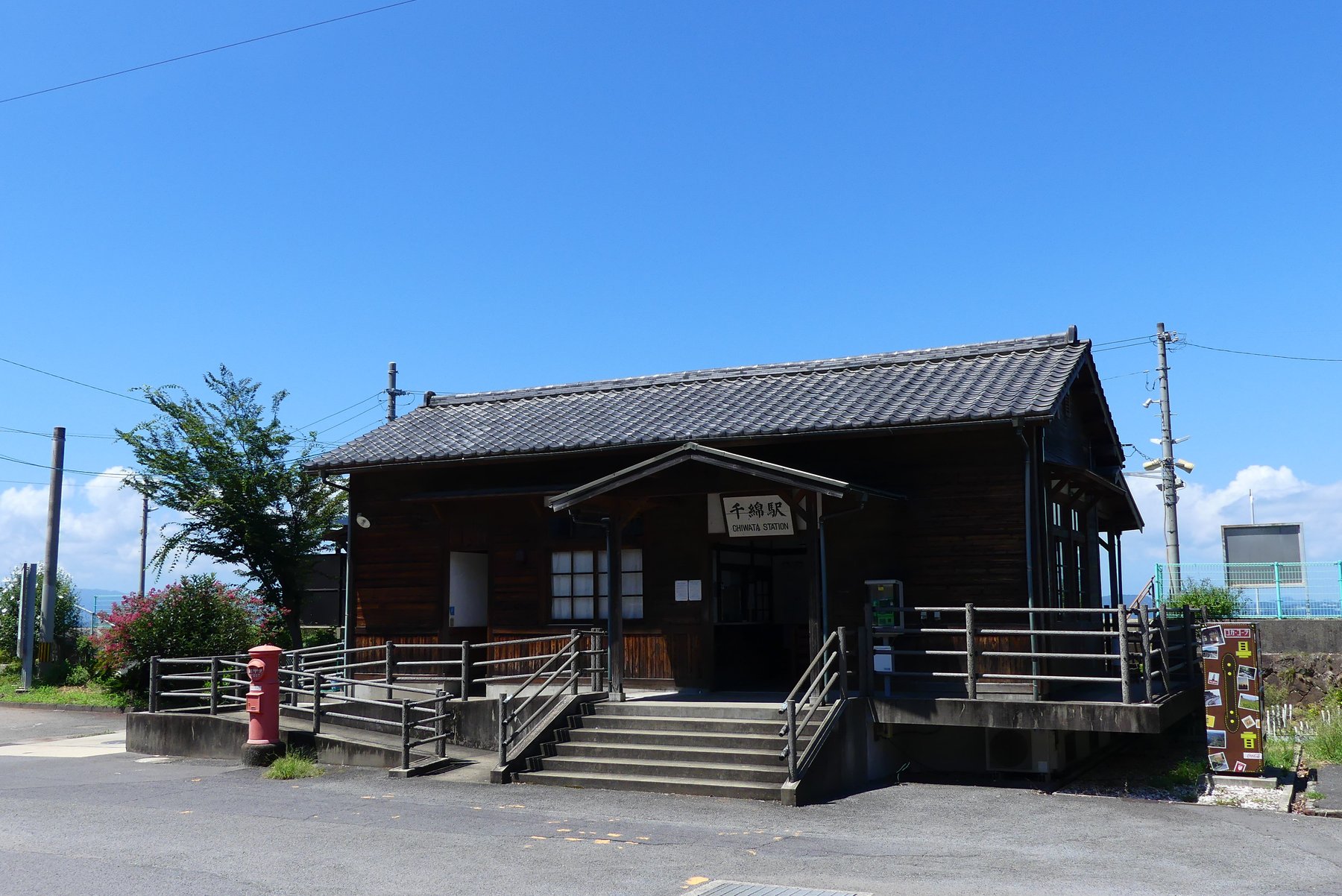
JR Omura Line Chiwata Station right beside the calm waters of Omura Bay (Source: Wikimedia Commons / MaedaAkihiko, CC BY-SA 4.0).
TOC
[
openclose
]
DAY 1Hakata to Takeo Onsen and Ureshino Onsen via Relay Kamome and Nishi-Kyushu Shinkansen
Day 1 begins at Hakata Station, boarding the Limited Express “Relay Kamome” (or “Midori” / “Huis Ten Bosch”) via the Kagoshima, Nagasaki, and Sasebo lines to Takeo-Onsen Station in Saga Prefecture. After picking up your physical rail pass at the Hakata Midori-no-Madoguchi ticket office or reserved-seat ticket vending machine in the morning, you first stop at Takeo Onsen to visit the historic Romon gate and Motoyu bathhouse before riding the Nishi-Kyushu Shinkansen “Kamome” one stop further to Ureshino Onsen.
Cross-Platform Transfer at Takeo-Onsen Station, Important Cultural Property “Romon,” and Japan’s Oldest Wooden Bathhouse “Motoyu”
Takeo-Onsen Station features a same-level cross-platform transfer where the Limited Express “Relay Kamome” and the Nishi-Kyushu Shinkansen “Kamome” face each other across the same platform floor. While through-passengers transfer in just a few minutes, on Day 1 you exit the ticket gate here, store your suitcase in a station coin locker, and walk to the vermilion “Romon” tower gate at the heart of the hot spring district.
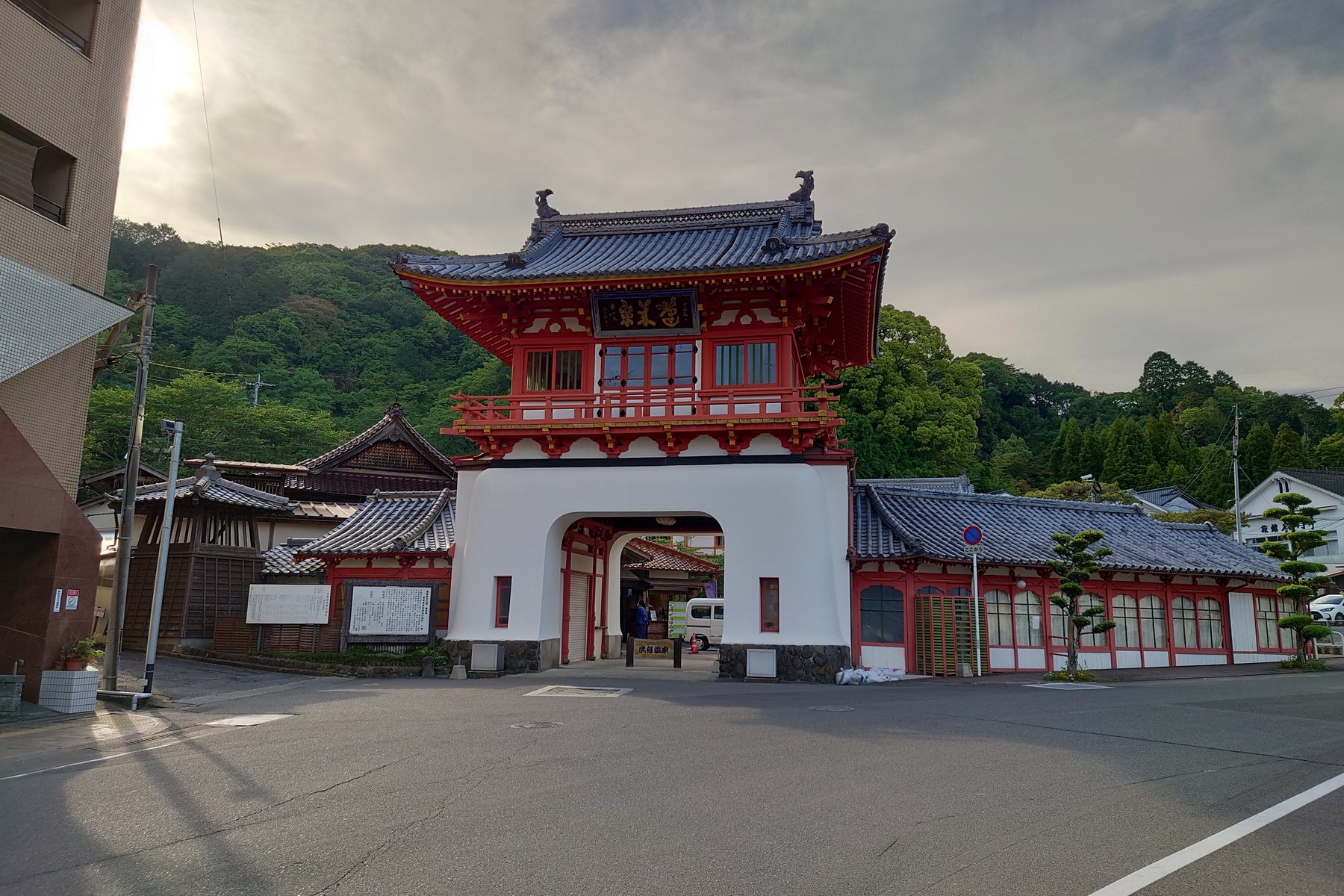
Designed by Kingo Tatsuno, the architect behind Tokyo Station’s Marunouchi Building, the Takeo Onsen Romon gate and Takeo Onsen Shinkan are designated Important Cultural Properties of Japan. Beyond the nail-free Romon gate stand public bathhouses including “Motoyu” and “Horaiyu,” alongside “Karazakitei” (offering 3 private family baths), “Karo-no-Yu” (with a 4.5-tatami anteroom), and the former feudal lord’s bath “Tonosama-Yu.”
Built in 1876 (Meiji 9), “Motoyu” is the oldest wooden hot-spring bathhouse structure still in active operation in Japan. Its high-ceilinged bath hall pours a clear, weakly alkaline simple thermal spring with a soft texture over the skin, offering an unforgettable architectural soak at the start of the journey. After bathing and viewing the historical exhibits inside the Shinkan building, enjoy lunch at a cafe or restaurant near the station before returning for the afternoon bullet train.
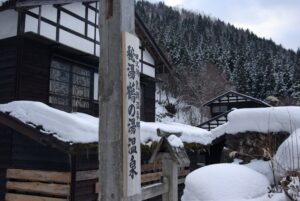
Takeo Onsen’s landmark Romon Gate, an Important Cultural Property with 1,300 years of hot spring history (Source: Wikimedia Commons / Viy4092, CC BY-SA 4.0).
Riding the N700S “Kamome” to Ureshino-Onsen Station and Public Bathhouse “Siebold-no-Yu”
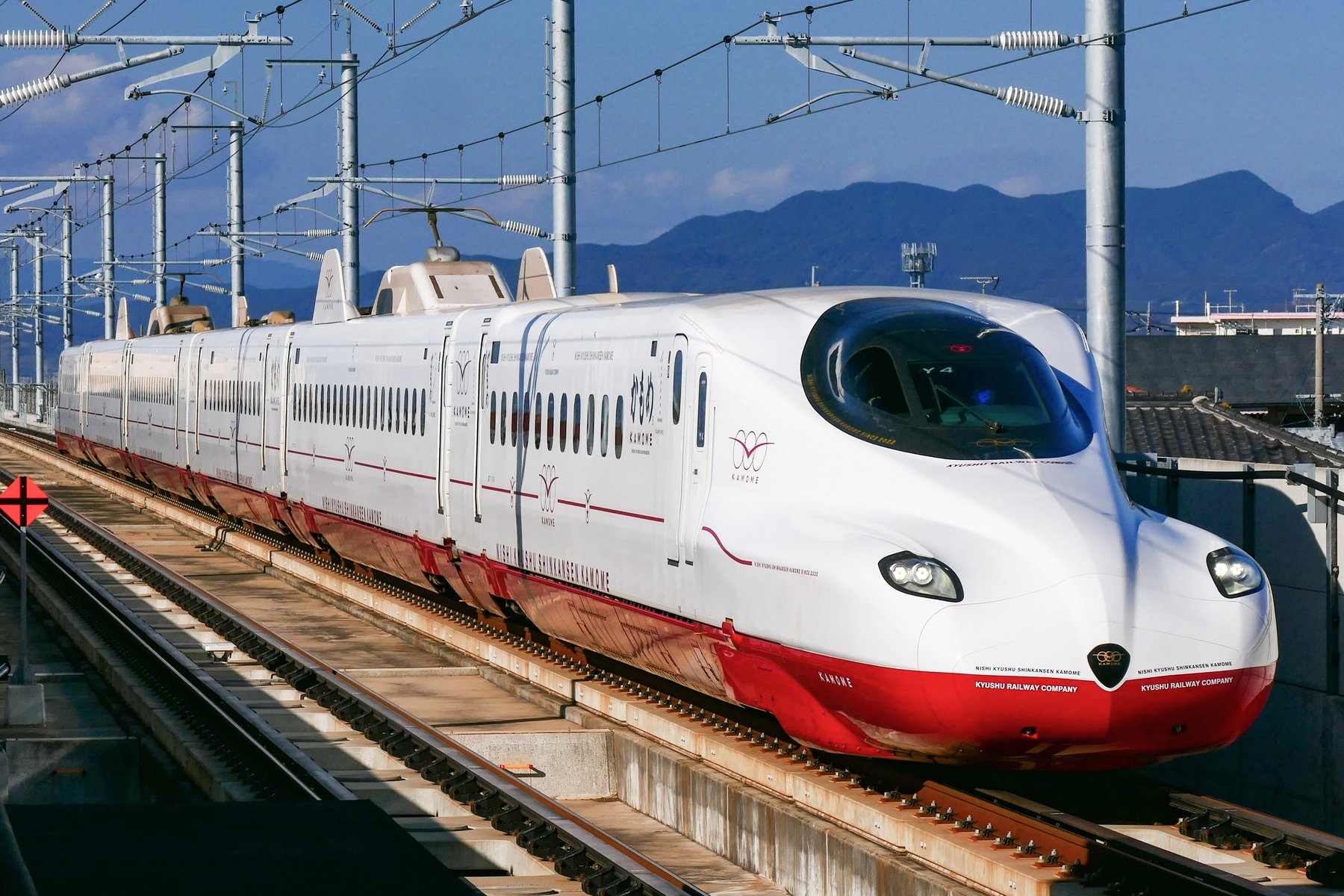
In the afternoon, return to the Shinkansen platform at Takeo-Onsen Station and board the white-and-crimson N700S “Kamome” for the single-station hop to Ureshino-Onsen Station. Emerging from the mountain tunnels brings you directly to the gateway of Ureshino City’s hot spring valley.
Celebrated as one of Japan’s Three Great Skin-Beautifying Hot Springs, Ureshino Onsen is a sodium-rich bicarbonate spring. Its waters emulsify and soften keratinized skin, delivering an unmistakable silky, lotion-like viscosity the moment you step into the bath. Soaking in Ureshino’s thick bicarbonate waters right after Takeo’s crisp weakly alkaline simple spring highlights the sharp contrast between Saga’s two neighboring hot spring towns.
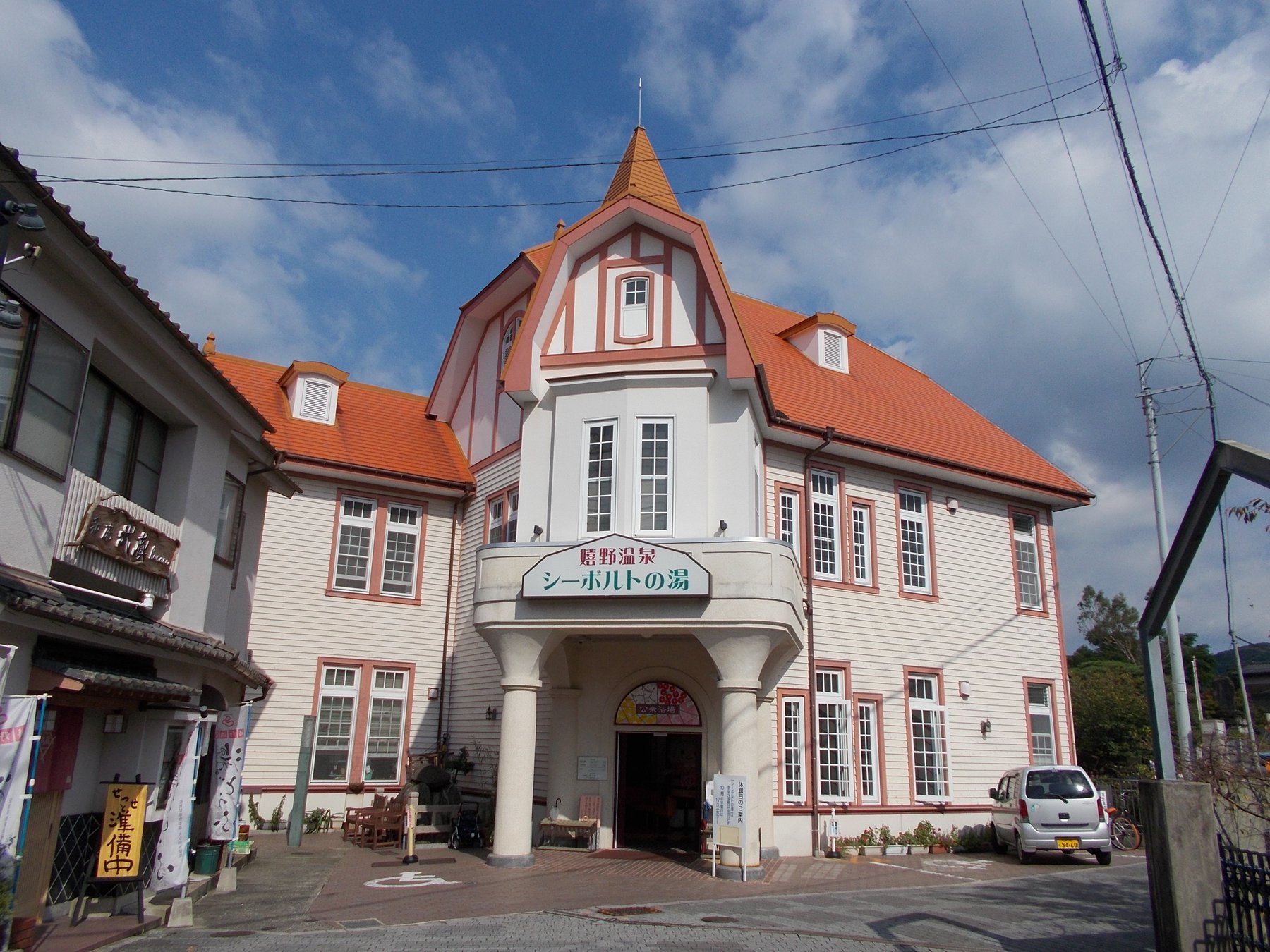
Along the Shiota River in the center of town stands the municipal public bathhouse “Siebold-no-Yu,” recognizable by its pointed orange Gothic-style roof, as well as “Yujuku Square” with its footbath and steam bath. Strolling between Siebold-no-Yu, local ceramics galleries, and Ureshino green tea stands before or after check-in lets you enjoy carefree exploration without needing a rental car.
Siebold-no-Yu municipal bathhouse in Ureshino Onsen (Source: Wikimedia Commons / STA3816, CC BY-SA 4.0).
Staying at an Ureshino Onsen Ryokan: Specialty “Onsen Yudofu” and Free-Flowing Green Tea Baths
Spend Night 1 at a ryokan in Ureshino Onsen (or Takeo Onsen). Many inns in Ureshino feature two-story atrium public baths on the 2nd and 3rd floors as well as 8 types of private open-air baths across 8 distinct designs, with free-flowing spring water fed directly into both the main baths and guestroom tubs, alongside Ureshino green-tea-infused baths and saunas.
For dinner and the following morning’s breakfast, be sure to savor “Onsen Yudofu” (hot spring tofu hotpot), cooked in Ureshino’s alkaline thermal water. As the tofu simmers, the sodium bicarbonate gently dissolves its surface into a creamy, soy-milk-like broth with a rich natural sweetness that ordinary water cannot replicate.
STAY Night 1: Traditional Ryokan in Ureshino Onsen (or Takeo Onsen).
Plan Guide: Half-board plan including Onsen Yudofu kaiseki dinner and breakfast (free-flowing spring and private bath options).
Why Stay Here: Staying directly along the Nishi-Kyushu Shinkansen corridor minimizes morning transit time on Day 2 when transferring at Shin-Omura Station onto the JR Omura Line for Chiwata Station.
DAY 2Switching at Shin-Omura to the JR Omura Line for Seaside Chiwata Station and Nagasaki City
Day 2 is the scenic centerpiece of this itinerary: switching from the high-speed Nishi-Kyushu Shinkansen to the coastal JR Omura Line. After a morning bath and Onsen Yudofu breakfast, board the Nishi-Kyushu Shinkansen “Kamome” at Ureshino-Onsen Station for Shin-Omura Station in Nagasaki Prefecture, ride the Omura Line north to stop at Chiwata Station, and then head south along Omura Bay via Isahaya into Nagasaki Station.
Ureshino-Onsen to Shin-Omura Station by Shinkansen and Transferring to the Ground-Level JR Omura Line
From Ureshino-Onsen Station, it is just one stop on the Nishi-Kyushu Shinkansen through the prefectural border tunnel to Shin-Omura Station. At Shin-Omura, the ground-level platform of the JR Omura Line sits immediately beside the elevated Shinkansen station building, allowing a smooth elevator or stair transfer in a few minutes.
Keep in mind one directional detail: when traveling from Shin-Omura Station to Chiwata Station, you board a northbound (“up” direction toward Haiki and Sasebo) train on the Omura Line. Because Shin-Omura lies south of Chiwata (closer to Isahaya), riding the Shinkansen to Shin-Omura and doubling back north on the Omura Line lets you keep your entire transit unified under a single JR rail pass rather than paying separately for a mountain bus from Ureshino to Sonogi, while giving you two opportunities to enjoy the coastal views along Omura Bay.
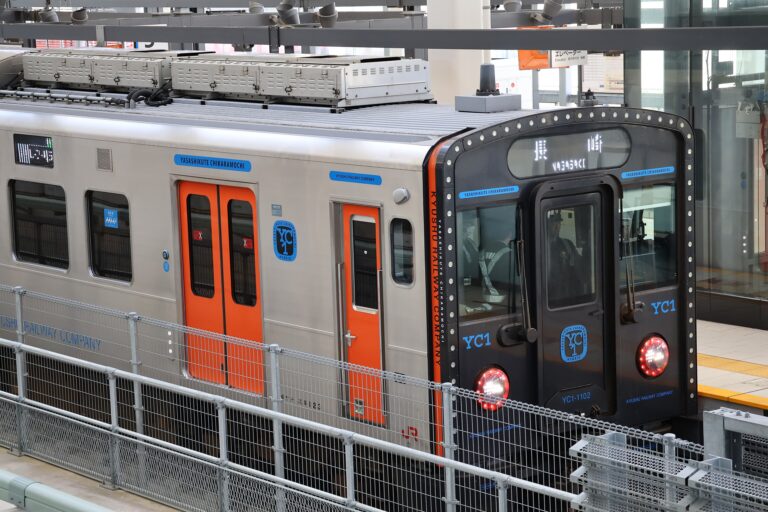
The Omura Line is served by YC1 series hybrid diesel-battery railcars and the Rapid “Seaside Liner.” As the train pulls north from Shin-Omura toward the shoreline, the calm inland waters of Omura Bay open up across the left-hand windows in shifting shades of emerald and cobalt blue.
N700S series “Kamome” on the Nishi-Kyushu Shinkansen linking Takeo-Onsen and Nagasaki (Source: Wikimedia Commons / MaedaAkihiko, CC BY-SA 4.0).
Stopover at JR Omura Line Chiwata Station: Retro Wooden Building and Open Seaside Platform Views
Alight at Chiwata Station in Higashisonogi Town for a relaxed seaside walk, cafe break, or lunch. Chiwata Station is renowned for its nostalgic wooden station house and its open, unobstructed platform facing directly onto Omura Bay.
With no high walls or buildings blocking the shoreline side, the gently curving track and wooden bench look straight out over the tranquil ripples of Omura Bay. Watching a train curve into the station against the glittering midday water or the warm silhouette of sunset offers one of the most photogenic railway scenes in western Kyushu.
Around the wooden station building and nearby Higashisonogi streets, visitors can stop by retro cafes, coffee stands, and local spots serving Sonogi green tea and spice curry. Because Chiwata Station has limited coin locker capacity for large suitcases and its ticket window operates only from 10:30 to 14:00 (closed Tuesdays and Wednesdays), be sure to follow the luggage and pre-issuance guidelines in the practical section below.
Chiwata to Nagasaki Station via Isahaya: Streetcar Ride and Mount Inasa Night View by Slope Car
After enjoying the seaside atmosphere at Chiwata Station, board a southbound JR Omura Line train toward Isahaya and Nagasaki. The coastal section between Chiwata and Isahaya hugs the bayside cliffs and inlets most closely, offering sweeping views of Omura Bay from the right-hand windows.
At Isahaya Station, you can either stay on the Nagasaki Main Line into Nagasaki Station or transfer onto a non-reserved car of the Nishi-Kyushu Shinkansen “Kamome” for the final 1-stop hop into Nagasaki Station at no extra charge when holding the “GO WEST Nishi-Kyushu Marutto Unlimited Ride Pass.”
After checking into your Nagasaki hotel in the late afternoon, ride the Nagasaki Electric Tramway (streetcar) or bus to the ropeway and Mount Inasa Slope Car up to the summit observatory. Following the panoramic night view over Nagasaki Harbor, head to the downtown dining districts for local seafood and regional cuisine.
STAY Night 2: Hotel around Nagasaki Station or the Shinchi Chinatown District.
Plan Guide: Bed-and-breakfast plan at a city hotel within walking distance of Nagasaki Station or a streetcar stop.
Why Stay Here: Staying in central Nagasaki keeps evening access to Mount Inasa, Day 3 morning streetcar sightseeing, and your return Shinkansen departure effortless.
DAY 3Nagasaki City Streetcar Sightseeing and Return via Nishi-Kyushu Shinkansen
On Day 3, contrast the hot springs and coastal rail scenery of the first two days with a morning streetcar tour through Nagasaki’s historic port districts and culinary landmarks before taking the afternoon Nishi-Kyushu Shinkansen “Kamome” and Limited Express “Relay Kamome” back to Hakata Station.
Morning Streetcar Route: Dejima, Glover Garden, and Megane Bridge
After checking out, leave your luggage at the hotel desk or in a Nagasaki Station coin locker and board the Nagasaki Electric Tramway for a morning sightseeing loop, starting with hilltop “Glover Garden” or the restored fan-shaped trading island of “Dejima.”
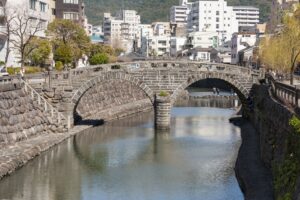
Visiting Glover Garden early in the morning avoids tour crowds and offers tranquil views over Nagasaki Harbor from the terrace of the Former Glover House. From there, take the streetcar to “Megane Bridge” (Spectacles Bridge) along the Nakashima River to stroll the stone embankments where the twin arches reflect on the water.
Champon and Sara Udon Lunch in Shinchi Chinatown and Castella Souvenir Shopping
For lunch, head to Nagasaki Shinchi Chinatown for authentic Champon noodle soup and crispy Sara Udon, or visit a long-established cafe near the Hamamachi Arcade for “Toruko Rice” (a local specialty platter combining pilaf, spaghetti, and pork cutlet). Ordering one Champon and one Sara Udon to share lets a pair compare both the rich broth and the savory sauce.
Afterward, stop by long-standing confectioners near Megane Bridge or the shopping concourse inside Nagasaki Station to pick up traditional coarse-sugar Castella sponge cake and Ureshino green tea before your train departs.
Return directly to Hakata via the same-platform transfer at Takeo-Onsen Station.
Returning from Nagasaki Station to Hakata via the Kamome and Relay Kamome Cross-Platform Transfer
For the return leg, board the Nishi-Kyushu Shinkansen “Kamome” at Nagasaki Station and ride straight past Isahaya, Shin-Omura, and Ureshino-Onsen back to Takeo-Onsen Station, where you walk across the same platform to the waiting Limited Express “Relay Kamome” bound for Hakata Station.
Taking your time to hop off at two hot spring resorts and a coastal local station on the outbound journey while using the high-speed cross-platform connection for a direct return keeps a 3-day trip energizing and unhurried. For another perspective on pacing a 2-day or 3-day Nagasaki trip, see our Nagasaki public-transit itinerary and local cost breakdown.
Ticket Selection and Stopover Break-Even Analysis: Kamome Net Kippu vs. Unlimited Ride Pass
The single most important practical decision on this itinerary is choosing the right rail ticket. Because this route involves multiple stopovers at Takeo-Onsen, Ureshino-Onsen, Shin-Omura, Chiwata, and Isahaya, the “GO WEST Nishi-Kyushu Marutto Unlimited Ride Pass” is far better suited than point-to-point discounted tickets.
JR Kyushu’s online-exclusive “Kamome Net Kippu” (ordinary reserved seat, valid 1 day) prices Hakata to Urakami, Nagasaki, Isahaya, or Shin-Omura at 4,500 JPY one way (regular fare 6,490 JPY; child 2,250 JPY), Hakata to Ureshino-Onsen at 3,990 JPY (child 1,990 JPY), Saga to Urakami/Nagasaki at 4,380 JPY (child 2,180 JPY), and Sasebo to Urakami/Nagasaki (via Takeo-Onsen) at 4,170 JPY (child 2,080 JPY). For Hakata to Urakami/Nagasaki, advance online purchase unlocks “Kamome Net Hayaltoku-3” (up to 3 days prior) at 3,850 JPY and “Kamome Hayaltoku-7” (up to 7 days prior) at 3,400 JPY.
However, all Kamome Net Kippu tickets carry the strict rule that “if you alight at an intermediate station, the remainder of the ticket becomes invalid.” Exiting the ticket gate at Takeo-Onsen, Ureshino-Onsen, or Shin-Omura voids the rest of your journey. Always review ticket change and stopover restrictions beforehand, just as outlined in our regional JR pass rules and day-trip planning guide.
Ticket Name.
Price (Adult / Child).
Validity & Booking Window.
Stopover & JR Omura Line (Chiwata) Coverage.
Kamome Net Kippu (Hakata to Nagasaki, Isahaya, Shin-Omura).
Adult 4,500 JPY one way (regular 6,490 JPY / Child 2,250 JPY). Hakata to Ureshino-Onsen: Adult 3,990 JPY (Child 1,990 JPY).
Valid 1 day. Online booking from 10:00 one month prior until 6 minutes before departure (convenience store payment until 22:30 two days prior).
Invalid for remaining sectors if you exit at an intermediate station. Unsuitable for multi-stop hopping.
Kamome Net Hayaltoku-3 / Kamome Hayaltoku-7 (Hakata to Nagasaki).
Hayaltoku-3: Adult 3,850 JPY one way / Hayaltoku-7: Adult 3,400 JPY one way.
Valid 1 day. Online advance booking up to 3 days or 7 days prior; limited seat quota.
No stopovers allowed. Best only for non-stop point-to-point rides between Hakata and Nagasaki.
GO WEST Nishi-Kyushu Marutto Unlimited Ride Pass (2-Day / 3-Day).
2-Day Pass: 9,990 JPY / 3-Day Pass: 10,990 JPY (same price for adults and children).
Valid 2026-10-04 to 2027-01-31 (on sale 2026-09-04 to 2027-01-29; 3-Day Pass until 2027-01-28). Online sales from 05:30 one month prior until 23:00 the day before.
Unlimited rides in non-reserved ordinary cars on the Nishi-Kyushu Shinkansen (Takeo-Onsen to Nagasaki), Nagasaki Main Line (Tosu to Nagasaki), Sasebo Line (Kohoku to Sasebo), and Omura Line (Haiki to Isahaya).
Source: JR Kyushu Official Fare Tables for “Kamome Net Kippu” and “GO WEST Nishi-Kyushu Marutto Unlimited Ride Pass” (checked 2026-11-03).
By contrast, the “GO WEST Nishi-Kyushu Marutto Unlimited Ride Pass” (9,990 JPY for 2 consecutive days, 10,990 JPY for 3 consecutive days, adult and child same fare) provides unlimited hop-on hop-off travel in non-reserved ordinary cars across the entire free area: Nagasaki Main Line (Tosu to Nagasaki, including the old line), Sasebo Line (Kohoku to Sasebo), Omura Line (Haiki to Isahaya), Karatsu Line (Kubota to Nishi-Karatsu), Chikuhi Line (Yamamoto to Imari and Meinohama to Karatsu), and the Nishi-Kyushu Shinkansen (Takeo-Onsen to Nagasaki).
When making six or more rail legs across Takeo-Onsen, Ureshino-Onsen, Shin-Omura, Chiwata, Isahaya, and Nagasaki over 3 days, the 10,990 JPY 3-Day Pass eliminates re-booking hassles. Note that the section between Hakata and Tosu lies outside the pass’s free area, so travelers departing Hakata either pair a separate Hakata-to-Tosu ticket or use a point-to-point ticket on the non-stop return leg. For additional background on transport fee structures, see our travel rules and ticket fee reference category.
Chiwata Station Ticket Window Hours, Bad-Weather Backup Routes, and Luggage Tips
Combining a seaside local station with bullet trains involves three operational bottlenecks that differ from major urban terminals. Keep these practical points in mind before boarding.
Chiwata Station Ticket Window Hours (10:30-14:00, Closed Tue/Wed) and Mandatory Pre-Issuance.
According to JR Kyushu’s official station guide, the ticket window at Chiwata Station is open only from 10:30 to 14:00, is closed on Tuesdays and Wednesdays, sells only short-distance tickets, and may be temporarily unstaffed during breaks or station patrols (JR Kyushu Information Center: 09:00-17:30; Online Booking Support: 08:00-20:00). Although Chiwata Station accepts IC cards such as SUGOCA for local rides, travelers combining Shinkansen sectors or using the “GO WEST Nishi-Kyushu Marutto Unlimited Ride Pass” must pick up their physical paper pass at a Midori-no-Madoguchi office or reserved-seat ticket vending machine at Hakata, Takeo-Onsen, or Ureshino-Onsen before boarding.
Storing Large Suitcases (Use Shin-Omura / Isahaya Coin Lockers or Luggage Delivery).
While Chiwata Station’s vintage wooden building is charming, it does not have large banks of coin lockers for oversized suitcases. Either forward your main luggage from your Ureshino ryokan on the morning of Day 2 or store your suitcase in a coin locker at Shin-Omura Station or Isahaya Station so you can visit Chiwata Station with a light daypack.
Rain or High-Wind Plan B (Switch to Indoor Onsen Facilities or Nagasaki Museums).
Because Chiwata Station’s appeal centers on its open bayside platform and clear coastal light, heavy rain or wind delays on the Omura Line reduce the experience. If severe weather hits on Day 2, skip the northbound detour to Chiwata and ride the Nishi-Kyushu Shinkansen straight from Shin-Omura to Nagasaki Station for indoor museums, cafes, and Dejima, or extend your morning soak at Ureshino and Takeo.
Confirmed Rail Pass Fares, Accommodation Budget Structure, and When to Choose a Rental Car Instead
The table below summarizes the confirmed JR Kyushu rail fares alongside the accommodation and local expense categories for this 3-day itinerary. When comparing city hotels and hot spring inns, checking hotel conditions in advance helps avoid surprises, as covered in our hotel breakfast and booking condition comparison.
Expense Item.
Breakdown & Official Basis.
Confirmed Fare / Budget Category.
Unlimited Rail Pass (3-Day / 2-Day).
GO WEST Nishi-Kyushu Marutto Unlimited Ride Pass (Tosu to Nagasaki, Omura Line, Nishi-Kyushu Shinkansen non-reserved).
3-Day Pass: 10,990 JPY per adult / 2-Day Pass: 9,990 JPY per adult (child same fare).
Point-to-Point Discount Ticket (Reference).
Kamome Net Kippu (Hakata to Nagasaki/Isahaya/Shin-Omura: regular 6,490 JPY; Hakata to Ureshino-Onsen: 3,990 JPY).
4,500 JPY one way (Hayaltoku-3: 3,850 JPY; Hayaltoku-7: 3,400 JPY).
Night 1 Accommodation (Ureshino or Takeo Onsen).
Onsen ryokan with half-board (Onsen Yudofu kaiseki dinner, free-flowing spring bath).
Actual rate based on room grade and travel date on hotel booking platforms.
Night 2 Accommodation (Nagasaki City).
City hotel near Nagasaki Station or Shinchi Chinatown with breakfast.
Actual rate based on room grade and travel date on hotel booking platforms.
Pass refund fee: 440 JPY per ticket (unused, before validity start).
Rail fares above reflect official JR Kyushu published prices checked on 2026-11-03. An unused “GO WEST Nishi-Kyushu Marutto Unlimited Ride Pass” can be refunded prior to its start date for a 440 JPY handling fee per ticket.
Finally, note two cases where this rail itinerary is not the best fit. First, travelers hoping to cover distant peninsulas and islands such as Unzen Onsen, the Shimabara Peninsula, or Hirado in the same trip should rent a car rather than relying on rail-and-bus connections. Second, travelers who prefer carrying heavy luggage everywhere without checking local train timetables may find the JR Omura Line’s regional intervals restrictive. For travelers who enjoy coordinating a coastal local train schedule with cafe stops, bayside photography, and two distinct hot spring towns, pairing Chiwata Station with the Nishi-Kyushu Shinkansen delivers a memorable 3-day journey.